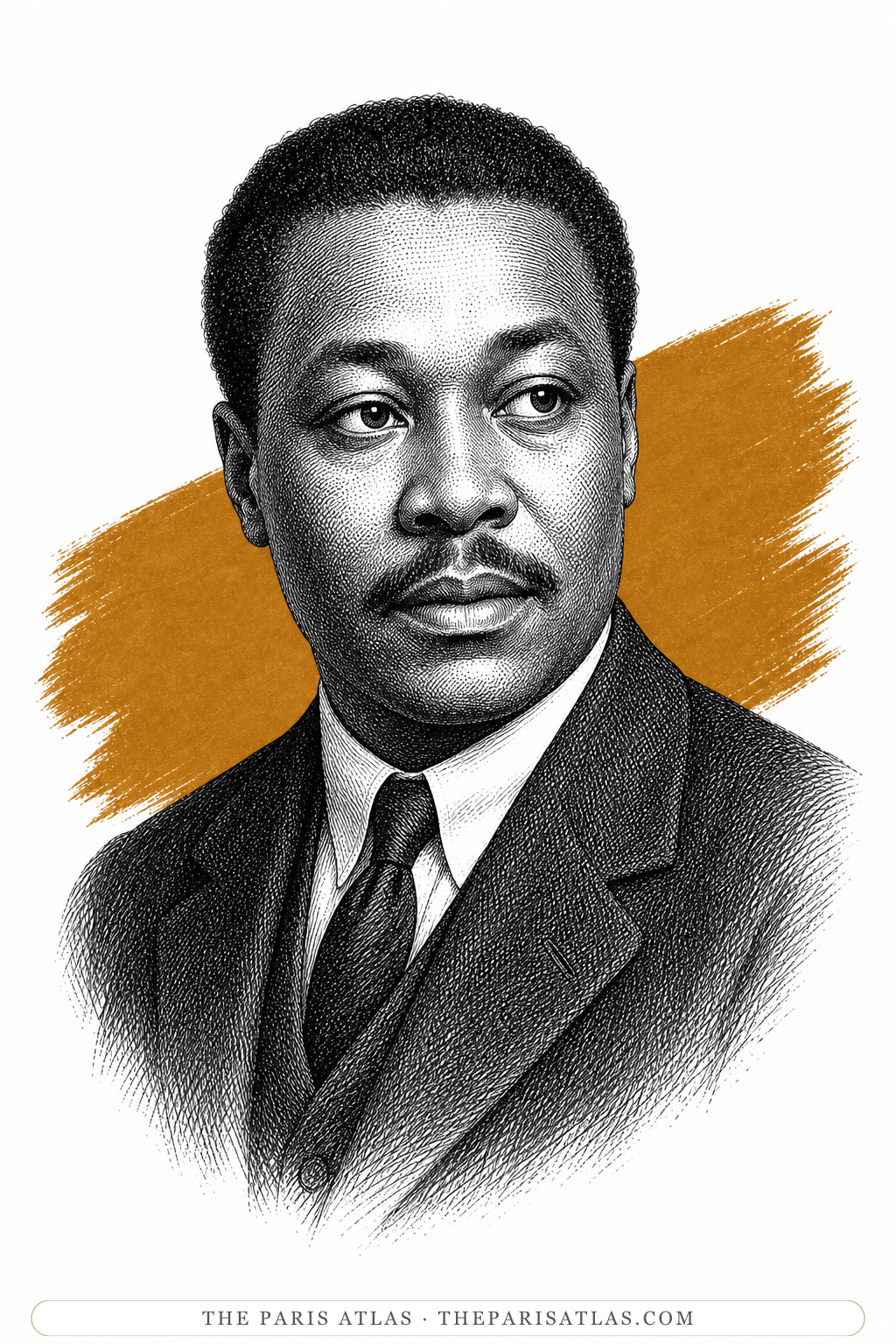

Home to Harlem
The first bestseller by a Black American novelist — written in France, set in Harlem, and denounced by the movement it belonged to.
Read our take
by Claude McKay
A Jamaican woman educated in England comes home and declines to be improved — the novel Claude McKay wrote furthest from Harlem and rated highest himself.
Bita Plant is taken in by English missionaries after an assault in childhood, sent to England for seven years of education, and returned to her Jamaican village as a demonstration of what cultivation can achieve. The novel is about what she does with that. Written in Morocco and set entirely in Jamaica, Banana Bottom is McKay's most controlled book and the one in which his argument about colonial education, folk culture and belonging is made whole rather than shouted.
Bita Plant is a peasant girl in the Jamaican village of Banana Bottom. After she is assaulted as a child, the Reverend Malcolm Craig and his wife Priscilla adopt her as a project: seven years of English education, elocution, piano, and a planned marriage to a divinity student they consider suitable. She returns to Jamaica as their evidence.
She does not perform the part. Bita is drawn back to the village life the Craigs meant to lift her out of — its dancing, its market, its obeah, its music, its bodies — and the novel follows her steady refusal to accept that the two worlds are ranked. The arranged engagement collapses. What she chooses instead is unremarkable by the standards of English fiction and radical by the standards of colonial improvement.
Around her McKay builds the fullest picture of Jamaican village life in his fiction: the church, the estate, the market, the drought, the folk songs. He was writing it in Morocco, twenty years after leaving the island, and it reads as a reconstruction by someone who knows he is not going back.
In the dance passage quoted by Barbara J. Griffin, Bita’s feet do more than follow a rhythm: they break down the social distance implied by her education. The description contrasts the dances she has learned with a pleasure shared by the crowd. Participation changes her relation to the gathering, from watching other people to moving among them. The scene gives her return a physical form, but its language of natural belonging should not be mistaken for proof that culture is inherited or that education and enjoyment must be opposites.
Jubban’s skill with animals gives the novel a way to value knowledge that carries no academic title. The brief description reproduced by Griffin emphasizes winning their cooperation, making ability visible through its effects rather than through claims to refinement. Yet the image of an assured rural man does not settle every question about Bita’s freedom. Gianfranca Balestra’s discussion, including Heather Hathaway’s critique, raises the limits of a resolution centered on marriage and domestic life. Read together, these details invite admiration for practical skill without treating the couple’s ending as a complete answer to the novel’s inequalities.
Where Home to Harlem and Banjo are deliberately loose, this one is composed. Many readers think it his best.
Bita is the product of an improving project and the book lets her judge it rather than the other way round.
McKay had been away twenty years. The village is reconstructed by a man who knew he would not return to it.
McKay wrote it in Morocco, where he lived for several years in the early 1930s, and it sold poorly enough to help end his career as a novelist in his lifetime.
1930s
McKay writes the novel while living in Morocco.
1933
Harper & Brothers publishes Banana Bottom.
1934
Poor sales contribute to his return to the United States.
The first bestseller by a Black American novelist — written in France, set in Harlem, and denounced by the movement it belonged to.
Read our take
Black seamen, drifters and musicians on the Marseille waterfront — the novel that gave Négritude its vocabulary, written by a Jamaican who preferred the docks to literary Paris.
Read our take
Claude McKay's account of two decades of travel — Harlem, London, Moscow, Berlin, Paris, Marseille, Morocco — by a writer who refused to settle anywhere or belong to anyone's programme.
Read our takeNo — it is set entirely in rural Jamaica. It is here because it belongs to the working life of a writer whose French years produced Banjo, and because it is generally considered his best novel.
That the folk culture colonial education treats as something to be raised out of is not inferior to what replaces it, and that a woman given both can decline to rank them.
Bita is the Jamaican protagonist. English missionaries arrange her education in England and expect her return to demonstrate the superiority of their values.
No. It is a novel. McKay uses Bita’s fictional life to explore colonial education and belonging rather than presenting the book as his own life story.
No. Bita’s education gives her opportunities, but the missionaries also expect gratitude and conformity. The novel asks what she can choose for herself after returning home.
Explore authors with a similar voice, perspective, and influence.
The Brooklyn dropout who arrived in Paris broke at thirty-eight and wrote the exuberant, banned books that ended American censorship.
View author
The doctor of the Paris slums who wrote the century's blackest, funniest novel — and changed the sound of French prose.
View author
The one-armed adventurer-poet of the Paris avant-garde — La Prose du Transsibérien, Moravagine, the memoir tetralogy — and the living writer Henry Miller ranked above all others.
View authorThe sources below include the primary text, editions, scholarship, archival materials, and other records that informed this page. They document Banana Bottom, its publication, and its place in literary history.


Used to verify Banana Bottom's bibliographic context and its place within Claude McKay's published work.

Used for independent archival, institutional, or historical context surrounding Claude McKay and Banana Bottom.
Used to cross-check chronology, publication history, and the circumstances in which Banana Bottom appeared.
Used for an additional scholarly or biographical perspective on Banana Bottom and Claude McKay's wider career.

Primary passages reproduced in the dissertation, citing the 1933 novel at pp. 104 and 252; not an independent collation of the complete novel.
The primary text is the baseline reference for every book page. Additional references document publication history, interpretation, and historical context where that evidence is available.
 Explore more resources