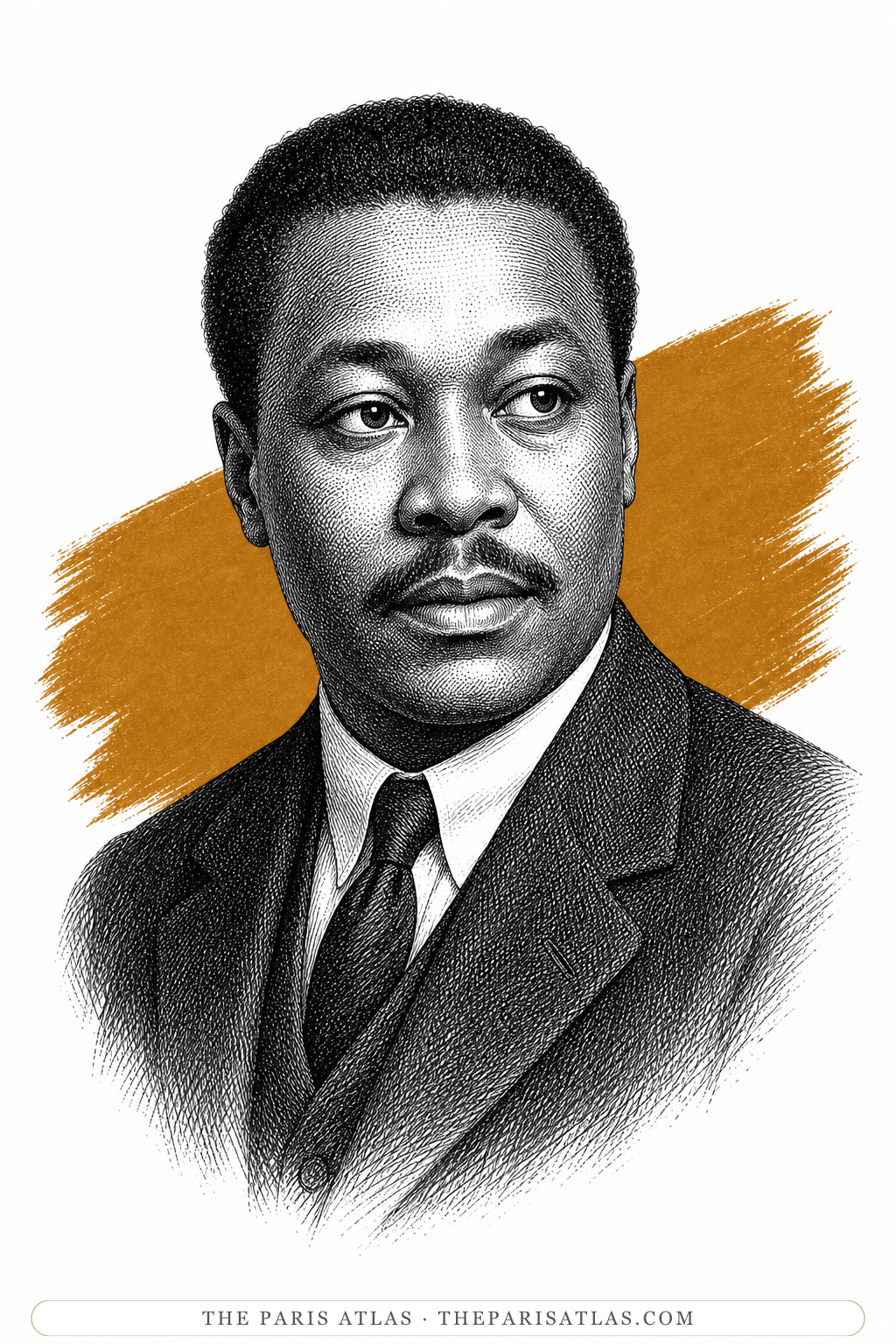

Home to Harlem
The first bestseller by a Black American novelist — written in France, set in Harlem, and denounced by the movement it belonged to.
Read our take
by Claude McKay
Black seamen, drifters and musicians on the Marseille waterfront — the novel that gave Négritude its vocabulary, written by a Jamaican who preferred the docks to literary Paris.
Banjo follows a group of Black men — American, West Indian, West African, Senegalese — living precariously around the port of Marseille in the 1920s. Its subtitle is exact: there is no plot to speak of, only the drift of men between the docks, the bars, casual work and each other's company. It is the most important of Claude McKay's books for anyone interested in France, and it was read closely by the young Caribbean and African writers in Paris who would build the Négritude movement out of it.
Lincoln Agrippa Daily, known as Banjo, is an American drifter who wants to put a band together on the Marseille waterfront. Around him gathers a shifting group of Black men from across the Atlantic world, living hand to mouth in the district the novel calls the Ditch: sailors between ships, dockers, men waiting on papers that will not come, men who have given up waiting.
Ray, the Haitian writer who had appeared in Home to Harlem, is here too, and he carries the book's argument. He is educated, displaced, and unable to settle into either the Black bourgeoisie's respectability or the assimilation Europe offers. What he finds among the men of the Ditch is a way of living that has refused both, and the novel is far more interested in that refusal than in any story.
The vagrancy is the form. Episodes accumulate, men appear and vanish with their ships, the police move everyone on. Nothing resolves, because nothing in these men's circumstances resolves. The book ends with movement rather than arrival.
The restaurant dispute makes language a practical source of power. Ray’s French allows him to challenge a bill that Banjo’s protests cannot settle. When the proprietress insists on her own nationality, Ray reads her words as an attempt to turn their foreignness into permission to cheat them. Banjo gives the returned coin a different purpose by proposing that they spend it on their new friendship. The movement from disputed payment to shared pleasure makes belonging something the two men can create together, rather than something the proprietress can grant.
Coal dust briefly makes the workers’ visible differences impossible to distinguish; washing reveals individuals, including Banjo. That temporary similarity is not a promise of equal opportunity: the chapter later traces access to work through Sarka’s favors and rivalries on the docks. Banjo’s change from musician to coal worker emerges from lost resources, not simply a different temperament. Without his instrument or an intact circle of companions, the daily search for work replaces the sociability Ray remembers. Even this new routine offers no certainty that there will be work each day.
Set on the Marseille waterfront rather than in literary Paris, and written by someone who found the expatriate cafés tiresome.
Aimé Césaire, Léopold Sédar Senghor and the Nardal sisters' circle in Paris read it closely. Senghor later credited McKay directly.
The subtitle is not a joke. The refusal of narrative shape is an argument about lives that are not permitted narrative shape.
Claude McKay was in France from 1923 to 1928 and knew the Marseille docks directly. He disliked the wealthy, largely white expatriate scene in Paris and wrote about the port instead.
1923
McKay arrives in France and begins the years that produce the Marseille material.
1929
Harper & Brothers publishes Banjo.
1930s
The novel circulates among Black students and writers in Paris and becomes a foundational text for Négritude.
The first bestseller by a Black American novelist — written in France, set in Harlem, and denounced by the movement it belonged to.
Read our take
Written around 1930, unpublished for ninety years: a novel of the Marseille docks with a disabled Black protagonist and openly queer characters, decades ahead of anything that could be printed.
Read our take
Claude McKay's account of two decades of travel — Harlem, London, Moscow, Berlin, Paris, Marseille, Morocco — by a writer who refused to settle anywhere or belong to anyone's programme.
Read our takeBecause that is where McKay's interest was. He had little patience for the wealthy expatriate circles of literary Paris and wrote instead about the Black seamen and dockworkers of the port.
It was read closely by the Caribbean and African students in Paris around the Nardal sisters' salon and the journal Légitime Défense. Léopold Sédar Senghor acknowledged McKay's importance to the movement.
Effectively none, and deliberately so. Episodes accumulate as men arrive and leave with their ships. The formlessness is the book's argument about lives lived without security or settlement.
They are Black seamen, dockworkers, travelers, and casual laborers from several countries. Their uncertain work and shared life around the Marseille waterfront hold the episodes together.
McKay organizes the novel around conversations, music, encounters, and departures rather than a single steadily developing conflict. The subtitle tells readers to attend to the group’s daily life.
Explore authors with a similar voice, perspective, and influence.
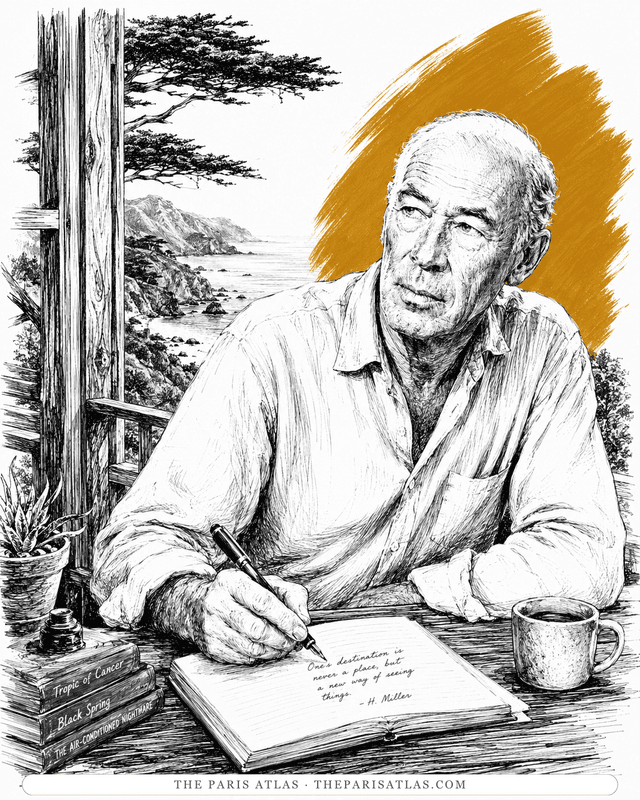
The Brooklyn dropout who arrived in Paris broke at thirty-eight and wrote the exuberant, banned books that ended American censorship.
View author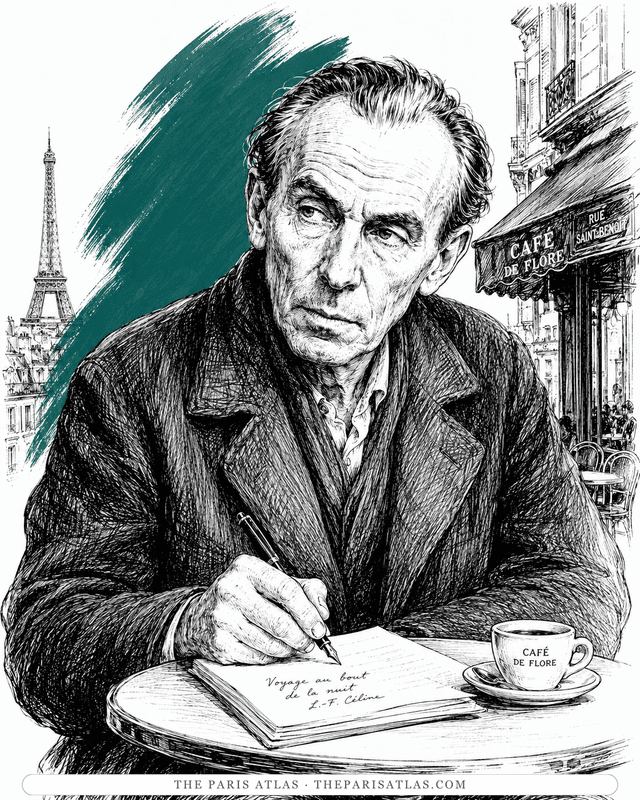
The doctor of the Paris slums who wrote the century's blackest, funniest novel — and changed the sound of French prose.
View author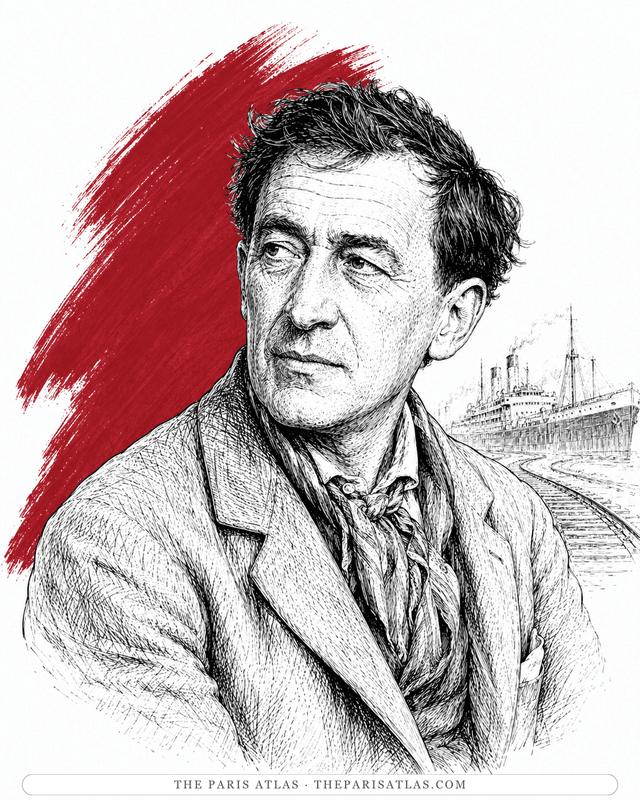
The one-armed adventurer-poet of the Paris avant-garde — La Prose du Transsibérien, Moravagine, the memoir tetralogy — and the living writer Henry Miller ranked above all others.
View authorThe sources below include the primary text, editions, scholarship, archival materials, and other records that informed this page. They document Banjo, its publication, and its place in literary history.


Used to place Banjo within Claude McKay's published work and verify its bibliographic context.

Used for independent biographical, archival, or historical context surrounding Claude McKay's career and the period in which Banjo appeared.
Used to cross-check authorship, chronology, and the work's place in Claude McKay's wider catalogue.
Used to verify Claude McKay's bibliography and place Banjo within the broader chronology of Claude McKay's career.
Analysis of the restaurant encounter and the return to dock work in the university transcription; not a complete novel reading or first-edition facsimile collation.
The primary text is the baseline reference for every book page. Additional references document publication history, interpretation, and historical context where that evidence is available.
 Explore more resources