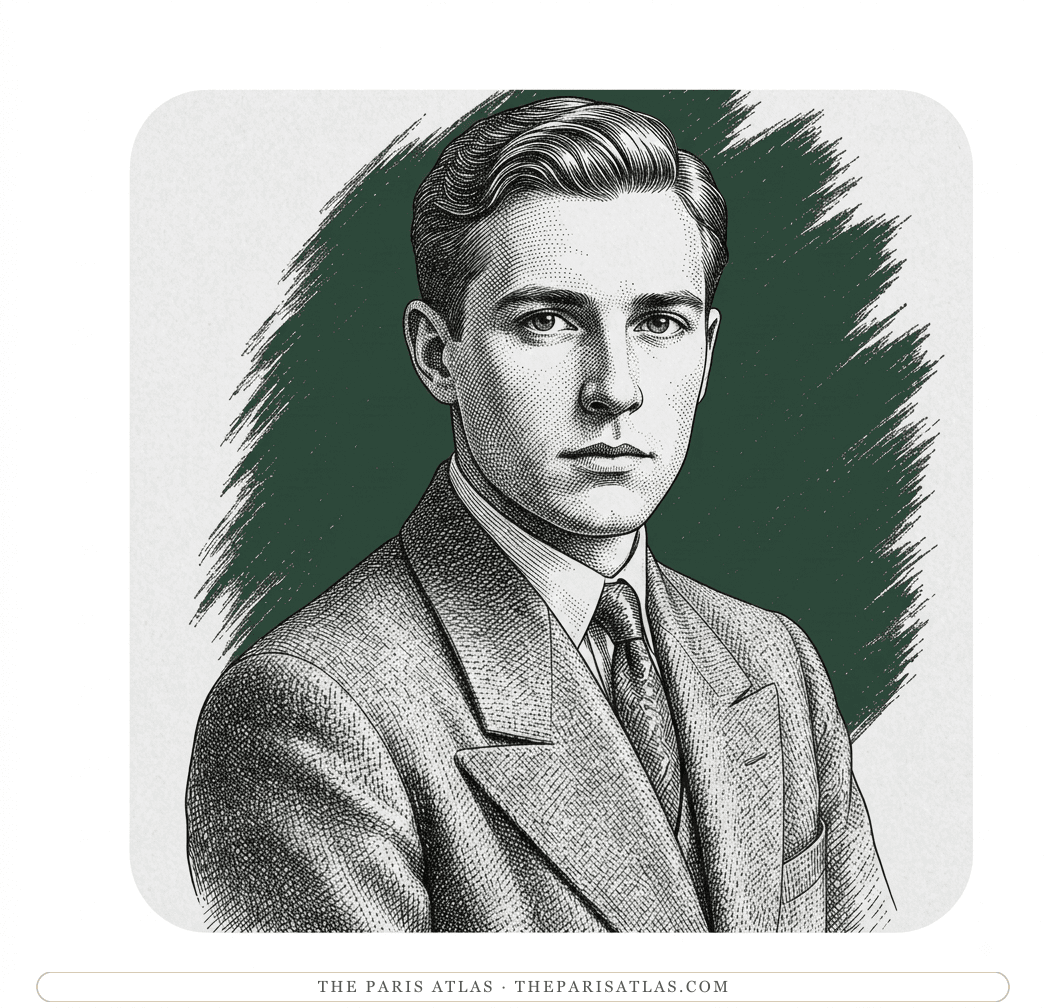
Martin Hallam
A young Canadian who loves trees, becomes Stephen's first real friend, proposes to her, and comes back twenty years later in love with the woman she lives with.
Somebody to show his forests to. He tells Stephen that all this damned convention is rot, that they are pals, that he will be desperately lonely, and asks why she cannot come back to Canada with him.
The book

At a glance
- Book One, then again in Book Five
- British Columbia — several farms and a number of orchards
- His mother is dead when the book opens; Anna Gordon half adopts him for it
- Served and was wounded; afterwards lives in Paris
- Riding, fencing, and the country between Upton and the Malverns
Who they are in the book
Spoiler-freeMartin Hallam is the young man Stephen Gordon meets at a New Year's Eve dance in The Well of Loneliness, the 1928 novel by the English writer Radclyffe Hall. He is fictional. He lives in British Columbia, where he owns several farms and a number of orchards; he went out there for six months after his mother died and stayed for love of the country. He is in England on holiday, staying a week with Roger Antrim, whom he met in London.
He is tall and loosely built, with a young clean-shaven bony face, brown hands with spatulate fingers, and a slouch from too much riding. He knows almost nothing about books and was a slack student. What he cares about is forests, and when he talks about them his voice changes.
He and Stephen become friends immediately and completely, because he takes her exactly as she is and would not be able to explain why if you asked him. They ride together, fence together — he laughs when she beats him — and walk the Malverns. She tells him he is the only real friend she has ever had except her father, and that the two of them are like brothers.
How Martin Hallam Is Portrayed
- The treesTowering firs many centuries old, hemlocks by the river courses, white spruces along the lakes, red pines that glow like copper at sunset. He speaks of them as friends and calls red pines unfortunate because builders covet their wood. He will not have his own roof cut from them, on the grounds that he would feel like an assassin.
- What he says about old thorn treesWalking up Raggedstone he stops to touch the twisted, crippled thorns and says it hurts him to see them, and asks whether Stephen has ever thought about the enormous courage of trees. Asked whether he believes in God, he answers that he does, because of His trees.
- The phrase he uses without knowing what it will becomeTalking about a forest heaven for the faithful of trees, he quotes the lament for Saul and Jonathan — "And in death they were not divided." Ten chapters and twenty years later Hall uses the same words for the night Stephen and Mary Llewellyn first spend together.
- The proposalHe rushes to Morton very early one morning, walks Stephen into the garden, and tells her he is deeply in love with her and wants to marry her. She stares at him in dumb horror and runs. Within two hours he is driving to London; within a fortnight he is on a steamer.
- What it does to himHe had told himself for months that this was friendship, and had been deceiving himself; Sir Philip and Anna were not deceived for a moment. Love came to him, the novel says, as a blinding revelation, and having been by habit quiet and reserved he lost his head completely.
- The returnWounded out of the war and living in Paris, he writes to Stephen at an English address and the letter is forwarded. She telephones him and gives the address twice: "At my house in Paris-35, Rue Jacob." He arrives on the stroke of eight and the friendship starts again where it stopped.
If you like The Well of Loneliness


If you like Radclyffe Hall
Explore authors with a similar voice, perspective, and influence.
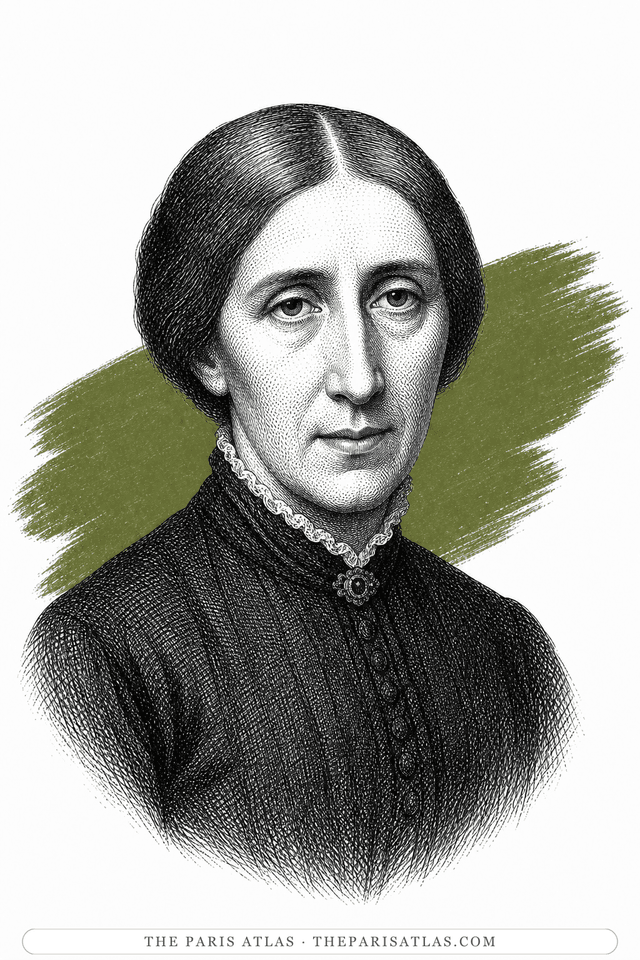
George Eliot
Mary Ann Evans, who wrote Middlemarch under a man's name because she was living openly with another woman's husband and knew what English readers would do with that. Her mind was formed in French and German: she translated Strauss and Feuerbach before she wrote a line of fiction, and the sight she most wanted in Paris was not a monument but the flat where Auguste Comte had lived.
View author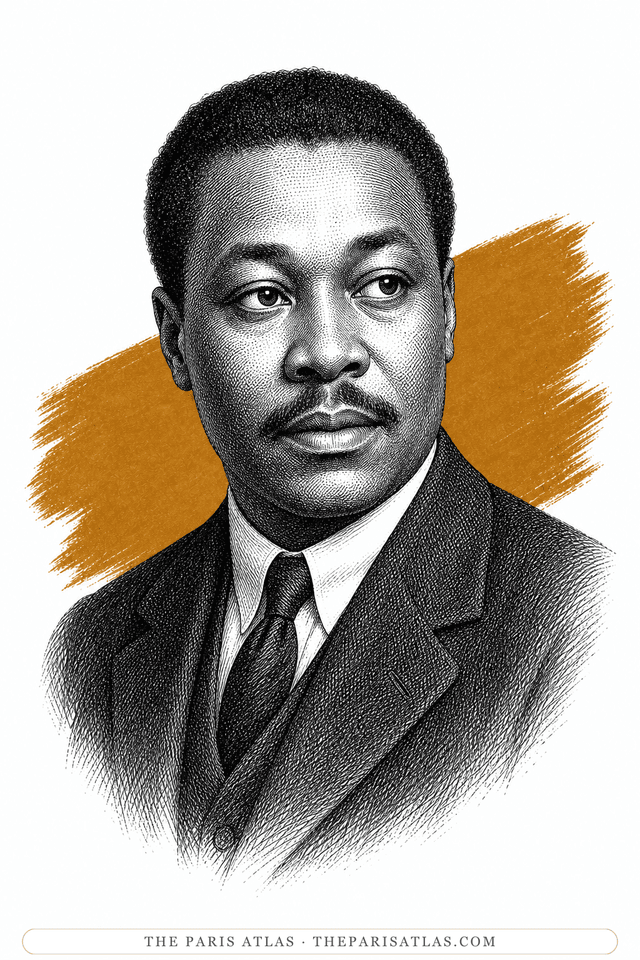
Claude McKay
Jamaican-born poet and novelist, and one of the essential writers of the Harlem Renaissance. He arrived in Paris from Moscow in 1923 and stayed in France until 1928, writing Home to Harlem there — and forming a low opinion of the rich, white expatriate scene that dominates most accounts of the period. His Paris is the same years as Hemingway's and almost nothing like it.
View author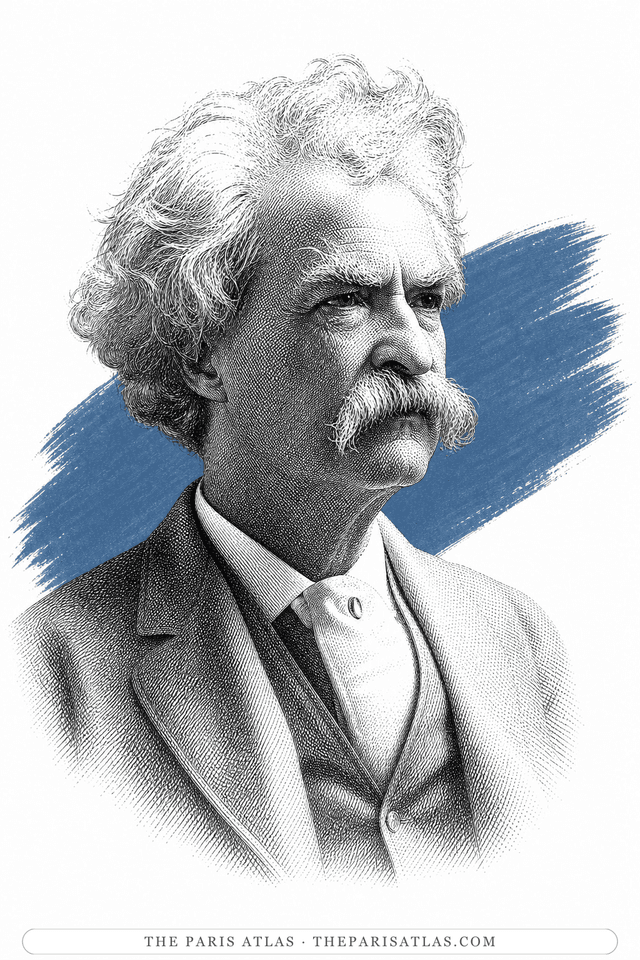
Mark Twain
The Missouri newspaperman who became America's most famous writer, and whose first book made its reputation partly out of Paris: in 1867 he arrived with a shipload of American tourists, renamed his guide Ferguson, watched the high-kicking can-can through his fingers and wrote it all down. He kept coming back — and was living in Paris in the mid-1890s, broke, while finishing the novel he considered his best, Personal Recollections of Joan of Arc.
View author