Ladies Almanack
How Radclyffe appears in its pages: The other Englishwoman at the tea table — a Stetson, a firm belief in marriage, and the loudest sympathy in the book.
Read the character guideEnglish novelist and poet, a prize-winner before she was a scandal, whose fifth novel The Well of Loneliness was ordered destroyed by a London magistrate in 1928 for writing about love between women without apologising for it.
Radclyffe Hall was an English novelist and poet. Her fifth novel, The Well of Loneliness, was published in London in July 1928 and ordered destroyed by a magistrate four months later. The book follows an Englishwoman named Stephen Gordon who loves women, and says so in plain words. That was the offence. Hall was not the defendant — her publisher and her London distributor were — and she was not allowed to give evidence, so the hearing that decided the fate of her book went on without her.
She was an established writer well before the trial. Adam's Breed, published in 1926, won both the Femina Vie Heureuse Prize and the James Tait Black Memorial Prize, a pairing very few novels have taken. Five volumes of verse came before the novels, and one of those poems, The Blind Ploughman, was set to music in 1913 and sung in concert halls for the next half century.
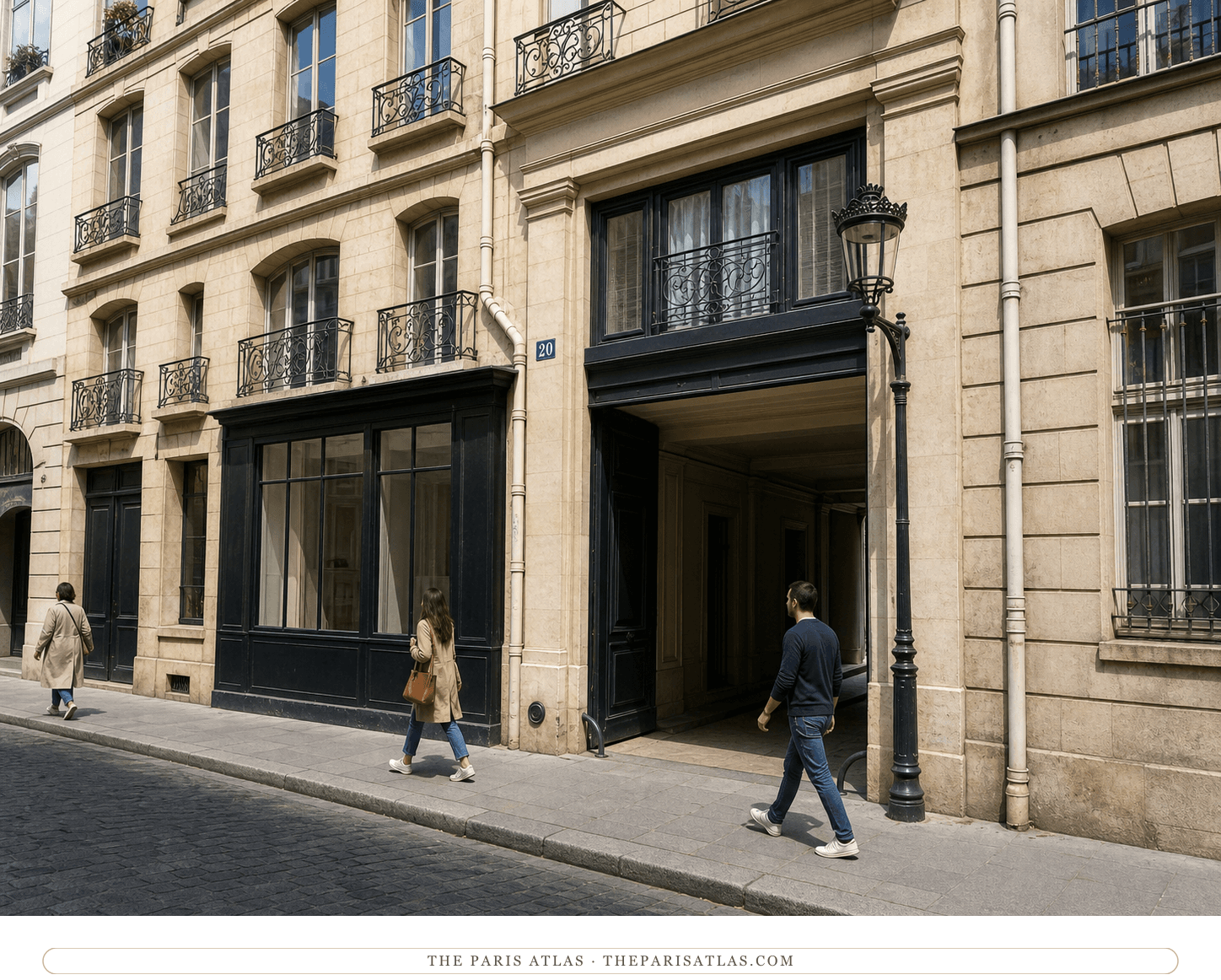
Hall lived openly with women for her whole adult life, dressed in men's tailoring, and was called John by everyone close to her. Her partner of nearly thirty years was Una, Lady Troubridge; before Troubridge there was Mabel Batten, who gave her the name John. In Paris she knew Natalie Clifford Barney, the American writer who had been running a Friday salon at 20 rue Jacob since 1909, and she wrote Barney into The Well of Loneliness as the salon hostess Valérie Seymour.
She was christened Marguerite Antonia Radclyffe-Hall. She published as Radclyffe Hall, dropping the first name and the hyphen, from her first book of verse in 1906 onwards. Friends called her John, a name Mabel Batten gave her early in their affair and which she answered to for the rest of her life. All three are hers. The books carry Radclyffe Hall, and so does the English Heritage plaque in Kensington.
Her father, Radclyffe Radclyffe-Hall, left the family when she was two. Her mother, an American widow from Philadelphia named Mary Jane Diehl, remarried a singing professor, Alberto Visetti, and the household was not a happy one. What made the writing life possible was money: at twenty-one Hall inherited a fortune from her grandfather, and never afterwards had to earn a living. She wrote because she wanted to, and later paid her own legal costs for the same reason.[1]
Hall began in verse. Five collections appeared between 1906 and 1915, and one poem from Songs of Three Counties, The Blind Ploughman, was set to music by Robert Coningsby Clarke in 1913 and became a standard of the ballad concert. It is the only thing she wrote that reached a mass audience before the trial did the job for her.
The novels came in her forties, and came quickly:
Adam's Breed took the Femina Vie Heureuse Prize and the James Tait Black Memorial Prize for fiction, both awarded in 1927. Only one novel had taken both before it, E. M. Forster's A Passage to India. This is the fact most accounts of 1928 leave out: the woman whose book the state destroyed had, the year before, won the two prizes an English novelist most wanted.[2]
The Well of Loneliness follows Stephen Gordon from her birth on a Worcestershire estate to middle age in Paris. Her father wanted a son and gave her the name he had chosen; she grows up riding, fencing and reading, falls in love with women, is turned out of her home for it, drives an ambulance in France in the war, and settles at last in a house on the Left Bank with the woman she loves. The book calls her an invert, the term the sexologists of the day used, and Havelock Ellis supplied a one-page Commentary for the first edition vouching for its psychological accuracy. Hall dedicated it To Our Three Selves.[3]
There is almost no sex in it. The single sentence that describes a night together reads, in full, "and that night they were not divided". What the book does instead is argue. It states that women like Stephen are made this way, that they are not sick and not wicked, and that they are owed a place. The last page has Stephen crying out to God for it.
You're neither unnatural, nor abominable, nor mad; you're as much a part of what people call nature as anyone else; only you're unexplained as yet—you've not got your niche in creation.[3]
The speaker is Puddle, Stephen's governess, and the point of the scene is that she never says it aloud. She rehearses the speech, loses her nerve, and lets the girl go on believing she is a monster. Readers wrote to Hall for the rest of her life about that passage.
Jonathan Cape published the novel on 27 July 1928 at fifteen shillings, roughly double the price of an ordinary novel, which was a deliberate signal that this was a serious book for serious readers. The early reviews were calm and several were warm.
On 19 August the editor of the Sunday Express, James Douglas, ran a leading article headed "A Book That Must Be Suppressed". He argued that the cleverness of the book made it more dangerous, not less, and demanded its immediate withdrawal.[1]
I would rather give a healthy boy or a healthy girl a phial of prussic acid than this novel.
Cape sent a copy to the Home Secretary, Sir William Joynson-Hicks, and asked for a view. The view came back that the book must be withdrawn. Cape withdrew it, then quietly licensed the text to the Pegasus Press in Paris and had copies shipped back into England. Customs seized a consignment at Dover in October, and the Director of Public Prosecutions moved against Cape and the London distributor Leopold Hill under the Obscene Publications Act 1857.[4]
The case was heard at Bow Street Magistrates' Court from 9 November 1928. Around forty witnesses had come to speak for the book, Virginia Woolf and E. M. Forster among them. The Chief Magistrate, Sir Chartres Biron, would not hear them: whether a book was obscene, he held, was a question for the court and not for novelists. Hall sat in court through all of it and was never called. On 16 November Biron ruled the novel an obscene libel and ordered every copy destroyed. His reasoning was not that the book was indecent but that it asked for lesbian lives to be tolerated rather than condemned.[5]
The appeal was heard at the County of London Sessions on 14 December before Sir Robert Wallace and a bench of magistrates, and was dismissed with costs. Hall helped pay them by selling her London house. The Well of Loneliness was not published in Britain again until Falcon Press brought it out in 1949, six years after her death.
The American rights went to Covici-Friede, a New York firm five months old, which published the book in January 1929. John Sumner of the New York Society for the Suppression of Vice had copies seized within weeks, and in February a magistrate named Hyman Bushel found the novel obscene and sent the publishers for trial.[6]
On 19 April 1929 the Court of Special Sessions cleared it. The court held that a book dealing with a delicate social problem does not break the law simply by dealing with it. Covici-Friede printed a two-volume victory edition carrying their lawyer Morris Ernst's account of the case, and the novel sold in numbers Hall's earlier books had never approached.[7]
Two courts, one text, five months apart, opposite results. Nothing in the book had changed.
Hall met Mabel Batten at the spa at Homburg in 1907. Batten was fifty, married, a grandmother and a singer of some reputation, and the two became lovers the following year. Batten steered her reading, brought her into the Roman Catholic Church in 1912, and called her John. She died in 1916, after a cerebral haemorrhage that followed a quarrel between them, and Hall carried the guilt of that quarrel for years.
The quarrel was about Una Troubridge. Una was Batten's younger cousin, a sculptor and translator married to a naval officer; Hall met her on 1 August 1915 and they were lovers by November. They set up house together in 1917 and stayed together until Hall died twenty-six years later. Troubridge translated Colette into English for British readers, put her own work aside to run Hall's, and wrote the first biography of her in 1961.
The 1921 census recorded the two of them at the same address as joint heads of household, which the form did not really allow for and which almost no other pair of women in the country claimed. It is a small piece of paper and a clear statement.
Hall met Natalie Clifford Barney through the women she knew in London, along with Barney's partner the painter Romaine Brooks. Barney was an American writer who had lived in Paris since 1902, wrote in French, and had been holding a Friday salon at 20 rue Jacob since 1909. She lived as a lesbian without any concealment at all, which in 1928 made her the most useful model in Europe for what Hall wanted to put on the page.
Valérie Seymour is the first person Stephen Gordon meets in Paris and the only character in the novel entirely at ease with herself. She is an American whose parties everybody goes to, and the book calls her a creature born out of her epoch, a pagan chained to an age that was Christian. Everyone else in Stephen's Paris is unhappy. Valérie is not, and the novel cannot quite explain why, which is the most interesting thing about her.
It is Valérie who tells Stephen about a tumbledown house with a good garden in the rue Jacob, and Stephen buys it: number 35, in the same short street in Saint-Germain-des-Prés as Barney's number 20. Hall put her heroine four doors and a few numbers from the real address.
What the record shows is that Hall knew Barney, and that the Paris chapters draw on Barney's circle. Later accounts also place Hall among the Friday guests at 20 rue Jacob, and the guest map Barney published in 1929 would settle it, but no source consulted for this page documents her attendance, so nothing here claims it.
After Mabel Batten died, Hall went to the medium Gladys Osborne Leonard to try to reach her. She and Troubridge sat with Leonard weekly through 1916 and 1917, taking turns as questioner and note-taker, and Hall wrote the whole thing up as a report published in the Proceedings of the Society for Psychical Research in 1919. It is a long, careful, sceptical document, and it made her name in a field that had nothing to do with fiction. She sat on the Society's council and resigned in 1924 to write.
The council seat also produced a court case. In 1920, while her name was before the Society, St George Lane Fox-Pitt told its secretary that Radclyffe Hall was a grossly immoral woman. Hall sued him for slander in the King's Bench and won. It was her first experience of a courtroom, and it went considerably better than the second.
In 1934, at a spa at Bagnoles-de-l'Orne in Normandy, Hall fell in love with a White Russian nurse called Evguenia Souline, thirty years old to her fifty-four. The attachment lasted the rest of her life and caused Troubridge lasting pain. Troubridge did not leave. The three of them travelled, quarrelled and wrote to one another for nine years, and Hall left Souline an annuity.
Hall was diagnosed with inoperable cancer of the rectum in March 1943 and died at her flat in Pimlico on 7 October, aged sixty-three, with Troubridge beside her. She was buried in Highgate Cemetery, in the Circle of Lebanon, in the vault that already held Mabel Batten.
Troubridge inherited everything, moved to Italy, and died in Rome in 1963. The papers went to the Harry Ransom Center in Texas, the letters to Souline to the University of Birmingham. The Well of Loneliness has been in print continuously since 1949. Its psychology has dated badly and its argument has not: it was the first English novel to ask, in public and under the author's own name, that lesbian lives be left alone.
Born on 12 August at Sunny Lawn, Bournemouth, and christened Marguerite Antonia Radclyffe-Hall. Her father leaves the household two years later.
Inherits a fortune from her grandfather at twenty-one, and is financially independent for the rest of her life.
Publishes her first book, the verse collection 'Twixt Earth and Stars. Four more follow by 1915.
Meets Mabel Batten at Homburg. They become lovers in 1908; Batten gives her the name John and brings her into the Roman Catholic Church in 1912.
Meets Una Troubridge on 1 August 1915 and they become lovers in November. Mabel Batten dies in 1916. Hall and Troubridge set up house together in 1917.
Publishes her report on a year of sittings with the medium Gladys Osborne Leonard in the Proceedings of the Society for Psychical Research, conducted with Troubridge.
Sues St George Lane Fox-Pitt for slander after he calls her a grossly immoral woman to the Society for Psychical Research's secretary, and wins.
The Forge and The Unlit Lamp, her first two novels, are published. She and Troubridge move to 37 Holland Street, Kensington, where they stay until 1929.
Adam's Breed, published the year before, takes both the Femina Vie Heureuse Prize and the James Tait Black Memorial Prize for fiction.
Jonathan Cape publishes The Well of Loneliness on 27 July. The Sunday Express demands its suppression on 19 August, and the Home Secretary asks Cape to withdraw it.
At Bow Street on 16 November, after a hearing that began on 9 November, the Chief Magistrate Sir Chartres Biron rules the novel an obscene libel and orders every copy destroyed. The appeal is dismissed at the County of London Sessions on 14 December.
Covici-Friede publishes the novel in New York and copies are seized. On 19 April the Court of Special Sessions clears it, and a victory edition follows.
Meets Evguenia Souline, a White Russian nurse, at Bagnoles-de-l'Orne. The attachment lasts until Hall's death and Troubridge stays.
Diagnosed with inoperable cancer of the rectum in March, dies at her flat in Pimlico on 7 October, and is buried at Highgate Cemetery in the vault holding Mabel Batten.
Falcon Press publishes The Well of Loneliness in Britain, twenty-one years after the destruction order. It has stayed in print since.
You're neither unnatural, nor abominable, nor mad; you're as much a part of what people call nature as anyone else; only you're unexplained as yet—you've not got your niche in creation.
Acknowledge us, oh God, before the whole world. Give us also the right to our existence!
I'm just a poor, heart-broken freak of a creature who loves you and needs you much more than its life, because life's worse than death, ten times worse without you.
How Radclyffe appears in its pages: The other Englishwoman at the tea table — a Stetson, a firm belief in marriage, and the loudest sympathy in the book.
Read the character guide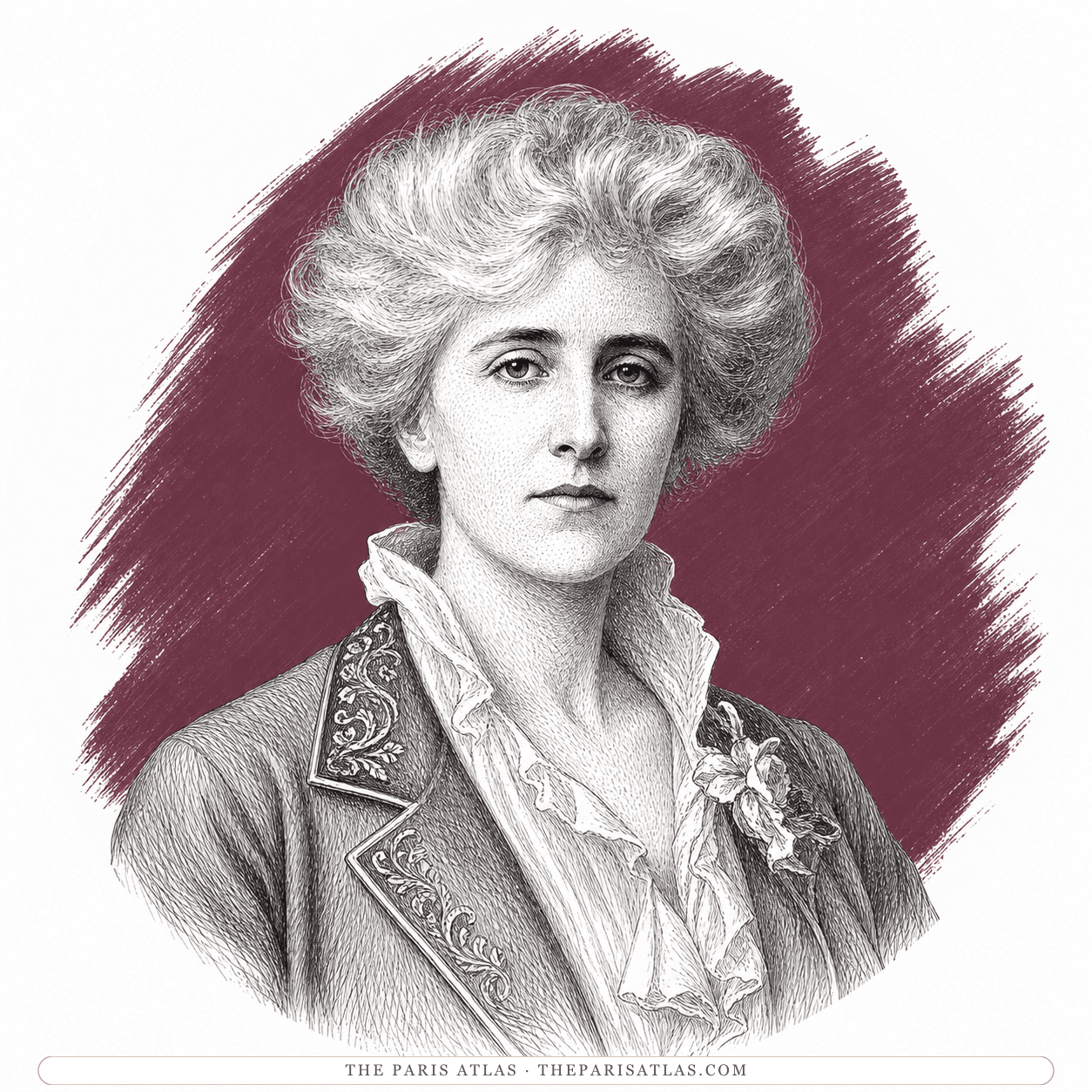
Met
Hall met Barney and the painter Romaine Brooks through the women she knew in London, and in 1928 she put Barney into The Well of Loneliness as the salon hostess Valérie Seymour, who is the first person Stephen Gordon meets in Paris. No year is given for the meeting, so none is recorded here. Accounts written since have also placed Hall among the guests at Barney's Friday salon at 20 rue Jacob; that is a separate assertion and no source consulted for this record documents it, so no attendance edge is claimed.

The 1928 novel about an Englishwoman who loves women and says so, which a London magistrate ordered destroyed four months after it was published and a New York court cleared five months after that.
An English novelist and poet (1880–1943) best known for The Well of Loneliness, the 1928 novel about a woman who loves women that a London magistrate ordered destroyed as obscene. She was already a prize-winning writer when it was published: her novel Adam's Breed had won the Femina Vie Heureuse and James Tait Black prizes in 1927. She published eight novels, a book of short stories and five volumes of verse.
Because it treated love between women as normal rather than shameful. The Chief Magistrate at Bow Street, Sir Chartres Biron, ruled on 16 November 1928 that the novel was an obscene libel and ordered every copy destroyed, holding that a book asking for lesbian lives to be tolerated rather than condemned would corrupt its readers. The book contains no explicit sex; the single sentence describing a night together reads "and that night they were not divided". An appeal was dismissed on 14 December 1928, and the novel was not published in Britain again until 1949.
No. The defendants were her publisher, Jonathan Cape, and her London distributor, Leopold Hill, prosecuted under the Obscene Publications Act 1857. Hall attended every day of the hearing but had no standing in it and was never called to give evidence. Around forty witnesses had come to speak for the book, Virginia Woolf and E. M. Forster among them, and the magistrate refused to hear any of them on the ground that literary merit was not the question before him.
The opposite. Covici-Friede published it in New York in January 1929, the New York Society for the Suppression of Vice had copies seized, and a magistrate found it obscene in February. On 19 April 1929 the Court of Special Sessions cleared the novel, holding that a book dealing with a delicate social problem does not break the law by dealing with it. The publishers issued a two-volume victory edition, and the case made the book a bestseller.
Mabel Batten, her partner from 1908 until Batten's death in 1916, gave her the name early in their affair, and she used it privately for the rest of her life. Her legal name was Marguerite Antonia Radclyffe-Hall; she published as Radclyffe Hall from her first book in 1906. She wore men's tailoring, kept her hair short, and described herself using the sexologists' term of the day, a congenital invert.
The Paris salon hostess Hall modelled on the American writer Natalie Clifford Barney, whose Friday salon at 20 rue Jacob had been running since 1909. Valérie is the first person the novel's heroine Stephen Gordon meets in Paris and the one character in the book wholly at peace with herself. She is also the one who sends Stephen to the rue Jacob to buy a house, which the novel places at number 35, a few doors from Barney's real address at number 20.
Mabel Batten from 1908 until Batten's death in 1916, and Una, Lady Troubridge — Batten's younger cousin, a sculptor and translator — from 1915 until Hall's own death in 1943. From 1934 Hall was also in love with Evguenia Souline, a Russian nurse she met at a spa in Normandy; Troubridge knew, was hurt by it, and stayed.
She was diagnosed with inoperable cancer of the rectum in March 1943 and died at her flat in Pimlico, London, on 7 October that year, aged sixty-three, with Una Troubridge beside her. She is buried in the Circle of Lebanon at Highgate Cemetery, in the vault that already held Mabel Batten, and visitors still leave flowers at the door.
Met
Hall met Barney and the painter Romaine Brooks through the women she knew in London, and in 1928 she put Barney into The Well of Loneliness as the salon hostess Valérie Seymour, who is the first person Stephen Gordon meets in Paris. No year is given for the meeting, so none is recorded here. Accounts written since have also placed Hall among the guests at Barney's Friday salon at 20 rue Jacob; that is a separate assertion and no source consulted for this record documents it, so no attendance edge is claimed.
The sources below include biographies, scholarly essays, interviews, and primary materials that informed this page. They reflect both the historical record and ongoing critical conversations about Radclyffe Hall and their work.


Web source consulted for documented facts and historical context presented on the Radclyffe Hall page.

Archival evidence used to document the historical record connected to Radclyffe Hall.
Web source consulted for documented facts and historical context presented on the Radclyffe Hall page.
Web source consulted for documented facts and historical context presented on the Radclyffe Hall page.
Web source consulted for documented facts and historical context presented on the Radclyffe Hall page.
Contemporary reporting or criticism used to document the historical reception and context of Radclyffe Hall.
Web source consulted for documented facts and historical context presented on the Radclyffe Hall page.
Published analysis and historical context used in preparing the Radclyffe Hall page.
These references anchor the page in the documented record and in the scholarly conversations around Radclyffe Hall. Every claim on this page traces back to one or more of the works listed here.
 Explore more resources