The Paris AtlasCharting the artists, works, and places worth returning to.
  • Singer
  • Composer
  • Pianist
· French · 1928–1991

Serge Gainsbourg

Songwriter born Lucien Ginsburg in the 9th arrondissement to Russian Jewish émigré parents, who trained as a painter, played piano in Paris cabarets, and wrote four decades of French popular song from behind the black walls of his house at 5 bis rue de Verneuil — now a museum whose street wall has been covered in his admirers' graffiti since he died there in 1991.

Details

Lived
1928–1991
Born
2 April 1928
Birthplace
Paris
Birth name
Lucien Ginsburg
Died
2 March 1991 · aged 62
Place of death
Paris
Nationality
French
Profession
Songwriter, singer and composer
Roles
SingerComposerPianist
Also known as
Lucien Ginsburg · Gainsbarre

About Serge Gainsbourg

Serge Gainsbourg wrote songs the way a difficult painter paints: for himself first, and then, when that failed to pay, for whoever would sing them. He was born Lucien Ginsburg in Paris in 1928, studied painting, gave it up, played piano in cabarets, and spent the 1960s writing hits for other people's voices before his own — thin, spoken, unbeautiful — became the most recognisable in France.

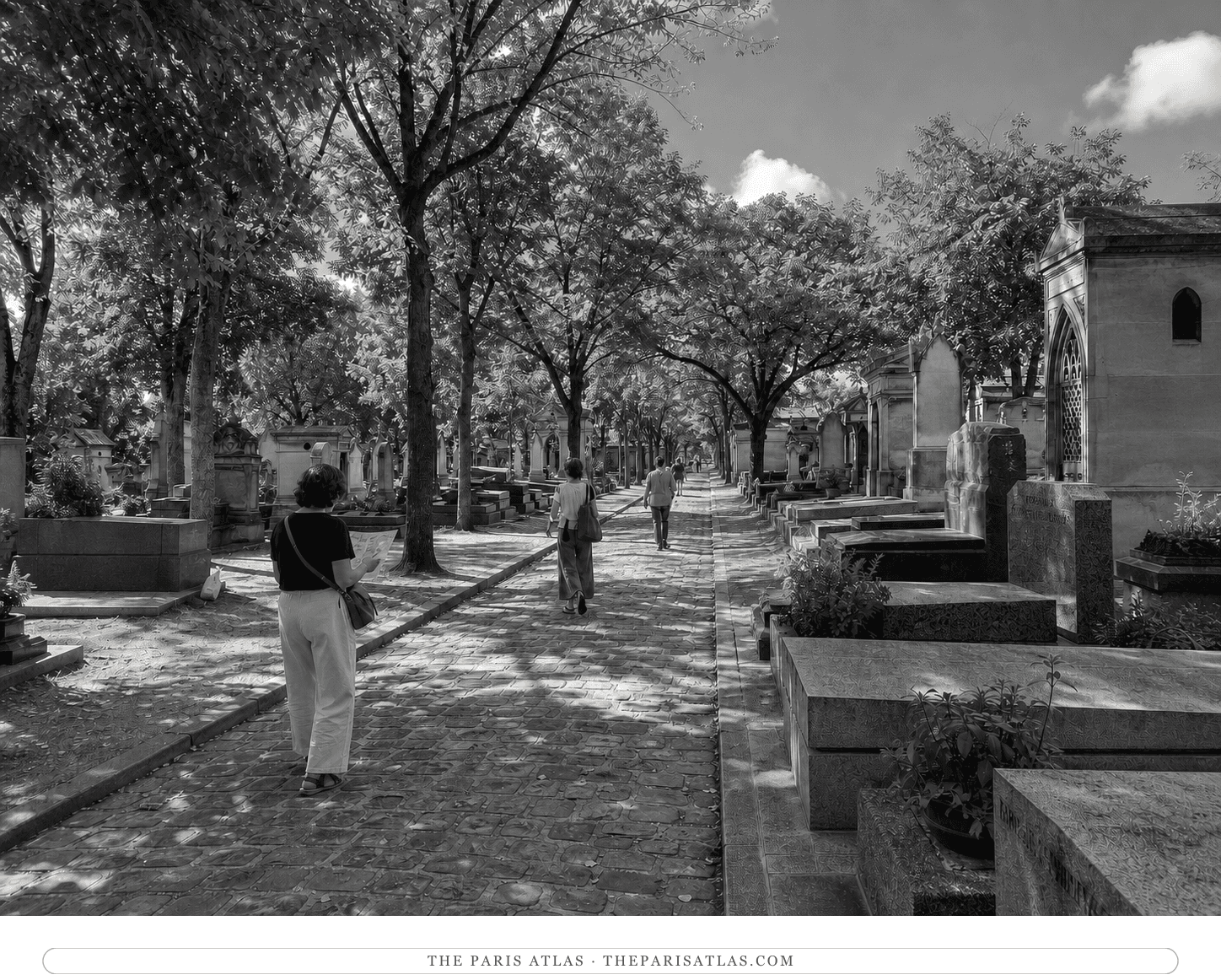
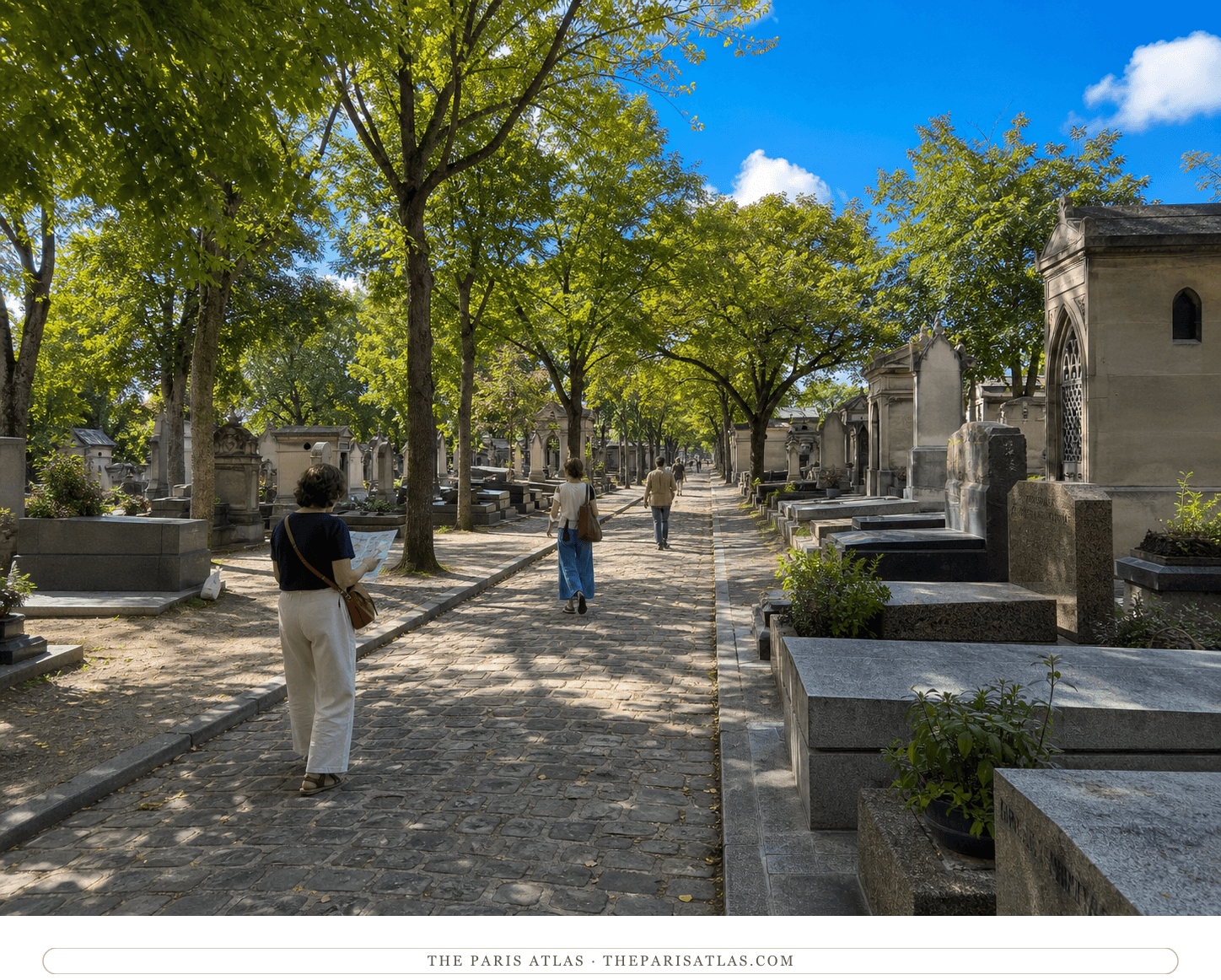
The address is the point. From 1968 until his death in 1991 he lived at 5 bis rue de Verneuil, a narrow street in Saint-Germain-des-Prés, in rooms he painted black and filled with pianos and collected objects. He died there of a heart attack on 2 March 1991, at sixty-two. The interior was left exactly as it was, the outside wall filled up with visitors' graffiti, and in September 2023 his daughter Charlotte Gainsbourg opened the house to the public as the Maison Gainsbourg. He is buried a short way south, in the first division of Montparnasse cemetery.

Lucien Ginsburg, and the painting he gave up

Lucien Ginsburg was born on 2 April 1928 in the 9th arrondissement of Paris, the son of Russian Jewish émigrés. What he wanted was to paint: he studied at the École des Beaux-Arts, the state fine-art school, under the painters André Lhote and Fernand Léger. Then he stopped, having decided that music, not painting, was what would keep him.

So he played piano in bars and cabarets instead. It was his father who found him the job at Milord l'Arsouille, a Paris cabaret where he accompanied the singer Michèle Arnaud and began putting his own words to music. There he also acquired the name: it was meeting the novelist, jazz trumpeter and songwriter Boris Vian — the presiding figure of Saint-Germain's literary nightlife — that pushed Lucien Ginsburg to become Serge Gainsbourg.

Le Poinçonneur des Lilas

The breakthrough came in 1958, when he was thirty, with Le Poinçonneur des Lilas — "the ticket-puncher of Les Lilas", sung in the voice of a man who spends his life underground at a Paris métro station making holes in other people's tickets and dreams of making one in his own head. It was not a love song and it was not sentimental, and it announced a songwriter who thought in characters. His first album, Du chant à la une!… — the title means, roughly, 'song on the front page' — won the grand prize of the Académie Charles Cros, the French recording academy whose award is the country's most respected for a record.

For most of the next decade he was better known as the man who wrote what other singers sang. In March 1965 the seventeen-year-old French singer France Gall won the Eurovision Song Contest — the annual televised competition between European countries — singing his Poupée de cire, poupée de son ('wax doll, sawdust doll') for Luxembourg; Gainsbourg, on television afterwards, explained that he had written the song for the occasion. He wrote for the film star Brigitte Bardot — Harley Davidson and Comic Strip — and for Anna Karina, the Danish-French actor of the New Wave, France's young cinema of the 1960s: for her he wrote a television musical called Anna in 1967, appeared in it himself, and gave her the song Sous le soleil exactement ('exactly under the sun').

Je t'aime… moi non plus, and Jane Birkin

He wrote Je t'aime… moi non plus — "I love you… me neither" — for Bardot during their affair, and recorded it with her; she asked him not to release it, because of the scandal a breathy duet about sex would cause a married film star. He then met the English actor and singer Jane Birkin on the set of the film Slogan in 1968, and recorded the song again with her. That version travelled: it is still the record most people who know one Gainsbourg song know.

Their daughter Charlotte Gainsbourg was born on 21 July 1971, the year Gainsbourg made the album that critics eventually treated as his masterpiece: Histoire de Melody Nelson, a twenty-eight-minute story-cycle for spoken voice, bass, drums and orchestra about a middle-aged man who knocks a girl off her bicycle with his Rolls-Royce. It sold badly and was reassessed for the next fifty years. L'Homme à tête de chou — 'the man with a cabbage head' — followed in the same vein, and by the end of the 1970s he had taken his songs to Jamaica and come back with reggae, including a reggae Marseillaise — a version of the French national anthem, titled Aux armes et cætera — 'to arms, et cetera' — that enraged people who thought the anthem was not his to rearrange.

Gainsbarre, and the burning banknote

After a first heart attack in 1973 he built a second self and gave it a name: Gainsbarre, the unshaven, drinking, boasting, chain-smoking figure who turned up on television to say the unsayable while Gainsbourg the writer stayed at his desk. The most famous of the provocations came on 11 March 1984, live on TF1's Sunday news programme 7 sur 7. Complaining that the tax authorities took 74 per cent of what he earned and calling it a racket, he took out a 500-franc note and set fire to it on air. Burning banknotes was illegal in France at the time.

The provocations were the part of him that made the news, and they have never been the part that lasted. What lasted was the writing: four decades of songs built on puns, borrowed classical themes, spoken vocals and unfashionable arrangements, and a habit — unusual in French popular music — of treating a pop record as something a serious artist could take seriously.

5 bis rue de Verneuil

He moved into the house at 5 bis rue de Verneuil, a short narrow street in Saint-Germain-des-Prés, in 1968, and lived there for twenty-three years. He painted the walls black and filled the rooms with two pianos and a collector's accumulation of objects, and when a television crew filmed him walking through it in April 1979 he said he was no longer sure whether the room they were standing in was a sitting room, a music hall or a museum. The apparent disorder, he explained, was arranged: rhythms, diagonals and curves, never parallels.

Gainsbourg died in that house on 2 March 1991 of a heart attack, at sixty-two, living with his partner Bambou and their son Lucien. Nothing inside was moved. The street wall filled with graffiti — messages, lyrics, portraits, repainted and rewritten by admirers for three decades — and became a pilgrimage stop on a street that otherwise looks like any other in the 7th arrondissement. In 2021 Charlotte Gainsbourg announced that she would open her father's house, and the Maison Gainsbourg — the interior exactly as he left it — opened to visitors on 20 September 2023. He is buried in division 1 of Montparnasse cemetery, at 3 boulevard Edgar-Quinet in the 14th arrondissement — not, as is often assumed, at Père-Lachaise.

Life events

  1. 1928

    Born Lucien Ginsburg on 2 April in the 9th arrondissement of Paris, to Russian Jewish émigré parents.

    Serge Gainsbourg (1928-1991); Une sélection d'archives pour retracer la vie de Serge Gainsbourg for ever

  2. 1940s

    Studies painting at the École des Beaux-Arts under André Lhote and Fernand Léger, then abandons it for music.

    Serge Gainsbourg (1928-1991); Une sélection d'archives pour retracer la vie de Serge Gainsbourg for ever

  3. 1950s

    Plays piano in Paris bars and cabarets; his father finds him the job at Milord l'Arsouille, where he accompanies the singer Michèle Arnaud and takes the name Serge Gainsbourg.

    Serge Gainsbourg (1928-1991); Une sélection d'archives pour retracer la vie de Serge Gainsbourg for ever

  4. 1958

    Le Poinçonneur des Lilas makes his name at thirty; his first album wins the grand prize of the Académie Charles Cros.

    Serge Gainsbourg (1928-1991); Une sélection d'archives pour retracer la vie de Serge Gainsbourg for ever

  5. 1965

    France Gall wins the Eurovision Song Contest for Luxembourg with his Poupée de cire, poupée de son.

    France Gall, Serge Gainsbourg et Alain Goraguer à propos du Grand Prix de l'Eurovision (1965)

  6. 1967

    Writes the television musical Anna for Anna Karina, appearing in it himself; Brigitte Bardot records his Harley Davidson and Comic Strip.

    Sight and Sound — Anna Karina obituary: the French New Wave in the flesh (2019); Une sélection d'archives pour retracer la vie de Serge Gainsbourg for ever

  7. 1968

    Meets Jane Birkin on the set of the film Slogan, and buys the house at 5 bis rue de Verneuil, where he lives for the rest of his life.

    Une sélection d'archives pour retracer la vie de Serge Gainsbourg for ever; Une visite du 5 bis rue de Verneuil par Serge Gainsbourg

  8. 1971

    Histoire de Melody Nelson appears and sells badly; his daughter Charlotte Gainsbourg is born on 21 July.

    Une sélection d'archives pour retracer la vie de Serge Gainsbourg for ever

  9. 1973

    First heart attack; the drinking, provoking alter ego Gainsbarre takes shape.

    Une sélection d'archives pour retracer la vie de Serge Gainsbourg for ever

  10. 1979

    Films a tour of his black-walled house at 5 bis rue de Verneuil for television in April; his reggae version of the Marseillaise, Aux armes et cætera, divides the country.

    Une visite du 5 bis rue de Verneuil par Serge Gainsbourg; Une sélection d'archives pour retracer la vie de Serge Gainsbourg for ever

  11. 1984

    Burns a 500-franc note live on TF1's 7 sur 7 on 11 March, in protest at a 74 per cent tax rate.

    Le jour où Serge Gainsbourg a brûlé un billet de 500 francs à la télé; Serge Gainsbourg brûle un billet de 500 francs

  12. 1991

    Dies of a heart attack at 5 bis rue de Verneuil on 2 March, aged sixty-two; buried in division 1 of Montparnasse cemetery.

    Une sélection d'archives pour retracer la vie de Serge Gainsbourg for ever; Cimetière du Montparnasse — map of the most searched-for burial places (English edition)

  13. 2023

    The Maison Gainsbourg opens on 20 September: the untouched house at number 5 bis, with a museum in a second building across the street.

    Une visite du 5 bis rue de Verneuil par Serge Gainsbourg

People they knew

Documented connections — every one carries its source.

Illustrated portrait of Anna Karina

Anna Karina

  • Actor
  • Singer
  • Filmmaker
  • +1

Collaborated with · 1967

Anna (1967) was a musical made for French television, written by Gainsbourg, who also appeared in it. It began Karina's singing career: two of its songs, Sous le soleil exactement and Roller Girl, outlived the broadcast.
Sight and Sound — Anna Karina obituary: the French New Wave in the flesh (2019)

Illustrated portrait of Brigitte Bardot

Brigitte Bardot

  • Actor

Collaborated with · 1967–1968

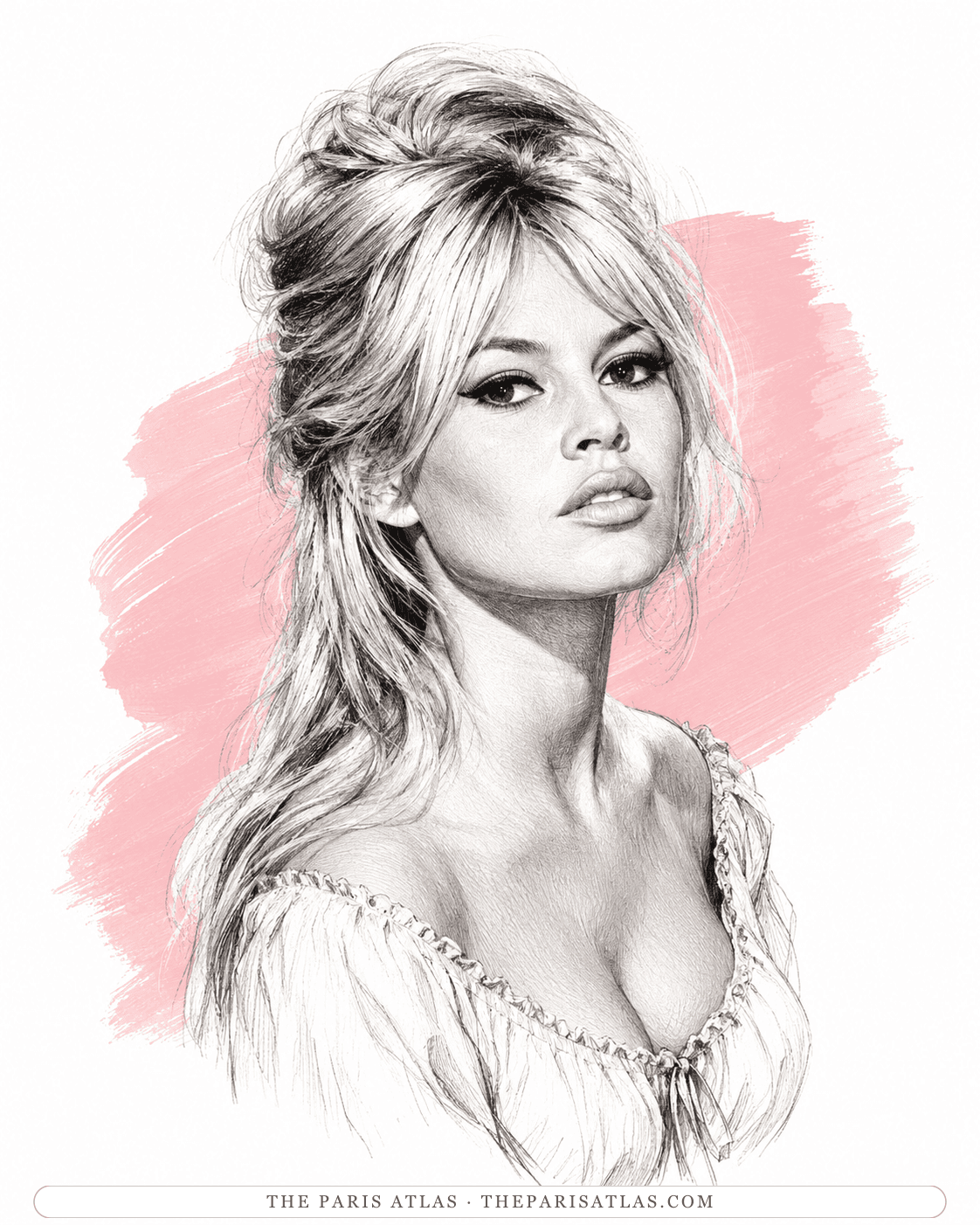
Gainsbourg wrote Harley Davidson and Comic Strip for Bardot, who recorded them at the height of her fame, and wrote Je t'aime… moi non plus for her during their affair. They recorded that duet together, and she asked him not to release it because of the scandal it would cause; he recorded it again with Jane Birkin instead.

Une sélection d'archives pour retracer la vie de Serge Gainsbourg for ever

Illustrated portrait of Fernand Léger

Fernand Léger

  • Painter
  • Filmmaker

Studied under

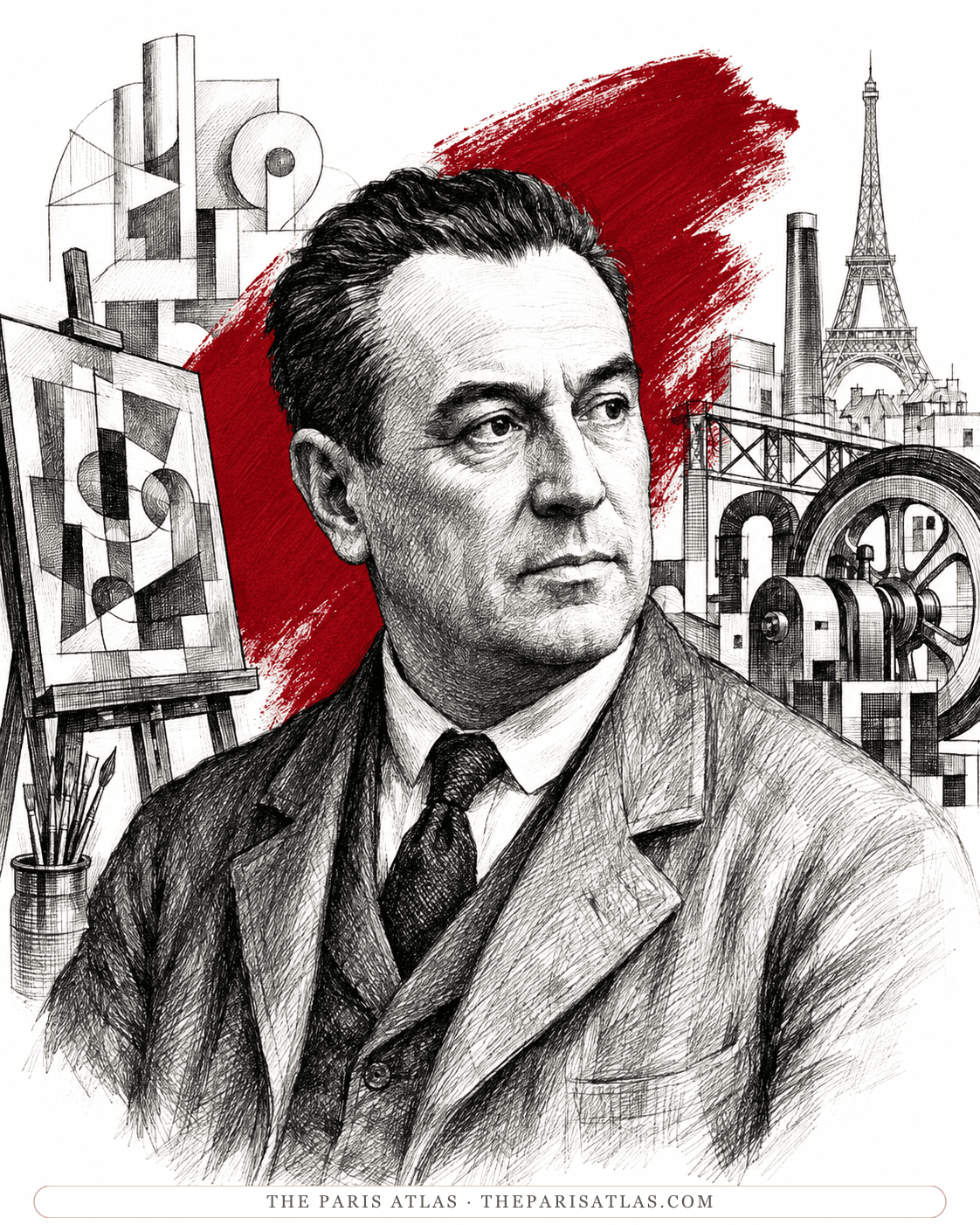
Before he was a songwriter, Gainsbourg meant to be a painter: the Encyclopædia Universalis notice records his fine-art studies under André Lhote and Fernand Léger. He gave painting up for music in the early 1950s, and went on describing his songs — and the rooms of his own house — in a painter's terms.

Serge Gainsbourg (1928-1991)

Questions about Serge Gainsbourg

Who was Serge Gainsbourg?

A French songwriter, singer and composer, born Lucien Ginsburg in Paris in 1928 and dead there in 1991. He trained as a painter, played piano in Paris cabarets, and wrote four decades of French popular song — for France Gall, Brigitte Bardot, Jane Birkin, Anna Karina and himself — including Le Poinçonneur des Lilas, Je t'aime… moi non plus and the album Histoire de Melody Nelson.

Where is Serge Gainsbourg buried?

In Montparnasse cemetery, at 3 boulevard Edgar-Quinet in the 14th arrondissement, in the cemetery's first division. The City of Paris marks the grave on its own map of the cemetery's most-visited burials. He is not buried at Père-Lachaise, which is where visitors most often look for him.

Can you visit Gainsbourg's house at 5 bis rue de Verneuil?

Yes, since 20 September 2023. He lived there from 1968 until his death in 1991, and the interior — black walls, pianos, collected objects — was left untouched for more than thirty years afterwards. His daughter Charlotte Gainsbourg opened it to the public as the Maison Gainsbourg. The graffiti-covered street wall outside can be seen at any hour, free.

Why is the wall outside his house covered in graffiti?

Because admirers began writing on it after he died in the house in March 1991, and never stopped. Lyrics, portraits, names and messages are painted over each other continuously, so the wall is never the same twice. It is one of the few pieces of unofficial public art in Paris that the city has left alone.

What is Je t'aime… moi non plus?

A duet whose title means "I love you… me neither". Gainsbourg wrote it for Brigitte Bardot during their affair and recorded it with her, but she asked him not to release that version because of the scandal it would cause. He recorded it again with the English actor Jane Birkin, whom he met on the film Slogan in 1968, and that recording became the song the world knows.

What is Histoire de Melody Nelson?

A twenty-eight-minute concept album from 1971: a story told in spoken and sung fragments over bass, drums and orchestra, about a middle-aged man who knocks a young girl off her bicycle with his Rolls-Royce. It sold poorly on release and is now routinely called his masterpiece, and one of the most influential French records ever made.

Why did Gainsbourg burn a 500-franc note on television?

To make a point about tax. On 11 March 1984, live on TF1's Sunday programme 7 sur 7, he said the state took 74 per cent of what he earned, called it a racket, and set fire to a 500-franc note on air. Destroying banknotes was against the law in France at the time, which was part of the point.

Was Gainsbourg a painter?

He trained as one. He studied at the École des Beaux-Arts under the painters André Lhote and Fernand Léger and meant to make his living at it, then gave painting up for music and played piano in Paris cabarets instead. The training stayed visible in how he worked: he talked about songs as constructions, and about his own house as an arrangement of diagonals and curves.

Sourced claims

Every connection the graph holds for Serge, with the evidence behind it.

Collaborated with · 1967

Anna Karina

Anna (1967) was a musical made for French television, written by Gainsbourg, who also appeared in it. It began Karina's singing career: two of its songs, Sous le soleil exactement and Roller Girl, outlived the broadcast.
Sight and Sound — Anna Karina obituary: the French New Wave in the flesh (2019)

Collaborated with · 1967–1968

Brigitte Bardot

Gainsbourg wrote Harley Davidson and Comic Strip for Bardot, who recorded them at the height of her fame, and wrote Je t'aime… moi non plus for her during their affair. They recorded that duet together, and she asked him not to release it because of the scandal it would cause; he recorded it again with Jane Birkin instead.

Une sélection d'archives pour retracer la vie de Serge Gainsbourg for ever

Studied under

Fernand Léger

Before he was a songwriter, Gainsbourg meant to be a painter: the Encyclopædia Universalis notice records his fine-art studies under André Lhote and Fernand Léger. He gave painting up for music in the early 1950s, and went on describing his songs — and the rooms of his own house — in a painter's terms.

Serge Gainsbourg (1928-1991)

References

References

The sources below include biographies, scholarly essays, interviews, and primary materials that informed this page. They reflect both the historical record and ongoing critical conversations about Serge Gainsbourg and their work.

  1. 1Une sélection d'archives pour retracer la vie de Serge Gainsbourg for ever

    Institut national de l'audiovisuel

    The French audiovisual archive's run through the whole life, with the broadcasts behind each stage of it.

    View source
  2. 2Une visite du 5 bis rue de Verneuil par Serge Gainsbourg

    Institut national de l'audiovisuel

    The 1979 television visit to 5 bis rue de Verneuil, and the house's afterlife as the Maison Gainsbourg.

    View source
  3. 3Serge Gainsbourg (1928-1991)

    Encyclopædia Universalis

    Reference notice: birth, the painting studies, the cabaret years, the 1958 breakthrough.

    View source
  4. 4Le jour où Serge Gainsbourg a brûlé un billet de 500 francs à la télé

    Institut national de l'audiovisuel
    View source
  1. 5Serge Gainsbourg brûle un billet de 500 francs

    Bibliothèque nationale de France
    View source
  2. 6France Gall, Serge Gainsbourg et Alain Goraguer à propos du Grand Prix de l'Eurovision

    Institut national de l'audiovisuel, 1965
    View source
  3. 7Cimetière du Montparnasse — map of the most searched-for burial places (English edition)

    Ville de Paris

    The city's own cemetery map, which places the grave in division 1 at Montparnasse.

    View source
i
Why these sources are here

These references anchor the page in the documented record and in the scholarly conversations around Serge Gainsbourg. Every claim on this page traces back to one or more of the works listed here.

Explore more resources