Starring — Film
- Actor
Brigitte Bardot
French actress and the biggest star of 1950s–60s French cinema; her one great art-film role was Camille in Jean-Luc Godard's Contempt (1963).
In images
Details
- 1934–2025
- 28 September 1934
- Paris, France
- 28 December 2025
- Saint-Tropez, France
- French
- Actor
About Brigitte Bardot
Brigitte Bardot became an international sensation with Roger Vadim's And God Created Woman (1956) and spent the next decade as the most famous French film star in the world — a commercial phenomenon as much as an actress.[1] Her image, more than any single performance, defined a certain idea of French glamour for a global audience.
Her most lasting role came when Jean-Luc Godard cast her as Camille in Contempt (1963), an art film built around, and partly against, her stardom; the producers had financed it for her fame, and Godard answered them with a cool, ironic portrait.[2] She retired from acting in 1973 to campaign for animal welfare.[3]
Brigitte Bardot began as a ballet pupil and teenage fashion model in Paris, then became one of the first French stars whose image traveled faster than her films. By the end of the 1950s, the initials ‘BB’ suggested not simply an actress but a hairstyle, a walk, a kind of unruly modern celebrity. The freedom projected by that image was carefully manufactured, fiercely watched and often costly to the woman inside it.
A Paris childhood and an early camera
Bardot was born in Paris's 15th arrondissement on 28 September 1934 and raised in a conservative, prosperous Catholic household.[4] She studied ballet at the Conservatoire de Paris and modeled while still a teenager. A cover of Elle brought her to the attention of filmmaker Marc Allégret and his assistant Roger Vadim.[1] The audition did not immediately produce a film, but Bardot and Vadim fell in love and married in 1952, when she was eighteen.
Her first screen years were busy rather than distinguished: light comedies, costume pictures and supporting roles made between Paris, Rome and London. The camera already understood what scripts did not. Bardot's mixture of directness and indifference made conventional scenes feel less settled, as if she might simply leave the movie built around her.
And God Created Woman
Vadim built And God Created Woman (1956) around that instability. Bardot plays Juliette, an orphan in Saint-Tropez whose desires reorder the lives of three men.[1] The film was not the birth of French New Wave cinema, but its location shooting, looseness and sexual candor announced the same impatience with respectable studio convention. Its American success turned Bardot into an international celebrity and Saint-Tropez into a global fantasy of the Riviera.
Fame made her an object of relentless pursuit. Photographers surrounded sets, houses and hospital doors; newspapers treated her marriages and pregnancies as public property. The apparent ease of the Bardot image concealed work, illness and repeated crises. Her celebrity matters to cultural history partly because it shows the modern publicity machine taking shape around a European film star in real time.
The actress inside the phenomenon
Several directors used the pressure around Bardot rather than pretending it did not exist. In Henri-Georges Clouzot's La Vérité (1960), she plays a young woman judged for a lover's death by a courtroom that has already condemned her way of living. Louis Malle made the surveillance itself the subject of Vie privée (1962), in which a hunted movie star begins to disappear beneath her public image.
Her richest role is Camille in Contempt, directed by Jean-Luc Godard. A screenwriter compromises himself on a film of the Odyssey and cannot understand why his wife has stopped loving him. Bardot's fame financed the production, but Godard did not reduce her to a decoration.[5] Camille's repeated changes of mood become the story's moral intelligence: she sees the betrayal before her husband can name it.
Songs, cinema and Serge Gainsbourg
Bardot also recorded pop songs and appeared in lavish television specials. Her collaboration with Serge Gainsbourg produced ‘Harley Davidson,’ ‘Comic Strip’ and the original 1967 recording of ‘Je t'aime… moi non plus.’ At Bardot's request, that version remained unreleased for almost two decades. The songs extended her screen persona into yé-yé pop while showing how precisely she could use a seemingly casual voice.
Retirement, advocacy and controversy
Bardot stopped acting in 1973, before she was forty. She sold personal belongings to help fund animal-welfare campaigns and established the Brigitte Bardot Foundation in 1986. The work became the center of her public life, from campaigns against seal hunting and slaughter practices to rescue and sterilization programs.
Her later public record cannot be reduced to advocacy. Bardot repeatedly made hostile statements about immigrants, Muslims and other groups and was convicted in France over inflammatory remarks. Those views belong in an honest account of her life alongside—not erased by—her work for animals. She died in Saint-Tropez on 28 December 2025, aged ninety-one.
Why Brigitte Bardot matters
Bardot connects several worlds at once: ballet training in Paris, postwar fashion publishing, commercial French cinema, the New Wave, chanson and the transformation of Saint-Tropez. Contempt is the central work, but the larger subject is how Parisian image-making turned a young model into a symbol the world believed it already knew.
Marianne
The sculptor Alain Aslan modelled Brigitte Bardot as Marianne, the figure who personifies the French Republic and whose bust stands in town halls across the country. He made it in 1968 and it was taken up as the official Marianne the following year.
Bardot was the first real person used for the Marianne bust. The figure had always been an idealised type rather than a portrait, and putting a living film star's face on the Republic was a departure. More than twenty thousand copies were eventually sold through the state casting workshop.
It set a pattern. Michèle Morgan modelled Marianne in 1972, Mireille Mathieu in 1978 and Catherine Deneuve in 1985, and the practice has continued since. Bardot's is still the best known of them.
What the films did to Saint-Tropez
Saint-Tropez was a working fishing port of about five thousand people when Roger Vadim shot And God Created Woman there in 1956.
And God Created Woman sold Saint-Tropez along with Bardot: the harbour, the light, the heat, a young woman walking barefoot through it. Within a few years the port had become the summer address of the European rich, and it has stayed that way for seventy years.
Bardot bought La Madrague, a house on the water outside the town, in 1958, and kept it for the rest of her life. It became the thing photographers besieged, and one of the reasons she stopped working was that there was nowhere in Saint-Tropez she could go unobserved.
Viva Maria!
In 1965 Louis Malle put Bardot opposite Jeanne Moreau in Viva Maria!, a comic western in which two women named Maria end up leading a revolution in a Central American country around 1907.
Viva Maria! is the only film Jeanne Moreau and Brigitte Bardot made together, and the casting was the point. Moreau was the serious one from the New Wave and Bardot the commercial phenomenon, and they play music-hall performers who invent the striptease by accident and then take up rifles.
Viva Maria! took three and a half million admissions in France, where it was among the year's biggest films, and did moderate business elsewhere. It changed nothing about how either woman was written about. Bardot went on being described as a body and Moreau as an actress — which is close to the joke the film itself had been making about the two of them.
Le Mépris, 1963
The film that matters most to art history among Bardot's sixty-odd is Jean-Luc Godard's Le Mépris, adapted from Alberto Moravia's novel, in which she plays Camille, the wife of a screenwriter hired to rewrite an adaptation of the Odyssey.
She was cast because the producers wanted her, and about half the budget went on her fee. They also wanted her body on screen, on the reasoning that it would return the investment. The long opening scene in which Camille lies naked and asks her husband to name each part of her in turn was shot after Godard believed the film finished, and added because the producers insisted. It is now usually read as the film's thesis rather than its concession. That is a fair description of how Godard used her throughout. He cast the most photographed woman in Europe, then made a film about what being looked at does to a marriage.
Its reputation has never settled. Colin MacCabe has called it the greatest work of art produced in postwar Europe. Roger Ebert thought it a failed experiment. Both were writing about the same performance.
Vie privée, and the year she tried to die
In September 1960, on her twenty-sixth birthday, Bardot attempted suicide near Menton. She had been famous for four years, was being pursued daily by photographers, and had recently given birth to her son Nicolas after a pregnancy the press covered in detail. She survived. There were further attempts, in 1958 and again on her forty-ninth birthday in 1983.
Fifteen months after the 1960 attempt she made Vie privée for Louis Malle, playing a film star hounded by photographers who attempts suicide in a bathtub and finally dies falling from a roof when a photographer's flash goes off. The film is her own life handed back to her as a script, and she agreed to it.
Leaving the cinema, and the foundation
Bardot stopped making films in 1973, at thirty-eight, having made about forty-five of them in eighteen years. She has been consistent ever since about why. She said in 2018 that she had suddenly understood the suffering animals endure on earth, and had stopped in order to look after them. Some people thought it a whim and others thought her mad, and she did not care. At thirty-eight she gave everything up for the animals, and it was the finest decision of her life. Asked in the same interview what the animals had done for her, she said that without them she would have killed herself.
She founded the Fondation Brigitte Bardot in 1986 and sold her possessions, including jewellery and personal effects, to fund it. In 1991 she gave it La Madrague, her own house at Saint-Tropez, in order to secure its recognition as a public-interest body. She went on living there. The foundation campaigns on seal hunting, ritual slaughter, bullfighting and the fur trade.
The convictions
Between 1997 and 2021 Bardot was convicted five times by French courts of inciting racial hatred, and fined on each occasion. The prosecutions followed statements published in her books and in an open letter about immigration, Islam and ritual slaughter. The largest fine, of €15,000, came in 2008 over a letter to the interior minister. She has also been fined for insulting public officials.
The convictions are a matter of court record and are noted here as such.
Her death, 28 December 2025
Brigitte Bardot died on 28 December 2025 at La Madrague, her villa at Saint-Tropez, aged 91. Her foundation announced the death. Her widower, Bernard d'Ormale, told Paris Match that she had tolerated well the two procedures she had undergone to treat the cancer that killed her. She was buried at the Saint-Tropez cemetery on 7 January 2026.
Life events
Born in Paris's 15th arrondissement on 28 September.
Models for French fashion magazines while studying ballet in Paris.
Makes her film debut and marries Roger Vadim.
And God Created Woman turns Bardot into an international star.
Buys La Madrague, a house on the water outside Saint-Tropez, and keeps it for the rest of her life.
Gives one of her strongest dramatic performances in La Vérité.
Plays a besieged celebrity in Louis Malle's Vie privée.
Stars as Camille in Jean-Luc Godard's Contempt.
Appears opposite Jeanne Moreau in Louis Malle's Viva Maria!, the only film the two of them made together.
Records songs with Serge Gainsbourg, including ‘Harley Davidson.’
The sculptor Alain Aslan models her as Marianne. She is the first real person used for the figure, and the bust is adopted the following year.
Retires from film at thirty-nine.
Establishes the Brigitte Bardot Foundation for animal welfare.
Dies in Saint-Tropez on 28 December, aged ninety-one.
Brigitte Bardot quotes
At thirty-eight I gave everything up for the animals. It is the finest decision of my life.A 38 ans, j'ai tout quitté pour les animaux. C'est la plus belle décision de ma vie.
Without the animals, I would have killed myself.Sans les animaux, je me serais suicidée.
I gave my youth and my beauty to men. I am giving my wisdom and my experience to the animals.J'ai donné ma jeunesse et ma beauté aux hommes, je donne ma sagesse et mon expérience aux animaux.
In the credits
People Brigitte Bardot Knew
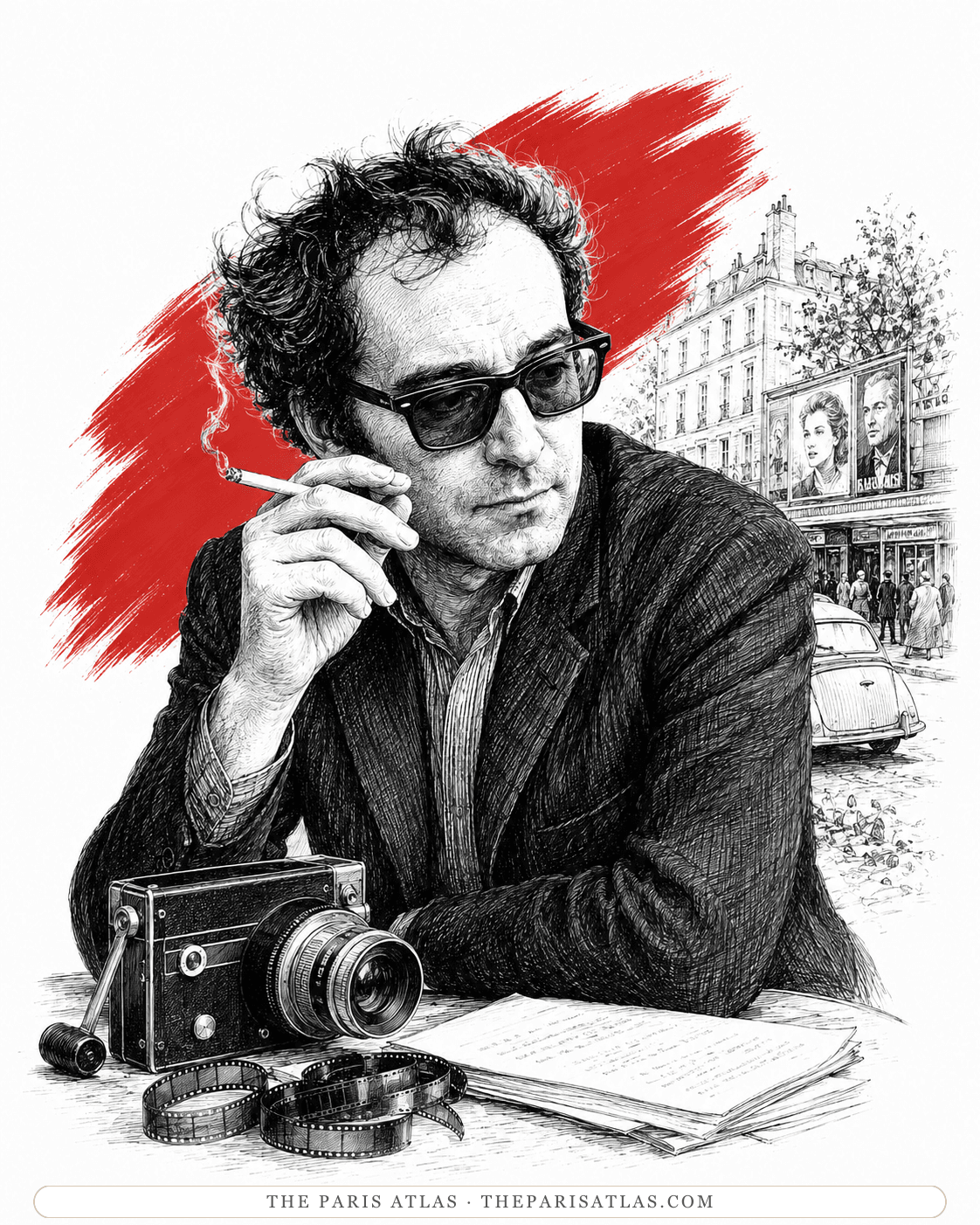
Jean-Luc Godard
- Filmmaker
- Critic
Collaborated with · 1963
Godard directed Bardot as Camille in Contempt (1963), building an art film around — and against — her stardom.
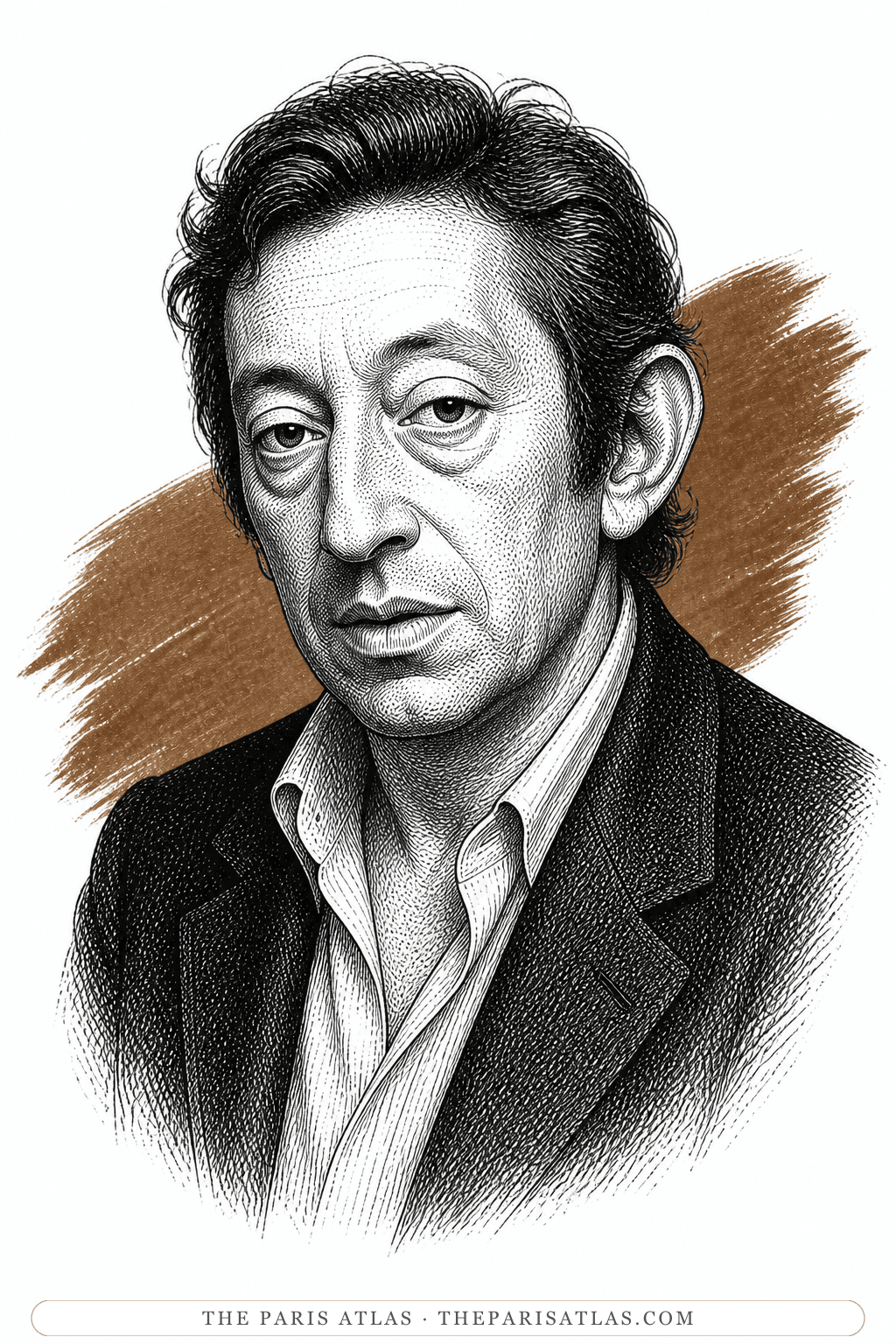
Serge Gainsbourg
- Singer
- Composer
- Pianist
Collaborated with · 1967–1968
Gainsbourg wrote Harley Davidson and Comic Strip for Bardot, who recorded them at the height of her fame, and wrote Je t'aime… moi non plus for her during their affair. They recorded that duet together, and she asked him not to release it because of the scandal it would cause; he recorded it again with Jane Birkin instead.
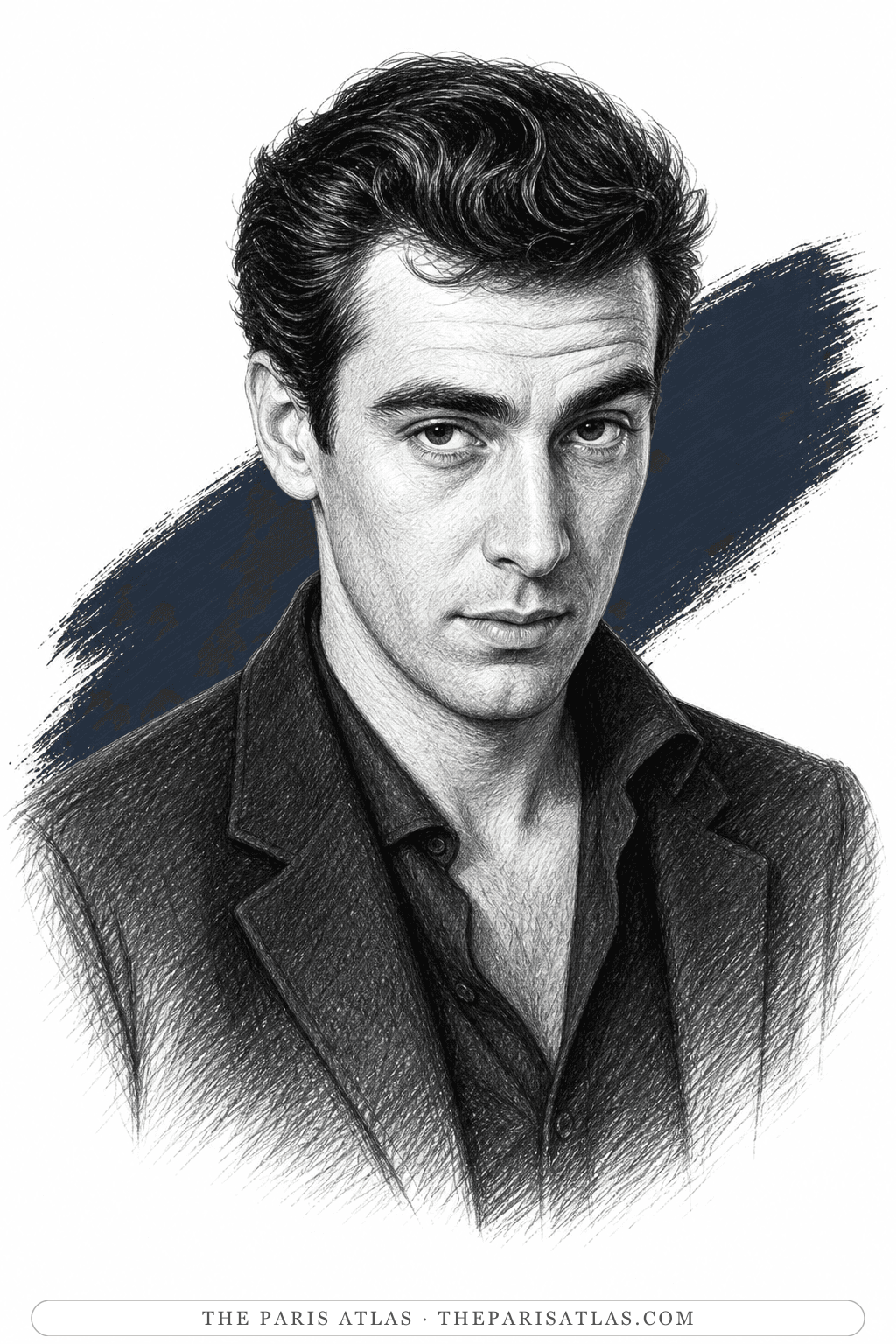
Roger Vadim
- Filmmaker
- Author
- Actor
Collaborated with · 1956–1957
Vadim directed Bardot in And God Created Woman (1956), the film that made her an international star, and again in The Night Heaven Fell (1957).
Movements
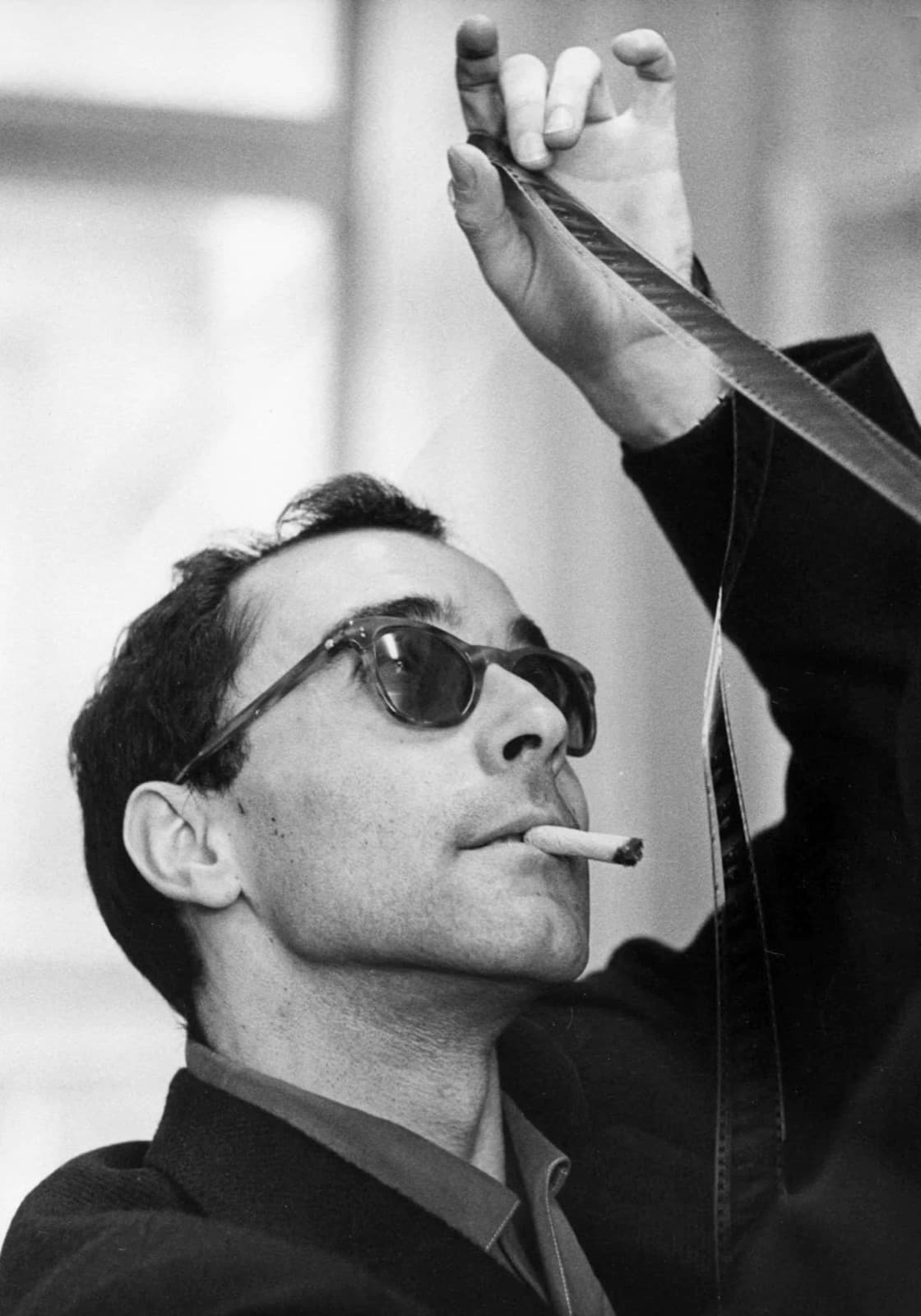
Film movement · c. 1958–1968
The French New Wave
A commercial star rather than a New Wave figure by formation, but her one great art-film role — Camille in Godard's Contempt (1963) — placed the biggest star in France at the center of the movement's grandest film.
Related pages
Questions about Brigitte Bardot
What was Brigitte Bardot famous for?
She was a French actor, model and singer whose breakthrough in And God Created Woman made her one of the world's most recognizable film stars. She later became a prominent animal-welfare campaigner.
Was Brigitte Bardot born in Paris?
Yes. She was born in Paris's 15th arrondissement on 28 September 1934 and trained in ballet at the Conservatoire de Paris.
What is Brigitte Bardot's best film?
Contempt (1963) is generally the richest intersection of Bardot's stardom and serious filmmaking. Jean-Luc Godard cast her as Camille, a woman who recognizes her husband's moral compromise before he does.
Why did Brigitte Bardot stop acting?
She retired in 1973, before turning forty, after two decades under intense public and press scrutiny. She redirected her celebrity and money toward animal-welfare campaigns.
Did Brigitte Bardot sing with Serge Gainsbourg?
Yes. Their collaborations included ‘Harley Davidson,’ ‘Comic Strip’ and the original recording of ‘Je t'aime… moi non plus,’ which was withheld from release until 1986.
Was Brigitte Bardot the model for Marianne?
Yes. Alain Aslan modelled her as the figure who personifies the French Republic in 1968, and the bust was adopted the following year. She was the first real person used for it, Marianne having always been an idealised type, and more than twenty thousand copies were eventually sold. Michèle Morgan followed in 1972, Mireille Mathieu in 1978 and Catherine Deneuve in 1985.
What did Bardot's films do to Saint-Tropez?
Made it. It was a working fishing port of about five thousand people when Roger Vadim shot And God Created Woman there in 1956, and the film sold the place along with its star. Within a few years it was the summer address of the European rich, and it has stayed that way. Bardot bought La Madrague outside the town in 1958.
Did Bardot and Jeanne Moreau ever work together?
Once, in Louis Malle's Viva Maria! in 1965, a comic western in which two women named Maria lead a revolution in Central America. It was the only film the two most famous French actresses of the period made together, and it took three and a half million admissions in France.
Connections and Sources
Associated with · 1963
The French New Wave
A commercial star rather than a New Wave figure by formation, but her one great art-film role — Camille in Godard's Contempt (1963) — placed the biggest star in France at the center of the movement's grandest film.
Collaborated with · 1963
Jean-Luc Godard
Godard directed Bardot as Camille in Contempt (1963), building an art film around — and against — her stardom.
Collaborated with · 1967–1968
Serge Gainsbourg
Gainsbourg wrote Harley Davidson and Comic Strip for Bardot, who recorded them at the height of her fame, and wrote Je t'aime… moi non plus for her during their affair. They recorded that duet together, and she asked him not to release it because of the scandal it would cause; he recorded it again with Jane Birkin instead.
Collaborated with · 1956–1957
Roger Vadim
Vadim directed Bardot in And God Created Woman (1956), the film that made her an international star, and again in The Night Heaven Fell (1957).
References
References
The sources below include biographies, scholarly essays, interviews, and primary materials that informed this page. They reflect both the historical record and ongoing critical conversations about Brigitte Bardot and their work.


2↑Le Mepris (Contempt)
WebsiteWikipediaUsed forProduction history of Le Mépris, including the casting, the budget and the added opening scene.

3↑Brigitte Bardot, 1960s French film symbol turned animal-rights activist, dies at 91
PeriodicalAssociated Press, 2025Used forBiographical overview covering her film stardom, animal advocacy, later controversies and death.
4↑Brigitte Bardot (1934–2025) — authority record
Official recordBibliothèque nationale de FranceUsed forAuthority record for Bardot's names, occupations, birth and death details.
5↑Le Mépris, Jean-Luc Godard's incandescent poem
WebsiteFestival de Cannes, 2023Used forFestival de Cannes account of Contempt, its production and Bardot's role as Camille.
6Brigitte Bardot: Sans les animaux, je me serais suicidee
WebsiteLe MondeUsed forLe Monde interview of 20 January 2018, the source for her account of leaving the cinema for the animals.
7Brigitte Bardot: Mon isolement, c'est un choix
WebsiteLe MondeUsed forLe Monde interview of 28 September 2024, on age and solitude.
8Fondation Brigitte Bardot
WebsiteFondation Brigitte BardotUsed forThe Fondation Brigitte Bardot's own record of its founding, its funding and her gift of La Madrague.
9Brigitte Bardot, French film icon, dies at 91
WebsiteFrance 24Used forReport of her death on 28 December 2025, announced by her foundation.
i
Why these sources are here
These references anchor the page in the documented record and in the scholarly conversations around Brigitte Bardot. Every claim on this page traces back to one or more of the works listed here.
 Explore more resources