The Paris AtlasCharting the artists, works, and places worth returning to.
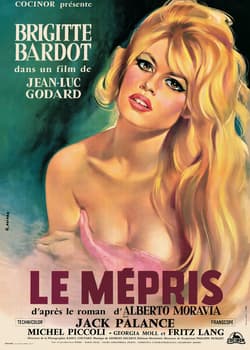
Poster for Contempt (Le Mépris, 1963), Jean-Luc Godard's film with Brigitte Bardot

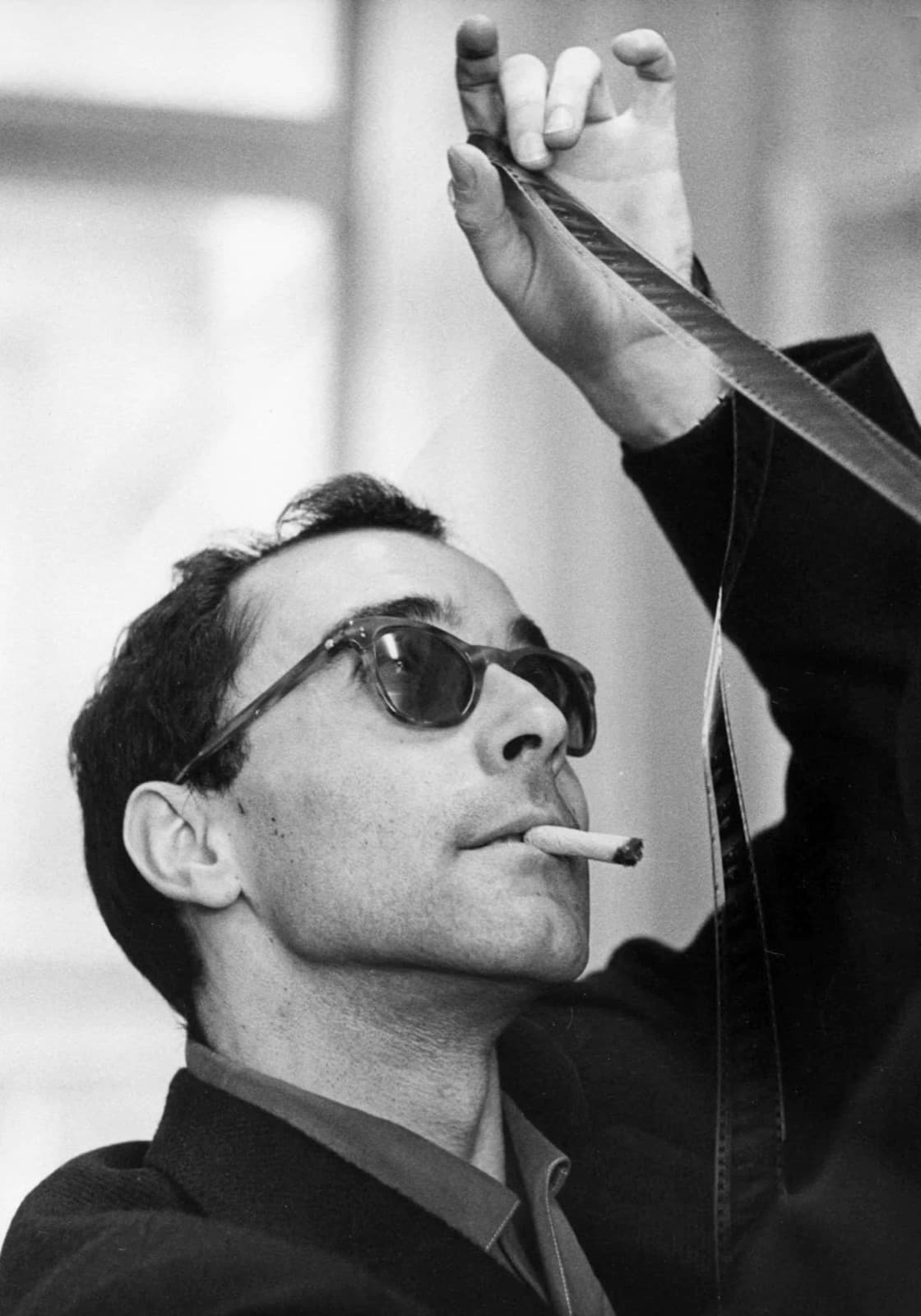
Archival photograph

Film

Contempt

Le Mépris

by Jean-Luc Godard

Contempt is Jean-Luc Godard's biggest and most international film: a widescreen color production about the making of a film, and about a marriage falling apart inside it. Michel Piccoli plays a screenwriter hired to rewrite Fritz Lang's adaptation of The Odyssey for a crass American producer; over a single day his wife, played by Brigitte Bardot, comes to feel a contempt for him she cannot explain, after he seems to hand her to the producer. Godard turns the clash of art and money into the film's real subject — a clash he was living out with his own producers, who had financed the picture for Bardot's fame and demanded she appear nude. It is the New Wave's grandest statement on the death of classical cinema.

Created
1963
Form
About 103 minutes, color — Franscope widescreen

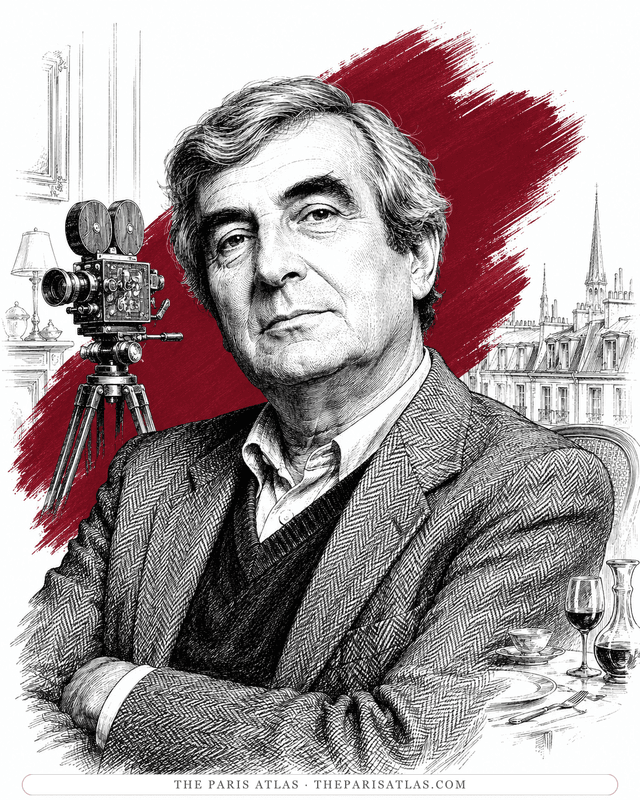
About Jean-Luc Godard

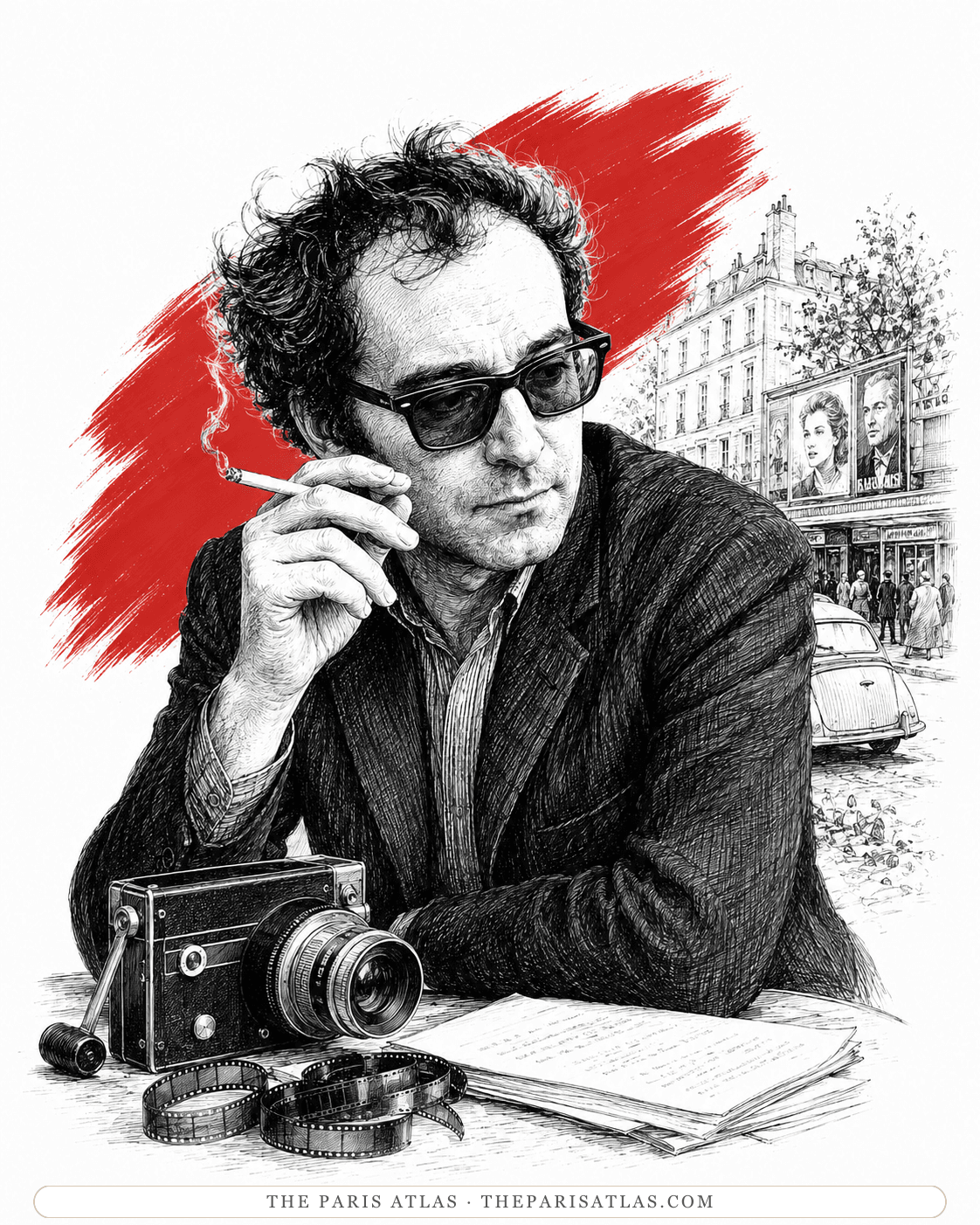
Illustrated portrait of Jean-Luc Godard
Jean-Luc Godard

5 works on our shelves

A film about a film

Paul Javal, a French playwright turned screenwriter, is hired to fix Fritz Lang's troubled adaptation of Homer's Odyssey for Jeremy Prokosch, a loud American producer who understands nothing of what Lang is doing. Lang, playing himself, stands for the classical cinema Godard revered; Prokosch stands for the money that was killing it.

Around that quarrel Godard builds a film in the widest possible frame — Raoul Coutard shooting in Franscope and color, the camera gliding along the ochre villa and the blue sea. Georges Delerue's theme returns like a tide. It is Godard at his most spacious, and his most mournful.

The marriage

When Prokosch invites Camille to ride alone in his sports car and Paul seems to allow it — arriving late himself — Camille begins to suspect that her husband would use her to advance his career. From that suspicion grows a contempt she cannot fully explain, and the marriage comes apart.

Much of the film is a single long scene in the couple's half-furnished apartment, the two circling the same wound for half an hour. The second half moves to Capri and the Casa Malaparte, where Camille decides to leave with Prokosch. The two are killed in a car crash; Lang goes on filming The Odyssey, and Paul leaves the island.

Art and money

The film's subject was also its making. Godard's producers — Carlo Ponti and the American Joseph E. Levine — had financed the picture for Bardot, the biggest star in France, and were unhappy that it contained no nudity. Godard added the now-famous opening scene, Camille lying nude as Paul catalogues her body, and shot it through red, then white, then blue filters, draining it of the eroticism they wanted.

Casting Bardot in a demanding art film, and answering the producers inside the film itself, is the New Wave's collision of popular stardom and auteur cinema made literal. Contempt is a movie about the compromise of making movies, filmed at the exact scale of the compromise.

Timeline

  1. 1954

    Alberto Moravia publishes the novel Il disprezzo (A Ghost at Noon), the film's source.

  2. 1963

    Godard films in Rome at Cinecittà and on Capri at the Casa Malaparte, with Raoul Coutard.

  3. December 1963

    Released in France — Godard's biggest-budget and most international film.

  4. 1995

    Delerue's theme “Camille” returns to wide audiences in Martin Scorsese's Casino.

  5. 2023

    A 4K restoration from the original negative returns the film to cinemas.

Frequently asked questions

What is Contempt about?

A French screenwriter, Paul, is hired to rewrite Fritz Lang's film of The Odyssey for a crass American producer. Over a single day his wife, Camille, comes to feel contempt for him after he seems to offer her to the producer, and their marriage collapses. Jean-Luc Godard directed it in 1963 from Alberto Moravia's novel; it is also a film about the death of classical cinema.

How does Contempt end?

Camille decides to leave Paul for the producer, Prokosch. The two are killed in a car crash on the way from Capri. Fritz Lang goes on filming The Odyssey, and Paul leaves the island alone.

Why is the opening nude scene shot through colored filters?

Godard's producers had financed the film for Brigitte Bardot's fame and demanded nudity the finished film lacked. He added the opening scene of Camille lying nude while Paul lists her features, and shot it through red, white, and blue filters — deliberately draining the eroticism the producers wanted, and making the film's argument about art and money part of its own images.

Who is in Contempt?

Brigitte Bardot plays Camille and Michel Piccoli her husband Paul; Jack Palance is the American producer Prokosch, and the director Fritz Lang plays himself, directing an adaptation of The Odyssey. Godard appears as Lang's assistant director. Raoul Coutard shot it; Georges Delerue wrote the score.

Is Contempt a French New Wave film?

Yes — it is Godard's grandest, a widescreen color production about the making of a film. Casting France's biggest star in a demanding art film, and turning his own fights with the producers into the film's subject, make it the movement's fullest statement on art, commerce, and the death of classical cinema.

Related videos

Official uploads only: trailers, performances, and works this one inspired.

Contempt — trailer (Rialto Pictures)

The US distributor's trailer for the film's re-release.

In the atlas

What the graph records about this work — every claim carries its citation.

Associated with · 1963

The French New Wave

Godard's biggest and most international film: a widescreen meditation on the making of a film and the death of classical cinema, turning his own fights with the producers over Bardot's stardom into its subject.
The Criterion Collection — Contempt; Encyclopaedia Britannica — New Wave (French film movement)

More by Jean-Luc Godard