Jacques Rivette
- Filmmaker
- Critic
Collaborated with · 1950
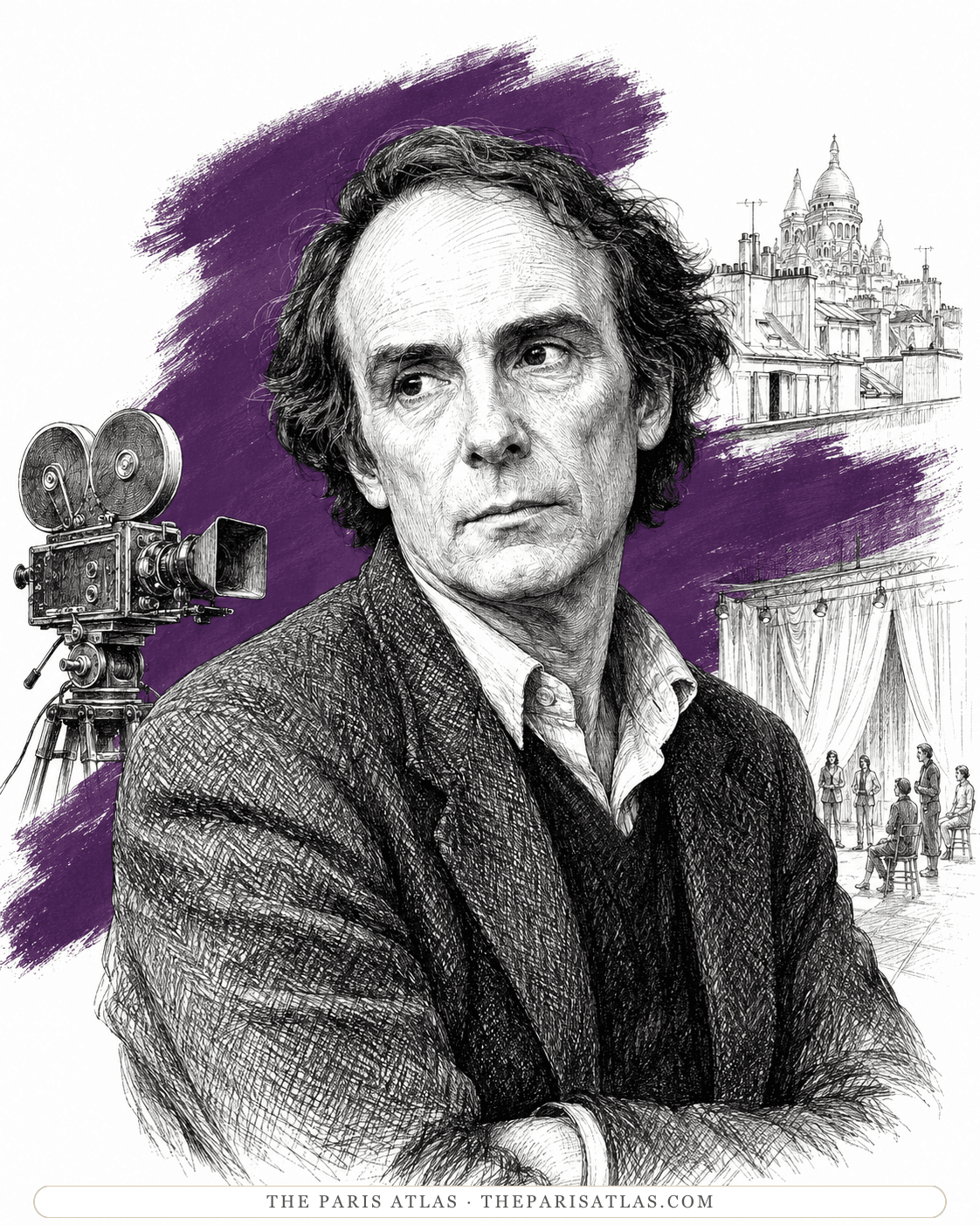
Rivette wrote for Rohmer's La Gazette du cinéma in 1950 and worked alongside him at Cahiers du cinéma, where he succeeded Rohmer as editor-in-chief in 1963.
Critic and editor of Cahiers du cinéma who became the New Wave's most literary director. His Six Moral Tales — My Night at Maud's, Claire's Knee — built a body of talkative, closely observed films about desire and hesitation.
Éric Rohmer was a French film director who made films about people talking themselves into and out of decisions. He was the oldest of the Cahiers du cinéma critics who became the New Wave, and the last of them to succeed.
He was born in Tulle, in central France, in 1920, under the name Maurice Schérer, and he died in Paris on 11 January 2010. He kept his private life so thoroughly hidden that even his birth date is uncertain: he gave reporters several different ones over the years.[1]
His films come in named series. The Six Moral Tales in the 1960s and early 1970s, the Comedies and Proverbs in the 1980s, and the Tales of the Four Seasons in the 1990s. Each film sets a person a small romantic problem and then watches them reason about it, at length, usually on holiday.[2]
He shot with tiny crews, natural light and unknown actors, spent almost no money, and made films into his late eighties. My Night at Maud's, released in 1969, was nominated for two Academy Awards and made him internationally known at forty-nine.[1]
The director known as Éric Rohmer was born Maurice Schérer, in Tulle in the Corrèze, in 1920. Beyond that, the record is what he chose to allow.
He gave his date of birth variously as 21 March 1920, 1 December 1920 and 4 April 1923, and his birthplace sometimes as Nancy rather than Tulle. The pseudonym is generally explained as a joining of the director Erich von Stroheim and the thriller novelist Sax Rohmer. He adopted it partly so that his mother, a devout Catholic, would not learn that her son made films; by most accounts she died without knowing.[3]
He came from a provincial Catholic family, took a degree in literature, and taught school in Clermont-Ferrand and then in Paris. In 1946 he published a novel, Élisabeth, under yet another name, Gilbert Cordier.[3]
Rohmer came to films late and through writing. In the late 1940s he ran a film club in Paris where he met Jean-Luc Godard, François Truffaut, Jacques Rivette and Claude Chabrol, all of them roughly a decade younger than he was.[4]
He began writing criticism, joined Cahiers du cinéma, and in 1957 published Hitchcock with Claude Chabrol, one of the first book-length studies to treat Alfred Hitchcock as a serious artist. In the same year he became the magazine's editor.[1]
He held the post until 1963, when the younger critics — Rivette chief among them — removed him. They wanted the magazine to be political; Rohmer, a Catholic and a conservative, did not. He left and did not return.[5]
Rohmer made his first feature, The Sign of Leo, in 1959, with money from Claude Chabrol's production company. An American musician in Paris expects an inheritance, does not get it, and slides into destitution over a summer. The distributor recut it and it disappeared.[1]
For most of the 1960s he made short films and educational television programmes for French schools broadcasting, on subjects from Louis Lumière to Pascal to Stéphane Mallarmé. He was in his forties, teaching and filming, while Godard and Truffaut were internationally famous.[3]
In 1962 he founded a production company, Les Films du Losange, with Barbet Schroeder. It gave him what he needed for the rest of his career: the ability to make films cheaply enough that they did not have to succeed.[1]
Rohmer had written six stories on one plan: a man committed to one woman meets a second, is tempted, thinks about it at length, and returns to the first. He filmed them over ten years, but not in the order he had numbered them. My Night at Maud's is third in the cycle and reached cinemas fourth, because Jean-Louis Trintignant was not free to play the lead when Rohmer wanted to shoot it.[2]
The first two, The Bakery Girl of Monceau and Suzanne's Career, were shorts made in 1963. La Collectionneuse followed in 1967. My Night at Maud's, in 1969, is the one that broke through: a Catholic engineer in Clermont-Ferrand spends a night arguing about Pascal's wager and Marxism with a divorced doctor, in her flat, and does not sleep with her. It was nominated for the Academy Award for best foreign-language film and, the following year, for best original screenplay.[1]
Claire's Knee followed in 1970 and Love in the Afternoon in 1972. The word moral in the series title does not mean the films deliver a lesson. Rohmer used it in the older French sense of the moralistes: writers who describe how people actually behave and what they tell themselves about it.[2]
Rohmer's method was fixed and unusual. He shot on location with a crew that could fit in a car, used natural light and direct sound, worked with young and often unknown actors, and rehearsed for weeks so that heavily written dialogue would sound like people talking.[3]
He kept his own costs down to the point of eccentricity. He never owned a car and travelled by Métro. He worked from a small office at Les Films du Losange and typed his own scripts. Several of his films cost less than a single week of a normal production.[3]
The result is a body of work that looks like documentary and is not. Almost every line is written. The films are full of weather, holidays, beaches, mountains and provincial towns, and nothing much happens in any of them except that people explain themselves.
The second series, six films made between 1981 and 1987, each takes a French proverb as its starting point. The Aviator's Wife, A Good Marriage, Pauline at the Beach, Full Moon in Paris, The Green Ray and Boyfriends and Girlfriends.[2]
The Green Ray, in 1986, is the most admired. A young woman in Paris loses her summer holiday plans, drifts miserably from place to place, and finally sees the optical effect of the title at sunset. Much of the dialogue was improvised by the actress, Marie Rivière, within Rohmer's structure. It won the Golden Lion at Venice.[2]
The films of this series are about younger people than the Moral Tales, and the talk is less philosophical and more anxious. Rohmer was in his sixties and filming people in their twenties, and he did it without condescension, which is the reason the series has aged as well as it has.
The third series ran from 1990 to 1998: A Tale of Springtime, A Tale of Winter, A Summer's Tale and Autumn Tale. Each is set in the season of its title and turns on a chance encounter or a misunderstanding that a conversation could have solved.[2]
A Tale of Winter, in 1992, is the one that carries the most weight. A woman who lost the address of the man she loves refuses to settle for anyone else for five years, on no evidence at all, and Rohmer takes her faith entirely seriously.
Alongside the contemporary series Rohmer made films set in the past, each shot in a deliberately artificial way. The Marquise of O, from Kleist's story, won the Grand Prix at Cannes in 1976. Perceval le Gallois, in 1978, staged a medieval verse romance on an obviously fake studio set with gold skies and toy castles.[1]
The Lady and the Duke, in 2001, tells the French Revolution from the viewpoint of a royalist Scottish woman in Paris, with the actors filmed against painted backdrops assembled digitally. It was attacked in France for its politics. Triple Agent, in 2004, concerns a Russian émigré general in 1930s Paris who may be working for the Soviet secret police.[1]
His last film, The Romance of Astrea and Celadon, came out in 2007, when he was in his late eighties.
Éric Rohmer died in Paris on 11 January 2010. He was eighty-nine. He had received the Golden Lion for lifetime achievement at Venice in 2001.[1]
He made roughly fifty films across half a century, almost all of them profitable, because they cost so little that they did not need to be popular.
Rohmer proved that a film could be built entirely out of talk and still hold an audience. His characters reason aloud about what they should do, at length and often dishonestly, and the drama is the gap between what they say and what they want.
He also solved the economic problem that ends most directors' careers. By owning his production company, working with small crews and paying almost nothing for locations, he made films for fifty years without ever having to make one he did not choose. Directors from Hong Sang-soo to Richard Linklater and Noah Baumbach have worked from his example, and the modern low-budget conversation film is largely his invention.
The magazine Rohmer joined and later edited was André Bazin's Cahiers du cinéma. Before it, in 1950, he had founded a short-lived journal of his own, La Gazette du cinéma, where the young Jean-Luc Godard and Jacques Rivette also wrote their first criticism.[4]
Born Maurice Schérer at Tulle in the Corrèze. He later gives reporters three different birth dates and two birthplaces.
Takes a degree in literature and begins teaching school.
Teaches at Clermont-Ferrand, the town he later sets My Night at Maud's in.
Publishes a novel, Élisabeth, under the name Gilbert Cordier.
Runs a film club in Paris where he meets Jean-Luc Godard, François Truffaut, Jacques Rivette and Claude Chabrol, all about a decade younger.
Adopts the name Éric Rohmer, joining the director Erich von Stroheim to the thriller novelist Sax Rohmer, partly so that his devout mother will not learn he makes films.
Founds the short-lived journal La Gazette du cinéma, where the young Jean-Luc Godard and Jacques Rivette also write.
Begins writing criticism for Cahiers du cinéma.
Publishes Hitchcock with Claude Chabrol, an early book-length case for Alfred Hitchcock as a serious artist.
Becomes editor of Cahiers du cinéma.
Directs his first feature, The Sign of Leo, financed by Claude Chabrol's company Ajym Films. The distributor recuts it and it fails.
Shoots his first feature, The Sign of Leo, which is not released until 1962.
Founds the production company Les Films du Losange with Barbet Schroeder.
Is removed as editor of Cahiers du cinéma by the younger critics, who want the magazine to be political. He does not return.
Films the first two Moral Tales as shorts, The Bakery Girl of Monceau and Suzanne's Career.
Begins making educational television films for French schools broadcasting, on subjects from Louis Lumière to Pascal.
Directs La Collectionneuse, the third Moral Tale, shot on the Mediterranean coast with a tiny crew.
Directs My Night at Maud's, in which a Catholic engineer argues about Pascal's wager all night with a divorced doctor and does not sleep with her.
My Night at Maud's is nominated for the Academy Award for best foreign-language film.
Directs Claire's Knee, the fifth Moral Tale.
My Night at Maud's is nominated for the Academy Award for best original screenplay.
Directs Love in the Afternoon, completing the Six Moral Tales after ten years.
Directs The Marquise of O, from Kleist's story, and wins the Grand Prix at Cannes.
Directs Perceval le Gallois, staging a medieval verse romance on a deliberately artificial studio set.
Directs The Aviator's Wife, opening the Comedies and Proverbs series, each film built on a French proverb.
Directs A Good Marriage.
Directs Pauline at the Beach.
Directs Full Moon in Paris.
Directs The Green Ray, much of it improvised by the actress Marie Rivière inside his structure. It wins the Golden Lion at Venice.
Directs Boyfriends and Girlfriends, closing the Comedies and Proverbs.
Directs A Tale of Springtime, opening the Tales of the Four Seasons.
Directs A Tale of Winter, about a woman who waits five years for a man whose address she has lost.
Directs A Summer's Tale.
Directs Autumn Tale, closing the four-season series.
Directs The Lady and the Duke, filming the French Revolution from a royalist viewpoint against digitally assembled painted backdrops.
Receives the Golden Lion for lifetime achievement at the Venice film festival.
Directs Triple Agent, about a Russian émigré general in 1930s Paris who may be working for the Soviet secret police.
Directs The Romance of Astrea and Celadon, his last film, in his late eighties.
Dies in Paris on 11 January, aged eighty-nine.
Collaborated with · 1950
Rivette wrote for Rohmer's La Gazette du cinéma in 1950 and worked alongside him at Cahiers du cinéma, where he succeeded Rohmer as editor-in-chief in 1963.
Collaborated with · 1950
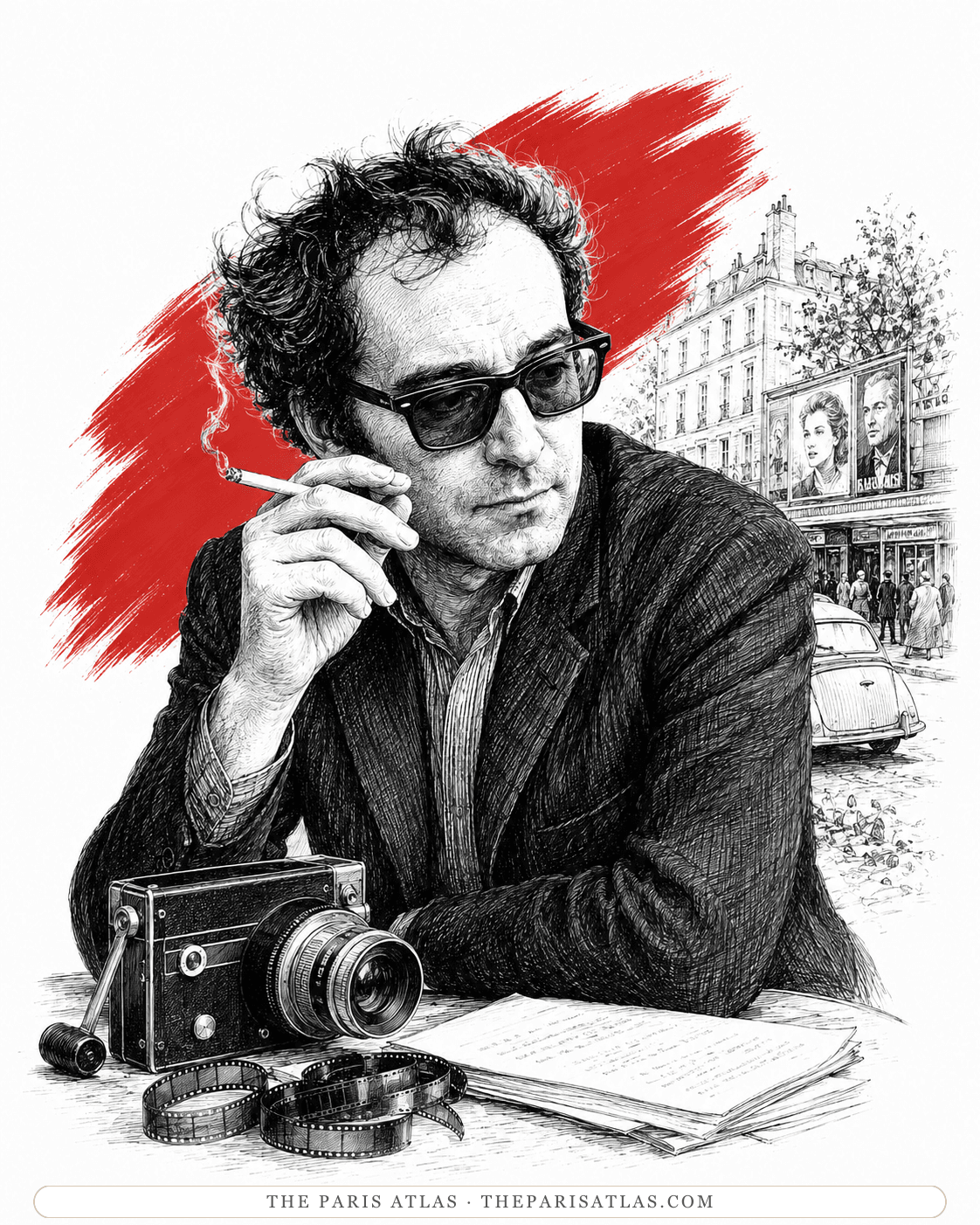
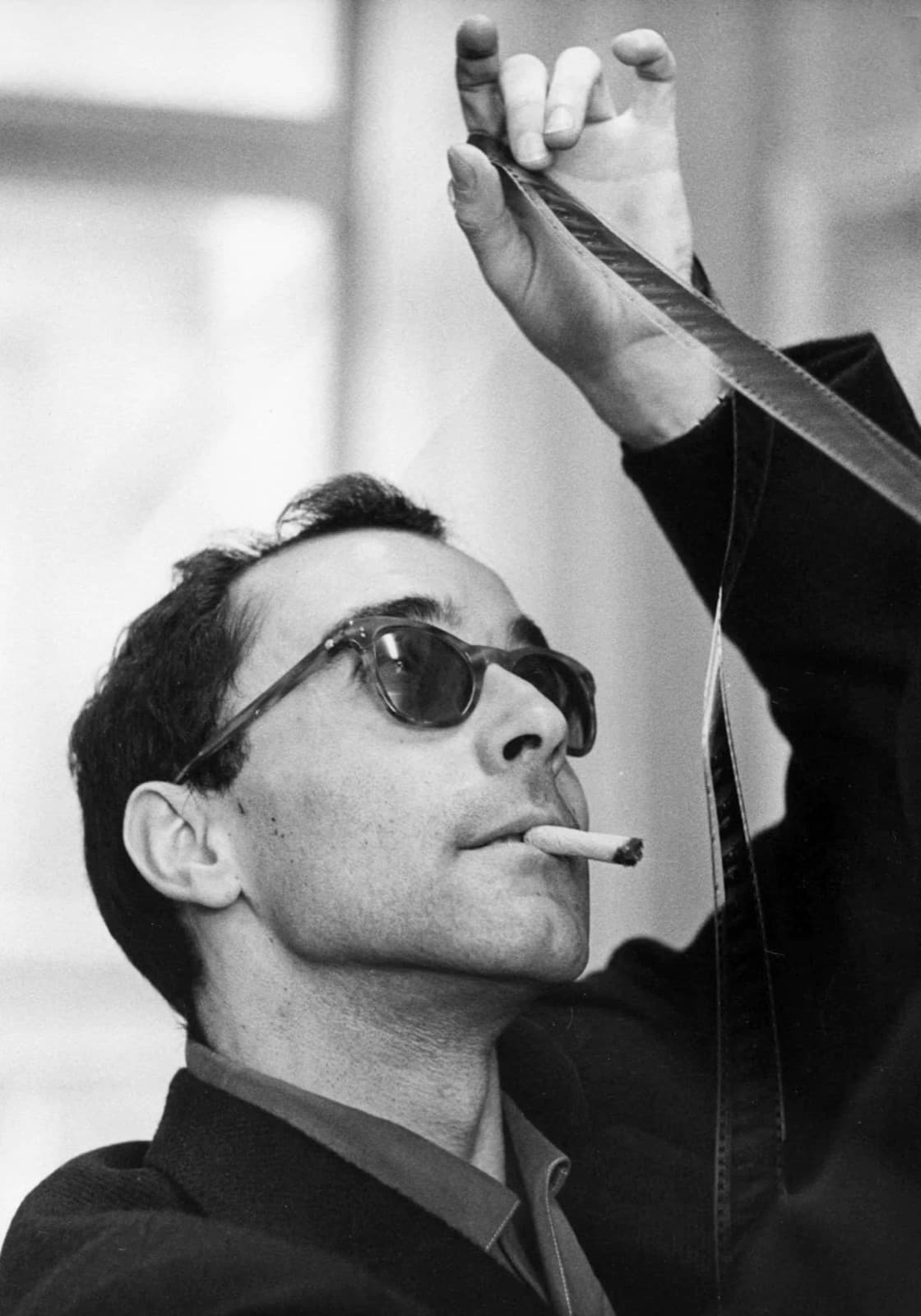
Godard wrote for Rohmer's short-lived journal La Gazette du cinéma in 1950 and acted in Rohmer's early short Présentation, ou Charlotte et son steak. Both were part of the Cahiers du cinéma circle.
Film movement · c. 1958–1968
One of the Cahiers du cinéma critics who became the New Wave. Rohmer edited the magazine from 1957 to 1963 and was the oldest of the group and the last to establish himself as a director, reaching his first success with My Night at Maud's in 1969.
A French film director, born Maurice Schérer at Tulle in 1920 and died in Paris in 2010. He was the oldest of the Cahiers du cinéma critics who became the New Wave and the last of them to succeed. He made about fifty films, grouped into named series, in which people talk at length about small romantic decisions.
My Night at Maud's, from 1969, in which a Catholic engineer spends a night arguing about Pascal's wager with a divorced doctor and does not sleep with her. After that, Claire's Knee from 1970 and The Green Ray from 1986.
Six films made between 1963 and 1972 on a single plan: a man committed to one woman meets a second, is tempted, thinks about it at length, and returns to the first. They are The Bakery Girl of Monceau, Suzanne's Career, La Collectionneuse, My Night at Maud's, Claire's Knee and Love in the Afternoon. Rohmer used moral in the older French sense of describing how people behave, not of delivering a lesson.
Because he hid it. He was intensely private, gave reporters his birthday as 21 March 1920, 1 December 1920 and 4 April 1923 at different times, and named his birthplace as both Tulle and Nancy. He took the name Éric Rohmer in part so that his mother would not learn that he made films.
He shot on location with a crew small enough to fit in a car, used natural light and direct sound, cast young and often unknown actors, and rehearsed for weeks so that written dialogue would sound spontaneous. He co-owned his production company, Les Films du Losange, from 1962. Several of his films cost less than one week of a conventional production, which meant they did not have to be popular to make money.
Directors who build films out of conversation and small social situations rather than plot: Hong Sang-soo, Richard Linklater and Noah Baumbach among them. The modern low-budget talking film, shot on real locations with a handful of actors, follows the working method he settled on in the 1960s.
Associated with · 1959
One of the Cahiers du cinéma critics who became the New Wave. Rohmer edited the magazine from 1957 to 1963 and was the oldest of the group and the last to establish himself as a director, reaching his first success with My Night at Maud's in 1969.
Collaborated with · 1950
Rivette wrote for Rohmer's La Gazette du cinéma in 1950 and worked alongside him at Cahiers du cinéma, where he succeeded Rohmer as editor-in-chief in 1963.
Collaborated with · 1950
Godard wrote for Rohmer's short-lived journal La Gazette du cinéma in 1950 and acted in Rohmer's early short Présentation, ou Charlotte et son steak. Both were part of the Cahiers du cinéma circle.
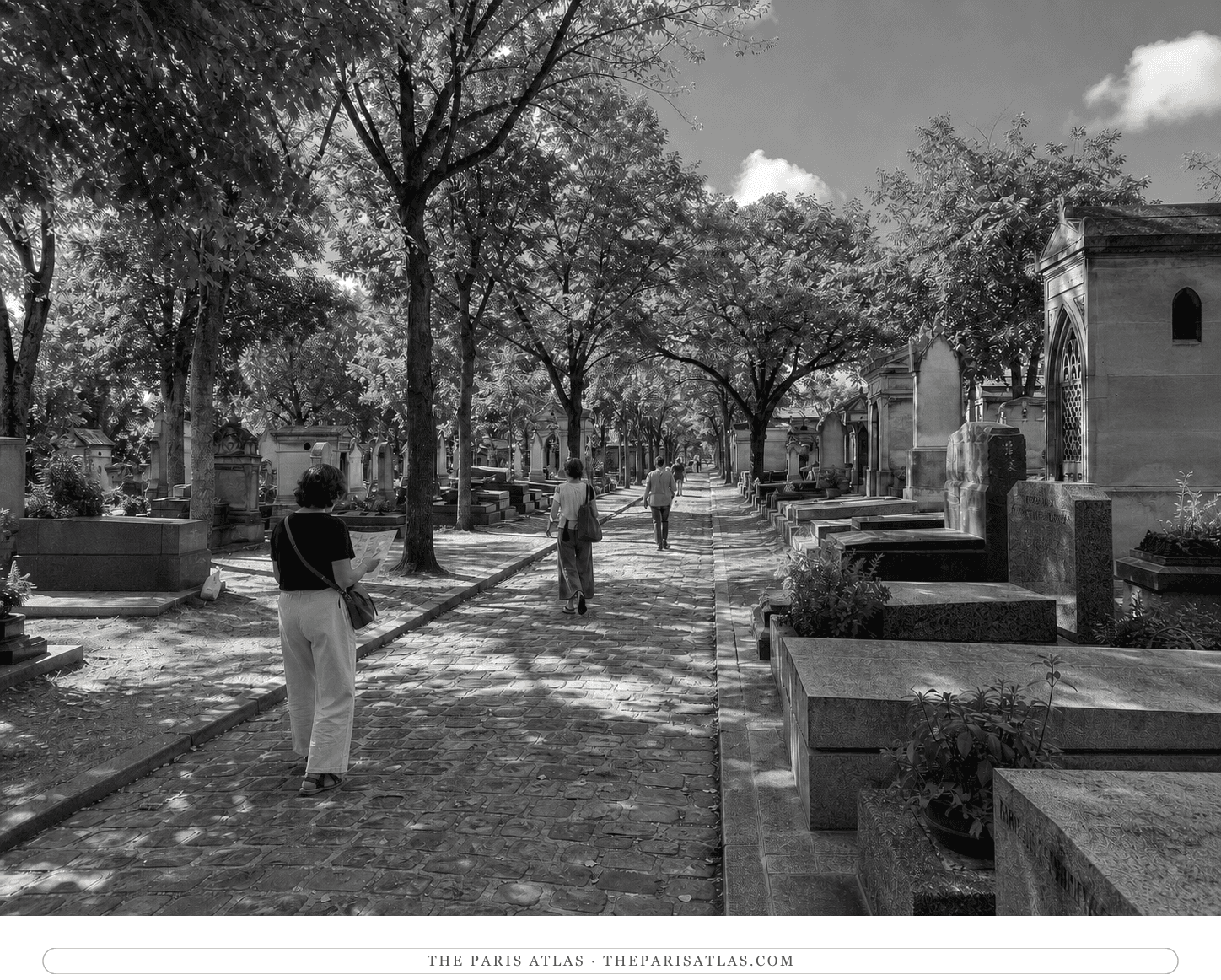
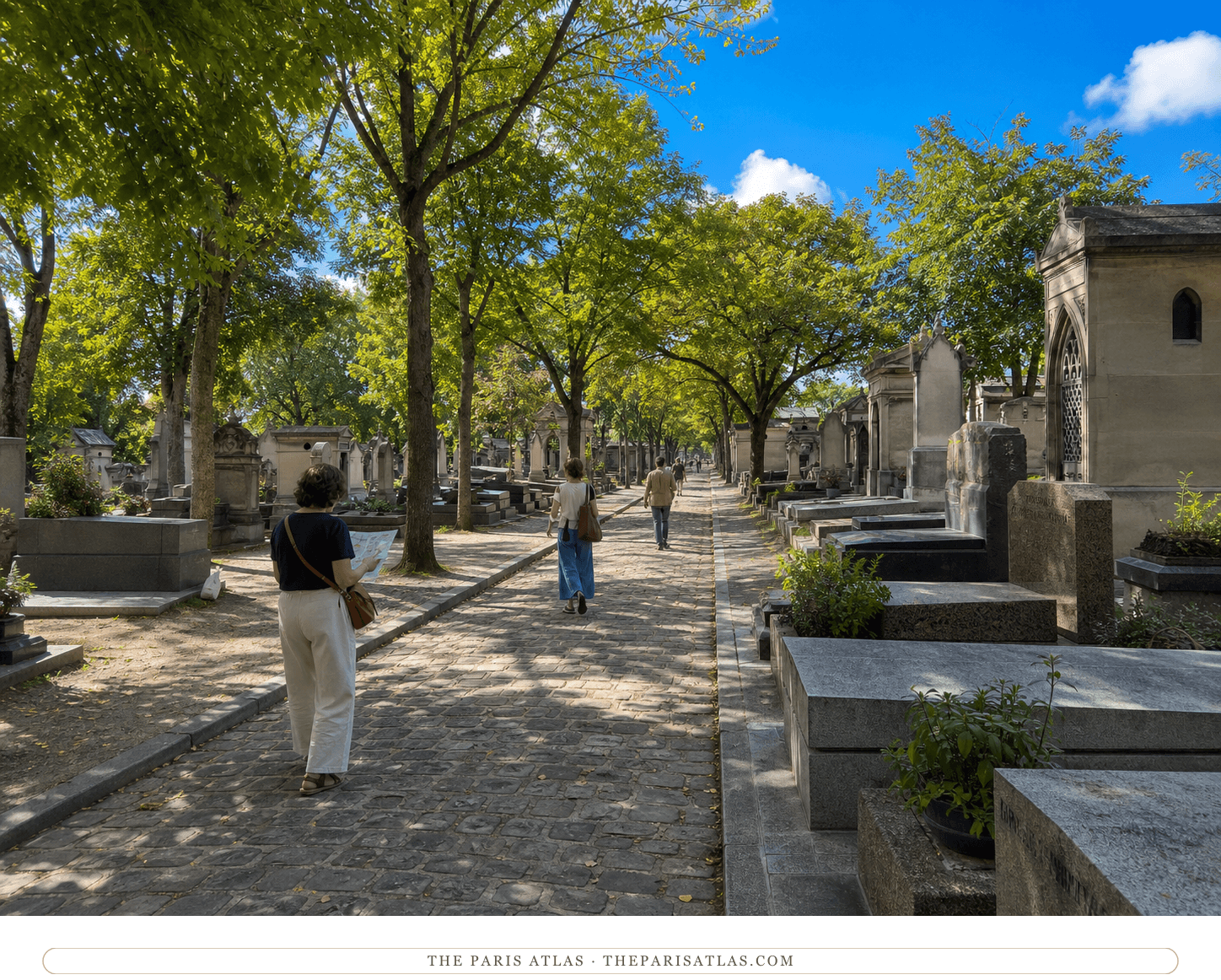
Buried at · 2010
Buried in division 13 after his death in Paris on 11 January 2010.
The sources below include biographies, scholarly essays, interviews, and primary materials that informed this page. They reflect both the historical record and ongoing critical conversations about Éric Rohmer and their work.

Web source consulted for documented facts and historical context presented on the Éric Rohmer page.
Reference article cross-checked for the disputed birth dates, the pseudonym, the film series and the Cahiers editorship.
Web source consulted for documented facts and historical context presented on the Éric Rohmer page.

Official record used to verify names, dates, institutional details, or other factual information on this page.
These references anchor the page in the documented record and in the scholarly conversations around Éric Rohmer. Every claim on this page traces back to one or more of the works listed here.
 Explore more resources