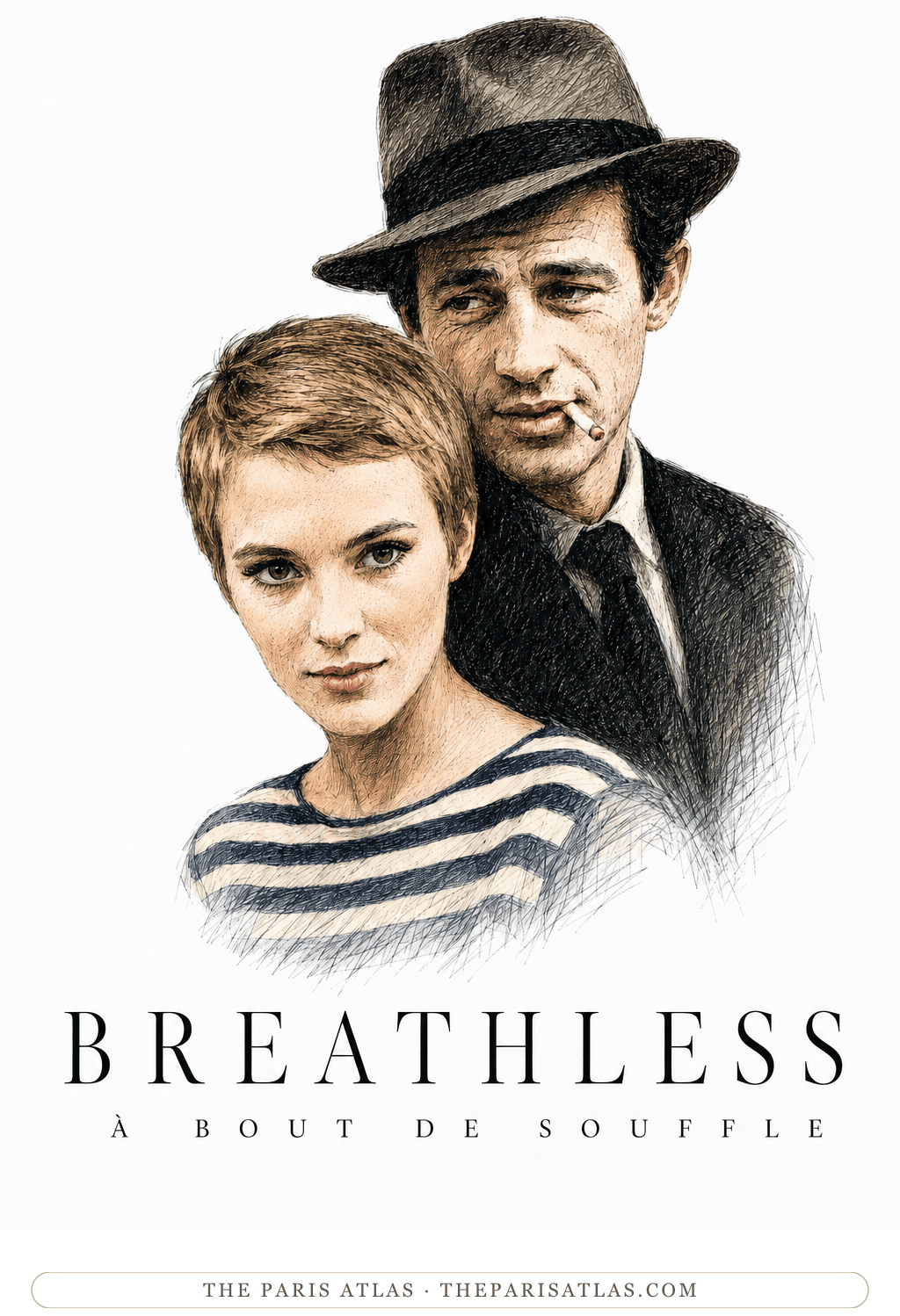
Godard's first feature: a small-time criminal who models himself on Humphrey Bogart shoots a policeman, hides out in Paris with an American student who sells the Herald Tribune, and is betrayed. Shot handheld in real streets in under a month for very little money, and cut with the jumps left showing, it turned the French New Wave into an international event and remains one of the most influential debuts in the history of the medium.
The story began as journalism. François Truffaut had read a news item about Michel Portail, who stole a car in 1952 to visit his sick mother and killed a motorcycle policeman, and had worked the case into a film treatment. Godard, then a critic who had directed only shorts, pitched the treatment to producer Georges de Beauregard.[1][2]
The project was greenlit on borrowed prestige. In May 1959 — the Cannes where The 400 Blows made Truffaut famous — Truffaut and Claude Chabrol, by then bankable names, endorsed Godard as director; Truffaut kept a story credit and Chabrol the title of technical adviser, and neither had much to do with the shoot. Godard described his subject to Truffaut as a boy who thinks about death and a girl who does not.[1]
August–September 1959
Twenty-three days without permits
Godard wanted the picture to look like reportage, and cinematographer Raoul Coutard shot nearly all of it handheld, in real streets and rooms, with almost no added light. To expose in low light he used Ilford HP5 stock pushed a stop in development; the often-repeated legend that he spliced rolls of still-camera film together is one Coutard himself denied. The noisy Cameflex camera could not record synchronized sound, so the film was dubbed afterward.[1]
The shoot ran twenty-three days, from mid-August to mid-September 1959, without filming permits. Godard wrote dialogue day by day in an exercise book and fed lines to Jean-Paul Belmondo and Jean Seberg with only brief rehearsal; some days ended after fifteen minutes, when he ran out of ideas. For tracking shots the crew skipped the dolly: Coutard was pushed in a wheelchair, or hidden in a postal cart with a hole cut for the lens.[1]
Seberg, already a star from Preminger's films, took $15,000 — a large share of the small budget — and privately doubted the method. The bedroom scene at the Hôtel de Suède, where Godard had lived in the early 1950s, runs longer than anything in the treatment and became the film's center of gravity.[1]
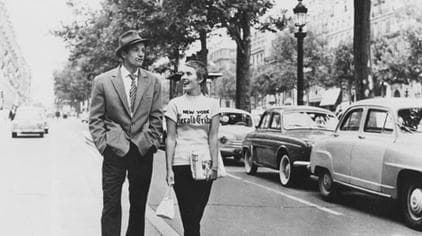
Michel and Patricia on the Champs-Élysées — Seberg in the Herald Tribune shirt she sells the paper in. Shot handheld on the street in 1959. Low-resolution image, used under fair use. — Les Films Impéria
The cut that showed
The jump cuts were not planned on set. In the cutting room with editor Cécile Decugis, faced with a long first cut, Godard shortened scenes from within — cutting forward in time inside the same shot instead of hiding the trim behind a change of angle. Continuity editing existed to be invisible; these cuts were visible on purpose, and the film's rhythm became part of its meaning.[1]
Godard did not invent discontinuous editing, and we do not claim he did. What Breathless did was make the visible cut expressive, fashionable, and finally ordinary — the distance between 1960, when critics called the editing cacophony, and now, when its grammar is everywhere, is the measure of the film's influence.
The framing the famous cuts operate on: Patricia in profile. In the car sequence, the background changes under her while the framing holds. — Frame from À bout de souffle (Les Films Impéria / StudioCanal)
Made of other movies
Breathless is built from the American cinema its director had spent a decade watching from the Cinémathèque's seats. Michel models his gestures on Humphrey Bogart, studies his lobby cards, and dies in a fall modeled on the endings of the noirs; the film is dedicated to Monogram Pictures, the B-movie studio, and Jean-Pierre Melville — the independent whose methods the New Wave studied — appears as a celebrity novelist being interviewed at Orly.[1][2]
The in-jokes run through it: Michel's alias Laszlo Kovacs borrows the name of Belmondo's character in a Chabrol film, a young woman on the Champs-Élysées sells Cahiers du cinéma, and future directors — Rivette, de Broca, Godard himself as the informer — pass through the frame. The film is a critic's scrapbook that happens to be a thriller.[1]
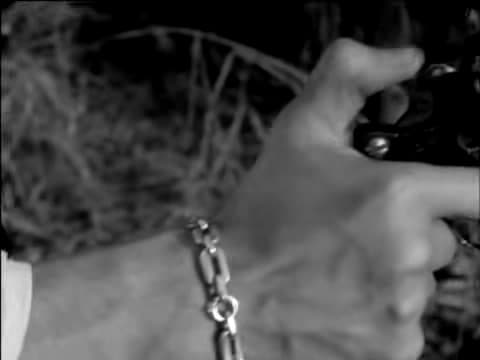
The signature gesture: Michel drags his thumb across his lips, Bogart-style, cigarette in hand. Frame from the restoration trailer, used under fair use. — Frame from À bout de souffle (Les Films Impéria / StudioCanal)
The room at the Hôtel de Suède
The room at the Hôtel de Suède: Michel shirtless, Patricia in his hat, mid-conversation. The scene runs close to twenty-five minutes with a crew of almost no one. Production still, used under fair use. — Production still, À bout de souffle (Les Films Impéria / StudioCanal)
Nearly a quarter of the film happens in one rented room. Michel and Patricia talk, smoke, quarrel, quote, and circle each other for close to twenty-five minutes — about love, about Faulkner, about whether either of them means anything they say. Godard shot it at the Hôtel de Suède, where he had lived in the early 1950s, with a minimal crew and no lights.[1]
Patricia in the bathroom mirror of the Hôtel de Suède room. The bedroom scene runs close to a quarter of the film. Frame from the restoration trailer, used under fair use. — Frame from À bout de souffle (Les Films Impéria / StudioCanal)
The scene broke the standing grammar of movie bedrooms, which moved couples from window to bed on a fixed rhythm. Here nothing advances; the talk is the action. Most of what later cinema learned from Breathless about intimacy — that two people in a room, improvising at each other, can hold an audience longer than a plot — it learned from this scene.
The last word
Michel's dying line — "C'est vraiment dégueulasse" — is mumbled, and the film's final exchange turns on it. The word means disgusting, but French gives it more registers than any single English word carries: it can land as scumbag, as sickening, as a thing that makes you want to be sick. The police inspector relays the line to Patricia as being about her; she looks into the camera, rubs her thumb across her lips — Michel's Bogart gesture, inherited — and asks what the word means.[1]
Patricia beside a blown-up portrait of herself — the film keeps putting its characters next to images of themselves. Frame from the restoration trailer, used under fair use. — Frame from À bout de souffle (Les Films Impéria / StudioCanal)
Translators have never settled it: subtitle editions render the line as disgusting, scumbag, or makes-me-want-to-puke, and each choice changes who the film's last judgment falls on. The ambiguity is not a flaw in the translations; it is the ending. A film about people imitating images closes on a borrowed gesture and an untranslated word.[1]
1960–
Release and afterlife
The film won the Prix Jean Vigo in January 1960, before release, and opened in Paris on 16 March 1960 in ordinary commercial theaters, not art houses. It drew more than two million admissions in France, won Godard the Silver Bear for best director at Berlin, and divided reviewers — Bosley Crowther in The New York Times found it vicious and its editing 'pictorial cacophony,' and said so in a review that reads today like advertising.[2][1]
Its standing has only climbed: it recurs in Sight & Sound's decennial polls of the greatest films ever made, was remade in Hollywood in 1983, and in 2025 became a subject itself — Richard Linklater's Nouvelle Vague dramatizes this film's shooting, with Zoey Deutch as Jean Seberg. Breathless is the hinge record of the French New Wave: the point where the movement's criticism, economics, and style converged in public.
The French release poster for À bout de souffle, 1960. Low-resolution copy, used under fair use. — Les Films Impéria / Société nouvelle de cinématographieThe Japanese poster for Breathless (Katte ni shiyagare), as printed in Eiga Hyoron, March 1960 — built entirely around Seberg in the striped top and Michel's hat, and billing the film as the newest masterpiece of the Nouvelle Vague. Public domain. — Eiga Hyoron, March 1960, via Wikimedia Commons
Breathless quotes
“
To become immortal, and then die.
Devenir immortel, et puis mourir.
— The novelist Parvulesco (Jean-Pierre Melville) in Breathless (À bout de souffle, 1960), screenplay by Jean-Luc Godard
“
The sun is beautiful.
C'est beau le soleil.
— Michel Poiccard (Jean-Paul Belmondo) in Breathless (À bout de souffle, 1960), alone at the wheel of the stolen car, pointing a revolver out at the road and making the noise of firing it.
“
Do you ever think about death? I think about it all the time.
Est-ce que tu penses à la mort quelquefois ? Moi, j'y pense sans arrêt.
— Michel Poiccard (Jean-Paul Belmondo) in Breathless (À bout de souffle, 1960), screenplay by Jean-Luc Godard
Michel Portail steals a car, kills a motorcycle policeman, and enters the newspapers — the case Truffaut works into a treatment.
May 1959
At Cannes, Truffaut and Chabrol endorse Godard to producer Georges de Beauregard; the treatment becomes his film.
August–September 1959
Twenty-three days of shooting in Paris, handheld and without permits.
Michel and Patricia on the Champs-Élysées — Seberg in the Herald Tribune shirt she sells the paper in. Shot handheld on the street in 1959. Low-resolution image, used under fair use. (Les Films Impéria)
January 1960
The Prix Jean Vigo, and the cover of Cahiers du cinéma, before the film has opened.
16 March 1960
Opens in Paris in four commercial theaters; more than two million admissions follow in France.
The French release poster for À bout de souffle, 1960. Low-resolution copy, used under fair use. (Les Films Impéria / Société nouvelle de cinématographie)
June 1960
Silver Bear for best director at the Berlin film festival.
February 1961
New York opening; Crowther's appalled review calls the editing 'pictorial cacophony.'
1983
Hollywood remakes it with Richard Gere; the original's standing keeps rising.
May 2010
A full restoration returns the film to US theaters for its fiftieth anniversary.
2025
Richard Linklater's Nouvelle Vague dramatizes the film's shooting, with Zoey Deutch as Jean Seberg.
Frequently asked questions
Who starred in Breathless?
Jean-Paul Belmondo as Michel Poiccard and Jean Seberg as Patricia Franchini, with Daniel Boulanger as the police inspector and a cameo by Jean-Pierre Melville. It was Belmondo's breakthrough and made Seberg the New Wave's face.
Who is Michel Poiccard?
The film's protagonist: a small-time car thief who kills a policeman, models himself on Humphrey Bogart, and hides out in Paris under the alias Laszlo Kovacs — a name borrowed from an earlier Belmondo role. He is played by Jean-Paul Belmondo.
What does 'À bout de souffle' mean?
Literally 'out of breath' — the French title of the film released in English-speaking countries as Breathless. One URL covers all three names here.
Did Godard invent the jump cut in Breathless?
No. Discontinuous editing existed long before 1960. Breathless made the jump cut conspicuous and expressive — the cuts arrived partly through shortening scenes in the edit, and Godard chose to leave them showing rather than conceal them.
Where was Breathless filmed?
On location in Paris (with opening scenes in Marseille), in August and September 1959 — real streets, cafés, and hotel rooms, shot handheld and without permits. It opened in Paris on 16 March 1960.
Related videos
Official uploads only: trailers, performances, and works this one inspired.
Breathless (1960) — official 4K restoration trailer (Studiocanal)
The rights holder's restoration trailer — the film's current public face.
Three Reasons: Breathless (Criterion Collection)
Criterion's case for the film in ninety seconds.
Nouvelle Vague — official trailer (Netflix)
Richard Linklater's 2025 film dramatizes the shooting of Breathless.
In the atlas
What the graph records about this work — every claim carries its citation.
The movement's breakthrough film: shot in 1959 by a Cahiers du cinéma critic on the movement's methods — handheld camera, real locations, jump cuts left showing — and, from its March 1960 opening, the work that made the New Wave an international event.
— Encyclopaedia Britannica — Breathless (film by Godard, 1960); Encyclopaedia Britannica — New Wave (French film movement); Sam Wigley, BFI — 10 great French New Wave films
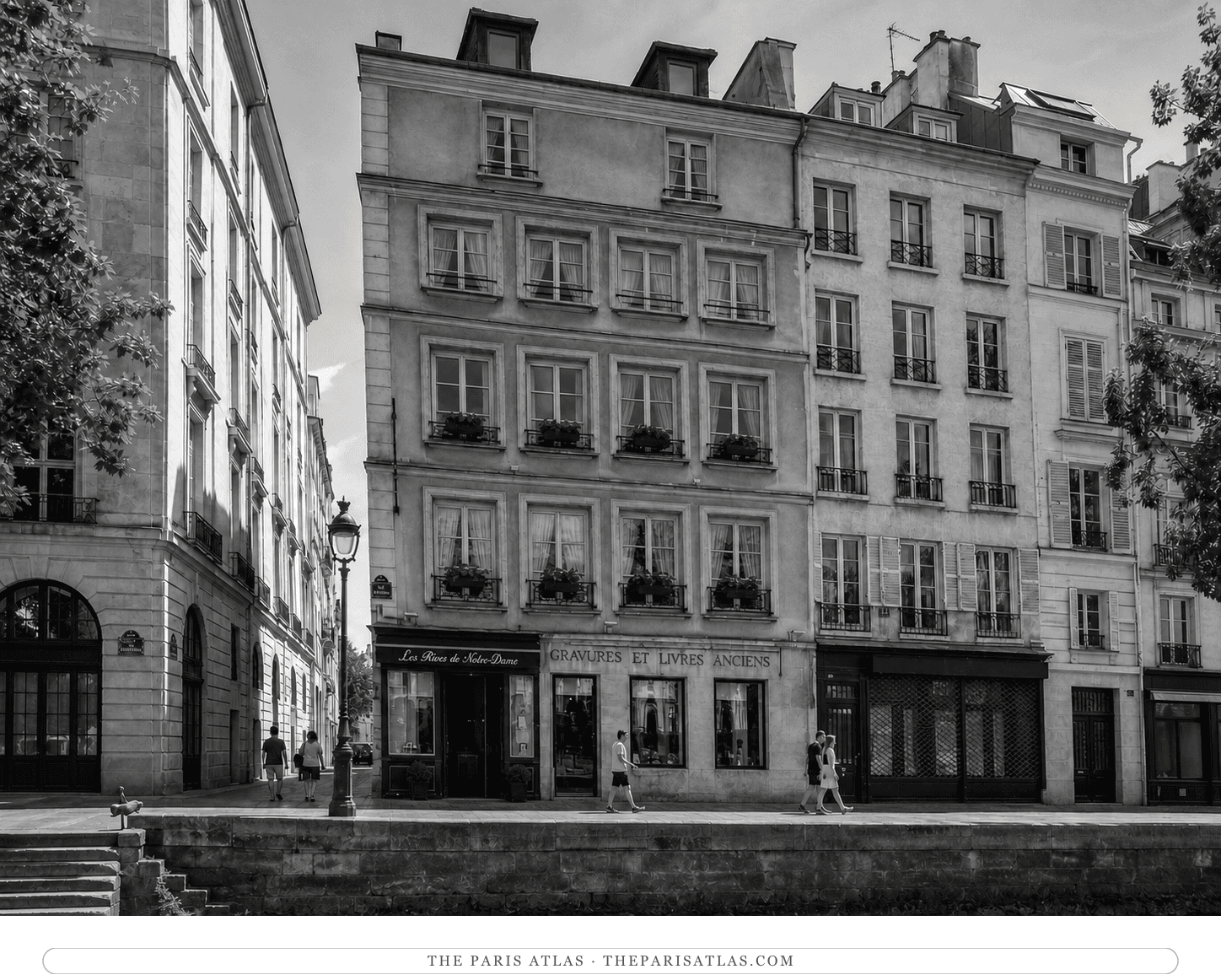
The film's long bedroom scene — close to a quarter of its running time — was shot in Room 12 in 1959, with a minimal crew and mostly natural light. The rest of the film was shot elsewhere in Paris and Marseille.
— Adam Scovell, BFI — In search of the locations for Jean-Luc Godard's Breathless (2020); The Worldwide Guide to Movie Locations — A Bout de Souffle (Breathless)
Breathless (À bout de souffle) is the film that made the jump cut a legible technique for postwar cinema. Godard and his editor Cécile Decugis reduced the assembled cut from over two hours to eighty-seven minutes by removing frames inside continuous shots rather than by cutting whole scenes — most conspicuously in the sequence of Patricia driving through Paris in Michel's stolen Ford, where the elisions between successive angles were kept visible rather than smoothed. TCM's production history and Criterion's John Powers essay both name the film as the technique's textbook example.
— TCM — Behind the Camera: Breathless; John Powers, Breathless (1992)
Early in Breathless, Michel Poiccard steals a car and is chased along a country road by the police. Jean-Luc Godard crosses the axis of action between two shots: Michel's car travels from frame left to frame right, and the police car in the following shot travels from frame right to frame left. Graig Uhlin's Oklahoma State University film textbook uses the sequence to demonstrate the broken rule, noting that the reversed screen direction makes the two cars look as though they are driving toward each other rather than one pursuing the other.
— Graig Uhlin, Introduction to Film & TV — Editing (2024), Editing, “Crossing the axis of action”
Explore directors from the same movements and circles.
Claude Chabrol
The Cahiers du cinéma critic who reached the screen first: his 1958 debut Le Beau Serge was the first feature from the group that made the New Wave. Over fifty years he became the 'French Hitchcock,' anatomist of the provincial bourgeoisie.
The most experimental of the Cahiers du cinéma directors. Rivette made films built on theatre, improvisation, and unusual length — from Paris Belongs to Us to the thirteen-hour Out 1 and Celine and Julie Go Boating.
Critic and editor of Cahiers du cinéma who became the New Wave's most literary director. His Six Moral Tales — My Night at Maud's, Claire's Knee — built a body of talkative, closely observed films about desire and hesitation.
The image the film is remembered by: Belmondo and Seberg on the Champs-Élysées, shot handheld among real pedestrians.1959 · Les Films Impéria · Fair useThe poster that went up in March 1960 — four commercial theaters, not art houses.1960 · Les Films Impéria / Société nouvelle de cinématographie · Fair useThe thumb across the lips — Michel rehearsing Bogart.1959 · Frame from À bout de souffle (Les Films Impéria / StudioCanal) · Fair usePatricia in the bathroom mirror of the Hôtel de Suède room. The bedroom scene runs close to a quarter of the film. Frame from the restoration trailer, used under fair use.1959 · Frame from À bout de souffle (Les Films Impéria / StudioCanal) · Fair usePatricia beside a blown-up portrait of herself — the film keeps putting its characters next to images of themselves. Frame from the restoration trailer, used under fair use.1959 · Frame from À bout de souffle (Les Films Impéria / StudioCanal) · Fair useThe framing the jump cuts operate on: Patricia in close profile, as in the film's famous car-ride sequence. Frame from the restoration trailer, used under fair use.1959 · Frame from À bout de souffle (Les Films Impéria / StudioCanal) · Fair useThe bedroom scene: a quarter of the film in one room.1959 · Production still, À bout de souffle (Les Films Impéria / StudioCanal) · Fair useJapan, March 1960: the poster built around Seberg.March 1960 · Eiga Hyoron, March 1960, via Wikimedia Commons · Public domainPatricia mid-drag, eyes sideways — the image of Seberg that Breathless fixed. Frame from the restoration trailer, used under fair use.1959 · Frame from À bout de souffle (Les Films Impéria / StudioCanal) · Fair useThe street as a set: the embrace, shot among parked cars and passers-by.1959 · Frame from À bout de souffle (Les Films Impéria / StudioCanal) · Fair usePatricia lifts the black sunglasses she wears through much of the film. Frame from the restoration trailer, used under fair use.1959 · Frame from À bout de souffle (Les Films Impéria / StudioCanal) · Fair useMichel points the revolver out of the car at the passing roadside and makes the sound of firing it himself. The run of shots ends on his line about the sun. Frame from the restoration trailer, used under fair use.1959 · Frame from À bout de souffle (Les Films Impéria / StudioCanal) · Fair use
References
References
The sources below include collection records, catalogues, scholarly research, and primary materials that informed this page. They document Breathless, its making, and its place in cultural history.
These references provide the documented foundation for this work's history and interpretation. Claim-level citations remain attached to the specific claims they support.

 View source