Starring — Film
- Actor
Jean-Paul Belmondo
French actor whose loose, insolent charm defined the male face of the New Wave; he broke through in Godard's Breathless (1960) and reunited with him for Pierrot le fou (1965).
In images
Details
- 1933–2021
- 9 April 1933
- Neuilly-sur-Seine, France
- 6 September 2021
- Paris, France
- French
- Élodie ConstantinNatty Tardivel
- Actor
- Bébel
About Jean-Paul Belmondo
Jean-Paul Belmondo was the male face of the French New Wave. Jean-Luc Godard cast him as the small-time car thief Michel Poiccard in Breathless (1960), and the performance — offhand, restless, modelled partly on Humphrey Bogart — became the image of the new French cinema. He then worked across the movement and the mainstream for six decades and more than eighty films, doing most of his own stunts, and when he died in 2021 France honored him with a national homage in the courtyard of Les Invalides, a ceremony last held for a former president.[1]
Boxing and the Conservatoire
Belmondo was born on 9 April 1933 in Neuilly-sur-Seine, just west of Paris. His father was the sculptor Paul Belmondo, his mother the painter Sarah Rainaud-Richard. The son's first ambition was athletic: he boxed as an amateur, winning his first fights by first-round knockout before quitting the ring. The flattened nose stayed.[2]
At twenty he entered the Paris Conservatoire, the national drama school, and left in the mid-1950s. He worked on the Paris stage through the 1950s and took small film parts. In 1952 he married Élodie Constantin; the marriage produced three children and ended in divorce in 1968.[2]
Breathless
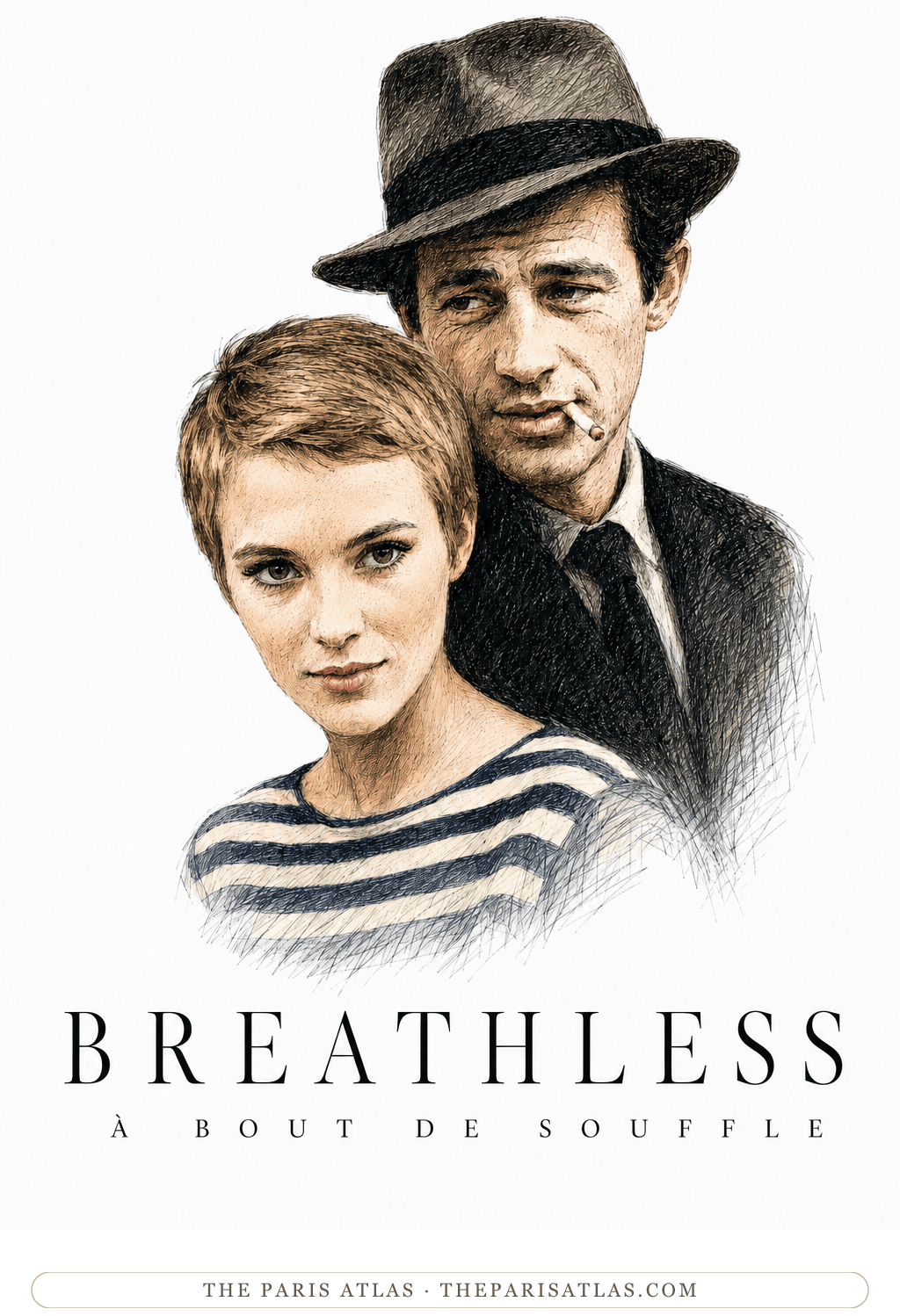
He was still primarily a stage actor in 1959 when Godard, preparing his first feature, cast him as Michel Poiccard, a petty car thief on the run in Paris, opposite Jean Seberg as the American student Patricia. Much of the film happens in room 12 of the Hôtel de Suède, where the two of them talk, smoke, and circle each other for nearly a quarter of the running time.[1]
The performance made him a star at twenty-six, and it became the male image of the New Wave, as Seberg's cropped hair became one of its female images. To the New Wave he gave a way of being on screen — casual, ironic, physically at ease — that the movement made its own.[3]
The movement and the mainstream
He never chose between the movement and the commercial cinema, working for directors from Jean-Pierre Melville to François Truffaut. For Melville he made Léon Morin, Priest (1961) and Le Doulos (1962); for Philippe de Broca, the swashbuckler Cartouche (1962) and then That Man from Rio (1964), an adventure comedy that sold nearly five million tickets in France, with Belmondo performing his own stunts. In 1965 he rejoined Godard for Pierrot le fou, playing Ferdinand, whom Anna Karina's Marianne calls Pierrot.[4]
From the 1970s he settled into a long career as a popular star of action films and comedies, known across France simply as Bébel, and kept insisting on doing most of his own stunts well into middle age. He turned down Hollywood offers, saying the language barrier would be a problem. In 1989 he won the César for best actor for Claude Lelouch's Itinéraire d'un enfant gâté (1988).
The stroke and the homage
In 2001 a stroke paralyzed his right side and took his speech for months. He recovered enough to appear in one further film, then retired from acting. The year after the stroke he married Natty Tardivel, his companion of many years; their daughter Stella was born in 2003, when he was seventy, and the marriage ended in 2008.
The honors came at the end. The Cannes film festival gave him an honorary Palme d'Or on 18 May 2011, and at the 2017 César ceremony the honorary César came with a standing ovation of more than two minutes.
I am very moved by this Palme d'or which has touched my heart.
He died at his Paris home on 6 September 2021, at eighty-eight; his lawyer said he had been very tired for some time and died peacefully. On 9 September President Emmanuel Macron led a national homage in the courtyard of Les Invalides, the first such ceremony since the death of former president Jacques Chirac in 2019, while thousands watched on screens outside before filing past to pay their respects.[5]
Life events
Born 9 April in Neuilly-sur-Seine, son of the sculptor Paul Belmondo and the painter Sarah Rainaud-Richard.
Stars as Michel Poiccard in Jean-Luc Godard's Breathless; the film makes him the male face of the New Wave.
Photographed in Zurich for the gala premiere of Cartouche (Philippe de Broca, 1962); the same year he makes Le Doulos with Jean-Pierre Melville.
Jean-Paul Belmondo in Zurich for the gala premiere of Cartouche in 1962, photographed by Jack Metzger. That Man from Rio, Philippe de Broca's adventure comedy, sells nearly five million tickets in France, with Belmondo doing his own stunts.
Rejoins Godard for Pierrot le fou, playing Ferdinand opposite Anna Karina.
Wins the César for best actor for Claude Lelouch's Itinéraire d'un enfant gâté.
A stroke paralyzes his right side and takes his speech for months; he appears in one further film before retiring.
Receives an honorary Palme d'Or at Cannes on 18 May; an honorary César follows in 2017, with a standing ovation of more than two minutes.
Dies at his Paris home on 6 September, at 88; France holds a national homage at Les Invalides on 9 September, led by President Emmanuel Macron.
In the credits
Starring — Film
Pierrot le fou
People Jean-Paul Belmondo Knew
Jean-Luc Godard
- Filmmaker
- Critic
Collaborated with · 1960
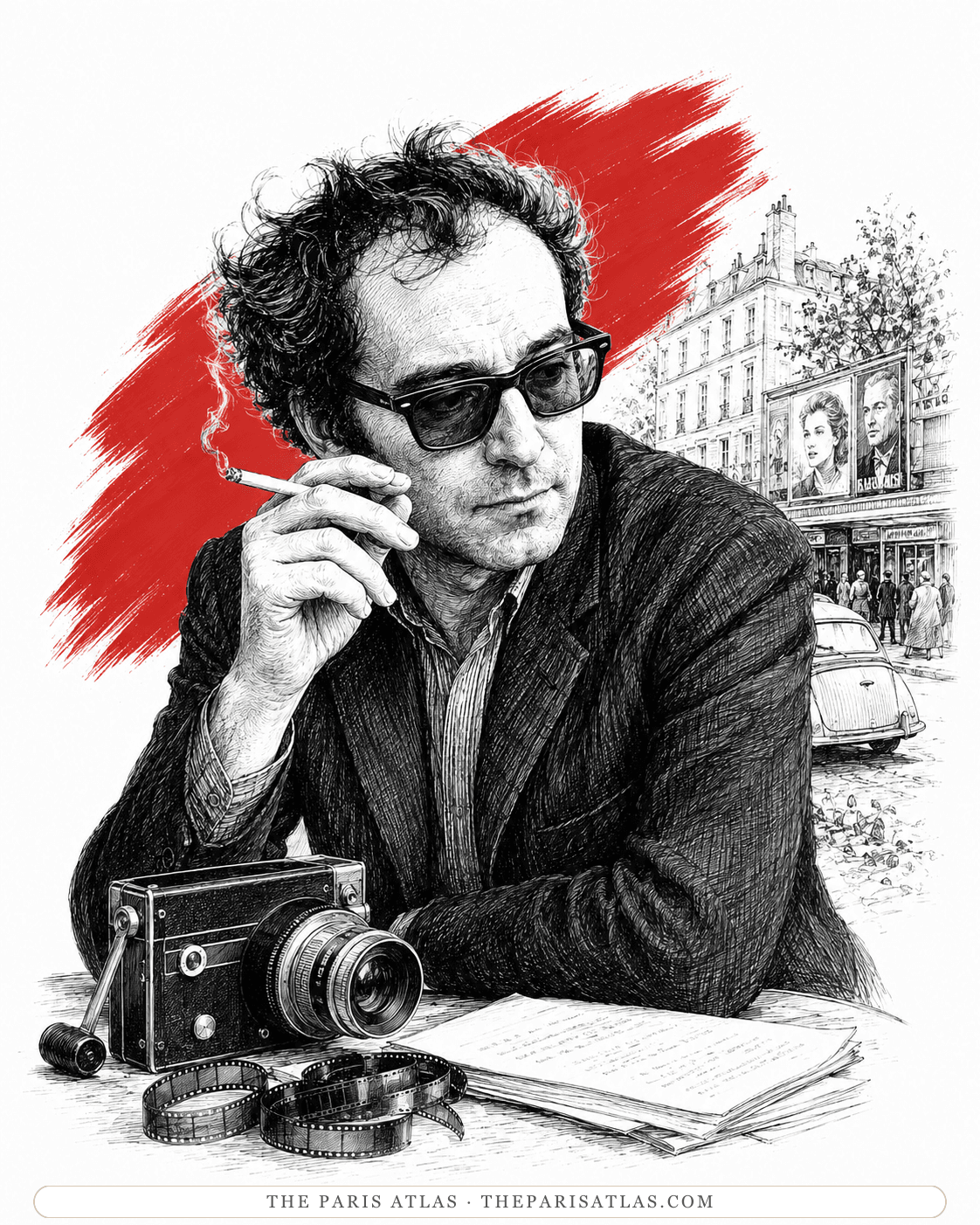
Godard directed Belmondo in Breathless (1960), the film that made him a star, and again in Pierrot le fou (1965).
Alain Delon
- Actor
Collaborated with · 1970–1998
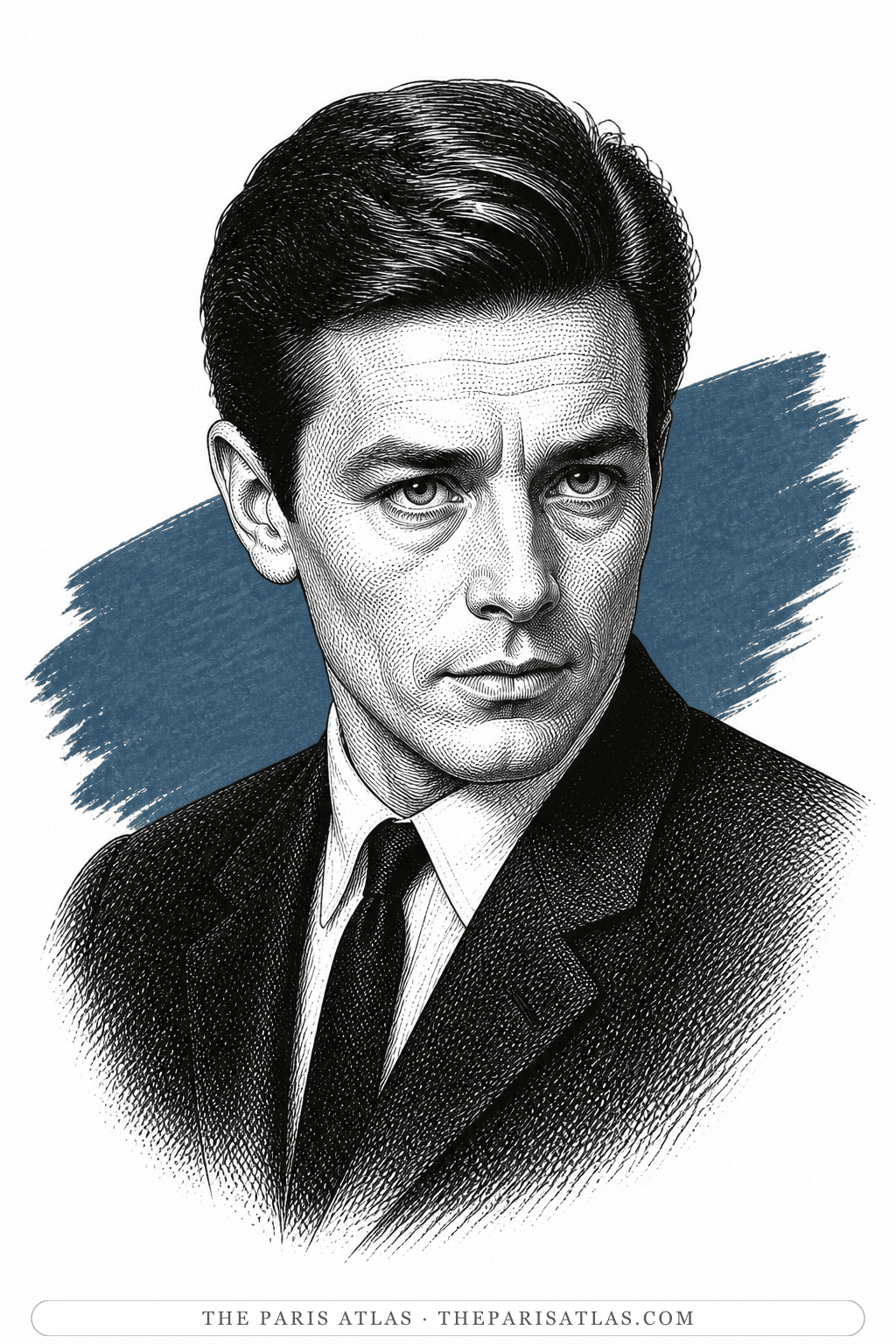
The two dominant French male stars of their generation built parallel careers as rivals and acted together only twice: Borsalino (1970), the Marseille gangster film Delon produced himself, and Une chance sur deux (1998).
Movements
Film movement · c. 1958–1968
The French New Wave
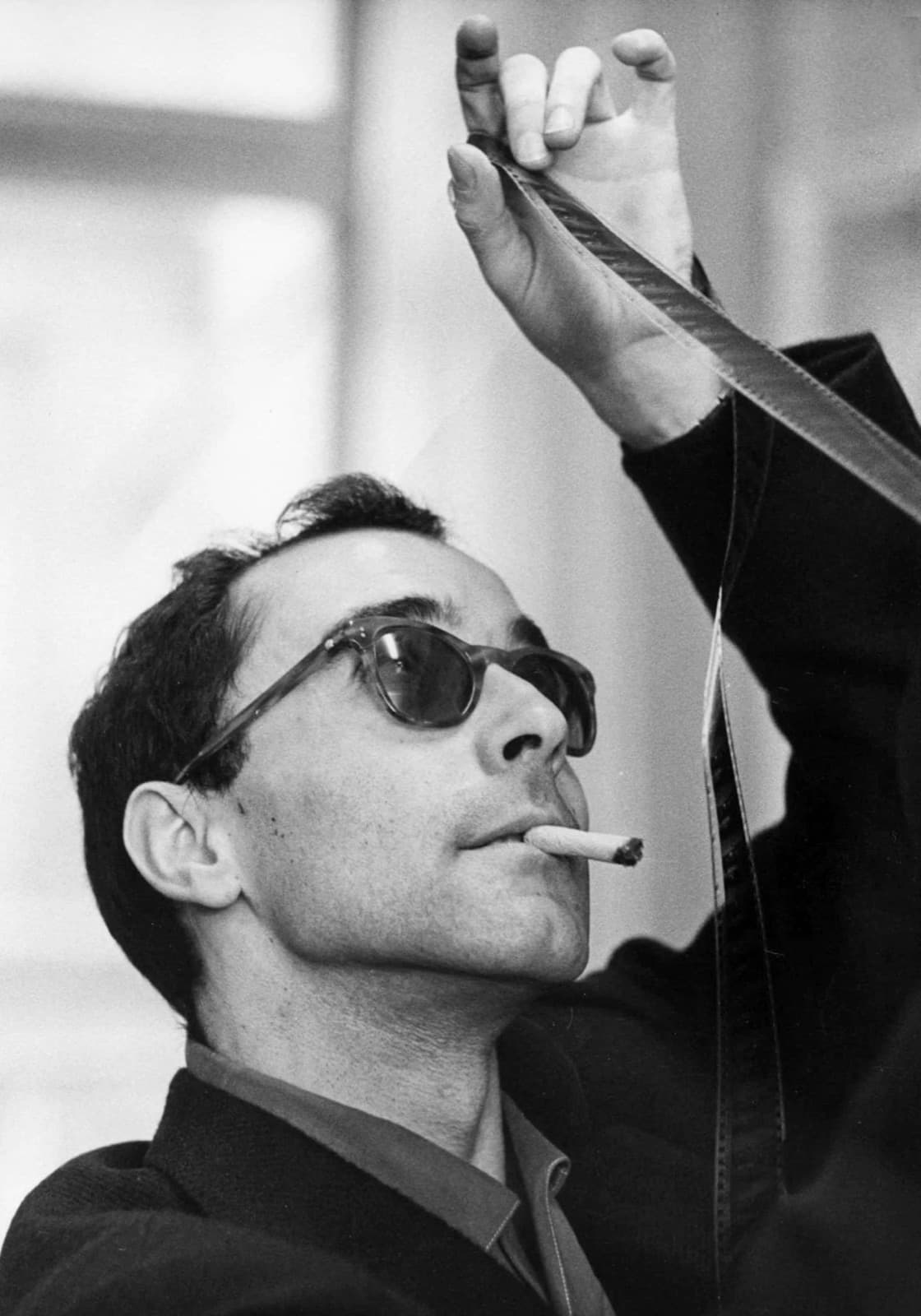
Belmondo's performance as Michel in Godard's Breathless (1960) became the male face of the movement; he reunited with Godard for Pierrot le fou (1965).
Questions about Jean-Paul Belmondo
What is Jean-Paul Belmondo's most famous film?
Breathless (À bout de souffle, 1960), Jean-Luc Godard's first feature, in which Belmondo plays the character Michel Poiccard, a small-time car thief on the run in Paris. The performance made him a star at twenty-six and the male face of the French New Wave. Pierrot le fou (1965), his reunion with Godard, and Philippe de Broca's adventure comedy That Man from Rio (1964) are the other titles most often named.
Did Jean-Paul Belmondo do his own stunts?
Yes, famously — he insisted on performing most of his own stunts, from That Man from Rio (1964) through the action films that made him France's biggest popular star in the 1970s and 1980s. The eulogy at his national homage recalled his trapeze work and his stunt driving.
How did Jean-Paul Belmondo die?
He died at his home in Paris on 6 September 2021, at 88; his lawyer said he had been very tired for some time and died peacefully. He had suffered a stroke in 2001 that paralyzed his right side and largely ended his acting career. France honored him with a national homage at Les Invalides on 9 September 2021, led by President Emmanuel Macron.
Was Jean-Paul Belmondo part of the French New Wave?
He was its male face. Jean-Luc Godard's Breathless (1960) made him the movement's defining leading man, and he returned to Godard for Pierrot le fou (1965). He also worked for Jean-Pierre Melville and François Truffaut, while building a parallel career in popular action films and comedies.
Who was Jean-Paul Belmondo married to?
He was married twice: to Élodie Constantin from 1952 to 1968, with whom he had three children, and to Natty Tardivel from 2002 to 2008, with whom he had a daughter, Stella, born in 2003 when he was seventy.
What awards did Jean-Paul Belmondo win?
The César for best actor in 1989, for Claude Lelouch's Itinéraire d'un enfant gâté (1988); an honorary Palme d'Or at the Cannes film festival on 18 May 2011; and an honorary César in 2017, presented with a standing ovation of more than two minutes.
Connections and Sources
Associated with · 1960
The French New Wave
Belmondo's performance as Michel in Godard's Breathless (1960) became the male face of the movement; he reunited with Godard for Pierrot le fou (1965).
Collaborated with · 1960
Jean-Luc Godard
Godard directed Belmondo in Breathless (1960), the film that made him a star, and again in Pierrot le fou (1965).
Collaborated with · 1970–1998
Alain Delon
The two dominant French male stars of their generation built parallel careers as rivals and acted together only twice: Borsalino (1970), the Marseille gangster film Delon produced himself, and Une chance sur deux (1998).
References
References
The sources below include biographies, scholarly essays, interviews, and primary materials that informed this page. They reflect both the historical record and ongoing critical conversations about Jean-Paul Belmondo and their work.

3↑Encyclopaedia Britannica — Jean-Luc Godard
WebsiteUsed forWeb source consulted for documented facts and historical context presented on the Jean-Paul Belmondo page.
4↑The Criterion Collection — Pierrot le fou
WebsiteThe Criterion CollectionUsed forWeb source consulted for documented facts and historical context presented on the Jean-Paul Belmondo page.

5↑L'acteur français Alain Delon est mort
PeriodicalRadio-Canada, 2024Used forContemporary reporting or criticism used to document the historical reception and context of Jean-Paul Belmondo.
i
Why these sources are here
These references anchor the page in the documented record and in the scholarly conversations around Jean-Paul Belmondo. Every claim on this page traces back to one or more of the works listed here.
 Explore more resources