Starring — Film
- Actor
Jean Seberg
The Iowa teenager Preminger plucked from eighteen thousand candidates, whom Breathless made the face of the French New Wave — and whom the FBI's campaign against her helped destroy.
In images
Details
- 1938–1979
- 13 November 1938
- Marshalltown, Iowa
- c. 30 August 1979
- Paris
- American
- François MoreuilRomain Gary
- Alexandre Diego Gary, Nina Hart Gary (died in infancy, 1970)
- Actor
About Jean Seberg
Jean Seberg was discovered at seventeen, burned at the stake on her first film, written off by Hollywood, and adopted by France. Selling the New York Herald Tribune on the Champs-Élysées in Breathless (1960), she became the French New Wave's most recognizable face — an American icon of a French revolution.
Her second act was darker: surveillance and a planted smear by the FBI over her support of the Black Panther Party, the death of her newborn daughter, and a decline that ended with her found dead in Paris in 1979, at 40. Romain Gary, her former husband, publicly blamed the Bureau. The file the FBI later released largely proved him right.
Marshalltown, and eighteen thousand rivals
Seberg was born on 13 November 1938 in Marshalltown, Iowa, the daughter of a pharmacist. Her politics arrived early: at fourteen she joined the NAACP. At seventeen she was one of some eighteen thousand candidates in Otto Preminger's nationwide talent search for the lead in Saint Joan, and she won it — a month before her eighteenth birthday, an unknown from Iowa cast as Joan of Arc.
Saint Joan (1957) failed with critics and audiences, and the production marked her literally: she was accidentally burned during the stake scene when the pyrotechnics misfired. Preminger cast her again in Bonjour Tristesse (1958), as Cécile on the Riviera. American reviewers were unkind; the young critics in Paris were not. To them the performance was the point — and one of them acted on it.[1]
Seberg in Breathless (1960)
By 1959 Hollywood considered Seberg damaged goods: two Preminger films, two failures, a contract worth less each year. The young critics in Paris had reached the opposite verdict, and one of them was about to direct his first feature. Godard reached her through her husband, the French lawyer François Moreuil, and in June 1959 she agreed to make Breathless for $15,000 — about a sixth of the film's entire budget, and the only conventional star salary on it. Moreuil got a cameo for his trouble. Jean-Paul Belmondo, her co-lead, was unknown; she was the marquee.[2]
Then she discovered what she had signed up for. There was no finished script: Godard arrived each morning with dialogue in an exercise book no one else was allowed to read, fed the actors their lines with only brief rehearsal, and stopped shooting when he ran out of ideas — some days after fifteen minutes. The camera hid in a postal cart with a hole cut for the lens while she walked among real, unwitting pedestrians. Nothing was recorded on set; every word, including hers, was dubbed in later. She questioned the method while it was happening, and said so in interviews for the rest of her life — she doubted the film would ever find an audience, and wondered whether it was a film at all.[3]
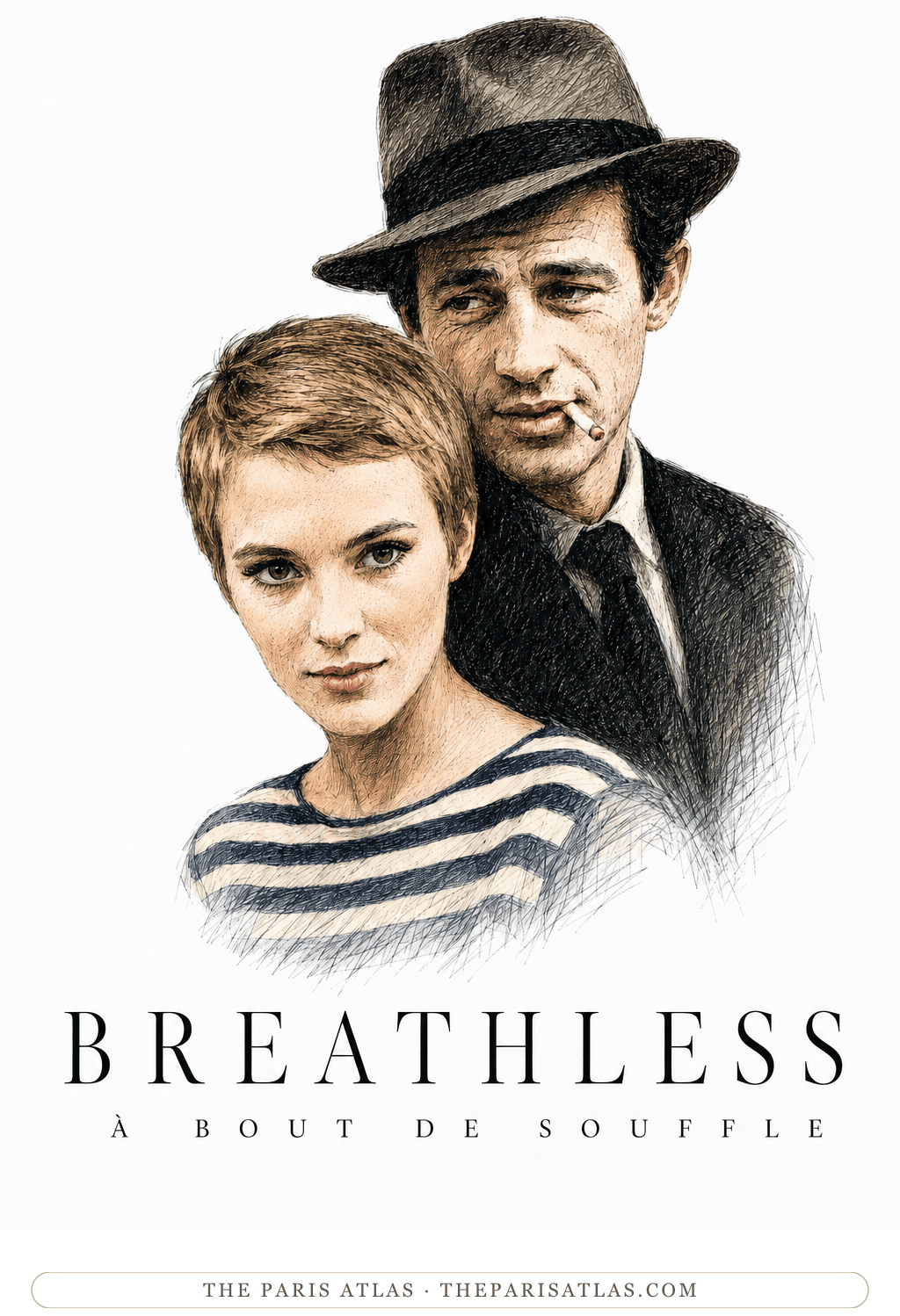
The scene that fixed her image was shot exactly that way: Seberg in a NEW YORK HERALD TRIBUNE T-shirt, hawking the paper up the real Champs-Élysées, the hidden camera rolling from the cart while Paris walked by unaware. Patricia is an American student selling an American paper on the most French street in the world — which was, more or less, Seberg's own situation. The shirt became the most imitated costume in the movement's history, and the walk one of the most reproduced images in cinema.
Her longest work in the film happened in one small room. For close to twenty-five minutes — nearly a quarter of the running time — Patricia and Michel talk, smoke, quarrel, and circle each other in Room 12 of the Hôtel de Suède, the quai Saint-Michel hotel where Godard had once lived. The crew was minimal and the light mostly what the windows gave. It is the sequence that taught later cinema that two people improvising at each other in a room could hold an audience longer than a plot — and it is carried, shot for shot, by her guardedness against Belmondo's noise.
Even the film's most famous technique runs through her. The jump cuts that made Breathless notorious operate most conspicuously on Patricia — the car ride cut again and again on the back of her head and her profile while the streets change behind her. When the film's editing is taught, it is usually her face on the screen.[4]
And the ending is hers. Michel dies in the street; Patricia gets the last word — asking what "dégueulasse" means — then looks straight into the camera and drags her thumb across her lips, Michel's borrowed Bogart gesture, inherited in the final frame. Godard gives the film's last image not to his dying hero but to her unreadable face.
The film she doubted opened on 16 March 1960, drew more than two million admissions in France, and made her a European star inside a season. Godard framed what he had done with her plainly: Patricia continued where Bonjour Tristesse's Cécile left off — he could have opened, he said, with a title reading "three years later." The doubter came around far enough to reprise the character in his segment Le Grand Escroc in 1964.[5]
What followed was an industry of her image. Japan built its poster entirely around her in the stripes and Michel's hat; Studio Harcourt photographed her like French patrimony within the year; the cropped hair became a haircut with her name on it. Hollywood had discarded her; the New Wave made her permanent.
The Gary years
In 1962 she married the novelist and diplomat Romain Gary — sources vary on the year because the marriage was kept quiet at first — and their son Alexandre Diego was born that July. She worked on both sides of the Atlantic through the sixties: Lilith (1964) opposite Warren Beatty, the musical Paint Your Wagon (1969), the ensemble hit Airport (1970). She and Gary divorced in 1970.[6]
The FBI campaign
Seberg gave money to civil-rights organizations all her adult life, and by the late 1960s that included the Black Panther Party — contributions the FBI put at roughly $10,500. In 1969, after a wiretapped call with a Panther leader, the Bureau opened a file on her under its COINTELPRO program. She was followed, her phones tapped, her mail opened.
Jean Seberg has been a financial supporter of the BPP and should be neutralized.[7]
In 1970, pregnant, she became the target of the operation the memo proposed: a planted story that the father of her child was a Black Panther. It ran as a blind item in the Los Angeles Times' gossip column in May and, with her name, in Newsweek in August. She went into premature labor; her daughter Nina was born on 23 August 1970 and died two days later. Seberg held an open-casket funeral in Marshalltown so that anyone could see the story had been a lie. She later won damages from Newsweek.[7]
The Bureau's role stopped being an allegation in December 1979, when Seberg's FBI file was released under the Freedom of Information Act, weeks after her death; fuller files followed in 1980. The documents contain the plan, the approval, and the aim, in the Bureau's own words.[8]
Paris, 1979
Seberg disappeared from her Paris apartment on 30 August 1979. On 8 September her body was found in the back seat of her car on the rue du Général-Appert, in the 16e arrondissement. The police ruled the death a probable suicide by barbiturates and alcohol; a note was found; she was 40. Romain Gary called a press conference and laid her destruction at the FBI's door. Fifteen months later Gary shot himself.
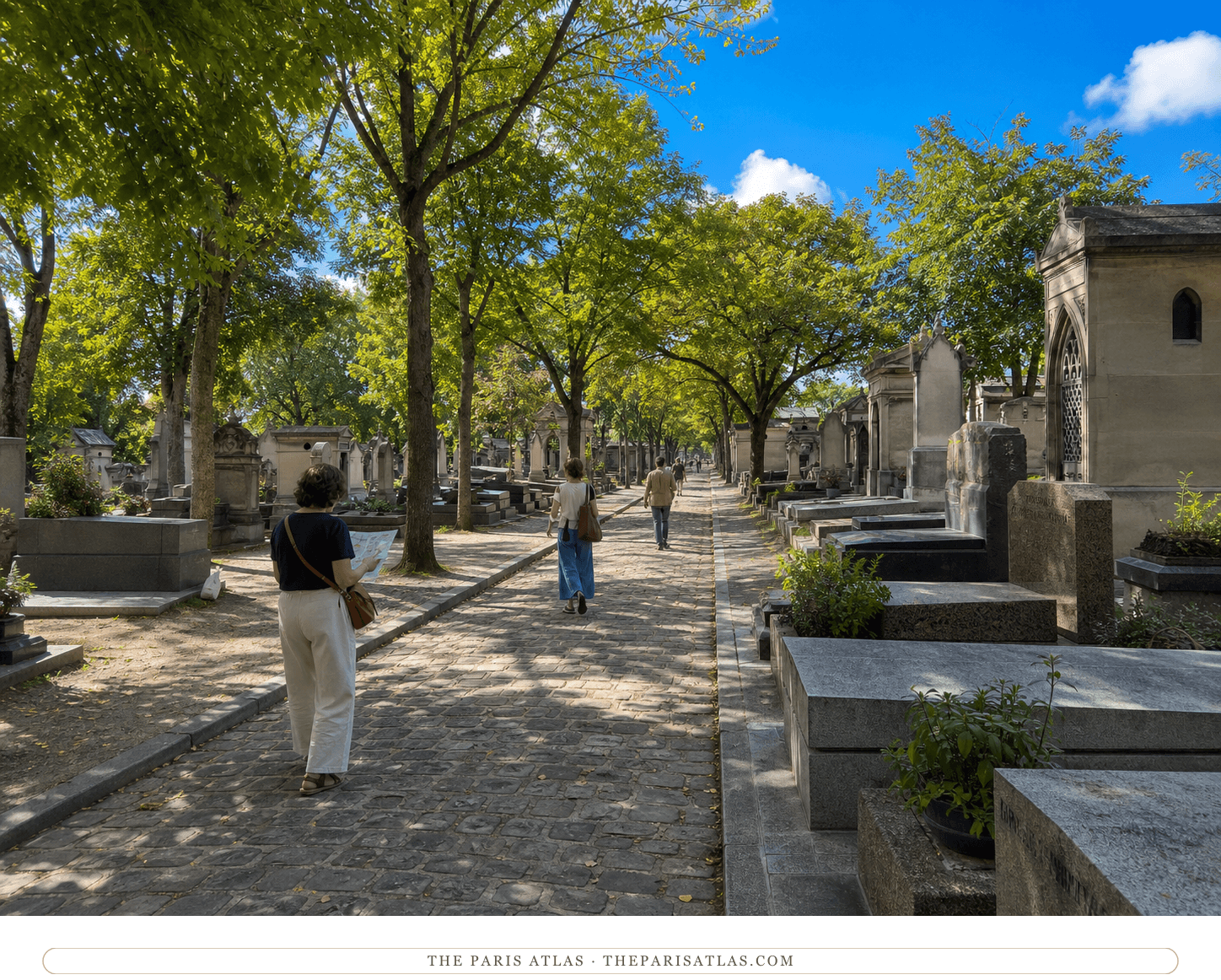
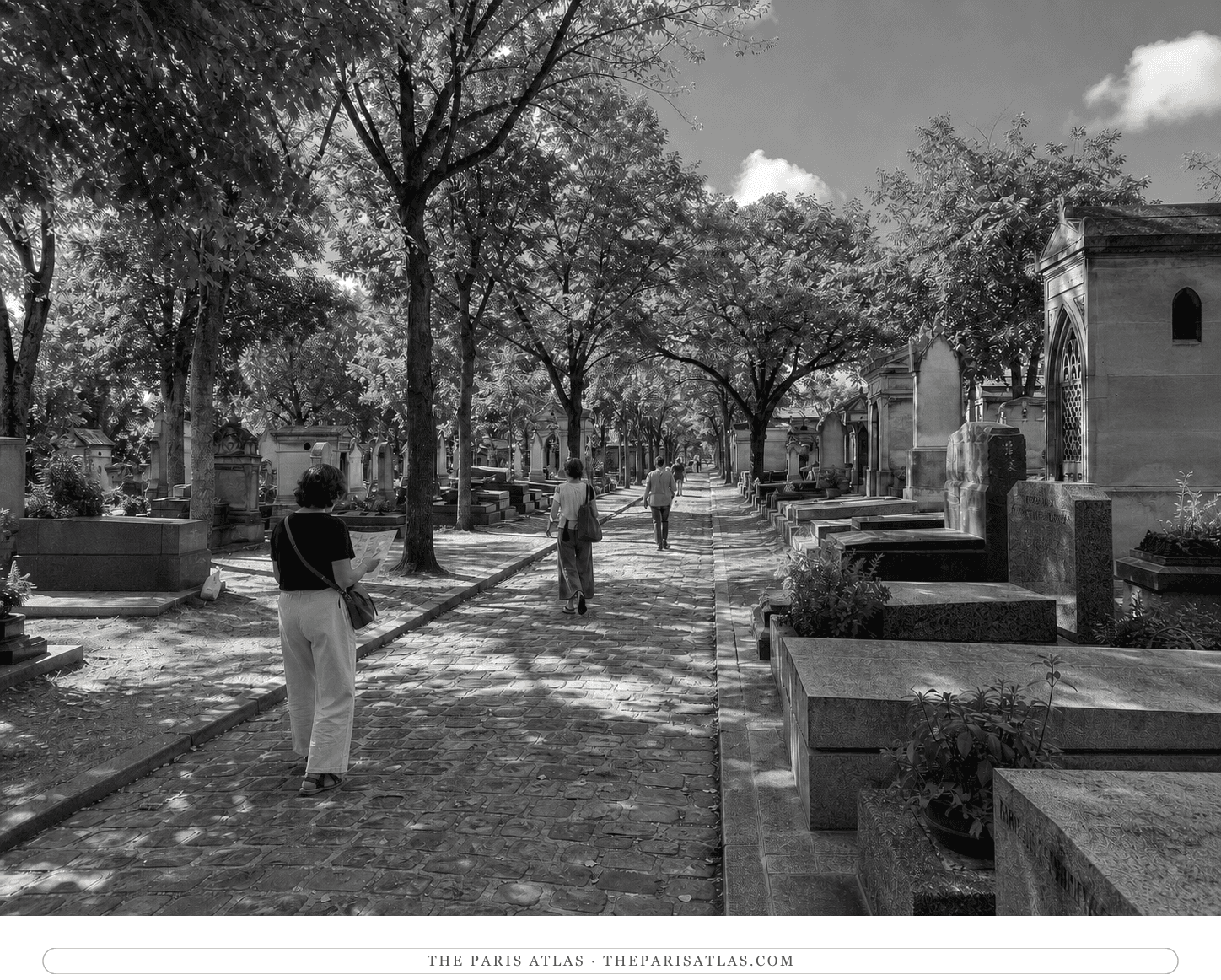
She is buried in Montparnasse Cemetery, on the Left Bank of the city that made her.[9]
The afterlife of an image
The crop she wore as Joan and kept for Patricia became a haircut with her name on it — the Seberg pixie, still cited by stylists sixty years on. The Herald Tribune shirt never went away — it resurfaces in fashion editorials, in film homages, and in every retrospective the New Wave gets. Kristen Stewart played her in Seberg (2019), which centers the FBI years; Zoey Deutch plays her in Richard Linklater's Nouvelle Vague (2025), which restages the making of Breathless. Sixty-five years on, both of her stories — the icon and the target — are still being told.
Saint Joan, 1957: burned twice
Otto Preminger ran a public talent search for his film of Shaw's Saint Joan and picked Jean Seberg, seventeen years old and from Marshalltown, Iowa, out of some eighteen thousand applicants. It is the kind of story a studio invents, except that this one happened.
During the burning scene the flames got out of control and she was actually burned. The film was then destroyed by the critics. Her own summary of it, given four years later, is the best line anyone has written about the episode. She had two memories of Saint Joan: being burned at the stake in the picture, and being burned at the stake by the critics. The second hurt more. She was blunt about her own performance too, saying she had been scared like a rabbit and that it showed, and that she had started where most actresses end up.[1]
Preminger cast her again the following year in Bonjour Tristesse, and cropped her hair short. Two years after that Jean-Luc Godard put that same face and that same haircut on the Champs-Élysées selling the New York Herald Tribune, and the image outlived everything else about her.
What the FBI documents actually show
In April 1970 the Los Angeles field office of the FBI proposed in writing to plant a false story that Seberg, then pregnant, had conceived a child by a member of the Black Panther Party. The memo included the full text of the fake letter to be sent, signed with an invented name. Headquarters replied on 6 May objecting only to the timing, and recorded internally that she should be neutralised. The stated purpose was to cause her embarrassment and cheapen her image with the general public, with the usual precautions taken to conceal the Bureau's hand.
On 3 June the Los Angeles office forwarded a Joyce Haber column from the Los Angeles Times, dated the previous month, carrying the story in unnamed form. What the documents do not contain is proof that the Bureau sent the letter, or that Haber's item came from it. That link rests on the FBI's own later admission in 1979 rather than on the memos.
Seberg gave birth by Caesarean section on 23 August 1970. The baby, Nina Hart Gary, lived two days. Seberg held an open-casket funeral in Marshalltown so that the town could see the child was white. She sued Newsweek over its version of the story and was awarded a small sum in Paris. Romain Gary said publicly in 1979 that she attempted suicide on the anniversary of the baby's death every year afterwards.
Paris, 1979
Seberg disappeared from her flat at 125 rue de Longchamp in Paris on 30 August 1979. Her body was found on 8 September, wrapped in a blanket in the back of her white Renault parked in the rue du Général-Appert, with barbiturates in her system and a note to her son. The verdict was probable suicide. She was forty. A French investigation into non-assistance to a person in danger followed the next year.
Romain Gary killed himself in Paris fifteen months later, in December 1980. He had already named the FBI operation in public and held it responsible for what happened to her.
Life events
Born 13 November in Marshalltown, Iowa.
Joins the NAACP at fourteen.
Wins Preminger's Saint Joan talent search over some eighteen thousand candidates, at seventeen.
Saint Joan flops; she is burned when the stake scene's pyrotechnics misfire.
Bonjour Tristesse; marries François Moreuil.
Agrees in June to make Breathless for $15,000 — a sixth of its budget; shoots it on the streets of Paris.
Michel and Patricia on the Champs-Élysées — Seberg in the Herald Tribune shirt she sells the paper in. Shot handheld on the street in 1959. Low-resolution image, used under fair use. Breathless opens in March and makes her the New Wave's face; divorces Moreuil.
The Japanese poster for Breathless (Katte ni shiyagare), as printed in Eiga Hyoron, March 1960 — built entirely around Seberg in the striped top and Michel's hat, and billing the film as the newest masterpiece of the Nouvelle Vague. Public domain. Son Alexandre Diego born in July; marries Romain Gary in October.
Seberg by Studio Harcourt, 1961 — the Paris studio portrait, the year after Breathless made her the New Wave's face. Lilith, Paint Your Wagon, Airport; divorces Gary in 1970.
Seberg in a black lace mantilla, 1963 — a magazine page from her transatlantic-stardom years. Public domain. The FBI opens its COINTELPRO file on her over her Black Panther donations.
The planted paternity story runs in the LA Times and Newsweek; her daughter Nina is born prematurely on 23 August and dies two days later. Open-casket funeral in Marshalltown.
The FBI's COINTELPRO memorandum of 6 May 1970: Los Angeles requests authority to plant the pregnancy story with Hollywood gossip columnists to 'cause her embarrassment and tarnish her image with the general public'; the note beneath states Seberg 'has been a financial supporter of the BPP and should be neutralized.' US government record, public domain. Disappears 30 August; found dead in her car in the 16e on 8 September, at 40 — a probable suicide. Her FBI file is released in December.
Seberg's grave in Montparnasse Cemetery, Paris. Photo: Jim Linwood (CC BY 2.0), via Wikimedia Commons. Kristen Stewart plays her in Seberg; Zoey Deutch in Linklater's Nouvelle Vague.
Jean Seberg quotes
I have two memories of Saint Joan. The first was being burned at the stake in the picture. The second was being burned at the stake by the critics. The latter hurt more.
I was scared like a rabbit, and it showed on the screen. It was not a good experience at all. I started where most actresses end up.
I've been making films in France about people I'm not really interested in. They are people whose greatest problem in life is where they are going to have dinner that night.
In the credits
People Jean Seberg Knew

Romain Gary
- Author
- Filmmaker
Married to · 1962–1970
Married in October 1962 — some sources say 1963, because the marriage was kept quiet at first — after the July birth of their son Alexandre Diego. Divorced in 1970. After her death Gary publicly blamed the FBI's campaign for her decline.
Collaborated with · 1968
Beyond the marriage, Gary wrote and directed Seberg in two feature films, Birds Come to Die in Peru (1968) and Kill! (1971) — a working partnership alongside the 1962–1970 marriage.
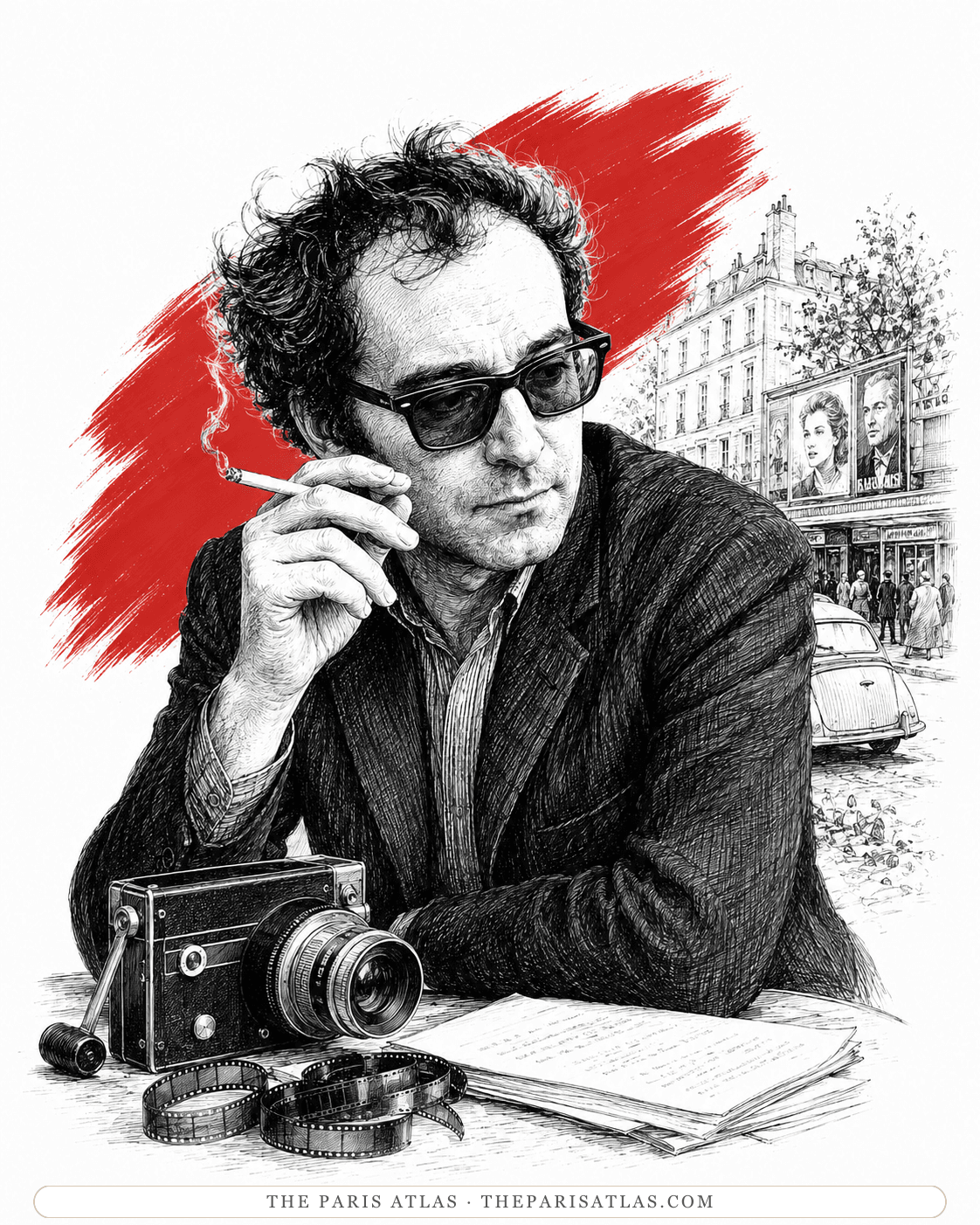
Jean-Luc Godard
- Filmmaker
- Critic
Collaborated with · 1959–1964
He cast her as Patricia in Breathless — reached through her first husband, François Moreuil, in June 1959 — and she carried the film that made them both. She reprised the character in his segment Le Grand Escroc (1964). She doubted his method during the shoot; the result outlived the doubt.
Movements
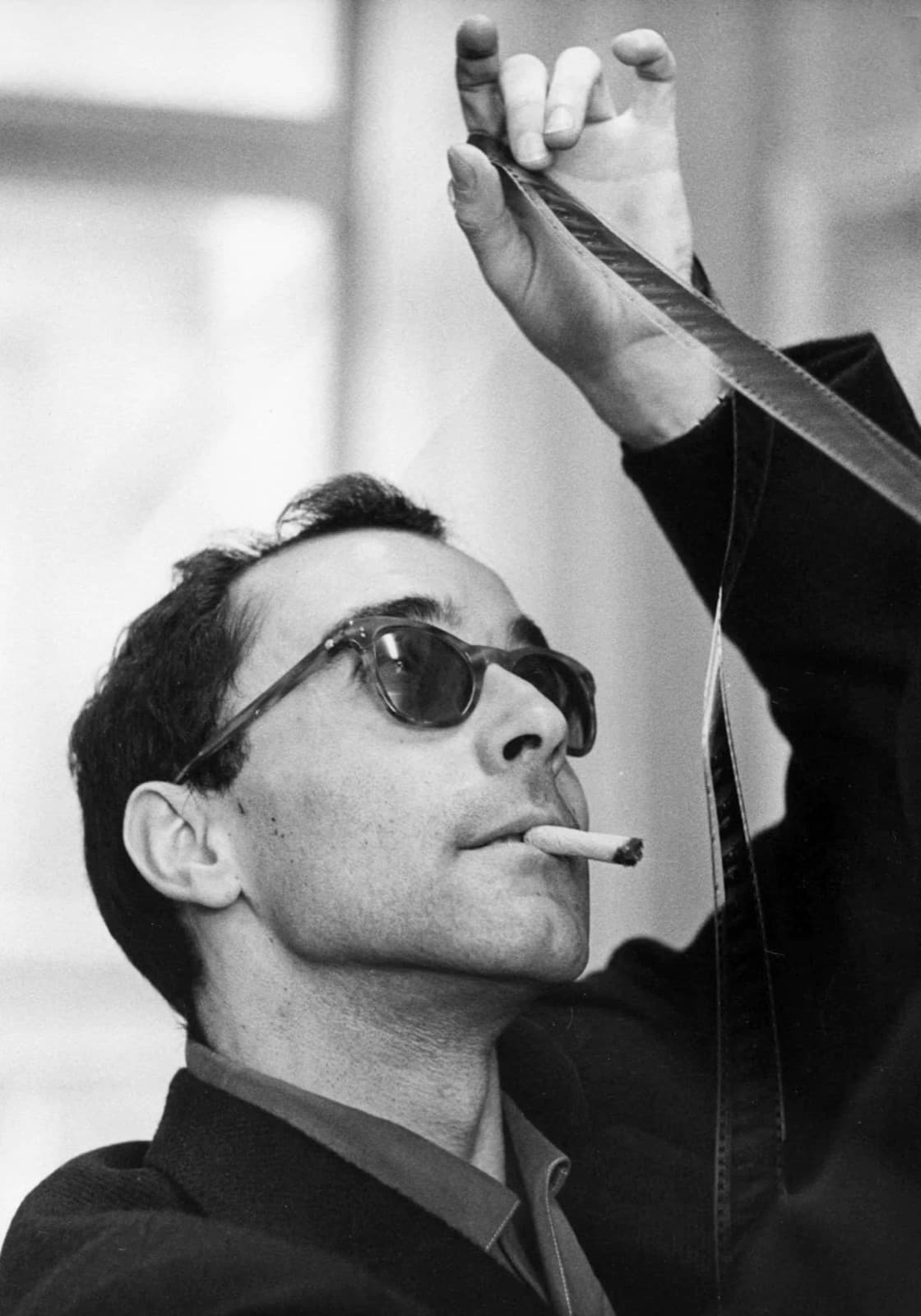
Film movement · c. 1958–1968
The French New Wave
The movement's most recognizable face: Patricia in Breathless, the American star who made the New Wave's breakthrough film bankable and its imagery iconic. An actor in the movement's orbit, not one of its directors.
Jean Seberg’s Places
Related pages
Questions about Jean Seberg
What is the Jean Seberg pixie cut?
The closely cropped haircut she wore from Saint Joan (1957) onward and made iconic in Breathless — one of the most-referenced short haircuts in film history. She kept versions of it for most of her career.
How did Jean Seberg die?
She was found dead in her car in Paris on 8 September 1979, ten days after disappearing; French police ruled it a probable suicide by barbiturates and alcohol. She was 40. Her death is presumed to have occurred around 30 August.
What did the FBI do to Jean Seberg?
Under COINTELPRO, the FBI surveilled her over her donations to the Black Panther Party and in 1970 planted a false story that the father of her unborn child was a Panther, aiming — in the Bureau's own words — to "cheapen her image with the general public." She went into premature labor; her daughter died two days after birth. The file confirming the operation was released weeks after Seberg's death.
Was Jean Seberg in Breathless?
Yes — she played Patricia Franchini, the American student selling the New York Herald Tribune in Paris, opposite Jean-Paul Belmondo. It made her the French New Wave's most recognizable face.
Who plays Jean Seberg in Nouvelle Vague?
Zoey Deutch, in Richard Linklater's 2025 film about the making of Breathless. Kristen Stewart played Seberg earlier, in Seberg (2019), which centers on the FBI years.
Connections and Sources
Associated with · 1959
The French New Wave
The movement's most recognizable face: Patricia in Breathless, the American star who made the New Wave's breakthrough film bankable and its imagery iconic. An actor in the movement's orbit, not one of its directors.
Married to · 1962–1970
Romain Gary
Married in October 1962 — some sources say 1963, because the marriage was kept quiet at first — after the July birth of their son Alexandre Diego. Divorced in 1970. After her death Gary publicly blamed the FBI's campaign for her decline.
Collaborated with · 1959–1964
Jean-Luc Godard
He cast her as Patricia in Breathless — reached through her first husband, François Moreuil, in June 1959 — and she carried the film that made them both. She reprised the character in his segment Le Grand Escroc (1964). She doubted his method during the shoot; the result outlived the doubt.
Buried at · 1979
Montparnasse Cemetery
Buried in division 13 after her death in Paris at the end of August 1979.
Collaborated with · 1968
Romain Gary
Beyond the marriage, Gary wrote and directed Seberg in two feature films, Birds Come to Die in Peru (1968) and Kill! (1971) — a working partnership alongside the 1962–1970 marriage.
References
References
The sources below include biographies, scholarly essays, interviews, and primary materials that informed this page. They reflect both the historical record and ongoing critical conversations about Jean Seberg and their work.


2↑HUMANITIES — The Secret Lives of Jean Seberg
WebsiteNational Endowment for the Humanities, 2016Used forWeb source consulted for documented facts and historical context presented on the Jean Seberg page.
3↑The Hollywood Reporter — Jean-Luc Godard, Enfant Terrible of Modern French Cinema, Dies at 91
WebsiteThe Hollywood Reporter, 2022Used forWeb source consulted for documented facts and historical context presented on the Jean Seberg page.
4↑BFI — 10 great French New Wave films
WebsiteBritish Film InstituteUsed forWeb source consulted for documented facts and historical context presented on the Jean Seberg page.
5↑Encyclopaedia Britannica — Breathless (film by Godard, 1960)
WebsiteUsed forWeb source consulted for documented facts and historical context presented on the Jean Seberg page.
6↑Jean Seberg interview by Sheilah Graham
WebsiteSyndicated, 12 November 1961Used forSheilah Graham's syndicated interview of November 1961, on living and working in Paris.
8↑FBI campaign against Jean Seberg, from the released files
WebsiteThe Washington Post, 1980Used forReporting on the released files, which date the operation to 1969 to 1972.

9↑Cimetière du Montparnasse — map of the most searched-for burial places (English edition)
Official recordVille de ParisUsed forOfficial record used to verify names, dates, institutional details, or other factual information on this page.
10Jean Seberg
WebsiteWikipediaUsed forReference article cross-checked for the chronology, the birth and death of Nina Hart Gary, and the circumstances of her death.
 View source
i
Why these sources are here
These references anchor the page in the documented record and in the scholarly conversations around Jean Seberg. Every claim on this page traces back to one or more of the works listed here.
 Explore more resources