What is a jump cut?
A jump cut is an edit you are meant to notice. The background stays similar, but time has been removed, so a face, body, or object suddenly shifts inside the frame.
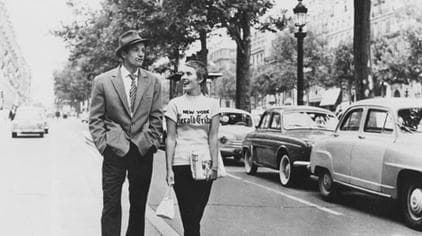
What a jump cut is
A jump cut joins two images of the same subject from nearly the same camera position after removing a piece of time between them. Because the framing changes very little, the missing action is visible: a person shifts, an object moves, or a sentence continues after a small leap.
Most continuity editing tries to hide a cut so the action feels unbroken. A jump cut does the opposite. It lets the viewer feel the edit and the missing time. The Academy of Motion Picture Arts and Sciences defines it broadly as a cut in which the joined shots do not match in time or place, creating the impression that the camera has jumped.
How the edit creates the jump
Before the cut
The camera sees a person with a cup on the table.
After the cut
The camera barely moves, but the cup is suddenly at the person's mouth.
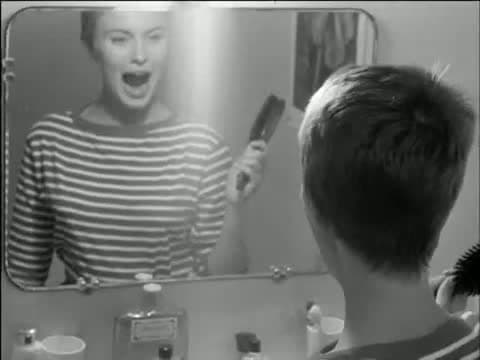
Imagine one camera recording a person sitting at a table. In the first image, the person's hand rests beside a cup. Several seconds are removed. In the next image, the camera is still in almost the same place, but the cup is at the person's mouth. The viewer sees the hand and cup jump because the movement between those positions is gone.
That missing interval is an ellipsis, which simply means that the film leaves out part of the action or time. A conventional film often hides an ellipsis by cutting to a different angle or another subject. A jump cut keeps enough of the original composition for the gap to remain obvious.
How Breathless made jump cuts famous
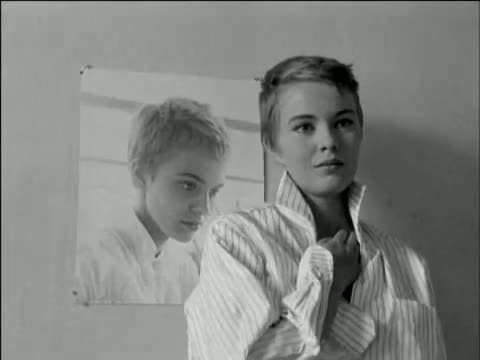
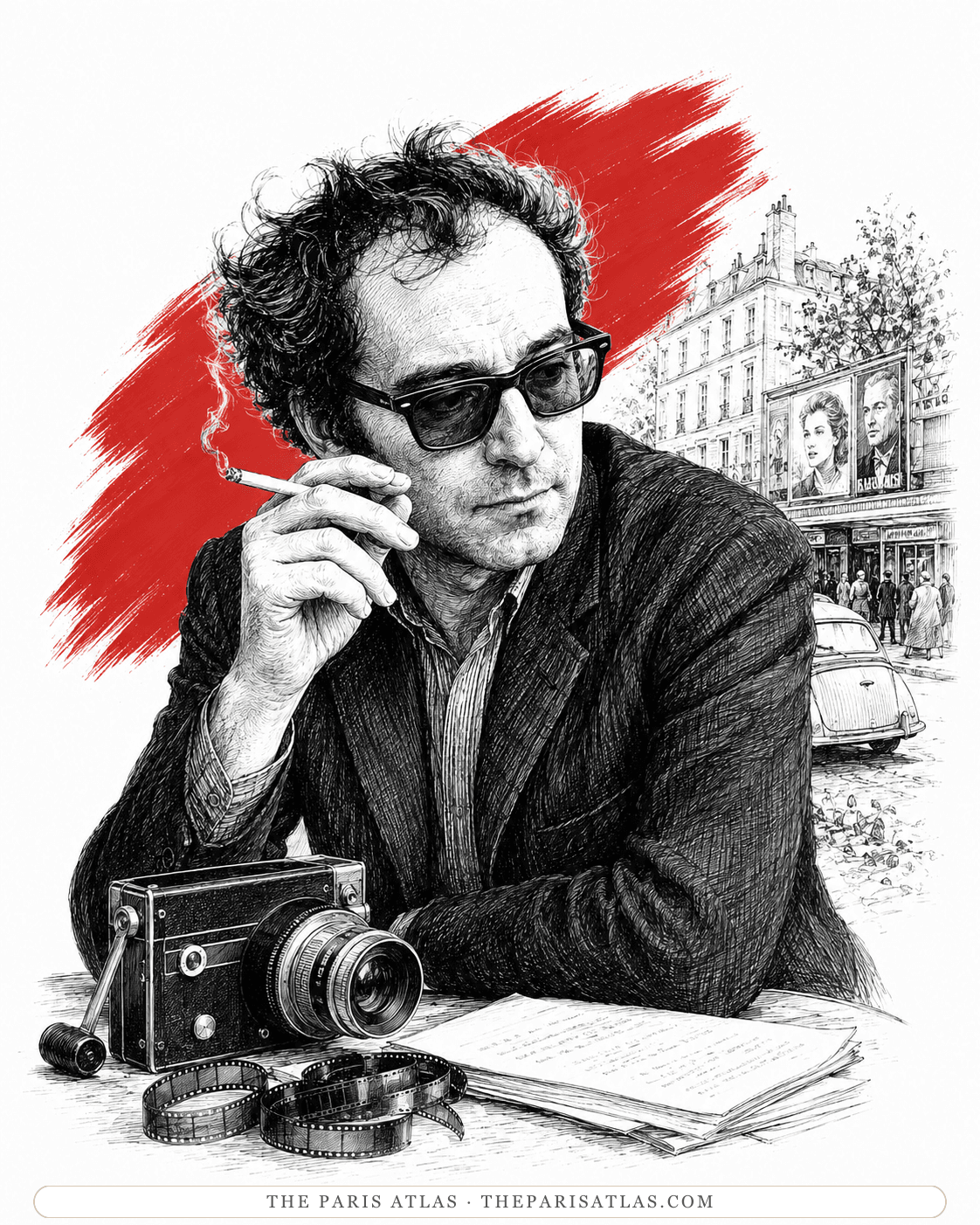
Breathless, the 1960 crime film directed by Jean-Luc Godard, did not contain jump cuts because the camera malfunctioned. They were created in the editing room. Godard and Cécile Decugis, the French film editor who cut the movie, had to shorten a first version that ran much longer than the contracted release length.
In a car conversation between Michel, played by French actor Jean-Paul Belmondo, and Patricia, played by American actor Jean Seberg, Godard described removing one side of the alternating conversation instead of trimming both sides evenly. The remaining images of Seberg were joined together. Her position changes while the car journey and conversation continue, so the missing pieces of Belmondo's side become visible as jumps.
The technique changed the film's rhythm. Turner Classic Movies reports that it was discovered during editing as a way to make the film feel more electric. The Criterion Collection describes the result as deliberately jarring and connects its pace to the speed and disorder of modern Paris. The jump cuts matter because they turn a practical need—to make the film shorter—into a style the audience can feel.
Jean-Luc Godard did not invent the jump cut
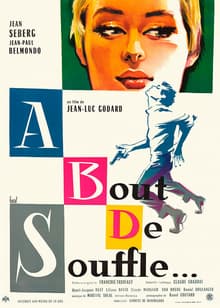
Jean-Luc Godard made the jump cut newly prominent; he did not create the first visible break in continuous action. The Academy's history of film editing traces an early form to trick films made around the turn of the twentieth century. Georges Méliès, the French magician and filmmaker, stopped the camera, changed something in the scene, and started filming again so a person or object seemed to vanish.
Those early trick cuts and the jump cuts in Breathless do not have the same purpose. Méliès used a hidden break to produce an impossible transformation. Godard left breaks visible and repeated them until discontinuity became part of the film's pace. The accurate claim is that Breathless popularized the modern expressive jump cut, not that Godard invented cutting time out of a shot.
Why filmmakers use jump cuts
A jump cut can compress time without pretending that nothing was removed. It can make a scene feel fast, nervous, comic, fragmented, or impatient. It can also remind viewers that a film has been assembled rather than simply recorded.
The effect depends on context. A string of jump cuts in a travel video may remove pauses and repeated words. In a fiction film, the same visible gaps can disturb space and rhythm. The technique is neither automatically careless nor automatically daring. It works when the visible discontinuity serves the scene.
To shorten an action
The editor removes waiting, walking, or repeated speech while keeping the subject in view. The viewer understands what happened between the remaining images without seeing every second.
To create energy or unease
Repeated shifts can make stable space feel restless. In Breathless, that rhythm suits a story about a man running out of time in modern Paris.
To show that editing is shaping the story
A visible cut can stop the audience from treating the camera as a neutral observer. The film announces that time has been selected and rearranged.
What a jump cut is not
Not every abrupt edit is a jump cut. A cut from a quiet room to an explosion may be a sharp contrast, often called a smash cut, but it does not necessarily create a jump within continuous action. A montage combines separate images to compress a longer process or build an idea. A match cut joins images through a shared shape, movement, or composition. A jump cut is identified by the visible break between closely related views of the same continuing subject or scene.
A continuity error can resemble a jump cut when an actor or object changes position between shots. The difference is purpose and pattern. An accidental mismatch distracts from an edit that was meant to disappear. A deliberate jump cut uses the mismatch as the effect.
Continue in the Atlas
See the jump cut in its historical setting
Read the French New Wave guide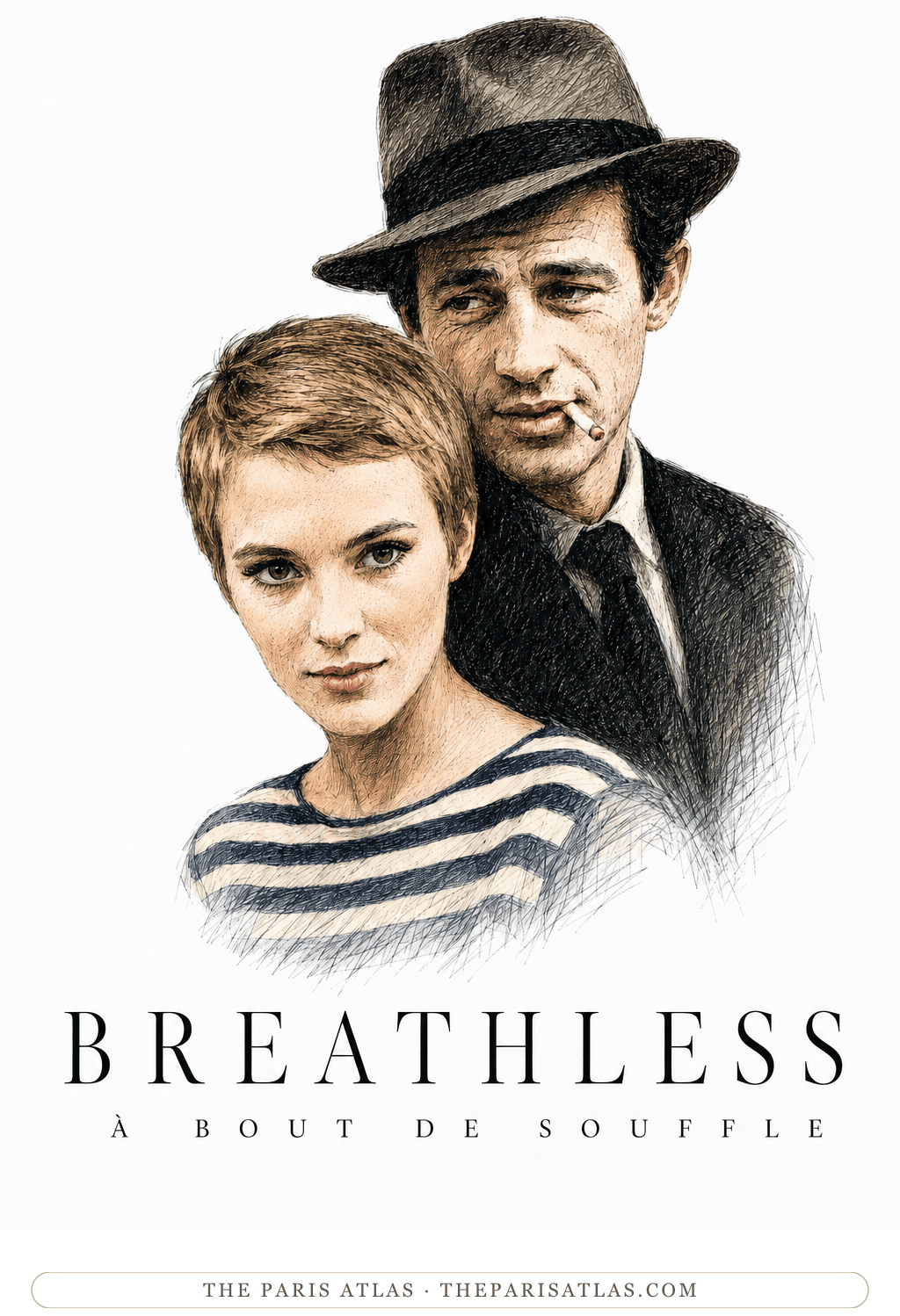
Questions about Jump cut
What is a jump cut in simple terms?
A jump cut removes a piece of continuous time while keeping nearly the same view. When the remaining images are joined, the person or object seems to jump to a new position.
Why do filmmakers use jump cuts?
Filmmakers use jump cuts to shorten action, speed up a scene, create nervous or comic energy, or make the audience notice that time has been edited.
Did Jean-Luc Godard invent the jump cut?
No. Visible breaks in continuous action existed in early cinema. Jean-Luc Godard, the French-Swiss film director, made the technique famous as an expressive modern style in Breathless, his 1960 first feature film.
Which film made jump cuts famous?
Breathless, Jean-Luc Godard's 1960 French New Wave crime film, is the standard example because it repeats visible time jumps throughout scenes instead of hiding them.
Is a jump cut always a mistake?
No. An unintended continuity error can look like a jump cut, but filmmakers also use the discontinuity deliberately. The surrounding pattern and the purpose of the scene show the difference.
What is the difference between a jump cut and a match cut?
A jump cut exposes a gap in continuous action. A match cut links two different images through a similar shape, movement, sound, or composition so the transition creates a comparison.
References
The definition comes from the Academy of Motion Picture Arts and Sciences. The account of Breathless uses the filmmaker and crew history collected by Turner Classic Movies, with critical context from the British Film Institute and The Criterion Collection.


1Teachers Guide Series: Film Editing
Official recordAcademy of Motion Picture Arts and Sciences, 2002Used forOfficial record used to verify names, dates, institutional details, or other factual information on this page.

2TCM — Behind the Camera: Breathless
WebsiteTurner Classic MoviesUsed forWeb source consulted for documented facts and historical context presented on the Jump cut page.
3Breathless
EssaysThe Criterion Collection, 1992Used forPublished analysis and historical context used in preparing the Jump cut page.
4BFI — Jean-Luc Godard obituary: a filmmaker of seismic impact and influence
WebsiteBritish Film Institute, 2022Used forWeb source consulted for documented facts and historical context presented on the Jump cut page.
These references provide the documented foundation for this concept's history and interpretation. Claim-level citations remain attached to the specific claims they support.
 Explore more resources