The Paris AtlasCharting the artists, works, and places worth returning to.
  • Sculptor
  • Painter
· French · 1911–2010

Louise Bourgeois

Sculptor of the giant Maman spiders, born in Paris on Christmas Day 1911 and raised in her parents' tapestry restoration workshop — the weaving and mending behind the spiders. New York claimed her from 1938, but the material was French, and she said so all her life.

In images

Details

Lived
1911–2010
Born
1911
Birthplace
Paris
Died
2010
Place of death
New York
Nationality
French
Roles
SculptorPainter

About Louise Bourgeois

Louise Bourgeois is filed everywhere as a New York sculptor, and the filing misses where the work comes from. She was born in Paris on 25 December 1911, and raised in her parents' tapestry restoration workshop at Choisy-le-Roi, where as a child she earned her keep drawing in the missing sections of damaged tapestries. The giant bronze spiders she made in her late eighties — each titled Maman, mother — are her stated homage to the woman who ran that workshop: a weaver, a mender, patient and useful.

The other Paris inheritance was a wound. Her father installed his mistress — Sadie, the children's English governess — in the household for a decade, in the family's full view, and Bourgeois spent seven decades of art on the betrayal. She studied mathematics at the Sorbonne, switched to art when her mother died in 1932, trained across five Paris academies — Fernand Léger told her she was a sculptor, not a painter — and ran a print shop on the rue de Seine until an American professor walked in, married her, and took her to New York in 1938.

The workshop at Choisy-le-Roi

Bourgeois was born on Christmas Day 1911 in Paris, the middle child of Joséphine and Louis Bourgeois, who dealt in and restored antique tapestries — a gallery in the city, and a restoration workshop at Choisy-le-Roi on the river Bièvre, whose waters served the dyeing. The child Louise was good at drawing, so the workshop used her: she filled in the worn and missing sections of tapestry designs, feet and flowers mostly. Repairing images of damage became, on her own account, the template for everything she made.

The household also contained the family's English governess, Sadie Gordon Richmond, who was her father's mistress for a decade, openly. The arrangement — the charming, betraying father; the mother who endured it; the child expected to notice nothing — supplied Bourgeois with her lifelong subject matter, and she never pretended otherwise. Psychoanalysis, which she undertook for decades, was as much a studio practice as a treatment.

Mathematics, then five academies

She entered the Sorbonne in 1930 to study mathematics — she loved geometry, she said later, because its rules could not be changed by anyone's behaviour. Her mother's death in 1932 broke the refuge, and she moved to art: the École des Beaux-Arts, the Académie de la Grande-Chaumière, the Académie Julian, the Académie Ranson, and the studio of Fernand Léger, who looked at her work and told her she was a sculptor. She also guided at the Louvre and, in 1937, opened a small gallery dealing in prints and drawings on the rue de Seine.

Bourgeois in New York, 1996, photographed by Oliver Mark. The first giant spider came three years later, when she was eighty-seven. (Oliver Mark, via Wikimedia Commons · CC BY-SA 4.0)

Into the rue de Seine shop in 1938 came Robert Goldwater, an American art historian buying Picasso prints. They married that year and she left for New York, where she would live for the next seventy-two years — showing paintings from 1945, carving the totem-like Personages on her apartment roof in the late 1940s, and remaining, through the whole reign of Abstract Expressionism, almost invisible.

Famous at seventy, monumental at eighty-seven

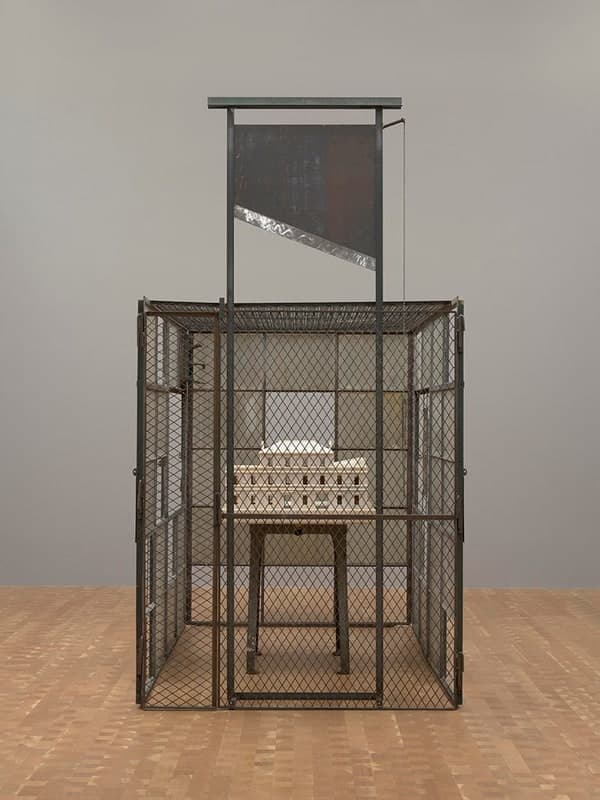
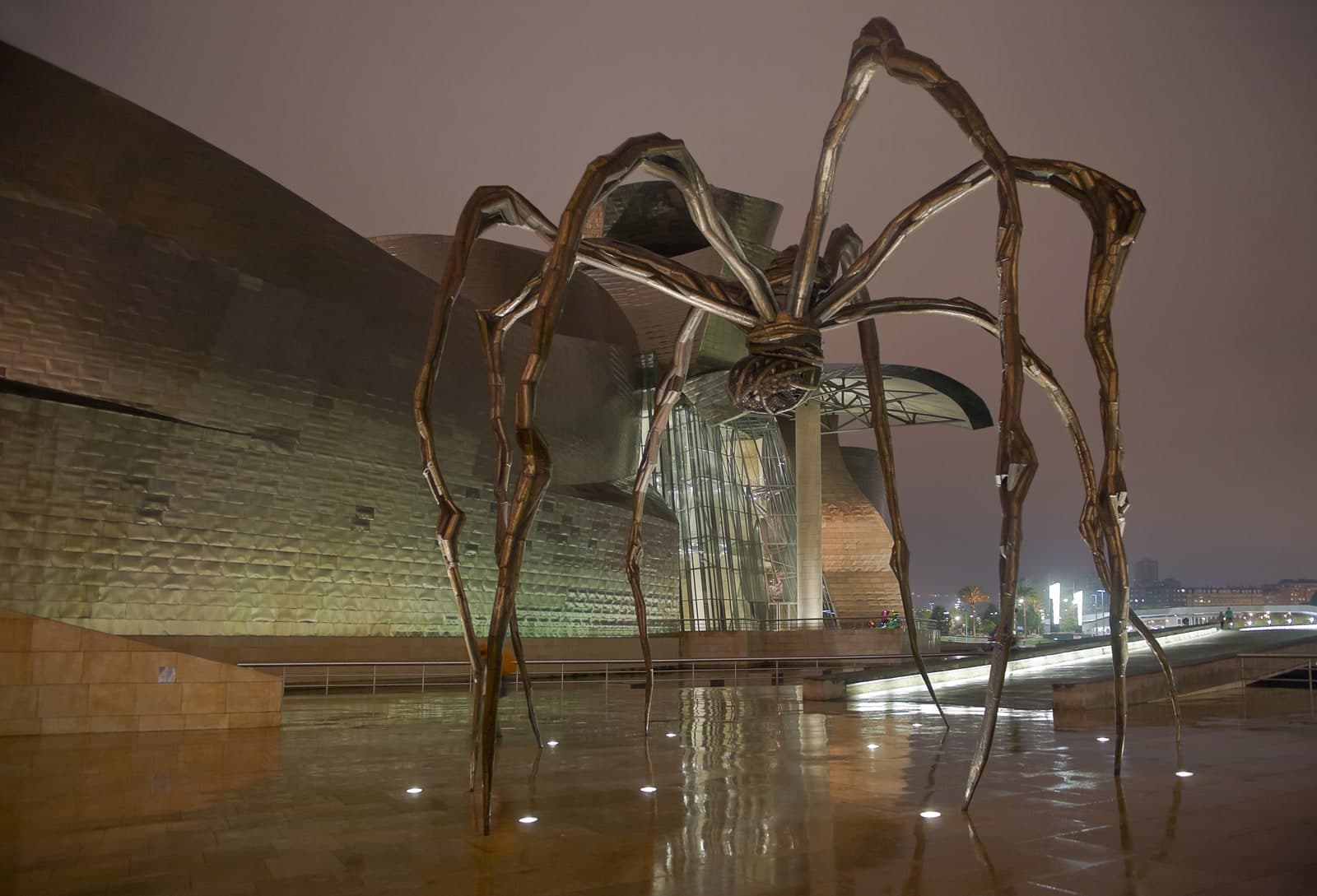
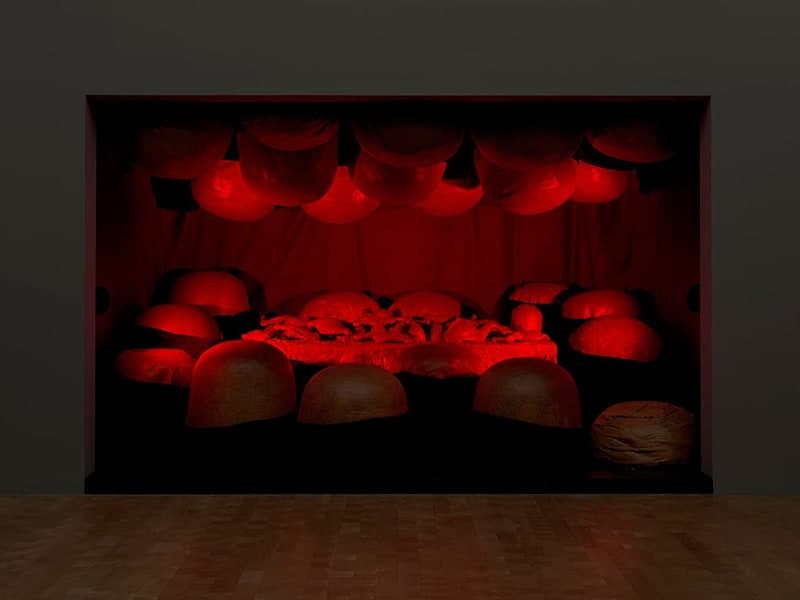
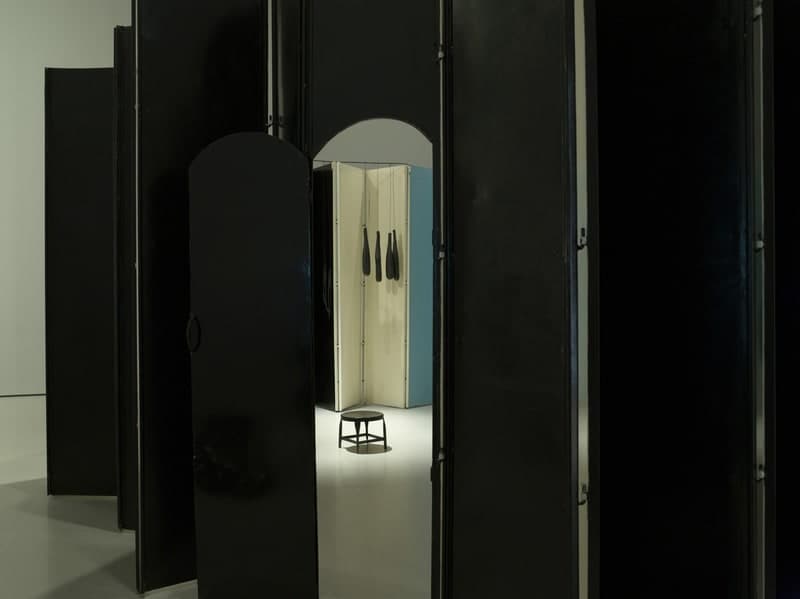
The Museum of Modern Art gave Bourgeois a retrospective in 1982, when she was seventy — its first ever for a woman sculptor — and the last three decades of her life reversed the first five. The Cells, room-sized enclosures of doors, mirrors, tapestry fragments and carved marble hands, occupied the 1990s. In 1999 she made the first Maman: a spider over nine metres tall — the original in steel, the later casts in bronze — standing guard over a sac of marble eggs, titled with the child's word for mother.

Maman inaugurated Tate Modern's Turbine Hall in 2000, and its casts now stand outside museums from Bilbao to Ottawa to Tokyo. Her explanation was consistent and Parisian: the spider was her mother — a weaver who repaired things, clever, patient, indispensable. She worked until the end, running her Sunday salons for young artists in Chelsea, and died in New York on 31 May 2010, aged ninety-eight.

Life events

  1. 1911

    Born in Paris on 25 December, into a family of tapestry dealers and restorers.

    Louise Bourgeois — Wikipedia

  2. 1919

    The family workshop settles at Choisy-le-Roi; as a child she draws in the missing sections of damaged tapestries.

    Louise Bourgeois — Wikipedia

  3. 1930

    Enters the Sorbonne to study mathematics — rules, she said, that nobody could change.

    Louise Bourgeois — Wikipedia

  4. 1932

    Her mother dies; she leaves mathematics for art, training at the Beaux-Arts, the Grande-Chaumière, Julian and Ranson academies and in Fernand Léger's studio.

    Louise Bourgeois — Wikipedia

  5. 1937

    Opens a print gallery on the rue de Seine.

    Louise Bourgeois — Wikipedia

  6. 1938

    Marries the American art historian Robert Goldwater, who walked into the shop as a customer, and moves to New York.

    Louise Bourgeois — Wikipedia

  7. 1982

    The Museum of Modern Art gives her its first retrospective for a woman sculptor. She is seventy.

    Louise Bourgeois — Wikipedia

  8. 1999

    Makes the first Maman, the nine-metre spider — steel original, bronze casts — titled with the child's word for mother.

    Louise Bourgeois — Wikipedia

  9. 2000

    Maman inaugurates the Turbine Hall at Tate Modern in London.

    Louise Bourgeois — Wikipedia

  10. 2010

    Dies in New York on 31 May, aged ninety-eight, still working.

    Louise Bourgeois — Wikipedia

People they knew

Documented connections — every one carries its source.

Illustrated portrait of Fernand Léger

Fernand Léger

  • Painter
  • Filmmaker

Met · 1934

She trained in Leger's Paris studio in the mid-1930s, one of the five academies of her art education, and credited him with the observation that redirected her career: he looked at her work and told her she was a sculptor, not a painter.

Louise Bourgeois — Wikipedia

Questions about Louise Bourgeois

Why did Louise Bourgeois make spiders?

For her mother. Joséphine Bourgeois ran the family's tapestry restoration workshop at Choisy-le-Roi outside Paris, and Bourgeois said the spider was her portrait: a weaver and mender, clever, patient, protective and useful. The giant spiders are titled Maman — the child's word for mother. The first was made in 1999, when Bourgeois was eighty-seven.

Was Louise Bourgeois French or American?

Both, in sequence. She was born in Paris on 25 December 1911, raised in the family tapestry workshop, and trained across the Sorbonne and five Paris academies before marrying the American art historian Robert Goldwater in 1938 and moving to New York, where she lived until her death in 2010. She took US citizenship in 1951; the subject matter of the work stayed French.

What happened in Louise Bourgeois's childhood?

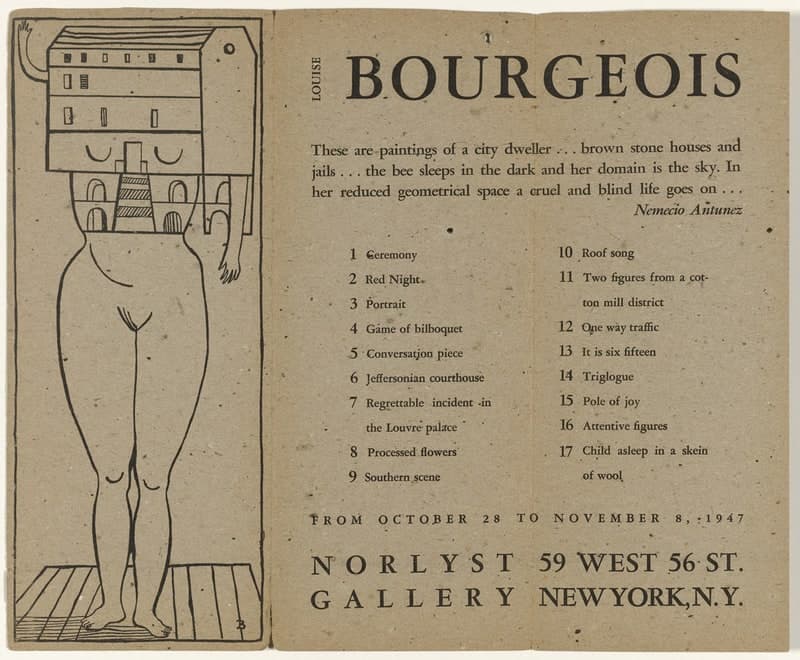
Two things she mined for seventy years. She worked in her parents' tapestry restoration workshop, drawing in the missing pieces of damaged weavings — repair as a first artistic act. And her father kept his mistress, the children's English governess Sadie Gordon Richmond, inside the household for a decade in open view; the betrayal and her mother's endurance of it became the engine of the work, from the Femme Maison ('Woman House') paintings — women's bodies with houses for heads — to the Cells.

When did Louise Bourgeois become famous?

At seventy. She had shown since 1945 in New York with little recognition; the Museum of Modern Art's 1982 retrospective — its first for a woman sculptor — reversed everything, and the last three decades of her life made her one of the most celebrated artists alive. The Maman spiders, the work most people know, began when she was eighty-seven.

Where can you see Maman?

Casts of the nine-metre spider stand outside the Guggenheim Bilbao, the National Gallery of Canada in Ottawa, the Mori Art Museum in Tokyo, the Leeum museum in Seoul and Qatar's national convention centre, among others; the steel original belongs to Tate, where it first stood in the Turbine Hall in 2000. There is no permanent Maman in Paris — the city she made spiders about.

Sourced claims

Every connection the graph holds for Louise, with the evidence behind it.

Met · 1934

Fernand Léger

She trained in Leger's Paris studio in the mid-1930s, one of the five academies of her art education, and credited him with the observation that redirected her career: he looked at her work and told her she was a sculptor, not a painter.

Louise Bourgeois — Wikipedia

References

References

The sources below include biographies, scholarly essays, interviews, and primary materials that informed this page. They reflect both the historical record and ongoing critical conversations about Louise Bourgeois and his work.

  1. 1Louise Bourgeois — Wikipedia

    Wikipedia
    View source
    i
    Why these sources are here

    These references anchor the page in the documented record and in the scholarly conversations around Louise Bourgeois. Every claim on this page traces back to one or more of the works listed here.

    Explore more resources