Anémic Cinéma
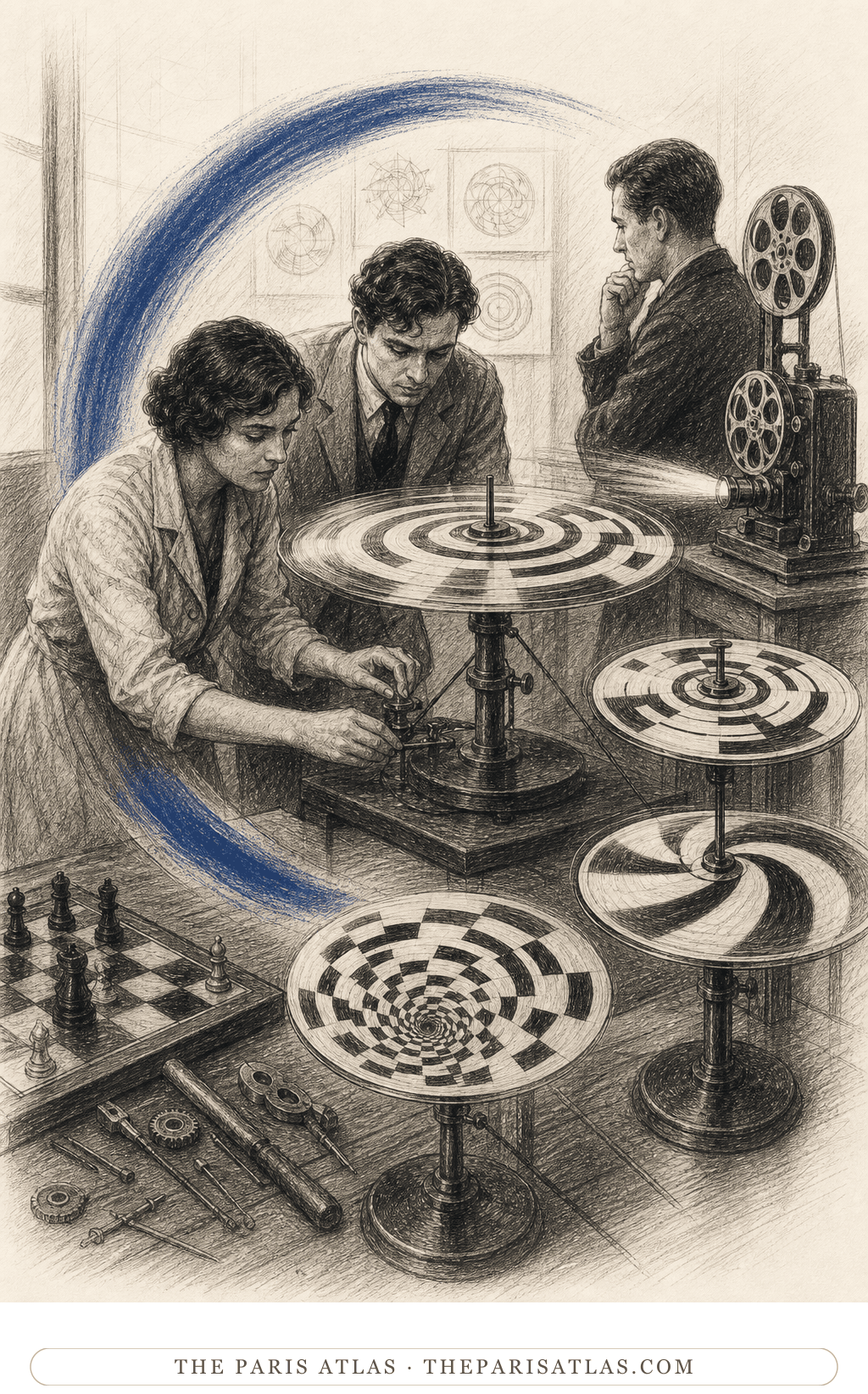
Seven minutes of spinning: Duchamp's optical discs pulse in and out of depth, alternating with rotating spiral texts whose French puns grind their obscenities slowly enough to read. Signed by his alter ego Rrose Sélavy, it is the readymade principle applied to cinema — anagram title included: Anémic is Cinéma, drained and rearranged.
- 1926
- Experimental film
About Marcel Duchamp

Precision optics, erotic engineering
Duchamp had been building motorized optical machines since 1920 — 'precision optics', he called the pursuit, half in earnest — and Anémic Cinéma mounts their results on film: rotoreliefs whose flat spirals throb into cones and back, hypnotic and faintly indecent. Between them turn discs of text, spiral sentences of alliterative French wordplay that the viewer must ride like a record needle. Man Ray and the young Marc Allégret worked the camera in Paris; the film was shown privately, one avant-garde to another.
It is the least anemic film imaginable about anemia: nothing happens, twice — motion without progress, language without statement — and in that refusal it states Duchamp's whole program more compactly than any object he signed. Cinema, the newest art, is welcomed by being politely emptied.
Timeline
1920
Duchamp began building motorized “precision optics” — the spinning optical machines whose results the film would record.
1926
Released, made with Man Ray and Marc Allégret and signed by his alter ego Rrose Sélavy: seven minutes alternating spinning discs with rotating spirals of French puns.
1935
Duchamp issued the spinning discs commercially as the Rotoreliefs, a boxed set of optical discs he tried to sell at a Paris inventors' fair.
Frequently asked questions
What is Anémic Cinéma?
A seven-minute film Marcel Duchamp made in 1926, alternating spinning optical discs with rotating spirals of French puns. He signed it with his feminine alter ego, Rrose Sélavy.
Why the strange title?
“Anémic” is an anagram of “cinéma” — the word drained and rearranged. It sets the tone for a film of motion that goes nowhere.
Who made it with him?
Man Ray and Marc Allégret helped shoot it.
What are the spinning discs?
Duchamp's “rotoreliefs”: flat spirals that appear to swell into three dimensions as they turn, drawn from the motorized “precision optics” he had been building since 1920.
What does it mean?
By design, almost nothing “happens” — motion without progress, language without statement. It applies the readymade principle to film, and states Duchamp's program as compactly as any object he made.
Is it connected to his other work?
Yes. The optical discs became the commercially issued Rotoreliefs in 1935, and the Rrose Sélavy signature ties the film to Duchamp's wordplay and alter-ego works.
More by Marcel Duchamp
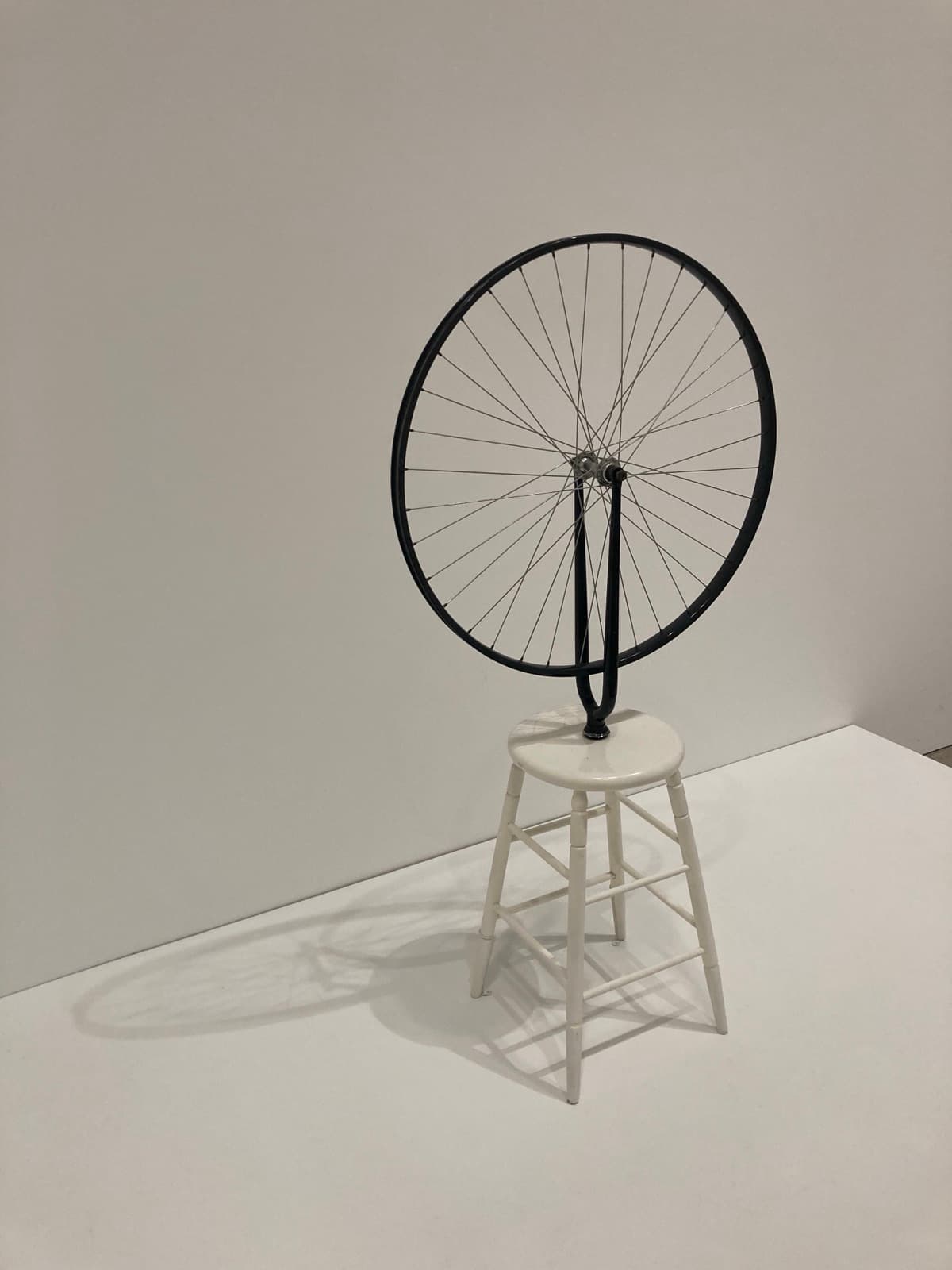
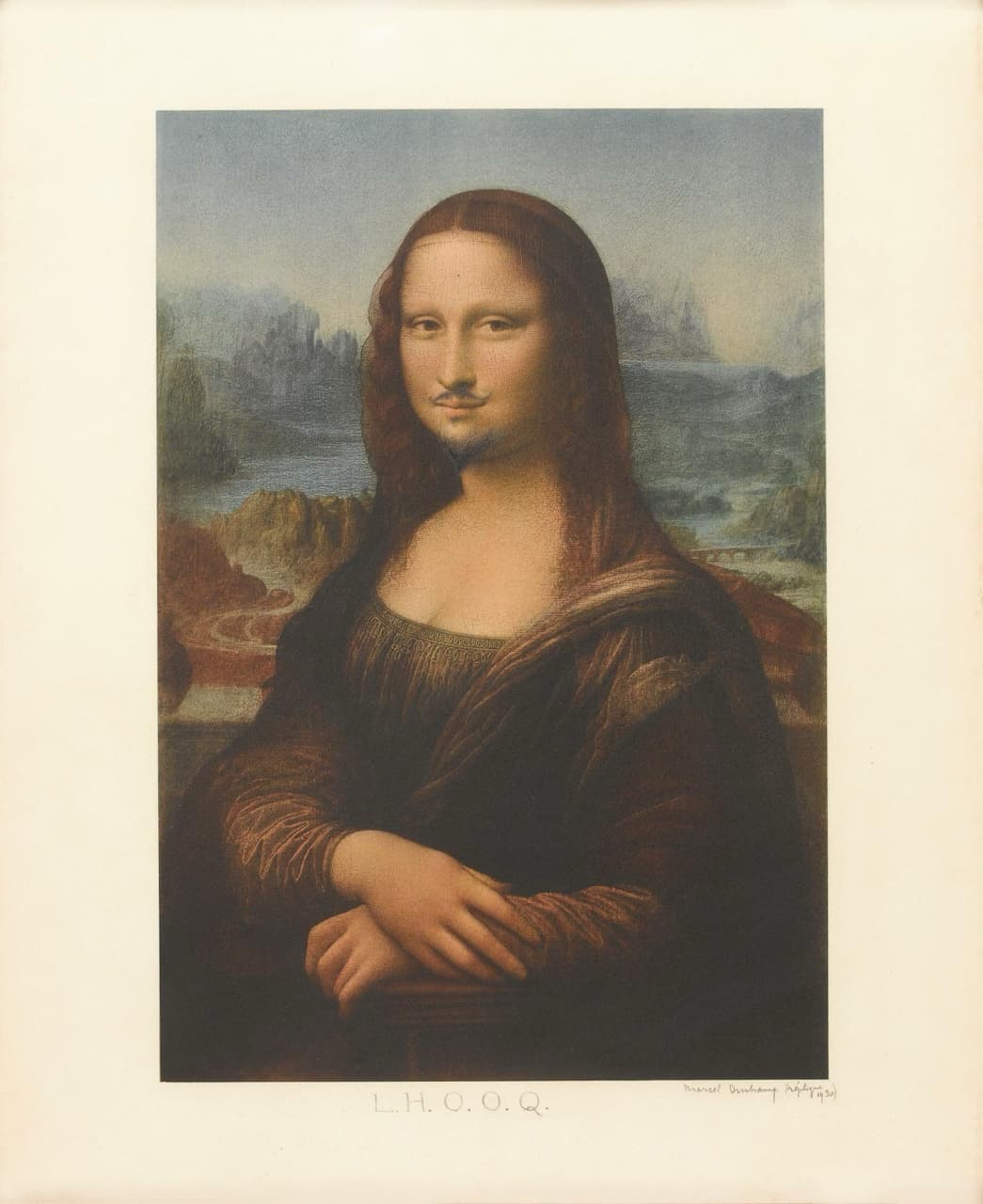
If you like Marcel Duchamp
Explore directors from the same movements and circles.

Man Ray
Montparnasse's American eye — portraitist of the whole expatriate quarter, inventor of the rayograph, and maker of films (Emak-Bakia, L'Étoile de mer) that treated the camera as another darkroom.
View artist
Henri Cartier-Bresson
French photographer who turned a pocket-sized 35mm camera into an instrument of split-second composition — the idea the world knows as 'the decisive moment'. He trained as a painter, was taken prisoner in 1940 and escaped on his third try, photographed the Liberation of Paris in August 1944, co-founded the photographer-owned agency Magnum Photos in 1947, gave up reporting for drawing in the 1970s, and left Paris a foundation in the Marais that deliberately hangs no permanent display of his own pictures.
View artist
Salvador Dalí
The self-made icon of Surrealism — melting watches and manicured scandal — who arrived in Paris by way of two films written with Buñuel, dreamed together before the movement claimed them.
View artist
References
The sources below include collection records, catalogues, scholarly research, and primary materials that informed this page. They document Anémic Cinéma, its making, and its place in cultural history.


1The Museum of Modern Art — Anémic Cinéma (collection record)
WebsiteUsed forWeb source consulted for documented facts and historical context presented on the Anémic Cinéma page.
2Encyclopaedia Britannica — Marcel Duchamp
WebsiteUsed forWeb source consulted for documented facts and historical context presented on the Anémic Cinéma page.
3Centre Pompidou — Marcel Duchamp : Anémic Cinéma (dossier ressource)
WebsiteUsed forWeb source consulted for documented facts and historical context presented on the Anémic Cinéma page.

4Anémic cinéma (1925) — Collection Record
Official recordCentre PompidouUsed forOfficial record used to verify names, dates, institutional details, or other factual information on this page.
These references provide the documented foundation for this work's history and interpretation. Claim-level citations remain attached to the specific claims they support.
 Explore more resources