The Paris AtlasCharting the artists, works, and places worth returning to.
  • Photographer
· French · 1857–1927

Eugène Atget

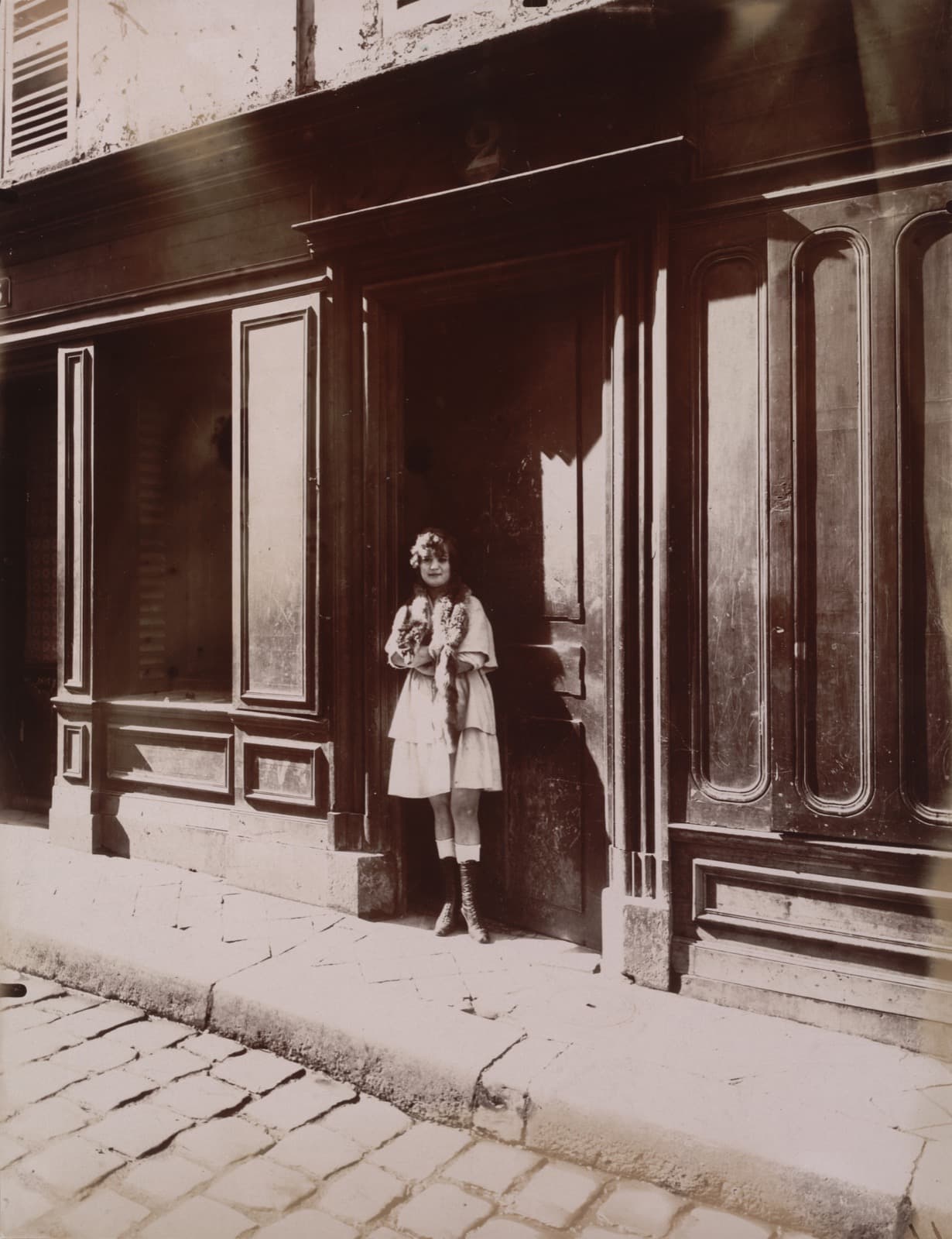
The photographer who spent thirty years documenting the streets, shopfronts and doorways of a Paris that was being demolished around him, sold the pictures as working material to painters, and is now counted a founder of documentary photography.

Details

Lived
1857–1927
Born
12 February 1857
Birthplace
Libourne
Birth name
Jean-Eugène-Auguste Atget
Died
4 August 1927 · aged 70
Place of death
Paris
Nationality
French
Profession
Photographer
Major works
roughly 10,000 photographs of Paris in thirteen series, among them Art in Old Paris, Picturesque Paris, Topography of Old Paris, Interiors and Versailles
Partner
Valentine Delafosse Compagnon · until 1926
Roles
Photographer

About Eugène Atget

French photographer who spent thirty years recording old Paris before it was demolished, and called the results documents rather than art

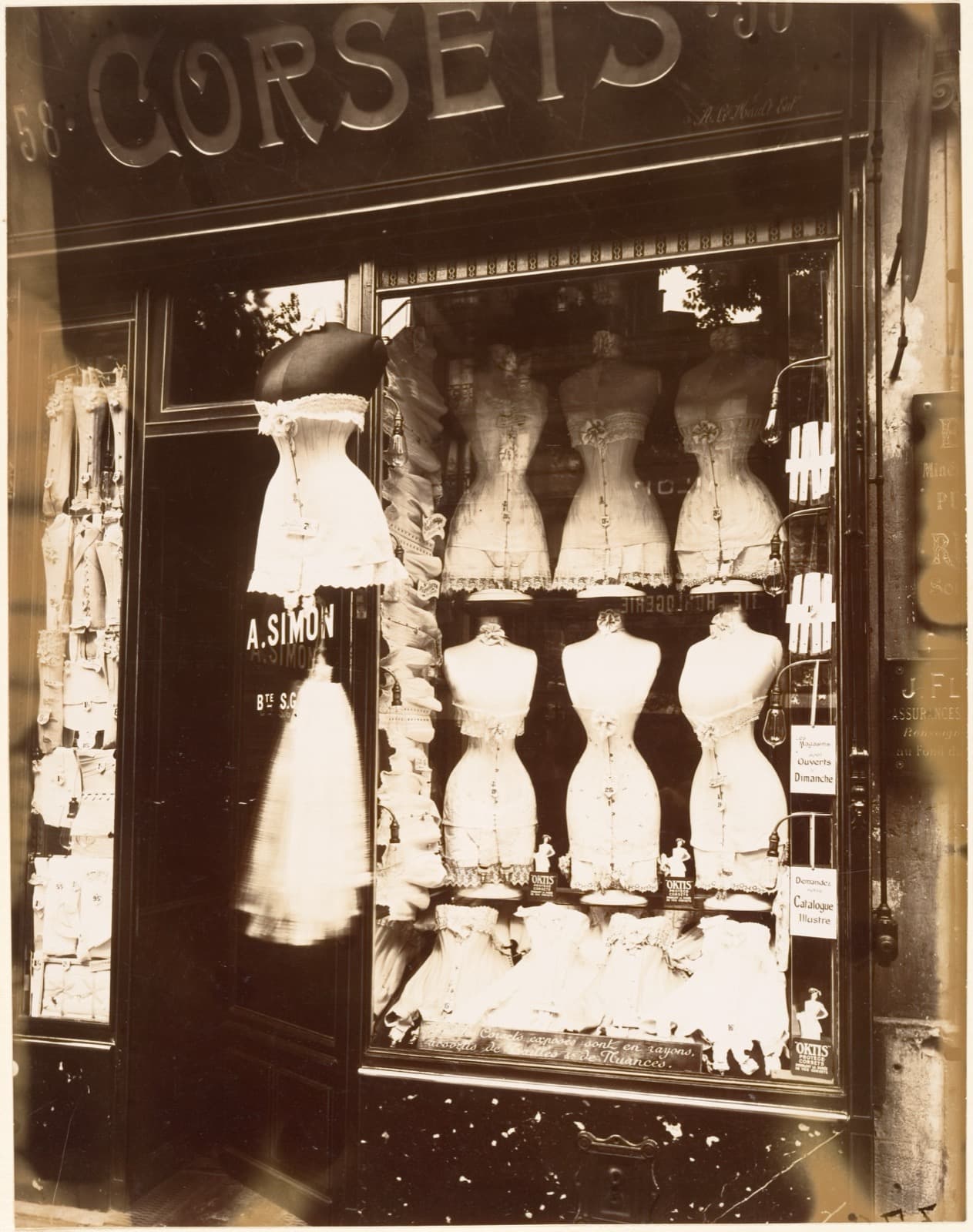
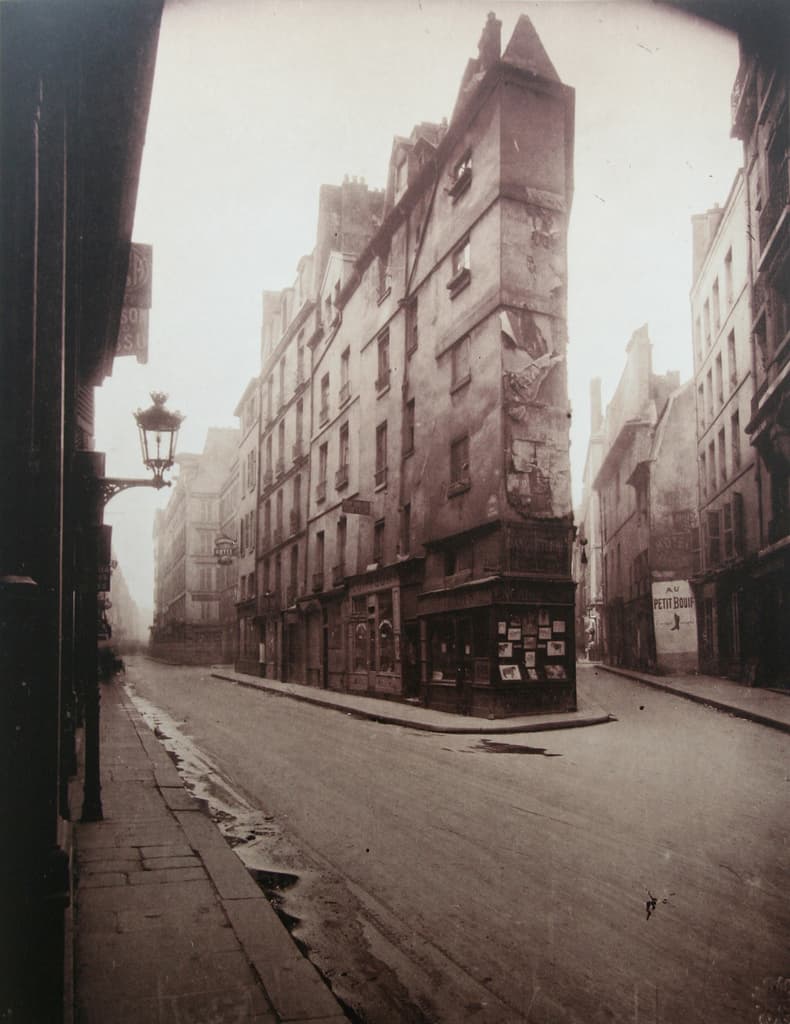
Eugène Atget was a French photographer, born in Libourne on 12 February 1857, who made roughly ten thousand photographs of Paris between 1890 and his death in 1927. He photographed streets, courtyards, shopfronts, doorways, staircases, park statuary and street traders, concentrating on the parts of the city that predated the French Revolution and were being cleared away as Paris modernised.

He did not present this as art. His shop sign read Documents pour Artistes, documents for artists, and he sold prints as working material to painters, architects, decorators and set designers, and in bulk to municipal archives and libraries. Asked by Man Ray for permission to publish one, he answered that his name should be left off, because these were simply documents he made.

He was an orphan at seven, a merchant seaman, then an actor for about fifteen years until a vocal cord infection ended it. He took up photography at thirty. Berenice Abbott found him near the end of his life, photographed him in 1927, bought what was left of his studio after he died, and spent forty years making him known. He died in Paris on 4 August 1927, aged 70.

Libourne, the merchant navy, and the stage, 1857–1888

Jean-Eugène-Auguste Atget was born on 12 February 1857 in Libourne, near Bordeaux. His father, a carriage builder, died in 1862 and his mother shortly afterwards, leaving him an orphan at seven. His maternal grandparents raised him in Bordeaux, and after finishing school he went to sea in the merchant navy.

He moved to Paris in 1878 to become an actor. He failed the drama school entrance examination, passed it on a second attempt, and was then expelled, because military conscription meant he could only attend part time. He acted with a travelling company in the Paris suburbs and the provinces instead, and there met the actress Valentine Delafosse Compagnon, who was his companion until her death in 1926. An infection of his vocal cords ended the acting in 1887. He tried painting without success, and at thirty made his first photographs, of Amiens and Beauvais, in 1888.

Documents pour Artistes, 1890–1914

Atget returned to Paris in 1890 and set up as a professional photographer supplying material to other people's trades. By 1891 a sign at his door read Documents pour Artistes. His customers were painters, architects, interior decorators, builders, ironworkers, engravers, illustrators and stage designers, who bought his prints as reference for their own work. His surviving address book, a thumb-indexed notebook now at the Museum of Modern Art, lists 460 of them, including the jeweller René Lalique and the painters Tsuguharu Foujita, Maurice de Vlaminck and Georges Braque.

Institutions became the larger buyers. The Musée Carnavalet and the Bibliothèque historique de la ville de Paris began purchasing in 1898, and around 1906 the latter commissioned him to photograph old Paris buildings systematically. He moved to Montparnasse in 1899. From the early 1900s he read widely on the city's history and set himself the subject he kept for the rest of his life. It was the Paris that predated the Revolution, photographed in context rather than as flat architectural elevations, at a moment when it was being demolished.

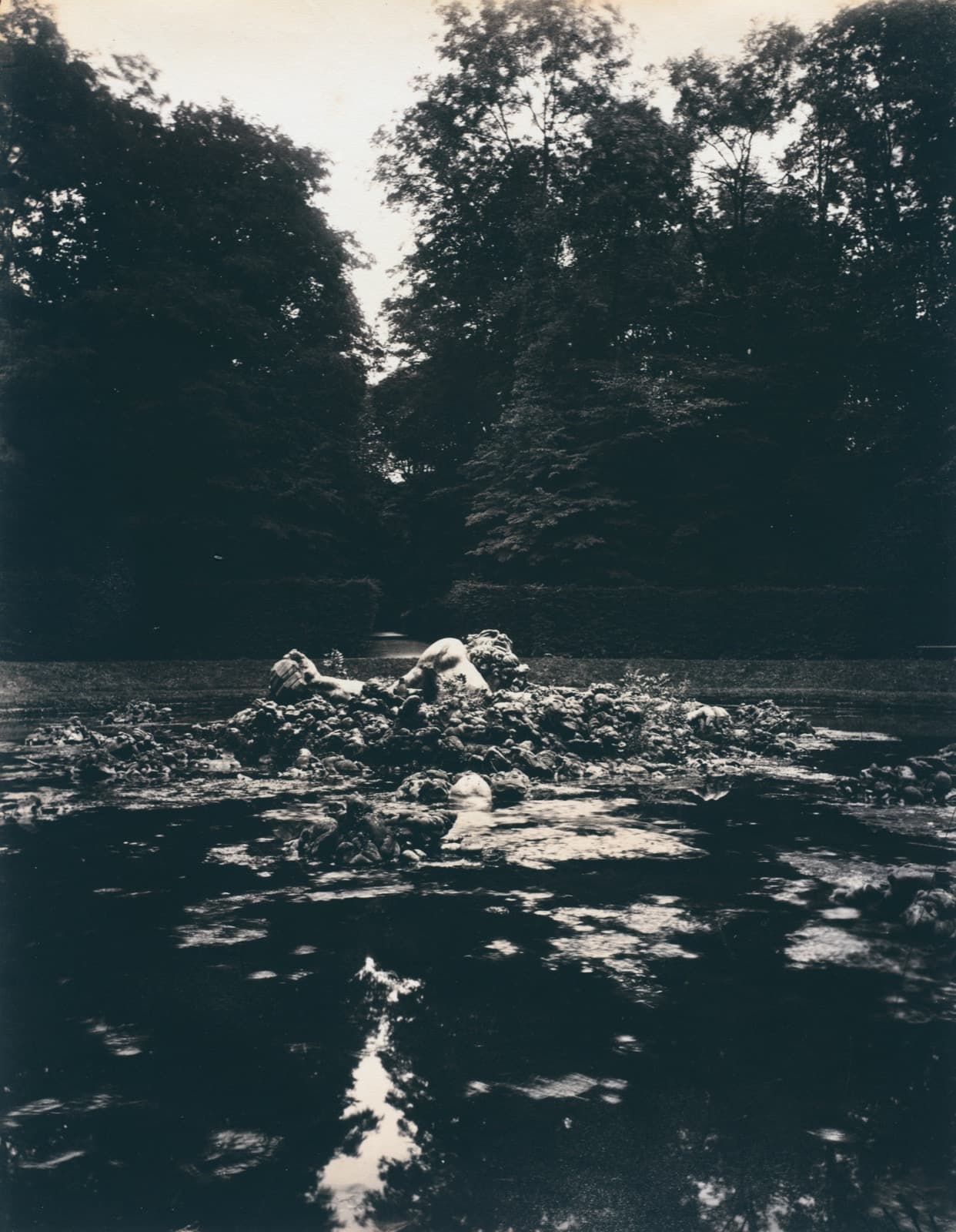
His subjects widened as he went. He photographed the small trades of the street in a series he called Petits Métiers. He made views of the gardens at Versailles from the summer of 1901 onward and returned to them until 1927. Altogether he worked concurrently on thirteen separate series, among them Art in Old Paris, Picturesque Paris, Topography of Old Paris, Interiors, Environs, Saint-Cloud, Sceaux and Parisian Parks. He would set a series aside for years and then come back to it.

How Atget worked

Atget used a large-format wooden bellows camera with a rapid rectilinear lens, and kept using it long after lighter and faster cameras were available. He shot on 180 by 240 millimetre glass plates coated with a slow emulsion, so exposures were long and anything that moved through the frame blurred. He shifted the lens relative to the plate to keep vertical lines straight, which is why some of his corners darken.

He owned no enlarger. Every print he made is the same size as its negative, contact-printed by clamping plate and paper together in a frame and putting it out in the sun, then washing, fixing and gold-toning it. Each negative was developed, numbered in pencil on the back and scratched into the emulsion, and filed into one of his categories. He photographed his own darkroom once, for a series made for the Bibliothèque nationale, and it holds trays, a safelight and printing frames.

The archive rather than the single picture is what most historians now argue the work is. About ten thousand photographs exist, organised on a filing principle he applied consistently for decades. The 1981 study by John Szarkowski and Maria Morris Hambourg at the Museum of Modern Art treats the whole catalogue as the thing he made. That reading leaves an unresolved question, which the critic Rosalind Krauss has pressed: it is not clear where the work stops, whether a single chosen frame is the work or the several thousand together are.

The war, the sales, and the last years, 1914–1927

Atget put his archive in the basement during the First World War and very nearly stopped photographing. Valentine's son Léon was killed at the front. In 1920 and 1921 he sold thousands of negatives to public institutions, which left him financially secure enough to photograph what he chose. He went back to the parks at Versailles, Saint-Cloud and Sceaux, and made a series on prostitutes.

The poverty often attached to his name may be overstated. Few documents about his life survive, and some researchers regard the destitution as a later invention that made him a more romantic figure. John Szarkowski cited a fragment of Atget's correspondence with Paul Léon, a senior official in the French cultural administration, recording the sale of 2,600 negatives for 10,000 francs. It was one of his largest sales but not his only one.

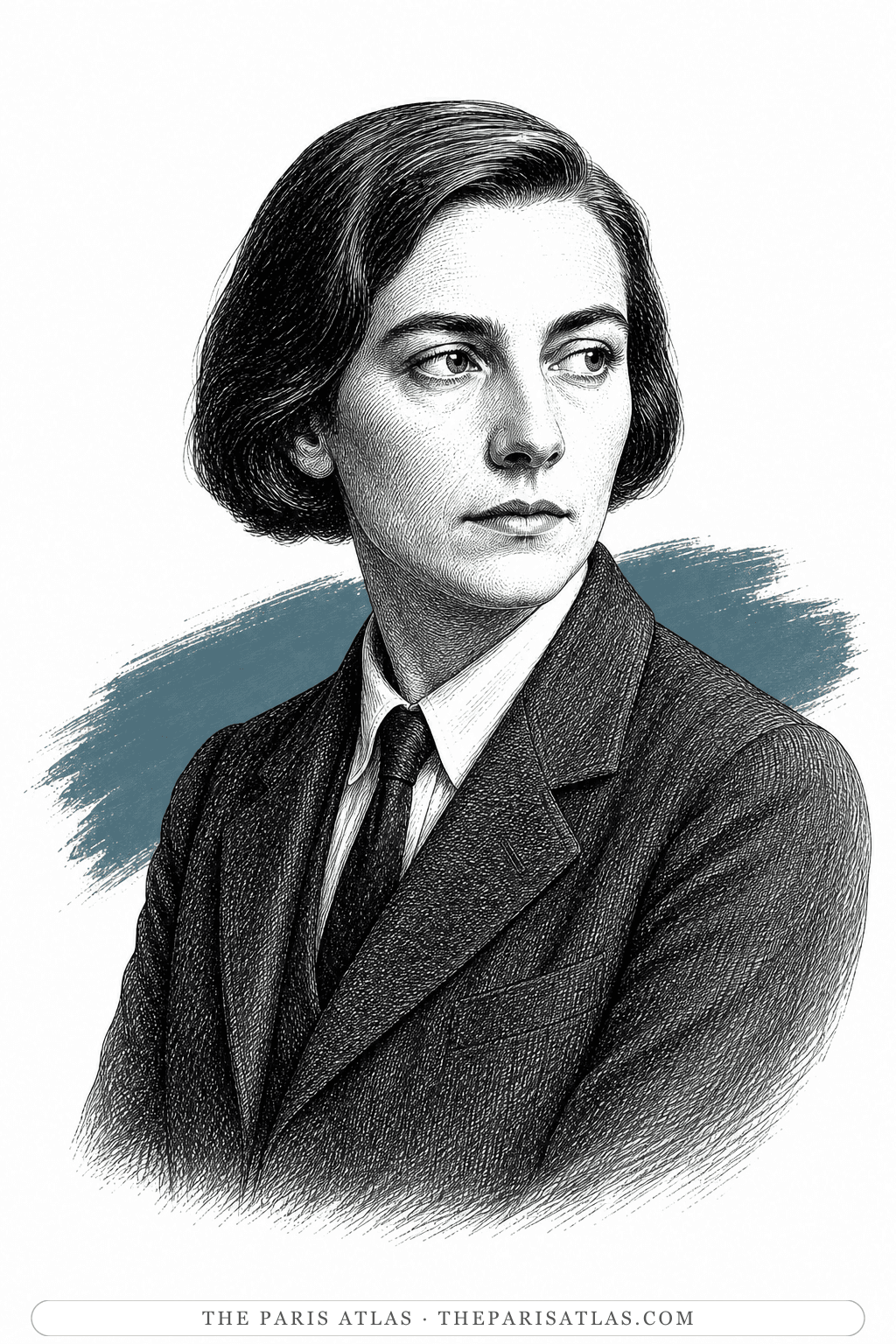
Valentine died in 1926, and Eugène Atget died in Paris on 4 August 1927, aged 70. Berenice Abbott had photographed him earlier that year, in a full-face and a profile portrait, and he did not live to see them. She described the man in them as slightly stooped, tired, sad, remote and appealing.

The Surrealists, and a refusal

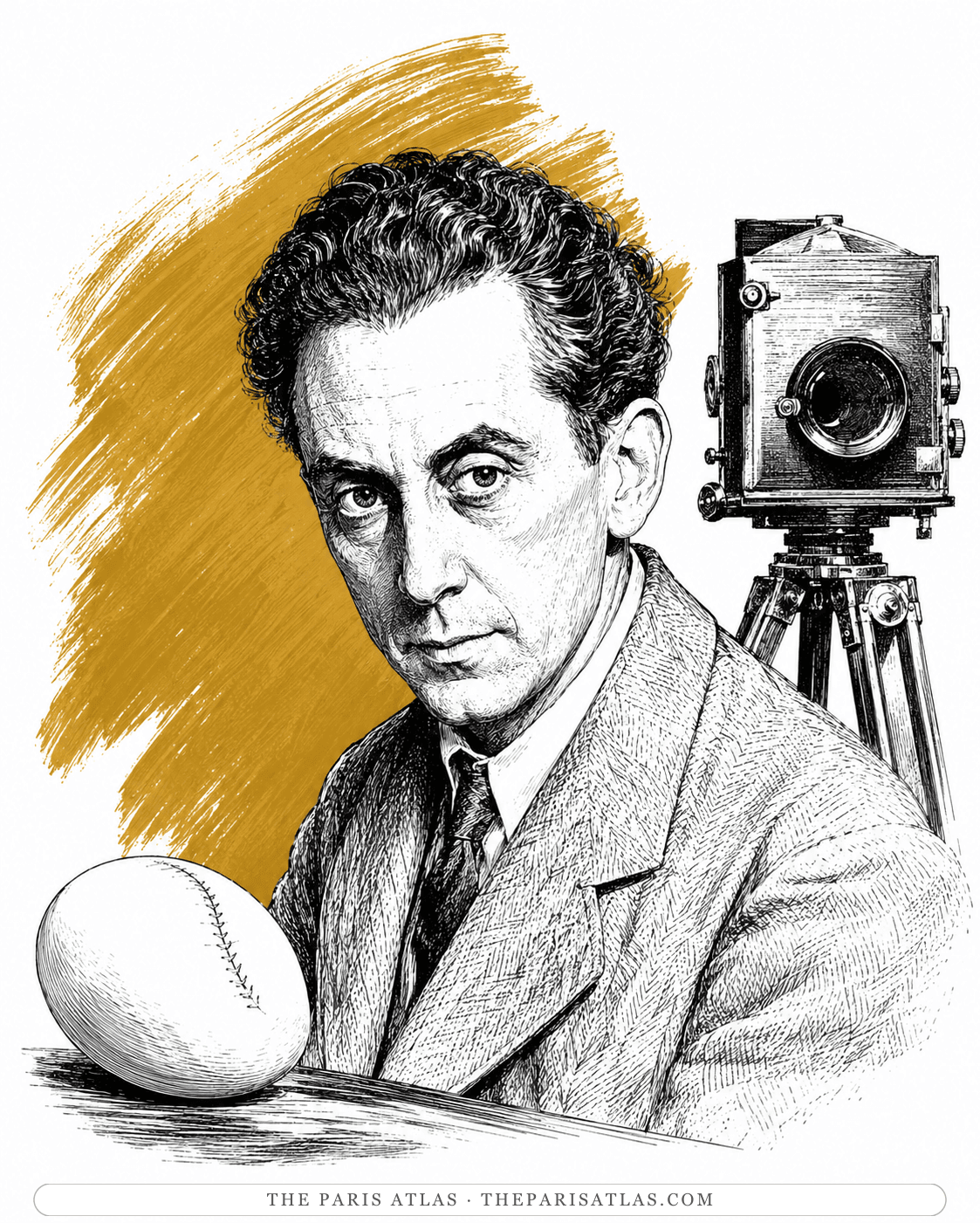
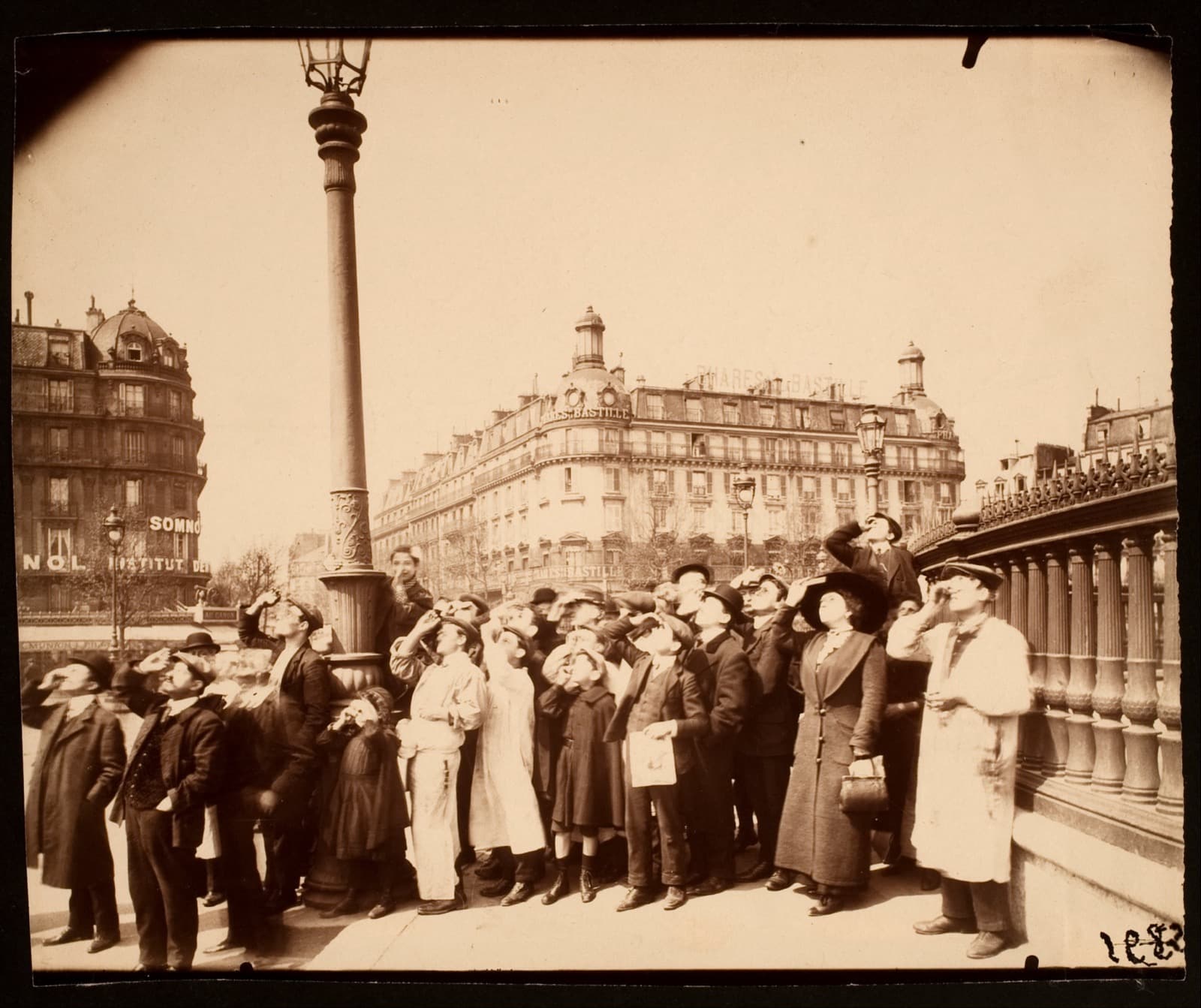
Man Ray lived on the same Montparnasse street, the rue Campagne-Première, and collected almost fifty of Atget's photographs into an album he embossed with Atget's name and the date 1926. He published several in the magazine La Révolution surréaliste. The best known ran in the issue of 15 June 1926. Atget had taken it fourteen years earlier: a crowd at the Colonne de Juillet, squinting through smoked glass and their own fingers at the solar eclipse of 17 April 1912.

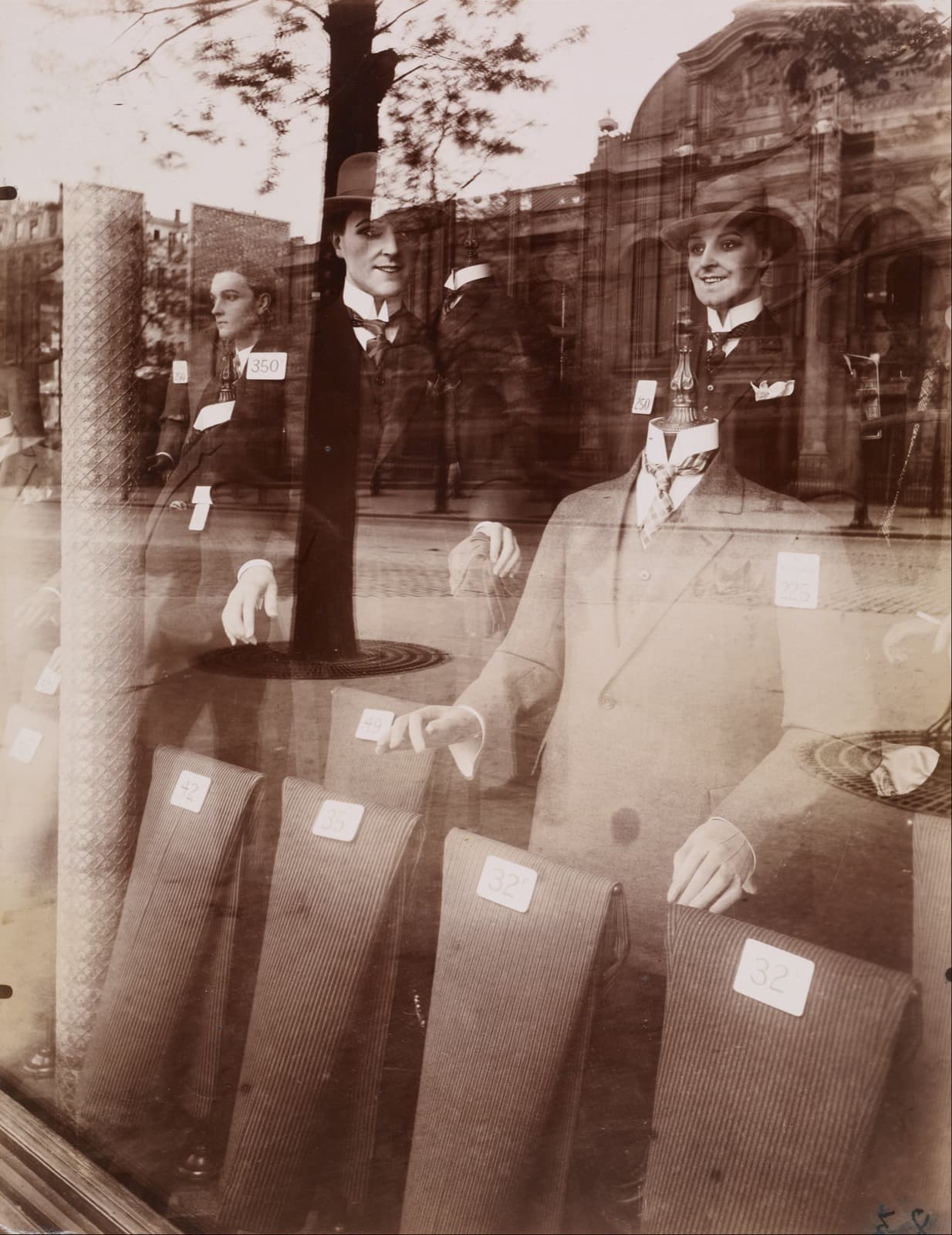
What the Surrealists saw in him was the shop windows, the mannequins, the empty staircases and the reflections in which foreground and background run together. Atget did not consider himself one of them and did not want the association. When Man Ray asked to use a photograph, his answer was to leave his name off it, because they were simply documents he made.

Berenice Abbott and the rescued archive

Berenice Abbott was working as Man Ray's darkroom assistant when she was shown Atget's photographs in 1925. She visited him, bought prints, and tried to interest other artists in the work. She persuaded him to sit for the 1927 portrait shortly before he died.

The French state and Atget's executor took most of the archive after his death. Abbott bought what remained of the studio in June 1928, thousands of prints and more than a thousand negatives, selling a half interest to the dealer Julien Levy because she could not afford it alone. She took it to New York and spent forty years making him known, beginning with the 1930 book Atget, photographe de Paris, on which she is credited as photo editor. She sold the collection to the Museum of Modern Art in 1968.

Atget's standing as a founder of documentary photography rests substantially on that work. His own painters had bought his pictures for a few centimes as reference. Henri Matisse, Marcel Duchamp, Pablo Picasso, Maurice Utrillo and André Derain all owned them, and some of their views are taken from the exact spot where he had set up his camera.

Life events

  1. 1857

    Born Jean-Eugène-Auguste Atget at Libourne on 12 February.

    Eugène Atget

  2. 1864

    Orphaned at seven and raised by his maternal grandparents in Bordeaux.

    Eugène Atget

  3. 1878

    Moves to Paris to train as an actor; is admitted to drama school on a second attempt, then expelled.

    Eugène Atget

  4. 1887

    A vocal cord infection ends his acting career.

    Eugène Atget

  5. 1888

    Makes his first photographs, at Amiens and Beauvais, aged thirty.

    Eugène Atget

  6. 1890

    Returns to Paris as a professional photographer supplying documents for artists.

    Eugène Atget

  7. 1898

    The Musée Carnavalet and the Bibliothèque historique de la ville de Paris begin buying his photographs.

    Eugène Atget

  8. 1906

    Commissioned to photograph the old buildings of Paris systematically.

    Eugène Atget

  9. 1920

    Sells thousands of negatives to public institutions over two years, becoming financially independent.

    Eugène Atget

  10. 1925

    Berenice Abbott, working in Man Ray's studio, is shown his photographs and seeks him out.

    Eugène Atget

  11. 1926

    Man Ray publishes his photograph of the 1912 solar eclipse crowd in La Révolution surréaliste on 15 June; Valentine dies.

    Eugène Atget

  12. 1927

    Sits for Berenice Abbott's portraits, and dies in Paris on 4 August, aged 70.

    Eugène Atget

  13. 1928

    Abbott buys the remainder of his studio in June and takes it to New York.

    Eugène Atget

  14. 1930

    Atget, photographe de Paris appears, with Abbott credited as photo editor.

    Atget, photographe de Paris (1930)

  15. 1968

    Abbott sells the Atget collection to the Museum of Modern Art.

    Eugène Atget

  16. 1981

    John Szarkowski and Maria Morris Hambourg begin the Museum of Modern Art study that treats the whole archive as the work.

    John Szarkowski and Maria Morris Hambourg, The Work of Atget (1981)

People they knew

Documented connections — every one carries its source.

Illustrated portrait of Berenice Abbott

Berenice Abbott

  • Photographer

Met · 1925–1927

Abbott sought Atget out in 1925 after Man Ray showed her his work, bought prints from him, and persuaded him to sit for a portrait in 1927. He died on 4 August that year without seeing the two photographs she made of him.

Eugène Atget

Who drew from them

Influence running outward — the writers and artists who built on their work.

Illustrated portrait of Berenice Abbott

Berenice Abbott

Abbott was shown Atget's photographs in 1925 and took his method to New York. What she absorbed was the programme rather than a style: photograph a city systematically, in context and without decoration, while it is being demolished. Changing New York, made between 1929 and 1939, is that idea applied to Manhattan, down to the large-format camera and the refusal to prettify.

Eugène Atget; Berenice Abbott

Illustrated portrait of Man Ray

Man Ray

Man Ray lived on Atget's street and collected almost fifty of his photographs into an album dated 1926. What he took from them was the uncanny in plain documentary: shop windows where reflections double the street, mannequins that look about to move, empty staircases. He published several in La Révolution surréaliste, among them Atget's photograph of a crowd watching the 1912 solar eclipse, in the issue of 15 June 1926. Atget asked that his name be left off, saying they were simply documents he made.

Eugène Atget

Questions about Eugène Atget

Who was Eugène Atget?

Eugène Atget (1857–1927) was a French photographer who made roughly ten thousand photographs of Paris between 1890 and his death. He concentrated on the parts of the city that predated the French Revolution and were being demolished as Paris modernised: streets, courtyards, shopfronts, doorways, staircases, park statuary and street traders. He is now regarded as a founder of documentary photography.

Did Eugène Atget consider himself an artist?

No. He sold his prints as working material to painters, architects, decorators and set designers, and the sign at his door read Documents pour Artistes. When Man Ray asked permission to publish one of his photographs, Atget told him to leave his name off it, because these were simply documents he made. His reputation as an artist was built after his death, largely by other people.

What did Berenice Abbott do for Atget?

She saved his archive and spent forty years promoting it. Abbott was shown his work in 1925 while assisting Man Ray, sought him out, and photographed him in 1927 shortly before he died. After his death she bought what remained of his studio in June 1928, thousands of prints and over a thousand negatives, with help from the dealer Julien Levy. She took it to New York, edited the 1930 book Atget, photographe de Paris, and sold the collection to the Museum of Modern Art in 1968.

Was Eugène Atget a Surrealist?

No, though the Surrealists claimed him. Man Ray lived on the same street, collected nearly fifty of his photographs, and published several in La Révolution surréaliste, drawn to the shop windows, mannequins, empty staircases and doubled reflections. Atget rejected the association and asked not to be credited.

How did Eugène Atget take his photographs?

With a large-format wooden bellows camera he kept using long after faster ones existed, on 180 by 240 millimetre glass plates with a slow emulsion, which is why moving figures blur in his street scenes. He owned no enlarger, so every print is the size of its negative, contact-printed in sunlight and then gold-toned. He shifted the lens relative to the plate to keep vertical lines straight, which darkens some corners.

Was Eugène Atget poor?

Less certainly than the legend suggests. Few documents about his life survive, and some researchers regard his destitution as a story invented later to make him a more romantic figure. John Szarkowski cited correspondence recording a sale of 2,600 negatives for 10,000 francs, one of several institutional sales, and by 1921 Atget was secure enough to photograph whatever he chose.

Sourced claims

Every connection the graph holds for Eugène, with the evidence behind it.

Influenced · 1925

Berenice Abbott

Abbott was shown Atget's photographs in 1925 and took his method to New York. What she absorbed was the programme rather than a style: photograph a city systematically, in context and without decoration, while it is being demolished. Changing New York, made between 1929 and 1939, is that idea applied to Manhattan, down to the large-format camera and the refusal to prettify.

Eugène Atget; Berenice Abbott

Influenced · 1926

Man Ray

Man Ray lived on Atget's street and collected almost fifty of his photographs into an album dated 1926. What he took from them was the uncanny in plain documentary: shop windows where reflections double the street, mannequins that look about to move, empty staircases. He published several in La Révolution surréaliste, among them Atget's photograph of a crowd watching the 1912 solar eclipse, in the issue of 15 June 1926. Atget asked that his name be left off, saying they were simply documents he made.

Eugène Atget

Met · 1925–1927

Berenice Abbott

Abbott sought Atget out in 1925 after Man Ray showed her his work, bought prints from him, and persuaded him to sit for a portrait in 1927. He died on 4 August that year without seeing the two photographs she made of him.

Eugène Atget

References

References

The sources below include biographies, scholarly essays, interviews, and primary materials that informed this page. They reflect both the historical record and ongoing critical conversations about Eugène Atget and their work.

  1. 1Eugène Atget

    Website
    Wikipedia
    Used for

    Reference article cross-checked for the early life, the working practice, the institutional sales, the Man Ray episode and the death.

    View source
  2. 2Eugène Atget

    Website
    Encyclopaedia Britannica
    Used for

    Encyclopaedia Britannica's biography, used for dates and the outline of the career.

    View source
  1. 3The Work of Atget

    Exhibition catalogue
    The Museum of Modern Art, 1981
    Used for

    The Museum of Modern Art study that reframed the whole archive, rather than the single print, as the work.

  2. 4Atget, photographe de Paris

    Nonfiction
    Henri Jonquières, 1930
    Used for

    The first book of his photographs, published three years after his death with Berenice Abbott as photo editor.

i
Why these sources are here

These references anchor the page in the documented record and in the scholarly conversations around Eugène Atget. Every claim on this page traces back to one or more of the works listed here.

Explore more resources