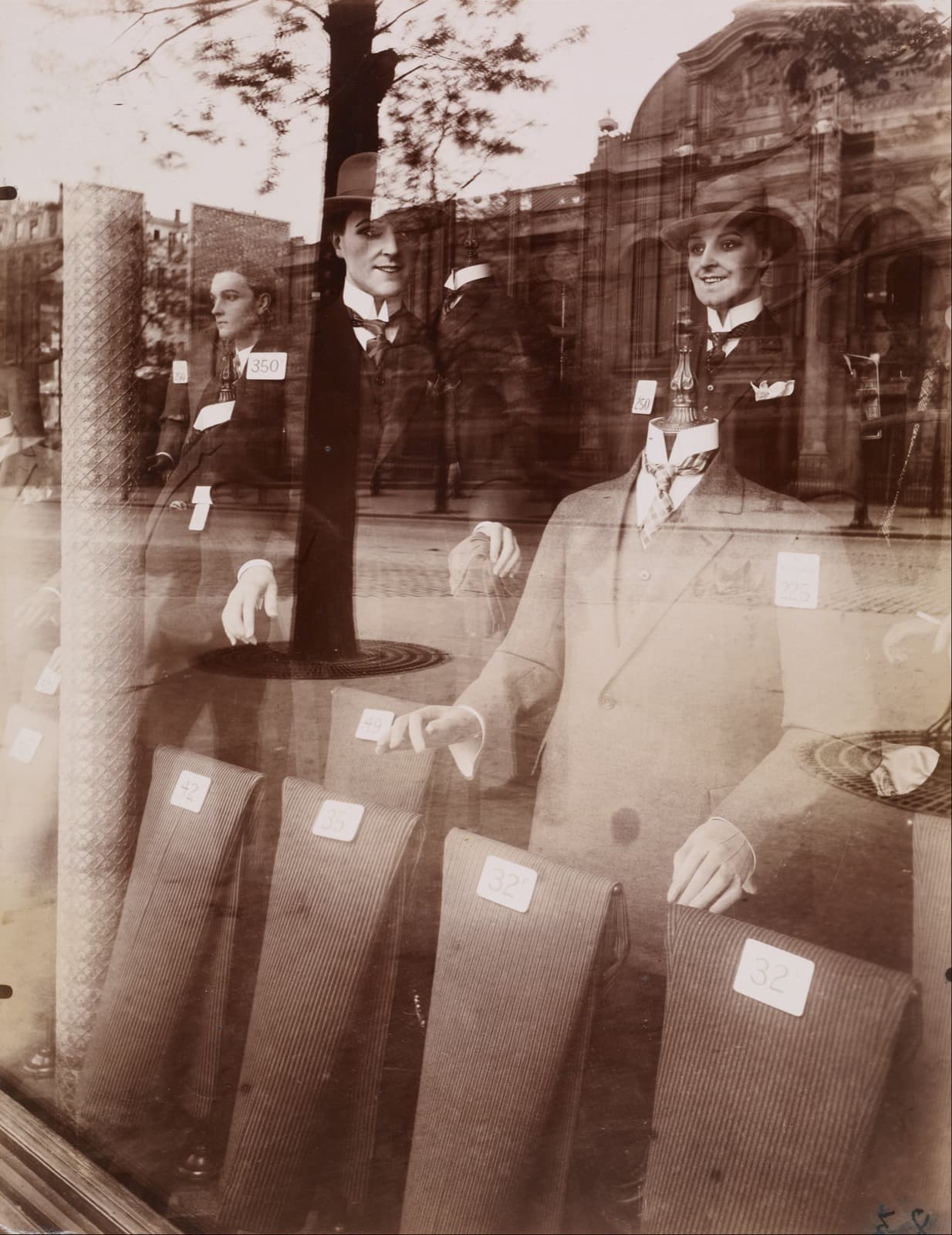
Shop, Avenue des Gobelins
by Eugène Atget
Suited mannequins stand behind a shop window on the avenue des Gobelins, and the street behind Atget is reflected across their faces and chests. The doubling of dummy and reflection made it one of the pictures the Surrealists seized on, though Atget photographed shopfronts for years as ordinary commercial documentation.
- 1925
- Gelatin silver print from a glass negative
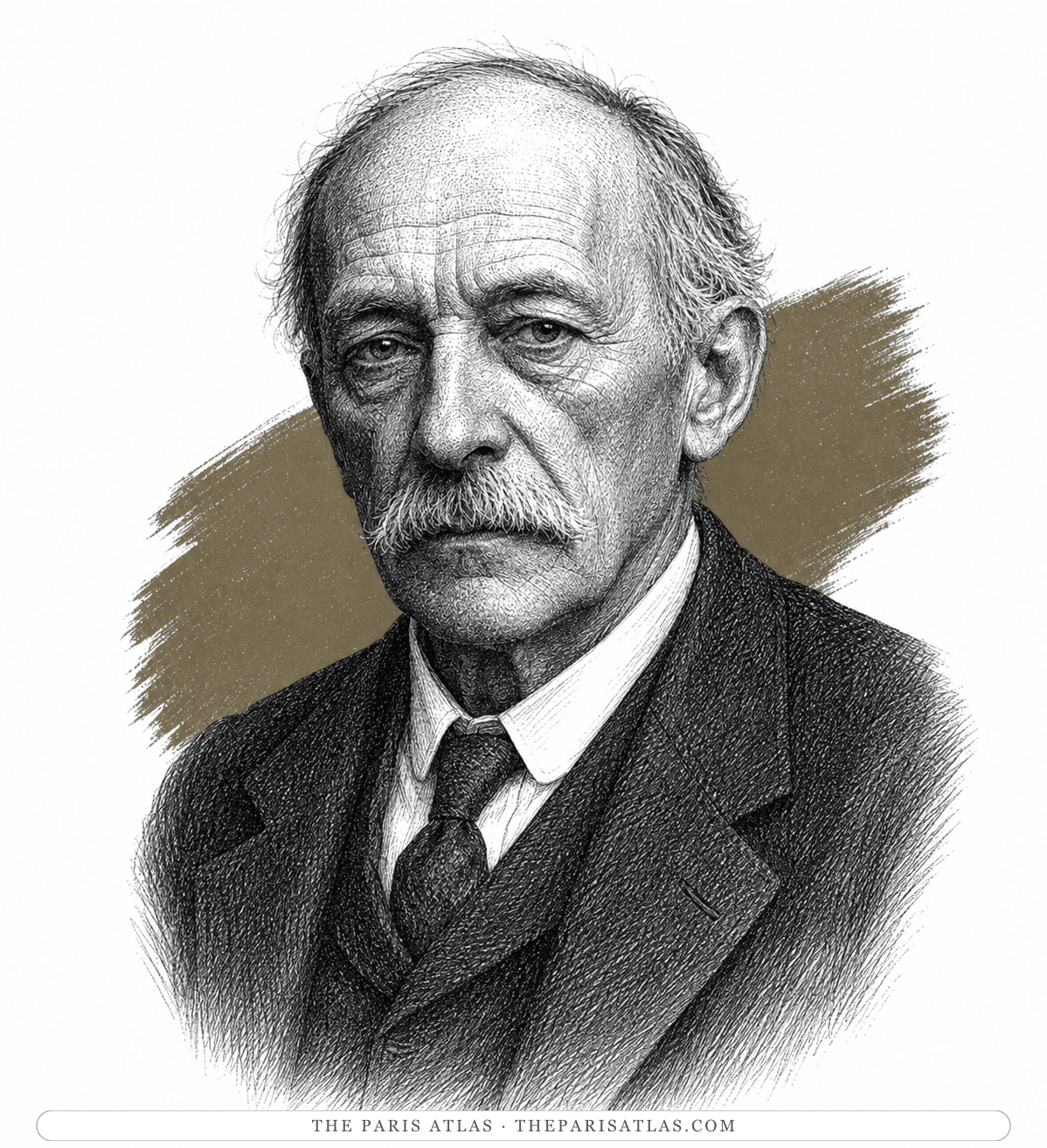
About Eugène Atget
What the photograph shows
Half a dozen mannequins in suits and hats are packed behind a plate-glass window on the avenue des Gobelins, in the 13th arrondissement. They face outward at slightly different angles, like a group posed for a photograph.
The glass carries the reflection of the street behind the camera, so buildings and sky lie across the dummies' faces. Two scenes occupy the same surface, and it is not always obvious which detail belongs to which.
One of hundreds of shopfronts
Atget photographed shop windows for decades as part of his documentation of Paris trades and streets, selling the prints to decorators, designers and archives. The window displays interested him as a record of what was sold and how it was presented.
He returned to the avenue des Gobelins several times in the mid-1920s. The pictures were made in the last few years of his life, when he was in his late sixties and financially secure enough to choose his own subjects.
Why the Surrealists wanted it
A figure that looks human but is not, seen through glass that shows two places at once, is close to what the Surrealists were describing in the mid-1920s. Man Ray collected Atget's work and published some of it in La Révolution surréaliste.
Atget rejected the association. He described his pictures as documents rather than art, and asked that his name be kept off them when Man Ray published.
Close reading
Reading the work, detail by detail
Atget's window combines displayed clothes with reflected buildings and trees. Each detail shows a different point where the shop interior and the street become difficult to separate.
1.A face behind the tree
The dark trunk cuts across the mannequin without respecting its outline. Two separate spaces occupy the same surface, making the face seem to emerge from the street itself.
2.The second smile
The fixed smile is easy to recognize, but the head shares its space with stonework and branches. The reflection prevents this apparently human presence from settling into a single location.
3.A headless suit
The broad jacket provides a pale area through which the reflected street remains visible. Its missing head makes the nearby lifelike faces seem more artificial in turn.
4.Hands without bodies
The white hands stay legible where darker sleeves disappear into the glass. Their disconnected gestures give the display a scattered animation.
5.Prices on cloth
The price cards assert the practical purpose of the display. Repeated numbers and vertical stripes impose a commercial order beneath the confusing faces and reflections.
6.The reflected facade
The building's cornice appears to sit directly above the mannequins. This borrowed architecture turns the window into a composite city view, with depth arriving from both sides of the glass.
Where to see it
A viewing location has not yet been listed for this work.
Frequently asked questions
What does Atget's Shop, Avenue des Gobelins show?
Menswear mannequins in suits and hats behind a shop window on the avenue des Gobelins in Paris, photographed in 1925. The street behind the camera is reflected in the glass, so the reflection lies across the mannequins' faces.
Why is the reflection important?
It puts two views in one frame. The mannequins are inside the shop and the reflected buildings are behind the photographer, so the picture holds both sides of the street at once and blurs which details belong where.
Did Atget mean it as a Surrealist image?
No. He photographed shopfronts for years as commercial documentation of Paris trades, selling prints to decorators, designers and archives. The Surrealists read the mannequins and reflections their own way, and Atget declined the label.
When did Atget photograph the avenue des Gobelins?
In the mid-1920s, returning more than once; this print is dated 1925. It comes from the last few years of his life, when he was in his late sixties.
Where is the avenue des Gobelins?
In the 13th arrondissement of Paris, running south from the place d'Italie area, named for the Gobelins tapestry manufactory nearby.
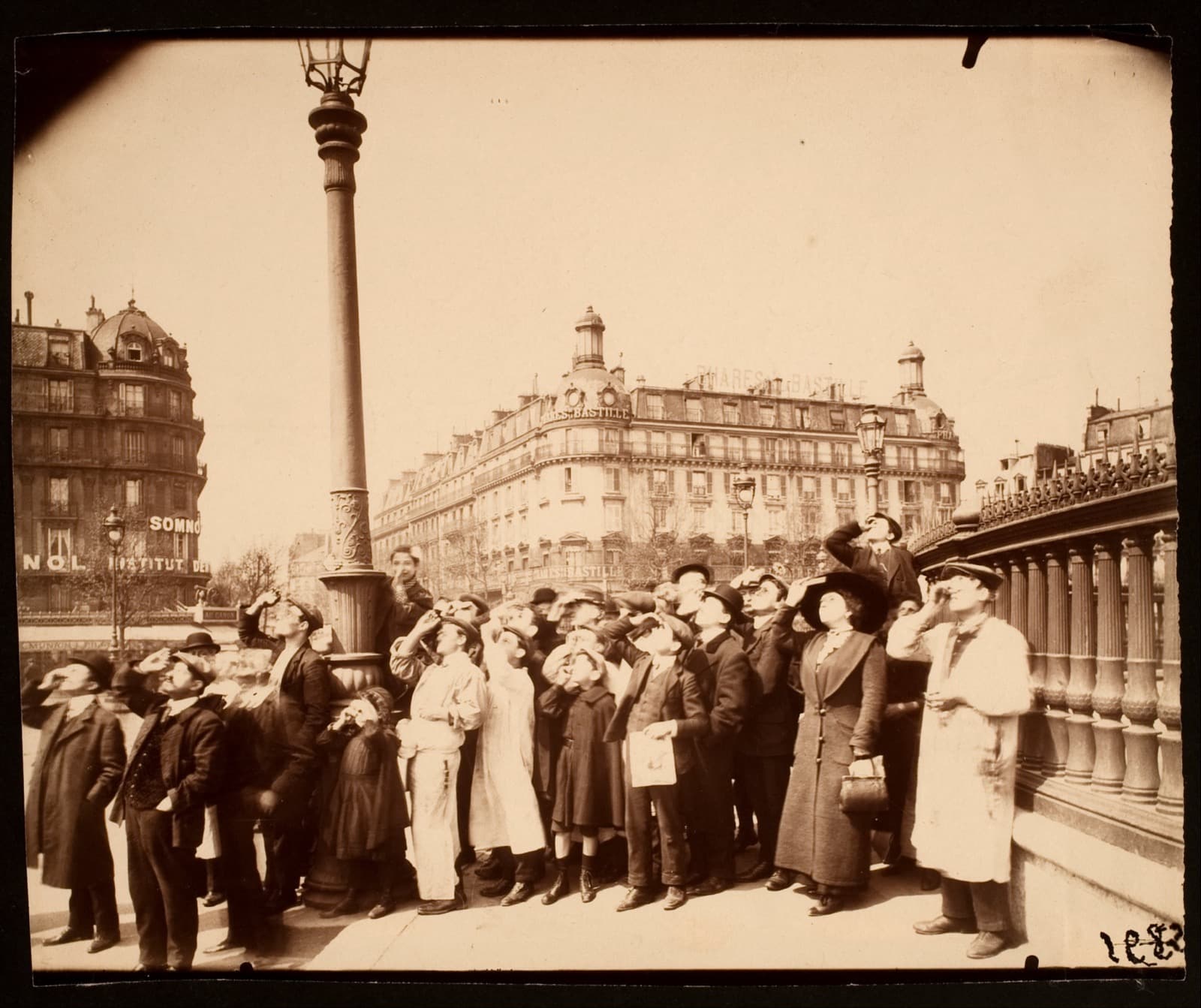
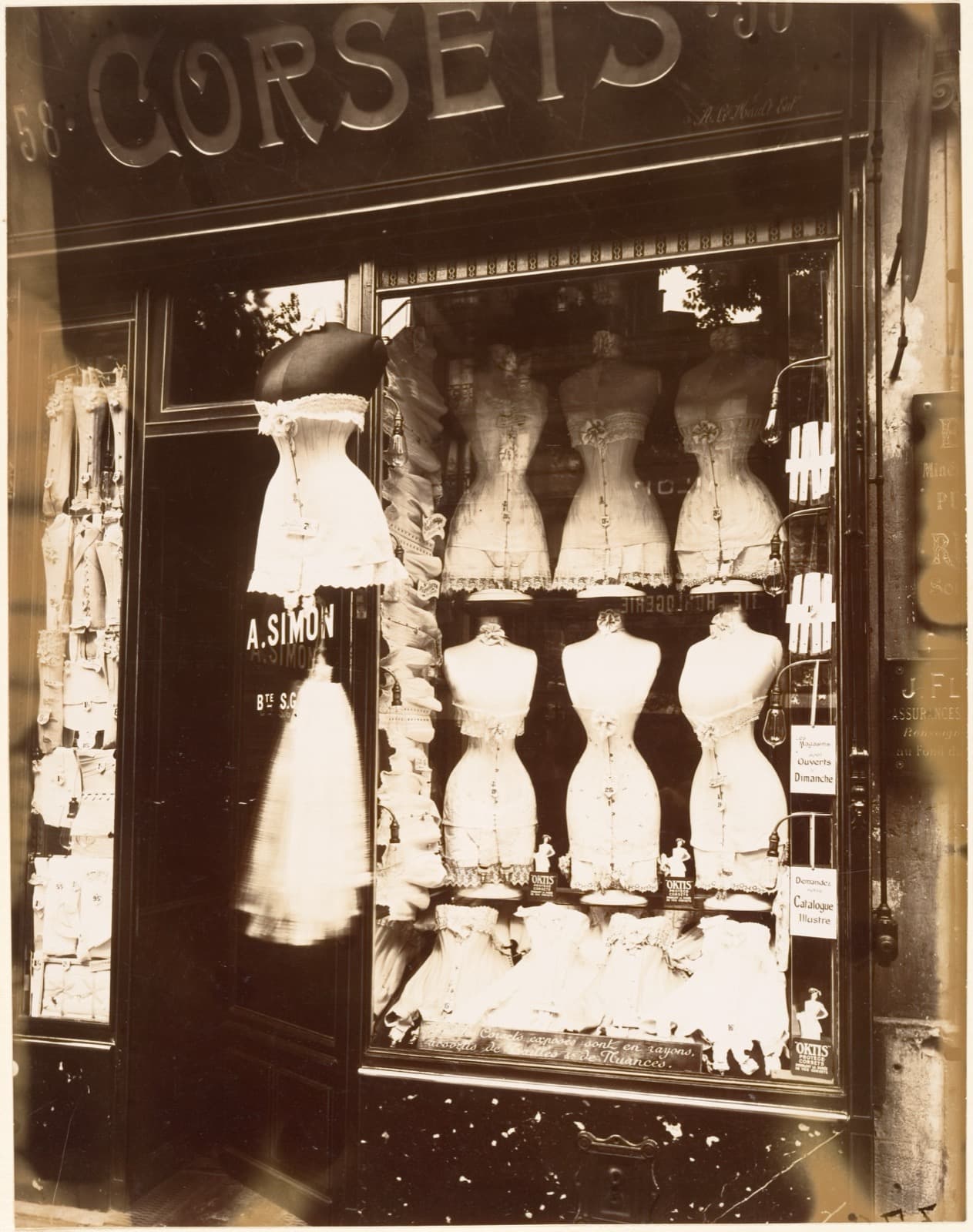
More by Eugène Atget
References
The sources below include collection records, catalogues, scholarly research, and primary materials that informed this page. They document Shop, Avenue des Gobelins, its making, and its place in cultural history.


1Eugène Atget
WebsiteWikipediaUsed forWeb source consulted for documented facts and historical context presented on the Shop, Avenue des Gobelins page.

2The Work of Atget
Exhibition catalogueThe Museum of Modern Art, 1981Used forThe Museum of Modern Art study of the archive and its thirteen series.
3Eugène Atget
WebsiteThe Museum of Modern ArtUsed forThe Museum of Modern Art's artist record.
4Eugène Atget
WebsiteEncyclopaedia BritannicaUsed forEncyclopaedia Britannica's biography, used for the outline of the career.
These references provide the documented foundation for this work's history and interpretation. Claim-level citations remain attached to the specific claims they support.
 Explore more resources