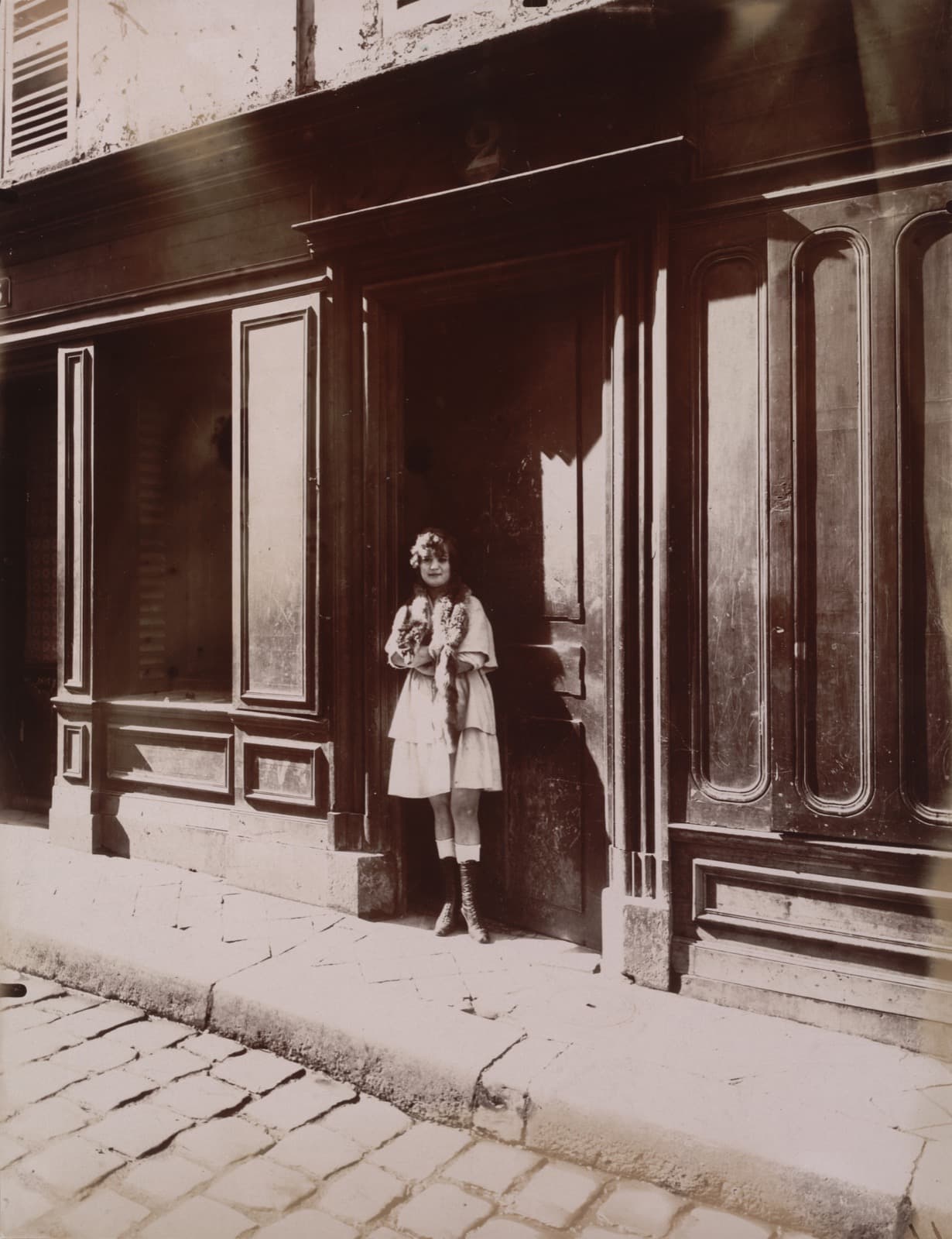
Versailles, Brothel, Petite Place
by Eugène Atget
A woman stands in a doorway on the Petite Place at Versailles, waiting, in front of a house whose number is painted large above the door. Atget made the photograph in March 1921 as part of a short series on licensed brothels and the women who worked in them, one of the few times he photographed people rather than streets.
- March 1921
- Gelatin silver print from a glass negative
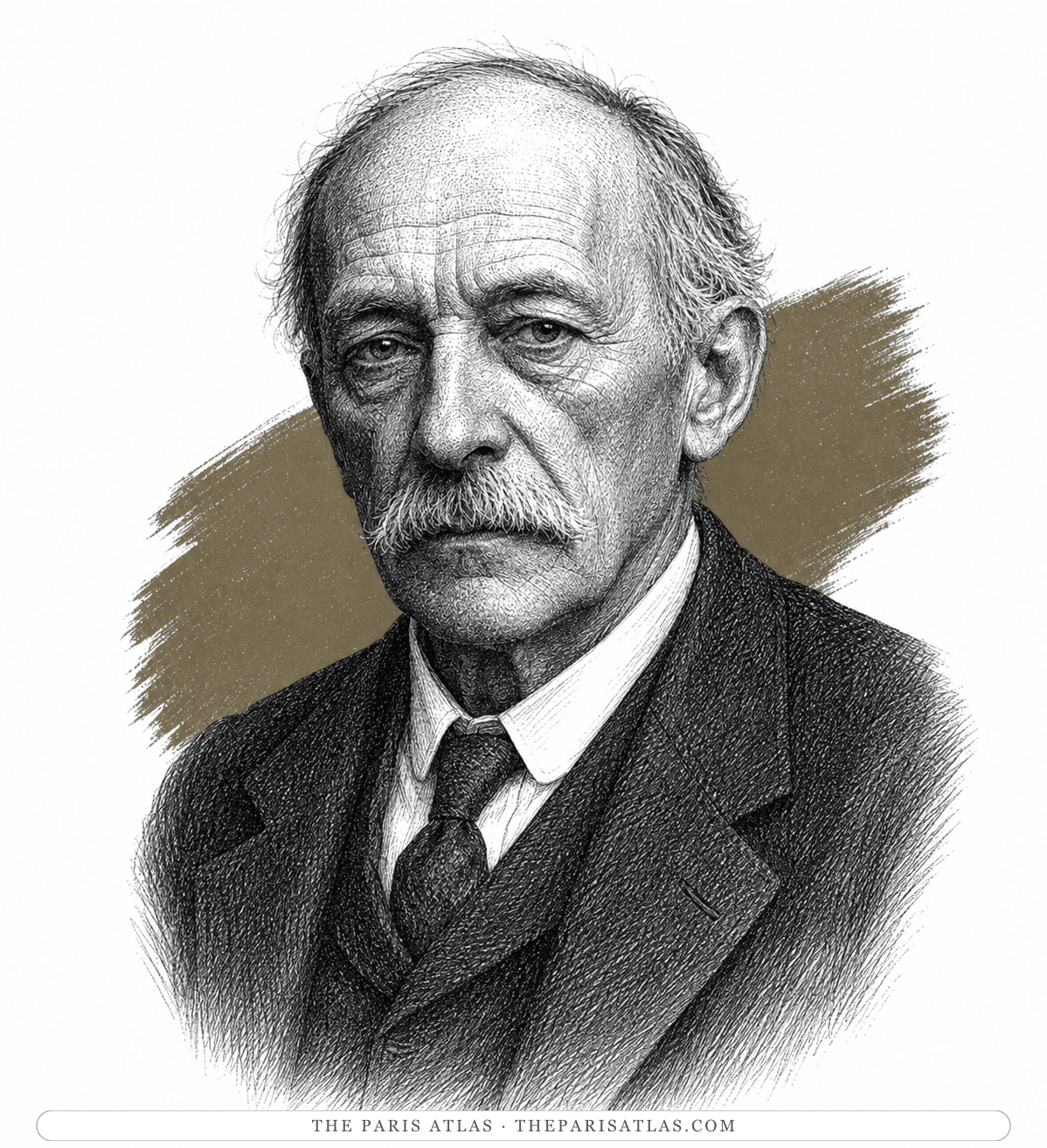
About Eugène Atget
What the photograph shows
A woman stands in an open doorway on the Petite Place at Versailles, one hand resting on the frame. The house number is painted large on the wall above her, which is how licensed brothels were marked.
She is looking at the camera. Atget photographed streets and buildings almost exclusively, and a person standing still and facing him is unusual in his work.
The 1921 series
Atget made a short series on prostitutes and licensed houses in 1921, after selling thousands of negatives to public institutions in 1920 and 1921 had left him financially independent enough to photograph what he chose.
The pictures are documentary in the same manner as the shopfronts: a trade, its premises, and how it presented itself to the street. The women are recorded standing at their doors during working hours, which is where the business was conducted.
Close reading
Reading the work, detail by detail
A single woman stands in a doorway surrounded by a much larger facade. Follow the relationship between her pose, the dark entrance, and the bright street.
1.The direct gaze
Her face is small within the full photograph but directly acknowledges the viewer. That returned gaze changes the facade from an architectural study into an encounter.
2.Folded arms
The compact pose holds the body close while the doorway extends around it. The pale sleeves and dress make her stance easy to read against the dark entrance.
3.Boots at the threshold
The boots form two firm verticals where the figure meets the street. The threshold becomes a precise boundary between her shaded position and the exposed pavement.
4.The tall entrance
The doorway leaves a large unoccupied area above her head. Its proportions emphasize the building's scale while giving the figure a sharply defined place within it.
5.Closed panels
The repeated panels have a formal rhythm that the open doorway interrupts. Sunlight reveals their raised edges and worn surfaces, lending the frontage a substantial weight.
6.The street surface
The change in paving establishes the camera's position out in the street. The curb's diagonal also guides the eye back toward the woman rather than letting the facade remain flat.
Where to see it
A viewing location has not yet been listed for this work.
Frequently asked questions
What does this photograph show?
A woman standing in the doorway of a licensed brothel on the Petite Place at Versailles, photographed by Eugène Atget in March 1921. The large painted number above the door is how such houses were identified.
Why did Atget photograph brothels?
As part of a short 1921 series documenting the trade and its premises, in the same working manner he applied to shopfronts and street traders. By 1921 he had sold thousands of negatives to public institutions and could choose his own subjects.
Is this unusual for Atget?
Yes. He photographed streets, buildings, courtyards and park sculpture almost exclusively, and people appear in his pictures mostly as blurred figures caught by a long exposure. A subject standing still and looking at the camera is rare in his work.
What was a maison close?
A licensed brothel. Under French regulation of the period such houses were registered, inspected, and marked by an outsized street number painted on the facade, which is the number visible above the door in this photograph.
When was it taken?
March 1921, at Versailles, six years before Atget's death.
More by Eugène Atget
References
The sources below include collection records, catalogues, scholarly research, and primary materials that informed this page. They document Versailles, Brothel, Petite Place, its making, and its place in cultural history.


1Eugène Atget
WebsiteWikipediaUsed forWeb source consulted for documented facts and historical context presented on the Versailles, Brothel, Petite Place page.
2Eugène Atget
WebsiteThe Museum of Modern ArtUsed forThe Museum of Modern Art's artist record; the museum holds the Abbott-Levy collection.

3The Work of Atget
Exhibition catalogueThe Museum of Modern Art, 1981Used forThe Museum of Modern Art study, which places the 1921 series after the institutional negative sales.
4Eugène Atget
WebsiteEncyclopaedia BritannicaUsed forEncyclopaedia Britannica's biography, used for the outline of the career.
These references provide the documented foundation for this work's history and interpretation. Claim-level citations remain attached to the specific claims they support.
 Explore more resources