

Ulysses
The book this book exists to explain — how a lending library became its publisher of last resort.
Read our take
by Sylvia Beach
The bookseller's own story — twenty-two years at 12 rue de l'Odéon, told by the woman who lent the Lost Generation its library and published Ulysses.
Sylvia Beach opened her English-language bookshop and lending library in 1919 and closed it under the Occupation in 1941; in between, nearly every English-language writer in Paris walked through the door. Her 1959 memoir tells it from the counter side: Joyce arriving with his ashplant cane, the all-hands campaign to print Ulysses, Hemingway borrowing by the armload on credit, and the quarter's whole cast — Monnier, Ford, Pound, Fitzgerald — seen by the person who found them their next book.
Everyone else wrote their Paris memoirs first; Beach, characteristically, waited until she could be generous. Published by Harcourt, Brace in 1959, three years before her death, her account of the little shop at 12 rue de l'Odéon is the testimony of the woman who ran the room the whole movement passed through — the lending library where Hemingway borrowed his education, the mail drop, the bank of last resort, and the publishing house of exactly one book, which happened to be Ulysses.[1]
The Joyce chapters are the spine — the subscriptions, the Dijon printers, the decade of serving genius and its expenses — told with a briskness that underplays how much the venture cost her, in money and in rights she quietly surrendered when Random House took the book to America. Around them moves the whole cast: Gide and Valéry from one Paris, Fitzgerald and Stein from the other, and the 'bunnies' — her word for the lending-library members — from both.[1]
It ends with the war: the German officer who threatened to confiscate her last copy of Finnegans Wake, the shop dissolved overnight into an upstairs apartment, internment, and the December 1944 afternoon when a jeep-borne Hemingway, in uniform, roared up the rue de l'Odéon to 'liberate' it. The shop never reopened; the book is its afterlife, and the primary source under half of these pages.[1]
The bookseller's own story: how a Princeton minister's daughter opened an American bookshop and lending library at 12 rue de l'Odéon in 1919, and how the little shop became the clubhouse, post office, bank, and publishing house of literary Paris. Beach walks through the whole cast as a hostess rather than a judge — Gide and Valéry from the French side, Hemingway (her favorite) borrowing books he could not buy, Fitzgerald, Stein, and the 'bunnies,' her word for the lending-library members whose cards recorded a generation's reading.[1]
The centerpiece is the great adventure: publishing Ulysses when no commercial house would touch it — the subscriptions, the heroic Dijon printer, Joyce's endless revisions and expenses, the smuggling, the piracy, and the cost, borne by her, of serving a genius. And through every chapter, the shop itself: the lending-library cards, the borrowed money, the writers treating the rue de l'Odéon as a second home for two decades.[1]
The memoir's last movement is the war. Sylvia Beach stays in Paris through the Occupation, and in 1941 a German officer, refused the shop's last copy of Joyce's Finnegans Wake, threatens to confiscate everything; within hours Beach and her friends carry the entire stock upstairs and paint out the name, and Shakespeare and Company simply vanishes from the street. Beach is interned for months as an enemy alien and returns to a shuttered shop. The book ends on its most storied afternoon: December 1944, gunfire still in the rooftops, when Ernest Hemingway — in uniform, leading his irregulars — roars up the rue de l'Odéon to 'liberate' the street, embraces her, and goes off, as she tells it, to liberate the wine cellar of the Ritz. The shop never reopened; the memoir is where it lives.
Beach's description of her filing system makes a practical inconvenience into a revealing joke. She imagines a professional librarian's horror at its informality, then explains the work required to recover a book's whereabouts. Without a catalogue or an index organized by title, the search runs through members' cards. Readers, rather than volumes, provide the organizing principle. The joke makes the shop seem hospitable and improvised, but the explanation exposes the attention on which that ease depends. Her self-deprecation gives the labor a light touch without making it disappear.
Keri Walsh reads the closing episode as more than a report of survival. Beach's brisk account of removing stock and dismantling the shop converts a threat of confiscation into a scene of practical collective action. Yet the memoir does not finish with that disappearance: it moves toward Hemingway's arrival and the promise of renewed conviviality. The change of tone matters. The books can be saved, but the old public space is not thereby restored. Read together, the removal and the buoyant ending distinguish preserving a community's memory from recovering the conditions that once sustained it.
The lending library educated a broke generation and the back office published Ulysses — this is the only account of both by the person who did it.
Smuggled copies, customs burnings, a Dijon printer racing Joyce's birthday — the making of Ulysses reads like a caper, told with a shopkeeper's practicality.
Beach's shop connects half the places and people in these pages; her memoir is the connective tissue, written from 12 rue de l'Odéon itself.
1919
Sylvia Beach opens her English-language bookshop and lending library at 12 rue de l'Odéon.
1922
The shop publishes Ulysses when no commercial house will touch it.
1941
Under the Occupation, refused the shop's last copy of Finnegans Wake by a German officer, Beach and her friends empty the stock upstairs overnight, and the shop vanishes; it never reopens.
1959
Harcourt, Brace publishes her memoir, three years before her death.
The book this book exists to explain — how a lending library became its publisher of last resort.
Read our take
Hemingway's chapter on the shop is the borrower's version of the same rooms; Beach's is the lender's.
Read our take
Huddleston devoted a chapter to the shop in 1928 — the outside view, thirty years before Beach wrote the inside one.
Read our takeSylvia Beach, the American bookseller who founded the Paris bookshop of the same name. Her memoir was published in 1959, three years before her death.
Her English-language bookshop and lending library, open from 1919 to 1941, and the writers who passed through it — Joyce, Hemingway, and the whole quarter — told from the counter side.
Yes. It recounts the all-hands campaign to print James Joyce's Ulysses, which Beach published from the shop in 1922 when no commercial house would.
The memoir is about Beach's original shop, which closed under the Occupation in 1941. The present Shakespeare and Company by the Seine took the name later, in her honor.
It is the warm, first-hand record of the institution at the center of literary Paris, written without knives by the person who ran it.
Explore authors with a similar voice, perspective, and influence.

Her most devoted borrower — the bookshop chapter of A Moveable Feast is the warmest thing he ever wrote about anyone.
View author
The journalist gave the shop a whole chapter in 1928 and called himself its mascot; his memoir preserves the goldfish bowl, the Whitman manuscripts, and the Ulysses decision in dialogue.
View author
The doctor of the Paris slums who wrote the century's blackest, funniest novel — and changed the sound of French prose.
View author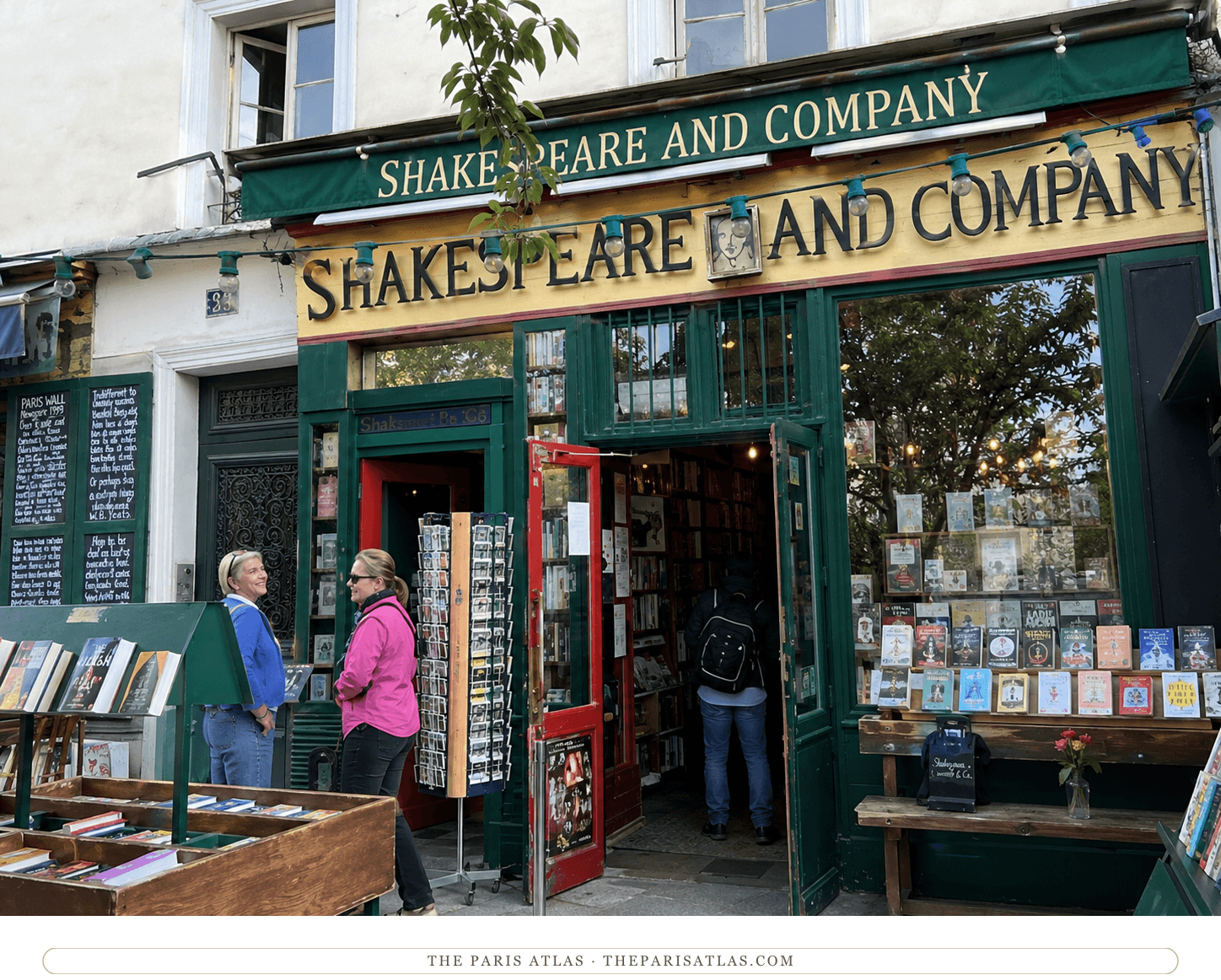
Recalled
The subject, the setting, and the hero — twenty-two years at 12 rue de l'Odéon, told from behind the counter.
Visit the place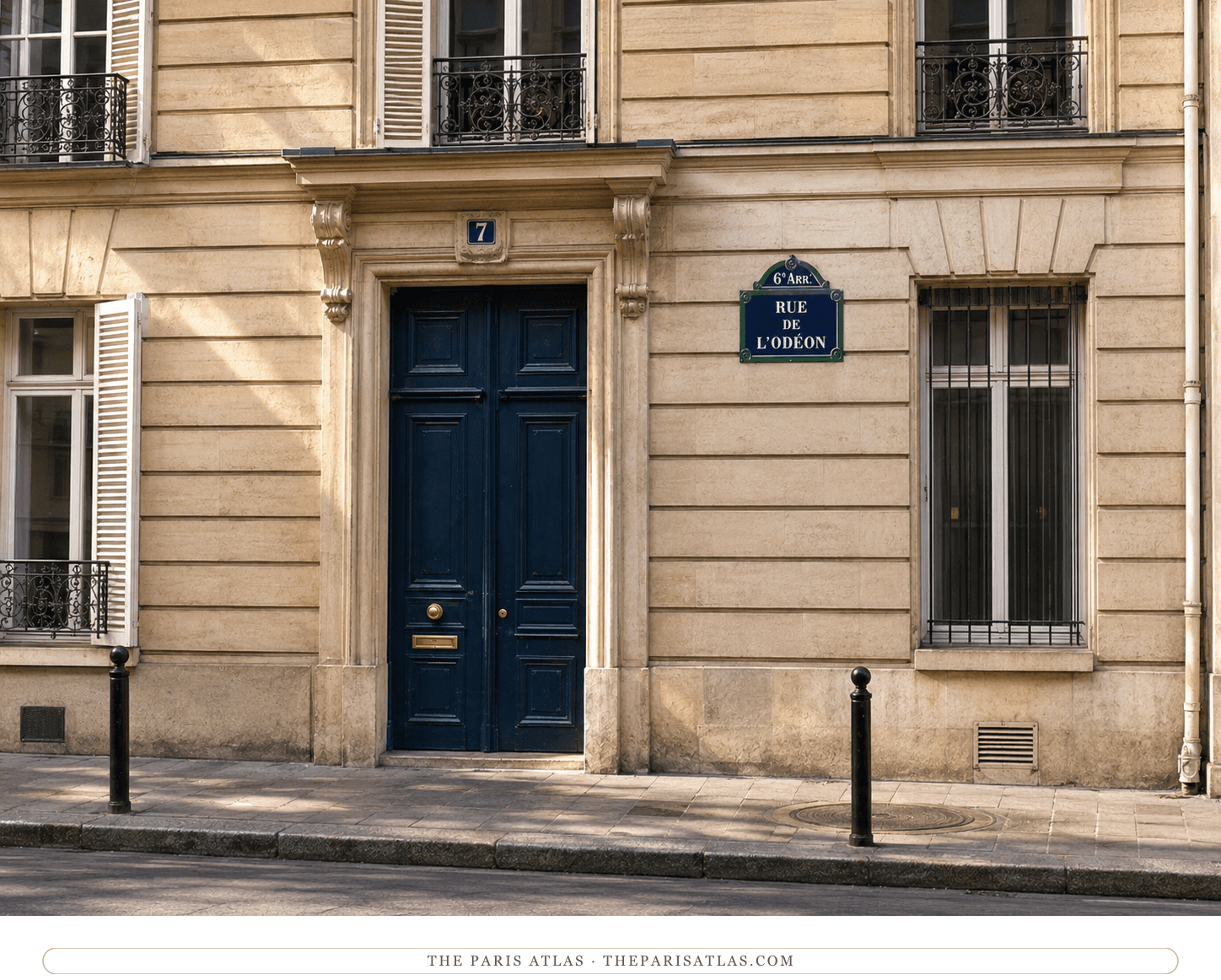
Recalled
Beach's memoir repeatedly returns to Adrienne Monnier's bookshop across the rue de l'Odéon, the French half of their shared literary world.
Visit the placeThe sources below include the primary text, editions, scholarship, archival materials, and other records that informed this page. They document Shakespeare and Company, its publication, and its place in literary history.


Used for archival context on Sylvia Beach's lending library, its members, and its literary network.

Used to cross-check the shop's history and Beach's role in publishing Ulysses.
Used for independent historical context on Beach and the shop's Paris addresses.
Used to verify Sylvia Beach's bibliography and place Shakespeare and Company within the broader chronology of Sylvia Beach's career.
Quoted primary memoir passage and archival explanation of Beach's lending records.
Keri Walsh's critical reading of the closure episode and the memoir's framing of postwar recovery.
The primary text is the baseline reference for every book page. Additional references document publication history, interpretation, and historical context where that evidence is available.
 Explore more resources
