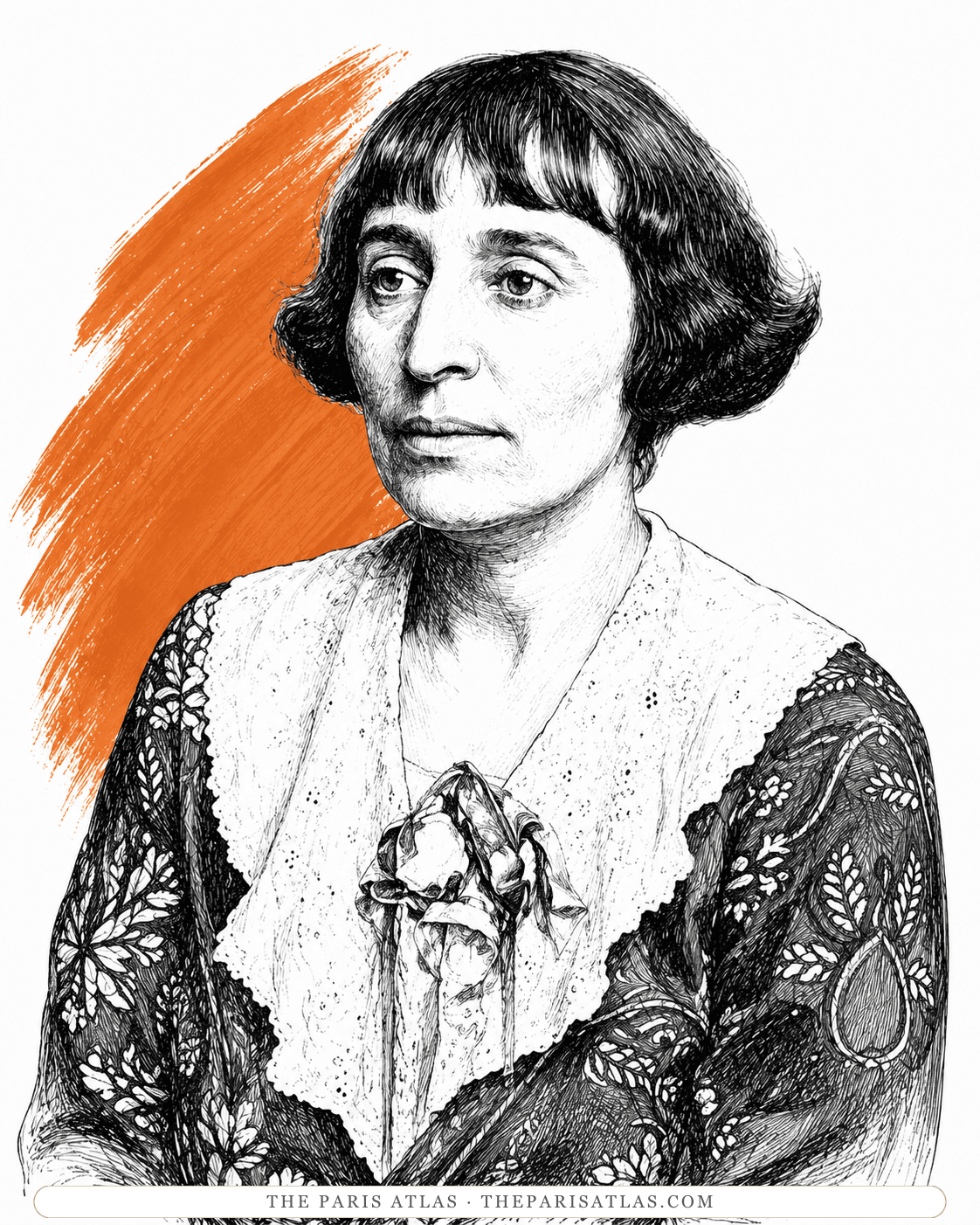


The Alice B. Toklas Cook Book
Alice B. Toklas's 1954 cookbook, which is also her memoir of fifty years with Gertrude Stein, told through the meals she cooked.
- 1954
About Alice B. Toklas
The story, briefly
Spoiler-freeAlice B. Toklas ran the household of Gertrude Stein's salon and refused for years to write her memoirs. What she published instead, in 1954, was a cookbook in which every recipe comes with a memory: dishes cooked for Picasso, the vegetable garden at Bilignin, cooking under rationing during the German occupation. A friend's contributed recipe for 'Haschich Fudge' — a cannabis confection, cut from the first American edition — became more famous than the book. (More below — courses, not chapters.)
The story, in more detail
Publishers had asked Toklas for her memoirs for years, and she refused; she felt the story had been Gertrude Stein's to tell, and Stein had told it. Eight years after Stein's death she agreed to a cookbook instead, and it turned out to be a memoir anyway. Every recipe arrives with its occasion: the bass she cooked for Picasso comes with Picasso's reaction, and the chapters move from the rue de Fleurus salon through the summers at Bilignin, where she kept the vegetable garden, to the occupation winters, when cooking meant improvising around rationing.
The scandal was an accident. Short of material, Toklas asked friends for recipes, and the painter Brion Gysin sent 'Haschich Fudge (which anyone could whip up on a rainy day)' — a cannabis confection. It ran in the 1954 British edition; Harper cut it from the American one. The cut only spread the story: by the sixties 'Alice B. Toklas brownies' were counterculture slang, and the 1968 film I Love You, Alice B. Toklas! fixed the misattribution for good. Toklas herself never made the recipe.
The full story
The chapters follow the life in order. The early ones cover the Stein-Toklas household in Paris: learning to cook French food seriously, the meals served to guests at 27 rue de Fleurus, and 'Murder in the Kitchen,' the book's most quoted chapter, about what it was like to kill a carp for dinner with her own hands. The middle chapters cover the summer house at Bilignin, where the garden and the market decided the menu, and the war years, when ingredients ran out and improvisation replaced them.
The book ends with 'Recipes from Friends,' a chapter of contributed dishes — Gysin's fudge among them — and a look back at the kitchens of fifty years in France. Stein appears throughout the book; her death is never mentioned directly.
Themes and analysis
A bass for Picasso
In Bass for Picasso, Toklas turns a meal into a test of artistic recognition. She describes the decoration as her own achievement, but Picasso redirects the tribute toward Matisse. The joke separates the cook's intention from the guest's interpretation without making the dish a failure: he admires its beauty. It also gives the anecdote its shape. A recipe becomes a small comedy of authorship, in which Toklas can control the preparation and the telling, but not the response at her table.
The breakfast garden
The Bilignin passage measures pleasure against effort. Toklas's hour of picking yields only a small breakfast basket; when the crop expands, younger guests must gather their own. Hospitality does not make the labor disappear. Her joke with Stein about seeing weeds rather than strawberries when she closes her eyes brings that imbalance into their conversation. Read beside the image, the passage makes the garden more than a peaceful retreat: its pleasures depend on repetitive work, and Toklas insists that the work be remembered too.
Why we recommend it
The view from the kitchen
Other memoirs describe the salon's conversation. This is the only account of its meals, by the person who cooked them.
The era's most notorious recipe
One contributed recipe — the cannabis fudge remembered in pop culture as 'Alice B. Toklas brownies' — became more famous than the book. How that happened is a story about the sixties as much as the fifties.
Grief, perfectly plated
Toklas wrote it eight years after Stein's death and never mentions the loss directly. Readers have found the grief in it anyway.
What this book explores
Timeline
1954
Eight years after Gertrude Stein's death, Toklas publishes the cookbook, which doubles as her memoir.
1954
The London first edition includes Brion Gysin's contributed "Haschich Fudge"; Harper cuts it from the American edition.
1968
The film I Love You, Alice B. Toklas! fixes the fudge's misattribution to Toklas, and "Alice B. Toklas brownies" become counterculture slang.
Book editions
Hardcover
- Hardcover
- Michael Joseph
- 1954
Hardcover
- Hardcover
- Harper & Brothers
- 1954
Paperback
- Paperback
- Harper Perennial
Reader reviews
Readers may also like

Aromas and Flavors of Past and Present
Her second cookbook, produced after this one's success, with an editor's annotations she had not asked for.
Read our take

Shakespeare and Company
Sylvia Beach's memoir of the same era from behind the bookshop counter, as this one is from the kitchen.
Read our takeThe Alice B. Toklas Cook Book: frequently asked questions
Who wrote The Alice B. Toklas Cook Book?
Alice B. Toklas, Gertrude Stein's partner. It was published in 1954, eight years after Stein's death.
What is The Alice B. Toklas Cook Book?
A cookbook that is also a memoir. The recipes come with five decades of memories: dishes cooked for Picasso, the vegetable garden at Bilignin, and cooking under rationing during the German occupation.
What is the "Haschich Fudge"?
A recipe for a cannabis confection contributed by the painter Brion Gysin. It ran in the British edition, was cut from the first American one, and is often credited to Toklas herself, who never made it.
Why did she write a cookbook instead of a memoir?
Publishers had asked for her memoirs for years, but she felt Stein's story had been Stein's to tell. A cookbook let her tell her own part of it — the household — instead.
Is it really a memoir?
Yes. Behind the recipes it covers the salon, the war years, and her life with Stein. It is one of the era's memoirs in an unusual form.
If you like Alice B. Toklas
Explore authors with a similar voice, perspective, and influence.
Gertrude Stein
The other half of the household — Stein borrowed her voice for the era's most famous 'autobiography'; Toklas's own books are the correction of record.
View author
Sylvia Beach
The era's other great keeper-of-the-room — both women ran the institutions the geniuses depended on, and both wrote their memoirs late, without knives.
View author
Ernest Hemingway
Author of The Sun Also Rises and A Moveable Feast; his pared-down style, developed in 1920s Paris, became the most imitated in American prose.
View author
References
References
The sources below include the primary text, editions, scholarship, archival materials, and other records that informed this page. They document The Alice B. Toklas Cook Book, its publication, and its place in literary history.


1The Alice B. Toklas Cook Book
NovelAlice B. Toklas, 1954Used forThe primary text represented by this page, used for descriptions of the work’s contents and for any quoted passages shown here.
2Bass for Picasso (Cook Book excerpt)
MemoirThe Marginalian, 1954Used forPrimary excerpt supporting the first close reading.
3The Vegetable Gardens at Bilignin (Cook Book extracts)
MemoirThe Daily Gardener, 1954Used forPrimary extracts supporting the second close reading.
4The Autobiography of Alice B. Toklas
MemoirGertrude Stein, 1933Used forUsed to place The Alice B. Toklas Cook Book within Alice B. Toklas's published work and verify its bibliographic context.
5A Moveable Feast
MemoirErnest Hemingway, 1964Used forUsed for independent biographical, archival, or historical context surrounding Alice B. Toklas's career and the period in which The Alice B. Toklas Cook Book appeared.
6What Is Remembered
MemoirHolt, Rinehart and Winston, 1963Used forUsed to cross-check authorship, chronology, and the work's place in Alice B. Toklas's wider catalogue.

7Gertrude Stein and Alice B. Toklas Collection, YCAL MSS 77
ArchiveBeinecke Rare Book and Manuscript Library, Yale UniversityUsed forUsed to verify Alice B. Toklas's bibliography and place The Alice B. Toklas Cook Book within the broader chronology of Alice B. Toklas's career.
i
Why these sources are here
The primary text is the baseline reference for every book page. Additional references document publication history, interpretation, and historical context where that evidence is available.
 Explore more resources