

Ulysses
Joyce's previous novel, finished in Paris the year before he began this one. Ulysses follows one Dublin day. Finnegans Wake follows a Dublin night.
Read our takeFinnegans Wake
James Joyce
by James Joyce
James Joyce's last book, written in Paris over sixteen years: one Dublin family's night, told in a dream language made from dozens of languages at once.
Finnegans Wake is the last book James Joyce wrote, and he wrote most of it in Paris. He started it in March 1923 and published it on 4 May 1939.[1] For most of those years it had no public title and appeared in pieces as "Work in Progress", first in Ford Madox Ford's Paris magazine the transatlantic review in 1924.[2] The book follows a Dublin publican, Humphrey Chimpden Earwicker, his wife Anna Livia Plurabelle and their three children through one night of dreams.[3] Earwicker is haunted by some offence in Phoenix Park that nobody can pin down.[3] The words themselves are the famous difficulty. Joyce built them out of puns and pieces of many languages, and the last sentence runs back into the first.[4]
Joyce finished Ulysses in Paris, and it was published there in 1922.[5] He was worn out and his eyes were failing, so he took about a year off. In March 1923 he wrote to his patron, Harriet Shaw Weaver, that he had written two pages, "the first I have since the final Yes of Ulysses."[1] The two pages were the start of Finnegans Wake.[1]
Pieces of the new book began appearing the next year. The first went into the transatlantic review, a magazine Ford Madox Ford edited in Paris through 1924, under the label "Work in Progress".[2] From April 1927 further sections came out in transition, a Paris magazine edited by Eugene Jolas.[6][1] The Index of Modernist Magazines lists Shakespeare and Company, Sylvia Beach's bookshop at 12 rue de l'Odéon, as the magazine's Paris publisher.[6]
Many of Joyce's first supporters did not like what they saw. The James Joyce Centre in Dublin names Harriet Shaw Weaver, Ezra Pound, Wyndham Lewis and Joyce's brother Stanislaus among the doubters.[1] Joyce answered them in person. He told the journalist Sisley Huddleston that a meaningless book could be written quickly. The twenty pages on his desk, he said, had cost him twelve hundred hours.[7]
The book took so long partly because Joyce was going blind. He had eye surgery again and again during these years, and he was often unable to see.[5] Friends in Paris helped him work. Paul Léon, a Russian-born scholar of Rousseau whom he met in 1928, sat with him at a cramped table and corrected the galley proofs.[8] Faber and Faber in London and the Viking Press in New York published the finished book in 1939.[9]
The book has four parts. Critics connect them to the Italian philosopher Giambattista Vico, who taught that history goes round in a cycle of ages.[3] Part One has eight chapters and belongs mostly to the parents. A mythical figure called Finnegan falls, and Earwicker takes his place. Earwicker's offence is replayed as a trial, with a man called Festy King in the dock.[3]
Part One also brings back Anna Livia's letter, and her sons, Shem and Shaun, start their long battle of wits.[3] One of its best-known chapters is a conversation between two washerwomen on the banks of the Liffey. They gossip about Earwicker and Anna Livia as they work.[10]
In Part Two the children take over. They are supposed to be doing homework in grammar, history and mathematics. They are really trying to find out about their parents.[3] Earwicker closes up the bar, falls asleep on the floor and dreams himself into a series of other men.[3]
Part Three belongs to Shaun, his father's heir. He appears as Shaun the Postman. He attacks a fable he has heard, claims he can write as well as Shem, denounces his father and runs down his brother. Then he slowly falls apart, tumbles into a barrel and rolls backwards down the river.[3]
Part Four is a single short chapter at dawn. The family's sleep is broken by a child's cry. The newspapers report Earwicker's offence, and Anna Livia's letter arrives in the morning post. The book ends with Anna Livia speaking as she flows out to sea. Her last sentence breaks off on the word "the" and runs on into the book's first line.
Most of Finnegans Wake was written in Paris flats. The family's longest address was 2 Square de Robiac, a quiet cul-de-sac off the rue de Grenelle, where the Joyces lived from 1925 to 1931. Sisley Huddleston visited Joyce in these years and described a cool, quiet study by the Champ de Mars.
Huddleston's book Paris Salons, Cafés, Studios also records how Joyce worked. Joyce did not write from the first page to the last. He worked on separate passages, marked them in different colours and filed them on a kind of card index. Then he fitted the passages together. He even learned some Chinese for certain effects he wanted.
One of Huddleston's examples shows how the strange words were made. Joyce thought the English word "thunder" did not sound like thunder. So he built a new word for it from syllables of German, French, Italian, Norwegian and other languages. Huddleston wondered whether the effort was worth it. He did not doubt that the work was hard.
The last years of work were slow, and Joyce's sight kept failing. Paul Léon's apartment on the rue Casimir-Périer became a regular meeting place. As Joyce's eyes got worse, Léon sat with him at a cramped table correcting the galley proofs. The book came out in May 1939. A few months later war broke out, and the Joyces left Paris.
In 1929, ten years before the book was finished, Shakespeare and Company in Paris published a volume of essays about it. Joyce chose the title: Our Exagmination Round His Factification for Incamination of Work in Progress. Sylvia Beach later wrote that readers of transition needed help and were often losing their way.
The twelve essayists were friends and helpers of Joyce, including Samuel Beckett, Stuart Gilbert, Eugene Jolas, Robert McAlmon and William Carlos Williams. Two "letters of protest" closed the book. Stuart Gilbert suspected that one of the protesters, a "Vladimir Dixon", was Joyce himself. Beach mentions the suspicion in her introduction to the 1961 reissue.
Beckett's essay opens the volume. He answered readers who complained that the new work was not written in English: "His writing is not about something; it is that something itself." In the new work, he argued, form is content and content is form. When the sense is sleep, he wrote, the words go to sleep too.
Underneath the language there is a household. A couple sleep in a bedroom above a pub in Chapelizod, a village on the edge of Dublin. Their waking name is Porter. Down the hall sleep their twin boys, Kevin and Jerry, and their daughter, Isabel.
In the dream the father becomes Humphrey Chimpden Earwicker, known by his initials HCE. The mother becomes Anna Livia Plurabelle, and she is also the River Liffey. The twins become Shem, a writer and exile, and Shaun, a respectable hypocrite, and they fight all night. Ordinary things in the bedroom turn into dream figures. The four posts of the bed become the four gospel writers.
The one fixed event is an offence Earwicker committed, or is said to have committed, in Phoenix Park. A man, two girls and three soldiers are involved. Rumour, gossip and a street song keep retelling the story until almost every detail is doubtful. Only one thing seems certain: something happened.
Finnegans Wake has no real first page. The book opens in lower case, halfway through a sentence, with the word "riverrun". The last line, on page 628, stops without a full stop, on the word "the". Readers carry it back to the first line on page 3, and the book becomes a circle.
Because the book is a circle, many readers do not begin at the beginning. Modernist Studies Ireland suggests starting anywhere, and reading in a group. The book is packed with songs, jokes, languages and stories, and no single reader catches all of them. Modernist Studies Ireland runs its own reading group online, meeting every other week.
Hearing the book helps. Beckett told readers in 1929 that the text was meant to be looked at and listened to, not only read. His example was that when the sense is dancing, the words dance. Penguin's edition quotes Joyce's own aim: to show "what goes on in a dream, during a dream."
riverrun, past Eve and Adam's, from swerve of shore to bend of bay, brings us by a commodius vicus of recirculation back to Howth Castle and Environs.
A way a lone a lost a last a loved along the
Joyce spent sixteen years on it, longer than on anything else he wrote. Everything he learned writing Ulysses went into it.
Joyce wrote it in Paris flats, printed its pieces in Paris magazines, and had it defended by a Paris bookshop ten years before it was finished. Samuel Beckett, Sylvia Beach and Eugene Jolas all helped it along.
The puns, songs and mock trials are jokes as often as they are puzzles. Heard aloud, much of it is comedy about a Dublin family and the gossip around it.
The last sentence runs into the first, so there is no wrong place to start. Reading groups in Dublin and online still work through it together.
HCE, a publican in Chapelizod on the edge of Dublin, haunted by rumours of an offence in Phoenix Park. His initials turn up everywhere, as Here Comes Everybody and as Howth Castle and Environs.
ALP, Earwicker's wife, who is also the River Liffey. Her letter turns up again and again, and the book ends with her voice as she flows out to sea.
Shem the Penman, one of the twin sons: a writer, a bohemian and an exile, his mother's favourite. He lives in a house called the Haunted Inkbottle.
The other twin: Shaun the Postman, dull, respectable and preferred by his father. He takes over Part Three and attacks his brother's writing.
Isabel, the daughter, who sleeps down the hall from the twins. She divides people, where her mother brings them together.
1923
In March, in Paris, Joyce tells Harriet Shaw Weaver he has written two pages, the first since finishing Ulysses. They become the start of Finnegans Wake.
1924
The first extract appears in Ford Madox Ford's Paris magazine the transatlantic review, under the label "Work in Progress".
1925
The Joyces move to 2 Square de Robiac, off the rue de Grenelle. They stay until 1931, longer than at any other Paris address.
1927
Eugene Jolas launches transition in Paris in April. The magazine carries sections of Work in Progress.
1928
Sisley Huddleston's Paris Salons, Cafés, Studios prints Joyce's defence: twenty pages had cost him twelve hundred hours.
1929
Shakespeare and Company publishes Our Exagmination Round His Factification for Incamination of Work in Progress, twelve essays in defence of the unfinished book. Samuel Beckett's comes first.
1939
Faber and Faber in London and the Viking Press in New York publish Finnegans Wake on 4 May.
1940
After the fall of France the Joyces leave Paris for the village of Saint-Gérand-le-Puy, then go on to Zurich.
1941
Joyce dies in Zurich on 13 January. In December, by Sylvia Beach's account, she closes Shakespeare and Company after a German officer demands the copy of Finnegans Wake in her window.


Joyce's previous novel, finished in Paris the year before he began this one. Ulysses follows one Dublin day. Finnegans Wake follows a Dublin night.
Read our take
An easier way into Joyce's Dublin, and his first novel about a young writer who leaves Ireland. Finnegans Wake has its own exiled writer in Shem the Penman.
Read our take
Sisley Huddleston's 1928 portrait of literary Paris. He visited Joyce in the middle of writing Finnegans Wake and recorded how he worked.
Read our take
Sylvia Beach's memoir of the bookshop that published the 1929 essays on the book and sold it in its window until 1941.
Read our takeA Dublin family through one night. A publican, Humphrey Chimpden Earwicker, sleeps above his pub in Chapelizod with his wife, Anna Livia Plurabelle, and their three children nearby. In their dreams the family turns into figures from history and myth, and Earwicker is haunted by rumours of an offence in Phoenix Park.
Yes, almost all of it. Joyce began it in Paris in March 1923 and finished it there in the late 1930s. Pieces appeared in two Paris magazines, the transatlantic review and transition, and Sylvia Beach's Shakespeare and Company published a book of essays about it in 1929.
On 4 May 1939, by Faber and Faber in London and the Viking Press in New York. Joyce had been working on it for about sixteen years. He died in Zurich less than two years later.
Joyce wrote it in a dream language of his own. He built words out of puns and pieces of many languages, so one word can carry several meanings at once. He told Sisley Huddleston he had made a word for thunder from German, French, Italian, Norwegian and other languages.
In the middle of a sentence. The first word is "riverrun", in lower case. The last line breaks off on the word "the", and the sentence continues at the top of page 3. The book is a circle.
The name under which pieces of Finnegans Wake appeared while Joyce was writing it. Extracts ran as Work in Progress in Paris magazines from 1924 onward, first in the transatlantic review and then in transition.
A book of twelve essays defending the unfinished Finnegans Wake, published by Shakespeare and Company in Paris in 1929. Joyce chose its odd title. The writers included Samuel Beckett, Eugene Jolas, Stuart Gilbert and William Carlos Williams.
Explore authors with a similar voice, perspective, and influence.
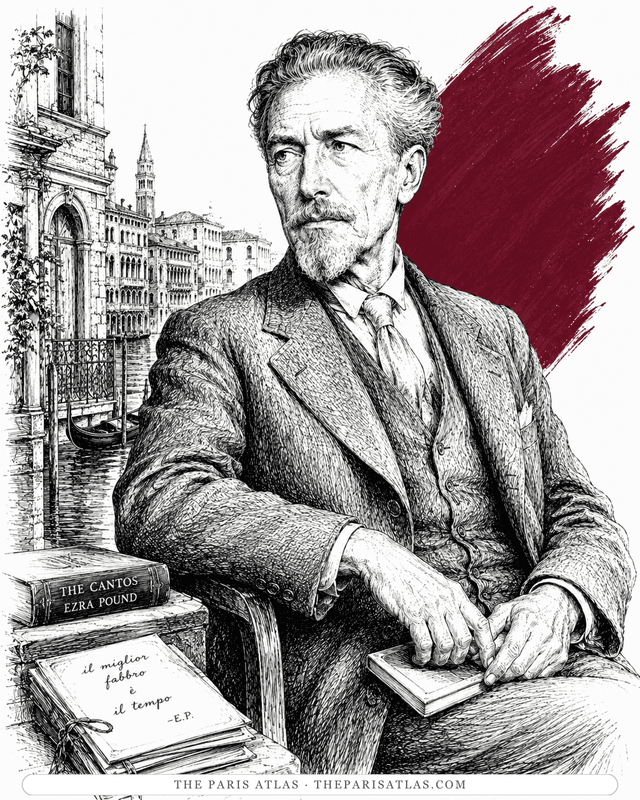
The impresario who dragged Joyce's early books into print, brought him to Paris, and championed Ulysses until the world caught up.
View author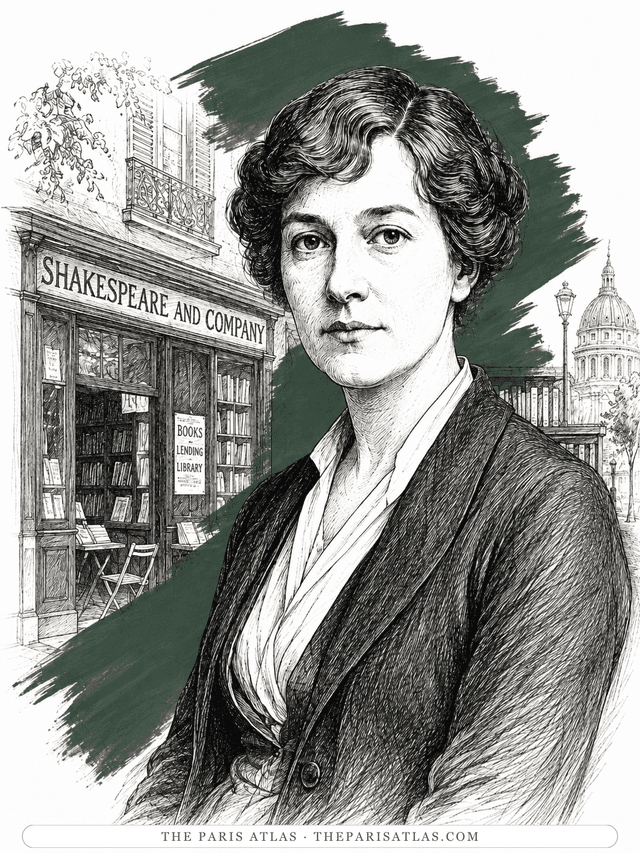
His publisher of last resort and first devotion — the bookseller who printed Ulysses when no one else would.
View author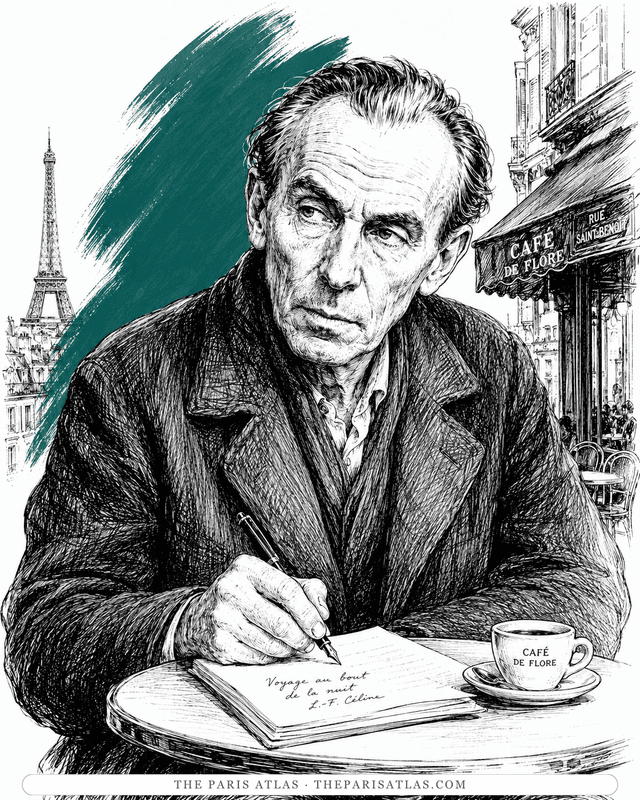
The doctor of the Paris slums who wrote the century's blackest, funniest novel — and changed the sound of French prose.
View authorThe sources below include the primary text, editions, scholarship, archival materials, and other records that informed this page. They document Finnegans Wake, its publication, and its place in literary history.

Penguin Classics edition: ISBN, extent, on-sale date, and the publisher's description quoting Joyce.
Sisley Huddleston's 1928 account of visiting Joyce in his study and of how he worked on the book.
National Library of Ireland story on Paul Léon: the proofs of the book and the Joyces' departure from Paris.

Open Library edition records: the 1939 Faber and Viking first editions, and confirmation that each ISBN listed resolves to Finnegans Wake.
Michael Witkoski on the book's settings: the bedroom above the pub in Chapelizod, Phoenix Park, the Liffey.
Primary text of the 1929 essay collection, in the New Directions reprint: publication details, contributors, Sylvia Beach's 1961 introduction and Samuel Beckett's essay.
Casey Lawrence's reading guide: the first and last lines with page numbers, and reading in groups.
Faber paperback: ISBN, date, and the note on Joyce's corrections to the 1939 printing.
Sylvia Beach's memoir, for her account of closing the shop in 1941.
Richard Ellmann's biography, cited by the 2 Square de Robiac record for the family's dates at that address, 1925 to 1931.
The primary text represented by this page, used for descriptions of the work’s contents and for any quoted passages shown here.
The primary text is the baseline reference for every book page. Additional references document publication history, interpretation, and historical context where that evidence is available.
 Explore more resources