

A Portrait of the Artist as a Young Man
The novel Joyce made from this draft. The novel covers Stephen's whole childhood and youth in five chapters, and ends with him leaving for Paris.
Read our takeStephen Hero
James Joyce
by James Joyce
James Joyce's abandoned first try at A Portrait of the Artist as a Young Man: two years of a Dublin student's life, rescued from a manuscript Sylvia Beach sold from her Paris bookshop.
Stephen Hero is the novel James Joyce wrote before A Portrait of the Artist as a Young Man, and then threw over.[1] Only a middle stretch of the manuscript survives. The surviving pages follow Stephen Daedalus through about two years at university in Dublin.[2] He writes a paper on drama that the college president tries to stop. He argues with his mother about religion, falls for a girl called Emma Clery, and watches his sister die.[2] The pages reached print through Paris. Joyce gave them to Sylvia Beach, who offered them for sale from Shakespeare and Company in 1935.[2] Harvard bought them, and the book came out in 1944, three years after Joyce's death.[2][1]
Joyce worked on Stephen Hero in his early twenties. When he left Ireland in 1904 he took a first chapter and notes for it with him. In March 1906 he told the London publisher Grant Richards that he had written 914 pages, in twenty-five chapters, and that this was about half the book.[2] He never finished it. He started again and cut the same material down into A Portrait of the Artist as a Young Man.[1]
The manuscript followed him to Paris. Joyce moved there in June 1920 and left his library in Trieste with his brother Stanislaus. Stanislaus later sent most of it on, including most of the surviving Stephen Hero pages.[2] Joyce passed many of his manuscripts to Sylvia Beach, the Paris bookseller who had published Ulysses.[2]
In 1935 Beach issued a sale catalogue from her bookshop at 12 rue de l'Odéon. One lot was pages 519 to 902 of the early Portrait, in Joyce's hand. Her catalogue told a story: Joyce had thrown the manuscript into the fire after twenty publishers rejected it, and Nora Joyce had pulled the surviving pages out.[2] The Harvard College Library bought the pages in the autumn of 1938.[2]
The Harvard scholar Theodore Spencer edited them. He wrote to Joyce at the end of 1938 and got a reply from Joyce's secretary. The letter dismissed the draft as a schoolboy's work, written at nineteen or twenty.[2] Spencer thought the lost early pages probably had been burnt, although none of the surviving pages shows any sign of fire.[2] New Directions in New York and Jonathan Cape in London published his edition in 1944.[3]
The manuscript starts in the middle of a sentence, with Stephen Daedalus already a student at the university on St Stephen's Green in Dublin. He is nearly always late for lectures. His friends include Madden, a student from County Limerick, and Cranly, Lynch and McCann.[2]
Home is getting harder. Stephen's father worries he is falling into bad company. His evening walks with his brother Maurice are stopped, because Stephen is thought to be leading the boy into idle habits. His university fees depend on a godfather, not on his father.[2] He meets Emma Clery at Mr Daniel's house on Sunday evenings. To be near her, he joins an Irish-language class, though he refuses to wear the Gaelic League badge.[2]
Most of the middle of the book follows his paper "Drama and Life". The college president tries to ban it, and Stephen argues with him in the college garden. The paper is read at last, to a cool reception.[2] At home his mother asks whether he has made his Easter duty, and the question becomes an open quarrel about his faith.[2]
His sister Isabel falls ill. Stephen is in the room when she dies, with his mother, his father and Maurice.[2]
During an Italian lesson Stephen sees Emma from the window, crossing St Stephen's Green, and runs out after her. He asks her to spend one night with him, and then to say goodbye in the morning and never meet again. She tells him he is mad and walks away in tears. Lynch laughs at the story. Stephen explains his idea of the epiphany to Cranly.
In the last surviving chapter Stephen's godfather may stop paying for college, and Stephen says he means to decide what to do with his life. Standing in a porch with Lynch, he says he will not serve the Church or submit to it. The manuscript breaks off mid-conversation, with Emma laughing with friends in a nearby doorway.
The extra pages found later belong to an earlier part of the book. Their first lines became, with a few changes, one of the last diary entries in A Portrait. Below them Joyce wrote "Departure for Paris" across the page in blue crayon. The rest follow Stephen on a visit to his godfather in Mullingar, in the Irish midlands.
The surviving pages cover much the same ground as the last part of A Portrait of the Artist as a Young Man. Spencer measured the difference. Two years at university take up at least as many pages in the draft as Stephen's whole life takes in the finished novel.
Much of what Joyce later cut is here in full. Stephen has a close friendship with his younger brother, Maurice. He tries to talk his family into admiring the Norwegian playwright Henrik Ibsen. His sister Isabel falls ill and dies, and he is in the room when she dies. None of that reaches A Portrait.
Scenes that A Portrait only mentions are acted out here. In the novel, Stephen's refusal to make his Easter duty comes up in a talk with his friend Cranly. In Stephen Hero it is a full argument with his mother over breakfast. The girl whom A Portrait calls only E. C. has a name here, Emma Clery, and a personality of her own.
Spencer put the difference in a picture. Reading A Portrait is like looking at a room through a keyhole. In Stephen Hero the door is open, and everything is in plain daylight. The draft is looser and less artful. Its Stephen is younger, more foolish and easier to like.
One long thread in the surviving pages is a paper. The college's Literary and Historical Society invites Stephen to read one, and he calls it "Drama and Life". He spends weeks composing it on long walks around Dublin before writing a word down.
Every paper has to be approved by the college president first. Word comes back that Stephen's paper is banned. Stephen marches off to find the president, a priest saying his prayers in the garden. They argue about Ibsen, Dante and the philosopher Thomas Aquinas. The president admits he has never read a line of Ibsen.
The paper is read in the end. The paper gets polite applause, an attack from a student speaker and a friendly lecture from one of the priests. The vote of thanks passes, without enthusiasm. Stephen stands up, bows and makes no speech.
The episode comes from Joyce's own student years. At University College Dublin he wrote a paper defending Ibsen, also called "Drama and Life". The college president suppressed it on moral grounds.
Stephen Hero is where Joyce explains his idea of the "epiphany". Spencer called the passage the most interesting and revealing in the whole manuscript. A Portrait leaves it out entirely.
The scene is small. Walking down Eccles Street one misty evening, Stephen overhears a young woman on the steps of a brick house flirting with a young man at the railings. The scrap of talk gives him the idea of collecting such moments in a book. An epiphany, he decides, is a sudden showing of something real, in a gesture, a remark or a thought.
He explains the idea to Cranly with the clock on the Ballast Office, a Dublin landmark. Stephen passes it every day and hardly sees it. Then one day he looks and really sees it, and that moment of seeing is the epiphany. Cranly is not very interested.
Joyce really did collect epiphanies of his own. Two scenes in the extra pages first printed in 1955 are based on epiphanies that survive at the University at Buffalo. Spencer read Dubliners, A Portrait, Ulysses and even Finnegans Wake as larger versions of the same idea.
A Portrait is famous for what it leaves out. Here the family, the friends and the arguments are all still in, told in full scenes and long stretches of talk.
Joyce's idea of the epiphany, a sudden moment when something ordinary shows what it really is, is spelled out only in this book.
Stephen's paper on Ibsen, the president's ban and the argument in the college garden are some of the liveliest scenes in the book.
The pages survived because Joyce handed them to Sylvia Beach at Shakespeare and Company. She sold them, and a Harvard library bought them in 1938.
A student at the university on St Stephen's Green who worships Ibsen, argues with priests and plans to be a writer. An earlier, younger and more foolish version of the Stephen Dedalus of A Portrait.
The girl Stephen follows to an Irish-language class. She lives near Portobello, chats happily with a young priest, and turns Stephen down flat. A Portrait cuts her to the initials E. C.
Stephen's closest friend at college. They talk for hours in the National Library and on the walk home. Stephen explains the epiphany to him, and he barely listens.
Stephen's younger brother and first listener. Stephen tries out his ideas on him, until their parents stop the evening walks. A Portrait drops their friendship.
A student from County Limerick who asks Stephen the way to a lecture and becomes a friend. A nationalist, he talks Stephen into learning Irish.
Stephen's young sister. Her illness and death, with Stephen in the room, is one of the scenes Joyce left out of A Portrait.
Dr Dillon, the priest who runs the college and must approve every paper read to its society. He tries to stop Stephen's, argues with him in the garden, and admits he has never read Ibsen.
A college friend who laughs at Stephen's proposal to Emma. He is with Stephen in the last surviving scene.
1902
James Joyce graduates from University College Dublin and goes to Paris to study medicine. He returns to Dublin when his mother is dying.
1904
Joyce leaves Ireland with Nora Barnacle, taking a first chapter and notes for Stephen Hero.
1906
In March Joyce tells the publisher Grant Richards he has written 914 pages, twenty-five chapters, about half the book.
1920
Joyce moves to Paris in June. His brother Stanislaus later sends on from Trieste most of the surviving manuscript.
1935
Sylvia Beach offers pages 519 to 902 for sale in a catalogue from Shakespeare and Company, 12 rue de l'Odéon.
1938
The Harvard College Library buys the pages in the autumn.
1944
New Directions and Jonathan Cape publish Stephen Hero, edited by Theodore Spencer, three years after Joyce's death.
1948
Gallimard publishes a French translation in Paris, Stephen le héros, by Ludmila Savitzky.
1955
A new edition adds twenty-five more pages. Stanislaus Joyce had kept them; John J. Slocum bought them in 1950, and by 1955 they belonged to the Yale University Library.
1963
New Directions issues the revised paperback edition still in print, on 18 January.


The novel Joyce made from this draft. The novel covers Stephen's whole childhood and youth in five chapters, and ends with him leaving for Paris.
Read our take
Joyce's stories of Dublin, written in the same years. Spencer thought the draft was written the way Dubliners is: one scene and one character after another.
Read our take
Stephen Dedalus comes back, a few years older, in Joyce's great Dublin novel, published in Paris in 1922.
Read our take
Sylvia Beach's memoir of the Paris bookshop that published Ulysses and later sold the Stephen Hero manuscript.
Read our takeAn early, unfinished version of James Joyce's novel A Portrait of the Artist as a Young Man. Joyce abandoned it and rewrote the material in a much shorter form. The surviving part was published in 1944, three years after his death.
Stephen Hero is longer, looser and more direct. The surviving pages cover only two years at university, and they are at least as long as the whole of A Portrait. Stephen's family, his friends and a girl called Emma Clery get full scenes that the later novel cuts or only mentions.
Most of the first 518 pages of the manuscript are lost. Sylvia Beach's 1935 sale catalogue said Joyce threw the manuscript in the fire and Nora Joyce rescued what was left. Theodore Spencer, who edited it, thought the story probably true, although none of the surviving pages shows any sign of fire.
The manuscript reached print through Paris. Joyce's papers followed him there after he moved in 1920, and he gave the Stephen Hero pages to Sylvia Beach. She offered them for sale from Shakespeare and Company in 1935, and Harvard bought them in 1938. A French translation appeared in Paris in 1948.
A sudden moment when something ordinary shows what it really is. Stephen explains it to his friend Cranly with the clock on Dublin's Ballast Office. He passes it every day without noticing, until one day he really sees it.
The young woman Stephen pursues. In A Portrait of the Artist as a Young Man she appears only as E. C., but in Stephen Hero she has a full name and a personality. When Stephen asks her to spend a single night with him, she refuses.
Explore authors with a similar voice, perspective, and influence.
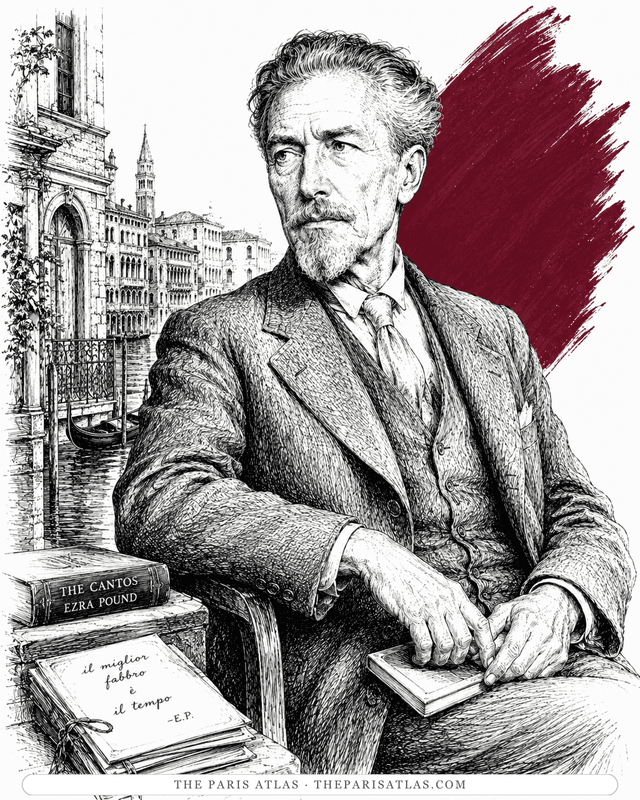
The impresario who dragged Joyce's early books into print, brought him to Paris, and championed Ulysses until the world caught up.
View author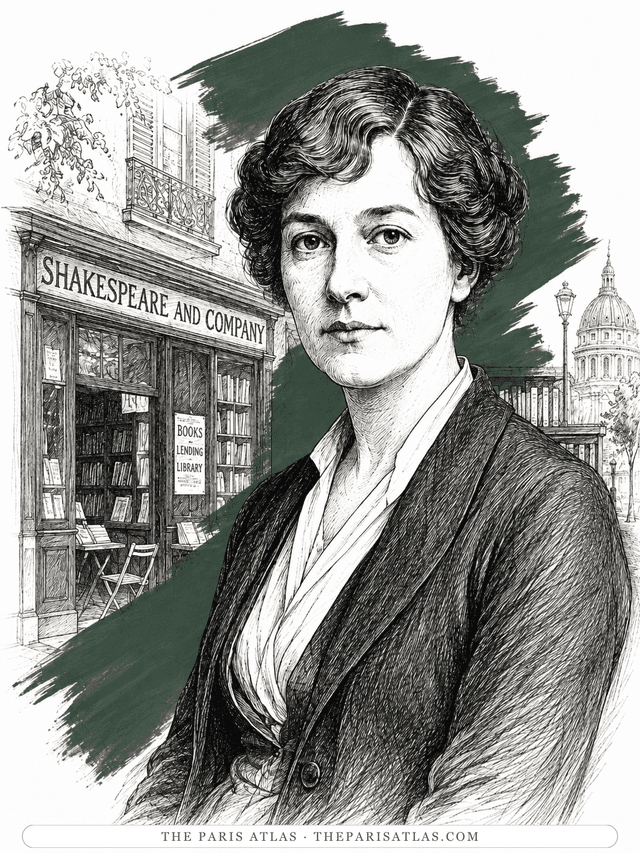
His publisher of last resort and first devotion — the bookseller who printed Ulysses when no one else would.
View author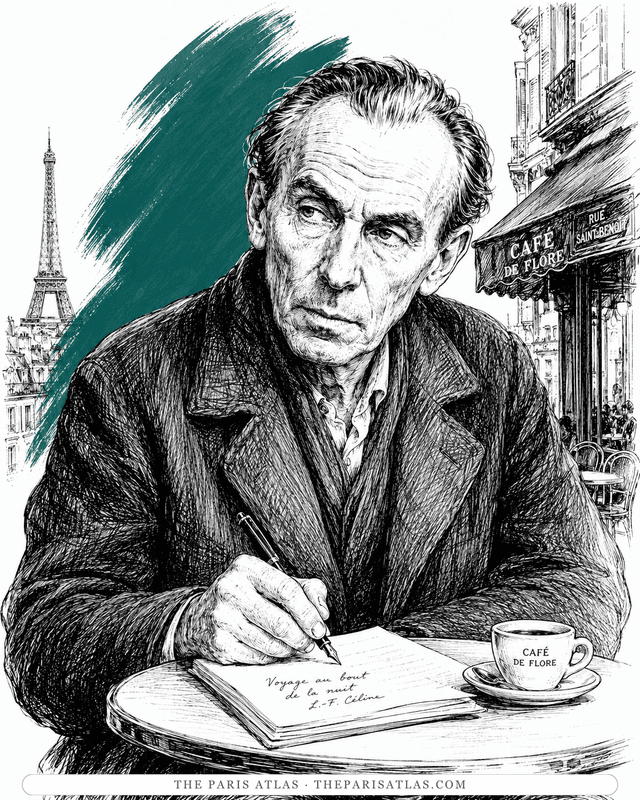
The doctor of the Paris slums who wrote the century's blackest, funniest novel — and changed the sound of French prose.
View authorThe sources below include the primary text, editions, scholarship, archival materials, and other records that informed this page. They document Stephen Hero, its publication, and its place in literary history.

The text of the 1955 New Directions edition, read in full on the Internet Archive, with Theodore Spencer's introduction and the foreword by John J. Slocum and Herbert Cahoon. Source for the plot and for the manuscript's history.

Open Library edition records: the 1944 New Directions and Jonathan Cape editions, and confirmation that each ISBN listed resolves to Stephen Hero.
Harry Ransom Center biography: Joyce's "Drama and Life" paper at University College Dublin, and his first stay in Paris after graduating.
Publisher's page: the current paperback, its ISBN, date and extent.
Bibliothèque nationale de France catalogue record for the 1948 French translation.
The primary text represented by this page, used for descriptions of the work’s contents and for any quoted passages shown here.
The primary text is the baseline reference for every book page. Additional references document publication history, interpretation, and historical context where that evidence is available.
 Explore more resources