The Paris AtlasCharting the artists, works, and places worth returning to.
  • Author
  • Poet
  • Translator
  • Critic
  • Educator
· Russian-American · 1899–1977

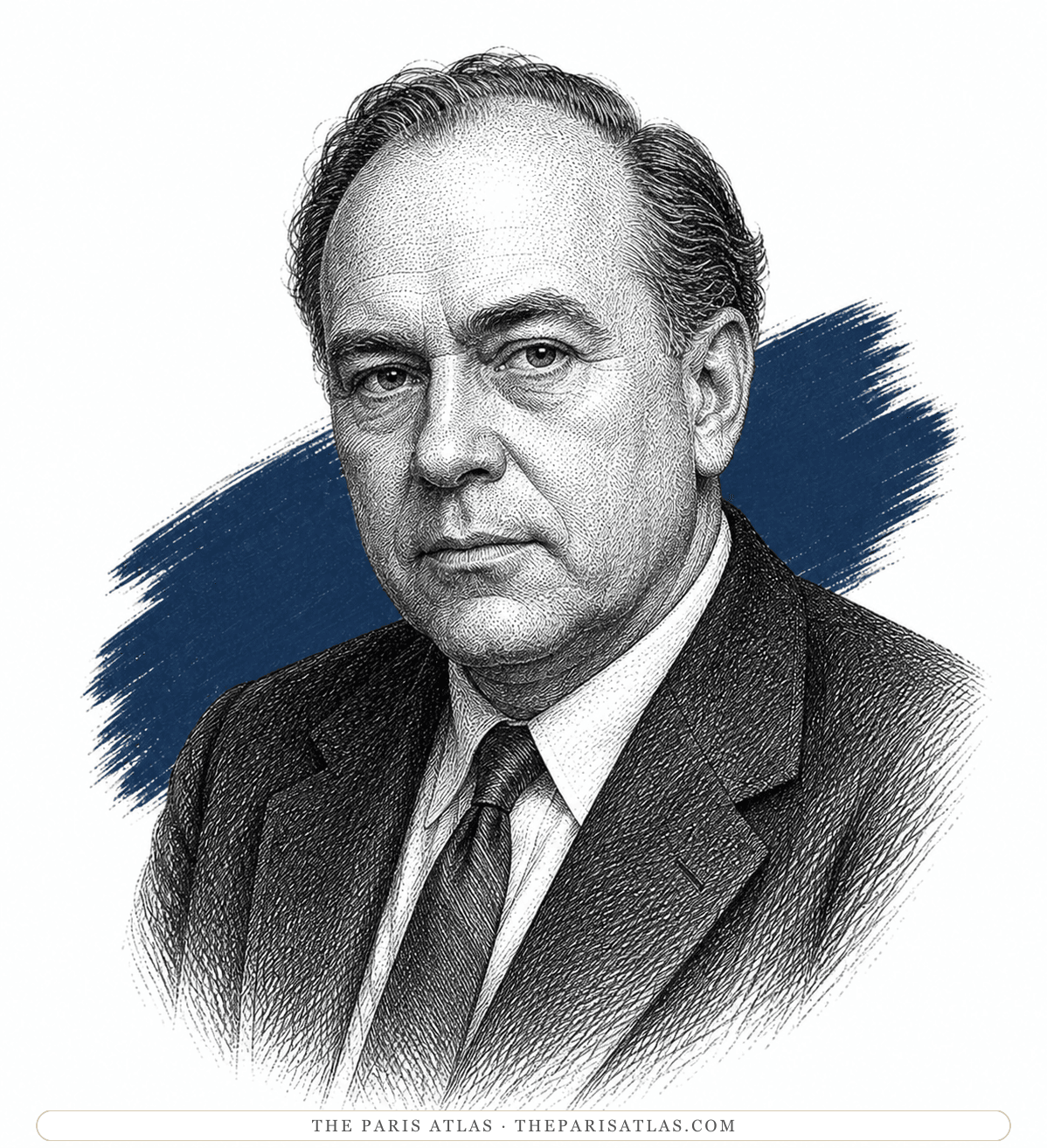
Vladimir Nabokov

Russian-American novelist, poet, translator, critic, teacher and lepidopterist whose fiction transformed memory, exile, desire, deception and literary form through extraordinary verbal precision. He wrote his first nine novels in Russian for the émigré communities of Berlin and Paris. He crossed into English with The Real Life of Sebastian Knight, written in Paris in 1938–39, and became internationally famous when Olympia Press published Lolita in Paris in 1955. Pale Fire, Ada and the autobiography Speak, Memory followed.

In images

Details

Lived
1899–1977
Born
1899
Birthplace
Saint Petersburg, Russia
Died
1977
Place of death
Lausanne, Switzerland
Nationality
Russian-American
Roles
AuthorPoetTranslatorCriticEducator
Also known as
Vladimir Vladimirovich Nabokov · Vladimir Sirin · V. Sirin

About Vladimir Nabokov

Russian-American novelist, poet, translator, critic, teacher and lepidopterist whose fiction transformed memory, exile, desire, deception and literary form through extraordinary verbal precision.

Vladimir Nabokov lived several literary lives inside one career. He began as a Russian poet and novelist writing under the name Vladimir Sirin for the émigré communities of Berlin and Paris. After fleeing Europe in 1940, he rebuilt himself in the United States as an English-language novelist, university teacher and professional butterfly specialist. Lolita eventually made him internationally famous, but it represents only one part of his work. The Defense, The Gift, The Real Life of Sebastian Knight, Bend Sinister, Pnin, Pale Fire, Ada and the autobiography Speak, Memory stand beside it. He also translated Pushkin, composed chess problems, published scientific papers and spent years classifying butterflies at Harvard's Museum of Comparative Zoology.

His life was shaped by repeated displacement. Nabokov was born in 1899 into one of the wealthiest and most cultivated families in Saint Petersburg. The Russian Revolution destroyed that world while he was still a teenager. His family fled first to Crimea, then left Russia permanently in 1919. He studied at Cambridge, joined his family in Berlin and spent the next eighteen years writing for a Russian readership scattered across Europe. The rise of Nazi Germany placed his wife Véra and their son Dmitri in danger because Véra was Jewish. The family moved through France before escaping to New York shortly before the German occupation of Paris.

Paris was not Nabokov's longest home, but it occupied a decisive position between his Russian and American careers. He gave successful readings there in the early 1930s, left Berlin for Paris in 1937 and lived in the city more consistently from 1938 until 1940. He completed The Gift during his French years, wrote The Real Life of Sebastian Knight — his first English-language novel — in Paris, and composed The Enchanter, an early treatment of material that later returned in Lolita. James Joyce attended one of his Paris readings in 1937 and dined with him in 1939. Fifteen years after Nabokov fled the city, Maurice Girodias's Olympia Press published Lolita in Paris after American publishers had rejected it.

Nabokov's work is famous for verbal beauty, but beauty in his fiction is rarely innocent. His narrators charm, conceal, exaggerate and misdirect. Characters believe they understand the patterns governing their lives while the reader gradually notices evidence they have ignored. Nabokov built novels from recurring colors, sounds, names, reflections, doubles, coincidences and apparently insignificant objects. He expected readers to notice these details and distrusted interpretations that reduced a book to a political message, psychological diagnosis or summary of its plot. His preferred reader was attentive enough to reread, compare and recognize the design that only becomes visible after the first journey through the story.

The intricacy of his books did not make them emotionally empty. Nabokov wrote repeatedly about people trying to recover what time has removed: childhood homes, first loves, dead parents, lost countries and earlier versions of themselves. His comic villains and unreliable narrators can dominate a page, but the deepest sympathy often belongs to the person whom the narrator fails to see clearly. This is especially important in Lolita, where Humbert Humbert's elaborate prose continually attempts to control the reader's interpretation of Dolores Haze. Nabokov stated plainly that Dolores is twelve when Humbert meets her, described Humbert as cruel, and reserved his sympathy for the child whose experience the narrator tries to overwrite.

A privileged childhood in Saint Petersburg

Vladimir Vladimirovich Nabokov was born at 47 Bolshaya Morskaya Street in Saint Petersburg on 10 April 1899 according to the Russian calendar then in use, equivalent to 22 April in the Western calendar. The date later became confused because the difference between the Julian and Gregorian calendars increased from twelve to thirteen days in 1900. When the family lived outside Russia, it often celebrated his birthday on 23 April, although standard modern biographies give 22 April.

He was the first surviving child of Vladimir Dmitrievich Nabokov and Elena Ivanovna Rukavishnikova Nabokova. His father was a jurist, legal scholar, journalist and liberal politician whose own father had served as minister of justice under two tsars. His mother was the daughter of a wealthy mine-owning family and inherited the estate of Vyra, south of Saint Petersburg. The Nabokovs lived most of the year in a large pink-granite house on fashionable Bolshaya Morskaya and spent their summers among the neighboring country estates of Vyra, Rozhdestveno and Batovo. Vladimir's surviving siblings were Sergey, Olga, Elena and Kirill.

The scale of Nabokov's childhood wealth matters because he lost it completely. The family had servants, tutors, governesses, horses, automobiles, extensive libraries and the ability to travel through western Europe. The estates provided forests, rivers, bogs and meadows in which the young Nabokov collected butterflies. The Saint Petersburg house hosted political meetings and contained rooms, stairways and colored windows that later reappeared in his memory. When he wrote about this world decades later, he did not present it merely as a social system or lost fortune. He remembered textures, reflections, voices, wallpaper, plants, insects and the changing light of particular days.

Nabokov's attachment to this childhood did not make him an advocate for tsarist autocracy. His father belonged to the Constitutional Democratic Party and supported liberal reform, civil rights, parliamentary government and legal protection for minorities. In 1903, after a deadly pogrom at Kishinev, Vladimir Dmitrievich published a prominent article accusing the imperial authorities of encouraging the violence. He later served in Russia's first State Duma and was imprisoned for signing the Vyborg Manifesto after the tsar dissolved it. Political opposition therefore belonged to the young Nabokov's family life before revolution forced the family into exile.

English, Russian and French

Nabokov grew up among several languages. British governesses began teaching him and his brother Sergey English in early childhood, while their mother read English fairy tales to them. A French governess, Cécile Miauton, joined the household in 1906. At one point their father was dismayed to discover that the boys could read and write English more readily than Russian and hired Russian tutors to correct the imbalance.

This multilingual childhood later became central to Nabokov's identity. Russian remained the language of his earliest memories, lyric poetry and first nine novels. English was not simply a language acquired after immigration; he had spoken and read it since childhood, studied it formally and had already written scientific prose in it by the time he reached Cambridge. French was the language of governesses, travel, reading and much of the European culture around him. His later shift into English fiction was still difficult, but it was not the first encounter of an adult refugee with an unfamiliar language. It was the deliberate reorganization of a mind already accustomed to moving among three of them.

The movement among languages affected his prose. Nabokov could hear when a word carried foreign associations, when a name contained another sound or when an apparently ordinary English phrase resembled something in Russian or French. His books frequently exploit false cognates, multilingual puns, hidden translations and names that reveal more than their owners realize. Self-translation later allowed him to revisit earlier Russian novels, but he seldom treated the process as mechanical equivalence. He revised extensively, removed weaknesses, added patterns and sometimes turned the translated book into a substantially new version of the original.

Memory, color and synesthesia

Nabokov described himself as possessing colored hearing, a form of synesthesia in which letters and sounds evoked particular colors. His mother experienced similar associations, and his son Dmitri later reported them as well. Nabokov's exact color alphabet differed between Russian and English because the sound and shape of a letter mattered as much as its abstract identity.

Synesthesia did not single-handedly create his style, but it belonged to a larger intensity of perception. He remembered sequences through color, noticed minor visual differences and often reconstructed scenes through several senses at once. A remembered room might be recovered through the shade of a wall, the sound of a name, the pressure of sunlight and the pattern made by a moving insect. His fiction repeatedly treats perception as an active artistic process rather than a passive reception of the world.

This approach became most explicit in Speak, Memory. Although the book follows his life from childhood through exile, it is not organized like a simple chronological record. Images recur across chapters, apparently accidental moments answer one another many years apart and the full design becomes visible only after the reader recognizes repeated motifs. Nabokov's autobiography argues implicitly that memory does not preserve life as a continuous film. It saves vivid fragments, and the artist's task is to discover the pattern connecting them.

Butterflies

Nabokov began collecting butterflies seriously as a child. In 1906 he explored the family estates with a net, and during a severe case of pneumonia the following year his mother surrounded his bed with butterfly books. The fascination became systematic. By 1908, according to the detailed chronology maintained by the International Vladimir Nabokov Society, he had mastered the known butterflies of Europe. He raised caterpillars, recorded specimens in English and dreamed of discovering a species that science had not yet described.

The activity trained precisely the kind of attention his fiction later demanded. Identifying a butterfly can depend on minute differences in wing markings, anatomy, habitat and seasonal variation. A superficial observer sees two nearly identical insects; a taxonomist notices the feature that proves they belong to different groups. Nabokov brought the same suspicion of approximate resemblance into literature. His books are full of doubles who are not quite duplicates, patterns that change when repeated and deceptive surfaces whose smallest inconsistency reveals the truth.

Butterflies also connected pleasure with discipline. Field collecting required long walks, knowledge of habitat, quick physical movement and patience. Laboratory work required microscopes, dissection, classification and exact description. Nabokov never treated science as a decorative source of metaphors for his novels. During the 1940s, it became a genuine profession in which he produced original taxonomic research.

Tenishev School, sport and first poems

In 1911, Nabokov and Sergey entered the Tenishev School, an elite but comparatively liberal institution in Saint Petersburg. Nabokov performed well academically but disliked the conformity of school life. He played football as a goalkeeper, boxed, read widely and continued studying drawing. His teachers included the artist Mstislav Dobuzhinsky, who later became an important stage designer and illustrator.

Sport remained a significant part of Nabokov's life. He played football at school and Cambridge, taught tennis and boxing for money in Berlin, and continued swimming and hiking into old age. The goalkeeper's position may have appealed to the same temperament visible elsewhere in his work: the player remains apart from the main crowd, observes the full field and must respond instantly when the pattern changes.

Nabokov dated his first true poem to the summer of 1914, when he experienced what he later described as an uncontrollable need to make verse. In 1915 he fell in love with Valentina “Lyussya” Shulgina, who became “Tamara” in Speak, Memory and contributed to the heroine of his first novel, Mary. That year his poem “Autumn” became his first publication. In 1916, he privately printed Stikhi, a collection of sixty-seven youthful poems, and inherited the large Rozhdestveno estate from his maternal uncle. He was seventeen and briefly possessed a fortune that revolution would make meaningless.

Revolution and Crimea

The political crisis of 1917 entered Nabokov's life through his father. After the February Revolution ended the Romanov dynasty, Vladimir Dmitrievich served as a minister without portfolio in the first Provisional Government and was elected to the Constituent Assembly. When the Bolsheviks seized power later that year, he remained involved in electoral work and was briefly imprisoned.

Nabokov completed his school examinations early, and in November he and Sergey left Petrograd for Crimea to avoid possible conscription into the Red Army. Their mother and younger siblings joined them, followed by their father after his release. The family lived at Gaspra and later Livadia, the former imperial estate near Yalta. Nabokov continued writing poetry, studied prosody with the encouragement of Maximilian Voloshin and hunted butterflies on the Crimean plateau.

The family's situation changed repeatedly as Bolshevik, German, anti-Bolshevik and regional forces took control. Nabokov's father eventually served as minister of justice in a short-lived Crimean government. By spring 1919, the Red Army was advancing again, and evacuation became unavoidable. On 15 April 1919, the family left Sevastopol aboard the Greek ship Nadezhda, traveling first to Athens and then to London. Nabokov never returned to Russia.

The loss of Russia became the central historical fact behind his work, but he refused to write conventional political novels about dispossessed aristocrats. Exile appears more often through missing rooms, displaced names, remembered gardens and people trying to recreate private worlds in rented spaces. His fictional émigrés carry the habits of one country into another and discover that memory can preserve a place more vividly than geography while also making ordinary life elsewhere difficult to inhabit.

Cambridge

Nabokov entered Trinity College, Cambridge, in October 1919. He initially enrolled in both zoology and modern and medieval languages, studying French and Russian, but eventually dropped zoology to devote more time to poetry, football and an active social life. He continued collecting butterflies and wrote his first English-language scientific article about specimens he had taken in Crimea.

Cambridge was emotionally complicated. Nabokov valued its libraries, playing fields and aesthetic atmosphere, but he did not experience it as a stable new home. Russia had become inaccessible, his family moved to Berlin in 1920 and he worried that life among English speakers might weaken his Russian. He bought Vladimir Dal's great Russian dictionary and read it regularly, gathering unusual words as a way of maintaining contact with the language in which he intended to become a poet.

In 1921 he began publishing as Vladimir Sirin, adopting the name partly to distinguish his byline from that of his father. The sirin is a bird-woman from Russian legend, and the name gave the young writer a separate literary identity. He received first-class results in the Russian component of his examinations but graduated in 1922 with second-class honors overall.

The assassination of his father

On 28 March 1922, while Nabokov was still at Cambridge, his father attended a political meeting at the Berlin Philharmonie. Two far-right Russian monarchists attempted to assassinate the liberal leader Pavel Milyukov. Vladimir Dmitrievich leapt at one of the attackers and was shot and killed by the other.

The death deprived Nabokov of the person who had given his childhood its intellectual and moral structure. His father had encouraged his poetry, defended his right to abandon church attendance, shared interests in sport and butterflies, and demonstrated a liberal opposition to both tsarist repression and Bolshevik dictatorship. The circumstances of his death also joined courage with terrible contingency: he was not the intended victim but died while trying to protect someone else.

Nabokov seldom wrote about the assassination directly in his fiction. Its emotional pattern nevertheless recurs in sudden deaths, mistaken identities, diverted bullets and apparently accidental events that reveal a larger design only afterward. His refusal to turn his father into a simple fictional martyr is characteristic. Personal grief is usually displaced, transformed and hidden within structure.

Berlin and the Russian émigré world

After graduating, Nabokov joined his family in Berlin, which had become the largest center of Russian émigré publishing. His father had helped establish the liberal newspaper Rul' and the publishing house Slovo. The young Nabokov published poetry, stories, criticism, crossword puzzles and plays under the Sirin name. He also translated Romain Rolland and produced a Russian version of Lewis Carroll's Alice's Adventures in Wonderland.

He lived without the wealth of his childhood. Nabokov briefly tried a bank position but left after only a few hours. He worked as a private tutor in English, Russian, tennis and boxing, appeared occasionally as a film extra and wrote sketches for Russian cabarets. Berlin was his principal home for fifteen years, yet he did not learn German deeply enough to make it a major literary language. He remained inside the displaced Russian culture of newspapers, theatres, lecture halls and rented rooms.

In 1921 he fell in love with Svetlana Siewert, and the two became engaged after his return from Cambridge. Her parents ended the engagement in January 1923 because Nabokov lacked a reliable income. The rejection added to the depression following his father's death but also pushed him toward prose fiction, the form in which he soon began establishing his reputation.

Meeting Véra Slonim

Nabokov met Véra Evseevna Slonim at a Berlin charity ball on 8 May 1923. She reportedly wore a black mask and recited some of his poetry to him during their first evening together. Véra had followed the career of “Sirin” before meeting the man behind the name. She came from an educated Jewish family that had also fled Saint Petersburg and was multilingual, widely read and experienced in translation and publishing work.

They married at a Berlin town hall on 15 April 1925. From the beginning, Véra typed Nabokov's manuscripts and became his first reader. Over the following five decades, she also served as translator, literary agent, business manager, teaching assistant, archivist and driver. Nabokov never learned to drive, so the thousands of miles the couple later traveled across the United States in pursuit of butterflies depended upon her. She handled publishers and correspondence, guarded his working time and occasionally intervened when she believed an interview or business arrangement was going badly.

The scale of Véra's contribution can make the marriage sound like a purely professional arrangement, which it was not. Nabokov's letters reveal intense affection, shared humor and the private systems of nicknames, drawings and references through which they sustained their relationship during separation. He dedicated nearly all his books to her. At the same time, most of the surviving correspondence presents his voice rather than hers because Véra destroyed nearly all the letters she had written to him. The surviving record therefore demonstrates her importance without allowing a complete reconstruction of her own inner life.

Mary and the beginning of the novelist

Nabokov began his first novel, Mashen'ka—later translated as Mary—in 1925 and completed it shortly after his marriage. Published in Berlin in 1926, the novel follows the Russian émigré Ganin, who learns that the wife of a fellow lodger is the girl he loved before the Revolution. He spends several days reconstructing the past and planning to recover her, only to recognize that the remembered relationship belongs more completely to imagination than to the woman about to arrive.

The novel establishes several themes Nabokov never abandoned. Exile intensifies memory because the remembered landscape cannot be revisited. Love becomes inseparable from the artistic reconstruction of the beloved. The person who remembers may care more for the pattern preserved in the mind than for the living person from whom it began.

Mary also demonstrates Nabokov's early economy. It is much shorter and less structurally elaborate than The Gift or Ada, but it already contains sudden shifts in time, repeated images and the tension between ordinary émigré surroundings and the almost painfully vivid Russia preserved inside Ganin's memory.

King, Queen, Knave

Nabokov's second novel, King, Queen, Knave, appeared in 1928. Set largely among Germans rather than Russian émigrés, it follows a provincial young man drawn into an affair with the wife of his wealthy uncle. The characters imagine themselves as agents of a melodramatic plot while Nabokov treats them increasingly like figures being moved across a designed surface.

The novel's title reveals his growing interest in systems and pieces. Human beings resemble cards assigned apparent roles, yet chance and physical detail prevent the plan from unfolding as expected. Nabokov later revised the English translation extensively, another example of his refusal to treat an earlier book as untouchable merely because it had already appeared.

The German rights brought enough money for Vladimir and Véra to travel to the eastern Pyrenees in 1929. Nabokov used the trip to hunt butterflies and began the novel that established Sirin as one of the leading writers of the Russian emigration.

The Defense

The Defense, written in 1929 and published in book form in 1930, centers on the chess prodigy Aleksandr Luzhin. From childhood onward, Luzhin experiences chess not simply as a game but as the only system in which the world appears coherent. Patterns from the board gradually invade ordinary life until he begins interpreting relationships, rooms and coincidences as moves in a fatal combination.

The book is not an argument against chess. Nabokov loved the game and composed difficult chess problems himself. Luzhin's tragedy lies in his inability to move between systems. Chess offers a structure of extraordinary elegance, but he cannot keep its logic from consuming every other form of experience.

The novel also announced Nabokov's mature structural method. Images introduced casually return with altered meanings. Apparently minor details become part of a design that the protagonist senses without fully understanding. The reader's pleasure comes from recognizing both the beauty of the construction and the danger of mistaking life for a closed puzzle.

The Eye, Glory and the unstable self

Nabokov wrote the novella The Eye in 1930. Its narrator believes that he has died and begins observing a man named Smurov from what appears to be a detached, posthumous perspective. Gradually, the distinction between observer and observed becomes uncertain. The book turns identity into a collection of versions produced by other people's perceptions.

Glory, completed later that year and published in 1932, presents a very different protagonist. Martin Edelweiss is a young Russian émigré drawn toward adventure and toward an impossible return across the Soviet border. The novel combines Cambridge memories, romance, landscape and political danger without converting Martin into a conventional hero. His idealism is moving partly because its practical meaning remains unclear.

Together, the books show Nabokov moving beyond autobiographical nostalgia. Exile remains present, but it is now joined to questions about self-invention, the stories people tell about themselves and the difference between aesthetic courage and fatal illusion.

Camera Obscura and Laughter in the Dark

Camera Obscura was written in 1931 and published in Russian in 1933. Nabokov later rewrote it substantially in English as Laughter in the Dark. The novel follows Albinus, a prosperous art critic who destroys his marriage through his obsession with the much younger Margot and becomes the victim of an increasingly cruel deception.

The book is structured around failed vision. Albinus believes himself capable of judging art and people, yet he repeatedly misreads what is in front of him. Physical blindness later makes literal the blindness already governing his choices. Nabokov allows the reader to understand the deception before Albinus does, replacing suspense about what is happening with dread about when he will recognize it.

When Nabokov revised the book in the late 1930s, his own marriage was undergoing its most serious crisis. The novel should not be treated as a disguised confession, but the rewritten version's intensity belongs to a period in which adultery, deception and the damage caused by erotic obsession had become immediate personal questions.

Despair

Despair was composed in 1932 and published in Russian in 1936. Its narrator, Hermann, believes he has encountered a man who looks exactly like him and devises an elaborate murder intended to produce the perfect crime.

The resemblance exists principally because Hermann insists upon it. His artistic self-confidence is greater than his ability to observe. Nabokov turns the criminal narrator into a parody of the artist who believes intensity of intention can force other people to see what he sees.

The novel marks an important stage in Nabokov's development of the unreliable first-person voice. Hermann does not merely conceal facts. He writes with such confidence and ingenuity that the reader must continually distinguish the beauty of his narration from the incompetence of his perception. This method later reaches its most famous form in Lolita.

Unable to find an English translator he trusted, Nabokov translated Despair himself in 1935. The decision reflected a growing recognition that the Russian émigré world might not survive Hitler's Germany and that his future could require a change of literary language.

Invitation to a Beheading

In 1934, while working on The Gift, Nabokov interrupted the larger novel and rapidly wrote Invitation to a Beheading. Its protagonist, Cincinnatus C., has been condemned to death for the unexplained crime of being inwardly different from the transparent, conformist people around him. The prison behaves like a badly managed theatre, and the officials preparing his execution alternate between bureaucratic cheerfulness and absurd menace.

The novel is often called anti-totalitarian, but it does not resemble conventional political allegory. Nabokov does not build a realistic dictatorship and then assign each character a historical equivalent. He creates an artificial world whose language, theatricality and unstable physical laws reveal the emptiness of the power surrounding Cincinnatus.

The book's deepest movement is from fear toward imaginative independence. Cincinnatus initially accepts the prison's reality as something fixed. By the conclusion, he begins to perceive its scenery and executioners as fraudulent constructions. Art and individuality do not reform the state, but they allow him to recognize that its claim to complete reality is false.

The Gift

Nabokov worked on The Gift through much of the 1930s and completed it in France in January 1938. The novel follows Fyodor Godunov-Cherdyntsev, a young Russian writer in Berlin, through artistic frustration, émigré life, romantic discovery and the composition of a controversial biography of the nineteenth-century radical Nikolai Chernyshevsky.

The Chernyshevsky chapter was so provocative to the editors of the émigré journal Sovremennye zapiski that they omitted it when serializing the novel. The censorship was particularly ironic because the chapter itself examines how ideology can turn literature into a collection of approved lessons. The complete book did not appear until 1952.

The Gift is generally considered the culmination of Nabokov's Russian fiction. It brings together poetry, biography, parody, literary criticism, butterfly exploration, romance and the history of Russian thought. Its form is circular, and its closing prose quietly prepares the rhythm of a sonnet without printing the lines as verse. The book's title refers not to one talent or inheritance but to artistic consciousness itself: the ability to notice, remember and transform.

Dmitri Nabokov

Vladimir and Véra's only child, Dmitri Nabokov, was born in Berlin on 10 May 1934. Nabokov described caring for him as both exhausting and joyful. Dmitri grew up amid political insecurity, repeated moves and the intense literary partnership of his parents.

As an adult, Dmitri pursued a career as an operatic bass and also raced automobiles. He later became one of his father's principal translators, working on English versions of Invitation to a Beheading, The Gift and other Russian works under close supervision. Translation within the family was collaborative but not casual. Nabokov examined wording in detail and frequently revised the original novel while reviewing the English version.

Dmitri remained closely involved with his parents through Nabokov's final illness and later managed the literary estate with Véra. His most controversial decision concerned the unfinished manuscript of The Original of Laura. Nabokov had instructed that the cards be destroyed if the novel remained incomplete, but Dmitri eventually authorized their publication in 2009.

Nazi Germany and the decision to leave

By the middle of the 1930s, Berlin had become increasingly dangerous. Véra lost her final German job in 1936 because she was Jewish. Nabokov also learned that Sergey Taboritsky, one of the men responsible for his father's assassination, had become an official in the Nazi-controlled organization overseeing Russian émigré affairs. The remaining Russian literary community was shrinking, and opportunities to support a family through writing and tutoring were disappearing.

Nabokov began searching for work in France, Britain or the United States. He gave successful readings in Brussels, Antwerp and Paris and wrote the French memoir “Mademoiselle O,” later incorporated into Speak, Memory. During these years he also completed the story “Spring in Fialta,” one of his finest treatments of memory, missed possibility and the delayed recognition of love.

On 18 January 1937, Nabokov left Germany for the final time. Véra and Dmitri remained temporarily in Berlin while he traveled through Brussels, Paris and London trying to find work and secure documents. The separation became the setting for the only major extramarital relationship known in his marriage.

Irina Guadanini

In Paris, Nabokov began an affair with Irina Guadanini, a Russian émigrée who attended his readings and hoped to become a poet. The relationship lasted for several months during 1937. Nabokov wrote passionate letters to Irina while assuring Véra that their marriage remained secure. Véra learned of the affair, apparently through an anonymous letter, before Nabokov admitted it.

The crisis nearly ended the marriage. Nabokov experienced severe psoriasis and intense emotional distress and at one point came close to suicide. After obtaining travel papers, he reunited with Véra and Dmitri in southern France and ultimately chose to remain with them. When Irina later came to Cannes, he asked her to leave.

The affair should neither be omitted from the biography nor turned into the secret explanation of the fiction. It reveals that the marriage Nabokov habitually described as perfectly harmonious contained deception and serious pain. It also shows Véra making a consequential decision whose private reasoning cannot be recovered because her side of the correspondence was destroyed.

France and Paris, 1937–1940

After leaving Germany, the Nabokovs lived precariously among Paris, Cannes, Menton, Moulinet, Cap d'Antibes and Fréjus. Money was scarce, work permits were difficult to obtain and the family depended at times on friends, patrons, tutoring and small literary payments. Nabokov nevertheless produced an exceptional amount of work.

Paris had already become important through his reading tours. During a February 1937 appearance, Nabokov was pleased to see James Joyce in the audience. In February 1939, the two writers dined together at the home of Lucie and Léon Noël. Nabokov admired Ulysses but later denied that Joyce had influenced his writing and expressed little affection for Finnegans Wake. His insistence on complete artistic independence should be treated partly as a statement of temperament: he preferred affinities to be discovered by readers rather than admitted as debts.

In October 1938, the family rented a small apartment at 8 rue de Saigon. They moved to 31 rue Le Marois in February 1939 and then to 59 rue Boileau that April. These were not glamorous expatriate addresses comparable to the salons of the 1920s. They belonged to a stateless family trying to remain in France without reliable employment while Europe moved toward war.

Nabokov completed The Gift, wrote the plays The Event and The Waltz Invention, and produced stories including “The Visit to the Museum.” In December 1938, he began The Real Life of Sebastian Knight and completed it the following month. He also wrote The Enchanter in late 1939, a novella about a man who marries a woman in order to gain access to her twelve-year-old daughter. The work remained unpublished during his lifetime but demonstrates that the central problem later transformed into Lolita had already entered his imagination before America.

The transition into English

The Real Life of Sebastian Knight was Nabokov's first completed novel written in English. Its narrator attempts to reconstruct the life of his dead half brother, a novelist named Sebastian, by interviewing acquaintances and reading his books. The biography repeatedly fails because people remember incompatible versions and because the narrator's search gradually becomes entangled with his own identity.

The novel gave Nabokov a way to dramatize his change of language. Sebastian is a Russian-born English writer whose books exist inside an English novel written by a Russian author. Errors, accents, translations and imperfect recollections become part of the structure rather than obstacles to it.

Lucie Léon reviewed the manuscript's English for Nabokov, but the style was already distinctly his own. Its unusual diction, controlled jokes and shifting identities do not read like an apprentice copying an English model. The novel demonstrates that Nabokov's first task in the new language was not to sound safely native. It was to make English accommodate the patterns he had developed in Russian.

Leaving France

Germany invaded France and the Low Countries on 10 May 1940. The Nabokovs had secured American visas but still needed French exit documents. The Hebrew Immigrant Aid Society assisted them, in part because of Vladimir Dmitrievich Nabokov's record of defending Jewish rights in pre-revolutionary Russia.

Vladimir, Véra and six-year-old Dmitri boarded the Champlain and reached New York on 27 May 1940, shortly before Paris fell. They arrived with approximately six hundred dollars. Nabokov carried manuscripts and butterfly specimens, including insects he had collected near Moulinet in 1938.

The departure ended his Russian-European career. The journals and publishers that had sustained émigré literature would be scattered or destroyed by war. Nabokov began a final Russian novel, Solus Rex, but abandoned it after reaching America because he believed that developing fully as an English novelist required him to stop dividing his principal creative work between languages.

Becoming an American writer

The Nabokovs first lived in New York, moving from Madison Avenue to West 87th Street. Vladimir gave lectures, tutored Russian and wrote literary reviews while seeking an academic position. Through his composer cousin Nicolas Nabokov, he met the critic Edmund Wilson in October 1940. The friendship helped connect him to American magazines, publishers and intellectual life.

Nabokov later insisted that he considered himself an American writer. He became a United States citizen in 1945 and developed a genuine attachment to the western landscape, roadside travel and the country's wildlife. His American identity did not replace his Russian memories. It gave him another geography through which those memories could be reorganized.

America also changed the material scale of his fiction. The Russian books often inhabit furnished rooms, European trains and tightly connected émigré communities. Lolita opens into highways, motels, tourist attractions, summer camps, advertisements and thousands of miles of movement. Nabokov saw commercial America with an immigrant's concentration, noticing the names and surfaces that residents often stopped seeing.

Wellesley, Stanford and Harvard

In 1941, Nabokov taught summer courses in Russian literature and creative writing at Stanford University. On the journey west, he captured a previously undescribed butterfly at the Grand Canyon and later named it in honor of Dorothy Leuthold, the student who had driven his family across the country. That autumn he began teaching at Wellesley College, where he eventually offered Russian language and literature courses.

At the same time, he volunteered in the butterfly collections at Harvard's Museum of Comparative Zoology. His knowledge and precision led to a paid research position, and from 1942 to 1948 he worked as the museum's de facto curator of Lepidoptera. He sometimes spent as many as fourteen hours a day examining specimens and published technical papers on the group of small butterflies known as the blues.

The museum work was not a genteel diversion from literature. Nabokov dissected hundreds of specimens and reorganized difficult classifications by comparing minute anatomical structures. The prolonged microscope work contributed to deteriorating eyesight and forced him to begin wearing reading glasses. He later considered his monograph on North American Lycaeides one of the achievements of which he was most proud.

Nabokov the scientist

Nabokov's scientific reputation grew substantially after his death. His 1945 study of Polyommatus blues proposed that the butterflies had originated in Asia and entered the Americas across the Bering region in a series of separate migrations over millions of years. The hypothesis was difficult to test using the anatomical evidence available during his lifetime and received limited attention.

Decades later, researchers used genetic sequencing to reconstruct the evolutionary relationships of the butterflies. Their results strongly supported Nabokov's central proposal: New World blues had arrived from Asia in five waves whose increasing cold tolerance corresponded to the changing climate around the Bering Strait. Later work also supported his judgment that the Karner blue was more distinct from the Melissa blue than some researchers had believed.

Not every Nabokov classification proved correct. Two unusual butterflies he collected in France and described as a possible new species were later shown to be sterile hybrids. His willingness to record doubts about that identification, however, demonstrates the seriousness of his scientific method. He could be delighted by the possibility of discovery without treating his preferred explanation as immune from later evidence.

Sergey Nabokov

Nabokov's younger brother Sergey followed a very different path through exile. Sergey was musical, shy, multilingual and gay. He lived for periods in Paris, where his circle included figures associated with Diaghilev, Jean Cocteau, Gertrude Stein and the painter Pavel Tchelitchew. His long-term partner was Hermann Thieme, an Austrian from a wealthy family.

The relationship between the brothers was difficult. Vladimir had discovered evidence of Sergey's sexuality when they were adolescents and exposed it to an adult tutor. Later reflections suggest that Nabokov regretted his youthful behavior and believed he had failed to know or love his brother adequately. Because Nabokov protected his own private life intensely, his brief treatment of Sergey in Speak, Memory leaves much unresolved.

Sergey was arrested under the Nazi regime and later detained again for anti-government statements and sympathies toward Britain. He was sent to Neuengamme concentration camp, where he died in January 1945 from starvation and illness. Nabokov learned the news later that year. The death joined the assassination of his father and the destruction of European Jewish and émigré life within the personal history behind his later novels about tyranny, imprisonment and arbitrary loss.

Nikolai Gogol and Bend Sinister

Nabokov's study Nikolai Gogol appeared in 1944. It is not a conventional scholarly biography. Nabokov concentrates on verbal invention, grotesque perception and the strangeness of Gogol's greatest prose while dismissing realistic or political interpretations he regarded as reductive.

The book reveals Nabokov's strengths and limitations as a critic. He could illuminate minute formal effects and explain how a great writer altered the texture of reality. He could also be impatient with historical context and with works that did not fit his personal hierarchy of taste.

Bend Sinister followed in 1947. Set in an invented dictatorship, it concerns the philosopher Adam Krug, whose former schoolmate has become head of a totalitarian state. The regime attempts to force Krug's cooperation by controlling his friends and ultimately his child.

The novel grew from Nabokov's experience of both Bolshevik and Nazi power, but it resists becoming a coded representation of one government. Its dictator is absurd as well as murderous, and its language continually exposes the vulgarity behind official slogans. The emotional center is not political theory but a father's inability to protect his son.

Edmund Wilson

Edmund Wilson became Nabokov's closest American literary friend during the 1940s. Wilson recommended him to editors, encouraged American publishers and offered practical support during years when Nabokov remained financially insecure. Nabokov, in return, tried to improve Wilson's Russian and discussed Pushkin, Gogol, politics and contemporary literature with him. Their letters preserve affection, intellectual competition and frequent disagreement.

Their friendship deteriorated over Nabokov's translation of Eugene Onegin. Nabokov had decided that exact literal meaning mattered more than reproducing Pushkin's rhyme and metrical elegance. Wilson's 1965 review challenged both the method and aspects of Nabokov's Russian scholarship. Nabokov responded publicly with a detailed and mocking list of Wilson's linguistic errors.

The dispute was not merely a quarrel between sensitive literary personalities. It concerned what translation owes an original work. Wilson believed that a translation of poetry should remain poetry in the receiving language; Nabokov believed that preserving rhyme could introduce meanings Pushkin had never written. The argument damaged a friendship of more than twenty years, although Nabokov continued remembering its earlier warmth after Wilson's death in 1972.

Cornell University

Nabokov joined the faculty of Cornell University in 1948, teaching Russian literature and the course usually known as Masters of European Fiction. His lectures covered writers including Jane Austen, Charles Dickens, Gustave Flaubert, Robert Louis Stevenson, Marcel Proust, Franz Kafka, Leo Tolstoy and James Joyce. The course became one of the most popular at Cornell.

He prepared the lectures in detail and expected students to know physical facts about the books. They might be asked to draw the arrangement of rooms, trace a character's route or notice the color of a particular object. Nabokov distrusted broad discussions of “themes” when students had not first mastered the details from which a novel was constructed.

Véra attended lectures as his course assistant, helped administer examinations and occasionally substituted for him. Nabokov knew many students by assigned seat numbers rather than by name and did not cultivate the informal accessibility later associated with creative-writing professors. Yet former students frequently remembered the intensity with which he made a work's design visible. His teaching argued that reading was not passive reception of plot but a form of attentive reconstruction.

The Cornell years were exceptionally productive. Nabokov worked simultaneously on Speak, Memory, Lolita, Pnin and his enormous translation and commentary on Eugene Onegin. Cornell's archive now contains more than two thousand documents concerning Lolita and his other publications from this period.

Road trips and index cards

The Nabokovs spent many summers traveling across the United States in search of butterflies. Because Vladimir never drove, Véra handled the car while he navigated, collected specimens and wrote. They crossed the Rocky Mountains, the Southwest and the Pacific Northwest, staying in tourist cabins, rented rooms and roadside motels.

Nabokov wrote on lined index cards rather than composing a novel continuously from its first chapter to its last. A scene, image or paragraph could be written whenever it became clear, then placed among other cards and rearranged as the design developed. He compared the process to filling different portions of a crossword puzzle after the overall pattern had already been perceived.

This method allowed him to work in parked cars, motel rooms and temporary faculty houses. It also suited novels built from intersecting patterns rather than simple chronological progression.

The cards should not be mistaken for spontaneous fragments later assembled without plan. Nabokov believed the shape of a book preceded the final wording. The cards gave him a flexible physical system for realizing that shape while preserving exact control over each sentence.

Speak, Memory

Nabokov began publishing autobiographical chapters in American magazines during the 1940s. The first book version appeared in 1951 under the title Conclusive Evidence. He expanded and translated it into Russian as Drugie berega, then returned to the English text for the substantially revised Speak, Memory: An Autobiography Revisited in 1967.

The book ends before his mature literary career begins. Its central subject is not fame but the recovery of childhood, family and early exile. Nabokov reconstructs the Saint Petersburg house, the estates, governesses, butterflies, school, first love, revolution and departure from Russia. He also examines the process by which memory preserves some details intensely while allowing entire intervals to disappear.

The autobiography's elegance can obscure its selective nature. Sergey receives comparatively little attention, political and economic realities remain at the edge of many scenes, and Véra appears indirectly rather than becoming an ordinary biographical character. The book's enduring power comes from the tension between loss and possession. The physical estates were gone, his father and mother were dead, and return to Russia was impossible. Yet Nabokov could recover particular moments so exactly in language that exile became not merely deprivation but an intense discipline of remembering.

The beginnings of Lolita

Nabokov had explored the central situation behind Lolita in The Enchanter in 1939. In 1947, he began planning another novel about an adult man sexually obsessed with a child. The project developed slowly during the Cornell years and accompanied the Nabokovs on their summer butterfly trips. He drafted portions on the backs of entomological index cards and completed the novel on 6 December 1953.

At one point Nabokov attempted to destroy the manuscript, reportedly placing pages near or in an outdoor incinerator. Véra stopped him. The familiar anecdote can become sentimental, but its practical meaning is significant: one of the century's best-known novels survived because its author's first reader refused to accept his momentary judgment.

The completed book takes the form of a manuscript written by Humbert Humbert, a cultivated European awaiting judgment after a series of crimes. Humbert becomes the lodger and later husband of Charlotte Haze because he wants access to her twelve-year-old daughter, Dolores. After Charlotte's death, he takes the child across the United States, controls her movements and repeatedly sexually abuses her while describing their relationship in language designed to make his own obsession appear romantic.

Humbert Humbert and Dolores Haze

The fame of the name “Lolita” has often obscured the novel's most basic fact: Lolita is Humbert's name for Dolores, not an identity she chooses for herself. The narrator turns a child into a literary image and then attempts to make readers see that image in place of the person he has harmed.

Humbert is one of Nabokov's most accomplished unreliable narrators because his unreliability is not limited to factual lying. His prose is funny, musical, learned and self-conscious. He anticipates objections, performs remorse, flatters the reader and repeatedly substitutes aesthetic language for Dolores's experience. The beauty of the narration becomes part of the method by which he tries to control judgment.

Nabokov did not regard Humbert as a misunderstood lover. In his 1967 Paris Review interview, he emphasized that Dolores was twelve when Humbert met her and described Humbert as vain and cruel. He stated that the character deserving tenderness was the girl, not the narrator who managed to make himself appear touching.

The novel nevertheless refuses to provide Dolores with an equally elaborate first-person account. Her situation must be reconstructed from details Humbert cannot fully suppress: crying, illness, loneliness, references to money, attempts to escape and memories of a childhood he has interrupted. The ethical work demanded of the reader is therefore closely related to Nabokov's larger aesthetic method. Attention to small details becomes the means of seeing beyond a narrator's design.

Rejections and publication in Paris

American publishers understood the legal danger immediately. Viking rejected the manuscript in January 1954. Simon & Schuster, New Directions, Farrar, Straus, and Doubleday also declined it, fearing prosecution or judging it unpublishable. Nabokov considered publishing anonymously but was advised that anonymity would weaken the book's defense as a serious work of literature.

In February 1955, he sent the manuscript to the Paris literary agent Doussia Ergaz. Maurice Girodias of Olympia Press agreed to publish it under Nabokov's name, and the contract was signed on 6 June. Lolita appeared in Paris that September as two green-covered volumes in Olympia's Traveller's Companion series, a list largely associated with erotic books sold to English-speaking visitors.

The publication initially attracted limited attention. Its fortunes changed when Graham Greene named it among the best books of 1955. The British press controversy that followed increased international curiosity. In December 1956, the French Ministry of the Interior banned Lolita along with twenty-four other Olympia titles at the request of British authorities. Girodias successfully challenged the order, and the prohibition was lifted in January 1958.

The Paris publication was therefore both rescue and complication. Olympia made the novel available when conventional publishers would not, but its list encouraged some readers to approach the book as pornography rather than as a novel about narration, exploitation and self-deception. Nabokov's later disputes with Girodias concerned contracts, copyright, royalties and the publisher's public claims about his role in the book's history.

American success

Putnam finally published the American edition on 18 August 1958. It sold one hundred thousand copies within three weeks, the fastest sale by an American novel since Gone with the Wind. Film rights were purchased for $150,000 the following month.

The success transformed Nabokov's circumstances. For most of his adult life, he had supported himself through tutoring, lectures, teaching, translation and small literary payments. Lolita gave him enough financial independence to leave Cornell, travel and devote himself fully to writing.

Fame also threatened to reduce the rest of his work to an appendix of one controversial title. Nabokov spent the following decade supervising translations and new English editions of his Russian novels, making the earlier Sirin career available to the much larger audience created by Lolita. The publication of Invitation to a Beheading, The Gift, The Defense, The Eye, Despair, King, Queen, Knave, Mary and Glory in revised English versions gradually revealed that the famous American novel belonged to an already substantial body of work.

Pnin

While completing Lolita, Nabokov began writing stories about Timofey Pnin, a Russian émigré professor employed at the fictional Waindell College. Several chapters appeared independently in The New Yorker before Pnin was published as a novel in 1957. It received enthusiastic reviews and quickly entered a second printing.

Pnin is comic, absent-minded, linguistically awkward and frequently misunderstood, but he is not simply an object of ridicule. His mispronunciations and social disasters are balanced by generosity, loyalty and memories of people destroyed by the European catastrophes from which he escaped.

The novel's narrator initially appears to understand Pnin better than anyone else. As the book progresses, however, the narrator's own vanity and hostility become increasingly visible. Pnin's apparent comic incompetence is partly produced by the person telling the story. Once again, Nabokov asks the reader to notice a vulnerable figure behind the performance of a controlling voice.

Leaving Cornell and returning to Europe

Nabokov gave his final Cornell lecture on 19 January 1959. That September, after months of travel and publishing business, he and Véra concluded that he no longer needed to return to university teaching. He resigned and sailed for Europe, initially expecting the trip to last only a few months.

In late October, Gallimard held a large Paris reception celebrating the French publication of Lolita. Nabokov asked to meet Alain Robbe-Grillet, whose fiction he admired, and the two conducted an interview. The event marked a striking reversal from the financially desperate Paris years of 1938–40. The stateless émigré who had struggled to obtain a work permit returned as an international literary celebrity.

Nabokov also resumed work on a screenplay for Stanley Kubrick's film of Lolita. His first version would have produced an extremely long film, so he prepared a shorter draft. Kubrick ultimately used only part of Nabokov's work and made substantial changes, although Nabokov received sole screenplay credit when the film appeared in 1962.

Montreux

Vladimir Nabokov in 1973, during the Montreux years, when Strong Opinions appeared and Look at the Harlequins! was underway. Photograph by Walter Mori for Mondadori. (Walter Mori, Mondadori Publishers · Public domain)

After moving among hotels and rented apartments in France, Italy and Switzerland, the Nabokovs reached Montreux in August 1961. They initially stayed at the Hotel Belmont, then moved into the Montreux Palace Hotel on 1 October. What was intended as a temporary arrangement became their permanent home. From 1962 until his death, Nabokov occupied a connected suite on the sixth floor of the hotel's Cygne wing.

The hotel suited their circumstances. Véra did not have to manage a household, Nabokov could work without interruption, and the surrounding mountains offered rich butterfly territory. Their son could visit, publishers and interviewers could be received formally, and travel to France or Italy remained easy.

The arrangement also corresponded to the deeper pattern of Nabokov's life. After losing his childhood home, he rarely attempted to reproduce permanent domestic ownership. Berlin rooms, Paris apartments, American faculty houses, motels and hotels provided temporary enclosures in which the real continuity came from Véra, manuscripts, books and the small working tools he carried with him.

Pale Fire

Nabokov first imagined Pale Fire in 1960 as a novel consisting of a long poem and an elaborate commentary. He began composing the 999-line poem in Nice and completed the novel at Montreux in December 1961. It was published in 1962.

The book presents a poem by the fictional American writer John Shade, followed by a foreword, commentary and index written by his academic neighbor Charles Kinbote. Kinbote claims that Shade's poem concerns the exiled king of the northern country of Zembla, even though the poem is largely about Shade's family, artistic life and attempt to understand his daughter's death.

The commentary gradually overwhelms the poem it is supposed to explain. Kinbote uses scholarship to redirect attention toward his own story, and the reader must decide whether he is a deposed king, a delusional professor, an invented identity or some unstable combination of these possibilities.

The form turns literary interpretation into narrative action. Footnotes interrupt one another, cross-references lead readers through unexpected routes and the index contains jokes and concealed evidence. Pale Fire cannot be read fully from beginning to end only once; its architecture requires movement among poem, commentary and index.

Yet the book is not merely a puzzle. Shade's grief over his daughter and his hope that consciousness may reveal a pattern beyond death provide an emotional center that Kinbote cannot completely appropriate. The comic commentary repeatedly distracts from suffering, while the reader's return to the poem restores it.

Eugene Onegin

Nabokov devoted years to translating and annotating Alexander Pushkin's Eugene Onegin. The four-volume edition appeared in 1964, containing a deliberately literal prose translation, extensive commentary and a detailed study of Russian prosody.

His approach rejected the usual attempt to reproduce Pushkin's stanza form and rhyme. Nabokov believed that formal imitation inevitably forced translators to alter meaning. He therefore supplied the semantic content as exactly as possible and placed the literary, linguistic and historical richness in the notes.

The edition divided readers. Some valued its learning and exactness; others believed the translation had removed the poetic life of Pushkin's novel in verse. Edmund Wilson's hostile review turned the disagreement into a public rupture between old friends. Nabokov revised the translation again rather than moderating its literalism, and Princeton University Press published the revised version in 1975.

Ada, or Ardor

Vladimir Nabokov at Montreux in October 1969, the year Ada, or Ardor was published. Photograph by Giuseppe Pino for Mondadori. (Giuseppe Pino, Mondadori Publishers · Public domain)

Nabokov began composing Ada, or Ardor intensively in 1966, combining several earlier projects concerning time, memory and an imagined alternate world. He completed the novel in October 1968, and it appeared in 1969. Its publication produced major reviews, high sales and a Time magazine cover, marking the height of his reputation during his lifetime.

The novel presents the long relationship between Van Veen and his sister Ada on Antiterra, a world resembling Earth but with altered geography, technology and history. Their incestuous romance is told in retrospect across decades. Revisions, interruptions and comments blur the line between manuscript, memory and editing.

Ada is Nabokov's most expansive treatment of time. The lovers attempt to preserve an ideal childhood while the narration repeatedly demonstrates that memories are edited, contested and rearranged. The book's alternate geography gave Nabokov unusual freedom to merge Russia, America and western Europe. Places from his own life coexist without the historical events that had separated them. Antiterra is therefore not simply fantasy; it is a world assembled by an exile who could never physically bring his lost and adopted countries together.

The later books

Transparent Things, published in 1972, is a brief and severe novel about Hugh Person, an American editor repeatedly returning to Switzerland. Objects retain traces of earlier owners and moments, causing the narration to move abruptly across time. The book compresses Nabokov's long interest in memory and fatal pattern into a much darker structure.

Strong Opinions appeared in 1973, collecting interviews, letters and statements that Nabokov had often prepared or rewritten himself. He distrusted spontaneous interviews because he feared misquotation and preferred to receive questions in advance. The polished answers created an exceptionally vivid public voice — witty, imperious and precise — but they also ensured that “Nabokov the interview subject” remained another carefully constructed literary performance.

His final completed novel, Look at the Harlequins!, appeared in 1974. Its narrator, Vadim Vadimovich, is a Russian-born novelist whose life resembles Nabokov's while differing from it in conspicuous and often comic ways. The book parodies the growing biographical industry around its author and warns against treating fiction as a simple key to the novelist's life.

Nabokov was not abandoning autobiography. He was demonstrating how easily biographical resemblance can become another trap. A reader who knows his life recognizes the parallels, but each difference undermines the assumption that Vadim is merely Nabokov under a thin disguise.

Final illness and death

Nabokov's health deteriorated after a serious fall while butterfly hunting near Davos in 1975. Later that year doctors removed a prostate tumor, which proved benign. He returned to writing but suffered another fall and concussion in May 1976. An undiagnosed infection caused prolonged fever, and he spent much of that summer hospitalized, semi-conscious or delirious. Véra injured her own spine while trying to support him during one of his falls.

He was working on a new novel, The Original of Laura, but weakness and insomnia limited his progress. The surviving material remained on index cards, preserving scattered scenes, character notes and several possible structures rather than a completed continuous manuscript.

Nabokov was hospitalized again in Lausanne in March 1977. After a temporary improvement, fever returned, and he was readmitted on 5 June. Severe bronchial congestion developed late that month. He died at 6:50 p.m. on 2 July 1977, with Véra and Dmitri beside him, from fluid accumulation in his lungs. He was seventy-eight.

A nonreligious cremation took place in Vevey on 7 July, attended by a small group of family members and friends. His ashes were interred the following day at the cemetery in Clarens, near Montreux. Véra died in 1991 and was buried beside him; Dmitri died in 2012.

The Original of Laura

Nabokov had instructed that the unfinished Original of Laura be destroyed if he died before completing it. Véra could not bring herself to burn the cards and stored them in a Swiss bank vault. After her death, responsibility passed to Dmitri, who spent years considering whether publication would violate his father's wishes or preserve material of genuine literary importance.

The fragments were published in 2009 in a format reproducing the handwritten cards. Readers could see Nabokov's method physically and even detach facsimile cards from the pages. The publication made clear that the work was not a recoverable final novel. It was an unfinished collection of scenes, possible arrangements and phrases from which a novel might eventually have been made.

The controversy remains useful because it raises a question Nabokov's fiction repeatedly asks: who controls a work after its maker can no longer intervene? His explicit instruction favored destruction, while the archival and literary value of the fragments encouraged preservation. Publication solved the practical problem but not the ethical one.

Vladimir Nabokov and Véra Nabokov

Véra was the central relationship of Nabokov's adult life and one of the most consequential literary partners of the twentieth century. She typed manuscripts, reviewed translations, negotiated with publishers, managed money, drove on collecting trips, assisted in university classes and protected the conditions under which he could work. She also shared his multilingual culture and possessed the literary judgment required to challenge him.

Their partnership should not be reduced to the modern fantasy of the self-sacrificing spouse who removed every inconvenience from a male genius's path. Véra had strong preferences, exercised real authority and helped determine how Nabokov's public identity would be presented. After his death, she supervised editions, translations and archives with formidable control. Her work shaped both the books and the version of the author inherited by posterity.

The 1937 affair with Irina Guadanini complicates the image of an entirely untroubled marriage. Nabokov deceived Véra and briefly considered leaving. Their reconciliation became part of the partnership's later history, but the destruction of Véra's letters prevents readers from hearing her account of the crisis.

The marriage lasted fifty-two years. Nabokov's letters show that Véra was not only an administrative necessity but the intended private reader behind many of his descriptions, jokes and concealed references. The two created a shared system so complete that it can be difficult to determine where domestic intimacy ended and literary collaboration began.

Vladimir Nabokov and Dmitri Nabokov

Dmitri inherited elements of both parents' abilities. He was multilingual, possessed a powerful bass voice and pursued professional opera before becoming increasingly involved in translation and management of the literary estate. He also raced automobiles, a dangerous activity that worried his parents, and survived a serious crash.

His translations helped return Nabokov's Russian fiction to international circulation after the success of Lolita. Father and son worked closely, with Dmitri preparing English drafts and Vladimir correcting, revising or rewriting. This process produced authorized texts but also complicated the meaning of “translation,” because the English versions could differ significantly from the books first published under the Sirin name.

Dmitri's later decisions shaped Nabokov's posthumous reputation. He approved publication of plays, stories, letters and eventually The Original of Laura. His role required balancing an author's detailed instructions against the interests of scholars, publishers and readers.

Vladimir Nabokov and his father

Vladimir Dmitrievich Nabokov provided the moral and intellectual model against which much of his son's life can be read. He was a legal reformer, liberal politician and public defender of minority rights who opposed both imperial repression and Bolshevik dictatorship. He was also an attentive father who encouraged sport, reading, drawing and butterflies.

His assassination in 1922 left Nabokov with an example of courage that resisted sentimental treatment. The father's act was immediate and physical: he moved toward an armed attacker to protect another man. Nabokov's own resistance to tyranny took place mainly through literature, especially through artificial dictatorships whose official language is exposed as vulgar, theatrical and absurd.

The loss also contributed to Nabokov's lifelong refusal to assume that death provides emotional or narrative completion. People disappear before conversations are finished. Memory preserves them, but memory cannot correct the event.

Vladimir Nabokov and Sergey Nabokov

Sergey's life reveals an aspect of the family history that Vladimir treated only briefly. The brothers shared childhood tutors, exile and time at Cambridge, but their personalities and adult lives diverged. Sergey entered the musical and gay cultural circles of Paris, while Vladimir became absorbed in the Russian literary community of Berlin.

Vladimir's later regret about his treatment of Sergey matters because it resists the image of Nabokov as an artist completely satisfied with his own moral perception. He understood that he had failed to attend closely enough to someone near him. For a writer who made attentive perception an ethical as well as aesthetic value, that recognition carried particular force.

Sergey's death in a concentration camp also joined the family's private losses to the larger destruction of Europe. Nabokov's fiction rarely processes such events through direct documentary realism, but its repeated hostility to systems that erase individual difference belongs to the world in which his father was murdered and his brother died in Nazi custody.

Vladimir Nabokov and Edmund Wilson

The friendship between Nabokov and Edmund Wilson began as one of the great literary exchanges of the 1940s. Wilson helped the newly arrived writer find American readers, while Nabokov gave Wilson direct access to Russian language and literature. Their letters move rapidly between Pushkin, contemporary fiction, money, politics, jokes and personal news.

Their eventual conflict reveals how closely affection and competition had always coexisted. Nabokov regarded Russian prosody as an area of unquestionable authority and interpreted Wilson's challenge as both scholarly error and personal presumption. Wilson believed his old friend's translation method had produced an unreadable English Onegin.

The friendship did not recover fully, but it was not erased. After Wilson's death, Nabokov found revisiting their correspondence painful and remembered the early exchange as a period of unusual intellectual brightness.

Exact detail

Nabokov believed that literature begins with particular details rather than broad ideas. A reader should know the arrangement of a room, the appearance of an insect, the wording of a sign and the object that a character absent-mindedly handles. These facts are not ornamental additions placed around a plot. They often are the plot, because they reveal what a narrator has overlooked or connect scenes separated by hundreds of pages.

His insistence on detail shaped his teaching. Students who remembered a novel's general message but not its physical world had not, in his view, read closely enough. He treated fiction as a constructed object whose meaning resides in relationships among specific elements.

Pattern and rereading

Nabokov's novels often conceal their full structure during the first reading. A color, name, sound or gesture may appear insignificant until it returns in another form. Once the connection is noticed, earlier scenes acquire new meanings.

This makes rereading essential. The first journey supplies sequence and surprise; the second reveals construction. Nabokov did not regard this as an academic exercise. Recognition of pattern produces pleasure, similar to suddenly perceiving the design in a chess problem or distinguishing a rare butterfly from an almost identical species.

Unreliable narration

Nabokov's unreliable narrators are rarely simple liars. Hermann in Despair, Humbert in Lolita, Kinbote in Pale Fire and the narrator of Pnin each possesses a distinct style and a powerful explanation of events. Their unreliability emerges because details within their accounts resist the interpretation they impose.

The technique makes prose style morally consequential. A narrator can be eloquent and wrong, funny and destructive, observant in one area and blind in another. Readers must avoid granting ethical authority automatically to the most attractive voice.

This method also prevents the author from replacing one controlling narrator with a direct moral lecture. Nabokov rarely pauses to explain what readers should conclude. He distributes the evidence and expects attention to expose the distance between performance and reality.

Authorial control

Nabokov rejected the familiar idea that fictional characters take control of a novel and dictate their own behavior. He described his characters as entirely subject to the author's design. The remark can sound severe, but it clarifies the extraordinary deliberateness of his structures.

This does not mean the books lack psychological complexity. It means that complexity is composed rather than discovered through uncontrolled improvisation. Every apparent accident can occupy a precise place within the design, even when the characters experience it as chance.

His authorial control also extends to the reader. Cross-references, clues and delayed revelations guide attention, but a careful reader retains freedom to recognize forms of suffering that a narrator tries to conceal. Nabokov controls the arrangement of evidence without requiring that the loudest character control its interpretation.

Index-card composition

Nabokov wrote novels in sections on Bristol index cards. Because the cards could be rearranged, he did not have to proceed in chronological order. He could write a final scene, return to the opening, insert a motif between them and alter the sequence without recopying an entire manuscript.

The method suited his belief that a novel's overall pattern existed before every gap had been filled. It also made temporary homes and travel less disruptive. The material for a book could be carried in a box and spread across a hotel bed or desk.

The cards became especially revealing in the publication of The Original of Laura. Without the final process of arrangement and revision, they show that a Nabokov novel did not emerge from elegant fragments alone. The artistry lay in deciding how those fragments would interact.

Memory and time

Time in Nabokov is rarely a simple forward movement. Characters remember, revise and misremember. An object can carry several moments at once, and a scene may become important only when viewed from a distant future.

Speak, Memory makes this method autobiographical, while Ada turns it into an elaborate theory of time. Transparent Things treats objects as surfaces through which earlier moments remain faintly visible. Even Lolita is narrated after the principal events, allowing Humbert to reshape experience while claiming to recover it.

Nabokov's interest in memory is closely connected to exile. The past cannot be revisited physically, so its reality depends upon attention. Remembering becomes an art capable of recovering detail but also a temptation to replace living people with perfected images.

Visual composition

Nabokov initially seemed likely to become a painter, and visual organization remained central to his prose. He frequently composes scenes through color, light, reflection, framing and movement across a field of view. A paragraph may shift focus in a manner resembling a camera, although Nabokov's language can also include perceptions no camera could record.

He disliked vague description. An image gains force from exact relations: the particular shade of a wing, the angle of sunlight, the shape of a shadow or the mismatch between two supposedly identical objects.

His synesthesia intensified this visual language, but it did not make the prose private or inaccessible. The colors help distinguish, organize and connect. Readers need not share his sensory associations to perceive that a carefully repeated color belongs to the novel's structure.

Names and wordplay

Names in Nabokov frequently carry several meanings. They may conceal an anagram, echo another language, anticipate a character's role or parody the conventions of fiction. Vivian Darkbloom, for example, is an anagram of Vladimir Nabokov and appears as a character or invented commentator in more than one book.

Wordplay is not limited to comedy. It can reveal the instability of identity or demonstrate how language controls perception. Humbert's private vocabulary attempts to classify children according to his desire. Kinbote's names and etymologies help manufacture Zembla. A false name may protect, imprison or expose the person using it.

Doubles and reflections

Nabokov repeatedly builds fiction around doubles who fail to match. Hermann's supposed double in Despair does not resemble him as closely as he claims. Sebastian Knight's brother attempts to reproduce a life that remains elusive. Kinbote finds his own imagined history reflected inside Shade's poem.

These doubles challenge the assumption that resemblance creates identity. Small differences become more important than broad similarity. The technique has obvious affinities with taxonomy, where two specimens that appear alike may belong to distinct evolutionary histories.

Reflections also dramatize the danger of self-absorption. A character sees another person as an extension of his own design and fails to perceive an independent consciousness. Much of Nabokov's moral structure lies in the consequences of that failure.

Chess

Nabokov played chess and composed problems in which a particular arrangement of pieces leads to an unexpected but exact solution. He regarded composition as an artistic activity distinct from competitive play. A successful problem misdirects the solver while remaining completely fair.

The same principle appears in his fiction. The author provides all necessary evidence but places it where the reader may not initially understand its importance. A later recognition reorganizes the whole position.

Nabokov included eighteen chess problems in Poems and Problems in 1971. The combination of verse and chess was not eccentric miscellany. Both activities involved constraint, pattern, surprise and the pleasure of a solution whose inevitability becomes visible only at the end.

Butterflies, mimicry and transformation

Butterflies enter Nabokov's fiction as real organisms before they become possible symbols. He knew their names, anatomy, habitats and seasonal behavior too thoroughly to use them merely as a general sign of beauty or transformation.

His scientific attention nevertheless enriched his artistic structures. Mimicry offered a natural example of surfaces designed to deceive perception. Metamorphosis joined continuity of identity to radical physical change. Classification raised questions about whether difference lies in appearance, internal structure or historical descent.

Nabokov sometimes resisted critics who searched mechanically for butterfly symbolism in every book. The resistance was justified. The deeper connection lies not in a code where each butterfly equals one abstract meaning, but in the habits of perception shared by science and fiction.

Parody

Nabokov was an exceptional parodist because he could reproduce a style closely enough to reveal its assumptions. His books imitate detective fiction, sentimental romance, academic commentary, biography, confession, political rhetoric, travel writing and literary criticism.

Parody in Nabokov does not always express simple contempt. Pale Fire depends upon the pleasures of scholarly annotation even while exposing Kinbote's misuse of it. Lolita draws on road narratives and romantic confession while turning their conventions against the narrator. The Gift can celebrate Russian literature while ridiculing the habits of literary communities.

The technique keeps his novels from settling into one authoritative voice. Every style carries a way of perceiving, and every way of perceiving can become limited or absurd when it claims complete authority.

Comedy

The reputation for difficulty can conceal how funny Nabokov is. His humor includes verbal jokes, physical embarrassment, parody, mistaken identity and the spectacle of self-important narrators exposing themselves.

The comedy can be affectionate, as in many of Pnin's disasters, or merciless, as in the exposure of Hermann's failed crime. Readers must therefore notice whom the joke protects and whom it harms. Nabokov's villains are often funny because their self-conceptions are absurd, but the people injured by them are not thereby made unreal.

His comic timing depends on precision. A delayed word, misplaced object or tiny contradiction can overturn an entire paragraph's apparent dignity.

Multilingualism and self-translation

Nabokov's career cannot be divided cleanly into one Russian writer and one American writer. The languages overlap. English phrases appear behind Russian constructions, Russian sound patterns return in English names and French mediates many of the cultural references in both.

When earlier books were translated, Nabokov often used the opportunity to revise them. Some were translated largely by Dmitri or other collaborators and then corrected by him; others, especially when he wanted major changes, were rewritten more directly.

He also translated English work into Russian, most importantly producing his own Russian Lolita. The task forced him to bring an American book back into the language of his childhood without pretending that the two linguistic worlds were interchangeable.

Translation and fidelity

Nabokov's theory of translation changed over time. His early version of Alice in Wonderland freely replaced cultural details so that the book would work for Russian children. His mature Eugene Onegin, by contrast, defended extreme literal fidelity and transferred aesthetic explanation into commentary.

The difference reflects the intended purpose. The Alice translation attempted to create a living children's book in Russian. The Onegin edition aimed to give readers without Russian access to the exact semantic content and the scholarship required to understand it.

Critics continue to disagree about whether the Onegin method preserves the poem or replaces it with an academic instrument. The dispute itself demonstrates Nabokov's seriousness about the smallest verbal decision.

Politics and individual consciousness

Nabokov opposed Bolshevism, Nazism, racial segregation and political systems that demanded ideological conformity. He described himself as an old-fashioned liberal and became strongly attached to American citizenship.

At the same time, he resisted fiction whose characters existed primarily to demonstrate a political message. Invitation to a Beheading and Bend Sinister are unmistakably hostile to dictatorship, but their invented regimes are deliberately grotesque rather than historically documentary.

His political principle is most visible in his defense of individual consciousness. Totalitarian language reduces people to categories and approved stories. Nabokov's fiction responds by making each consciousness difficult to summarize, though his unreliable narrators also demonstrate that individual imagination can become tyrannical when it denies the reality of others.

The moral importance of attention

Nabokov rejected the idea that literature's value lies in supplying moral instruction, yet many of his novels make attention an ethical act. Cruel characters fail to see other people except as pieces in their private designs. More humane characters notice particularity.

In Lolita, the reader's responsibility is to find Dolores behind Humbert's language. In Pnin, it is to recognize dignity behind the narrator's ridicule. In Pale Fire, it is to return to Shade's grief after Kinbote has attempted to appropriate it.

This does not turn Nabokov into a conventional moralist. His books do not issue rules for conduct. They demonstrate that aesthetic susceptibility without regard for another person can become predatory, while exact attention may restore an individuality that a powerful narrator has tried to erase.

Mary (1926)

Nabokov's first novel is a compact study of exile, memory and first love. Its protagonist prepares to reclaim a woman from his past but ultimately recognizes that the remembered relationship cannot be restored by meeting her again. The novel introduces Nabokov's lifelong distinction between the vividness of memory and the unpredictability of a living person.

The Defense (1930)

The story of chess master Luzhin turns pattern into both artistic pleasure and psychological danger. Luzhin's gift allows him to see combinations invisible to others, but he loses the ability to recognize where chess ends and ordinary life begins.

Glory (1932)

Glory follows a young émigré whose desire for adventure leads toward an unexplained crossing into Soviet territory. Its tone joins romance, memory and danger without deciding whether the protagonist's final action is heroic, foolish or both.

Laughter in the Dark (Russian version 1933; English revision 1938)

The novel exposes erotic obsession through a structure of dramatic irony. Albinus believes he is pursuing beauty and freedom while the reader watches other characters manipulate him. His physical blindness completes a pattern of failed perception established from the beginning.

Despair (1936)

Hermann plans a supposedly perfect crime around a double who does not actually resemble him. The book converts artistic vanity into criminal incompetence and develops the kind of eloquent, deceptive narrator later perfected in Lolita.

Invitation to a Beheading (1935–1938)

Cincinnatus has been condemned because his private inner life separates him from a society of transparent conformists. The novel's prison world is absurd, theatrical and deadly, creating a defense of individual imagination without becoming a straightforward political allegory.

The Gift (serialized 1937–1938; complete book 1952)

The last and largest Russian novel brings together émigré Berlin, poetry, biography, literary history, romance and butterfly exploration. Its young writer learns to turn exile and criticism into the materials of art.

The Real Life of Sebastian Knight (1941)

Nabokov's first English novel uses a failed biography to explore brotherhood, authorship and identity. The narrator's attempt to recover Sebastian gradually reveals as much about the searcher as about the dead writer.

Bend Sinister (1947)

A philosopher attempts to remain independent inside a dictatorship that uses his friends and child to force submission. The novel combines political terror with verbal parody and a deeply personal story of paternal helplessness.

Speak, Memory (1951; revised 1967)

Nabokov's autobiography reconstructs his childhood, education, first love, butterflies, revolution and exile through recurring sensory patterns. It remains one of the major literary accounts of memory, though its selectiveness distinguishes it from a comprehensive historical biography.

Lolita (1955)

Nabokov's best-known novel places beautiful language in the mouth of an abuser who attempts to aestheticize his crimes. Its formal achievement lies partly in forcing readers to resist the narrator's interpretation and reconstruct the life of Dolores Haze from evidence he cannot entirely conceal.

Pnin (1957)

The comic story of an émigré professor gradually becomes an account of displacement, memory and dignity. Its narrator's hostility makes Pnin appear ridiculous, but the structure ultimately frees him from the narrator's possession.

Pale Fire (1962)

A poem, commentary and index form a novel whose order remains open to debate. Kinbote attempts to convert John Shade's poem into evidence for his own imagined history, while Shade's grief and artistic search continue beneath the commentary.

Ada, or Ardor (1969)

Nabokov's longest English novel combines family chronicle, alternate history, erotic memory and philosophical reflection on time. Its richness is intentionally seductive, but its central lovers' devotion also creates a private world that excludes and injures others.

Transparent Things (1972)

This short late novel treats objects as containers of previous moments and follows a man returning repeatedly to Switzerland. Its compressed structure joins memory, violence and fatal recurrence.

Look at the Harlequins! (1974)

The final completed novel parodies Nabokov's own biography through a writer whose life resembles his in distorted form. It is both an autobiographical game and a warning against believing that factual correspondences can explain a work of fiction.

Vladimir Nabokov and butterflies

Butterfly collecting accompanied nearly every phase of Nabokov's life. He collected at Vyra, in Crimea, the Pyrenees, southern France, the American West, the Alps and Italy. Even after literary fame removed the need for academic employment, he continued planning trips according to the appearance of particular species.

His scientific work concentrated on the family of gossamer-winged butterflies, the Lycaenidae, and within that family on the group of small butterflies known as the blues. He examined tiny anatomical structures, reworked their classification and described new groups. At Harvard, he dissected hundreds of specimens and developed a collection of North American Lycaeides considered exceptionally representative.

The field also shaped the geography of his American years. Véra drove while Nabokov navigated toward mountain meadows and collecting sites. The same trips exposed him to the motels, road signs, camps and tourist culture that entered Lolita. Writing and collecting were not rival activities fitted into separate lives; one journey could provide material for both.

Later genetic research gave Nabokov a scientific recognition he had not fully received during his lifetime. The confirmation of his Bering-migration hypothesis did not prove that literary intuition could replace scientific evidence. It demonstrated that patient anatomical observation had allowed him to infer an evolutionary history that later technology could test much more directly.

Vladimir Nabokov and chess

Nabokov enjoyed chess throughout his life and regarded the construction of chess problems as an art. A problem differs from an ordinary competitive position because its composer controls every piece and arranges a predetermined solution while trying to conceal it from the solver.

This resembles the compact structure of many Nabokov novels. The obvious move may be a trap, an apparently irrelevant piece may prove essential, and the solution produces surprise without violating the information supplied from the beginning.

The comparison should not be taken too literally. Characters are not merely chessmen and novels are not solved once a hidden fact is identified. Chess provided one model for design, economy and fair deception, while the emotional lives inside the novels remain more unstable than any board position.

Vladimir Nabokov and Paris

Nabokov's relationship with Paris began during childhood travel. His family visited the city in 1903 while his brother Sergey received medical treatment, and France already belonged to his multilingual education through governesses, literature and repeated family journeys.

As an adult writer, he first entered Paris literary life through the Russian emigration. A successful reading tour in 1932 introduced him to Vladislav Khodasevich, Nina Berberova, Mark Aldanov and the editors of Sovremennye zapiski, as well as French figures including Jean Paulhan, Gabriel Marcel and Jules Supervielle. He returned for another successful tour in 1936.

Paris became a place of refuge after he left Nazi Germany in 1937. He stayed with the publisher and political activist Ilya Fondaminsky, who repeatedly helped him during the years of uncertain papers and employment. Fondaminsky later refused to leave occupied Paris, was arrested and died at Auschwitz.

The city also contained Nabokov's most serious marital crisis. He met Irina Guadanini through the Russian literary community and conducted their affair while Véra and Dmitri were still trying to escape Berlin. Paris therefore represented both professional recognition and private instability.

From 1938 to 1940, the Nabokovs lived at 8 rue de Saigon, 31 rue Le Marois and 59 rue Boileau. Nabokov wrote through financial insecurity, the death of his mother and the approach of war. He completed his first English novel there and produced The Enchanter, the clearest precursor to Lolita.

Paris returned to his career through publishing. Olympia Press issued Lolita in 1955, beginning the controversy that eventually made Nabokov famous. When he returned in 1959, Gallimard welcomed him with a major reception for the French edition. The city that had witnessed his most precarious years now presented him as an international author.

Nabokov's Paris therefore has several distinct layers. It was a childhood destination, a center of Russian émigré publishing and a refuge from Berlin. It was the place where he crossed into English fiction, the site of a dangerous personal affair, and the city that finally published the novel American firms would not touch.

Nabokov's place in literature

Nabokov is often classified as a Russian writer, American writer, émigré writer or postmodern precursor. Each description identifies something real, but none contains the whole career. He wrote major novels in two languages, translated himself, changed countries repeatedly and resisted membership in literary movements.

His influence appears most clearly in later fiction that treats the narrator as a constructed performance rather than a transparent source of truth. Lolita and Pale Fire demonstrated how commentary, confession and scholarship could become methods of concealment. His novels also helped normalize intricate formal play without abandoning character, comedy or emotional loss.

Nabokov's insistence on aesthetic independence sometimes made him dismissive of historical, political and psychological criticism. He could illuminate the smallest detail in another writer while refusing questions that interested readers for legitimate reasons. His interviews often converted disagreement into performance. That allowed wit to end a discussion before the underlying issue had been examined.

That resistance is part of his legacy rather than a final rule for reading him. Nabokov's intentions matter, but his books continue producing meanings their author did not authorize. The strongest criticism preserves his attention to form while also examining history, power, sexuality, exile and the experiences of characters whom his narrators attempt to control.

His scientific work adds another dimension. Few major novelists have also made contributions to taxonomy that later researchers could test through genetics. The same life produced Lolita, a major reclassification of blue butterflies, an exacting edition of Eugene Onegin, university lectures, chess problems and one of the great autobiographies of exile.

The unity behind these activities is a sustained belief in exact perception. Nabokov's artist, reader, translator, chess composer and taxonomist all confront similar questions: What distinguishes one thing from another? Which apparent resemblance is false? What hidden pattern explains the visible arrangement? What has been missed because somebody looked too quickly?
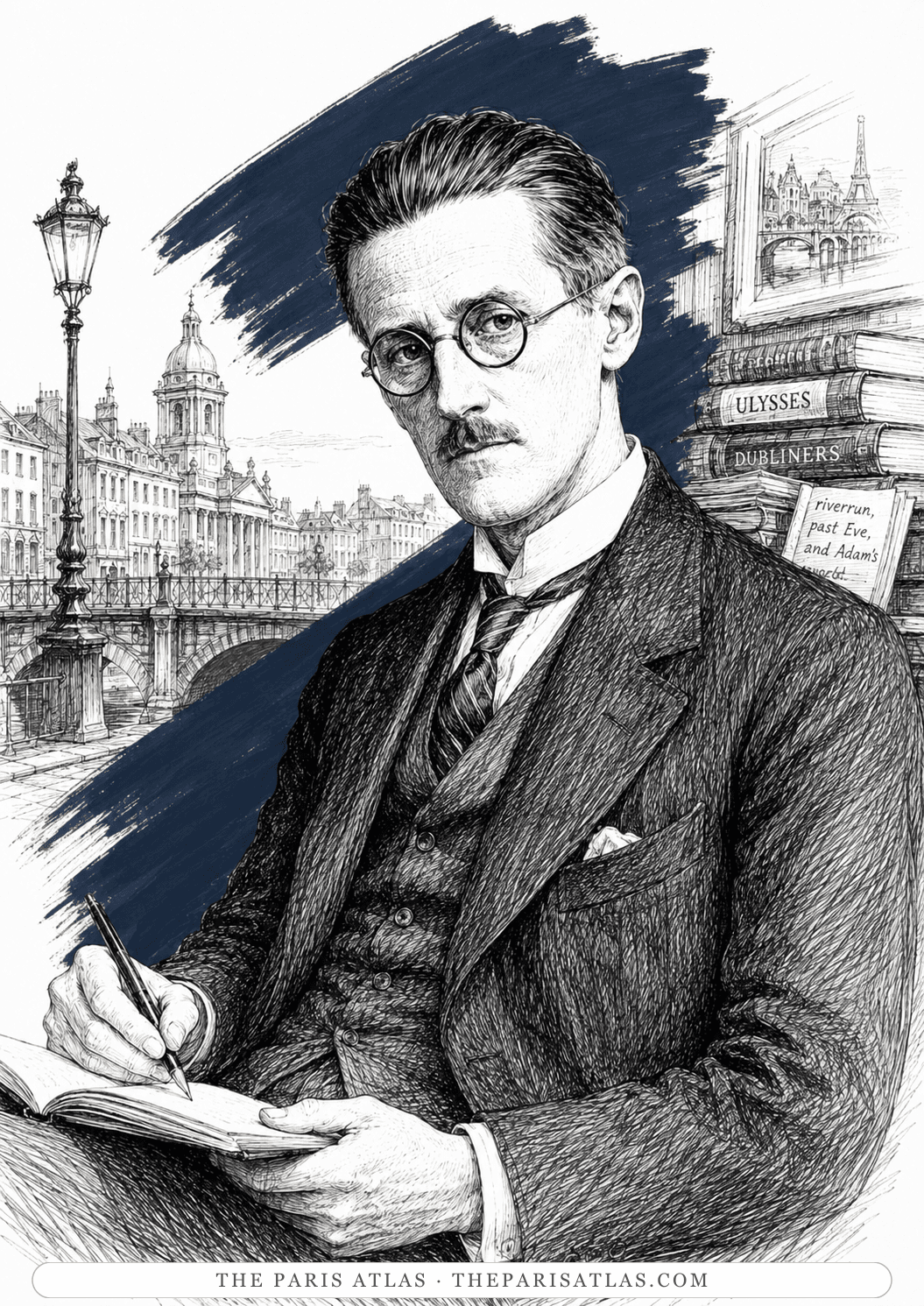
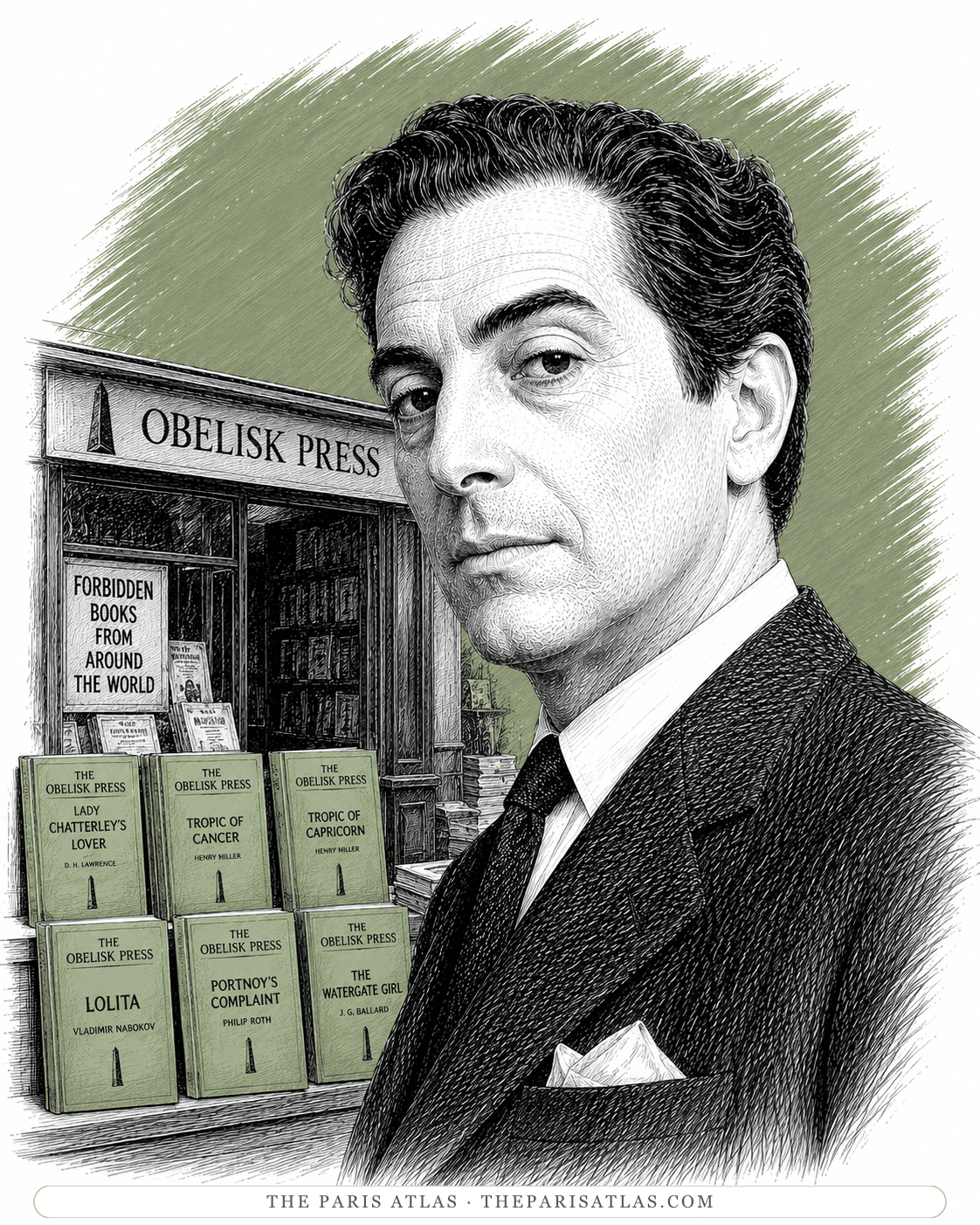
Life events

  1. 1899

    Born Vladimir Vladimirovich Nabokov at 47 Bolshaya Morskaya Street in Saint Petersburg on 10 April by the Russian calendar, equivalent to 22 April in the Western calendar.

  2. 1900

    His younger brother Sergey Nabokov is born.

  3. 1901

    His mother inherits the family estate at Vyra, where Nabokov spends much of his childhood and begins forming the landscape later reconstructed in Speak, Memory.

  4. 1902

    Begins learning English with British governesses, before it becomes the language of his mature fiction.

  5. 1903

    Visits Paris with his family while Sergey undergoes medical treatment. His father publishes a prominent article condemning the Kishinev pogrom and the imperial government's role in permitting it.

  6. 1906

    Begins collecting butterflies seriously and studies French with governess Cécile Miauton.

  7. 1907

    Suffers severe pneumonia. Butterfly books brought to his bedside deepen the interest that eventually becomes a scientific profession.

  8. 1908

    His father serves three months in Kresty prison for signing the Vyborg Manifesto. By this time, the young Nabokov has mastered the known butterflies of Europe.

  9. 1911

    Enters the Tenishev School, plays football as goalkeeper and continues intensive study of languages, art and natural history.

  10. 1914

    Writes what he later regards as his first true poem and begins composing verse compulsively.

  11. 1915

    Falls in love with Valentina “Lyussya” Shulgina, later transformed into “Tamara” in Speak, Memory. Publishes “Autumn,” his first printed poem.

  12. 1916

    Privately publishes Stikhi, a collection of sixty-seven poems. Inherits the Rozhdestveno estate from his maternal uncle.

  13. 1917

    His father serves in Russia's Provisional Government after the February Revolution. In November, after the Bolshevik seizure of power, Vladimir and Sergey leave Petrograd for Crimea.

  14. 1918

    Lives at Gaspra and Livadia in Crimea, publishes anti-Bolshevik poems, studies poetic meter with the encouragement of Maximilian Voloshin and continues butterfly collecting.

  15. 1919

    The family leaves Russia permanently in April, sailing from Sevastopol to Athens as the Red Army advances, and reaches London in May. In October, Nabokov enters Trinity College, Cambridge.

  16. 1920

    Publishes his first English-language scientific article, based on butterflies collected in Crimea. His family settles in Berlin, where his father helps establish the newspaper Rul'.

  17. 1921

    Begins publishing as Vladimir Sirin, the name he retains for his Russian literary career, and takes first-class results with distinction in Russian in his Cambridge examinations.

  18. 1922

    His father is assassinated in Berlin on 28 March while attempting to protect the liberal politician Pavel Milyukov from far-right attackers. Nabokov graduates from Cambridge in June, returns to Berlin, becomes engaged to Svetlana Siewert and translates Alice's Adventures in Wonderland into Russian.

  19. 1923

    Svetlana's parents end the engagement in January because Nabokov lacks stable employment. On 8 May, he meets Véra Slonim at a Berlin charity ball.

  20. 1925

    Marries Véra in Berlin on 15 April and completes his first novel, Mary, while Véra increasingly acts as typist and first reader.

  21. 1926

    Mary is published in Berlin and receives favorable reviews within the Russian émigré community.

  22. 1928

    Publishes King, Queen, Knave. German rights provide enough money for Vladimir and Véra to travel and collect butterflies.

  23. 1929

    Begins and completes The Defense while spending part of the year in the French Pyrenees.

  24. 1930

    The Defense appears in book form and establishes Sirin as one of the foremost writers of the Russian emigration. Writes The Eye and completes Glory.

  25. 1931

    Writes Camera Obscura, later extensively revised in English as Laughter in the Dark.

  26. 1932

    Completes an early draft of Despair and gives a highly successful public reading in Paris, strengthening connections with Russian and French literary figures.

  27. 1934

    Vladimir and Véra's son Dmitri is born in Berlin on 10 May. Nabokov interrupts The Gift to write Invitation to a Beheading.

  28. 1935

    Translates Despair into English himself after deciding that political changes may force him to continue his career in another language.

  29. 1936

    Gives successful readings in Brussels, Antwerp and Paris, writes “Mademoiselle O” and completes “Spring in Fialta.” Véra loses her job because she is Jewish, and Nabokov begins urgently seeking work in the English-speaking world.

  30. 1937

    Leaves Germany permanently on 18 January. Sees James Joyce in the audience at a February reading in Paris and begins an affair with Irina Guadanini. Reunites with Véra and Dmitri in southern France that summer and ends the relationship.

  31. 1938

    Completes The Gift in January. His play The Event premieres in Paris in March. In October, the family moves into an apartment at 8 rue de Saigon in Paris. In December, begins The Real Life of Sebastian Knight, his first English-language novel, completing it the following month.

  32. 1939

    Dines with James Joyce in Paris in February. The family moves to 31 rue Le Marois, then 59 rue Boileau. His mother dies in Prague in May. In the autumn, writes The Enchanter, an early treatment of subject matter later transformed in Lolita.

  33. 1940

    Flees France with Véra and Dmitri aboard the Champlain in May, shortly before the German occupation of Paris, and arrives in New York on 27 May with approximately six hundred dollars. Meets Edmund Wilson in October.

  34. 1941

    Teaches at Stanford and Wellesley, begins regular work in American butterfly collections and captures a new butterfly at the Grand Canyon. The Real Life of Sebastian Knight is published by New Directions on 18 December.

  35. 1942

    Receives a paid research position at Harvard's Museum of Comparative Zoology and begins his principal period of professional lepidopterological work.

  36. 1944

    Publishes Nikolai Gogol and signs a first-reading agreement with The New Yorker.

  37. 1945

    His brother Sergey dies in Neuengamme concentration camp on 10 January. Vladimir and Véra become United States citizens on 12 July.

  38. 1947

    Bend Sinister is published on 12 June. Writes “Signs and Symbols,” begins planning his autobiography and records an early concept for the novel that becomes Lolita.

  39. 1948

    Joins the faculty of Cornell University, where he teaches Russian literature and Masters of European Fiction until 1959 with Véra as his course assistant.

  40. 1949

    Publishes his major study of the North American members of the butterfly genus Lycaeides. Begins the summer butterfly journeys through the American West during which much of Lolita is composed on index cards.

  41. 1951

    Publishes the first English book version of his autobiography as Conclusive Evidence.

  42. 1952

    The complete Russian edition of The Gift is finally published. Receives a Guggenheim Fellowship for his translation and commentary on Eugene Onegin.

  43. 1953

    Completes Lolita on 6 December while writing early Pnin chapters.

  44. 1954

    Lolita is rejected by Viking, Simon & Schuster, New Directions, Farrar, Straus, and Doubleday.

  45. 1955

    Signs a contract with Maurice Girodias's Olympia Press in Paris on 6 June. Lolita is first published in Paris that September in two volumes.

  46. 1956

    French authorities ban Lolita with other Olympia Press titles. Girodias begins a successful legal challenge.

  47. 1957

    Pnin is published on 7 March to strong reviews and quickly receives a second printing. Completes his translation and commentary on Eugene Onegin in December.

  48. 1958

    The French ban on Lolita is overturned in January. Putnam publishes the American edition on 18 August; it sells one hundred thousand copies in three weeks. Stanley Kubrick and James Harris purchase the film rights in September.

  49. 1959

    Gives his final Cornell lecture on 19 January, resigns in September and returns to Europe with Véra. In October, Gallimard holds a major Paris reception for the French Lolita, where Nabokov meets Alain Robbe-Grillet.

  50. 1960

    Writes a screenplay for Kubrick's film and develops the initial conception of Pale Fire.

  51. 1961

    Settles in Montreux and moves into the Montreux Palace Hotel on 1 October, his home for the rest of his life. Completes Pale Fire on 4 December.

  52. 1962

    Pale Fire is published on 25 April and brings another major wave of critical attention. Kubrick's film of Lolita appears with Nabokov's sole screenplay credit.

  53. 1964

    Publishes his four-volume translation and commentary on Eugene Onegin.

  54. 1965

    Completes the Russian Lolita. Edmund Wilson's attack on the Onegin edition begins their public controversy.

  55. 1967

    Publishes Speak, Memory: An Autobiography Revisited and the Russian translation of Lolita.

  56. 1969

    Ada, or Ardor is published on 5 May to major publicity and high sales, marking the peak of Nabokov's lifetime reputation.

    Vladimir Nabokov at Montreux in October 1969, the year Ada, or Ardor was published. Photograph by Giuseppe Pino for Mondadori. (Giuseppe Pino, Mondadori Publishers)
  57. 1971

    Publishes Poems and Problems, bringing together Russian and English poetry with eighteen chess compositions.

  58. 1972

    Publishes Transparent Things on 13 October.

  59. 1973

    Publishes Strong Opinions and receives the National Medal for Literature.

    Vladimir Nabokov in 1973, during the Montreux years, when Strong Opinions appeared and Look at the Harlequins! was underway. Photograph by Walter Mori for Mondadori. (Walter Mori, Mondadori Publishers)
  60. 1974

    Publishes Look at the Harlequins! and begins planning The Original of Laura.

  61. 1975

    Suffers a serious fall while butterfly hunting near Davos and undergoes surgery for a benign prostate tumor.

  62. 1976

    A concussion and prolonged undiagnosed infection lead to months of hospitalization, fever and delirium. He completes little additional work on The Original of Laura.

  63. 1977

    Dies in a Lausanne hospital on 2 July at seventy-eight, with Véra and Dmitri at his bedside. His ashes are interred at Clarens Cemetery near Montreux on 8 July.

  64. 1979

    The Nabokov–Wilson Letters is published, revealing the range and eventual breakdown of their literary friendship.

  65. 1980

    His university lectures on European literature, Russian literature and Don Quixote begin appearing posthumously through 1983.

  66. 1986

    The Enchanter appears first in French and then, in 1987, in English.

  67. 1991

    Véra Nabokov dies and is buried beside him.

  68. 1999

    Nabokov's Butterflies gathers scientific and literary writing related to lepidoptery in his centenary year.

  69. 2009

    The unfinished index-card manuscript of The Original of Laura is published despite Nabokov's instruction that it be destroyed.

  70. 2012

    Dmitri Nabokov dies in Vevey, Switzerland.

People they knew

Documented connections — every one carries its source.

Illustrated portrait of James Joyce

James Joyce

  • Author
  • Poet

Met · 1937–1939

James Joyce attended Vladimir Nabokov's Paris reading in February 1937, and the two novelists dined together at the home of Lucie and Léon Noël in February 1939. Nabokov admired Ulysses but later denied that Joyce had influenced his writing.

Brian Boyd, Chronology of Nabokov's Life and Main Works; Nabokov's Life

Maurice Girodias

  • Publisher

Clashed with · 1955

Maurice Girodias's Olympia Press published Lolita in Paris in September 1955 after American publishers had rejected it, and successfully challenged the French ban imposed in 1956. Nabokov's later disputes with Girodias concerned contracts, copyright, royalties and the publisher's public claims about his role in the book's history.

Brian Boyd, Chronology of Nabokov's Life and Main Works; Nabokov's Life

Edmund Wilson

  • Critic
  • Author

Corresponded with · 1940–1971

Edmund Wilson became Nabokov's closest American literary friend after they met in October 1940, connecting him to magazines and publishers. Their letters preserve affection, competition and disagreement until the friendship broke publicly over Wilson's 1965 attack on Nabokov's literal translation of Eugene Onegin. The correspondence was published in 1979 as The Nabokov–Wilson Letters.

The Strange Case of Nabokov and Wilson; Nabokov and Edmund Wilson

Alexander Pushkin

  • Poet
  • Author
  • Playwright

Influenced by

Nabokov devoted years to translating and annotating Pushkin's Eugene Onegin, publishing a four-volume edition in 1964 whose deliberate literalism broke his friendship with Edmund Wilson. He rarely admitted influences outright, so the debt is inferred from the scale of that devotion and from Pushkin's place in the Russian poetry he was raised on rather than from any direct statement.

Brian Boyd, Chronology of Nabokov's Life and Main Works; The Strange Case of Nabokov and Wilson

Nikolai Gogol

  • Author
  • Playwright

Influenced by

Nabokov's 1944 study Nikolai Gogol celebrated Gogol's verbal invention and grotesque perception while dismissing realistic and political readings. Nabokov denied influences as a matter of temperament, so the connection is inferred from the study and from the shared delight in strangeness of perception rather than from his own admission.

Brian Boyd, Chronology of Nabokov's Life and Main Works

Véra Nabokov

  • Editor
  • Translator
  • Agent

Married to · 1925–1977

Vladimir Nabokov met Véra Slonim at a Berlin charity ball on 8 May 1923 and married her at a Berlin town hall on 15 April 1925. Over fifty-two years she was his typist, first reader, translator, agent, teaching assistant, archivist and driver, and she stopped him from burning the manuscript of Lolita. He dedicated nearly all his books to her.

Stacy Schiff, Véra (Mrs. Vladimir Nabokov); Judith Thurman, Nabokov's Silent Partner

Questions about Vladimir Nabokov

Who was Vladimir Nabokov?

Vladimir Nabokov was a Russian-American novelist, poet, translator, critic and lepidopterist, born in Saint Petersburg on 22 April 1899 and died in Switzerland on 2 July 1977. He wrote his first nine novels in Russian under the name Vladimir Sirin, then became one of the great English-language novelists with Lolita, Pnin, Pale Fire, Ada and the autobiography Speak, Memory.

Did Vladimir Nabokov live in Paris?

Yes. He gave successful readings there in 1932 and 1936, and lived in the city from 1938 to 1940 at 8 rue de Saigon, 31 rue Le Marois and 59 rue Boileau. He completed The Gift in France, wrote his first English novel, The Real Life of Sebastian Knight, in Paris, and fled to New York in May 1940, shortly before the German occupation.

Why was Lolita first published in Paris?

Five American publishers — Viking, Simon & Schuster, New Directions, Farrar, Straus, and Doubleday — rejected the novel in 1954, fearing prosecution. Maurice Girodias's Olympia Press published it in Paris in September 1955. Graham Greene named it among the best books of the year, France briefly banned it, and Putnam's American edition of 1958 sold one hundred thousand copies in three weeks.

What did Nabokov say about Humbert Humbert?

He described Humbert as vain and cruel and said the character deserving tenderness was Dolores Haze, the twelve-year-old child whose experience Humbert's elaborate prose tries to overwrite. Lolita is Humbert's name for her, not an identity she chooses; the novel asks the reader to see past the narrator's language to the child he has harmed.

Was Nabokov really a butterfly scientist?

Yes. From 1942 to 1948 he was the de facto curator of Lepidoptera at Harvard's Museum of Comparative Zoology, publishing technical papers on the group of butterflies known as the blues. His 1945 hypothesis that New World blues arrived from Asia across the Bering region in successive waves was confirmed by genetic sequencing decades after his death.

What languages did Nabokov write in?

Russian and English, with French as a third fluent language from childhood. British governesses taught him English before he could write Russian well. He wrote nine novels in Russian, switched to English with The Real Life of Sebastian Knight in 1938–39, and later translated Lolita into Russian himself.

How did Vladimir Nabokov die?

He died on 2 July 1977 in a Lausanne hospital, aged seventy-eight, from fluid accumulation in his lungs after severe bronchial congestion. His health had declined since a fall while butterfly hunting in 1975 and a long undiagnosed infection in 1976. Véra and their son Dmitri were beside him, and his ashes were interred at Clarens, near Montreux.

Where did Nabokov live at the end of his life?

In the Montreux Palace Hotel in Switzerland, where he and Véra moved in October 1961 and where he occupied a suite on the sixth floor of the Cygne wing until his death. He wrote Pale Fire and Ada there and never again owned a house after losing his childhood home in Russia.

Sourced claims

Every connection the graph holds for Vladimir, with the evidence behind it.

Met · 1937–1939

James Joyce

James Joyce attended Vladimir Nabokov's Paris reading in February 1937, and the two novelists dined together at the home of Lucie and Léon Noël in February 1939. Nabokov admired Ulysses but later denied that Joyce had influenced his writing.

Brian Boyd, Chronology of Nabokov's Life and Main Works; Nabokov's Life

Clashed with · 1955

Maurice Girodias

Maurice Girodias's Olympia Press published Lolita in Paris in September 1955 after American publishers had rejected it, and successfully challenged the French ban imposed in 1956. Nabokov's later disputes with Girodias concerned contracts, copyright, royalties and the publisher's public claims about his role in the book's history.

Brian Boyd, Chronology of Nabokov's Life and Main Works; Nabokov's Life

Corresponded with · 1940–1971

Edmund Wilson

Edmund Wilson became Nabokov's closest American literary friend after they met in October 1940, connecting him to magazines and publishers. Their letters preserve affection, competition and disagreement until the friendship broke publicly over Wilson's 1965 attack on Nabokov's literal translation of Eugene Onegin. The correspondence was published in 1979 as The Nabokov–Wilson Letters.

The Strange Case of Nabokov and Wilson; Nabokov and Edmund Wilson

Influenced by

Alexander Pushkin

Nabokov devoted years to translating and annotating Pushkin's Eugene Onegin, publishing a four-volume edition in 1964 whose deliberate literalism broke his friendship with Edmund Wilson. He rarely admitted influences outright, so the debt is inferred from the scale of that devotion and from Pushkin's place in the Russian poetry he was raised on rather than from any direct statement.

Brian Boyd, Chronology of Nabokov's Life and Main Works; The Strange Case of Nabokov and Wilson

Influenced by

Nikolai Gogol

Nabokov's 1944 study Nikolai Gogol celebrated Gogol's verbal invention and grotesque perception while dismissing realistic and political readings. Nabokov denied influences as a matter of temperament, so the connection is inferred from the study and from the shared delight in strangeness of perception rather than from his own admission.

Brian Boyd, Chronology of Nabokov's Life and Main Works

Married to · 1925–1977

Véra Nabokov

Vladimir Nabokov met Véra Slonim at a Berlin charity ball on 8 May 1923 and married her at a Berlin town hall on 15 April 1925. Over fifty-two years she was his typist, first reader, translator, agent, teaching assistant, archivist and driver, and she stopped him from burning the manuscript of Lolita. He dedicated nearly all his books to her.

Stacy Schiff, Véra (Mrs. Vladimir Nabokov); Judith Thurman, Nabokov's Silent Partner

References

References

The sources below include biographies, scholarly essays, interviews, and primary materials that informed this page. They reflect both the historical record and ongoing critical conversations about Vladimir Nabokov and their work.

  1. 1Chronology of Nabokov's Life and Main Works

    Website
    The Nabokovian / International Vladimir Nabokov Society
    Used for

    Brian Boyd's chronology for the International Vladimir Nabokov Society, the backbone for dates across the whole life: estates, schools, publications, addresses, moves and illnesses.

    View source
  2. 2Nabokov's Life

    Website
    International Vladimir Nabokov Society
    Used for

    The Society's biographical overview, cross-checked for the shape of the career.

    View source
  3. 3Vladimir Nabokov, The Art of Fiction No. 40

    Periodical
    The Paris Review
    Used for

    The 1967 Art of Fiction interview, the source for Nabokov's statements about Humbert's cruelty and his sympathy for Dolores Haze.

    View source
  4. 4Vladimir Nabokov and the Art of the Self-Interview

    Periodical
    The Paris Review
    Used for

    On his practice of receiving questions in advance and rewriting answers, behind the account of Strong Opinions.

    View source
  5. 5Nabokov Revealed

    Website
    Library of Congress
    Used for

    Library of Congress feature on the Nabokov papers.

    View source
  6. 6Vladimir Vladimirovich Nabokov Papers, finding aid

    Archive
    Library of Congress
    Used for

    Finding aid for the Vladimir Nabokov papers at the Library of Congress.

    View source
  7. 7Vladimir Nabokov at Cornell

    Website
    Cornell University Library
    Used for

    Cornell's account of his decade teaching Russian literature and Masters of European Fiction, and the archive of more than two thousand Lolita documents.

    View source
  8. 8The Life of a Lepidopterist

    Website
    Cornell University Library
    Used for

    Cornell exhibition on his butterfly career.

    View source
  9. 9Legendary Courses

    Website
    Cornell University
    Used for

    On the popularity and method of the Masters of European Fiction course.

    View source
  10. 10Lepidoptera Love: Nabokov's Untold Story

    Website
    Ernst Mayr Library, Harvard Museum of Comparative Zoology
    Used for

    Harvard Museum of Comparative Zoology account of his years as de facto curator of Lepidoptera, 1942–1948.

    View source
  11. 11Nabokov Theory on Butterfly Evolution Is Vindicated

    Website
    Pierce Laboratory, Harvard University
    Used for

    The Pierce Laboratory's account of the genetic confirmation of his Bering-migration hypothesis for the Polyommatus blues.

    View source
  12. 12Nabokov's butterflies (scientific reassessment)

    Periodical
    Nature
    Used for

    Scientific reassessment of his taxonomy in Nature.

    View source
  1. 13Nabokov's Silent Partner

    Periodical
    The New Yorker
    Used for

    Judith Thurman on Véra Nabokov's role as typist, agent, driver, teaching assistant and first reader — and on her destruction of her own letters.

    View source
  2. 14Véra (Mrs. Vladimir Nabokov)

    Biography
    Stacy Schiff
    Used for

    Stacy Schiff's biography of Véra, behind the account of the marriage, the 1937 Guadanini affair and the rescue of the Lolita manuscript.

    View source
  3. 15“My Dear Eyes”: Nabokov's Letters to Véra

    Periodical
    The Hudson Review
    Used for

    On the letters to Véra and the private language of the marriage.

    View source
  4. 16The Strange Case of Nabokov and Wilson

    Periodical
    The New York Review of Books
    Used for

    The 1965 exchange over the Eugene Onegin translation that broke the Wilson friendship.

    View source
  5. 17Nabokov and Edmund Wilson

    Website
    The Nabokovian
    Used for

    The Nabokovian's account of the Wilson friendship and its collapse.

    View source
  6. 18Is Humbert Humbert Jewish? (Sergey Nabokov and the Nabokov family)

    Periodical
    The New York Review of Books
    Used for

    On Sergey Nabokov's life, arrest and death at Neuengamme, and the brothers' difficult relationship.

    View source
  7. 19Vladimir Nabokov's Whereabouts: Homes and Haunts

    Website
    Dieter E. Zimmer
    Used for

    Dieter E. Zimmer's register of every Nabokov address, the source for 8 rue de Saigon, 31 rue Le Marois, 59 rue Boileau and the Montreux Palace suite.

    View source
  8. 20Vladimir Nabokov: Biography

    Website
    Boston University
    Used for

    Boston University biographical overview, cross-checked for the Russian years.

    View source
  9. 21Nabokov's Early Life (Nabokov Under Glass exhibition)

    Website
    New York Public Library
    Used for

    New York Public Library exhibition pages on the Saint Petersburg childhood and the émigré years.

    View source
  10. 22Nabokov in the United States, 1940–1960 (Nabokov Under Glass exhibition)

    Website
    New York Public Library
    Used for

    NYPL exhibition pages on the American years, 1940–1960.

    View source
  11. 23Nabokov and Lepidoptera (Nabokov Under Glass exhibition)

    Website
    New York Public Library
    Used for

    NYPL exhibition pages on the butterfly work.

    View source
  12. 24Lolita, first edition, Olympia Press, Paris, 1955

    Website
    Christie's
    Used for

    Auction record for the 1955 Olympia Press first edition, confirming the two-volume green-covered Traveller's Companion format.

    View source
i
Why these sources are here

These references anchor the page in the documented record and in the scholarly conversations around Vladimir Nabokov. Every claim on this page traces back to one or more of the works listed here.

Explore more resources
Browse all authors