
Albert Camus
Lived here · 1940
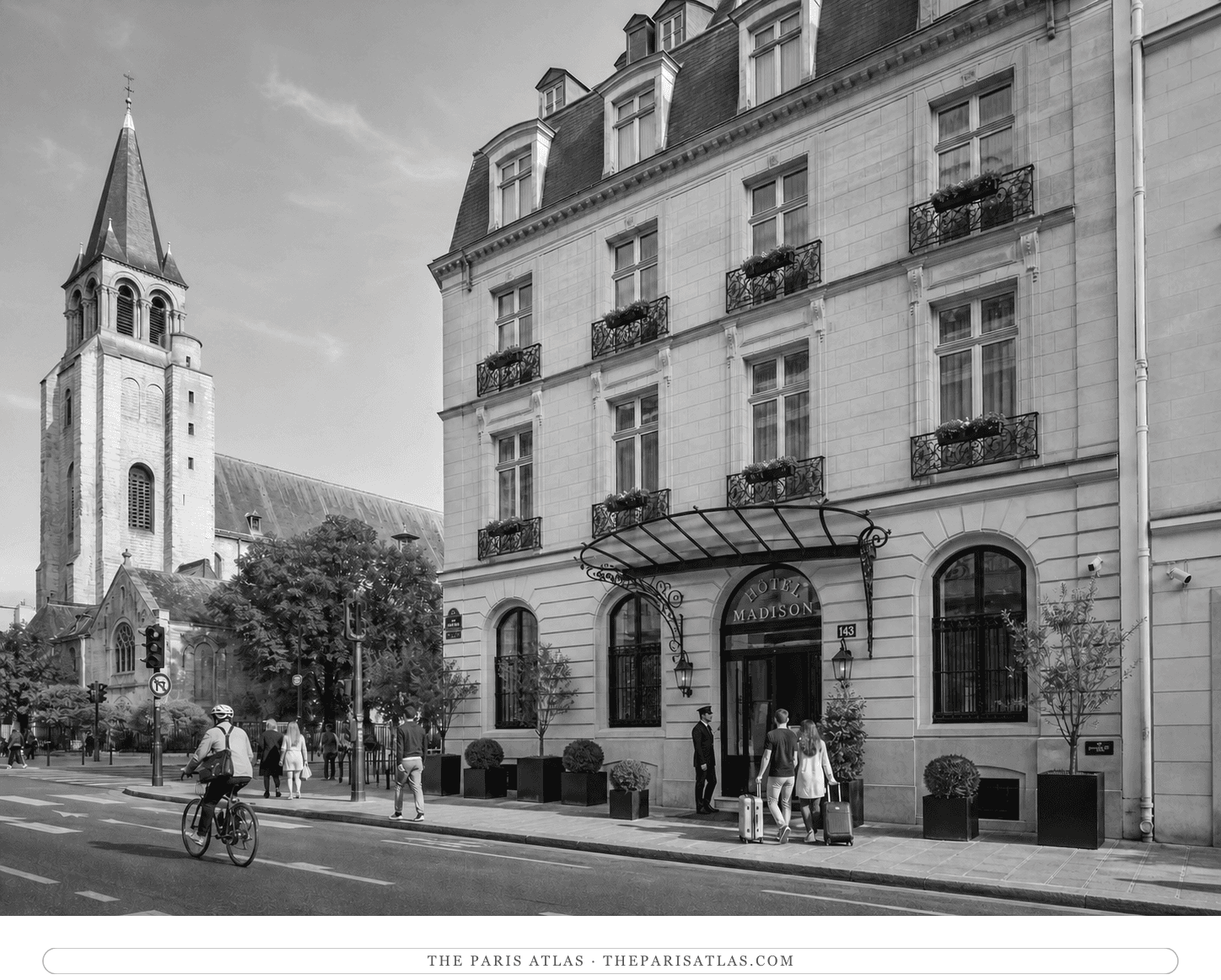
Camus moved to the Hôtel Madison, facing the church of Saint-Germain-des-Prés, at the start of June 1940 — the month Paris fell — putting him at the junction that became the centre of postwar French intellectual life.
Stay in Paris
Hôtel Madison faces Saint-Germain-des-Prés at 143 boulevard Saint-Germain. Its rooms range from compact doubles to larger categories, with suites and an apartment also available.
Explore the history of Hôtel Madison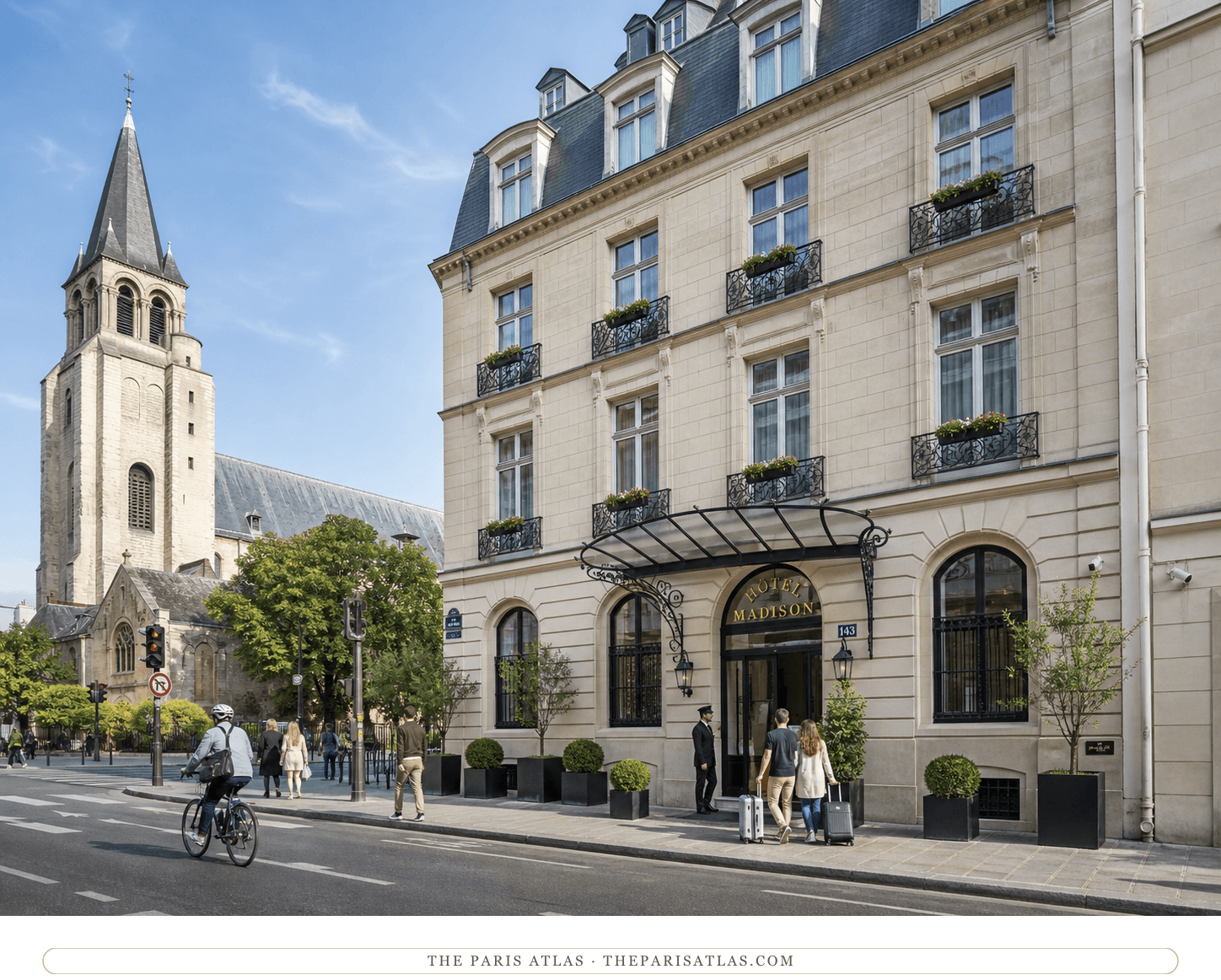
The hotel today
Open for stays
Accommodation in Paris.
Choose your room
Compare the options, then check your dates with the hotel for availability, current rates, and the exact room configuration.
A double bed and shower.
A queen bed and shower.
A queen or twin arrangement with a shower.
A queen or twin arrangement with a shower.
A queen or twin arrangement with a shower or bathtub.
During your stay
Breakfast is served from 7 to 11 a.m. in the glass-roofed lounge. Jay is the hotel’s cocktail bar.
Cribs, pet stays, accessible rooms, and transfers should be requested directly. Check the available suite or apartment if you need more space.
Choose your dates to check room options and availability. Confirm breakfast, additional charges, and cancellation terms for the rate you choose.
+33 1 40 51 60 00The history of this address
The hotel facing the church of Saint-Germain-des-Prés where Albert Camus lived from June 1940 — putting him, from the month Paris fell, at the centre of the quarter that would define postwar French intellectual life.
The neighborhood
Hôtel Madison is in Saint-Germain-des-Prés.
Albert Camus moved to the Hôtel Madison, 143 boulevard Saint-Germain, at the start of June 1940, directly opposite the church of Saint-Germain-des-Prés. He had finished L'Étranger the previous month in a Montmartre hotel room at 16 rue Ravignan.
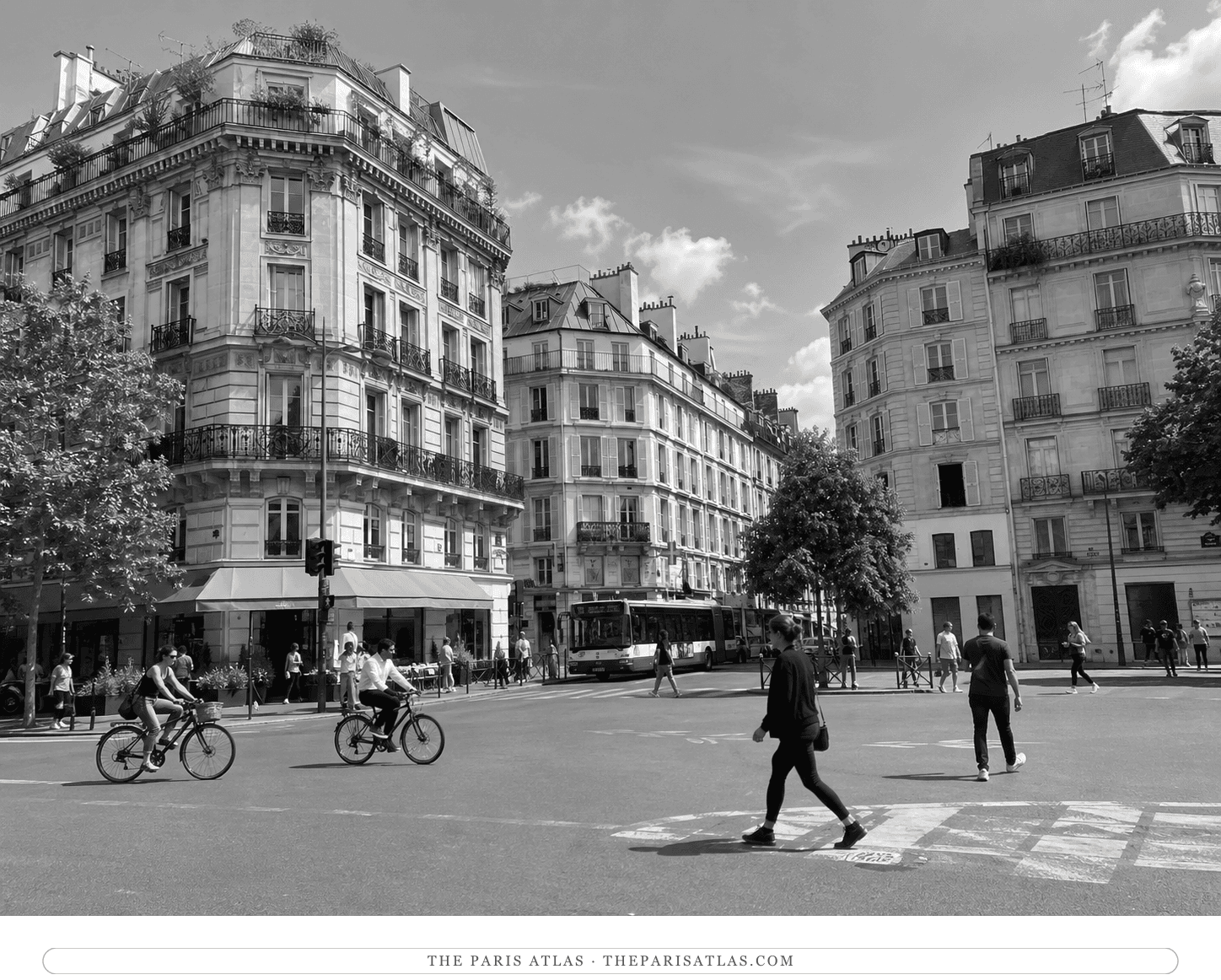
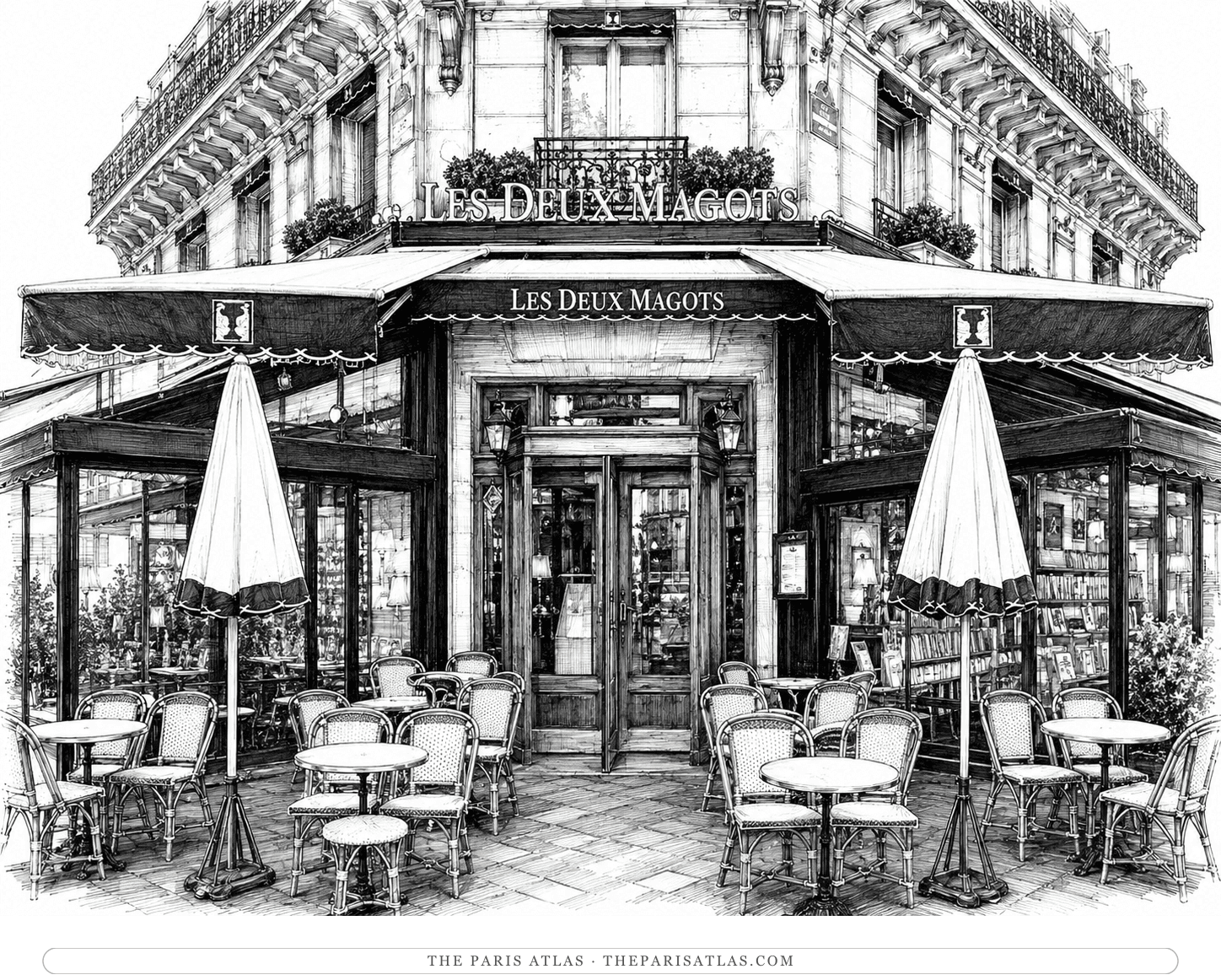
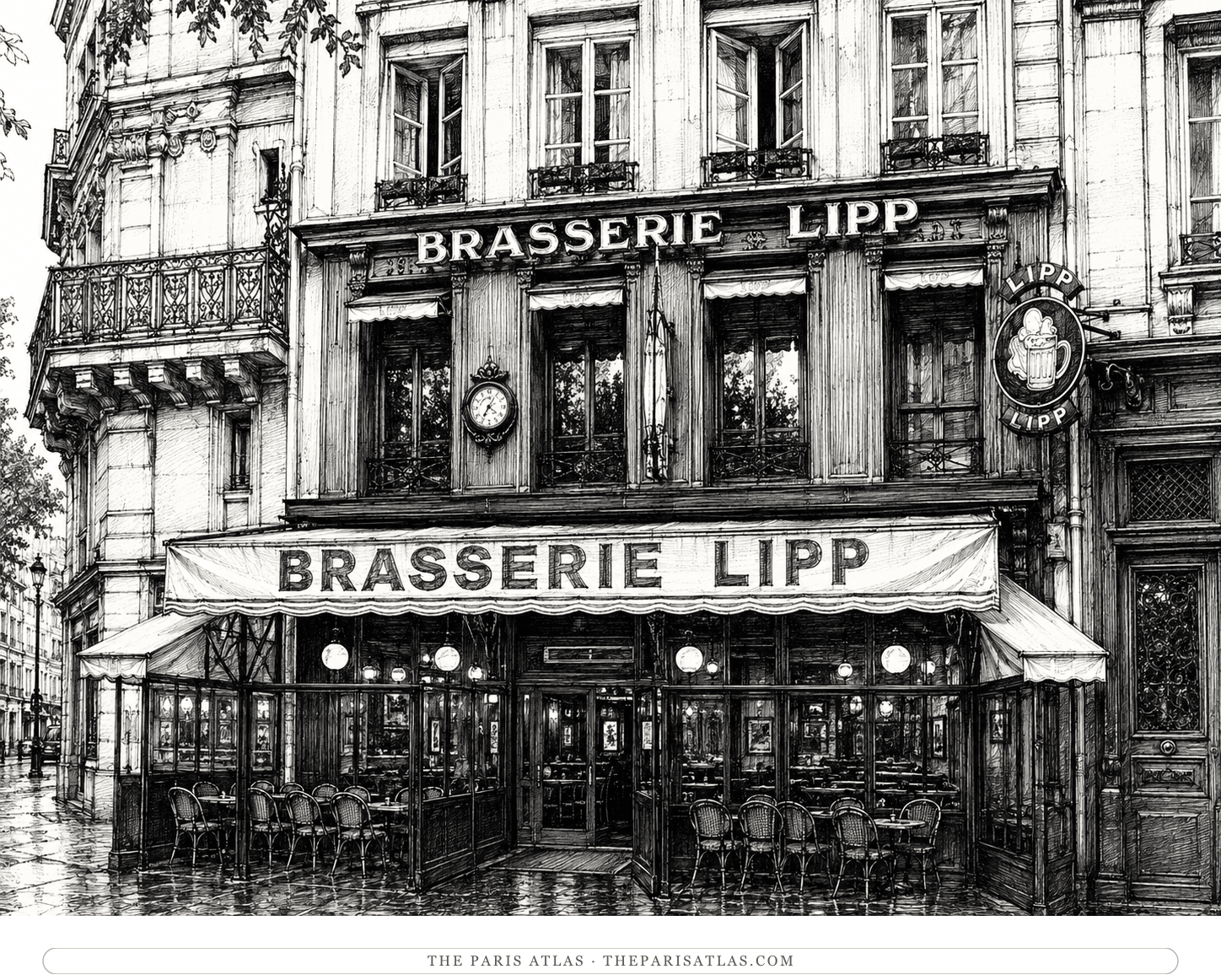
The address put him on the exact junction that mattered. The Café de Flore, Les Deux Magots and Brasserie Lipp are all within a minute of the door, and the square between them is now the place Sartre-Beauvoir. What became the postwar intellectual capital of France was, for Camus, the view from his hotel.
The timing again is not incidental. June 1940 is the month Paris fell. Camus was in Saint-Germain through the Occupation, worked on the clandestine paper Combat, and came out of the war as one of the most visible writers in the country — a position he then spent years in public argument over, most famously with Sartre, in the cafés a few metres from this building.
The Madison is still a hotel at the same address, which makes it one of the more enterable stops on a Camus walk.
Camus finishes L'Étranger at the Hôtel du Poirier in Montmartre.
He moves to the Hôtel Madison on the boulevard Saint-Germain; Paris falls.
L'Étranger is published.
He works on the clandestine paper Combat and becomes a central figure of Saint-Germain.
From early June 1940 at the Hôtel Madison, 143 boulevard Saint-Germain, directly facing the church of Saint-Germain-des-Prés. He had finished L'Étranger the previous month in a Montmartre hotel room.
Because it put him at the exact junction that became the centre of postwar French intellectual life. The Flore, the Deux Magots and Lipp are all within a minute of the door, and the square between them is now named for Sartre and Beauvoir — the people Camus would spend years arguing with in those cafés.
Yes — it still operates as a hotel at the same address, which makes it one of the few Camus locations you can actually go into. The Montmartre hotel where he finished L'Étranger has been demolished.
Lived here · 1940
Camus moved to the Hôtel Madison, facing the church of Saint-Germain-des-Prés, at the start of June 1940 — the month Paris fell — putting him at the junction that became the centre of postwar French intellectual life.
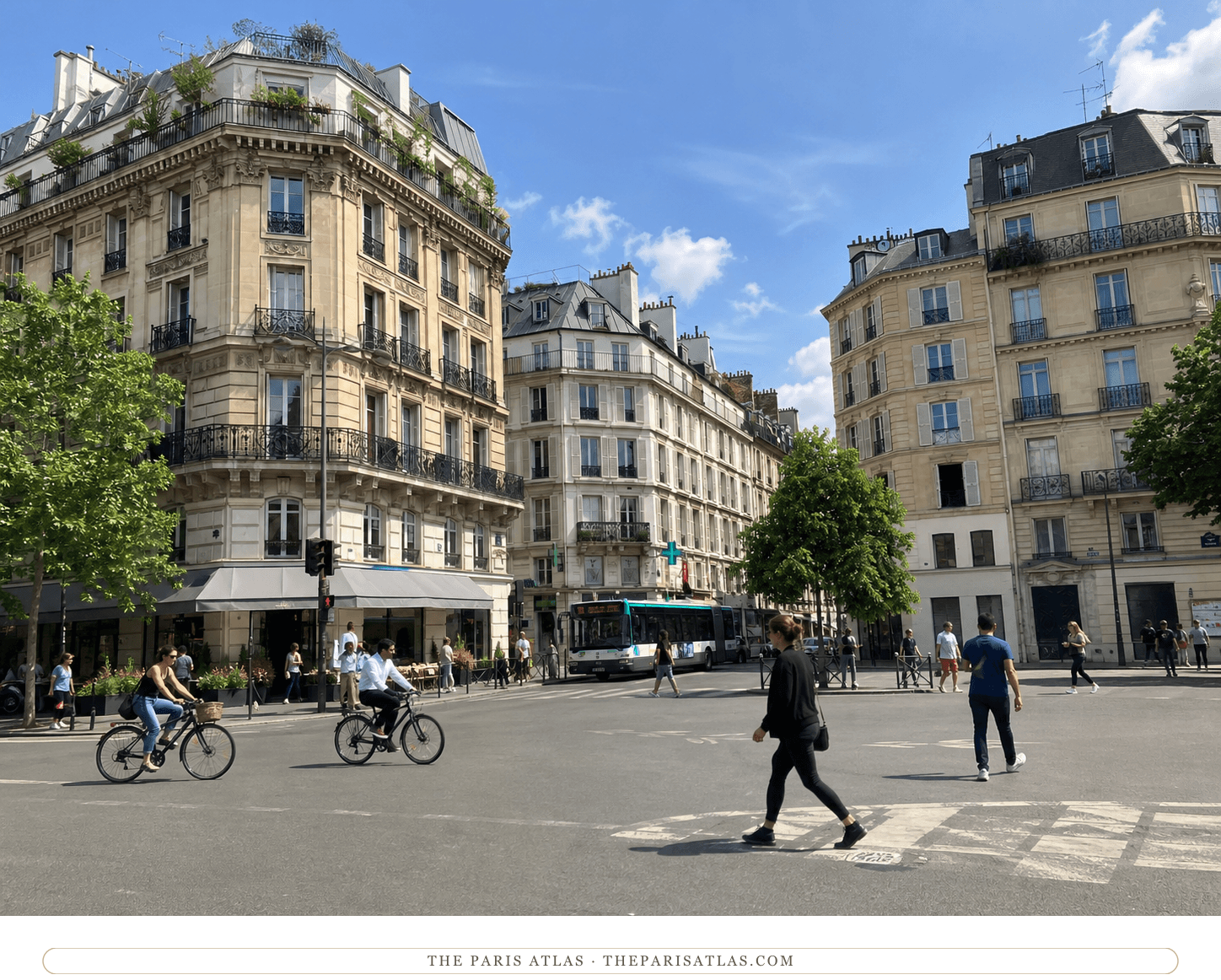
A small square in Saint-Germain-des-Prés, renamed in 2000 for Jean-Paul Sartre and Simone de Beauvoir together — a few steps from the Café de Flore and Les Deux Magots, where they worked.
Visit the place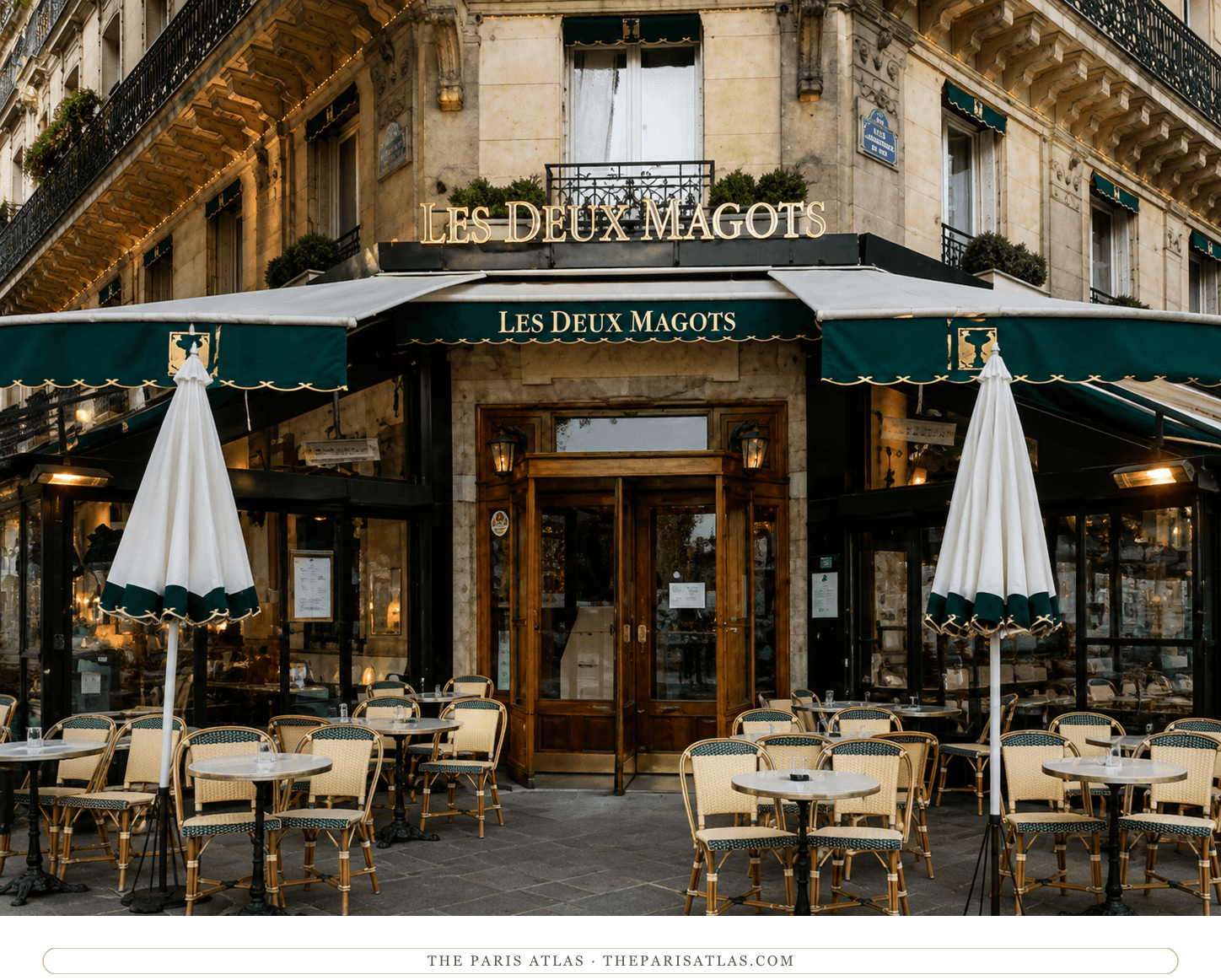
The famous literary terrace where the expat crowd gathered. Ernest Hemingway came here, though he preferred La Closerie for actual work.
Visit the place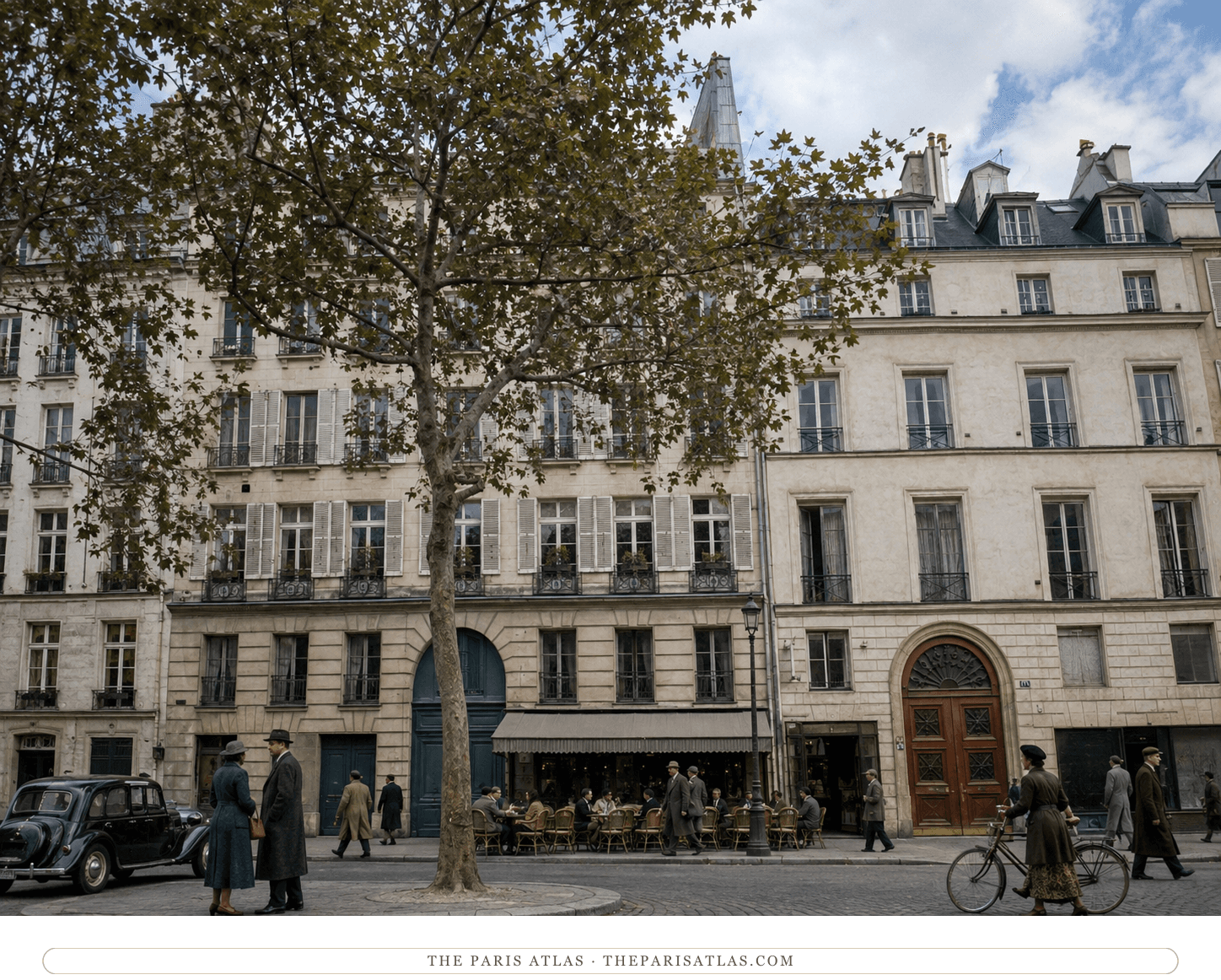
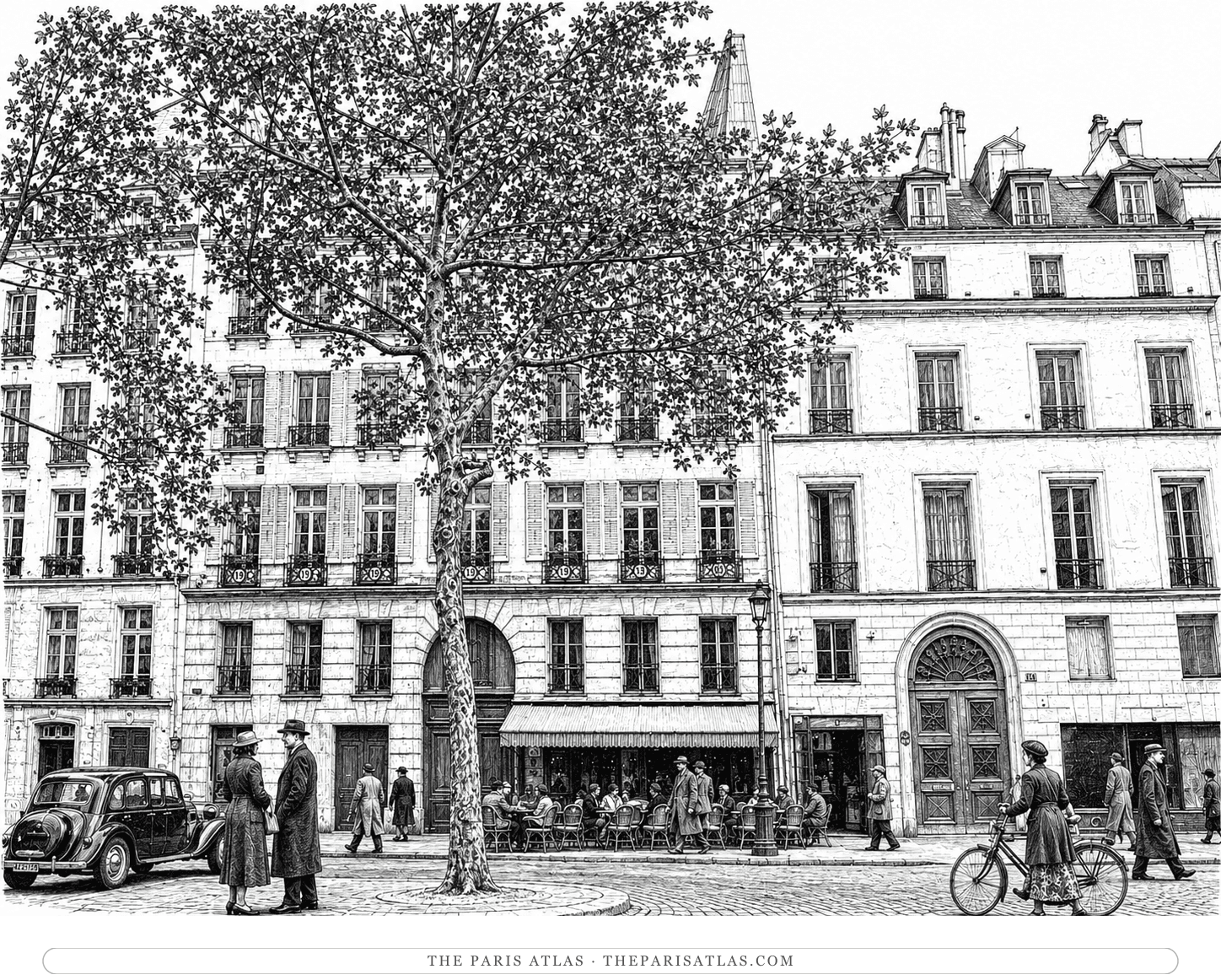
The Left Bank quarter around the abbey church, where the cafés doubled as offices and the bars above and below them ran the other half of post-war Paris.
Visit the place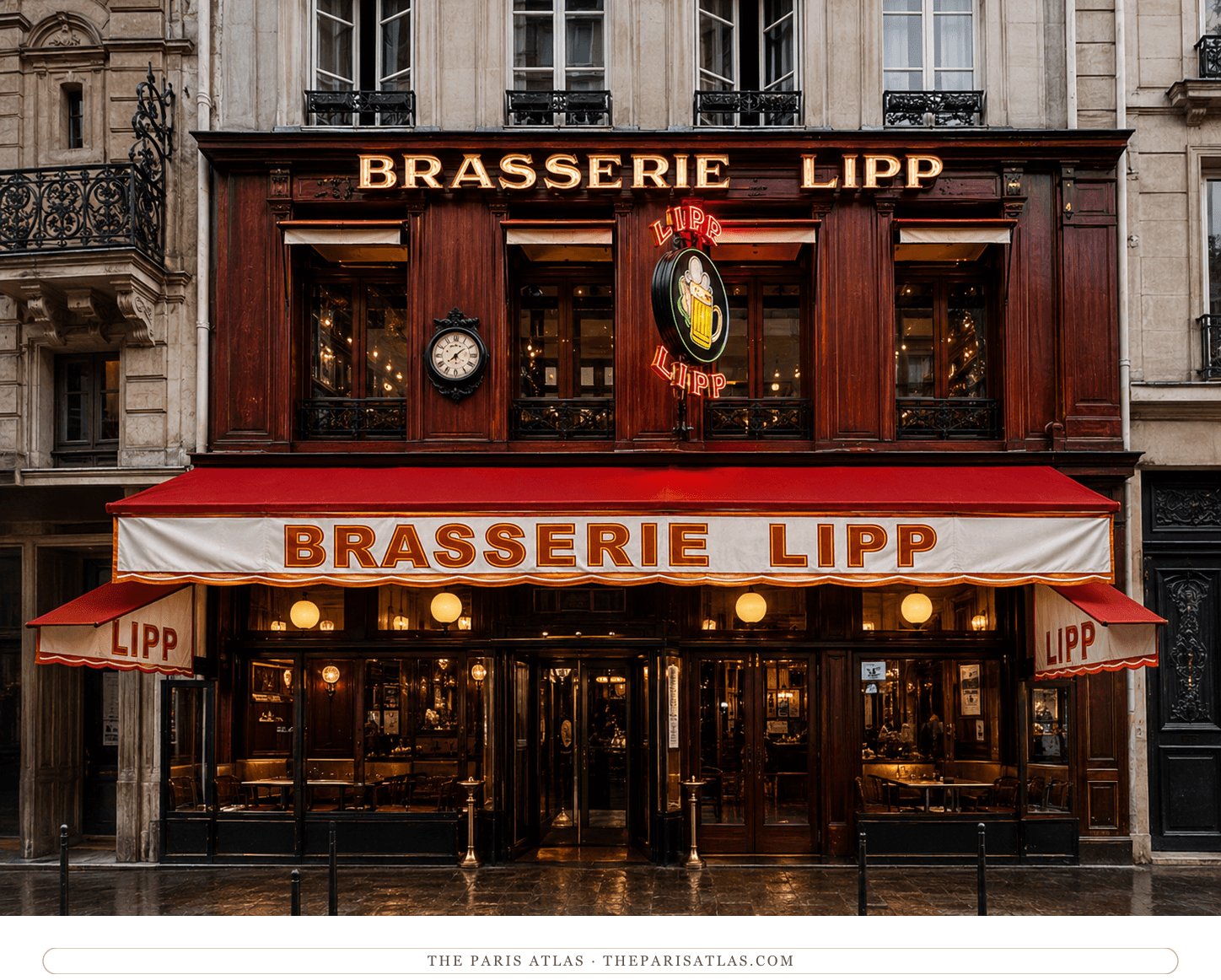
Beer, potato salad, and choucroute after a day's work. Ernest Hemingway considered it one of the best places in Paris.
Visit the placeThe sources below include histories, archival materials, scholarly research, and official records that informed this page. They document Hôtel Madison, the people connected to it, and its place in Paris.

The city's Camus walk: the move to the Hôtel Madison at 143 boulevard Saint-Germain, facing the church, at the start of June 1940.

Map data used to verify addresses, geographic coordinates, and the placement associated with Hôtel Madison.
Biographical evidence used to verify chronology, relationships, and historical context connected to Hôtel Madison.
Catalogue scholarship used to verify attribution, provenance, chronology, and interpretive context for Hôtel Madison.
These references provide the documented foundation for this page's history and context. Claim-level citations remain attached to the specific claims they support.
 Explore more resources
Newsletter
The cafés, studios, and walk-up flats where the work was made — one story from the map in every letter.