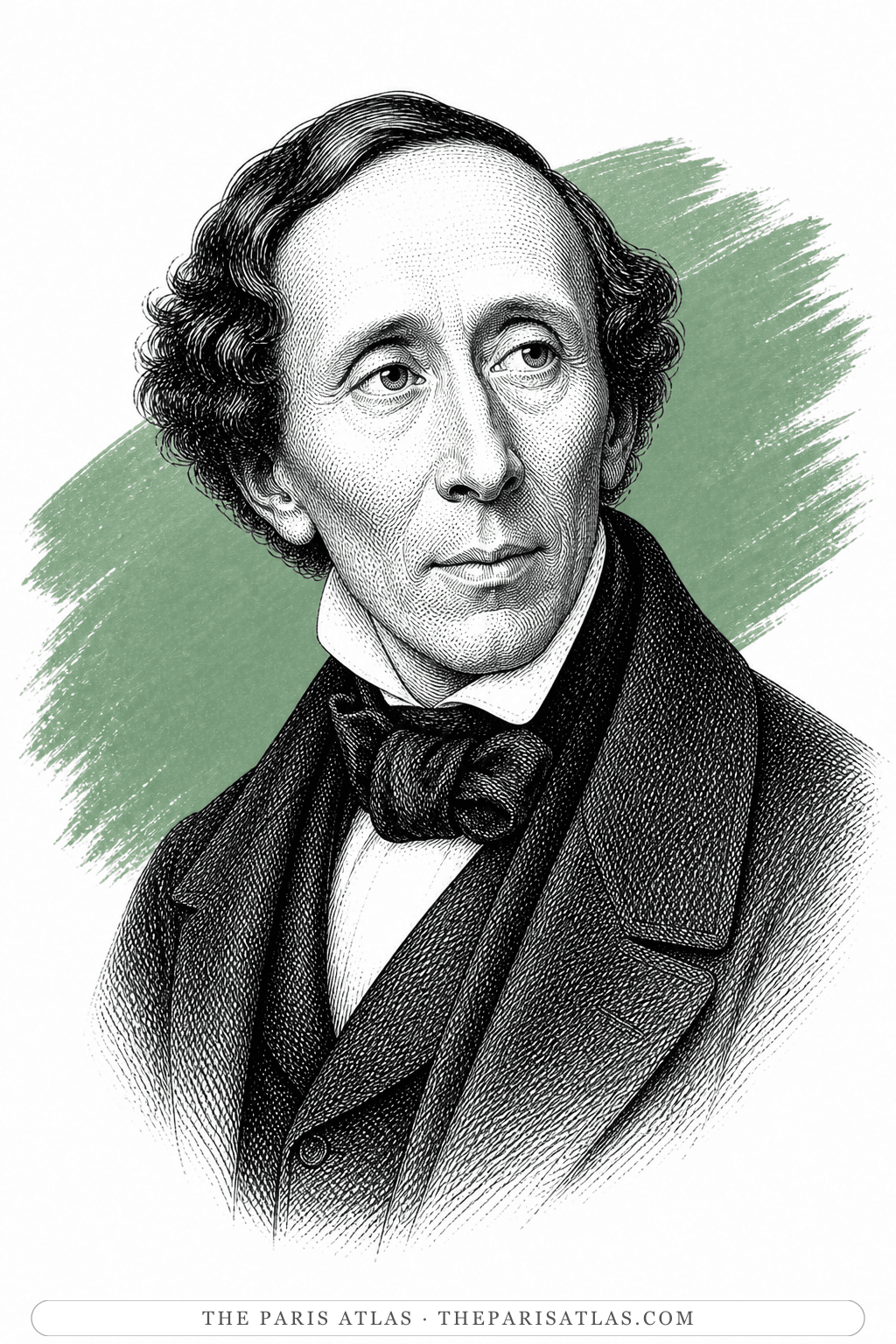
The Tinderbox
Fyrtøiet. A soldier, a witch, three dogs with enormous eyes, and a princess carried off at night. Pages 1 to 16 of the first edition.
Fairy Tales Told for Children: First Booklet
Hans Christian Andersen
Four tales in a 61-page booklet: a soldier with a magic tinderbox, a pea under twenty mattresses, and a reviewer who hoped Andersen would stop.
Hans Christian Andersen's first booklet of fairy tales came out in Copenhagen on 8 May 1835, a month after his novel The Improvisatore. The bookseller C. A. Reitzel published it as a 61-page booklet costing 24 skilling. The booklet held four tales: The Tinderbox, Little Claus and Big Claus, The Princess and the Pea, and Little Ida's Flowers. Andersen had heard the first three as a child. Little Ida's Flowers was his own. He called the series Fairy Tales Told for Children, and five more booklets followed, the last in 1842.
Andersen was twenty-nine and hoping to be known as a novelist. In a letter of March 1835 to his friend Henriette Wulff, he said he had just written some fairy tales. He passed on what the physicist Hans Christian Ørsted had told him: The Improvisatore might make him famous, but the fairy tales would make him immortal. Andersen wrote that he did not agree.[1]
Years later he explained where the four tales came from. The first three were stories he had heard as a boy, in the spinning room and at the hop harvest. Little Ida's Flowers began on a visit to the writer Just Mathias Thiele. Andersen told Thiele's daughter Ida about the flowers in the botanical garden, and kept some of her remarks when he wrote the story down.[1]
He wanted the tales to sound spoken. In his autobiography he said he wrote them down in the words he used when telling them aloud to children, and called them "told for children" to quiet the critics. He meant them for young and old alike.[2] The booklet sold for a quarter of a rigsdaler, the Danish currency of the day. The Andersen Centre puts that at about five US dollars now.[1]
The Tinderbox opens the booklet. A soldier walking home from the war meets a witch, who sends him down inside a hollow tree to fetch an old tinderbox. Down there, three dogs sit on chests of copper, silver and gold. Their eyes are as big as saucers, as big as millstones, and as big as the Round Tower in Copenhagen. The soldier keeps the tinderbox. Striking it calls the dogs, and he uses them to fetch a sleeping princess to his room at night.[3]
Little Claus and Big Claus is a comic tale about two farmers with the same name. Big Claus owns four horses and Little Claus owns one. On Sundays Little Claus borrows all five to plough, and he cannot stop shouting "Gee-up, my five horses!" Big Claus kills his one horse to shut him up. Little Claus sells the hide, and a string of lucky lies makes him rich. Every time Big Claus copies him, it goes badly for Big Claus.[3]
The Princess and the Pea is barely a page long. A prince wants to marry a real princess. On a stormy night a soaking-wet girl knocks at the town gate and says she is one. The old queen puts a single pea under twenty mattresses and twenty feather beds. In the morning the girl says she hardly slept and is black and blue all over, so she must be real.[3]
Little Ida's Flowers closes the booklet. Ida's flowers have wilted, and a student who is good at stories tells her why. They were at a ball all night, he says, dancing in the king's summer castle while everyone slept. That night Ida gets up and watches her own flowers dance.[4]
Andersen remembered only one review, and it was not kind. In 1836 Dannora, a journal edited by J. N. Høst, said the tales might amuse children but taught them nothing. The reviewer was shocked that a princess in The Tinderbox rides to a soldier on a dog's back and is kissed. He found The Princess and the Pea "not only as indelicate but positively without excuse". He ended by hoping Andersen would waste no more time writing fairy tales.
Others were no more encouraging. One monthly journal complained that the author of The Improvisatore had fallen back on something so childish. Some friends told him he had no talent for tales. Others told him to study the French fairy tale first. Andersen wrote that he would willingly have stopped, "but they forced themselves from me."
Andersen compared his method to that of Johann Karl August Musäus, a German writer of folk tales. Like Musäus, he retold old stories he had heard as a child, but in his own manner. The Tinderbox, Little Claus and Big Claus and The Princess and the Pea were the retellings. The Princess and the Pea ends with a joke about its own truth. The pea goes into the museum, "where it may still be seen if no one has stolen it."
Little Ida's Flowers was the only tale in the booklet Andersen made up himself. He admitted it was fairly close to a story by the German writer E. T. A. Hoffmann, and that he had already sketched it in an earlier book. Readers liked it best of the four, he said. After that he mostly invented his tales himself.
Andersen had spent the summer of 1833 in Paris on a travel grant from the Danish king, two years before the booklet appeared. The tales reached Paris in French later. In 1856 the Paris publisher Hachette brought out Contes d'Andersen, translated from the Danish by David Soldi, with a biographical notice by the critic Xavier Marmier.
All four tales from the first booklet are in the second edition of 1862. The Tinderbox became Le Briquet, and Little Claus and Big Claus became Petit Claus et grand Claus. The Princess and the Pea became La Princesse sur un pois, and Little Ida's Flowers became Les Fleurs de la petite Ida. The cartoonist Bertall drew forty small pictures for that edition.
The one with eyes like saucers, the one with eyes like millstones, and the one whose eyes were as big as the Round Tower.
So the prince took her to be his wife, for now he was sure that he had found a real princess, and the pea was put into the Museum, where it may still be seen if no one has stolen it.
the flowers have been to a ball last night, and therefore they droop so.
I would willingly have discontinued writing them, but they forced themselves from me.
The first four tales he published, in the order he chose. The Tinderbox is on page 1.
The whole booklet ran to 61 pages. The Princess and the Pea takes about a minute to read aloud.
Little Claus and Big Claus is a string of cheerful frauds. The reviewer of 1836 thought the booklet unfit for children.
The Danish text is in the public domain, and so are the English translations by Mary Howitt (1846) and Mrs. E. Lucas (1899).
The Tinderbox. Walking home from the war with nothing, he gets rich from the witch's tree and spends it all.
The poor farmer with one horse, who talks his way out of every disaster.
The rich farmer with four horses, who keeps copying Little Claus and keeps paying for it.
The Princess and the Pea. She arrives soaking wet in a storm and proves herself by being bruised by a pea.
Little Ida's Flowers. A girl whose wilted flowers, a student tells her, have been dancing all night. Andersen based her on Ida Thiele, a friend's daughter.
Little Ida's Flowers. A young man who tells wonderful stories and cuts pictures out of paper. He explains the flowers' ball to Ida.
Fyrtøiet. A soldier, a witch, three dogs with enormous eyes, and a princess carried off at night. Pages 1 to 16 of the first edition.
Lille Claus og store Claus. Two farmers with the same name, and a string of tricks that ends in the river. Starts on page 17.
Prindsessen paa Ærten. The shortest tale in the booklet, on pages 42 to 44. Also translated as The Real Princess.
Den lille Idas Blomster. Andersen's own invention, told first to a real girl named Ida. Starts on page 45.
March 1835
Andersen tells Henriette Wulff he has written some fairy tales, and that Hans Christian Ørsted thinks they will make him immortal.
8 May 1835
C. A. Reitzel publishes Eventyr, fortalte for Børn. Første Hefte in Copenhagen, 61 pages, at 24 skilling.
16 December 1835
The second booklet follows, with Thumbelina.
1836
The journal Dannora reviews the booklet and hopes Andersen will stop writing fairy tales.
1842
A second printing of the first booklet. A third follows in 1845.
1846
Mary Howitt's Wonderful Stories for Children, including Little Ida's Flowers, is published in New York.
1856
Hachette in Paris publishes Contes d'Andersen, translated by David Soldi.

Fairy Tales Told for Children: Second Booklet
Hans Christian Andersen
The next booklet, published seven months later, with Thumbelina.
Read our takeFairy Tales Told for Children: Third Booklet
Hans Christian Andersen
The third booklet of 1837, with The Little Mermaid and The Emperor's New Clothes.
Read our takeNew Fairy Tales
Hans Christian Andersen
The collection of 1843 to 1845 that made the tales famous, with The Ugly Duckling and The Snow Queen.
Read our takeThe Fairy Tale of My Life
Hans Christian Andersen
Andersen's autobiography, where he tells how the first booklet was received.
Read our take
Oscar Wilde's first book of fairy tales, written half a century later for children and adults alike.
Read our takeOn 8 May 1835, in Copenhagen, in the first booklet of Hans Christian Andersen's Fairy Tales Told for Children. The Danish title is Prindsessen paa Ærten. The tale fills pages 42 to 44 of the 61-page booklet.
Four tales: The Tinderbox, Little Claus and Big Claus, The Princess and the Pea, and Little Ida's Flowers. The first three were stories Andersen had heard as a child. Little Ida's Flowers was his own.
No. He said The Tinderbox, Little Claus and Big Claus and The Princess and the Pea were stories he heard as a boy, in the spinning room and at the hop harvest. He retold them in his own way.
Badly, by Andersen's account. The review he remembered, in the journal Dannora in 1836, said the tales taught children nothing and called The Princess and the Pea indelicate. Friends told him to give up fairy tales.
Several old English translations used that title, including the one by Mrs. E. Lucas in 1899. The prince in the tale is looking for a "real" princess, and the queen's pea is the test.
Through its French translation. Hachette in Paris published David Soldi's Contes d'Andersen in 1856. The 1862 edition has all four tales, including La Princesse sur un pois. Andersen himself had visited Paris in 1833.
Explore authors with a similar voice, perspective, and influence.
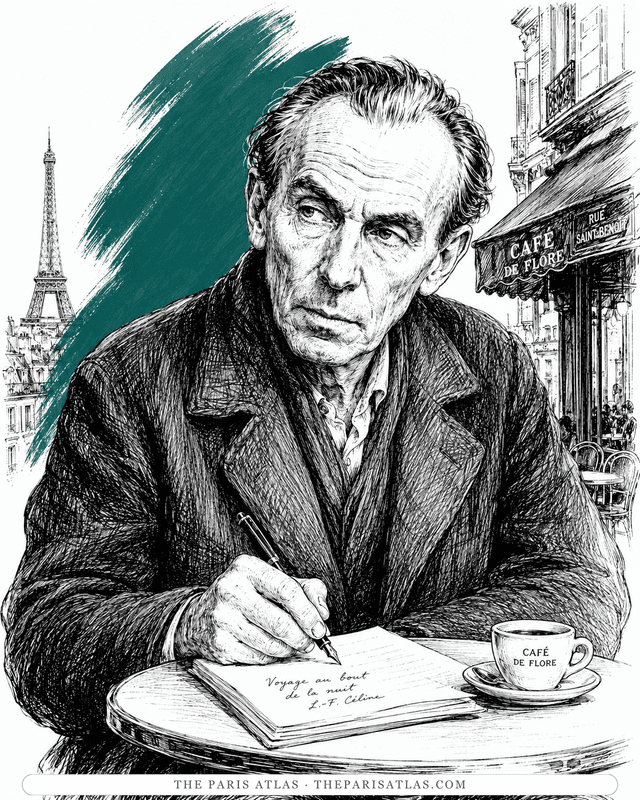
The doctor of the Paris slums who wrote the century's blackest, funniest novel — and changed the sound of French prose.
View author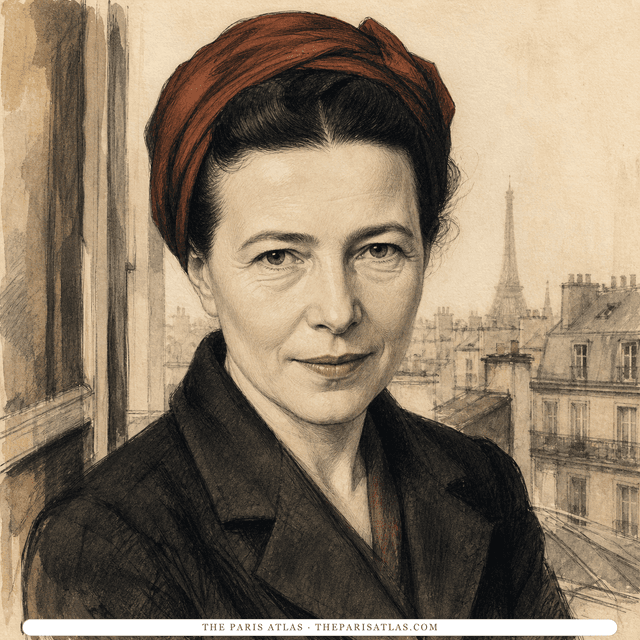
French writer and philosopher whose novels, memoirs, and social analysis examined freedom, gender, responsibility, aging, and the material conditions that shape a life.
View author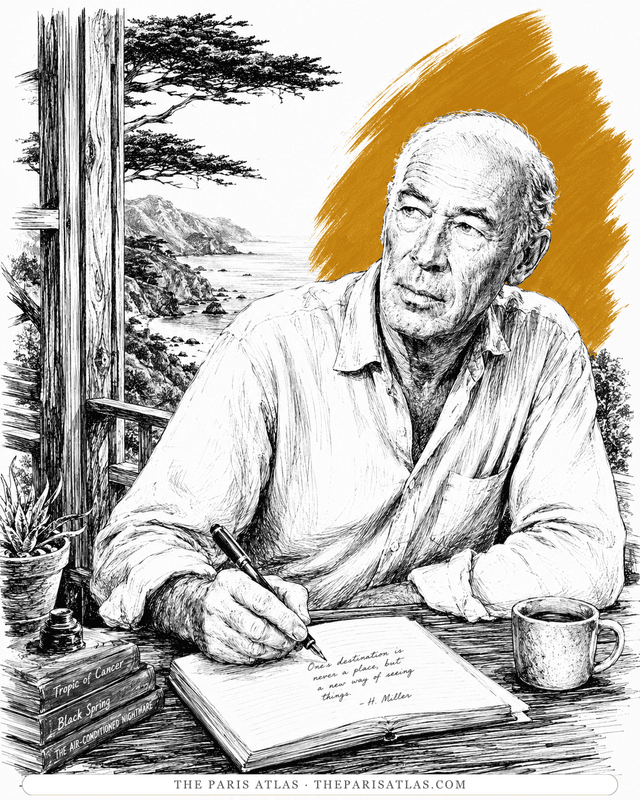
The Brooklyn dropout who arrived in Paris broke at thirty-eight and wrote the exuberant, banned books that ended American censorship.
View authorThe sources below include the primary text, editions, scholarship, archival materials, and other records that informed this page. They document Fairy Tales Told for Children: First Booklet, its publication, and its place in literary history.

Andersen's own account of the booklet, its title and the 1836 review.
The public-domain English translation used for the plot and for quotations from The Tinderbox and The Princess and the Pea.
Mary Howitt's 1846 translation, used for Little Ida's Flowers.
The Andersen Centre's record of the booklet: contents and publication date.
The standard bibliography of Andersen's Danish first editions: title page, publisher, page count, price, reprints and the page where each tale starts.

The Bibliothèque nationale de France record of the first Hachette edition, Paris, 1856.
The 1862 second edition, whose table of contents gives the French titles of all four tales.
Library record for ISBN 9780385189514, Erik Christian Haugaard's complete translation.
The primary text represented by this page, used for descriptions of the work’s contents and for any quoted passages shown here.
The primary text is the baseline reference for every book page. Additional references document publication history, interpretation, and historical context where that evidence is available.
 Explore more resources