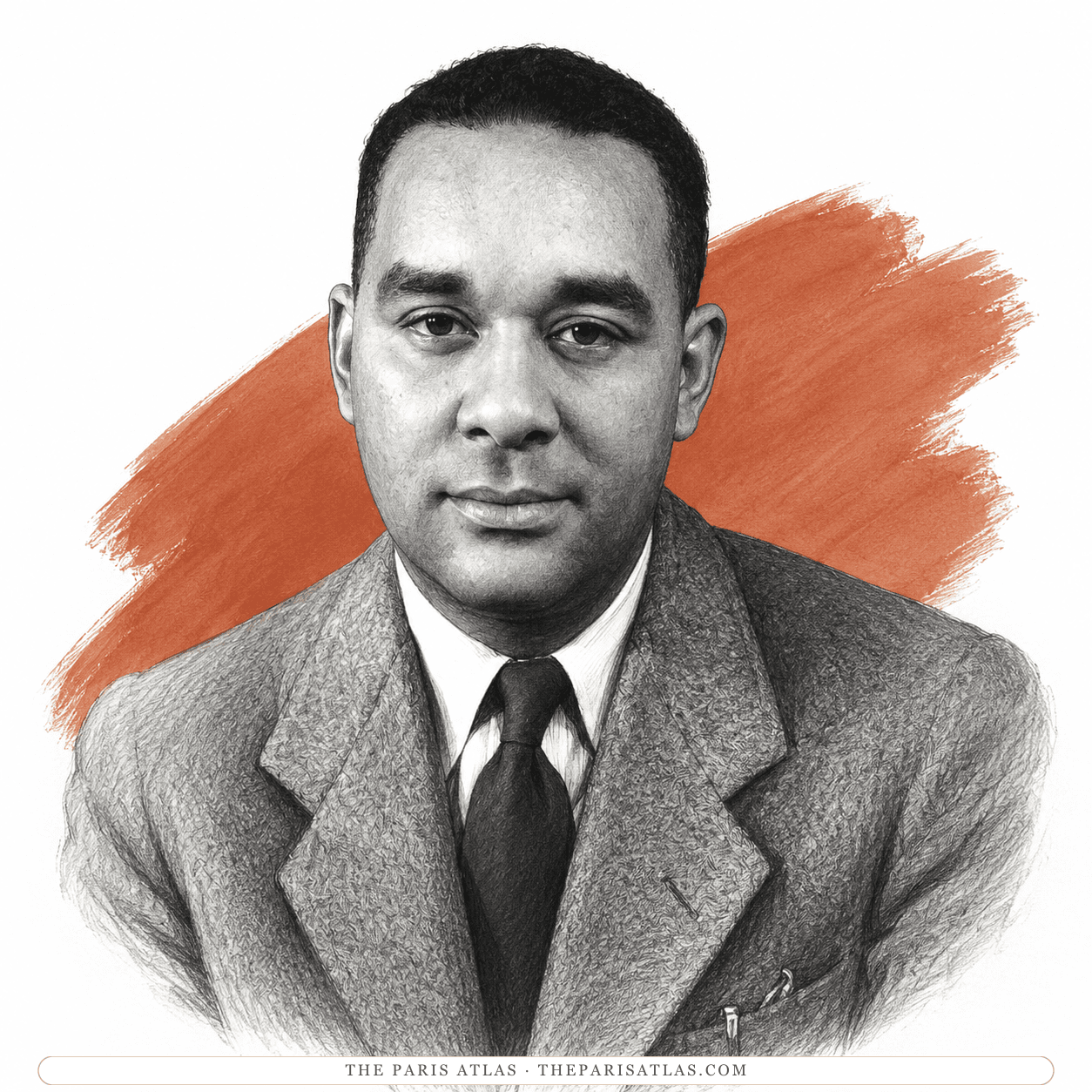
Richard Wright
Lived here · 1948–1959
The family apartment for eleven years, where nearly all the exile-era books were written. The marble plaque dedicated in February 1992 records the dates.
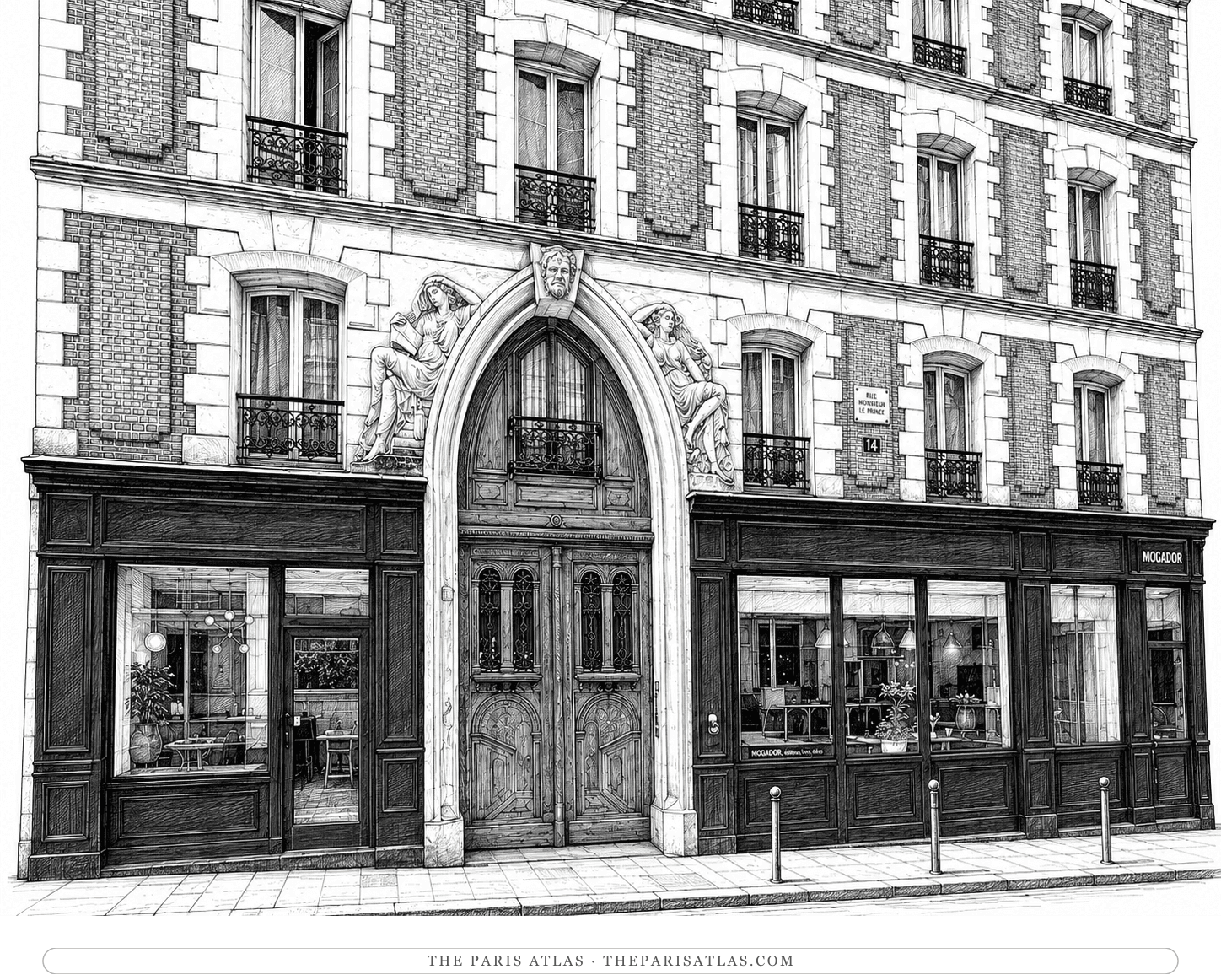
Richard Wright's Paris address for eleven years — the apartment where he wrote the books of his exile, marked since 1992 by a marble plaque.
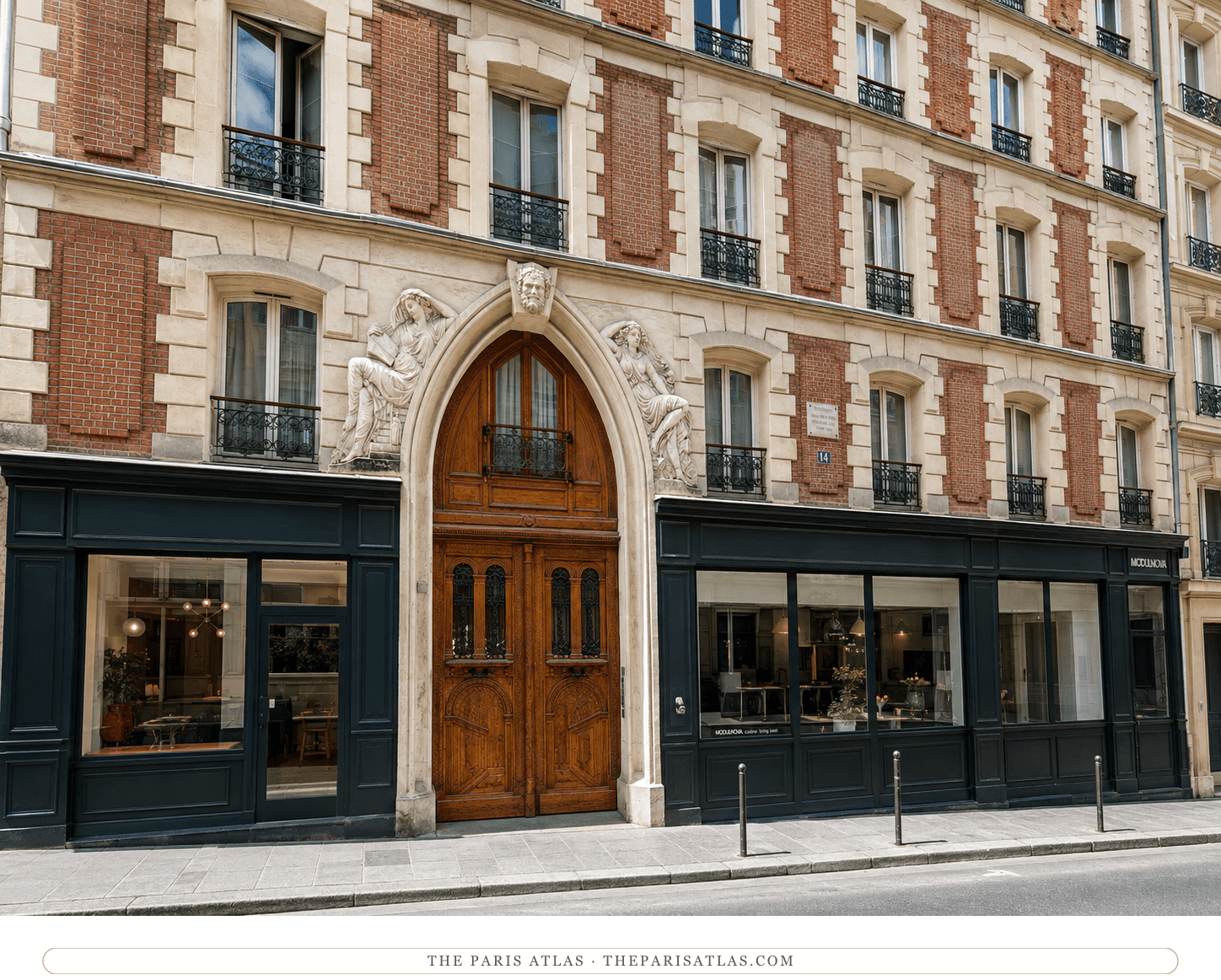
Richard Wright's Paris was run from 14 rue Monsieur-le-Prince. He moved his family into the building in 1948, after a first year in a rented apartment in Neuilly, and stayed until 1959 — eleven years on a street that climbs from the Odéon crossroads toward the Luxembourg Gardens, in the heart of the sixth arrondissement.[1]
The address put his whole daily geography within a few minutes' walk. The Luxembourg Gardens are at the top of the street. Le Tournon, the café below the Senate where his table became the headquarters of Black American writers in postwar Paris, is a short walk around the gardens' northern edge. His publisher-in-spirit, the Présence Africaine circle, met and printed across the boulevard Saint-Michel in the Latin Quarter.[2]
Nearly everything Wright published in exile was written while he lived here: the novel The Outsider (1953), the reportage of Black Power (1954), The Color Curtain (1956), and Pagan Spain (1957), the lectures of White Man, Listen! (1957), and the novel The Long Dream (1958). His younger daughter, Rachel, was born in Paris in 1949, in the first year at the address. The unpublished novel of the expatriate quarter's suspicions, Island of Hallucination, was written here too, near the end.[1]
The family left the apartment in 1959. Wright had a year to live; he died in a Paris clinic in November 1960, and his ashes rest at Père Lachaise.[2]
The marble plaque beside the door went up in February 1992, during the "African-Americans and Europe" conference, after a young American lawyer, Ben Davis, had spent more than two years steering the request through French bureaucracy. Wright's daughter Julia Wright and his biographer Michel Fabre unveiled it, with Julia's son Malcolm present; the organizers called it the first official marker of the African-American presence in Paris. The inscription reads "L'homme de lettres noir américain Richard Wright habita cet immeuble de 1948 à 1959" — the Black American man of letters Richard Wright lived in this building from 1948 to 1959.[3]
The building itself is a private residence, unremarkable on a street of bookshops and student cafés. The plaque is the only sign, and the street is worth the detour anyway: it is two minutes from the Odéon métro, and the walk up to the Luxembourg Gardens is the walk Wright took for eleven years.
The Wrights move in from Neuilly; the apartment becomes the base of the Paris exile.
Rachel Wright is born in Paris.
The Outsider opens the run of books written at the address — five more follow by 1958.
The family leaves the apartment, a year before Wright's death.
The marble plaque is dedicated in February, unveiled by Julia Wright and Michel Fabre during the African-Americans and Europe conference.
A private building; nothing but the plaque marks the years inside.
At 14 rue Monsieur-le-Prince, in the 6th arrondissement between the Odéon crossroads and the Luxembourg Gardens, from 1948 to 1959. Before that the family spent a year in Neuilly-sur-Seine, and on his first 1946 visit he stayed at the Hôtel Trianon on rue de Vaugirard.
"L'homme de lettres noir américain Richard Wright habita cet immeuble de 1948 à 1959" — the Black American man of letters Richard Wright lived in this building from 1948 to 1959. It is a white marble plaque with gilded lettering, mounted beside the door.
In February 1992, during the "African-Americans and Europe" conference in Paris. Wright's daughter Julia Wright and his biographer Michel Fabre unveiled it, after the American lawyer Ben Davis had spent over two years obtaining permission from the French authorities.
Nearly all his exile-era work: the novels The Outsider (1953) and The Long Dream (1958), the reportage of Black Power (1954), The Color Curtain (1956), and Pagan Spain (1957), and the lectures published as White Man, Listen! (1957). His unpublished novel Island of Hallucination was also written here.
Only from the street — the building is a private residence. The plaque is visible beside the door at number 14, two minutes' walk from the Odéon métro station, and the street runs straight up to the Luxembourg Gardens.
Lived here · 1948–1959
The family apartment for eleven years, where nearly all the exile-era books were written. The marble plaque dedicated in February 1992 records the dates.
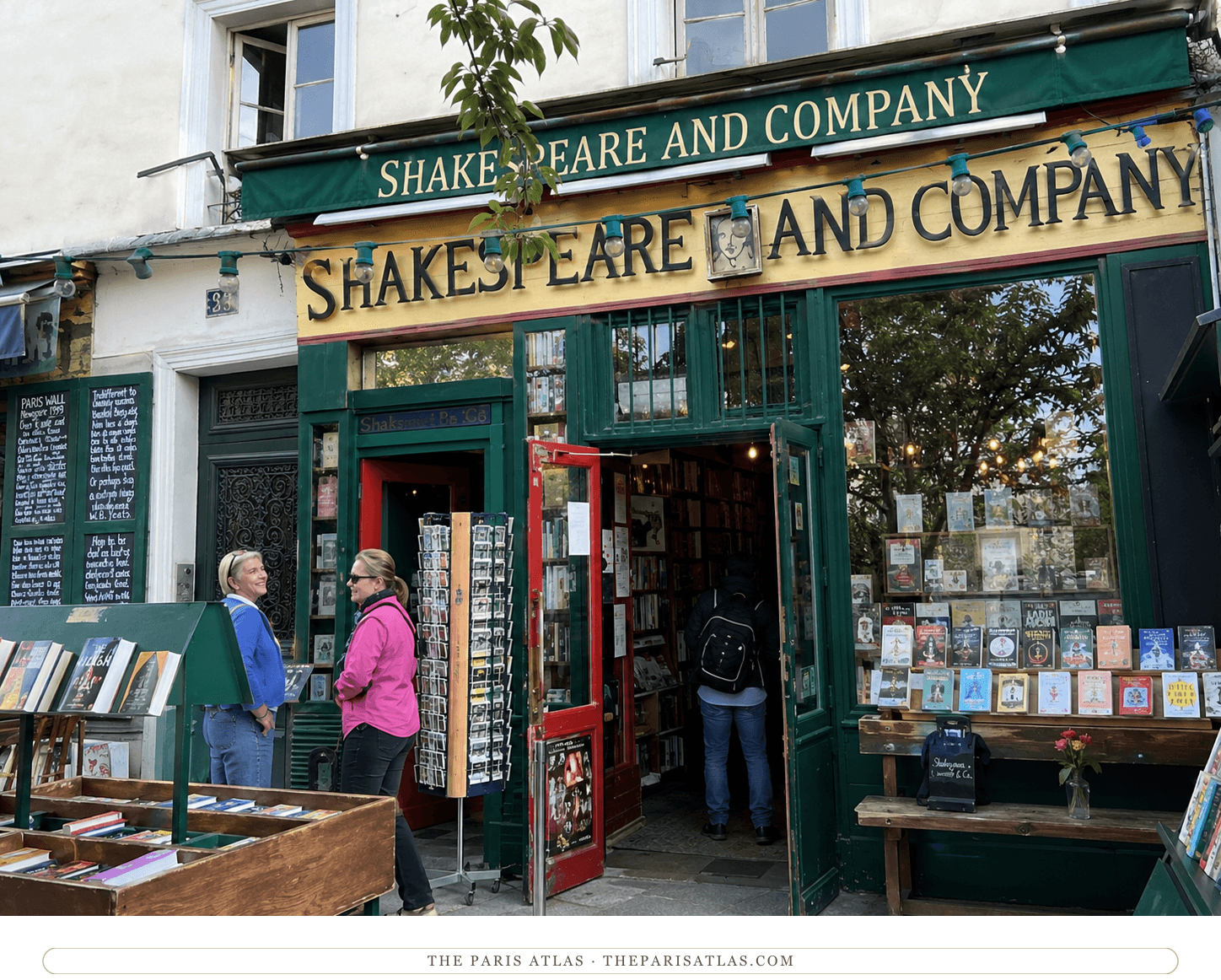
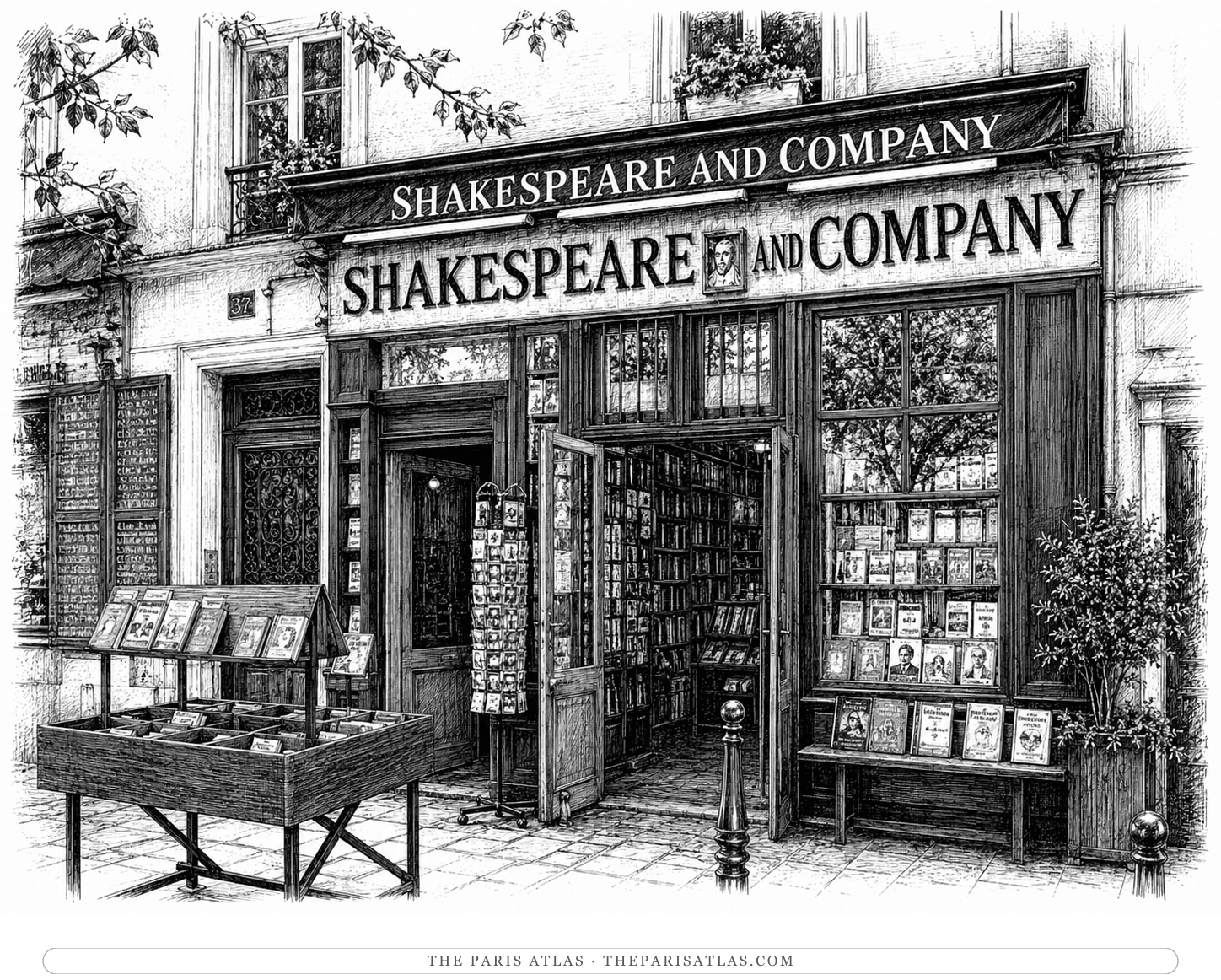
Sylvia Beach's original bookshop and lending library — Ernest Hemingway's home away from home, and where James Joyce's Ulysses was first published. The shop closed in 1941; the current Shakespeare and Company is a successor at a different address.
Visit the place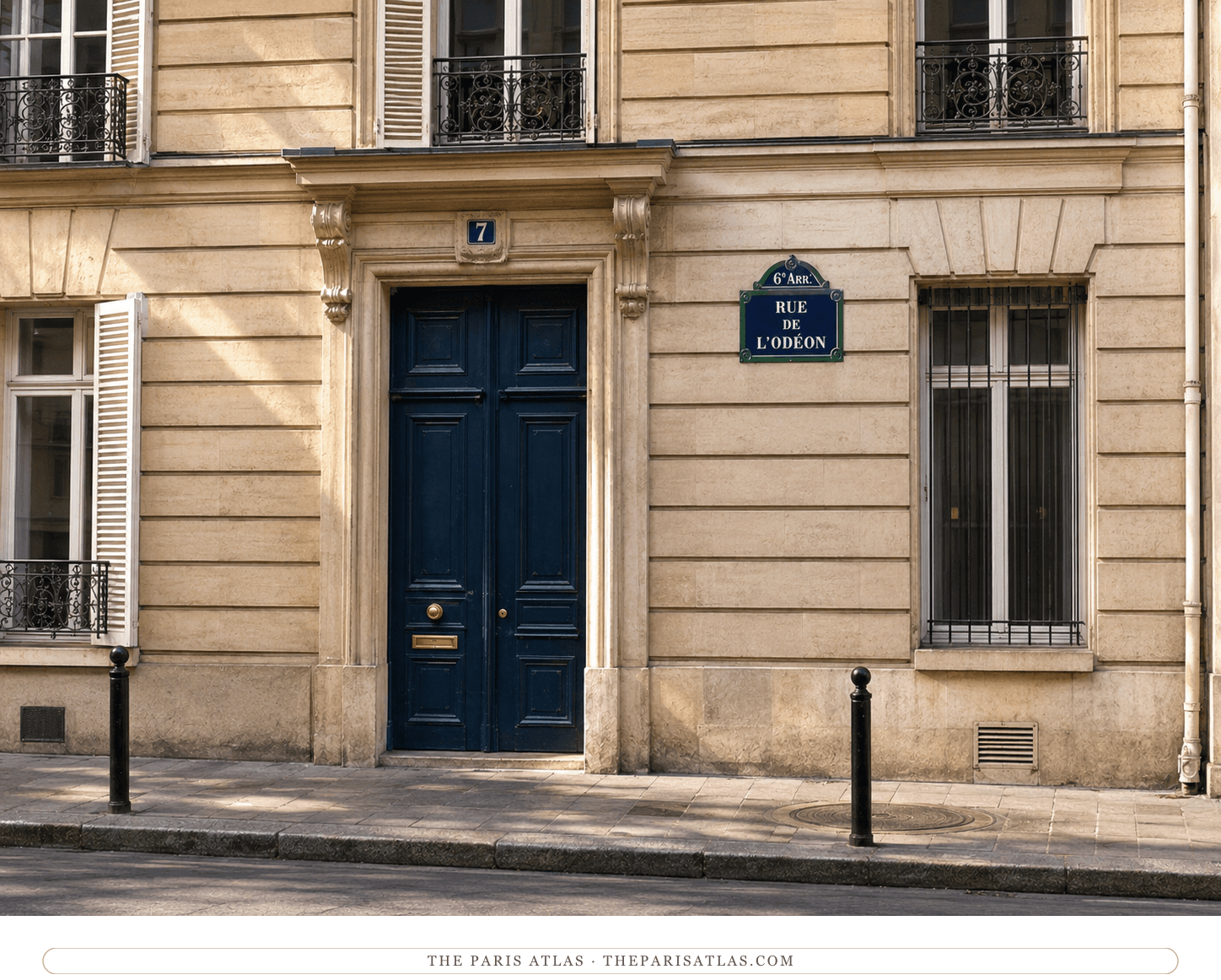
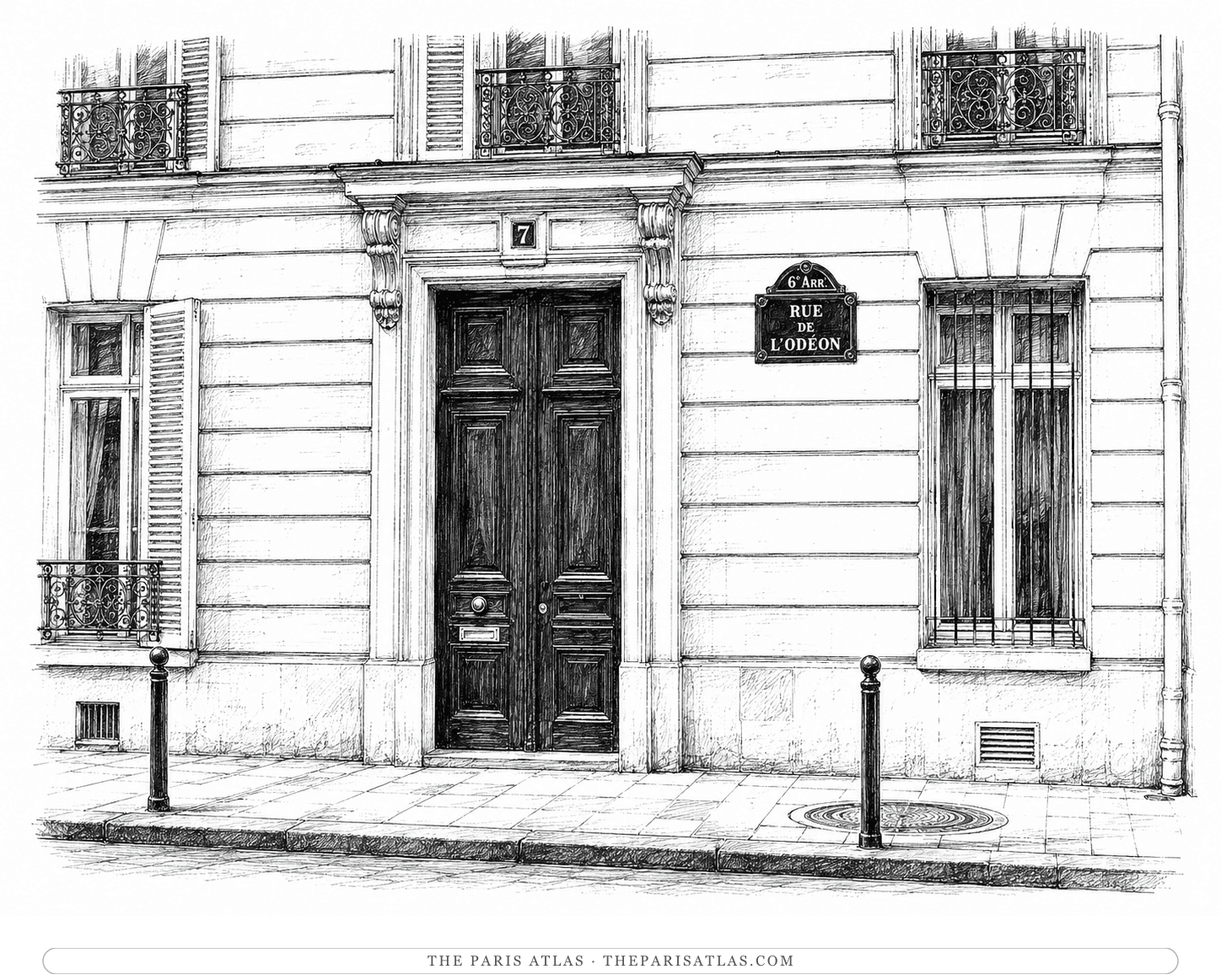
Adrienne Monnier's bookshop and lending library — the French half of the rue de l'Odéon, where Ulysses was read aloud to Paris before it was a book.
Visit the place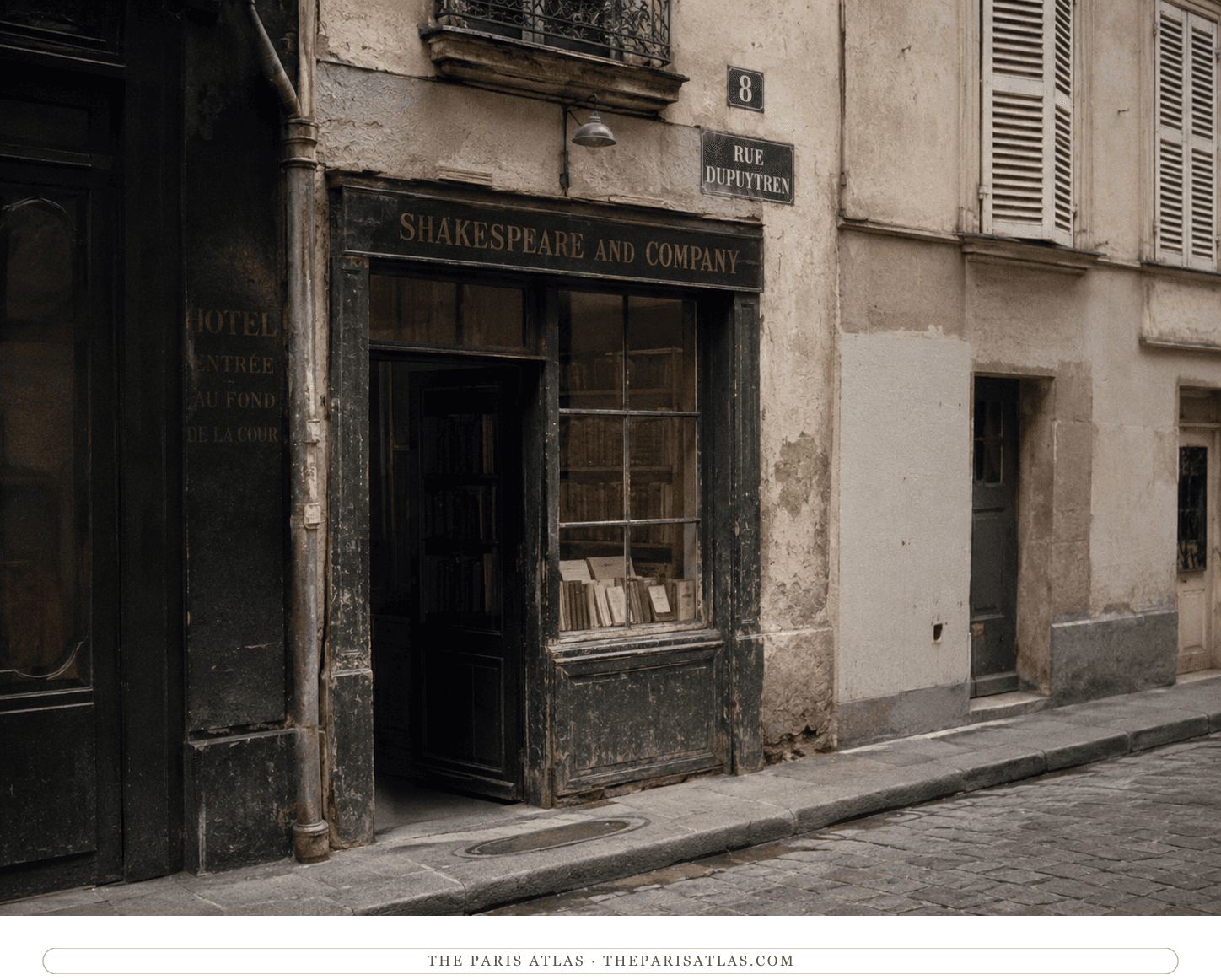
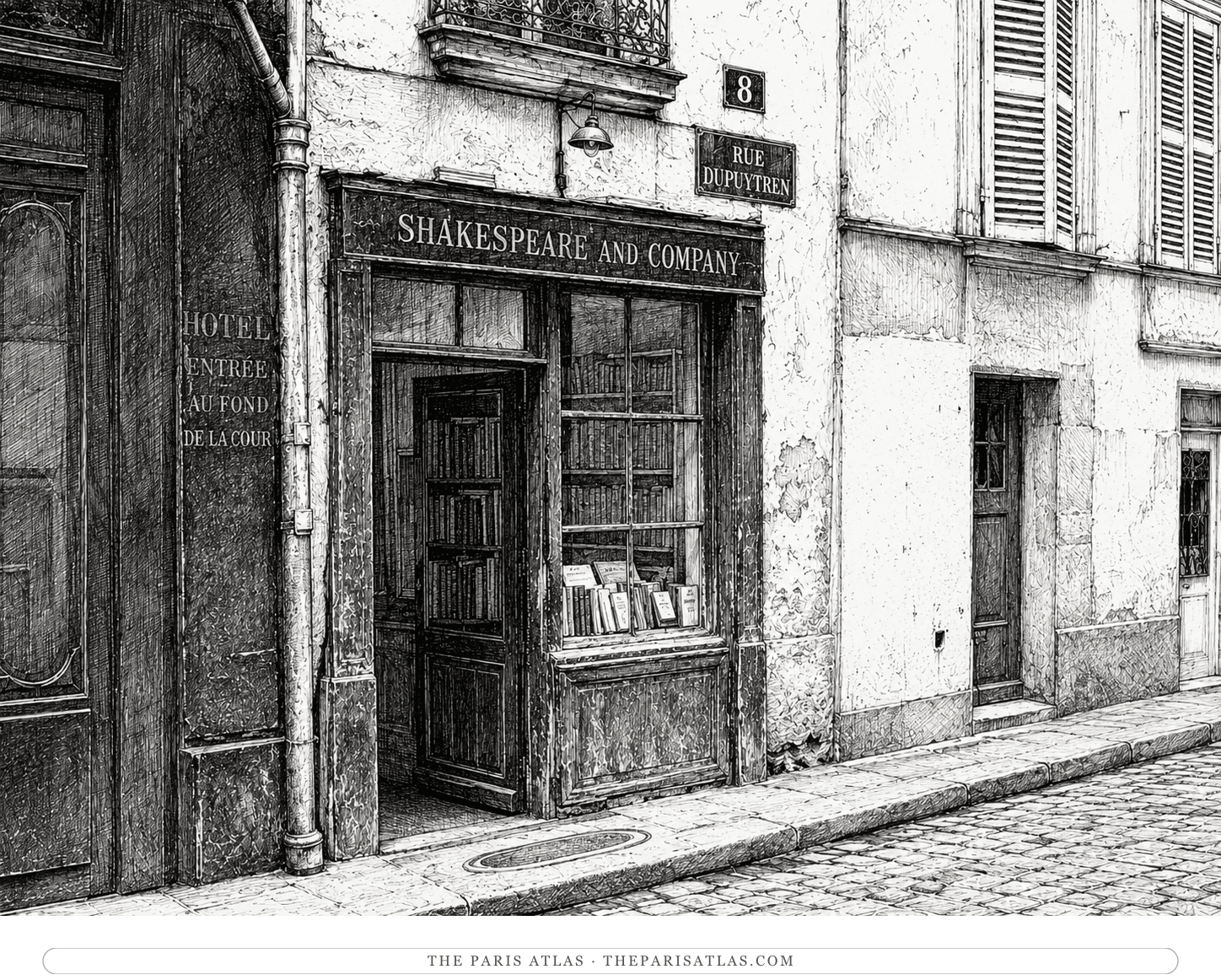
Where Shakespeare and Company began: the tiny shop Sylvia Beach opened on 19 November 1919, two years before the move to the rue de l'Odéon.
Visit the place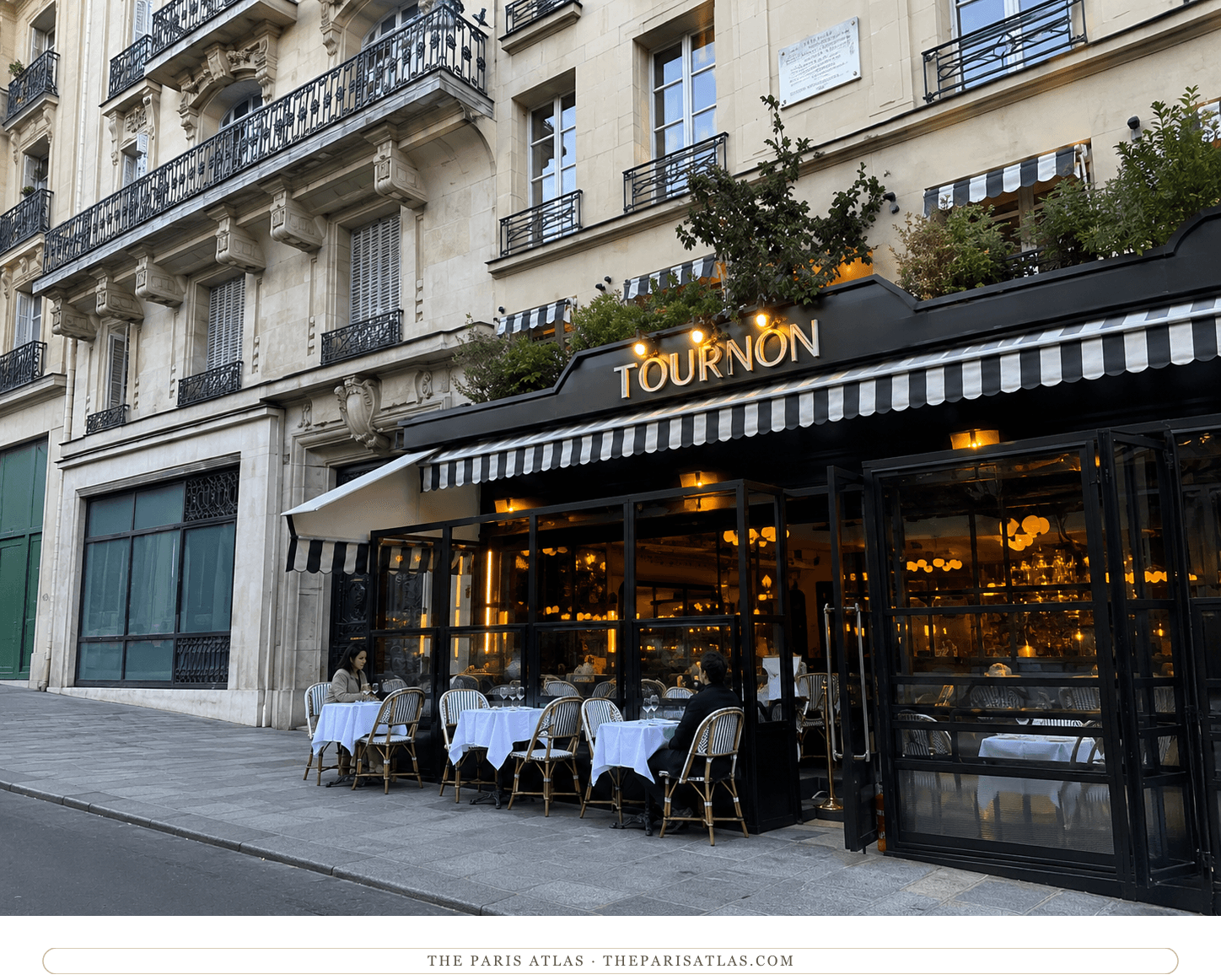
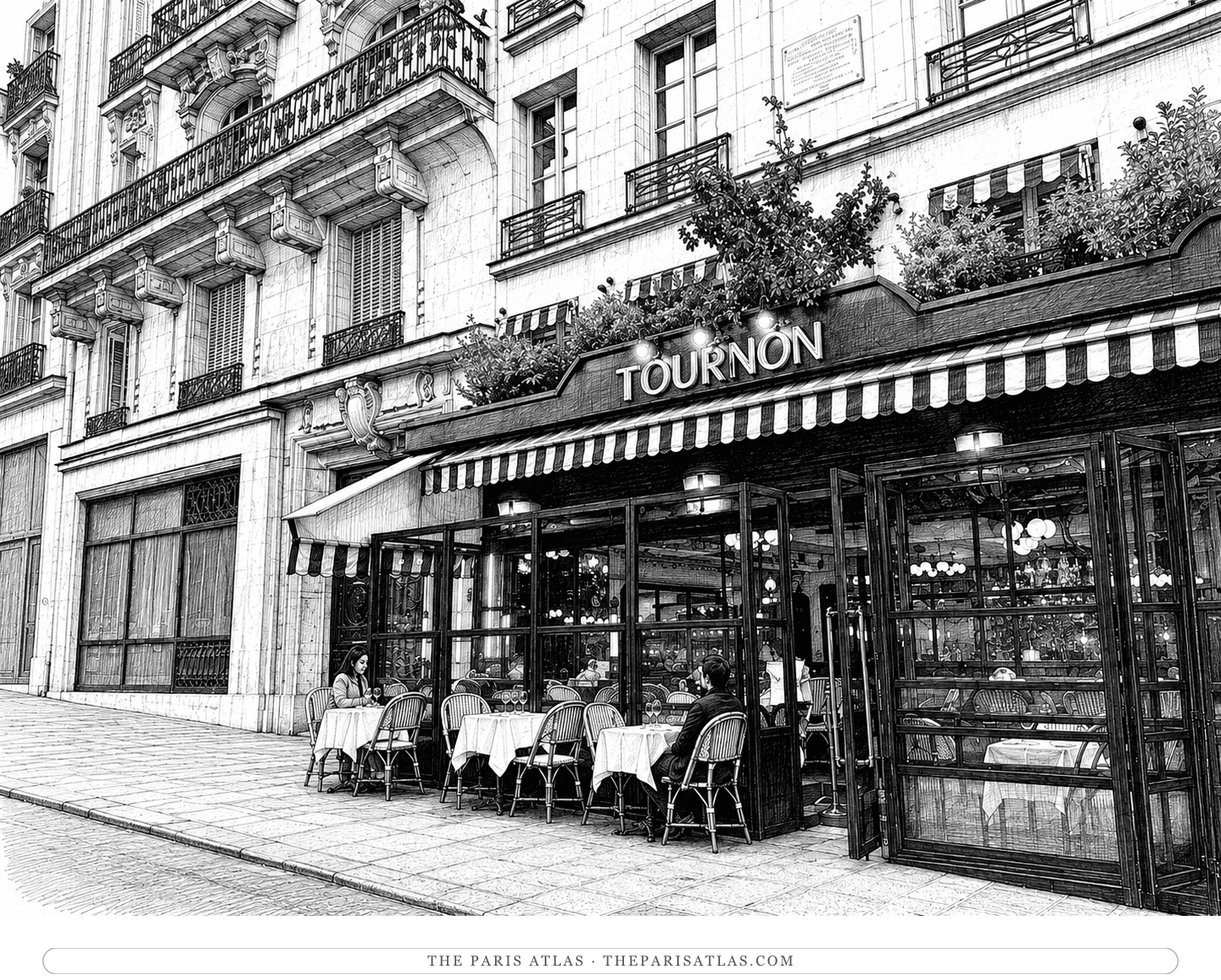
The café below the Senate that served as the unofficial headquarters of Black American writers in postwar Paris, with Richard Wright at the center and James Baldwin among the regulars.
Visit the placeThe sources below include histories, archival materials, scholarly research, and official records that informed this page. They document 14 Rue Monsieur-le-Prince, the people connected to it, and its place in Paris.


Web source consulted for documented facts and historical context presented on the 14 Rue Monsieur-le-Prince page.

Map data used to verify addresses, geographic coordinates, and the placement associated with 14 Rue Monsieur-le-Prince.
These references provide the documented foundation for this page's history and context. Claim-level citations remain attached to the specific claims they support.
 Explore more resources
Newsletter
The cafés, studios, and walk-up flats where the work was made — one story from the map in every letter.