

Recalled in the memoir
A Moveable Feast
His daily walking route and hungry-day refuge — the gardens where he studied the Cézannes on an empty stomach and learned to see like one.
Ernest Hemingway's daily shortcut and his hungry-day refuge — the park where he walked to avoid the smell of food, and studied the Cézannes in its museum on an empty stomach.
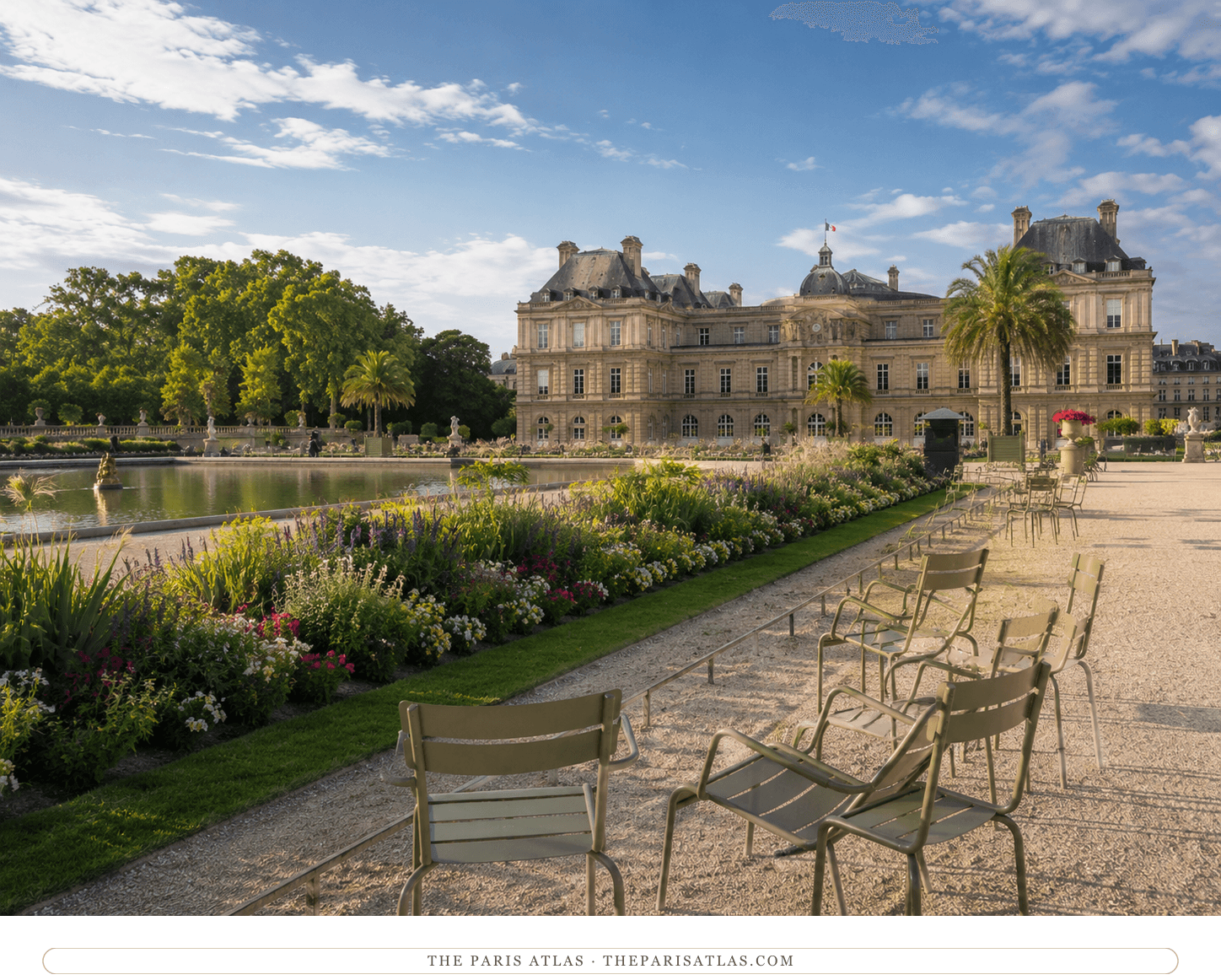
The Luxembourg was Hemingway's park the way the Closerie was his café — not scenery, but infrastructure. It lay directly on his walking routes between the flat, the bookshop, and Gertrude Stein's studio, and in the hungry chapters of A Moveable Feast it serves a specific tactical purpose: the gardens were the one route home on which you encountered no restaurants and almost no smell of food. Hunger, he insisted, was good discipline, and the Luxembourg was where he practiced it.
The gardens mark the Latin Quarter end of Langston Hughes's spring 1924 love story. Anne Marie Coussey — Mary in The Big Sea — lived in a large old house directly opposite them. Hughes first carried her a note from Rayford Logan, then returned often as friendship became romance. The memoir does not identify the house or claim the garden itself as their meeting place; the defensible connection is the frontage Hughes repeatedly used to locate Mary's Paris home.
It was also where the discipline paid its dividend. At the old Musée du Luxembourg on the garden's edge he went to look at the Cézannes — and discovered, he wrote, that they looked sharper and truer when he was belly-empty. Cézanne became the painter he tried hardest to write like, building landscapes out of repeated true strokes, and the lesson was learned in these gardens between meals that didn't happen.
One famous Luxembourg story needs a footnote: the tale of Hemingway wringing pigeons' necks in the gardens and smuggling them home in a pram for dinner comes not from the memoir but from his later table-talk, as recorded by A. E. Hotchner. Like several of Papa's best stories, it improves with distance from the evidence. What the book itself records is quieter and better — a broke young writer walking the gravel paths of a royal garden, learning to see.
In the morning I walked down the Boulevard to the rue Soufflot for coffee and brioche. It was a fine morning. The horse-chestnut trees in the Luxembourg gardens were in bloom. There was the pleasant early-morning feeling of a hot day.
He could hardly set foot out of doors without entering the great gates of the Luxembourg Gardens with its old world terrace, its ancient trees, its Seventeenth Century palace.
Marie de Médicis begins the palace and gardens on the model of the Boboli in Florence.
The Musée du Luxembourg becomes France's museum of living artists — later home to the Impressionists.
Hemingway crosses the gardens daily; the Cézanne lessons of A Moveable Feast happen at the museum on its edge.
Langston Hughes repeatedly visits Mary at the house she shares opposite the gardens.
The museum's modern collections begin moving to the Louvre and the Orangerie.
Hemingway's A Moveable Feast fixes the gardens in the walking mythology of literary Paris.
Unchanged in shape since the era — the most faithful surviving set piece of the book.
Recalled in the memoir
His daily walking route and hungry-day refuge — the gardens where he studied the Cézannes on an empty stomach and learned to see like one.

Depicted in its pages
Sherwood Anderson's Paris, as Huddleston saw it — a man who could hardly set foot outdoors without entering the great gates of the gardens.

Recalled in the memoir
Hughes locates Mary's home directly opposite the gardens and recalls returning there as their friendship became a romance in spring 1924.
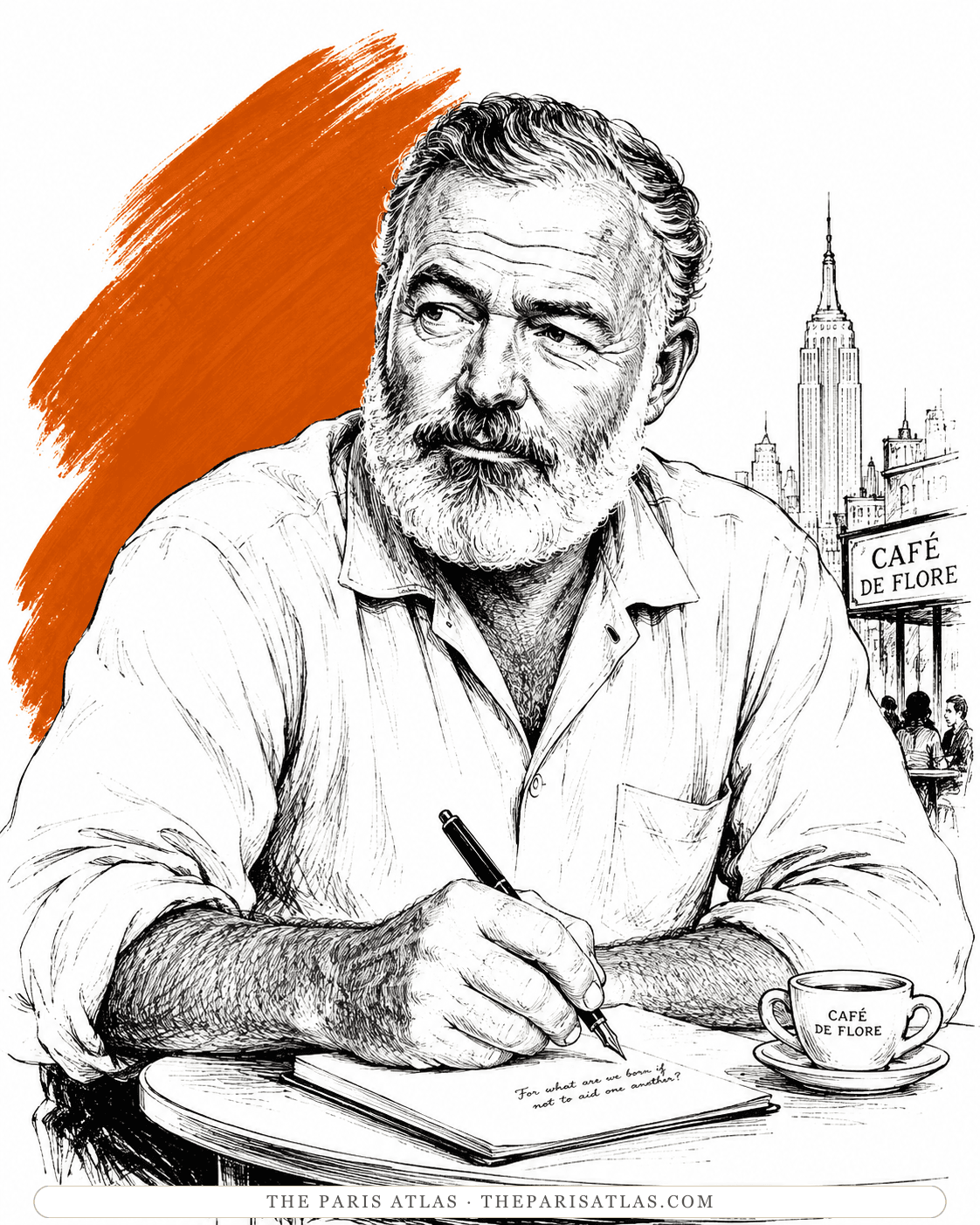
Frequented by
His daily walking route and hungry-day refuge — the gardens where he studied the Cezannes on an empty stomach.
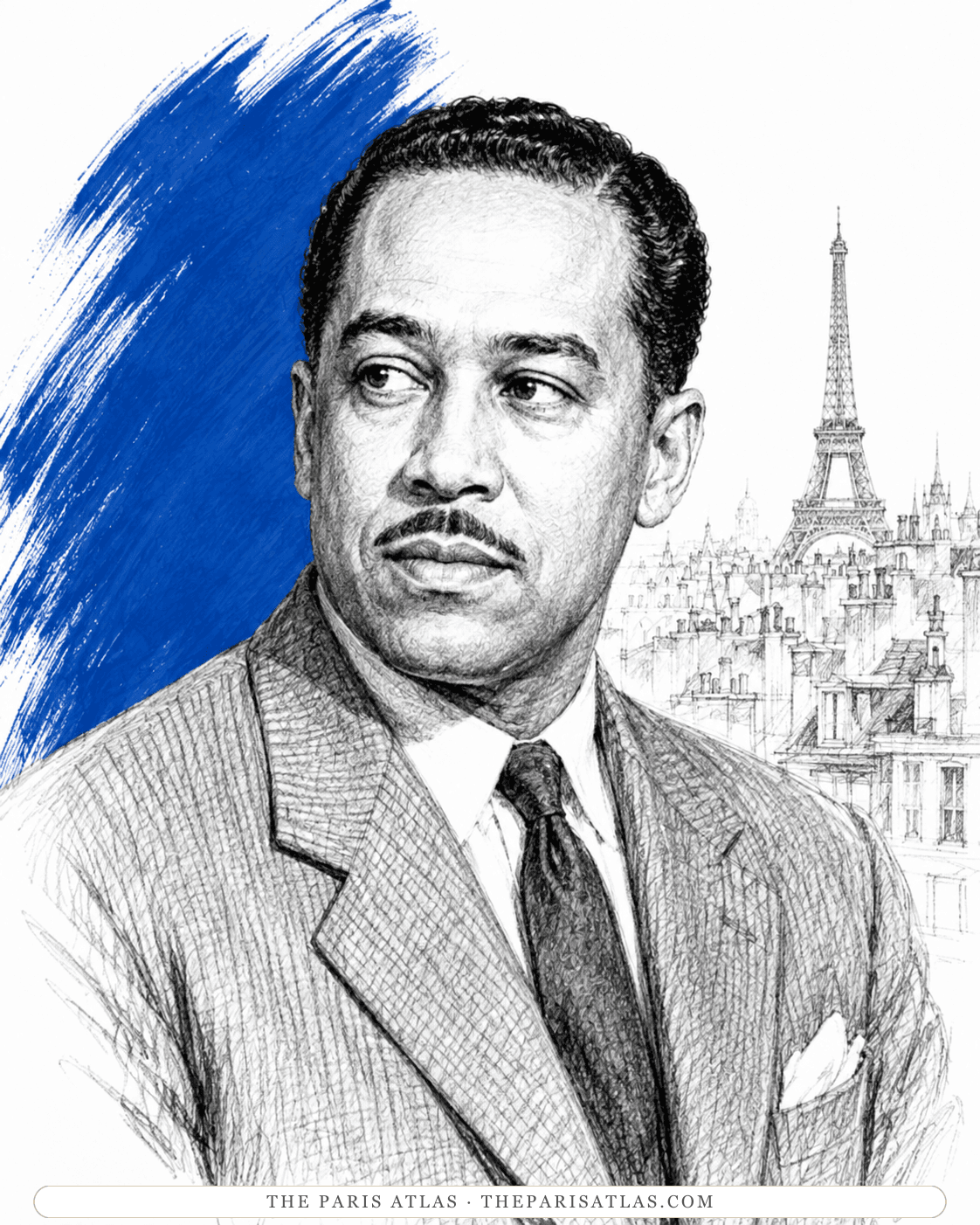
Visited by
Hughes returned to the gardens opposite Mary's home as their friendship became a romance in spring 1924.
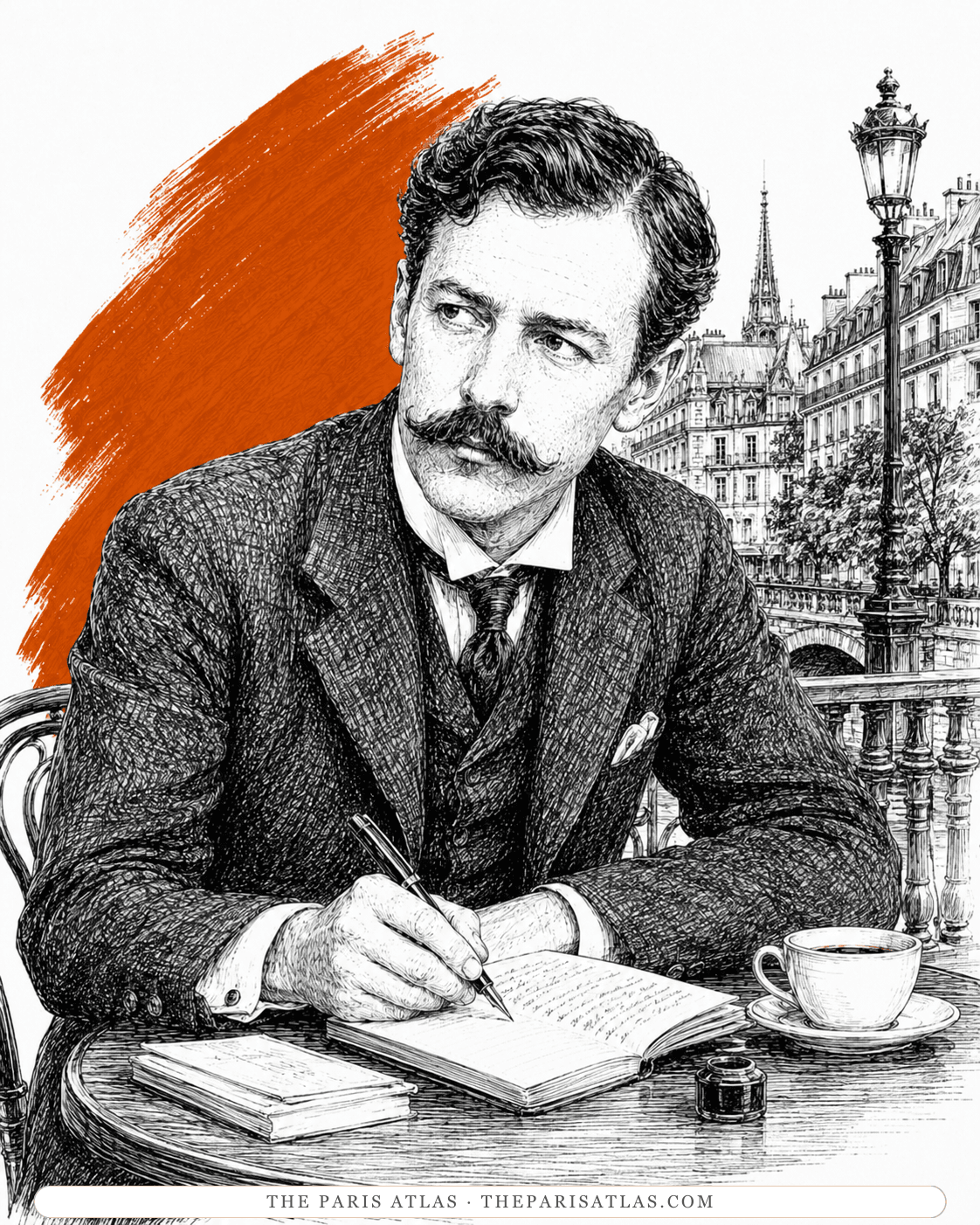
Sisley Huddleston wrote about Jardin du Luxembourg in Paris Salons, Cafés, Studios.
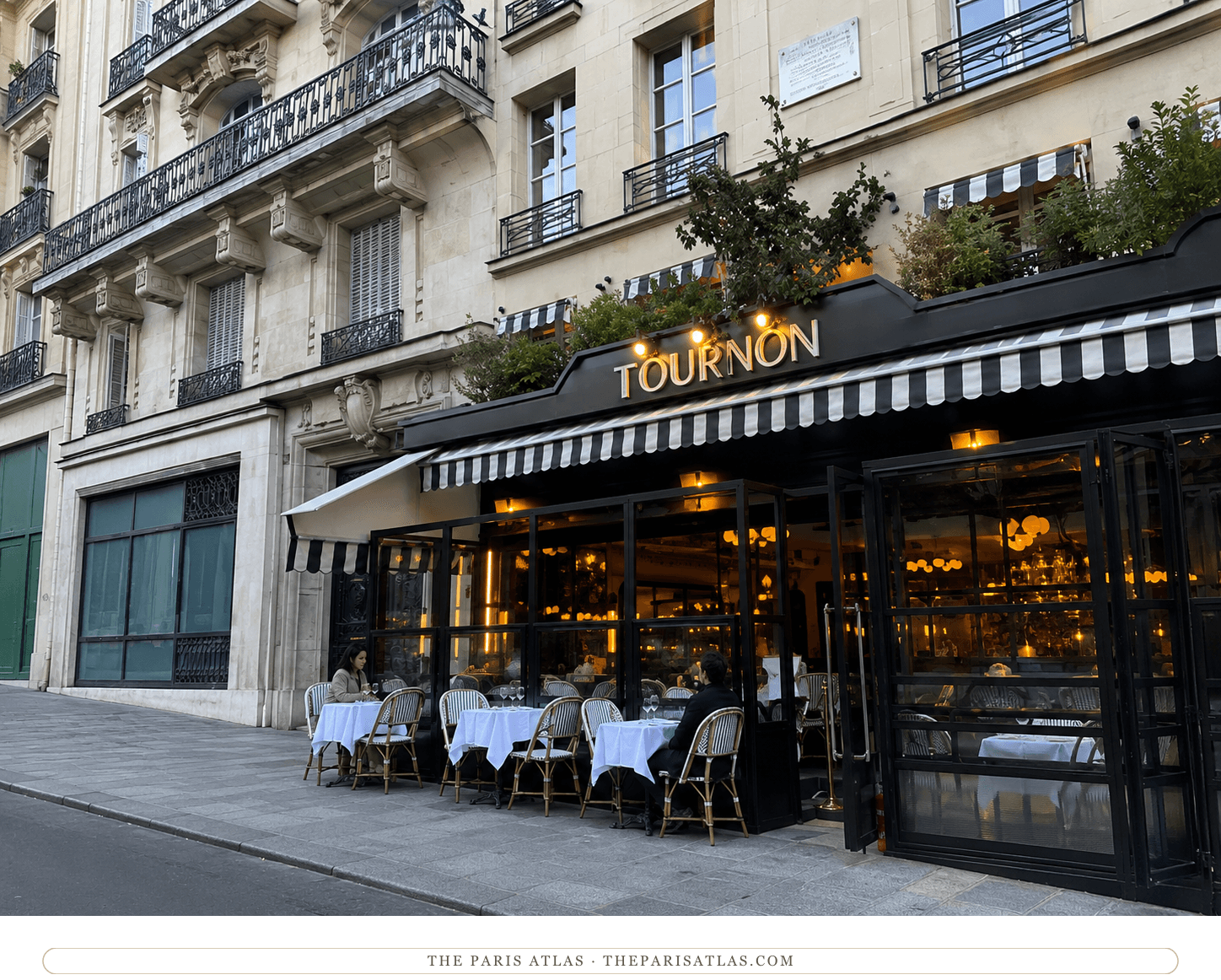
The café below the Senate that served as the unofficial headquarters of Black American writers in postwar Paris, with Richard Wright at the center and James Baldwin among the regulars.
Visit the place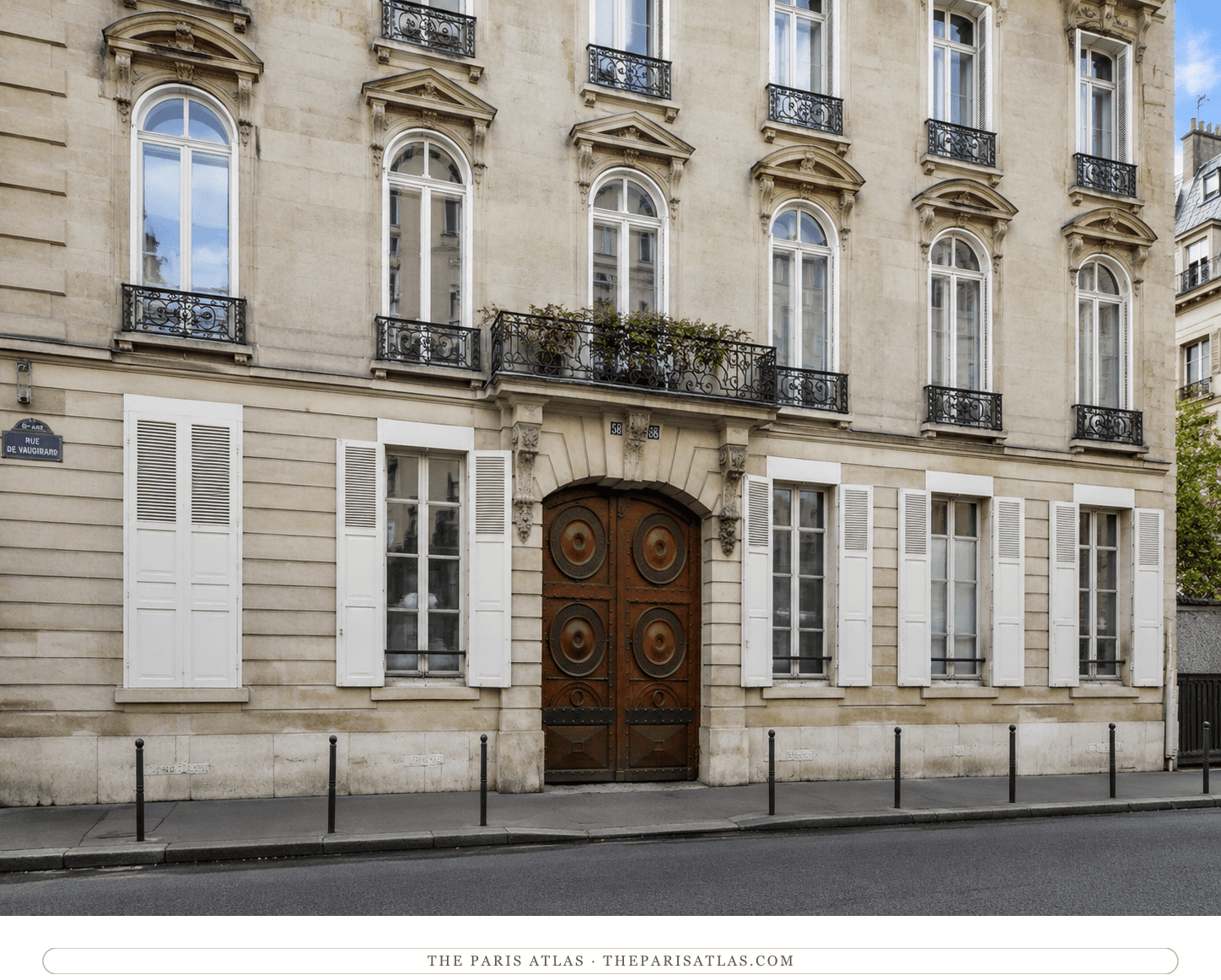
F. Scott and Zelda Fitzgerald's Left Bank apartment in the summer of 1928, facing the Luxembourg Gardens — the address of Zelda's ballet discipline and Scott's stalled novel.
Visit the place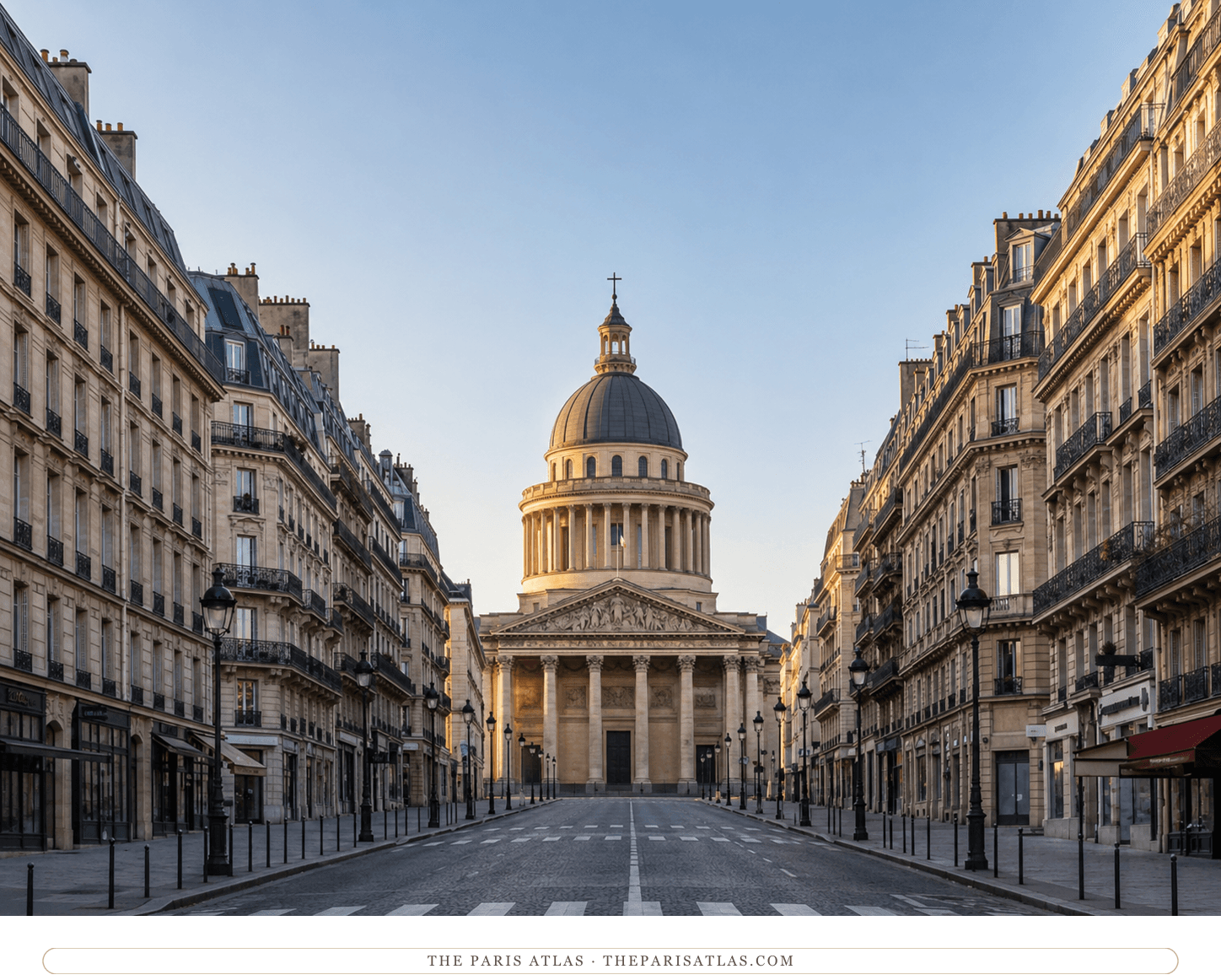
The street between the Luxembourg gardens and the Panthéon where the narrator of Ernest Hemingway's The Sun Also Rises stops for coffee and a brioche, on the one morning the novel shows him going to work. He never names the café.
Visit the place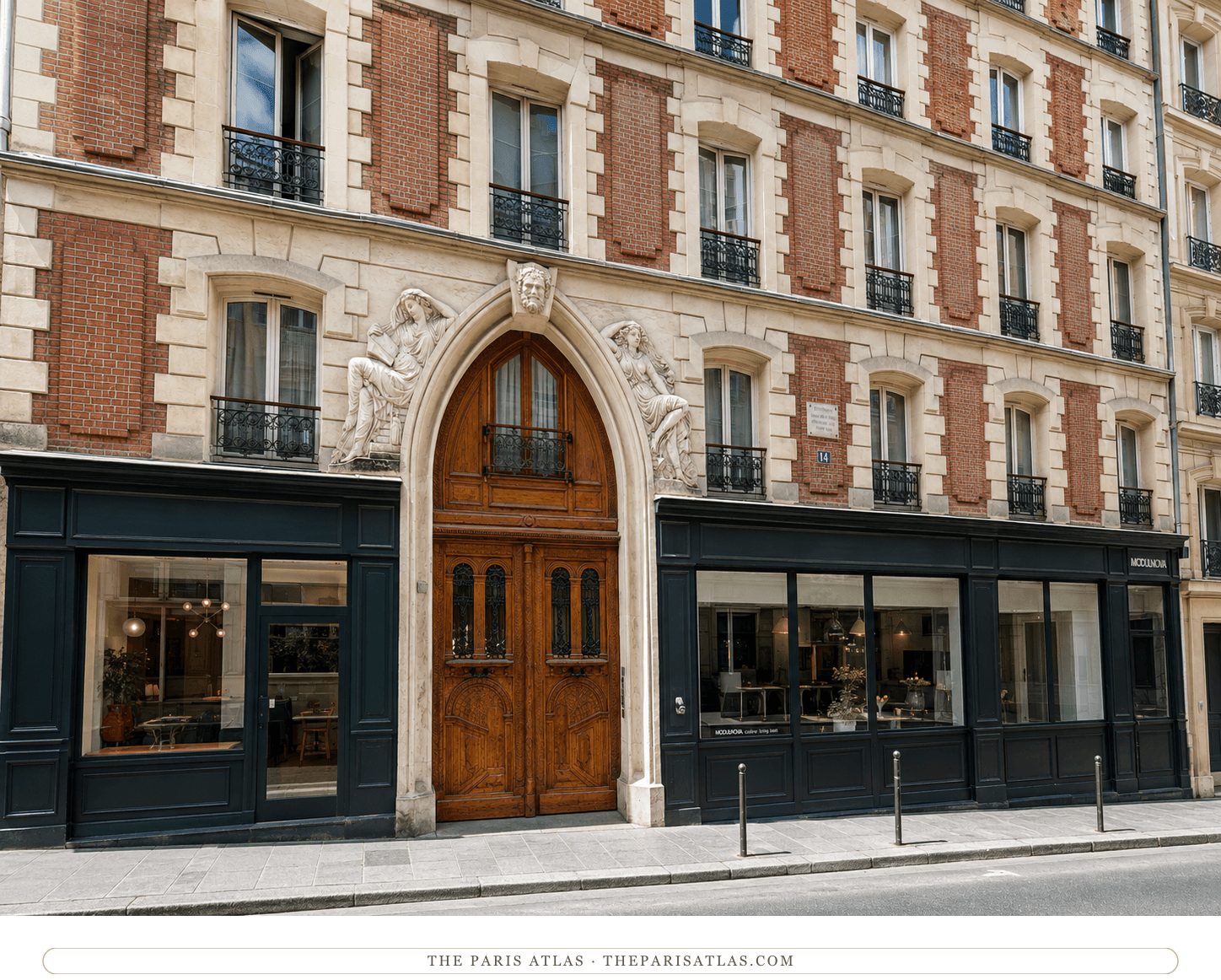
Richard Wright's Paris address for eleven years — the apartment where he wrote the books of his exile, marked since 1992 by a marble plaque.
Visit the placeThe sources below include histories, archival materials, scholarly research, and official records that informed this page. They document Jardin du Luxembourg, the people connected to it, and its place in Paris.

First-person evidence and historical context used in preparing the Jardin du Luxembourg page.
First-person evidence and historical context used in preparing the Jardin du Luxembourg page.
Primary text included as part of the documented record for Jardin du Luxembourg.
First-person evidence and historical context used in preparing the Jardin du Luxembourg page.
Web source consulted for documented facts and historical context presented on the Jardin du Luxembourg page.

Map data used to verify addresses, geographic coordinates, and the placement associated with Jardin du Luxembourg.
These references provide the documented foundation for this page's history and context. Claim-level citations remain attached to the specific claims they support.
 Explore more resources
Newsletter
The cafés, studios, and walk-up flats where the work was made — one story from the map in every letter.


