The place, briefly
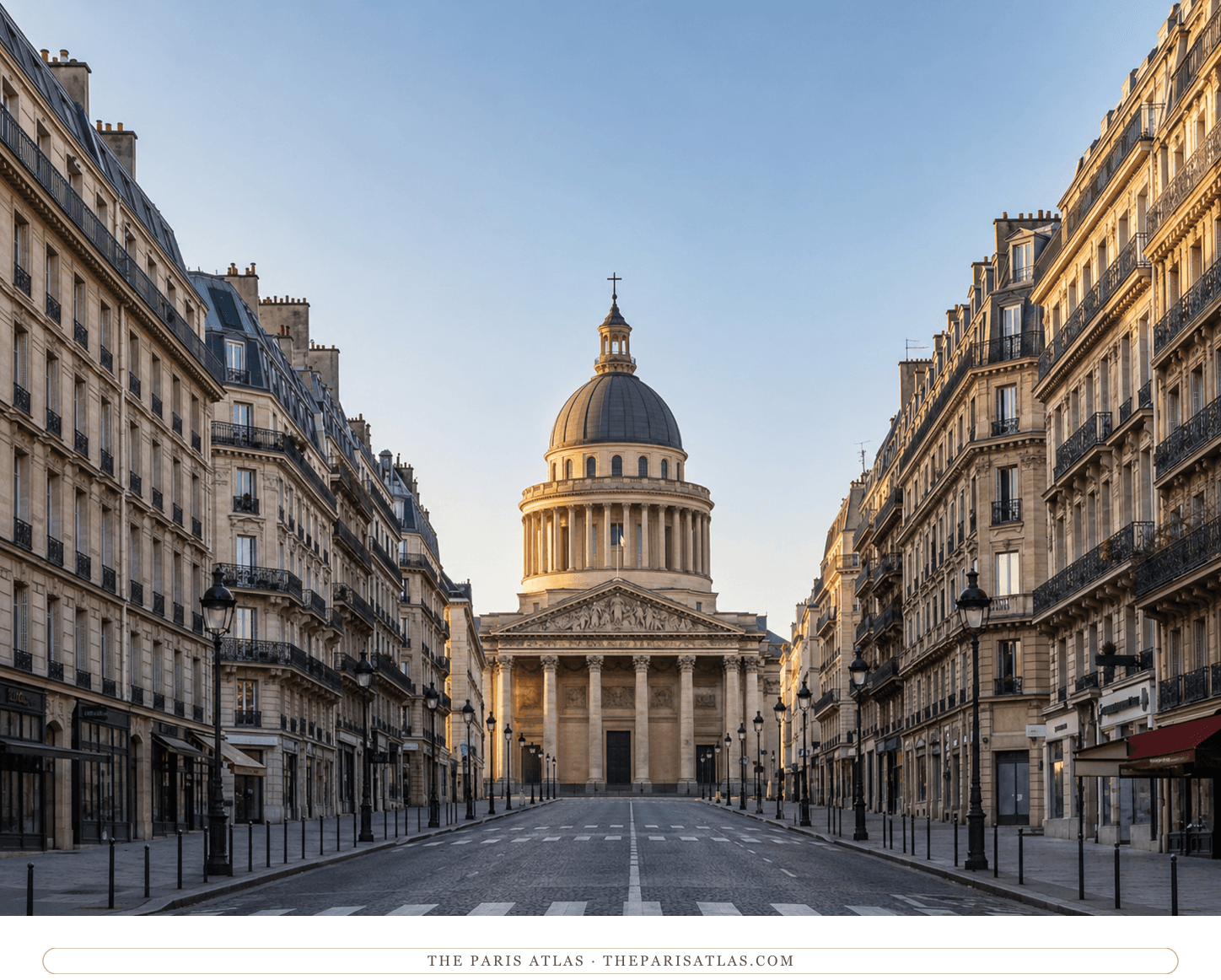
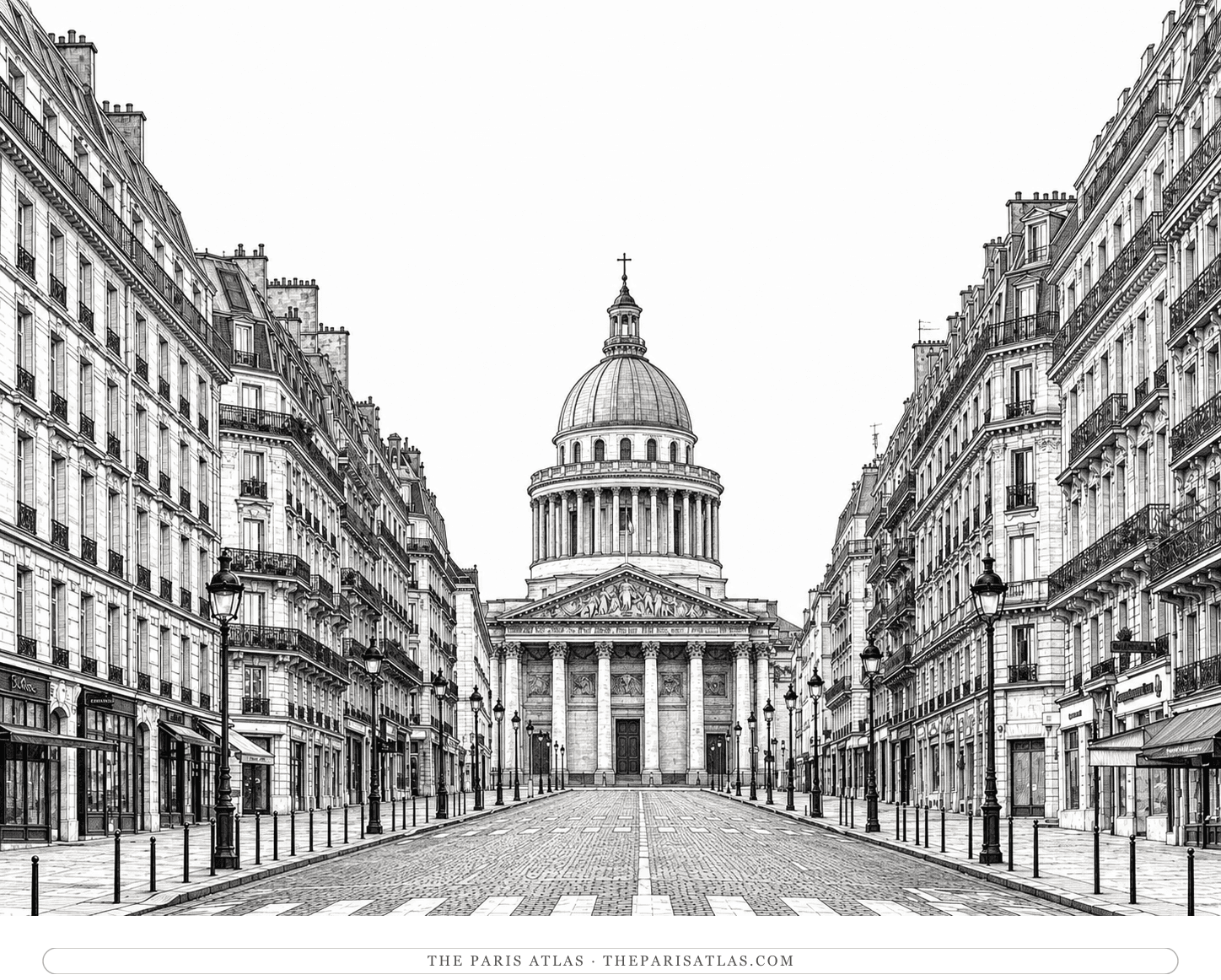
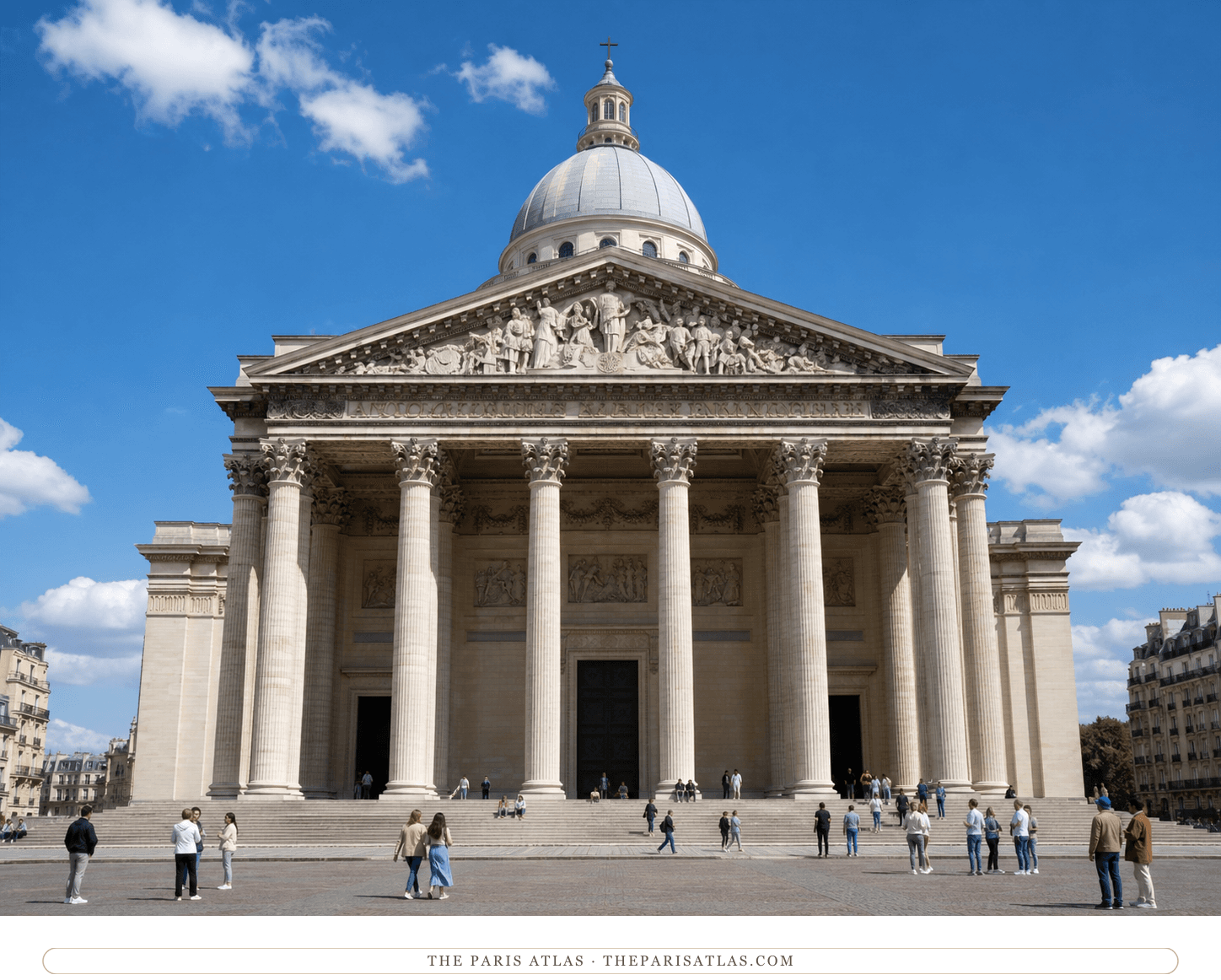
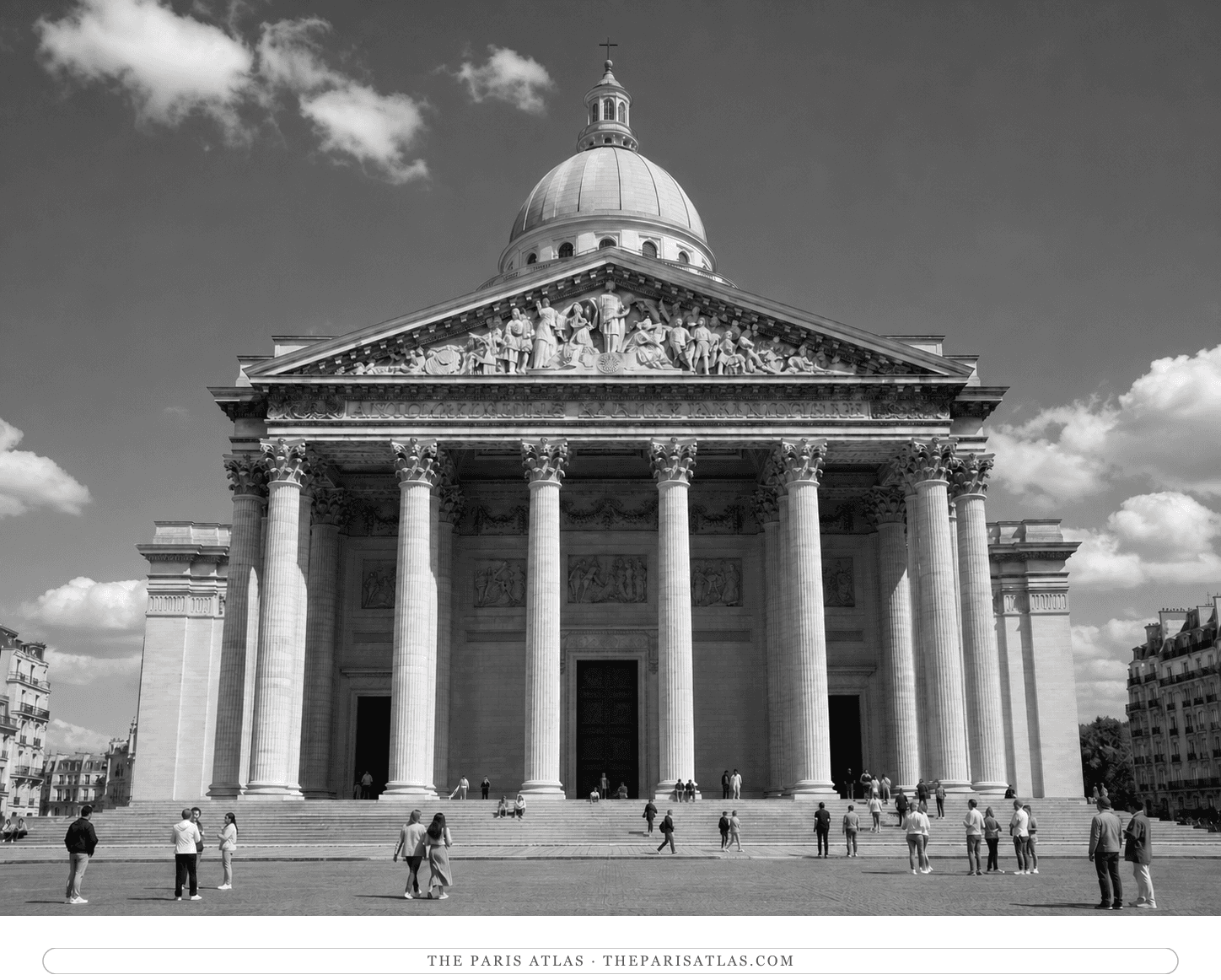
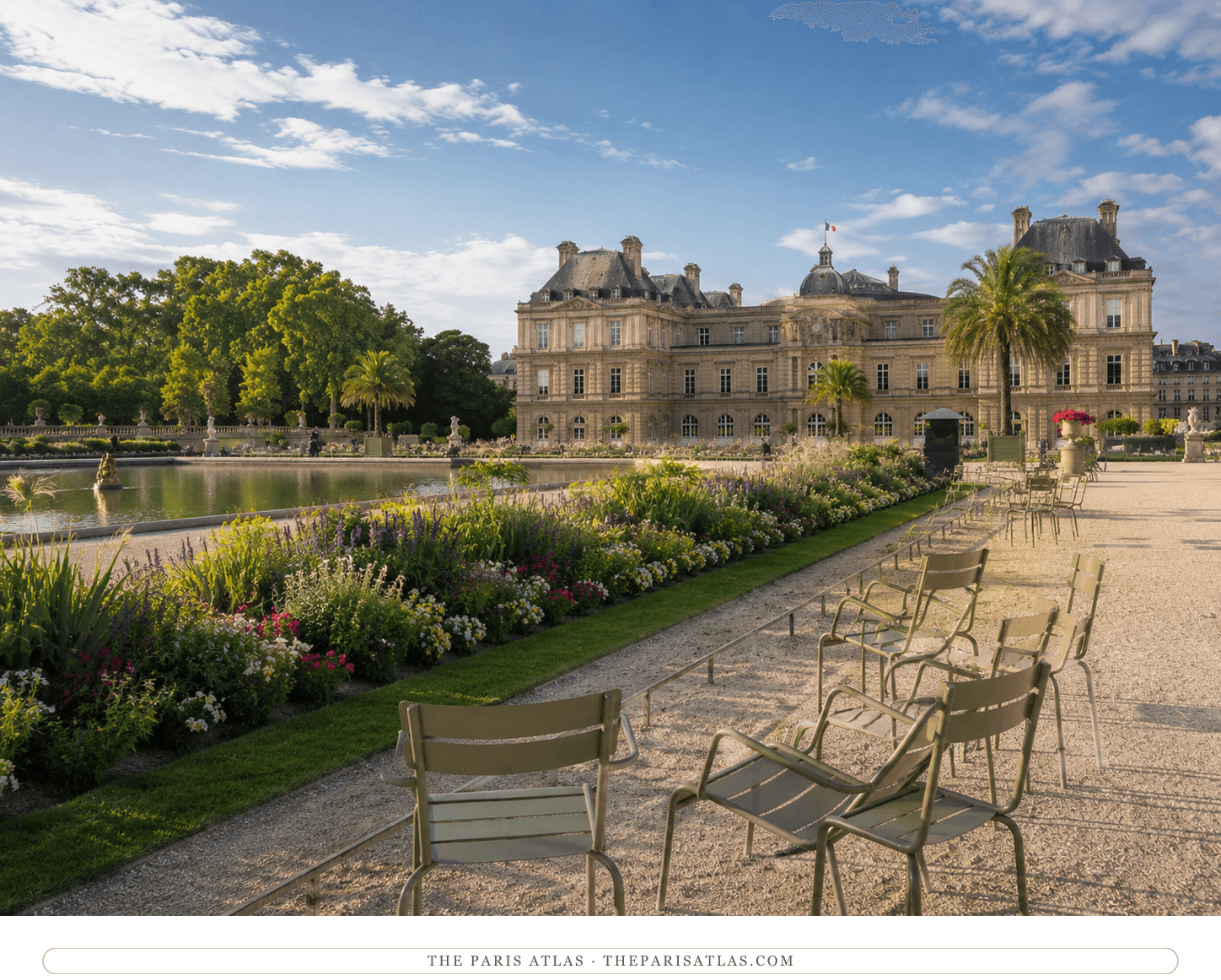
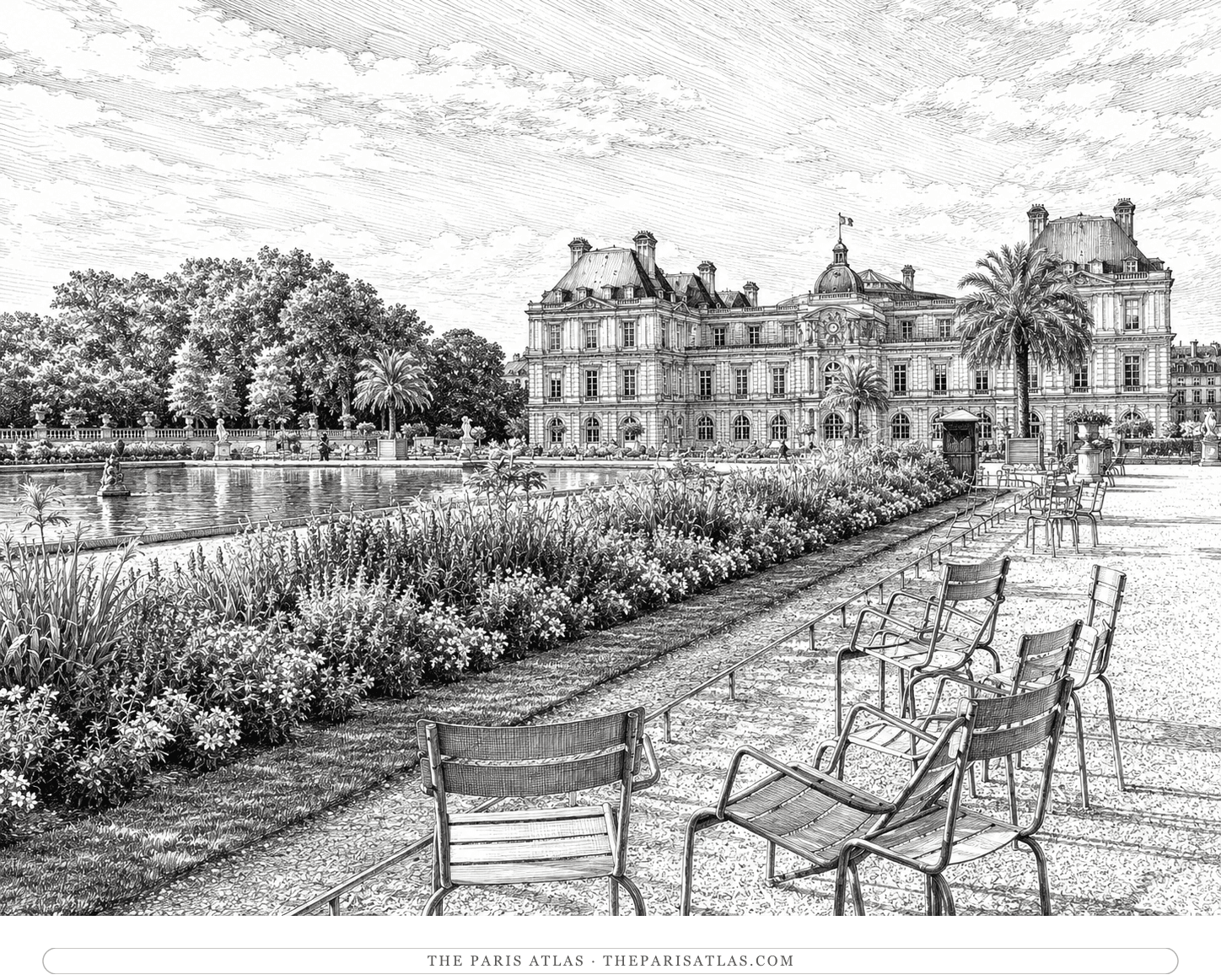
Rue Soufflot runs uphill from the Boulevard Saint-Michel to the Place du Panthéon, with the Jardin du Luxembourg at its lower end. It was laid out to give the Panthéon a clear approach, reached the rue Saint-Jacques around 1760, and was extended down to the boulevard in the second half of the nineteenth century. Since 1807 it has carried the name of Jacques-Germain Soufflot, who designed the building it points at.
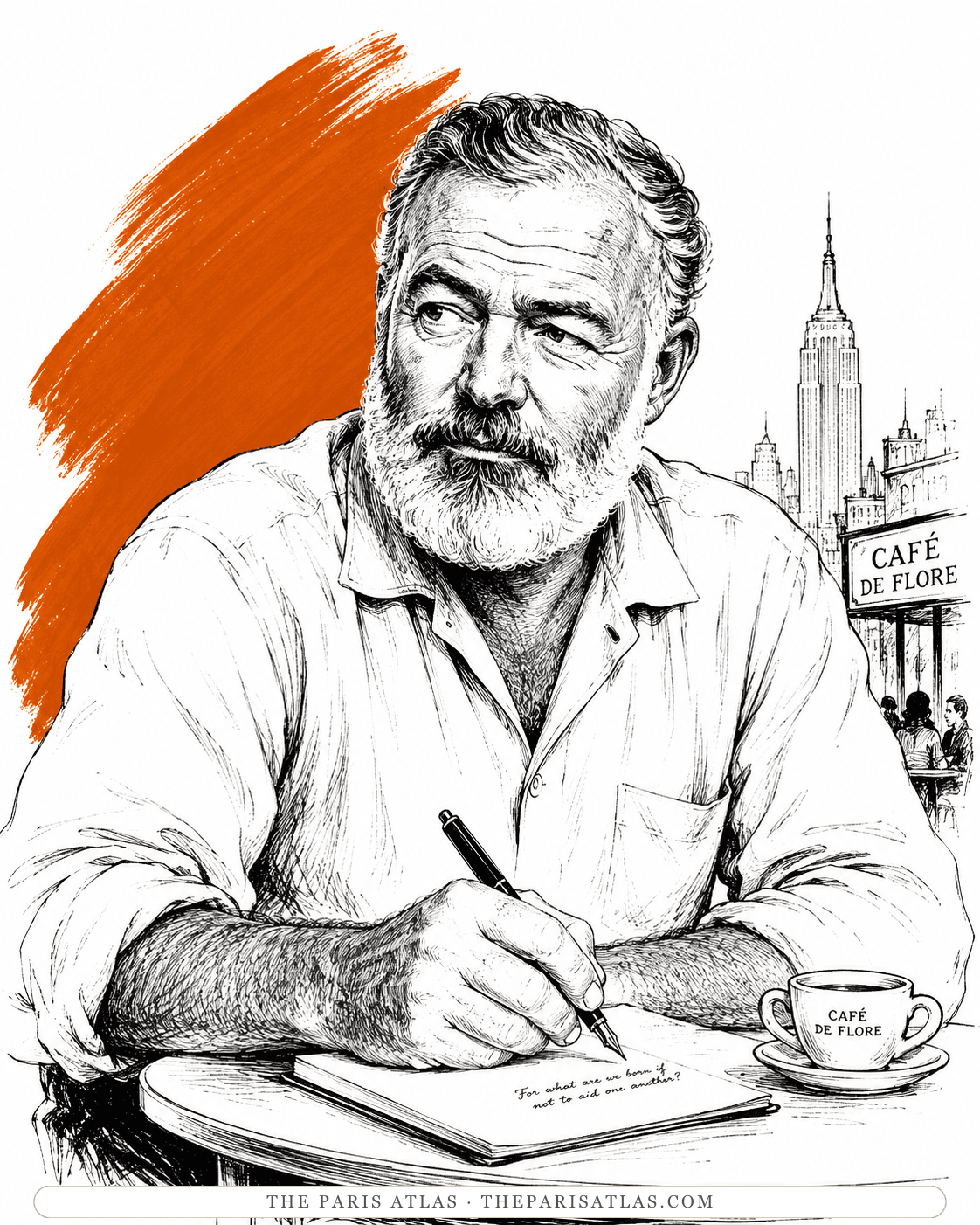
In chapter V of Ernest Hemingway's 1926 novel The Sun Also Rises, the narrator Jake Barnes walks down the boulevard to the rue Soufflot for coffee and a brioche. The horse-chestnuts in the Luxembourg gardens are in bloom. He reads the papers with the coffee and smokes a cigarette. The flower-women come up from the market to set out the day's stock, and students pass on their way up to the law school or down to the Sorbonne.
This is the only morning in the novel that shows him working. He finishes the coffee, takes an S bus down to the Madeleine, walks along the Boulevard des Capucines to the Opéra and up to his office, and puts in a good morning at the typewriter. Jake Barnes is a newspaperman. The book says so early and demonstrates it here.
Hemingway does not name the café. He gives the street, the order and the time of day, and nothing else. Cafés trade on the rue Soufflot now, some of them using the Soufflot name, but none has demonstrated a link to the one in the book.
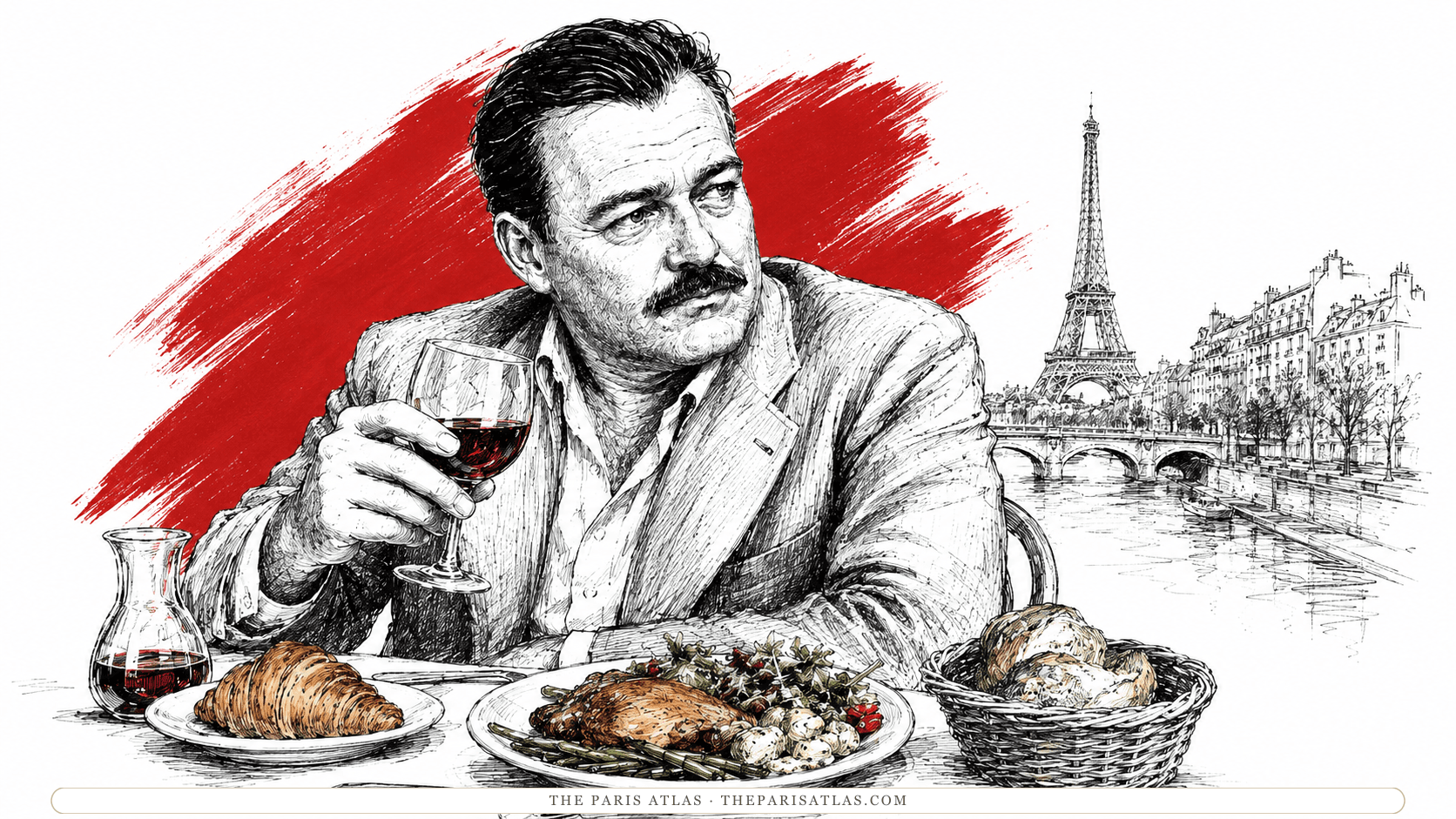
The order itself is coffee and one brioche. A brioche is an enriched yeast bread made with eggs and butter, closer to a soft loaf than to a croissant, and it should not be pictured as one. The novel does not say what shape the brioche took, and it does not say what kind of coffee he drank.






 View source