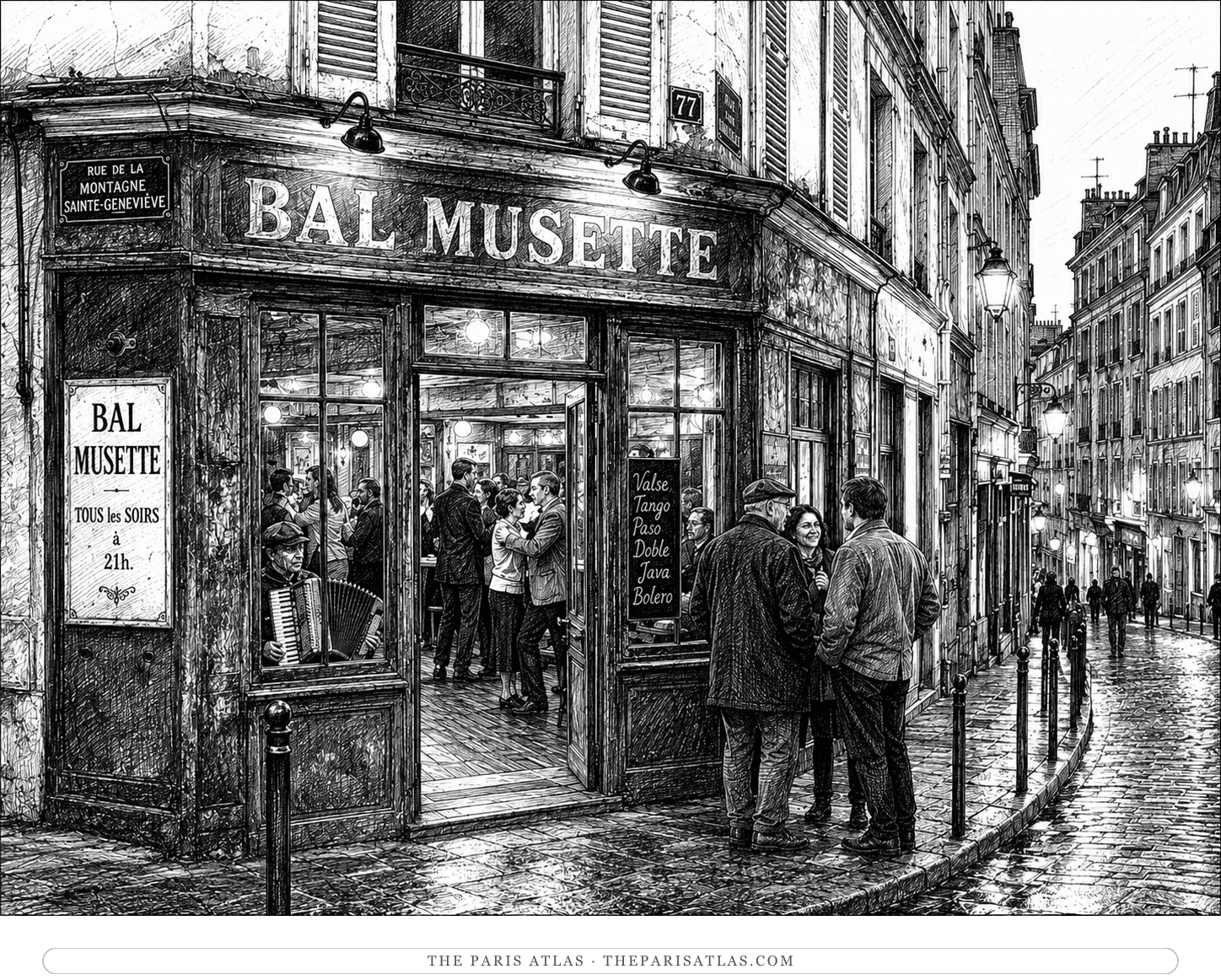

Setting of the story
The Sun Also Rises
A working-class accordion dance hall in the Latin Quarter — the neighborhood danced there most nights, and the expatriate crowd borrowed it on Mondays.
A working-class accordion dance hall in the Latin Quarter — the neighborhood danced there most nights, and the expatriate crowd borrowed it on Mondays.
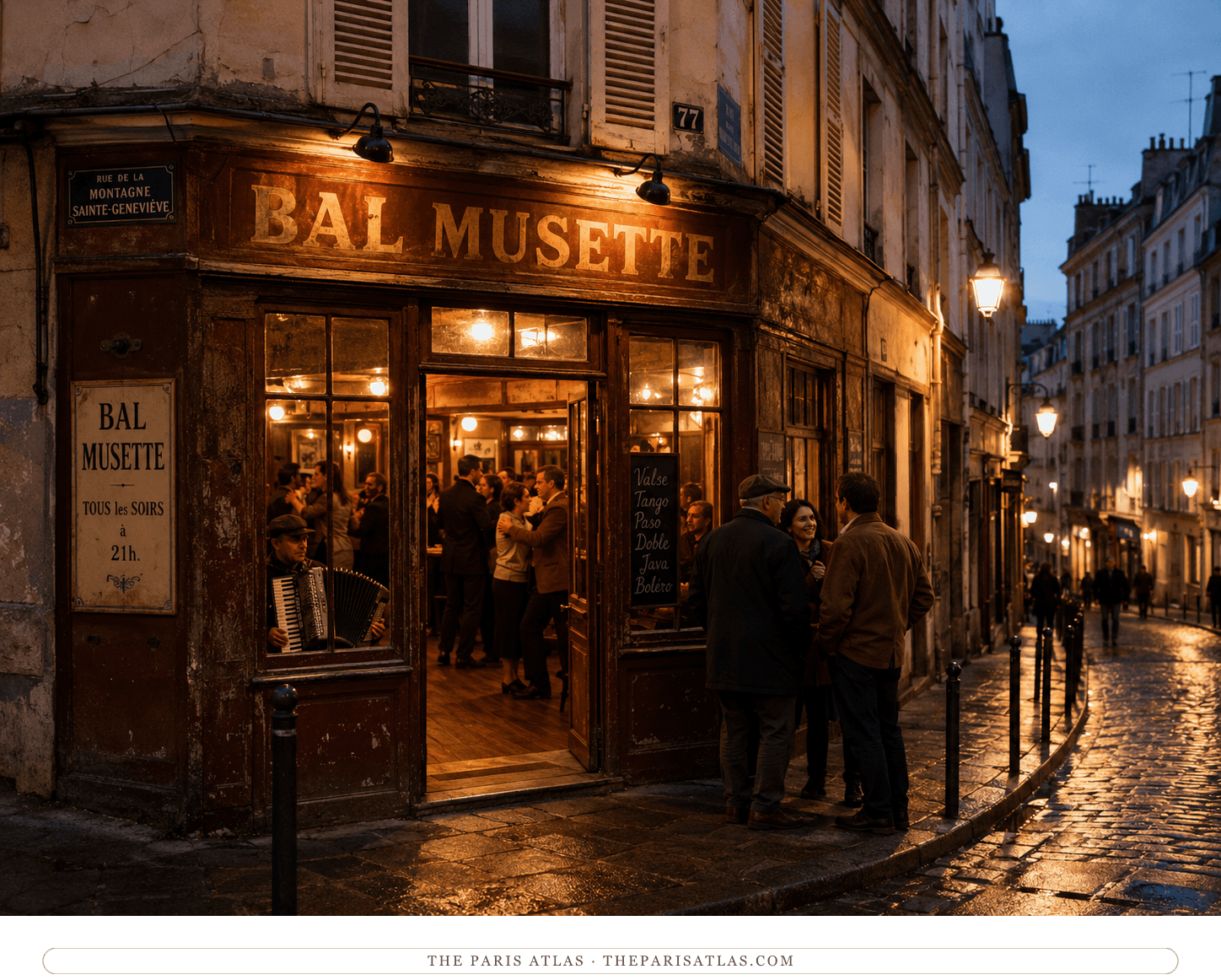
A bal musette was a working-class dance hall — an accordion, a small floor, waltzes and javas, drinks at zinc prices — and the slopes of the Montagne Sainte-Geneviève had them the way other quarters had bakeries. They were not attractions; they were where the neighborhood danced. The novel is exact about the arrangement: five nights a week the hall on the rue de la Montagne-Sainte-Geneviève belonged to the working people of the Panthéon quarter, and one night a week — Monday — it became 'the dancing-club,' borrowed by a smarter crowd.
Hemingway knew the institution from the inside. His first Paris flat, around the corner at 74 rue du Cardinal Lemoine, stood in a building that housed a bal musette on its lower floor, and the accordion came up through the boards. When he needed a room where his expatriates could collide with the real quarter — and where Lady Brett Ashley could make the entrance The Sun Also Rises is remembered for — he moved that world five minutes up the hill and let the two crowds share a floor for a night.
The bals musettes faded from the Latin Quarter by mid-century, migrating into memory along with the S bus and the horse-cabs. The street itself has kept its medieval pitch and its name, and the walk from the old Hemingway flat up to it takes the same five minutes it took in 1925.
The dancing-club was a bal musette in the Rue de la Montagne Sainte Geneviève. Five nights a week the working people of the Pantheon quarter danced there. One night a week it was the dancing-club.
So the parties were transferred to a Bal Musette behind the Pantheon. It was in a working-class district, and the habitual dancers were astonished at this strange apparition of artists and writers and hangers-on.
Bals musettes thrive across working-class Paris; the Latin Quarter slopes keep several.
Hemingway lives above one at 74 rue du Cardinal Lemoine, around the corner.
Hemingway sets the dancing-club of The Sun Also Rises on the rue de la Montagne-Sainte-Geneviève.
The accordion halls fade from the quarter.
No bal on the street; the walk up from the old flat is unchanged.
Setting of the story
A working-class accordion dance hall in the Latin Quarter — the neighborhood danced there most nights, and the expatriate crowd borrowed it on Mondays.

Depicted in its pages
Ford Madox Ford's parties, exiled from his studio to a bal musette behind the Panthéon — the workers astonished at the invasion of artists and writers.
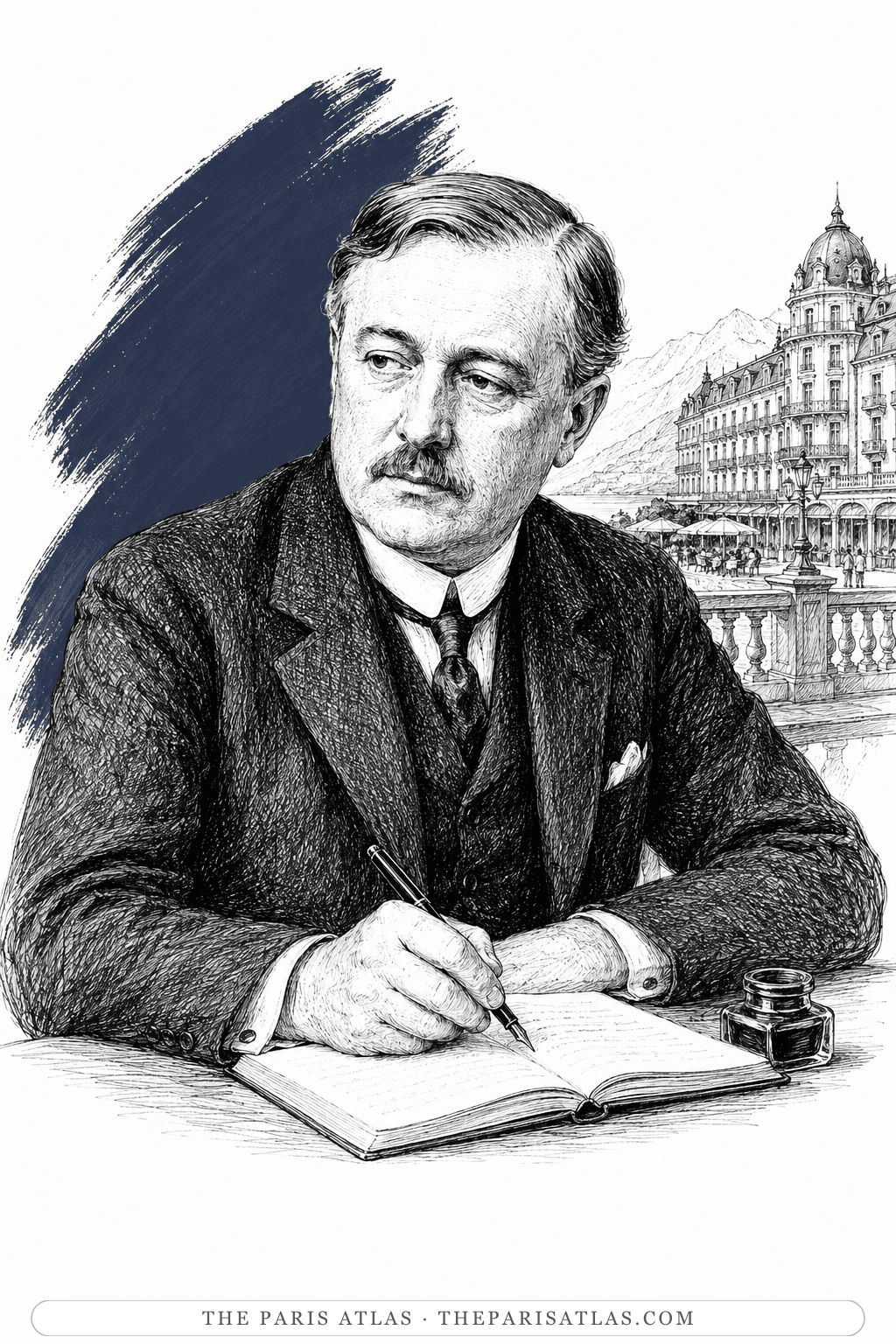
Hosted gatherings here · 1924–1925
Ford Madox Ford moves his weekly parties from his studio to a bal musette behind the Panthéon — writers and artists dancing among the quarter's regulars, per Huddleston's eyewitness account.
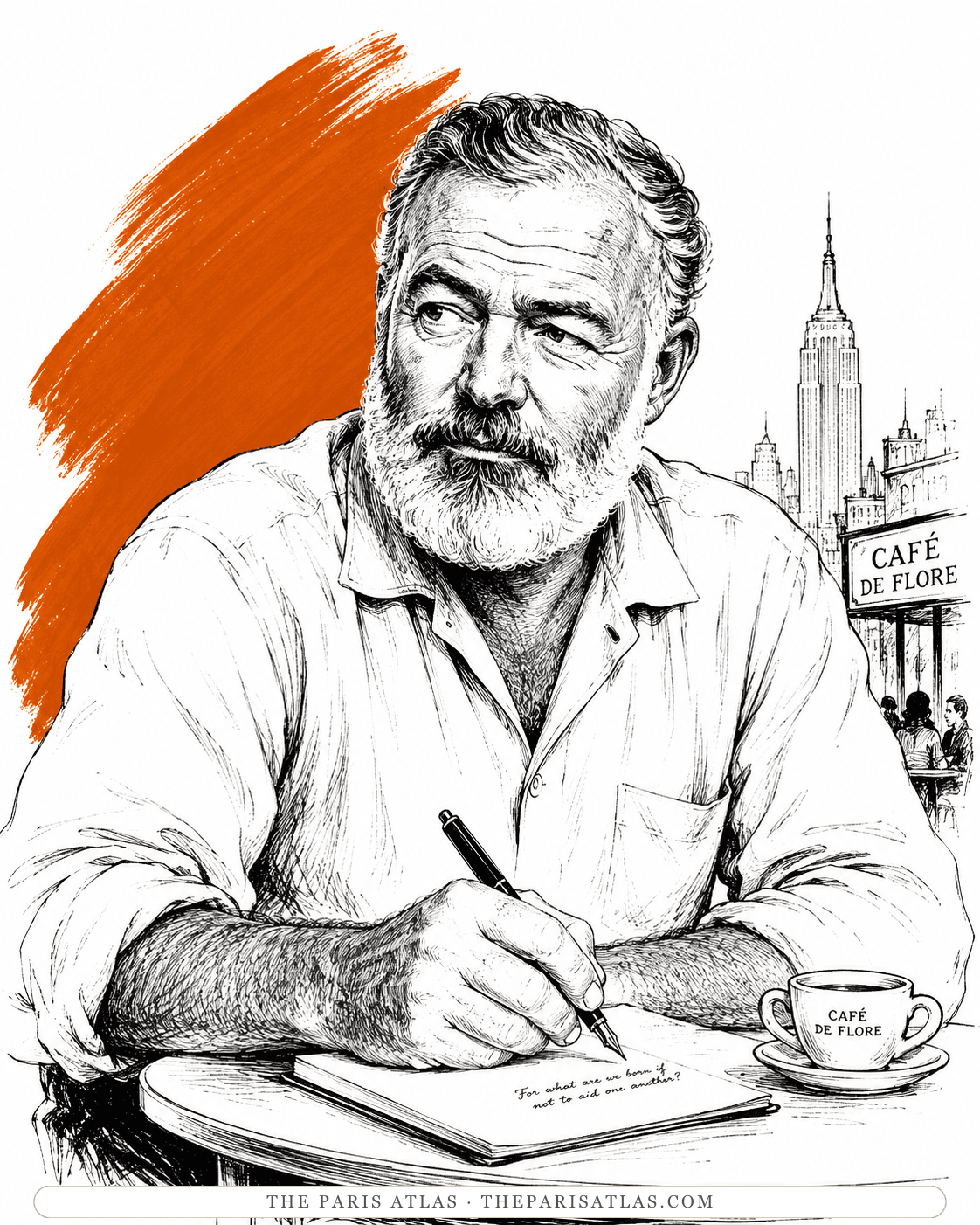
Ernest Hemingway wrote about Bal Musette in The Sun Also Rises.
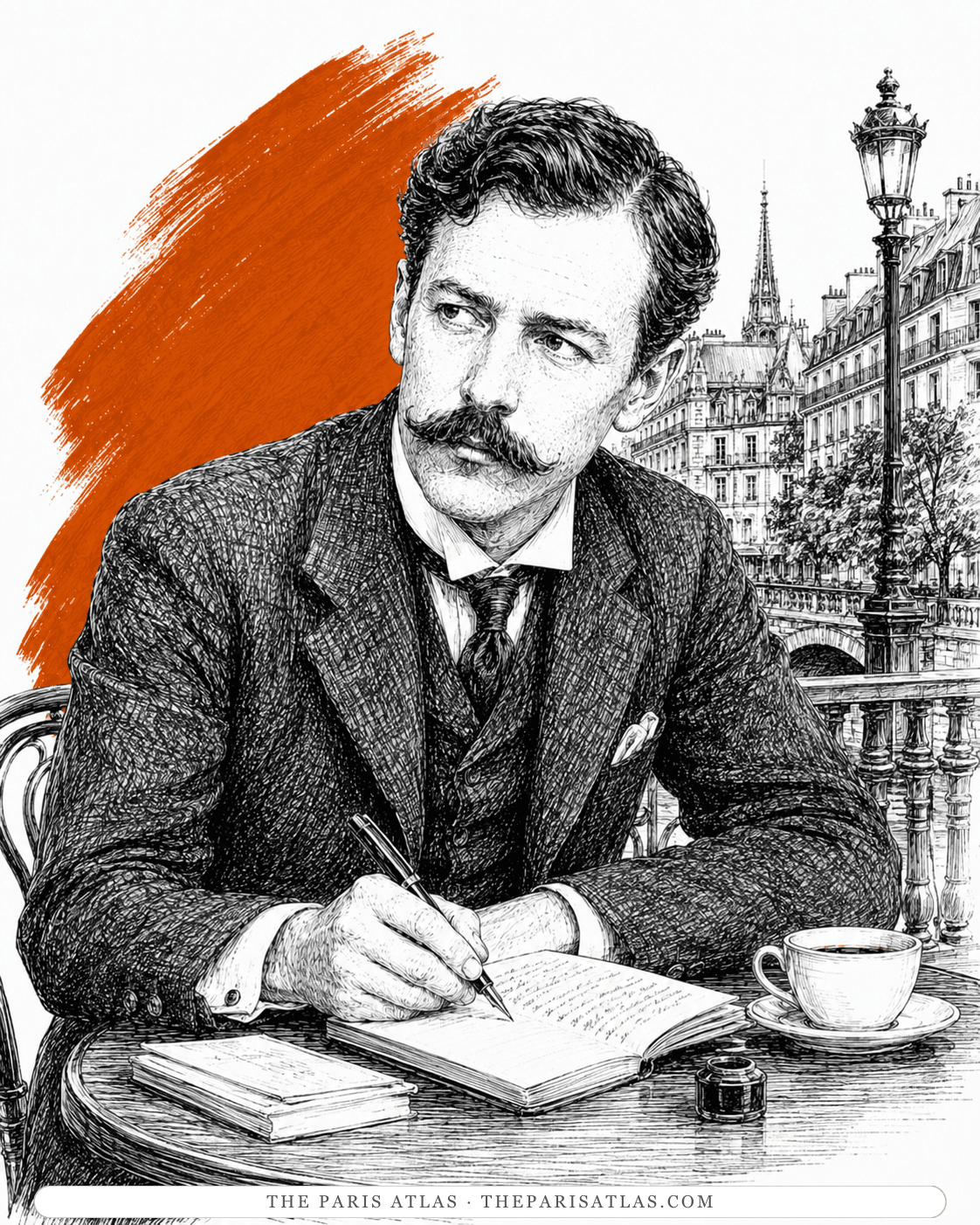
Sisley Huddleston wrote about Bal Musette in Paris Salons, Cafés, Studios.
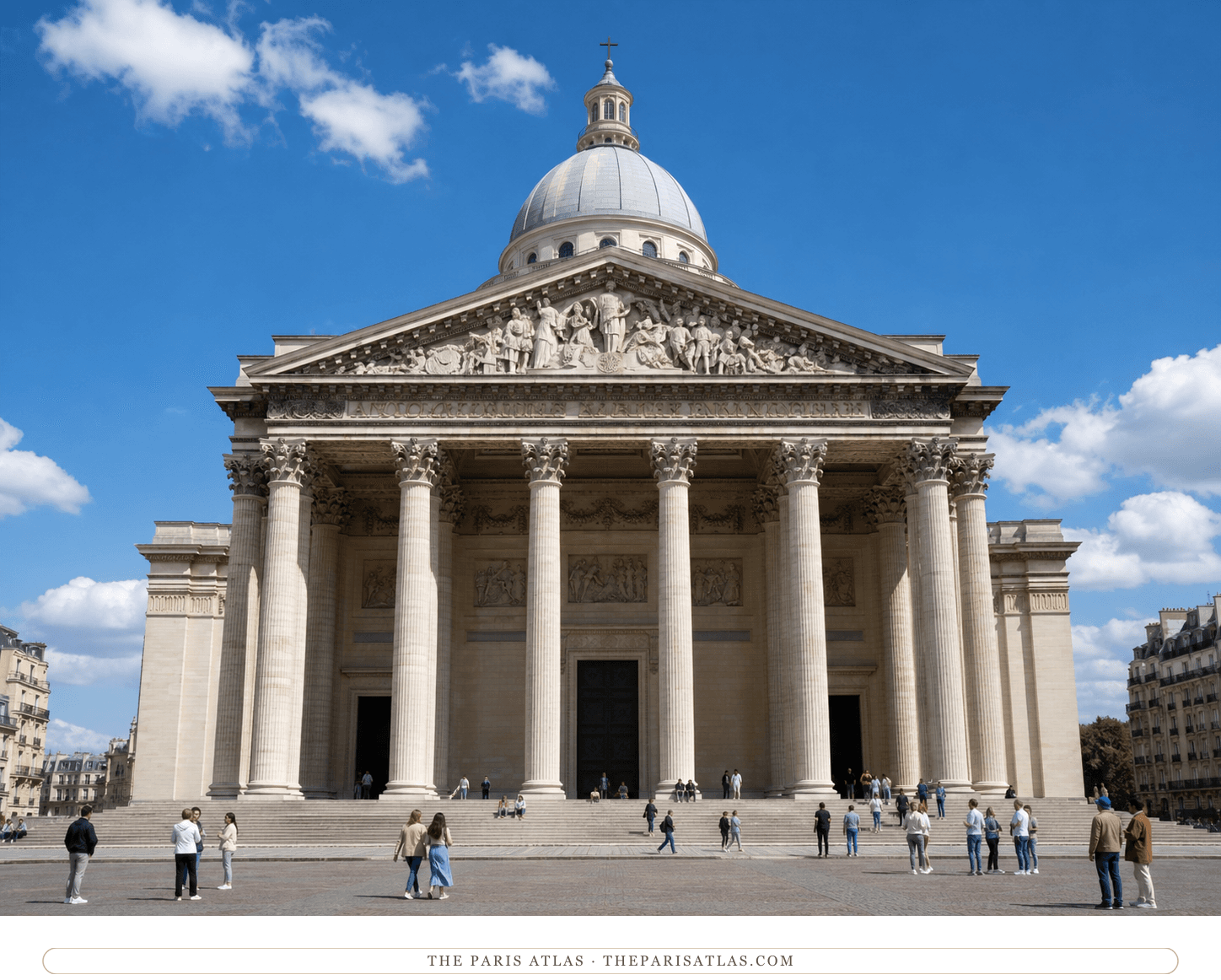
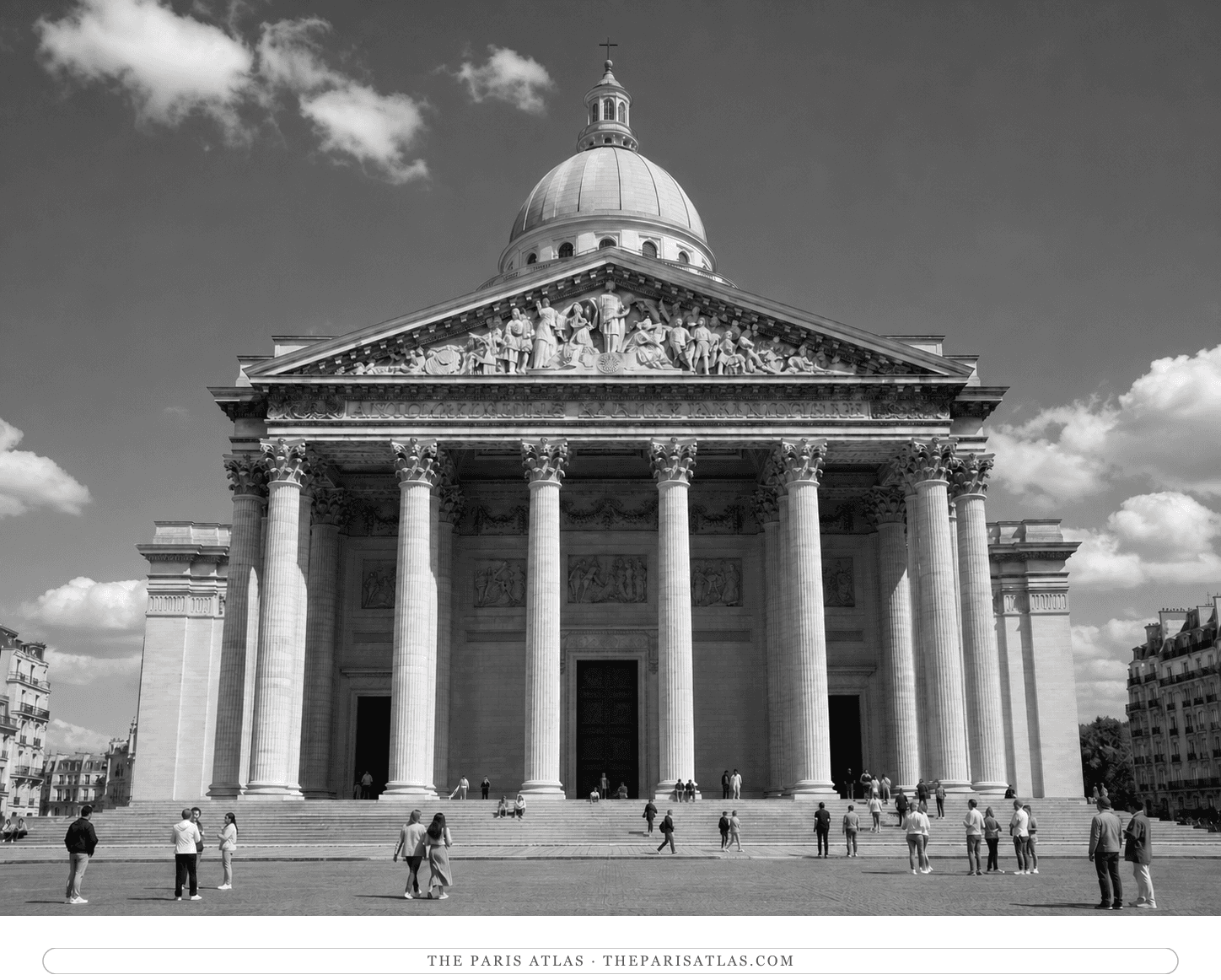
A domed neoclassical building at the top of the Latin Quarter, begun as a church to keep a king's promise and turned into a mausoleum for the nation's great by the Revolution. Voltaire arrived in 1791, Hugo's funeral settled its purpose in 1885, Alexandre Dumas came in 2002 and Josephine Baker in 2021. Open 10 a.m.–6.30 p.m. in summer; €13–€16.
Visit the place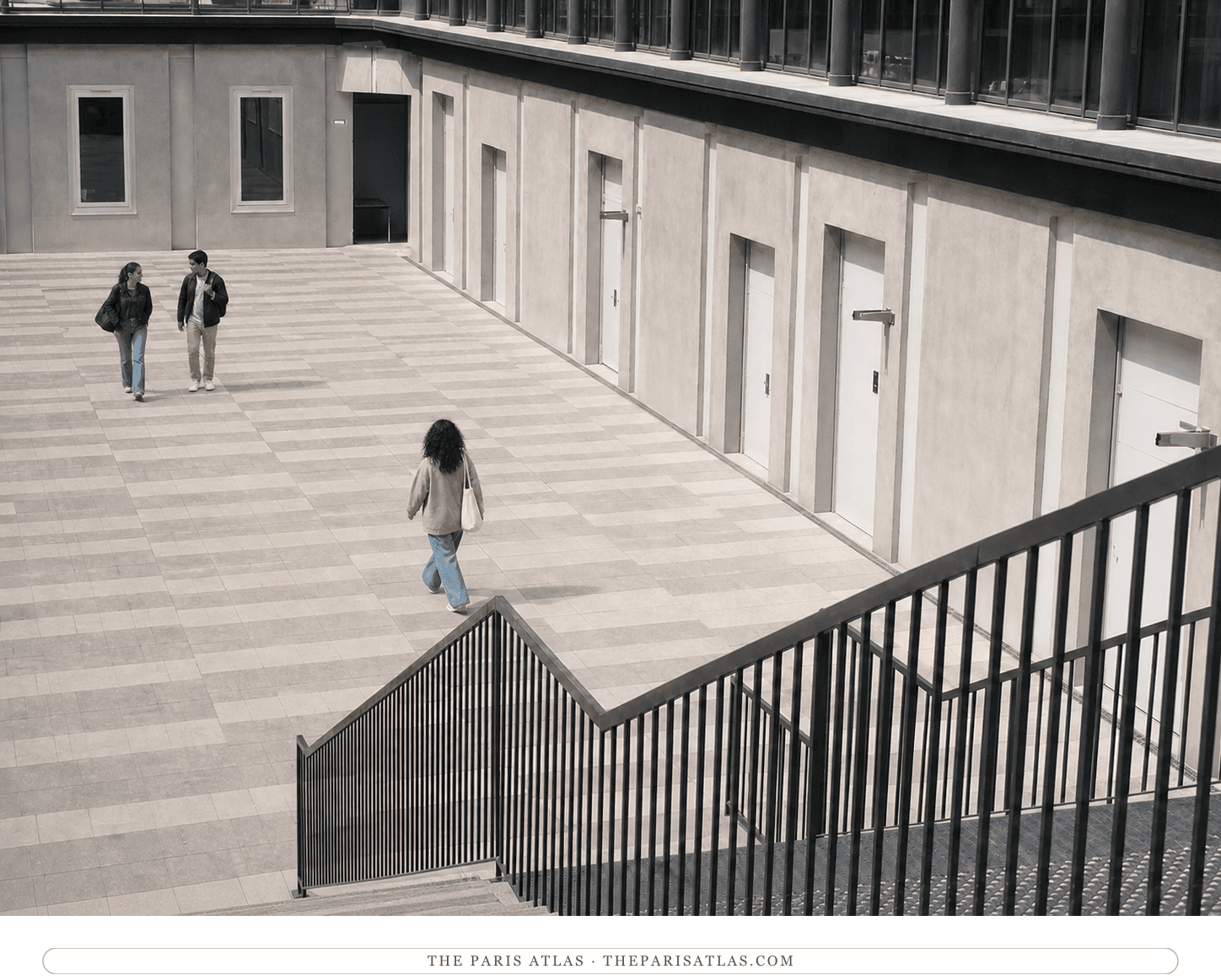
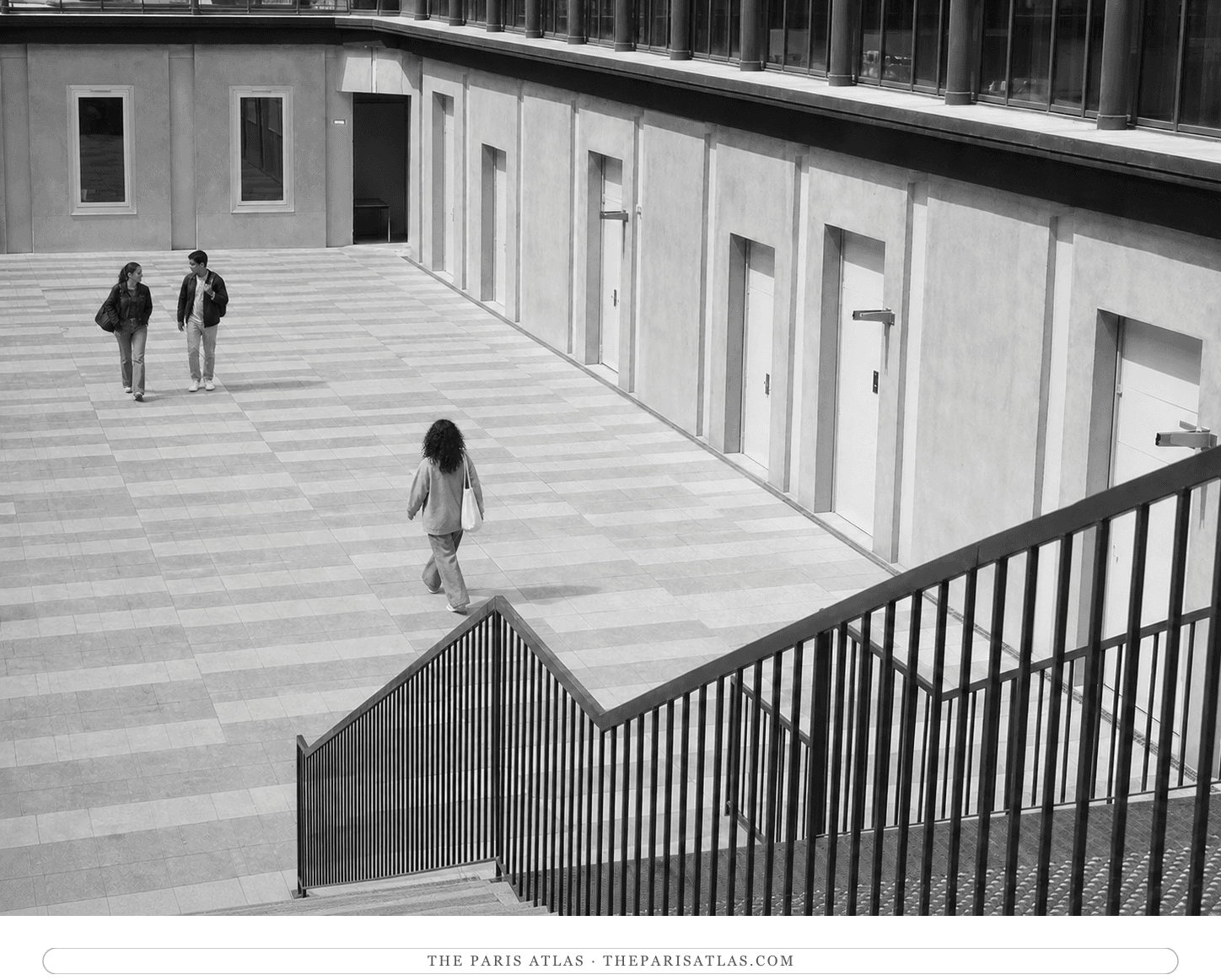
Paul Cézanne's Left Bank address in 1872 — the year his son Paul was born, and the year he went out to Pontoise to work beside Camille Pissarro, which changed his painting completely.
Visit the place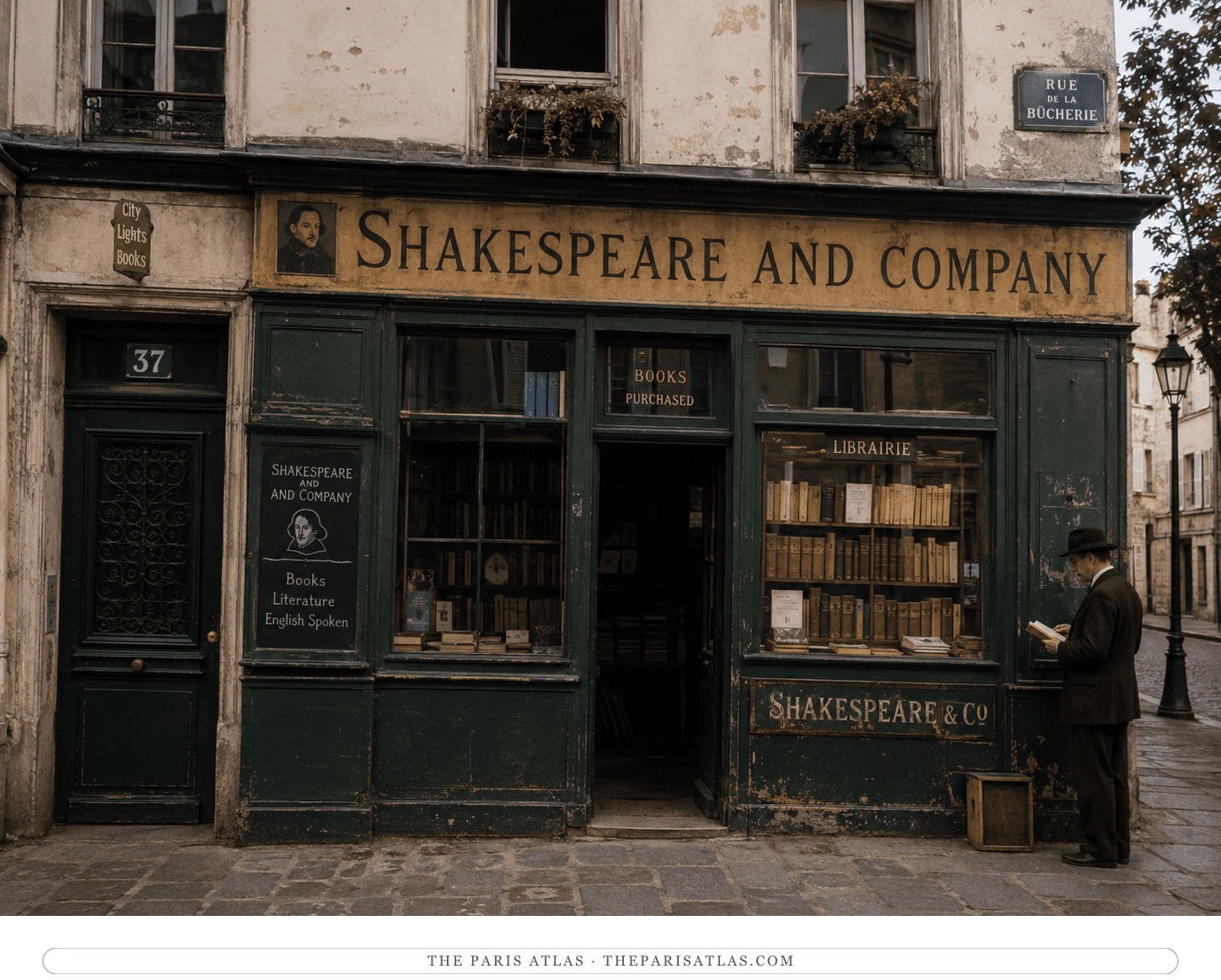
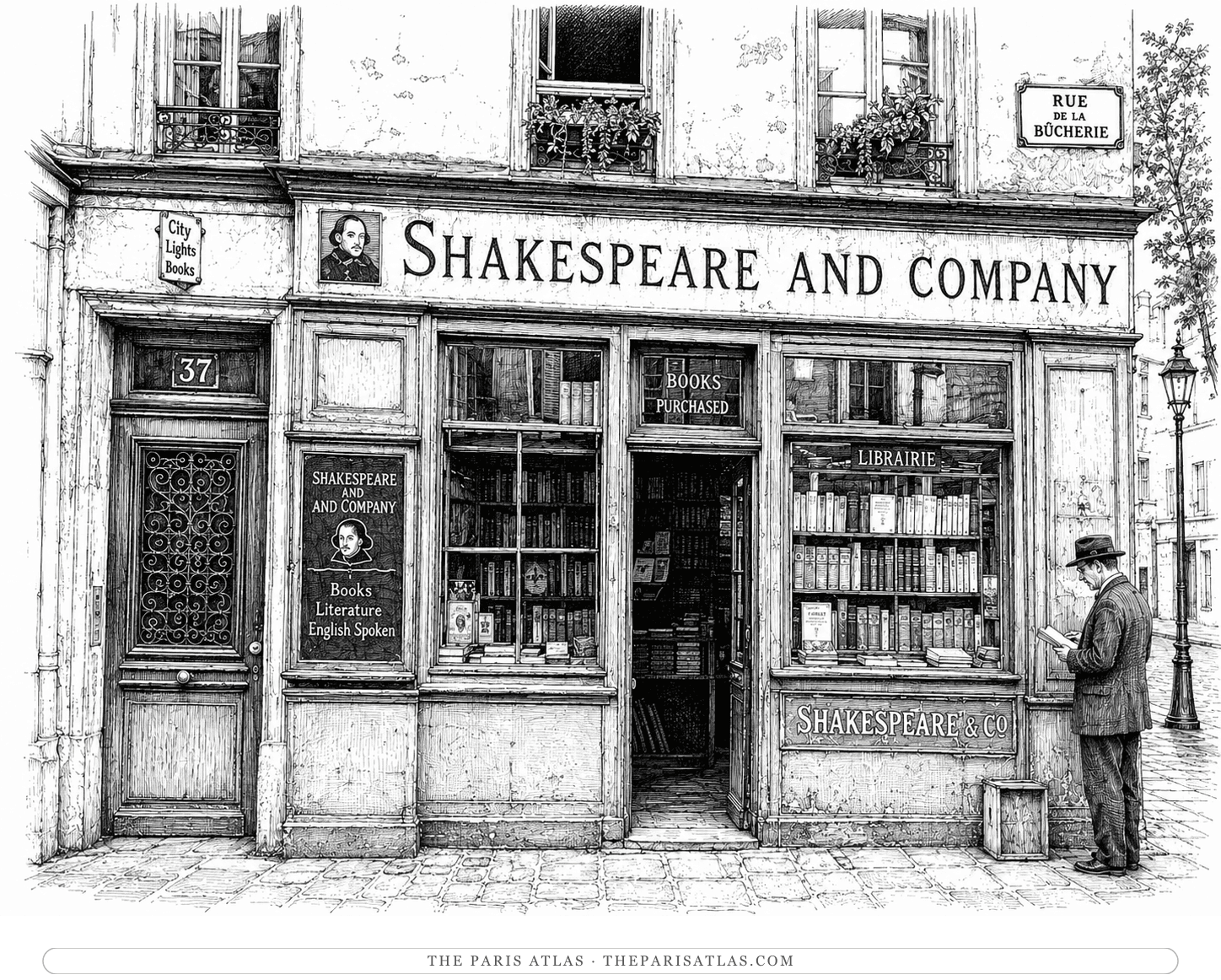
George Whitman's bookshop by the Seine — opened as Le Mistral in 1951, renamed Shakespeare and Company in 1964 with Sylvia Beach's blessing, and still sleeping writers among its shelves.
Visit the place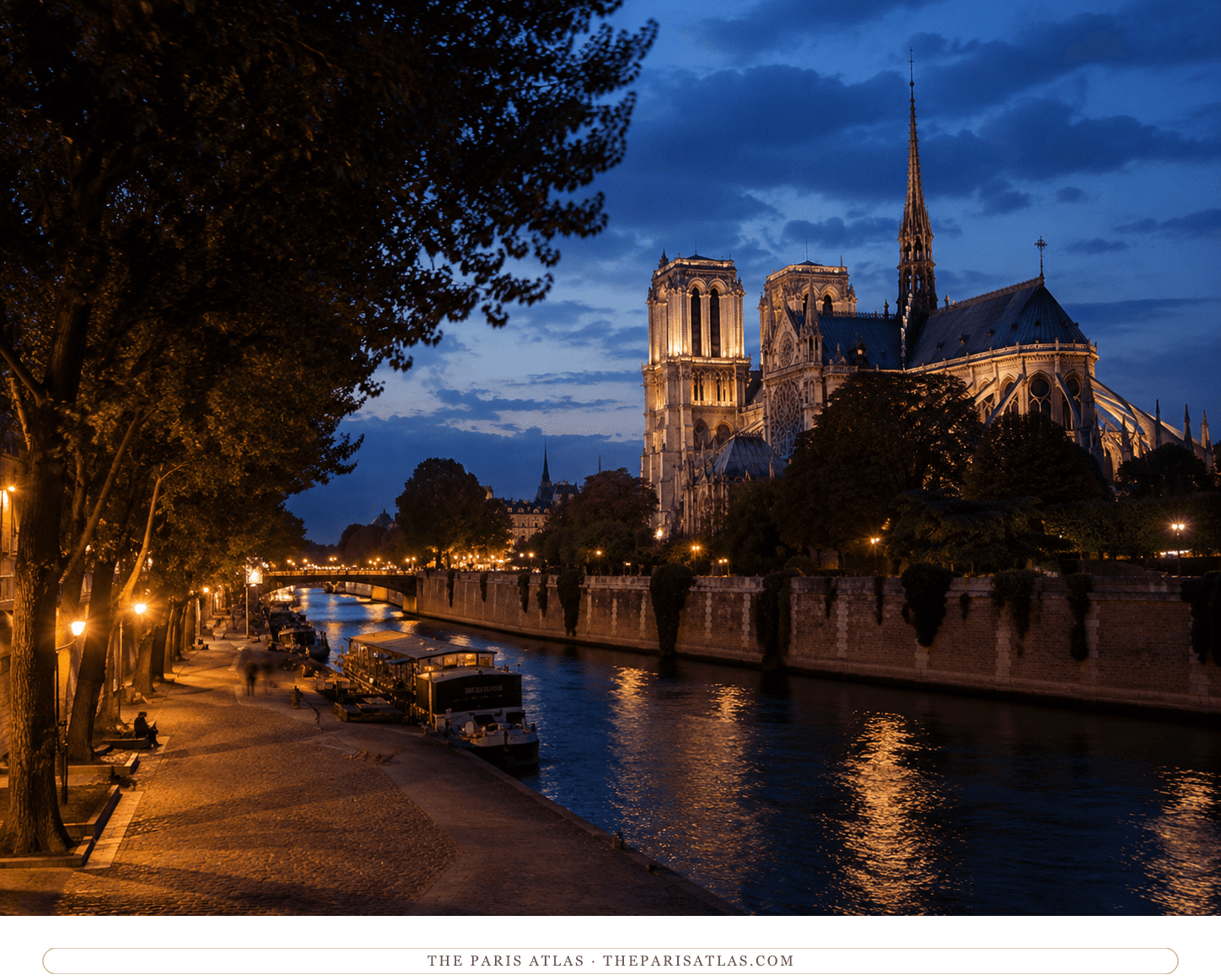
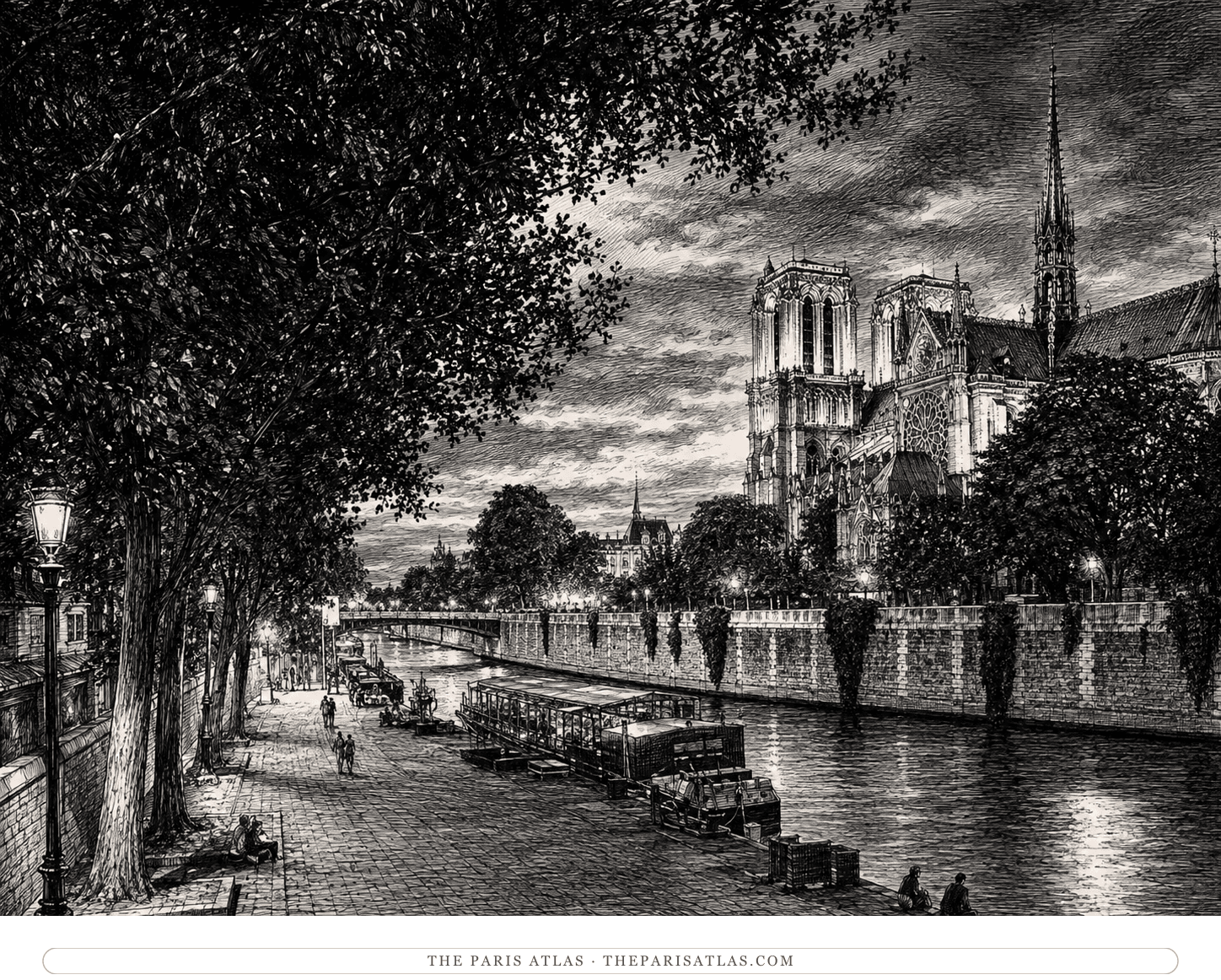
The cathedral seen at night from the wooden footbridge off the Quai de Béthune — the still point of the finest walk in Ernest Hemingway's The Sun Also Rises, answered a decade later from the same river in Henry Miller's Tropic of Cancer.
Visit the placeThe sources below include histories, archival materials, scholarly research, and official records that informed this page. They document Bal Musette, the people connected to it, and its place in Paris.

Primary text included as part of the documented record for Bal Musette.
First-person evidence and historical context used in preparing the Bal Musette page.
First-person evidence and historical context used in preparing the Bal Musette page.

Map data used to verify addresses, geographic coordinates, and the placement associated with Bal Musette.
These references provide the documented foundation for this page's history and context. Claim-level citations remain attached to the specific claims they support.
 Explore more resources
Newsletter
The cafés, studios, and walk-up flats where the work was made — one story from the map in every letter.