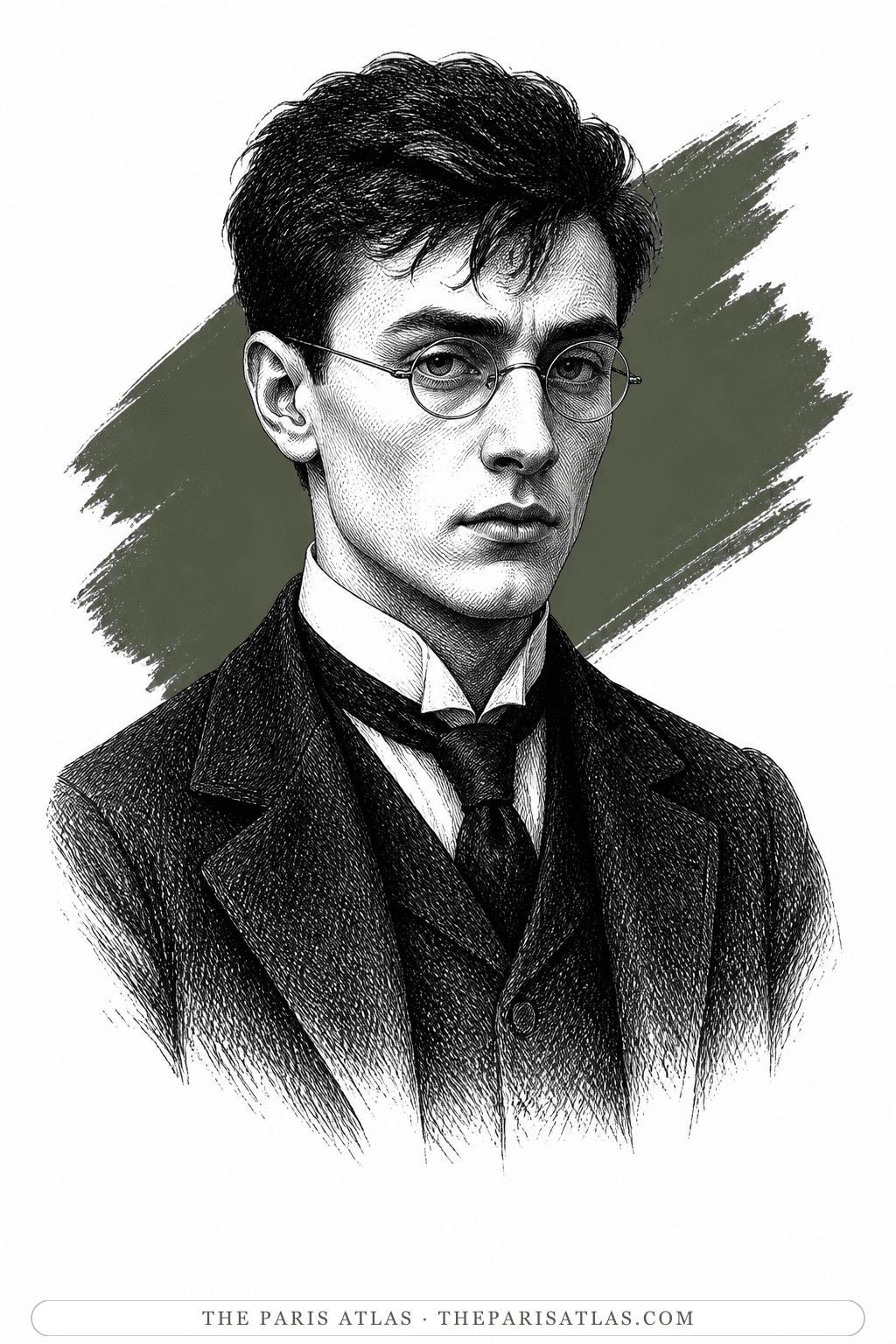
Stephen Dedalus
A 22-year-old schoolteacher who means to be a writer and has not written anything. He is also the central figure of Joyce's earlier novel, A Portrait of the Artist as a Young Man.
To get out from under the things that own him. Asked by the Englishman in the tower whether he is not his own master, he answers: "—I am a servant of two masters, Stephen said, an English and an Italian." He means the British state and the Roman Catholic church. He adds that there is a third which wants him for odd jobs, and does not say what it is.
The book

At a glance
- 22 years old; teaches part-time at a private boys' school run by a Mr Garrett Deasy
- A Portrait of the Artist as a Young Man (1916), Joyce's previous novel, where he is the central figure
- Simon Dedalus, his father, a drinker with a good singing voice; his mother May, dead within the year; sisters left at home with almost nothing
- Three pounds twelve, counted out of a headmaster's savings box in sovereigns, crowns and shillings
- An ashplant walking stick, and the key to the tower until he gives it away
- The opening three chapters, the newspaper office, the National Library, a maternity hospital, and the brothel quarter after midnight
- James Joyce — the author as a young man · 1882–1941 · Rathgar, Dublin
Who they are in the book
Spoiler-freeStephen Dedalus is the second man Ulysses follows through 16 June 1904, and the one readers of James Joyce meet first: he is the boy, and then the young man, of Joyce's previous novel A Portrait of the Artist as a Young Man, published in 1916, which ends with him leaving Ireland to become a writer. Ulysses opens with him back in Dublin at 22, teaching part-time at a private boys' school and still not having written anything.
His mother died within the past year. At her deathbed she asked him to kneel and pray, and he refused. He is still in the cheap black mourning suit, still being reminded of the refusal by people who mean it kindly and people who don't, and still dreaming about her. He is living in a rented stone tower on the coast at Sandycove with a medical student named Buck Mulligan and an Englishman named Haines, and by breakfast he has decided not to go back there.
What he does with the day: teaches a history lesson, collects his pay, walks alone on the beach at Sandymount, delivers a letter to two newspaper offices as a favour to his employer, argues a long theory about Shakespeare's Hamlet at the National Library, drinks with medical students, and ends up in the brothel quarter with almost none of the money left. He and Bloom cross paths repeatedly during the day without either of them making anything of it.
How Stephen Dedalus Is Portrayed
- What he is calledBuck Mulligan, who shares the tower with him, calls him Kinch — "the knife-blade," Mulligan explains, and he is pleased with it. He also calls him dogsbody, the bard, and the jejune jesuit. Stephen answers to all of it and keeps count.
- The suitCheap dusty mourning: a shiny black coat with a fraying cuff, secondhand trousers, and a hat Mulligan calls his Latin quarter hat. Offered a good grey pair of trousers, he says he cannot wear them if they are grey. It is the only thing he says out loud about his mother's death all morning.
- His mother's deathbedThe book returns to it without warning, and always in physical detail: the bowl of white china beside the bed holding the green bile she brought up, her breath smelling of wetted ashes, everyone in the room on their knees but him. She comes to him in dreams afterwards. What he thinks at her is "Ghoul! Chewer of corpses!"
- The way he talksCompressed, bitter, and quotable, which is part of his trouble — the Englishman in the tower starts writing his sayings down. Asked what Irish art is, he says: "—It is a symbol of Irish art. The cracked lookingglass of a servant." Asked by his employer whether history is not moving toward God, he says: "—History, Stephen said, is a nightmare from which I am trying to awake."
- The debtsHis employer boasts of never having borrowed a shilling, and Stephen silently runs his own account: "Mulligan, nine pounds, three pairs of socks, one pair brogues, ties." Then Curran, ten guineas; McCann, one guinea; Fred Ryan, two shillings; Temple, two lunches; Russell, one guinea; and five weeks' board owed to a landlady.
- The theory he does not believeAt the National Library he argues for the better part of an hour that Shakespeare wrote himself into Hamlet as the murdered father rather than the son, and that the play is about a marriage that went wrong in Stratford. The librarians are impressed. Asked straight out whether he believes it, he says: "—No, Stephen said promptly."
- What his employer says to him at the gateMr Deasy, the headmaster who has just paid him, runs after him with a last joke: Ireland is the only country that never persecuted the Jews, and does he know why? "—Because she never let them in, Mr Deasy said solemnly." He goes off up the path laughing at his own joke, and Stephen says nothing. Two chapters later the reader meets Leopold Bloom.
- Nowhere to sleepHe hands over the tower key to Mulligan on the beach that morning, along with twopence for a pint, and walks away thinking one word: "Usurper." His father's house is not an option either. The whole of his day happens with the question unresolved: "I will not sleep here tonight. Home also I cannot go."
Stephen is Joyce with the facts only lightly rearranged. Joyce's mother, May, died in August 1903 after he refused to kneel and pray at her bedside; he taught school for a few months in 1904, borrowed money constantly, and left Dublin that October with Nora Barnacle. He had been giving his fictional self the name Dedalus since Stephen Hero, the autobiographical novel he began in 1904 and abandoned. The difference between the two men is the eighteen years in between, which Joyce spent turning the young man who could not write into this book.
If you like Ulysses


If you like James Joyce
Explore authors with a similar voice, perspective, and influence.
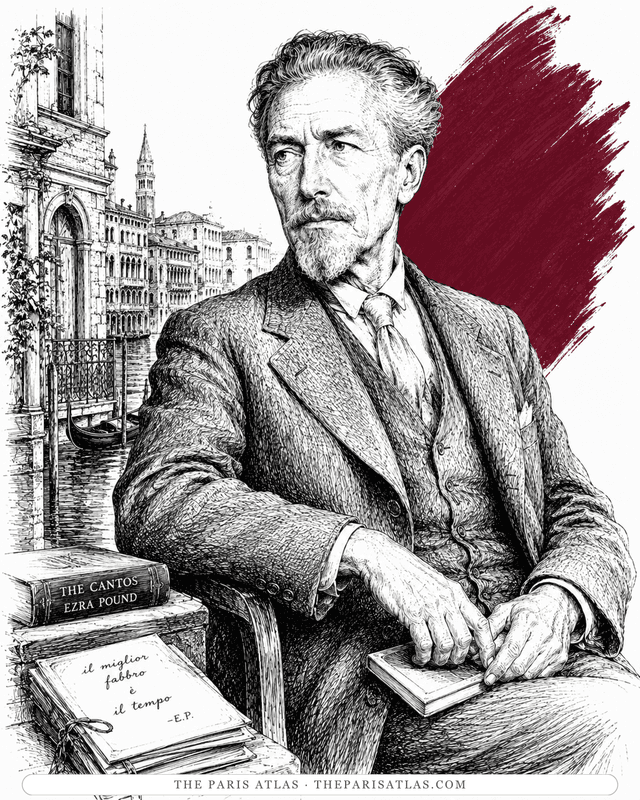
Ezra Pound
The impresario who dragged Joyce's early books into print, brought him to Paris, and championed Ulysses until the world caught up.
View author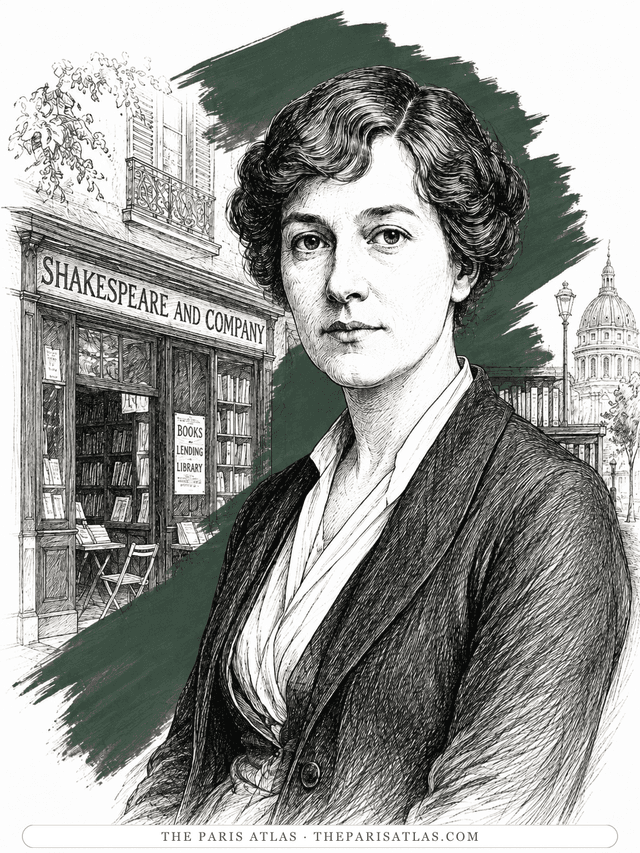
Sylvia Beach
His publisher of last resort and first devotion — the bookseller who printed Ulysses when no one else would.
View author
Louis-Ferdinand Céline
The doctor of the Paris slums who wrote the century's blackest, funniest novel — and changed the sound of French prose.
View author