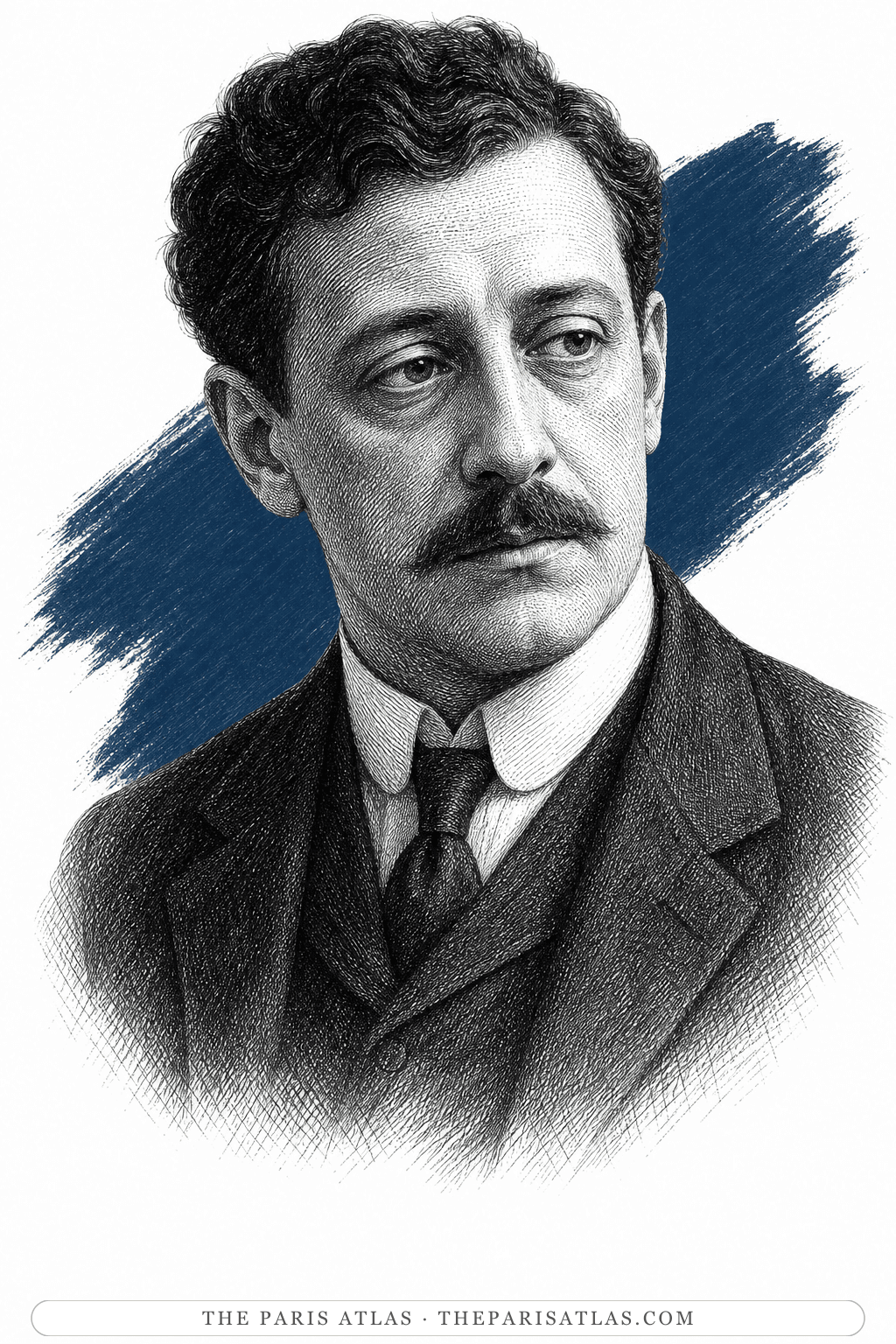
Leopold Bloom
The man Ulysses follows through 16 June 1904 — a Dublin advertising salesman of 38 who cooks a kidney for breakfast, goes to a funeral, and ends the night walking a drunk stranger home.
To be counted as one of them. Asked in a pub what his nation is, he gives the plainest possible answer: "—Ireland, says Bloom. I was born here. Ireland." Pushed further a few minutes later, he says that force and hatred are no life for men and women, and names the opposite: "—Love, says Bloom. I mean the opposite of hatred."
The book

At a glance
- Advertising canvasser for the Freeman's Journal, 38 years old
- 7 Eccles Street, Dublin, with his wife Molly
- Milly, their daughter, 15 and away working in Mullingar; Rudy, their son, who died at eleven days old
- Rudolph Bloom, born Rudolf Virag in Szombathely, Hungary, who changed the family name by deed poll
- A potato in his trouser pocket, a cake of lemon soap bought for fourpence, and a folded prospectus for a Palestine planting company
- Printed in full in the novel, from the threepenny kidney and the penny newspaper to five shillings for a dead man's widow, and balanced at sixteen and six in hand
- Most of the novel, and every street in it between Sandymount and Glasnevin
Who they are in the book
Spoiler-freeLeopold Bloom is the central figure of Ulysses, the 1922 novel by the Irish writer James Joyce. He is 38 years old, lives at 7 Eccles Street in Dublin with his wife Molly, and sells advertising space for a newspaper, the Freeman's Journal. The book follows him through one ordinary Thursday and records nearly all of it: what he buys, what he eats, who he nods to in the street, and what runs through his head while he does it.
The day's business is small. He buys a pork kidney at the butcher's for threepence and fries it while the kettle boils, takes his wife her tea in bed, collects a letter at a post office under a false name, attends the funeral of an acquaintance at Glasnevin cemetery, and spends the afternoon trying to sell a renewed advertisement to a tea and spirit merchant named Alexander Keyes. He has a gorgonzola sandwich and a glass of burgundy for lunch. He is insulted at length in a pub. Late in the evening he follows a drunk young man he barely knows into the brothel quarter, mainly to see that nothing happens to him.
Two things sit under all of it. The first is that at four o'clock his wife will receive a man named Blazes Boylan at their house, and Bloom knows it, and arranges his day around not being there. The second is that Dublin treats him as an outsider. His father came from Hungary and changed the family name from Virag to Bloom; Bloom himself was baptised into Christian churches three times and eats pork for breakfast, and none of that makes any difference to how the men in the pubs talk about him.
How Leopold Bloom Is Portrayed
- The first sentence about him"Mr Leopold Bloom ate with relish the inner organs of beasts and fowls." Joyce introduces him through his appetite, and then through what he does with it: he walks round the corner for a pork kidney, fries it in butter, and burns one side of it while explaining a word to his wife upstairs.
- What the job actually involvesHe is selling a renewal, not writing copy. The advertisement he chases all day is for Alexander Keyes, tea, wine and spirit merchant, and Bloom's idea is to set two crossed keys above the name — a visual pun on the Manx parliament, the House of Keys, which he thinks will catch the eye of tourists. The newspaper wants three months' custom before it will print the design.
- How his thoughts are printedJoyce prints Bloom's thoughts as they run: half-finished, off on tangents, mixing arithmetic with sympathy. Watching the cat drink he wonders whether clipping a cat's whiskers stops it hunting. Standing at a graveside he works out what a corpse does to the soil. Joyce credited the method to a French novel he had read in 1903, Édouard Dujardin's Les Lauriers sont coupés, and then took it a very long way past its source.
- The small kindnessesHe buys two Banbury cakes for a penny and crumbles them into the river for the gulls. He takes a blind young man by the elbow and walks him across Dawson Street. He puts five shillings into a collection for a dead acquaintance's widow. He calls at a maternity hospital in the evening to ask after a Mrs Purefoy, who has been in labour for three days.
- The letter under another nameHe is conducting a written flirtation with a woman called Martha Clifford, who believes his name is Henry Flower. He collects her letter at a post office counter, reads it walking, and tears the envelope into shreds under a railway arch. It never goes further than the post, and it complicates any reading of him as simply the wronged husband.
- What the book prints about his bodyThe book gives him a digestion, and prints it. He reads a magazine on the outdoor toilet and tears off half the story to wipe himself. Later, on the beach at Sandymount, he masturbates while a girl leans back to watch fireworks. That passage, published in an American magazine in 1920, is what got Ulysses prosecuted for obscenity and kept it out of the English-speaking world for over a decade.
- What the men in the pub sayIn a bar late in the afternoon a drinker known only as the citizen works himself up about Bloom's foreignness and his religion while Bloom, who is Jewish, stands his ground and says he belongs to a race that is hated and persecuted at this very moment. Leaving, he calls back: "Your God was a jew. Christ was a jew like me." The citizen throws a biscuit tin after the departing cab and misses.
- His fatherRudolph Bloom died by suicide at the Queen's Hotel in Ennis on 27 June 1886. He bought a bottle of aconite liniment from a chemist at twenty past ten that morning, a new straw hat at a quarter past three that afternoon, and swallowed the liniment in the evening. Bloom is going down to Ennis for the anniversary in eleven days. In the funeral carriage that morning a mourner calls suicide the greatest disgrace a family can have, and is quietly hushed by a friend who knows.
Boylan does come at four, and Bloom does nothing.
Bloom has no single original. The borrowings are scattered, and the name usually offered among them is Ettore Schmitz, the Triestine businessman who wrote as Italo Svevo, whom Joyce taught English and asked about Jewish practice. Joyce set the novel on 16 June 1904 for a private reason: it was the date of his first walk out with Nora Barnacle, who became his wife. Readers now mark the date as Bloomsday and walk Bloom's route through Dublin, which is a strange afterlife for a man invented so that nothing much would happen to him.
If you like Ulysses


If you like James Joyce
Explore authors with a similar voice, perspective, and influence.
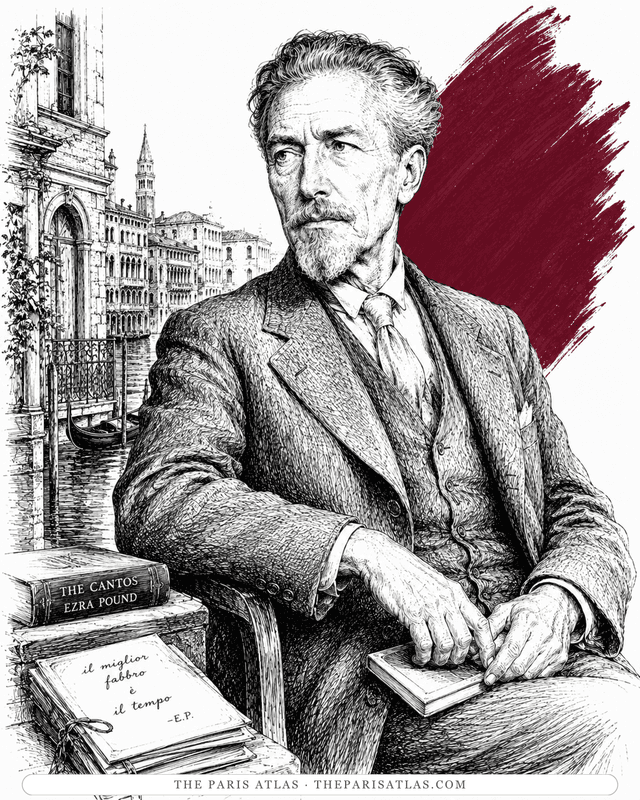
Ezra Pound
The impresario who dragged Joyce's early books into print, brought him to Paris, and championed Ulysses until the world caught up.
View author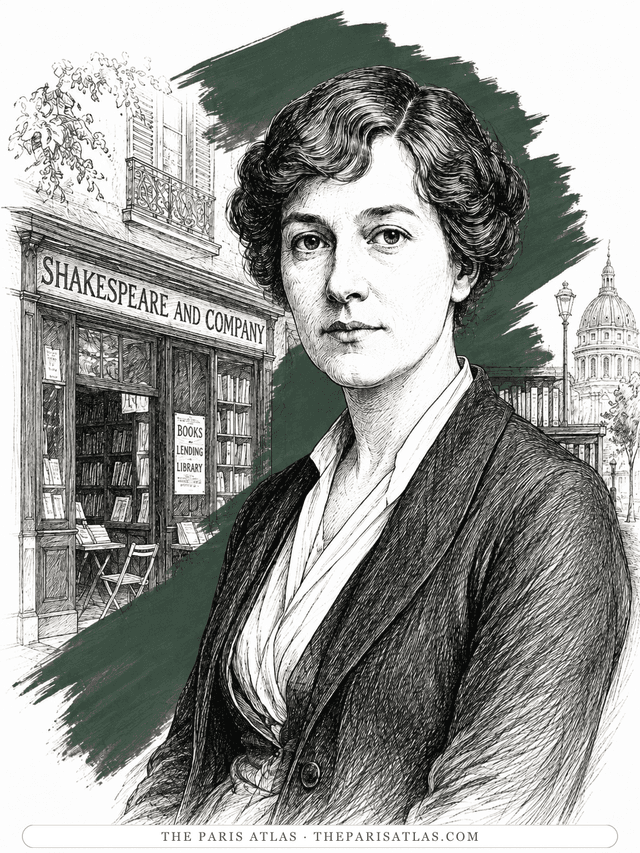
Sylvia Beach
His publisher of last resort and first devotion — the bookseller who printed Ulysses when no one else would.
View author
Louis-Ferdinand Céline
The doctor of the Paris slums who wrote the century's blackest, funniest novel — and changed the sound of French prose.
View author