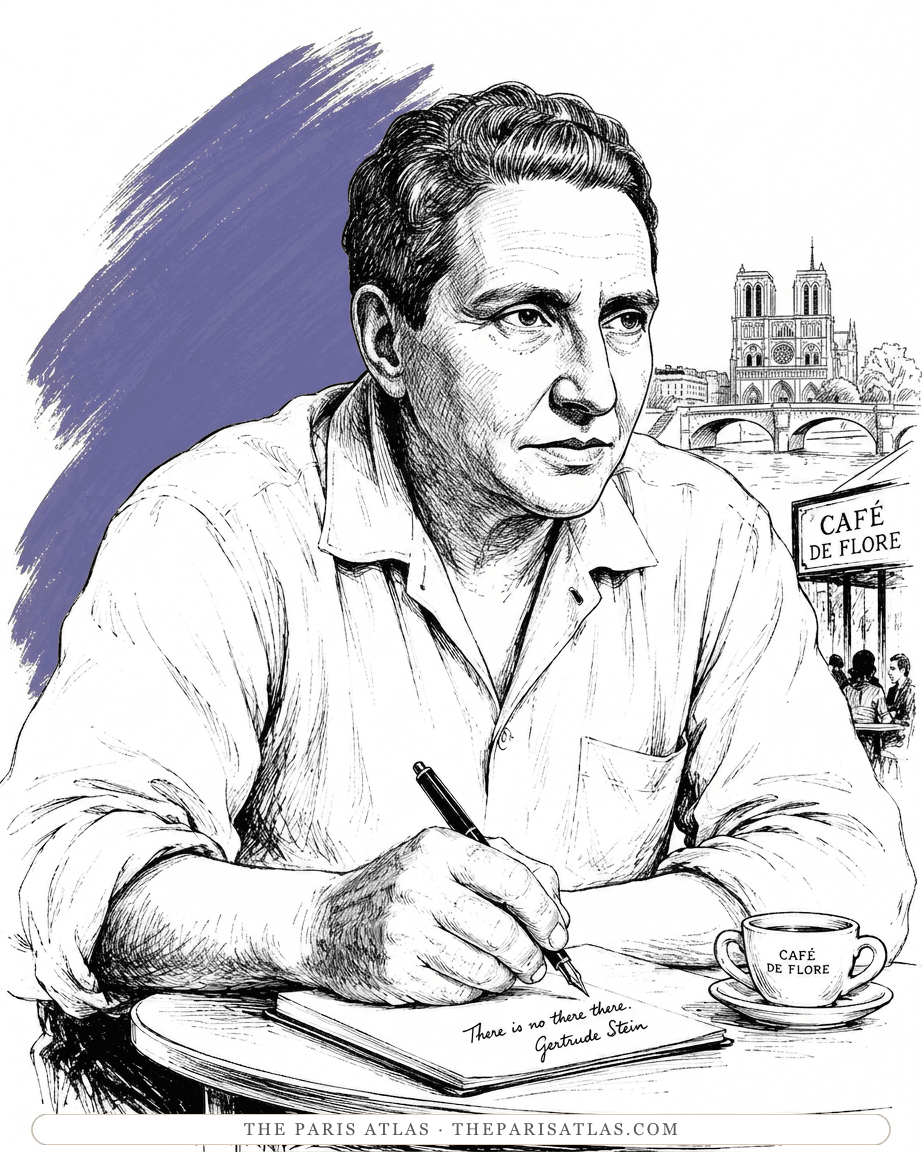
Depicts
Gertrude Stein
Picasso's portrait of his host and first great collector — she kept it above the fireplace at the rue de Fleurus.
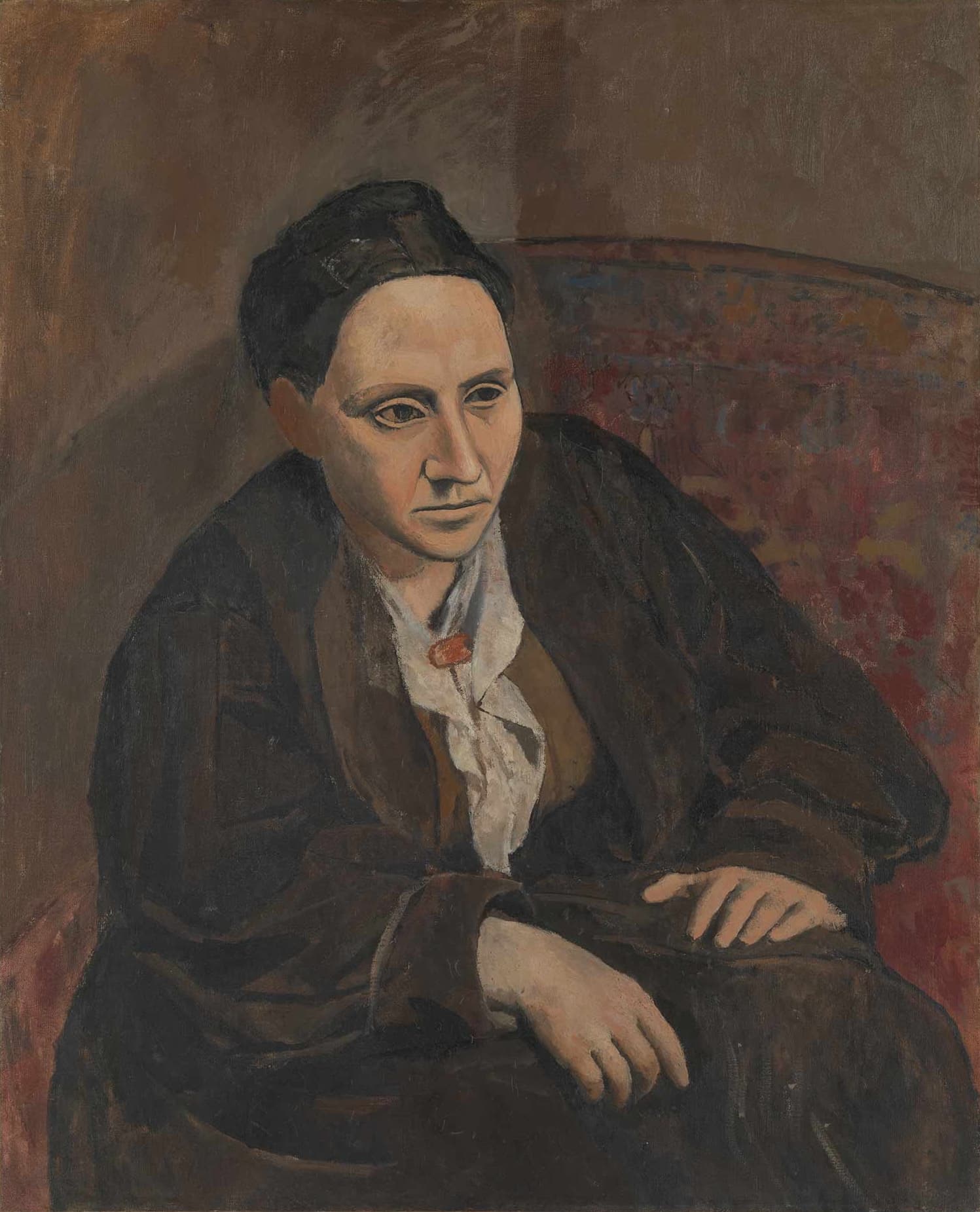
Painted through eighty or ninety sittings at Picasso's Bateau-Lavoir studio, the portrait joins Stein's massive, calmly seated body to a face radically reinvented in 1906. She hung it above the fireplace at 27 rue de Fleurus, where it became both her public image and a threshold on Picasso's road to Cubism.
Gertrude Stein sits forward in a broad reddish-brown armchair, and her body fills most of the canvas. A dark, heavy coat; a pale blouse fastened at the neck with a small ornament; one hand resting across her lap, the other dropped over her knee. Look for the usual props of intellectual life and you will not find them. No book, no pen, no painting within the painting. Picasso strips the scene down to body, clothing, chair, and gaze.
So her presence does all the work. The coat and torso form a dark pyramid, the hands are large and plainly drawn, and the forward lean reads as engagement rather than rest. Against a room reduced to brown and gray, the face is the one sharply built thing on the canvas: heavy-lidded eyes, a firm mouth, a head that looks carved rather than painted. She glances past us, thinking, evaluating, waiting for something worth her attention.
Authority, in this portrait, is the occupation of space without apology.
Picasso began the portrait in the winter of 1905–6, a few months into a new friendship. He was twenty-four. Stein was thirty-one, and she and her brother Leo had recently started buying his pictures, recognition and rent money arriving together. To pose, she crossed Paris to his studio in a converted piano factory at 13 rue Ravignan in Montmartre, the ramshackle building known as the Bateau-Lavoir.
Eighty sittings, or ninety. The number is Stein's own, and the Met treats it as part of the portrait's myth rather than a documented tally.
She did not spend those hours merely posing. She was writing Melanctha then, the longest of the Three Lives stories, and later remembered composing sentences in the chair while Picasso made and unmade her face. Whether the two experiments shaped each other is not something the evidence can settle. What is certain is stranger: two young modernists, one room, many weeks, both trying to work out what a likeness could be once copying stopped seeming like the point.
For all those sittings, the head would not come. Picasso repainted it, scraped it, and finally painted the face out altogether, telling Stein, by her account, that he could no longer see her when he looked.
The canvas sat headless while he spent the summer of 1906 in Gósol, in the Catalan Pyrenees, simplifying the figure toward sculpture and absorbing the ancient Iberian carving that had recently surfaced in Paris. When he came back he finished the face without asking her to sit again. Heavy outlines, asymmetrical eyes, planes flattened into a mask. The Met ties the head directly to the Iberian encounter and reads it as a foreshadowing of Cubism. People complained that it no longer looked like her; Picasso's reply became famous. It would.
He was right, and not by accident. He had reversed the job of portraiture. The sitter would grow into the image.
The Met's conservation study confirmed that the stories of erasure were not embellishment. X-radiography and autoradiography show heavy reworking of the face, though only traces of the earlier features survive, because Picasso scraped the canvas between sittings. The pigment maps are more talkative. In the brown-ochre map, a thin outline along her cheek records an earlier three-quarter profile. In the vermilion map of her lap, seven adjacent fingers mark the hand's repeated repositioning, probably shifting as the face changed above it.
Parts of the coat went down fast, broad strokes with paint dripping along the sleeves, still looking, in the Met's phrase, as fresh as the day of the first sketch. The face and hands grew muddy with revision. Two kinds of time share one surface: the speed of the first attack, and months of argument layered over it.
If the finished face gave up observation, what makes this still a likeness of Gertrude Stein? Partly the body, which carries what the face withholds: weight, endurance, forward intent, a total indifference to being approved of. None of the flattery conventionally extended to female sitters appears anywhere on the canvas.
Stein never wavered about the result. It was, she wrote in 1938, "the only reproduction of me which is always I, for me." Fitting, from a writer whose own prose portraits refused physical description and built their subjects out of rhythm and repetition instead. Neither artist illustrates the other. But both had stopped treating likeness as a copy, and the painting is where those two refusals sat in one room, looking at each other.
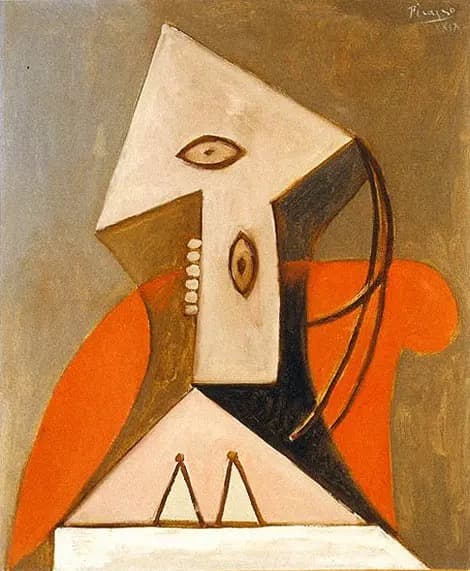
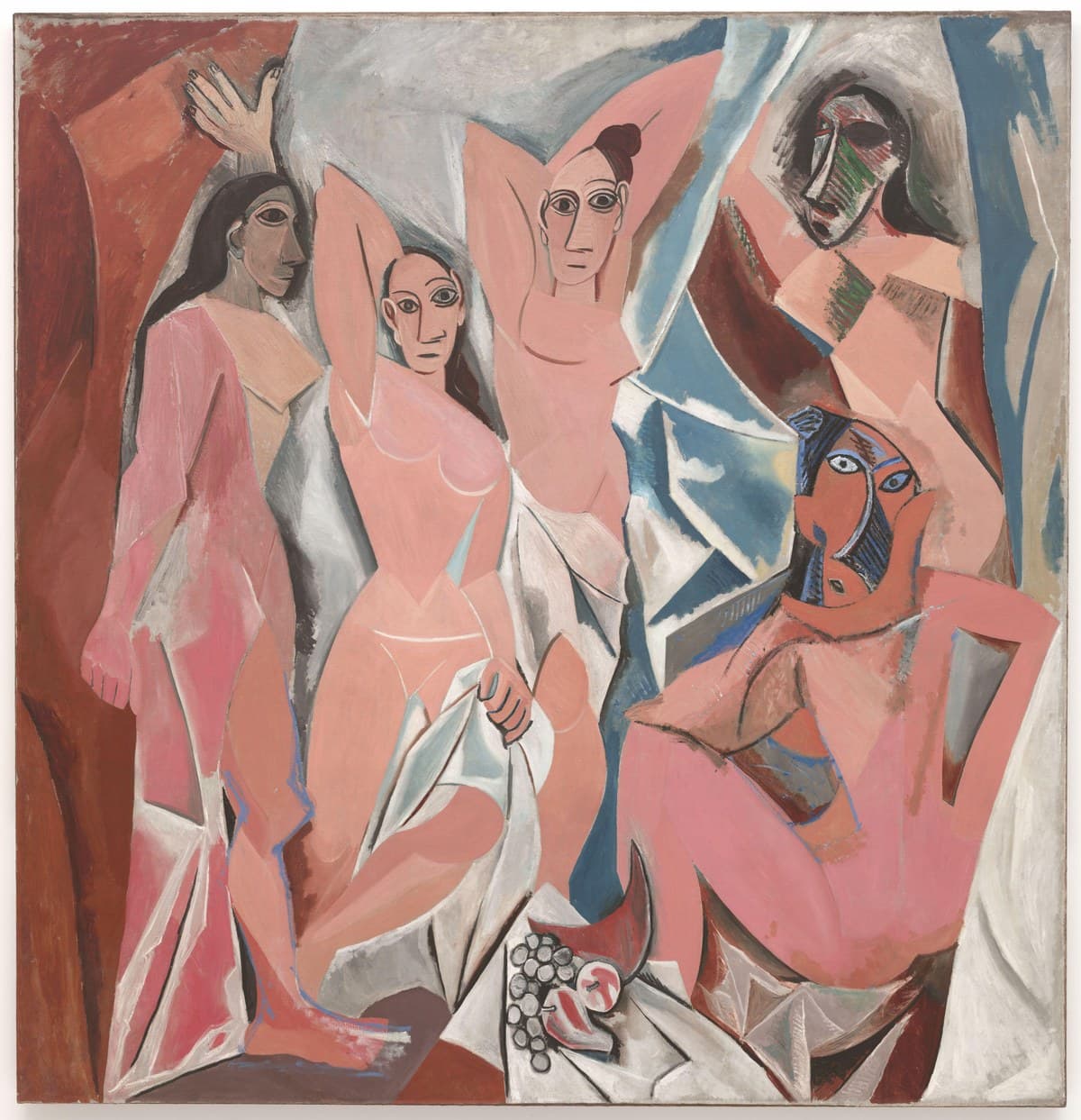
The painting is divided against itself, and the division is the point. Coat, chair, and earthen palette belong to the end of the Rose Period and the weight of traditional portraiture. The head belongs to what came next, the rebuilding of the figure that ran through Les Demoiselles d'Avignon in 1907 and on into Cubism. It is not a Cubist painting. It is the evidence that Cubism arrived not as a system but as a series of problems inside individual pictures, beginning with the problem of the face.
Stein hung the finished portrait above the fireplace at 27 rue de Fleurus, the painted Stein presiding over the living one through every Saturday salon, until she and Alice B. Toklas moved to the rue Christine in 1938. Photographs paired her with it for the rest of her life, which is to say the prediction kept coming true.
She bequeathed it to the Metropolitan Museum at her death in 1946, the first Picasso the museum ever acquired. In February 1947, before the canvas left Paris, Toklas brought Picasso in to say goodbye to it. He stood in front of the portrait alone for some minutes.
Close reading
The portrait is famous for the tension between a firmly observed body and a face Picasso repainted from memory. The close views make that divide—and the force of Stein's presence—especially clear.
1.The face reads like a mask set onto a sitter
Hard outlines, broad planes, and asymmetrical eyes reduce descriptive likeness while intensifying concentration. The head feels less modeled by the room's light than declared as a fixed sign of identity.
2.The hands carry the weight of attention
Broad, calm hands occupy the lower center and repeat the solidity of the face. Their stillness keeps the seated pose from becoming passive; Stein appears grounded, watchful, and difficult to dislodge.
3.The chair and coat form one dark architecture
Figure and furniture merge into a large brown-black mass, relieved by hands and face. Picasso makes social authority compositional: Stein occupies the canvas not through ornament but through sheer stable volume.
4.The nearest hand spreads over the dark clothing
The nearest hand spreads over dark fabric, with long fingers directed downward. A broad light area across its back narrows into the separate fingers. Its clear outer contour and warm color make the hand easy to distinguish from the less defined folds around it.
5.The chair back carries a faint pattern
Muted reddish marks appear across the chair back behind the shoulder. Its curved upper boundary is clearer than the pattern within it. The subdued decoration identifies a separate surface without introducing the bright colors or sharp detail that would draw attention away from the sitter.
6.The sleeve changes direction at the elbow
Broad brown folds turn around the elbow and narrow toward the wrist. Lighter edges pick out a few changes of plane within the dark fabric. The sleeve's diagonal movement leads toward the resting hand, giving the heavy coat an internal direction.
1905–6
Picasso painted the portrait over some eighty or ninety sittings at his Bateau-Lavoir studio in Montmartre.
1906
Unable to resolve the face, he painted it out, then finished it from memory after a summer in Gósol — reworking it into mask-like planes drawn from ancient Iberian sculpture.
1906–1938
Stein hung it above the fireplace at 27 rue de Fleurus, where it presided over her Saturday salons until she moved to the rue Christine.
1946
Bequeathed to the Metropolitan Museum of Art at Stein's death — the first Picasso the museum acquired.
The Metropolitan Museum of Art
1000 Fifth Avenue, New York, NY 10028, United States
Displays and loans can change. Check whether this work is on view before making a special trip.
Plan your visit on the museum’s official website (opens in a new tab)After some eighty or ninety sittings he still could not resolve it, and by Stein's account told her he could no longer see her when he looked. He painted the face out, and finished it from memory after a summer in Gósol, reworking it into the mask-like planes influenced by ancient Iberian sculpture.
By Stein's own account, eighty or ninety, at Picasso's Bateau-Lavoir studio in 1905–6. The Metropolitan Museum treats the figure as part of the portrait's lore rather than a documented tally.
Yes. She kept it above her fireplace for more than thirty years and wrote in 1938 that it was “the only reproduction of me which is always I, for me.”
By the familiar account he replied that she would come to look like it. The remark became famous because it reversed the usual aim of portraiture — the sitter growing into the image rather than the image copying the sitter.
No, but it points toward Cubism. The coat, chair and earthen palette belong to the Rose Period, while the reconstructed face prefigures Les Demoiselles d'Avignon (1907) and the rebuilding of the figure that led into Cubism.
The Metropolitan Museum of Art in New York, bequeathed by Gertrude Stein in 1946.
Depicts
Picasso's portrait of his host and first great collector — she kept it above the fireplace at the rue de Fleurus.
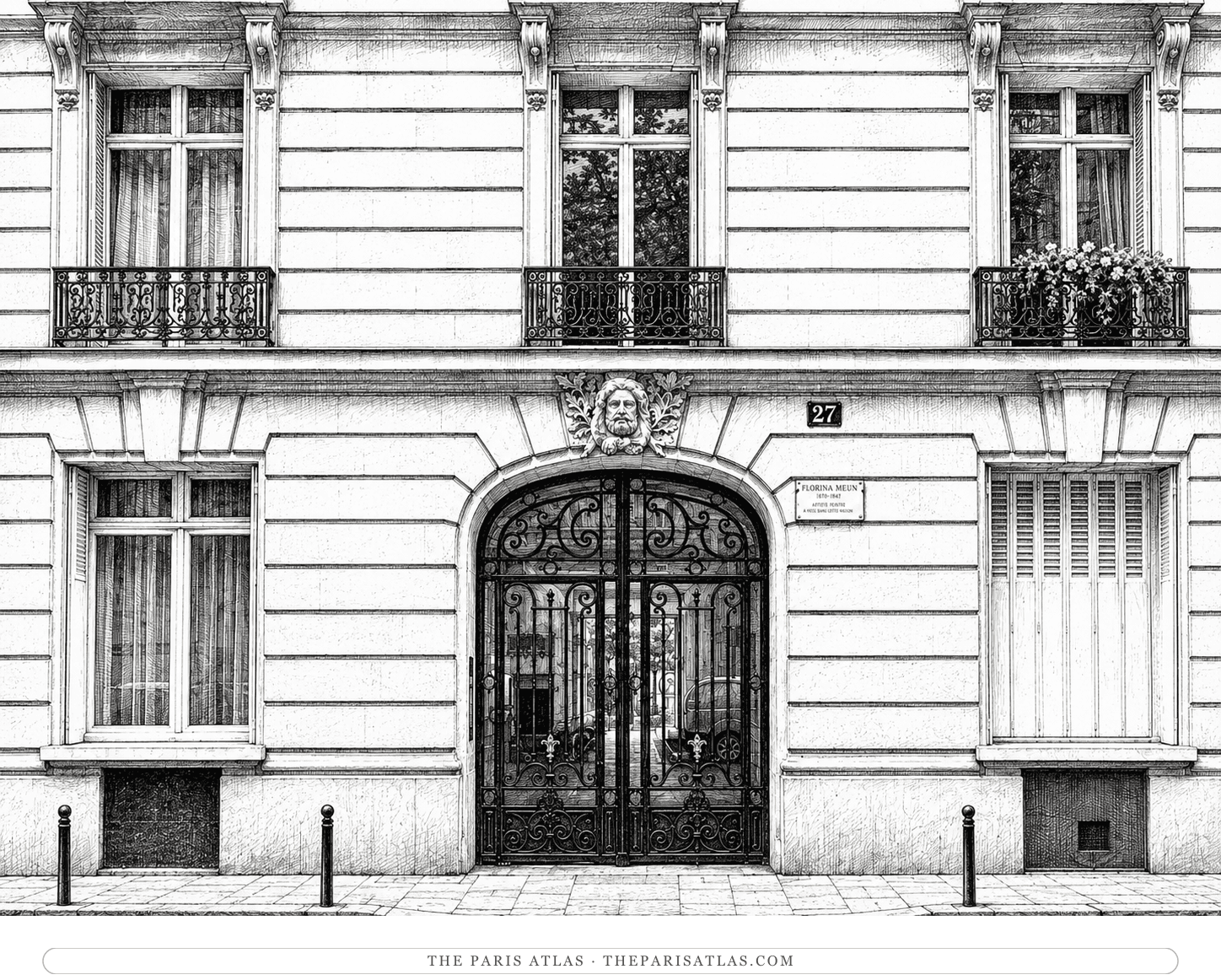
Displayed at · 1906–1938
Hung above the fireplace of the atelier from its completion until Stein and Toklas left for the rue Christine — the presiding image of the Saturday salons.
Explore painters from the same movements and circles.
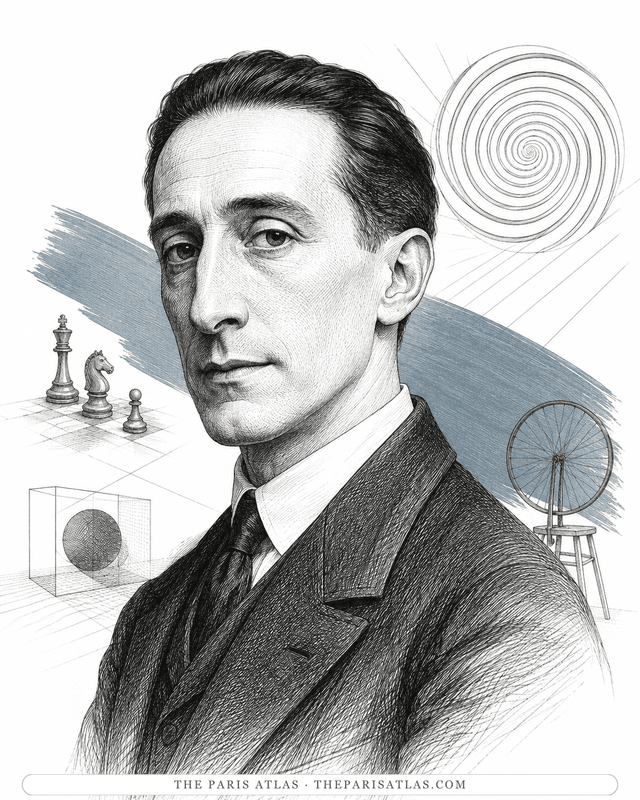
The century's quietest revolutionary — readymades, the abandonment of painting, chess on a Paris rooftop in Entr'acte, and one anemic film of spinning puns signed Rrose Sélavy.
View artist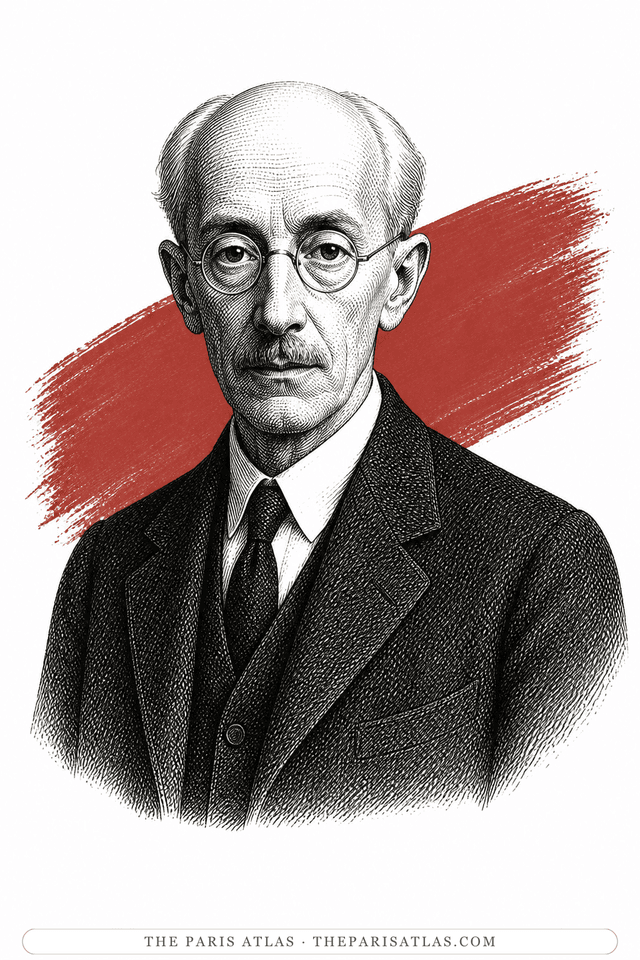
Dutch painter of the primary-colour grids, made mostly in a studio beside the Gare Montparnasse where he lived on and off from 1912 to 1938. He dropped an 'a' from Mondriaan on arriving in Paris, painted his studio walls in movable rectangles, and danced the Charleston.
View artist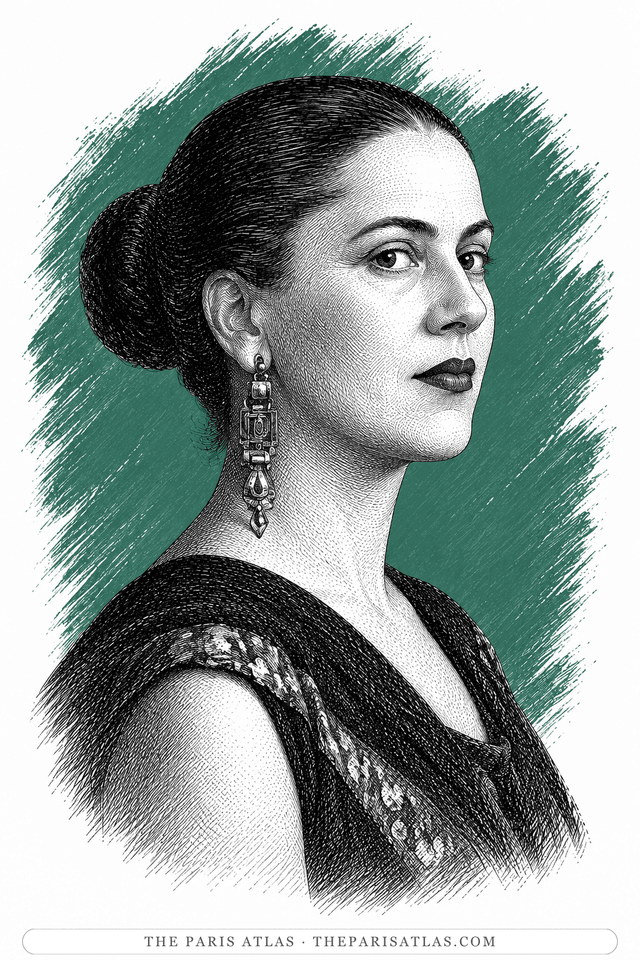
Brazilian painter who spent the 1920s moving between São Paulo and Paris, studied Cubism under André Lhote, Albert Gleizes and Fernand Léger, and used what she learned to paint Brazilian towns, railways, plants and bodies. Her 1928 painting Abaporu prompted the manifesto that gave the Anthropophagic movement its name.
View artistThe sources below include collection records, catalogues, scholarly research, and primary materials that informed this page. They document Gertrude Stein, its making, and its place in cultural history.


Web source consulted for documented facts and historical context presented on the Gertrude Stein page.
Web source consulted for documented facts and historical context presented on the Gertrude Stein page.
Web source consulted for documented facts and historical context presented on the Gertrude Stein page.
First-person evidence and historical context used in preparing the Gertrude Stein page.

Official record used to verify names, dates, institutional details, or other factual information on this page.
Official record used to verify names, dates, institutional details, or other factual information on this page.
These references provide the documented foundation for this work's history and interpretation. Claim-level citations remain attached to the specific claims they support.
 Explore more resources