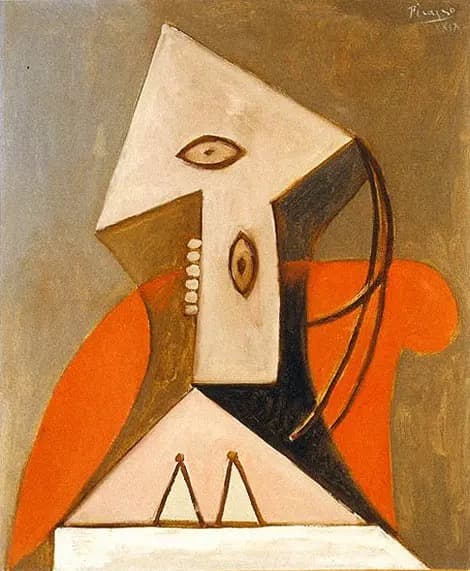
Woman in a Red Armchair
Picasso's 1929 painting of a seated woman broken into curved, bone-like forms — a Surrealist-era portrait so distorted that the sitter cannot be securely identified, though she is often read as his first wife, Olga Khokhlova. It hangs in the Menil Collection in Houston.
- 1929
- Oil on canvas
About Pablo Picasso
What the painting shows
A figure sits in a red armchair against a gray-brown ground. Picasso has reduced her to a stack of smooth, curved forms — closer to bone or moulded shapes than to flesh — with two eyes set at different heights and a small round mouth. The red of the chair frames the pale body.
The pose is a conventional one, a seated portrait, but almost nothing else about the picture is conventional. The body has been taken apart and rebuilt so thoroughly that reading it as a person takes a moment.
Picasso and Surrealism
The painting comes from the late 1920s, when Picasso was working close to the Surrealists and pushing the human figure into strange, biomorphic shapes. The curved white forms here belong to a run of pictures in which bodies swell, split, and harden into something between anatomy and sculpture.
The distortion is the subject as much as the woman is. The picture is about how far a recognizable seated portrait can be dismantled and still hold together as an image.
Who is the woman?
The sitter is not securely identified. She is often read as Olga Khokhlova, the Russian ballerina Picasso married in 1918 and from whom he had effectively separated by the late 1920s, but she may instead be an unnamed model. Picasso deconstructed the figure so completely that no likeness survives to settle the question.
That uncertainty sits close to the biography. The marriage was failing as the bodies in these years grew most violently reshaped, and viewers have long connected the two without being able to prove a direct link.
Where it is
The painting belongs to the Menil Collection in Houston, the museum built around the holdings of John and Dominique de Menil, whose collection was especially strong in Surrealism. It hangs among other works of the movement the picture grew out of.
Close reading
Reading the work, detail by detail
Picasso builds the seated woman from opposing curves, hard color blocks, and a face split between viewpoints. The details show portraiture kept legible at the edge of formal violence.
1.The face is divided and still confronts us
Profile and frontal cues occupy the same head, turning nose, eyes, and mouth into incompatible directions. Yet the gaze remains forceful. Picasso disrupts anatomy without surrendering psychological presence.
2.The red chair presses forward as strongly as the sitter
Chair arms and bodily curves overlap in a single red-dominated structure. Furniture does not recede behind the sitter; it competes with and encloses her, turning a portrait setting into active pressure.
3.Color holds together what drawing pulls apart
Heavy lines fracture the form, but repeated red and green passages reconnect it across those boundaries. The image coheres chromatically even where its anatomy cannot.
4.Long curved lines enclose an open patch of background
Long dark curves descend beside the angular head and cross the orange-red chair. Part of the brown background remains visible inside their loop. These thin lines describe an enclosing shape without filling it, contrasting with the solid pale planes of the face.
5.A row of pale marks defines one edge of the face
A short row of pale oval marks runs vertically beside the long central plane of the face. Dark brown separates the small shapes from one another. Their regular repetition introduces a fine scale of detail within a head otherwise built from a few large angles.
6.Small triangles repeat the body's larger angles
Two narrow outlined triangles stand on the pale area below the head. Their tips and sloping sides repeat the much larger triangle that contains them. This repetition connects the small linear marks to the body's overall structure without making that structure anatomically naturalistic.
Timeline
1918
Picasso married the Russian ballerina Olga Khokhlova, the sitter most often proposed for this painting.
Late 1920s
The marriage had effectively broken down as Picasso pushed the figure into its most distorted, biomorphic forms.
1929
Picasso painted Woman in a Red Armchair, now in the Menil Collection, Houston.
Where to see it
A viewing location has not yet been listed for this work.
Frequently asked questions
What is Woman in a Red Armchair?
A 1929 oil painting by Pablo Picasso showing a seated woman broken into curved, bone-like forms. Its French title is Femme au fauteuil rouge, and it hangs in the Menil Collection in Houston.
Who is the woman in the painting?
Her identity is uncertain. She is often read as Picasso's first wife, Olga Khokhlova, but may be an unnamed model. Picasso distorted the figure so heavily that no reliable likeness remains.
When was it painted?
In 1929, during the years when Picasso worked closest to the Surrealists and reshaped the human figure into swollen, biomorphic forms.
Is it a Surrealist painting?
It comes from Picasso's Surrealist period and shares that movement's taste for metamorphosis, though Picasso never formally joined the group. The dismantled, bone-like body is characteristic of his work at the end of the 1920s.
Why does the figure look like bones?
Picasso rebuilt the seated body from smooth, curved white shapes rather than describing flesh. It is part of a run of late-1920s pictures in which the human form is pushed toward anatomy and sculpture at once.
Where can I see it?
At the Menil Collection in Houston, Texas, which holds a strong group of Surrealist works assembled by John and Dominique de Menil.
More by Pablo Picasso

If you like Pablo Picasso
Explore painters from the same movements and circles.
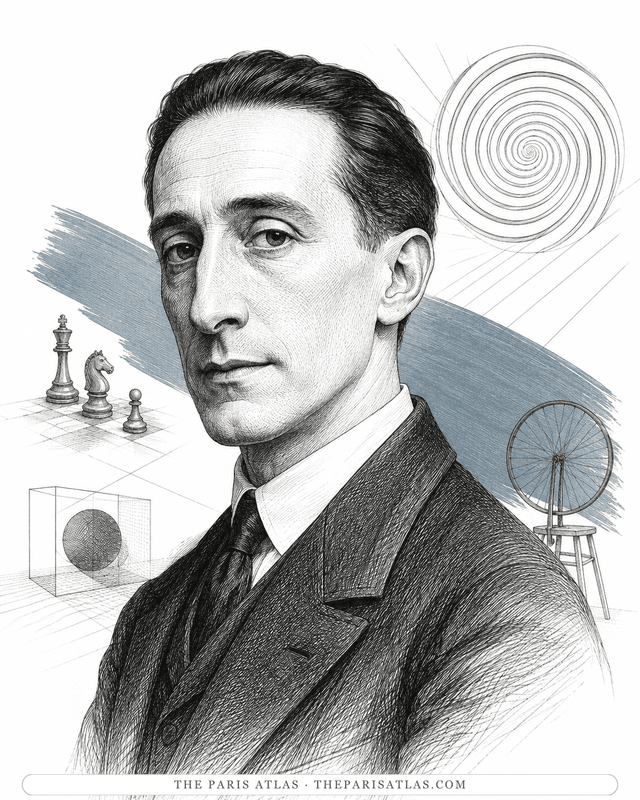
Marcel Duchamp
The century's quietest revolutionary — readymades, the abandonment of painting, chess on a Paris rooftop in Entr'acte, and one anemic film of spinning puns signed Rrose Sélavy.
View artist
Piet Mondrian
Dutch painter of the primary-colour grids, made mostly in a studio beside the Gare Montparnasse where he lived on and off from 1912 to 1938. He dropped an 'a' from Mondriaan on arriving in Paris, painted his studio walls in movable rectangles, and danced the Charleston.
View artist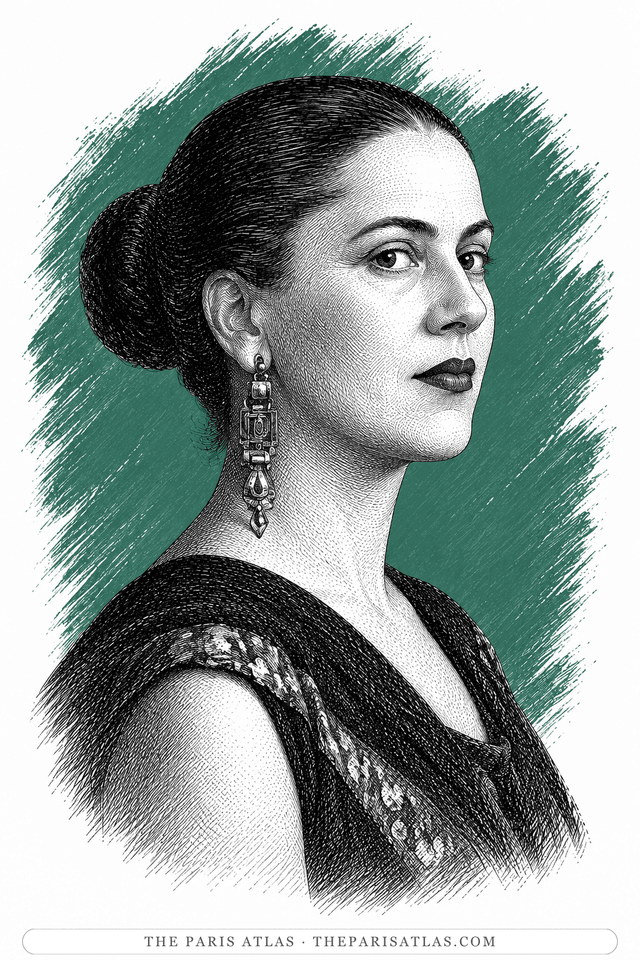
Tarsila do Amaral
Brazilian painter who spent the 1920s moving between São Paulo and Paris, studied Cubism under André Lhote, Albert Gleizes and Fernand Léger, and used what she learned to paint Brazilian towns, railways, plants and bodies. Her 1928 painting Abaporu prompted the manifesto that gave the Anthropophagic movement its name.
View artist
References
The sources below include collection records, catalogues, scholarly research, and primary materials that informed this page. They document Woman in a Red Armchair, its making, and its place in cultural history.


1Pablo Picasso, Woman in a Red Armchair (Femme au fauteuil rouge), 1929 — collection record
WebsiteThe Menil Collection, HoustonUsed forWeb source consulted for documented facts and historical context presented on the Woman in a Red Armchair page.
2The Picasso Collection and Creative Archive
WebsiteMusée National Picasso-ParisUsed forUsed to place Woman in a Red Armchair within Pablo Picasso's documented oeuvre and verify its period, medium, or institutional context.
3Pablo Picasso — Artist and Collection Record
WebsiteThe Museum of Modern ArtUsed forUsed to cross-check artist chronology and the work's relationship to Pablo Picasso's wider practice.
4Picasso Timeline
WebsiteMusée National Picasso-ParisUsed forUsed for an additional museum or scholarly perspective on Woman in a Red Armchair's history and interpretation.
These references provide the documented foundation for this work's history and interpretation. Claim-level citations remain attached to the specific claims they support.
 Explore more resources