Displayed at · 1963
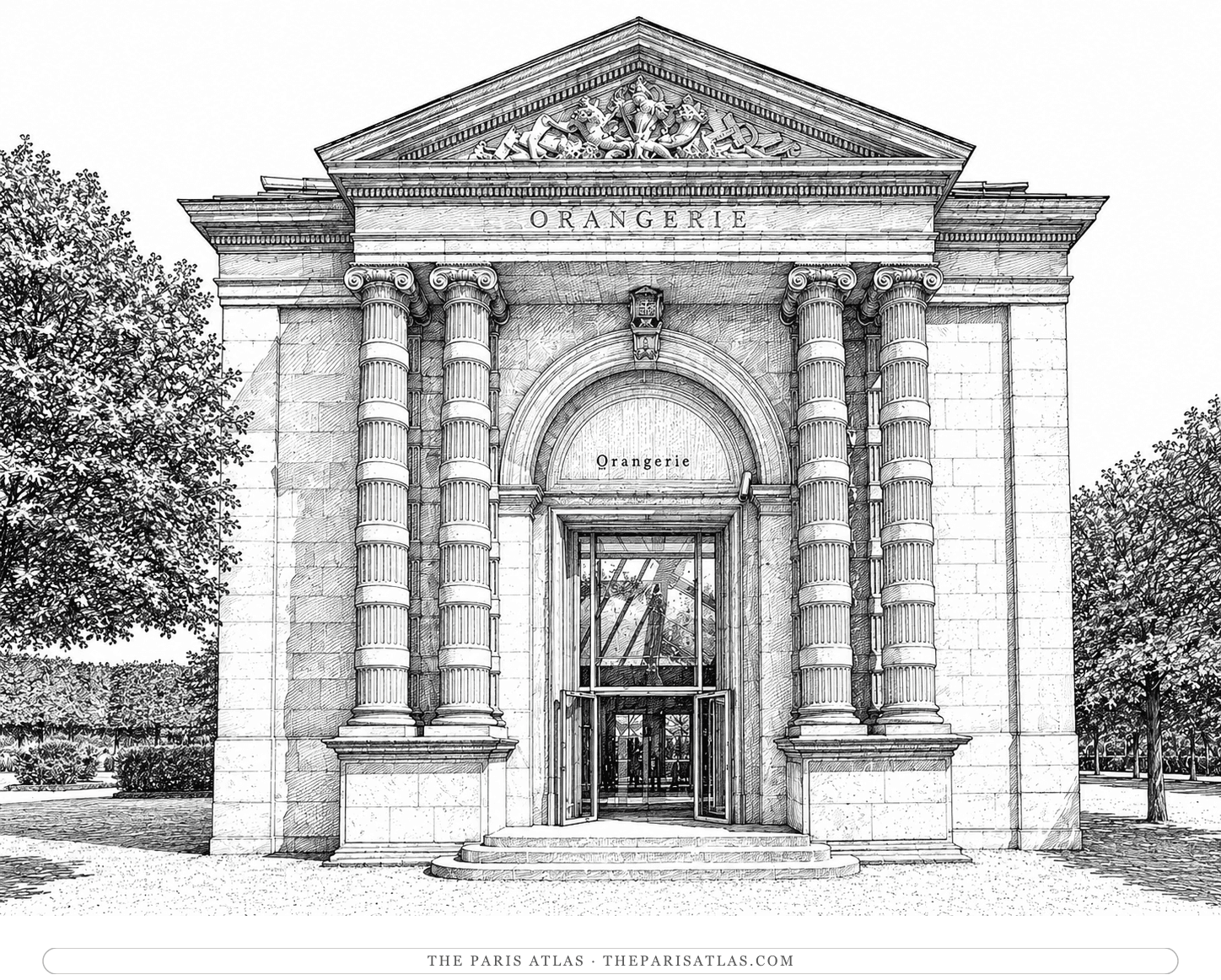
Orangerie des Tuileries
In the collection since the state's 1963 purchase; the museum's record places it in room 8, 'Les Arts à Paris.' Holdings rotate.
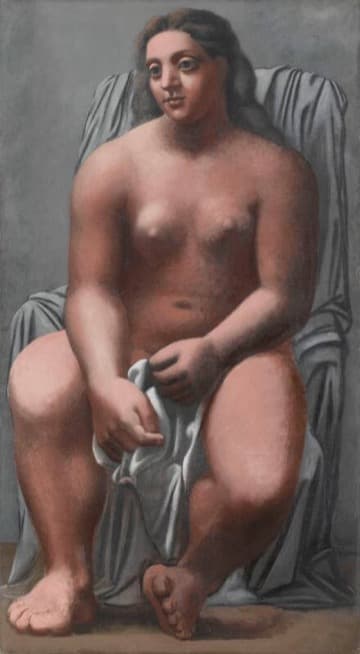
Picasso's monumental 1921 seated nude — Antiquity exaggerated rather than copied — the Walter-Guillaume collection's clearest statement of the postwar return to order.
A monumental seated female nude, wrapped at the hips in drapery, on a canvas nearly two meters tall and barely one wide. The museum's notice describes massive sculptural proportions that recall the canons of Antiquity while exaggerating them — a figure crowded by her own frame. The signature and date sit at the lower right: Picasso/21.
The record preserves the picture's earlier lives in its alternate titles: Baigneuse de Bernard, La Géante, plain Nu. La Géante — the giantess — is the one the eye believes.
The Orangerie reads the painting as Pablo Picasso's contribution to the postwar return to order, the turn back toward the old masters that ran through Paris after 1918. His sources here, the museum says, were Greek and Roman Antiquity along with Ingres and Renoir, worked into 'a strange style of Classicism' of distorted bodies and solid, heavy faces — an Antiquity transcended and idealised rather than imitated. Derain, the collection's other pillar, was traveling the same road at the same time.
For the painter of Cubism to produce this in 1921 was not a retreat. It was the same appetite for form, redirected at the classical past.
Paul Guillaume acquired the painting after 1930, near the end of his life, and the museum notes it was 'meticulously conserved' by his widow Domenica Walter. It came to the state in the 1963 purchase, with the Société des Amis du Louvre, and hangs in the collection's room 8, 'Les Arts à Paris' — named for the review Guillaume published.
Close reading
Picasso's bather is recognizable as a seated figure but refuses graceful anatomy. The close views show a body rebuilt from heavy blocks, with classical monumentality pushed toward discomfort.
1.The head is trapped inside the armature of the pose
The face is compressed between limbs whose scale overwhelms it. Rather than presenting a relaxed bather, Picasso makes the pose feel constructed and enclosed—the body both figure and frame.
2.The body is assembled from unequal masses
Torso, thigh, and forearm do not follow natural proportion. Their oversized volumes interlock like parts of a compact monument. Weight is the subject more than flesh.
3.A reduced coast keeps the figure outside ordinary scale
The coast is pared down to broad zones with few landmarks. Without detailed surroundings, the figure cannot be measured against a normal world and instead fills the image like an archaic idol.
4.The feet meet the ground at different angles
One foot spreads across the ground while the other turns to show more of its underside. Dark separations mark individual toes against the lighter flesh. Their different angles make the seated pose easier to understand and keep the lower body from becoming a single symmetrical shape.
5.Narrow cloth folds rise behind the shoulder
Narrow dark folds run down the gray cloth behind the shoulder. They are more linear and sharply separated than the soft shading on the skin. This difference in handling lets the fabric remain distinct from the rounded body even though both share subdued colors.
6.The face turns toward one side
The face turns toward the left, with dark eyes beneath a broad forehead. Light follows the nose and cheek, while the hair makes a darker border above them. These soft changes of tone give the head a rounded form distinct from the narrow cloth folds behind it.
1921
Painted and signed 'Picasso/21'.
After 1930
Acquired by Paul Guillaume, late in the dealer's life.
1963
Purchased by the French state from Domenica Walter with the Société des Amis du Louvre.
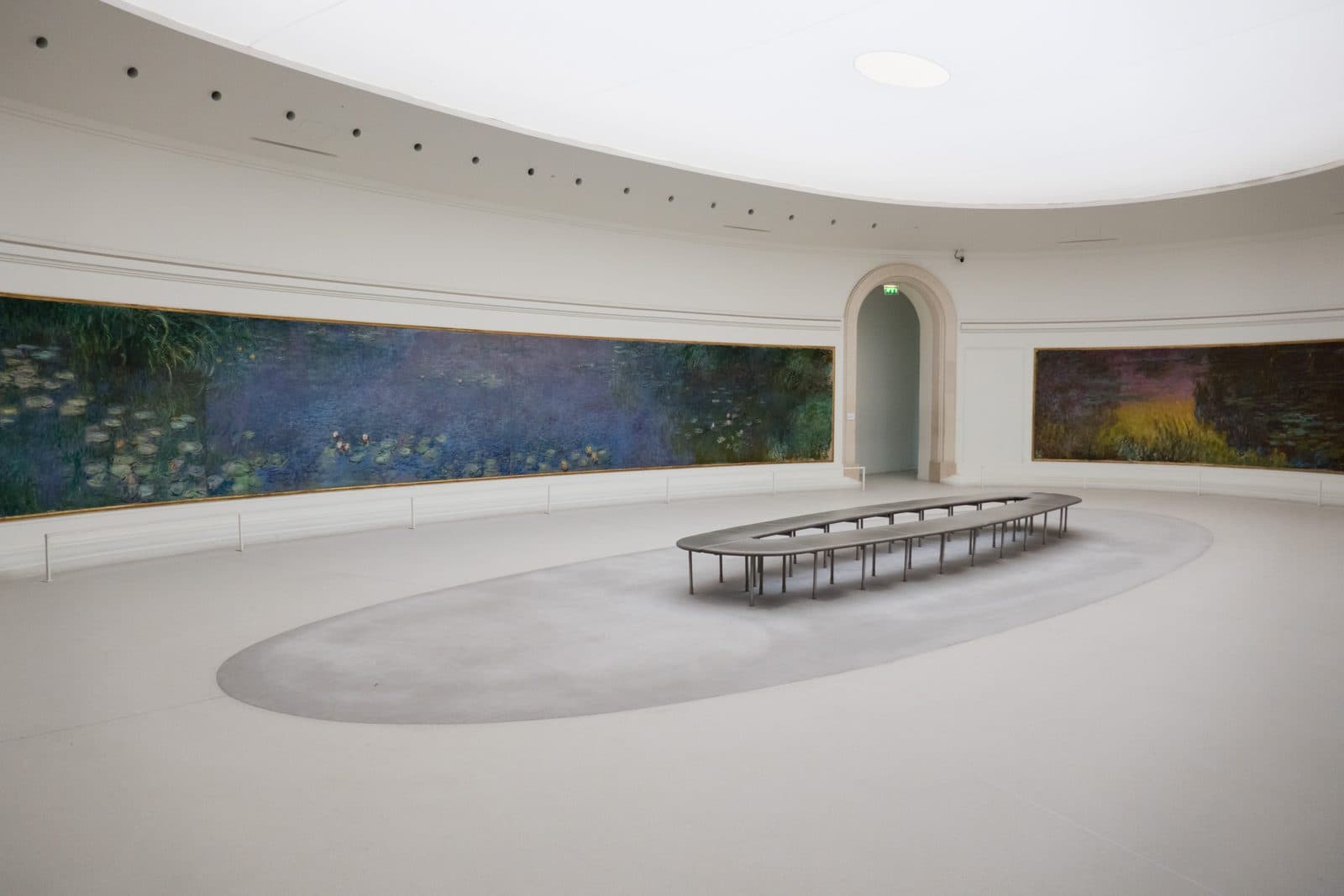
Musée de l'Orangerie, Paris
Jardin des Tuileries, Place de la Concorde (Seine side), 75001 Paris, France
Displays and loans can change. Check whether this work is on view before making a special trip.
Plan your visitA monumental seated nude painted in 1921, 182 by 101.5 centimeters, now in the Walter-Guillaume collection at the Musée de l'Orangerie. It belongs to Picasso's postwar return to classical sources.
The museum reads the painting as part of the return to order: Picasso drew on Greek and Roman Antiquity, Ingres, and Renoir, exaggerating classical proportions into distorted bodies and solid, heavy faces rather than copying them.
Paul Guillaume bought it after 1930; his widow Domenica Walter kept it, and the French state purchased it from her in 1963 with the help of the Société des Amis du Louvre.
Yes. Picasso died in 1973, so his works remain in copyright in the EU through 2043. The reproduction shown here is reduced in size and displayed under fair use for commentary.
Displayed at · 1963
In the collection since the state's 1963 purchase; the museum's record places it in room 8, 'Les Arts à Paris.' Holdings rotate.
Explore painters from the same movements and circles.
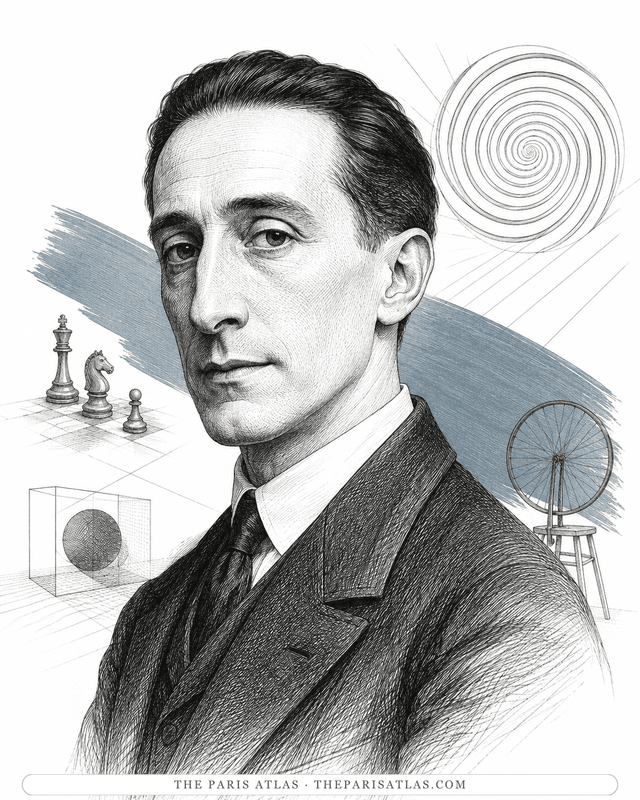
The century's quietest revolutionary — readymades, the abandonment of painting, chess on a Paris rooftop in Entr'acte, and one anemic film of spinning puns signed Rrose Sélavy.
View artist
Dutch painter of the primary-colour grids, made mostly in a studio beside the Gare Montparnasse where he lived on and off from 1912 to 1938. He dropped an 'a' from Mondriaan on arriving in Paris, painted his studio walls in movable rectangles, and danced the Charleston.
View artist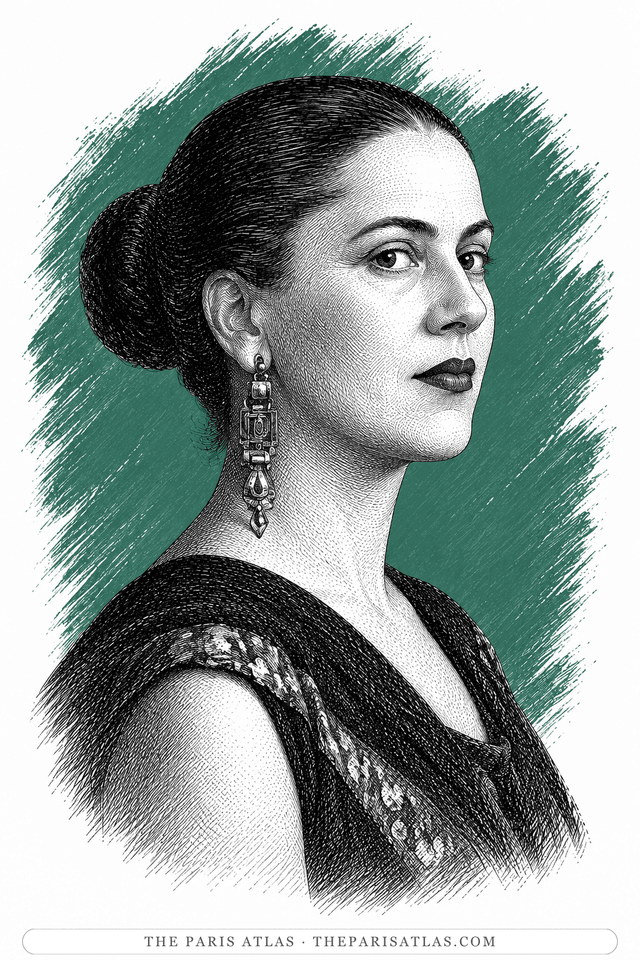
Brazilian painter who spent the 1920s moving between São Paulo and Paris, studied Cubism under André Lhote, Albert Gleizes and Fernand Léger, and used what she learned to paint Brazilian towns, railways, plants and bodies. Her 1928 painting Abaporu prompted the manifesto that gave the Anthropophagic movement its name.
View artistThe sources below include collection records, catalogues, scholarly research, and primary materials that informed this page. They document Grande baigneuse, its making, and its place in cultural history.


Web source consulted for documented facts and historical context presented on the Grande baigneuse page.
Used to place Grande baigneuse within Pablo Picasso's documented oeuvre and verify its period, medium, or institutional context.
Used to cross-check artist chronology and the work's relationship to Pablo Picasso's wider practice.
Used for an additional museum or scholarly perspective on Grande baigneuse's history and interpretation.
These references provide the documented foundation for this work's history and interpretation. Claim-level citations remain attached to the specific claims they support.
 Explore more resources