The Paris AtlasCharting the artists, works, and places worth returning to.

Museum · Le Marais · 3e arrondissement

Musée national Picasso-Paris

The buildingStill standing
Getting inHours or admission
What's there nowStill the same

Open as the Musée national Picasso-Paris, in the seventeenth-century Hôtel Salé. Check the museum's own site for current hours and admission before travelling.

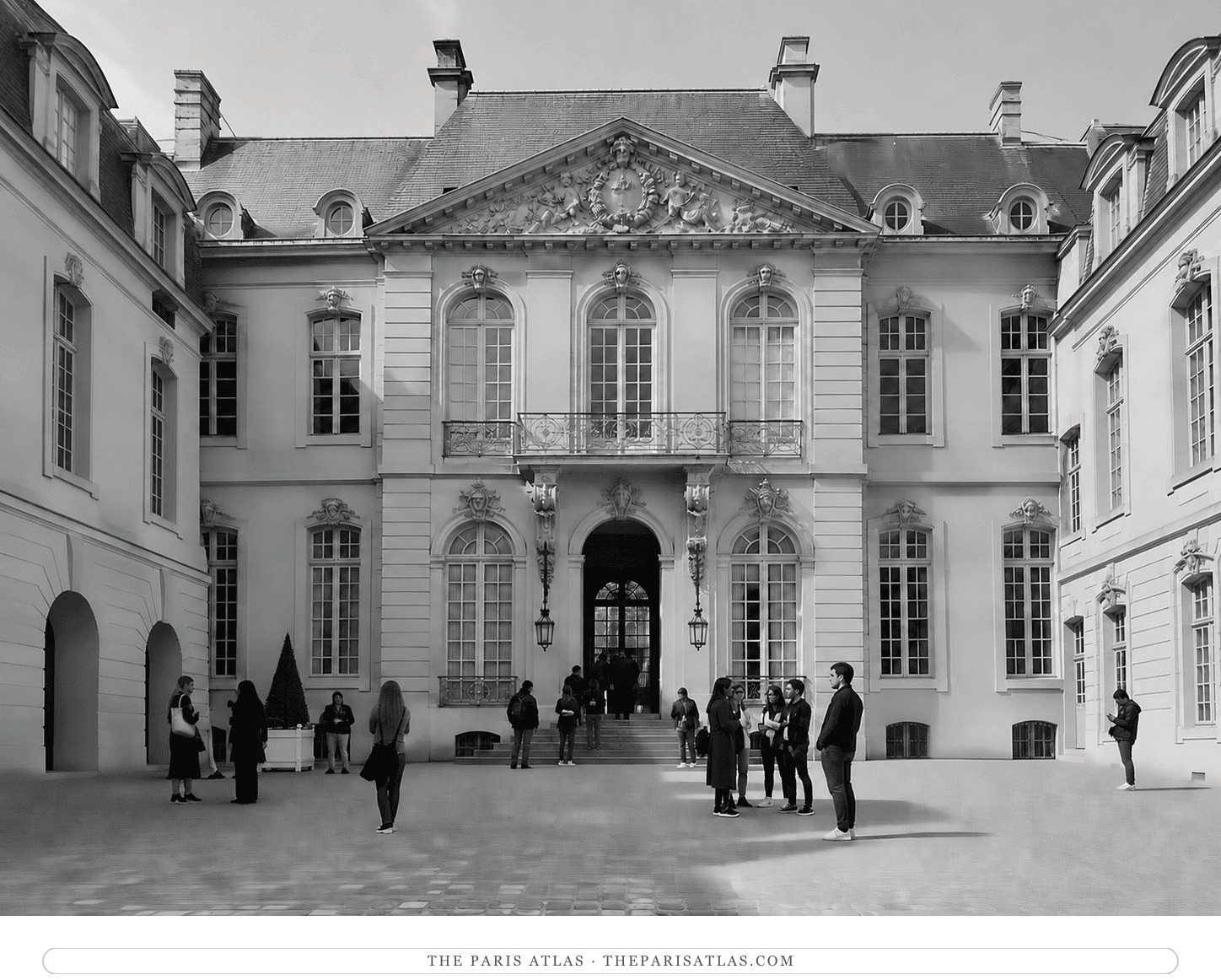
The national Picasso collection, housed in the Hôtel Salé — a grand seventeenth-century Marais mansion built on the proceeds of the salt tax, which is where the nickname comes from. It holds the works Picasso kept for himself, which makes it a different kind of collection from any other.

Address
5 rue de Thorigny, 75003 Paris
Years
A museum since 1985; the mansion dates from the 1650s

The place, briefly

The Hôtel Salé was built in the Marais in the 1650s for a man who had grown rich collecting the gabelle, the salt tax — hence the nickname, the "salted mansion", which has outlasted every official name it has had.

It became the national Picasso museum in 1985, and the reason it is worth a visit is what is in it rather than the building. Much of the collection came to the French state in lieu of inheritance tax after Pablo Picasso's death in 1973, and again after Jacqueline Picasso's in 1986.

That origin makes it unlike other museums. Most collections are assembled from what an artist sold. This one is largely made of what Picasso did not sell — the works he kept in his own houses, across seventy years and every change of manner, plus his personal collection of other people's art: Cézanne, Matisse, Rousseau, Degas, Braque.

So the museum is closer to the contents of a working life than to a curated survey, and it is the right place to end a Picasso walk that starts at the Bateau-Lavoir in Montmartre and passes 7 rue des Grands-Augustins, where Guernica was painted. Both of those are closed to visitors. This is the one you can go into.

Guernica itself is not here. It is at the Museo Reina Sofía in Madrid, in accordance with Picasso's wish that it go to Spain.

Key facts

The building
The Hôtel Salé, a Marais mansion of the 1650s
Where the name comes from
Its builder grew rich on the gabelle, the salt tax
Museum since
1985
How the collection was formed
Largely in lieu of inheritance tax after Picasso's death in 1973 and Jacqueline Picasso's in 1986
Why that matters
It is mostly what Picasso did not sell — the work he kept
Also holds
His own collection of Cézanne, Matisse, Rousseau, Degas and Braque
Not here
Guernica, which is at the Museo Reina Sofía in Madrid

Timeline

  1. 1650s

    The Hôtel Salé is built in the Marais for a collector of the salt tax.

  2. 1973

    Picasso dies; much of his retained work passes to the French state in lieu of inheritance tax.

  3. 1985

    The Musée Picasso opens in the Hôtel Salé.

  4. 1986

    Jacqueline Picasso dies; a further settlement adds to the collection.

On the map

Questions before you go

What is in the Musée national Picasso-Paris?

Largely the work Picasso kept for himself, across seventy years and every change of style, together with his personal collection of other artists — Cézanne, Matisse, Rousseau, Degas, Braque. The holdings came to the French state mainly in lieu of inheritance tax after his death in 1973 and Jacqueline Picasso's in 1986.

Is Guernica at the Musée Picasso in Paris?

No. Guernica is at the Museo Reina Sofía in Madrid, in accordance with Picasso's wish that it go to Spain. It was painted in Paris, at 7 rue des Grands-Augustins, in the spring of 1937 — but the painting is not in the city.

Why is it called the Hôtel Salé?

The "salted mansion" — its builder in the 1650s had made his money collecting the gabelle, the salt tax. The nickname has outlasted every formal name the building has carried since.

Where does it fit on a Picasso walk?

At the end. The Bateau-Lavoir in Montmartre, where he painted Les Demoiselles d'Avignon, and 7 rue des Grands-Augustins, where he painted Guernica, are both closed to visitors. This is the one you can go inside.

People who knew this place

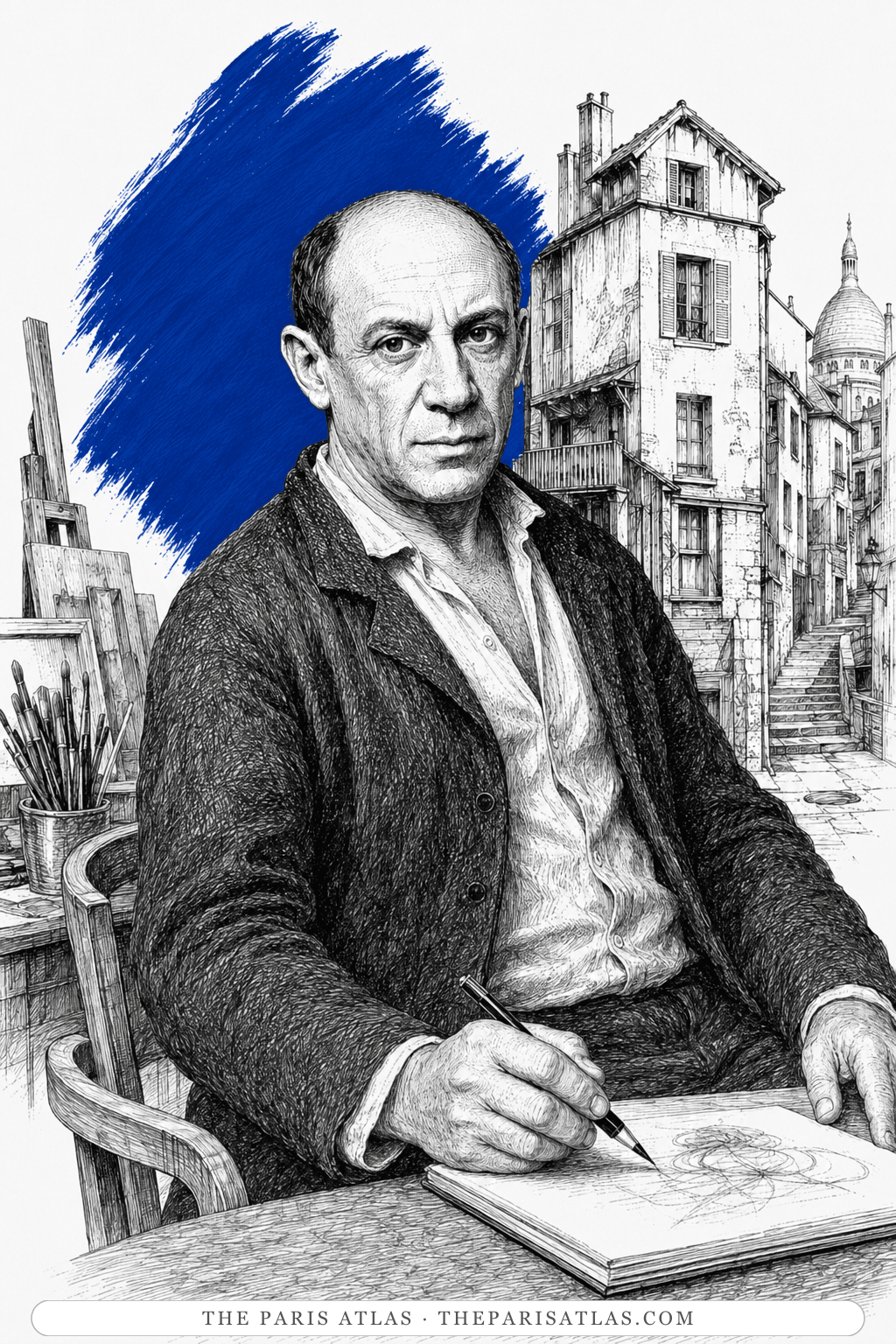
Illustrated portrait of Pablo Picasso

Pablo Picasso

Spanish · Painter, Sculptor

The national Picasso collection opened in the Hôtel Salé in 1985, formed largely from work that came to the French state in lieu of inheritance tax after Picasso's death in 1973 and Jacqueline Picasso's in 1986 — that is, mostly what he chose not to sell.

Within walking distance

The Friday Letter

Paris, one address at a time.

The cafés, studios, and walk-up flats where the work was made — one story from the map in every letter.

One email a week. No spam, no selling your address. Unsubscribe anytime.