
The Paris AtlasCharting the artists, works, and places worth returning to.

Office · Le Marais · 4e arrondissement

Crédit Municipal de Paris

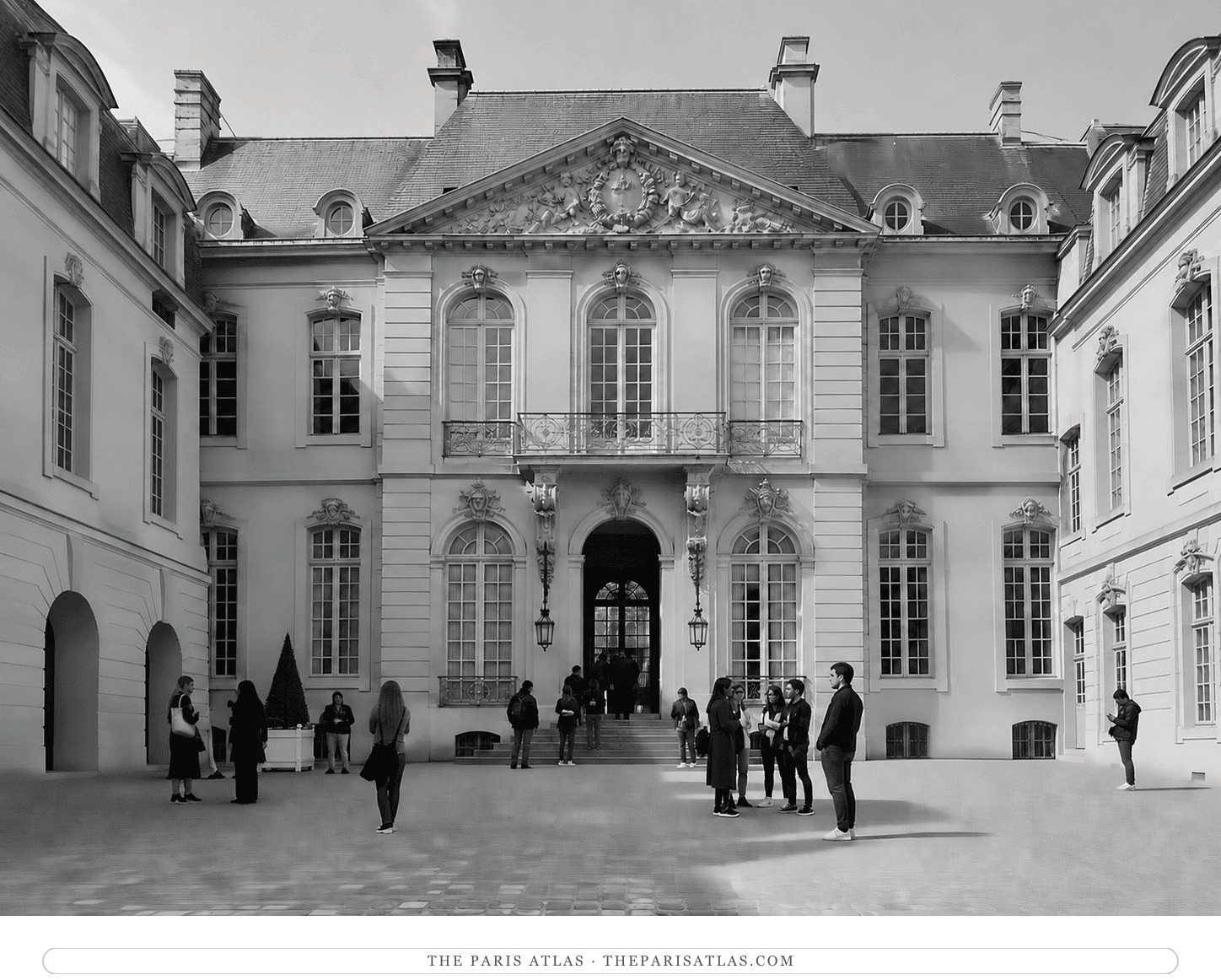
The buildingStill standing
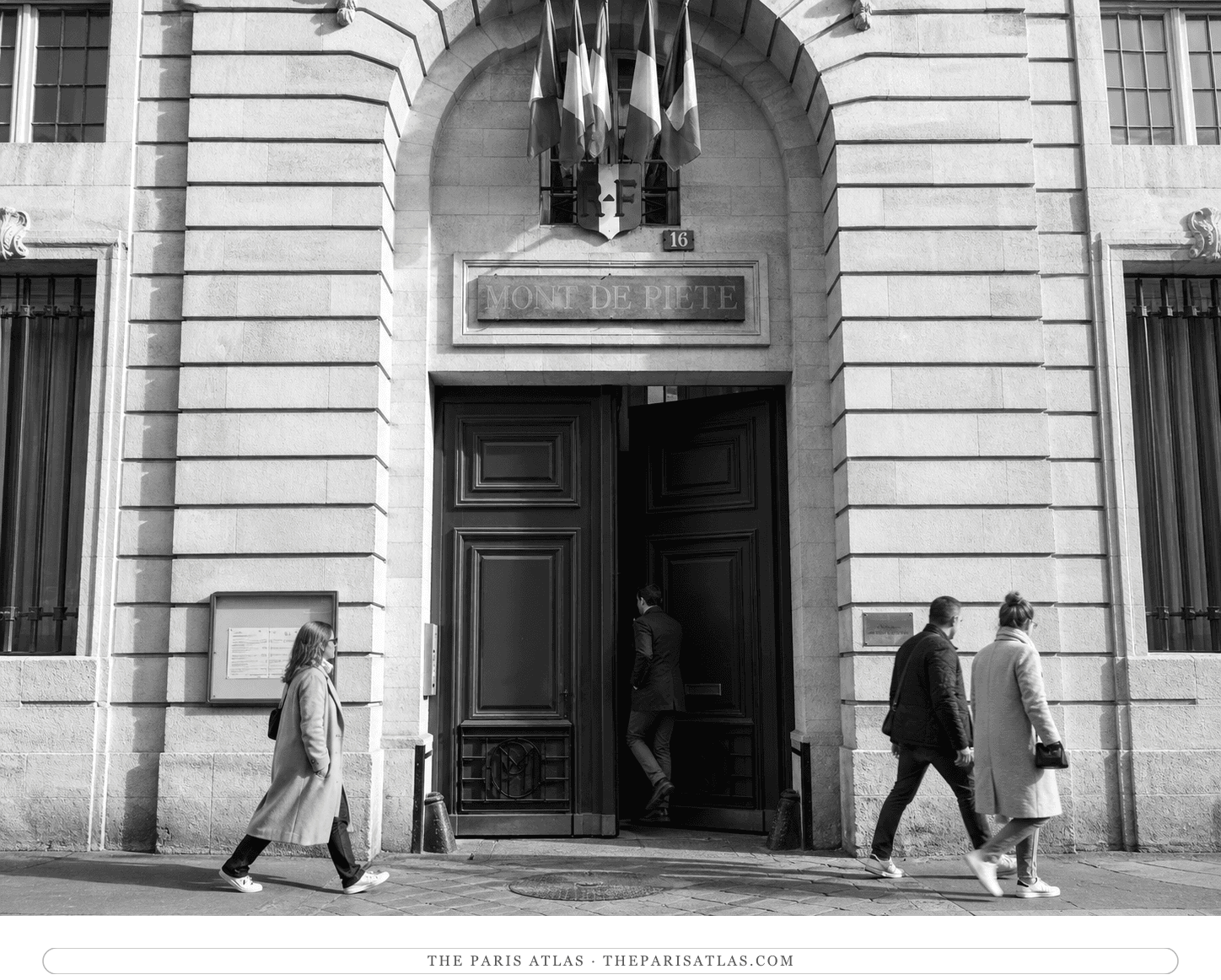
Getting inWalk straight in
What's there nowStill the same

Still the city's pawnbroker, still at the same Marais address, still lending against goods and holding public auctions — one of the few institutions in Orwell's Paris doing the same job in the same building.

The municipal pawnbroker of Paris, founded in 1777 and still trading from the same address in the Marais. Parisians called it ma tante — my aunt — and it is where George Orwell left his clothes for the money to eat during the poverty of Down and Out in Paris and London.

Address
55 rue des Francs-Bourgeois, 75004 Paris
Years
Founded 1777; Orwell pawned clothes with it in 1929

The place, briefly

The Crédit Municipal is the city's own pawnbroker. It was founded in 1777 as the mont-de-piété, a public institution set up to lend small sums against goods at controlled rates, expressly so that the poor would not have to go to private lenders charging whatever they liked. It has been doing that for nearly 250 years, and it is doing it today at 55 rue des Francs-Bourgeois.

Parisians called it ma tante — "my aunt" — the polite fiction you used when explaining where an object had gone. The nickname is the point: the institution was respectable enough to be a euphemism, and used widely enough to need one.

It runs all the way through the Paris half of Down and Out in Paris and London. George Orwell's poverty in that book is an arithmetic of what can be pawned and for how much, and the pawnshop is where the arithmetic is settled. Clothes go in; a few francs come out; the francs buy bread and tobacco and a bed for a few more days.

He also describes the process itself with the eye of someone who has queued in it — the valuations, the waiting, the way an institution designed to help the poor still processes them. The scene where he walks to a pawnshop with overcoats and finds it shut until four in the afternoon, having gone sixty hours without food, is on the boulevard de Port-Royal; the head office in the Marais is the institution behind it.

It is worth walking past for one reason above all the other Orwell addresses: nearly every other place in the book is either gone, renamed, or turned into something else. This one is still a pawnbroker, still municipal, still lending against what people bring in. You can go in.

Key facts

What it is
The municipal pawnbroker of Paris
Founded
1777, as the mont-de-piété
Nickname
Ma tante — "my aunt"
Why it existed
Controlled-rate lending to the poor, as an alternative to private moneylenders
In the book
Where Orwell pawned clothes for the money to eat
Today
Still trading at 55 rue des Francs-Bourgeois; still lends and still holds public auctions

Timeline

  1. 1777

    The mont-de-piété is founded as a public pawnbroker lending at controlled rates.

  2. 1929

    Orwell pawns clothing to eat during the events of Down and Out in Paris and London.

  3. 1933

    The book is published, with the pawnshop running through the Paris chapters.

  4. 2026

    Still operating from the same Marais address as the Crédit Municipal de Paris.

On the map

Questions before you go

What is the Crédit Municipal de Paris?

The city's own pawnbroker, founded in 1777 as the mont-de-piété. It was created so that Parisians short of money could borrow against their possessions at controlled rates rather than from private lenders. It still operates from 55 rue des Francs-Bourgeois in the Marais.

Why is it called "ma tante"?

"My aunt" was the polite euphemism Parisians used for the pawnshop — where you said an object had gone rather than admitting you had pawned it. The nickname stuck because the institution was both respectable and very widely used.

What is its connection to Orwell?

It is where he pawned clothes for money to eat during the events of Down and Out in Paris and London. Pawning is the engine of that book's Paris half — the whole economy of it is what can be pawned and for how much — and he describes the queueing and the valuations from the inside.

Can you go inside?

Yes, and that makes it unusual among Orwell's Paris addresses. Almost everything else in the book is demolished, renamed or turned into something else. The Crédit Municipal is still a working municipal pawnbroker at the same address, still lending against goods and still holding public auctions.

Writers who knew this place

Illustrated portrait of George Orwell

George Orwell

British · English novelist, essayist and journalist, born Eric Arthur Blair, who wrote Animal Farm and Nineteen Eighty-Four. He was an imperial policeman in Burma, a plongeur in Paris kitchens off the rue Mouffetard, and a militiaman shot through the neck in Spain before any of it.

Visited by · 1929

Orwell pawned clothing with the municipal pawnbroker to buy food during the events of Down and Out in Paris and London. Pawning is the engine of the book's Paris economy, and he describes the queueing and the valuations from inside the queue.

Qui donc était « Boris » ? (2024); George Orwell, Down and Out in Paris and London (1933)

Within walking distance

The Friday Letter

Paris, one address at a time.

The cafés, studios, and walk-up flats where the work was made — one story from the map in every letter.

One email a week. No spam, no selling your address. Unsubscribe anytime.