Le Marais
The old aristocratic quarter on the Right Bank that became the centre of gay Paris in the 1990s, at the end of a migration that started in Saint-Germain.
- Le Marais, 75004 Paris
- Aristocratic quarter 1600s; gay quarter since the 1990s
The place, briefly
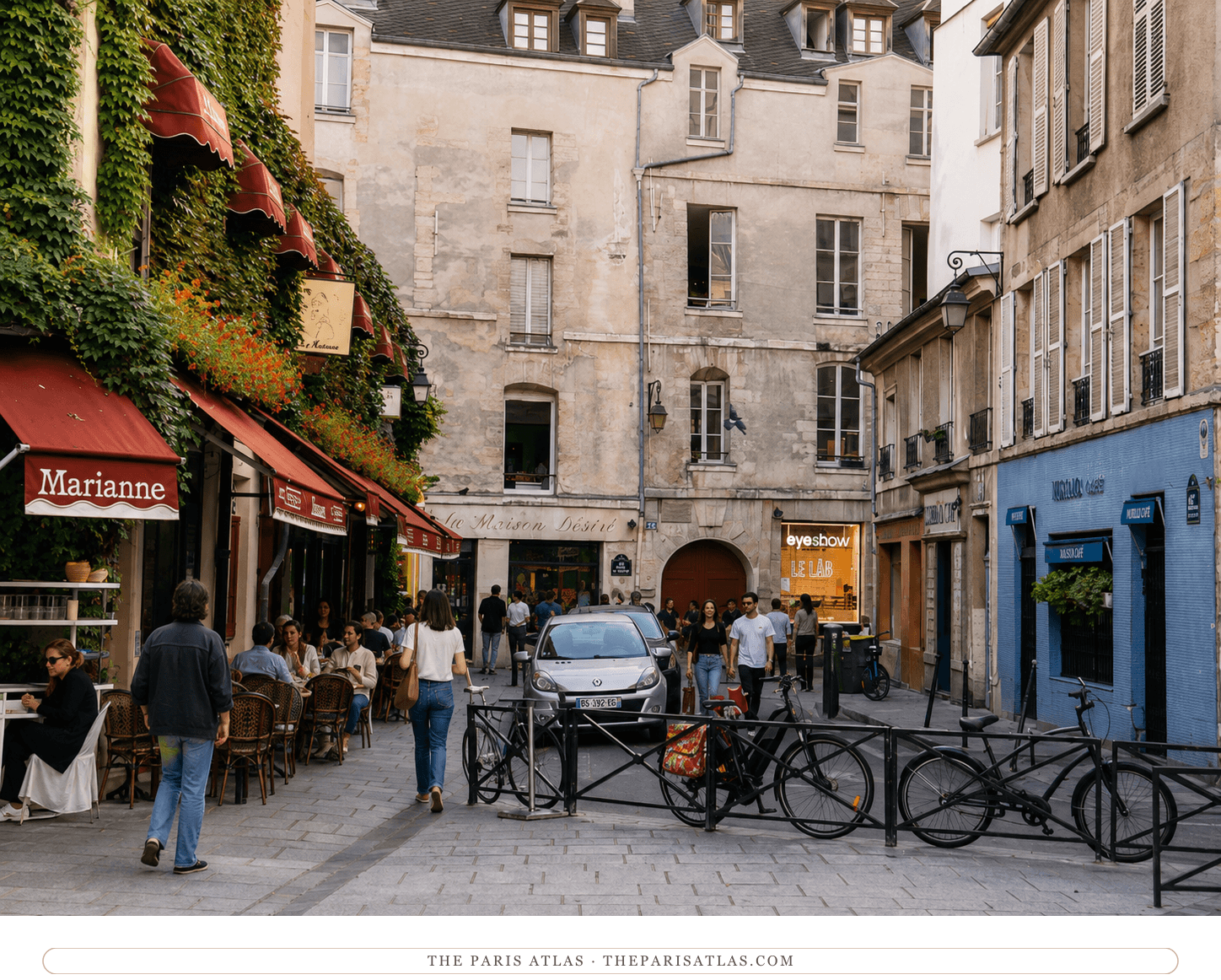
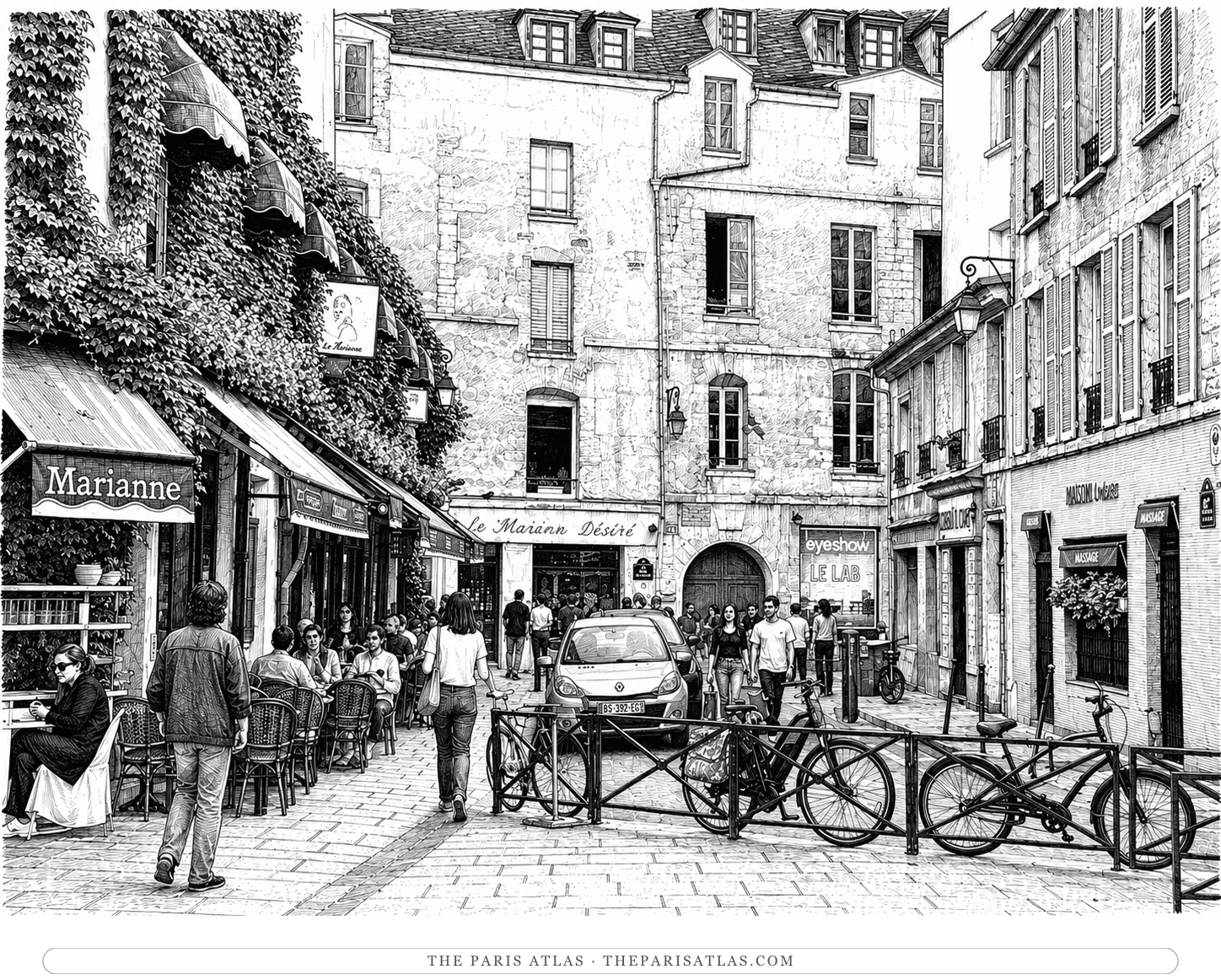
Le Marais is the part of Paris that Haussmann did not get to. The name means the marsh, which is what the ground was until the Knights Templar drained it in the twelfth century. Between 1600 and the Revolution it was where the aristocracy built, which is why the quarter is full of hôtels particuliers — the Hôtel de Sully, the Hôtel de Soubise, the Hôtel Salé that now holds the Picasso museum — standing behind gates on streets too narrow for the boulevards that were cut everywhere else.[1]
After the Revolution the aristocracy left and the quarter became a working district: workshops in the courtyards, and from the nineteenth century the centre of Jewish Paris, around the rue des Rosiers. That history is not decorative. The plaques on the schools in these streets record the children deported in 1942, and the rue des Rosiers is still where you go for the food.
By the 1960s the buildings were in bad enough condition that demolition was a real prospect. André Malraux, then culture minister, had the quarter protected in 1964, which is the reason it looks the way it does. The restoration took decades and made it expensive.
What matters about Le Marais now is what arrived after that. Since roughly the 1990s it has been the centre of gay Paris — the bars, the bookshops, the businesses, concentrated around the rue Vieille du Temple and the rue des Archives. That is a recent fact, and the recentness is the point.
James Baldwin's Paris was not here. He arrived in 1948, drank at La Reine Blanche on the boulevard Saint-Germain, and met Lucien Happersberger there in 1949. Giovanni's Room does not mention the Marais, and neither did the world it describes. In Baldwin's decade the visible homosexual life of the city was on the Left Bank, in Saint-Germain-des-Prés, a few hundred metres of boulevard on the other side of the river.[2]
What happened afterwards was a migration in stages. Saint-Germain held it through the 1940s and 1950s. In the 1970s the centre moved to the rue Sainte-Anne near the Opéra, a smaller and more discreet street of clubs. In the 1980s it moved again to Les Halles, after the market was demolished and the quarter was rebuilt. From the 1990s it has been here.[1]
So the Marais is the current end of a line that starts in Baldwin's bar. A reader who walks the rue Vieille du Temple on a Saturday night is standing in the fourth address of something that was on the boulevard Saint-Germain when Giovanni's Room was written, and that had to keep moving because rent, redevelopment and policing kept making the previous address impossible.
The quarter is easy to walk and worth a whole day. The place des Vosges, finished in 1612, is the oldest planned square in Paris and the best thing in it. The Musée Carnavalet holds the city's own history, including the porcelain ashtray that is nearly the only surviving object from Le Fiacre, the Saint-Germain bar where Baldwin drank.
Key facts
- Across the 3rd and 4th arrondissements, north of the Seine
- The marsh — drained by the Knights Templar in the 12th century
- The aristocratic quarter of Paris from 1600 to the Revolution
- Protected in 1964 by André Malraux, after demolition became a real prospect
- Since roughly the 1990s — around the rue Vieille du Temple and the rue des Archives
- He was in Saint-Germain in the 1940s and 1950s; Giovanni's Room never comes here
- Open. The place des Vosges, the Carnavalet, and the bars
In images
Timeline
The Knights Templar drain the marsh the quarter is named for.
The place des Vosges is completed, the oldest planned square in Paris.
The aristocracy builds its hôtels particuliers here.
The rue des Rosiers becomes the centre of Jewish Paris.
André Malraux has the quarter protected, halting demolition.
Gay Paris settles here, after Saint-Germain in the 1950s, the rue Sainte-Anne in the 1970s and Les Halles in the 1980s.
On the map
The name it carries
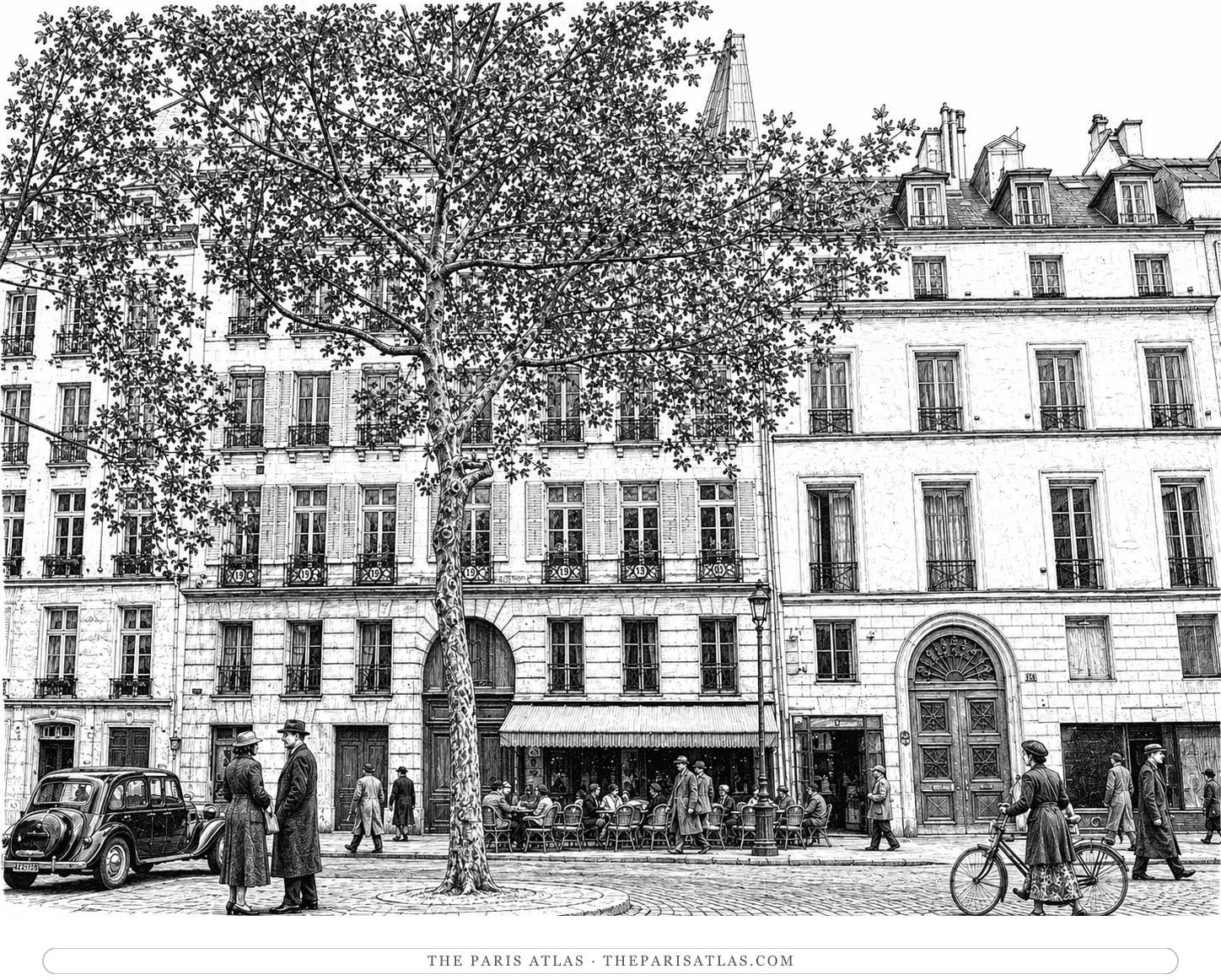 The historic original · Literary centre c. 1920–1960Saint-Germain-des-PrésGay Paris was in Saint-Germain in Baldwin's years, moved to the rue Sainte-Anne in the 1970s and Les Halles in the 1980s, and has been in the Marais since the 1990s. Baldwin never knew it here.See the historic original
Within walking distance
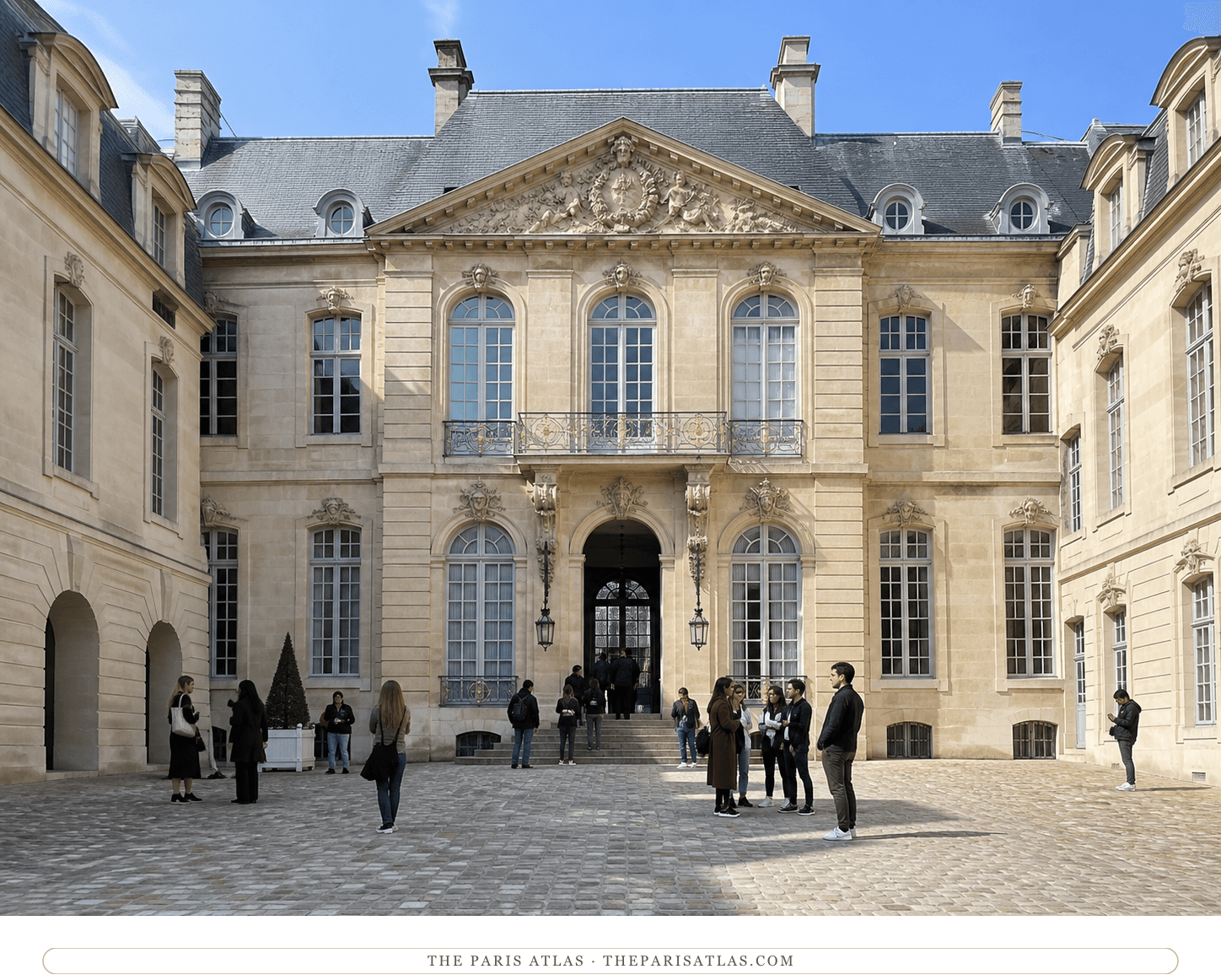
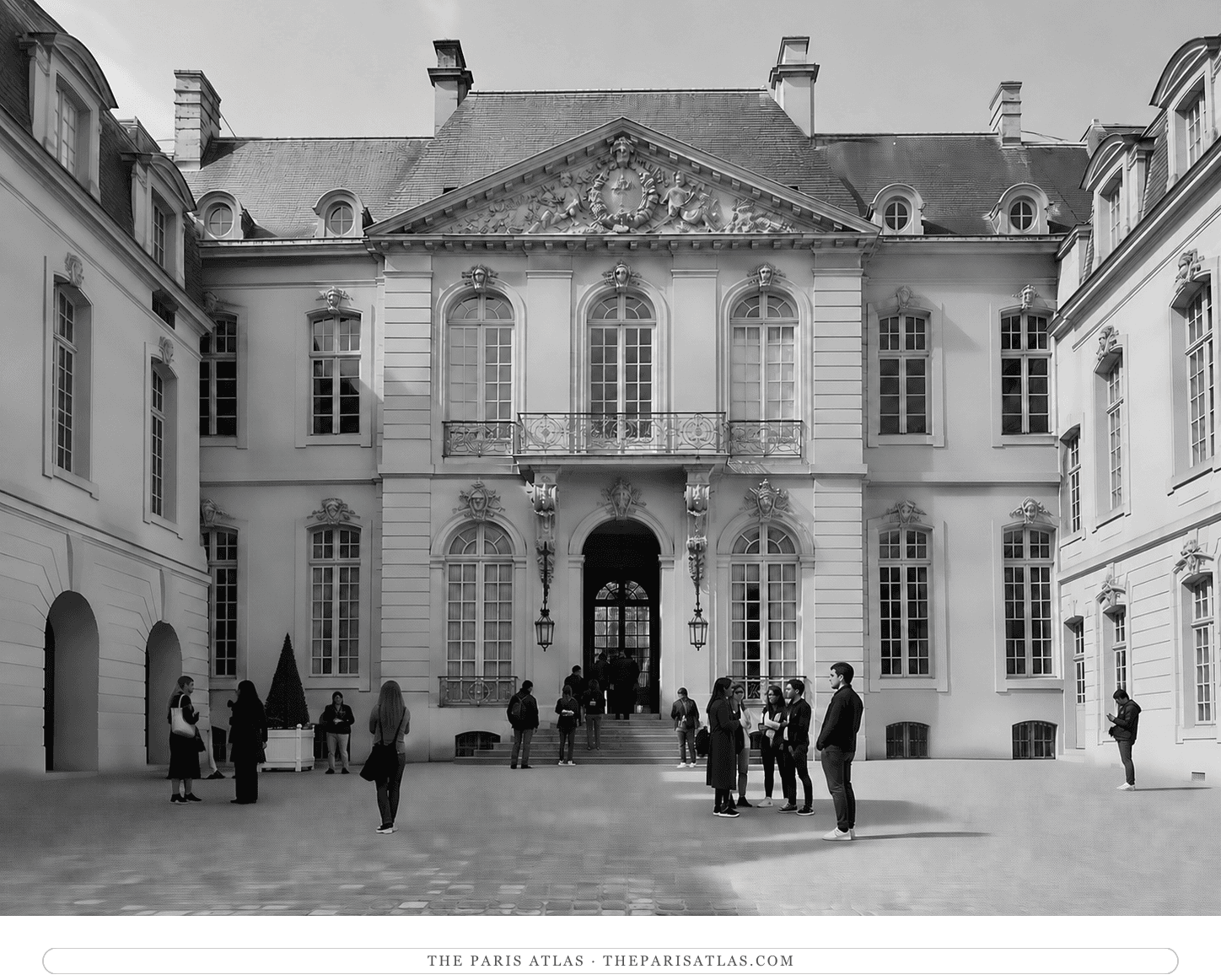
Musée national Picasso-Paris
The national Picasso collection, housed in the Hôtel Salé — a grand seventeenth-century Marais mansion built on the proceeds of the salt tax, which is where the nickname comes from. It holds the works Picasso kept for himself, which makes it a different kind of collection from any other.
Visit the place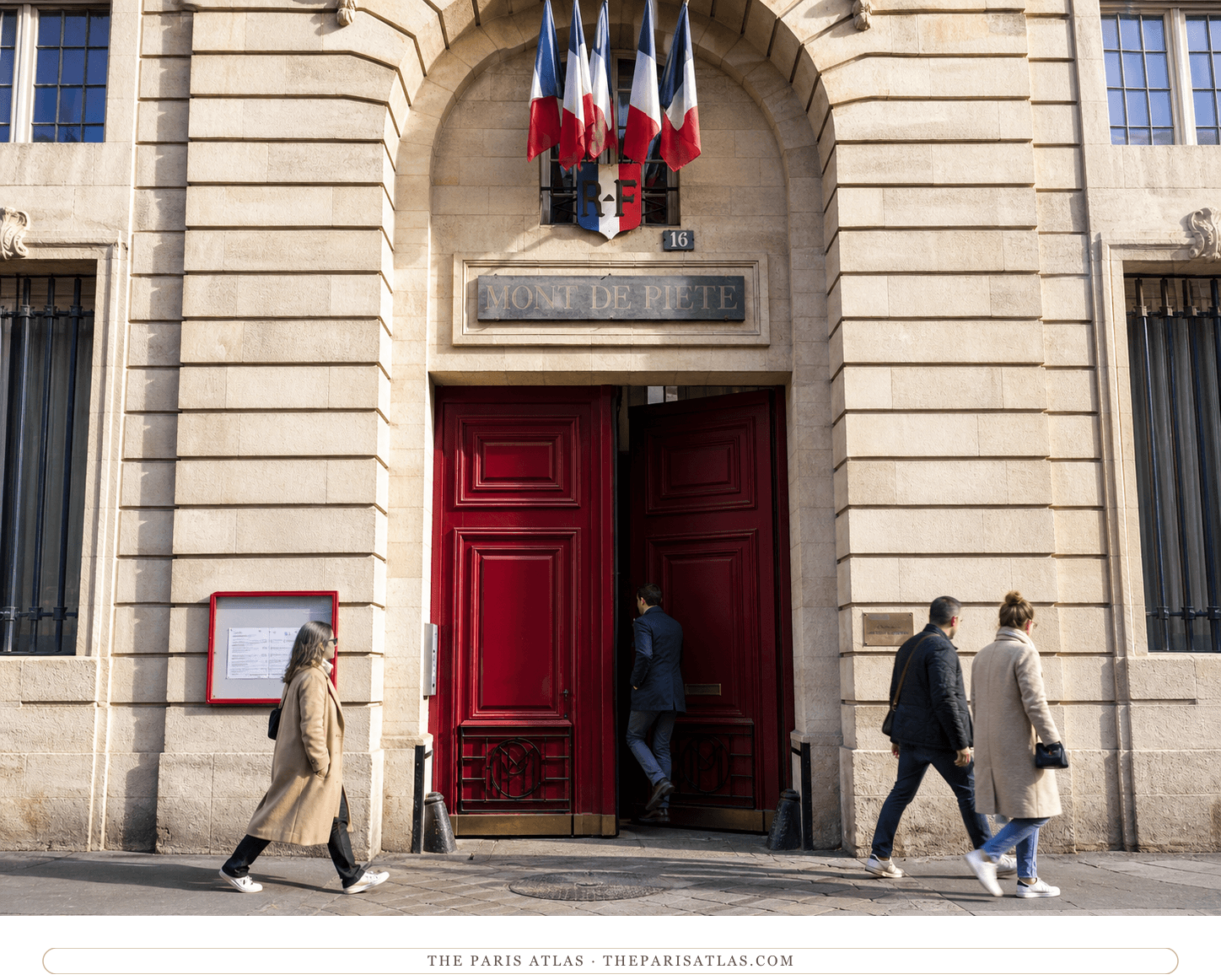
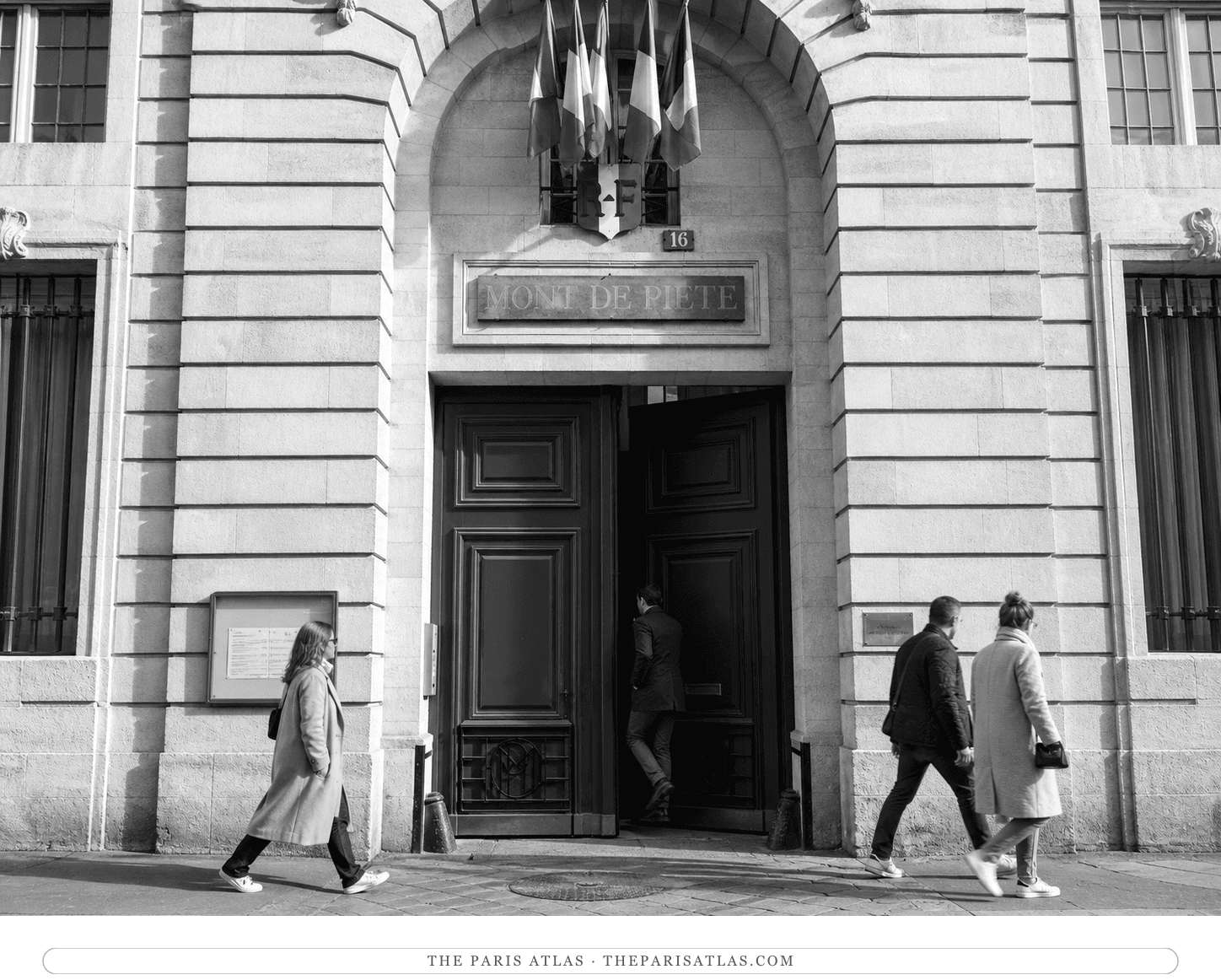
Crédit Municipal de Paris
The municipal pawnbroker of Paris, founded in 1777 and still trading from the same address in the Marais. Parisians called it ma tante — my aunt — and it is where George Orwell left his clothes for the money to eat during the poverty of Down and Out in Paris and London.
Visit the place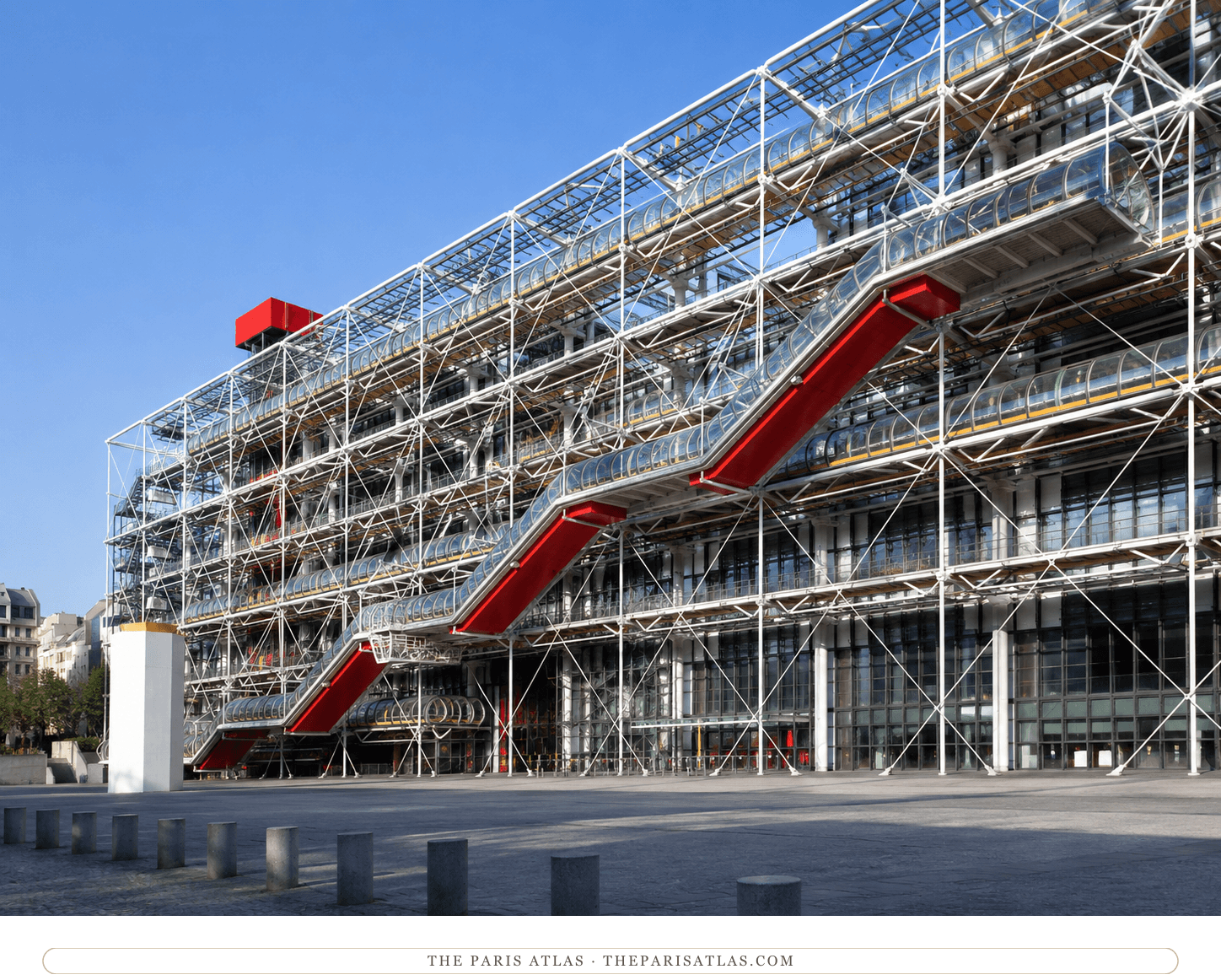
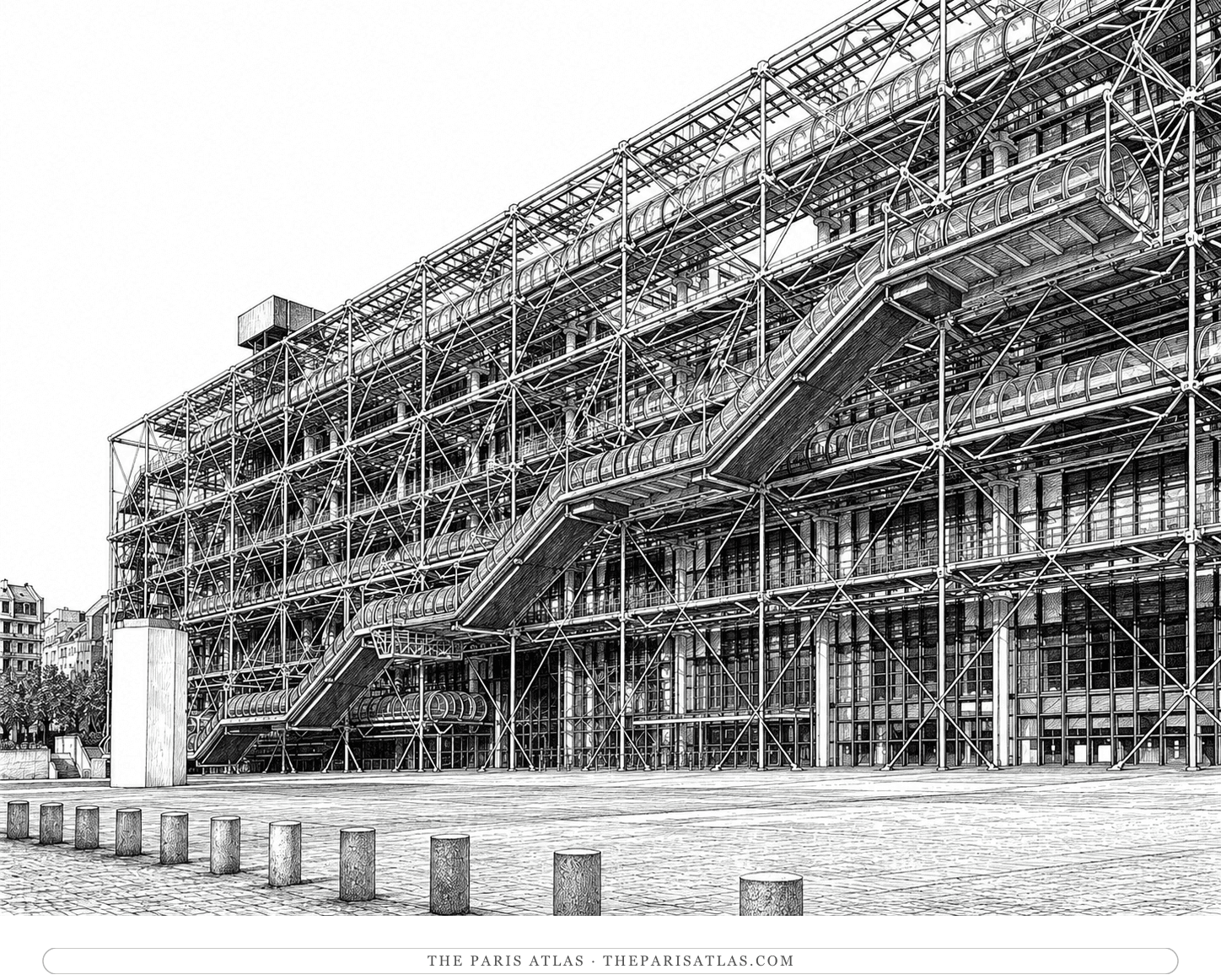
Centre Pompidou
The inside-out building of 1977 that houses the Musée national d'art moderne, closed for a five-year renovation since September 2025.
Visit the place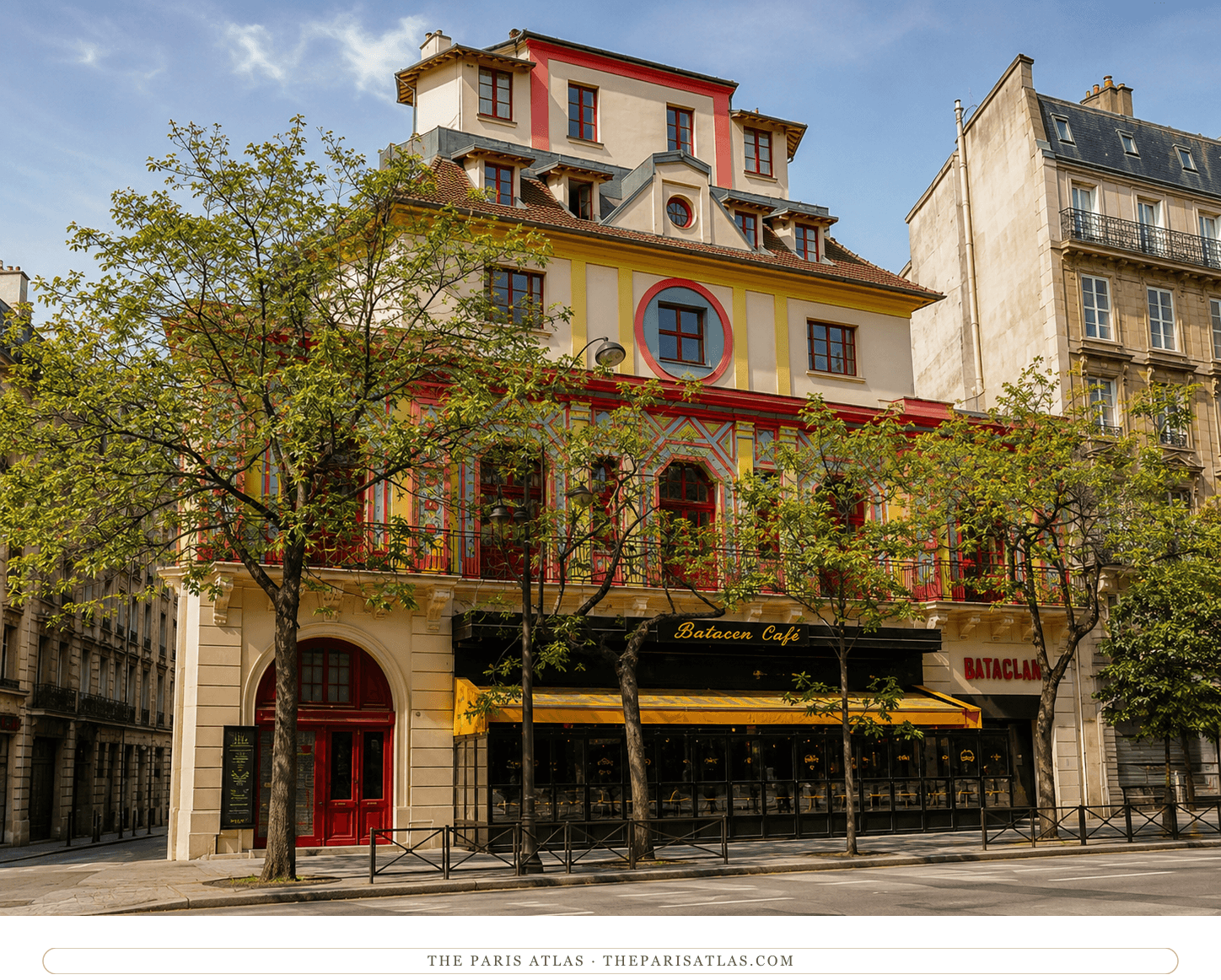
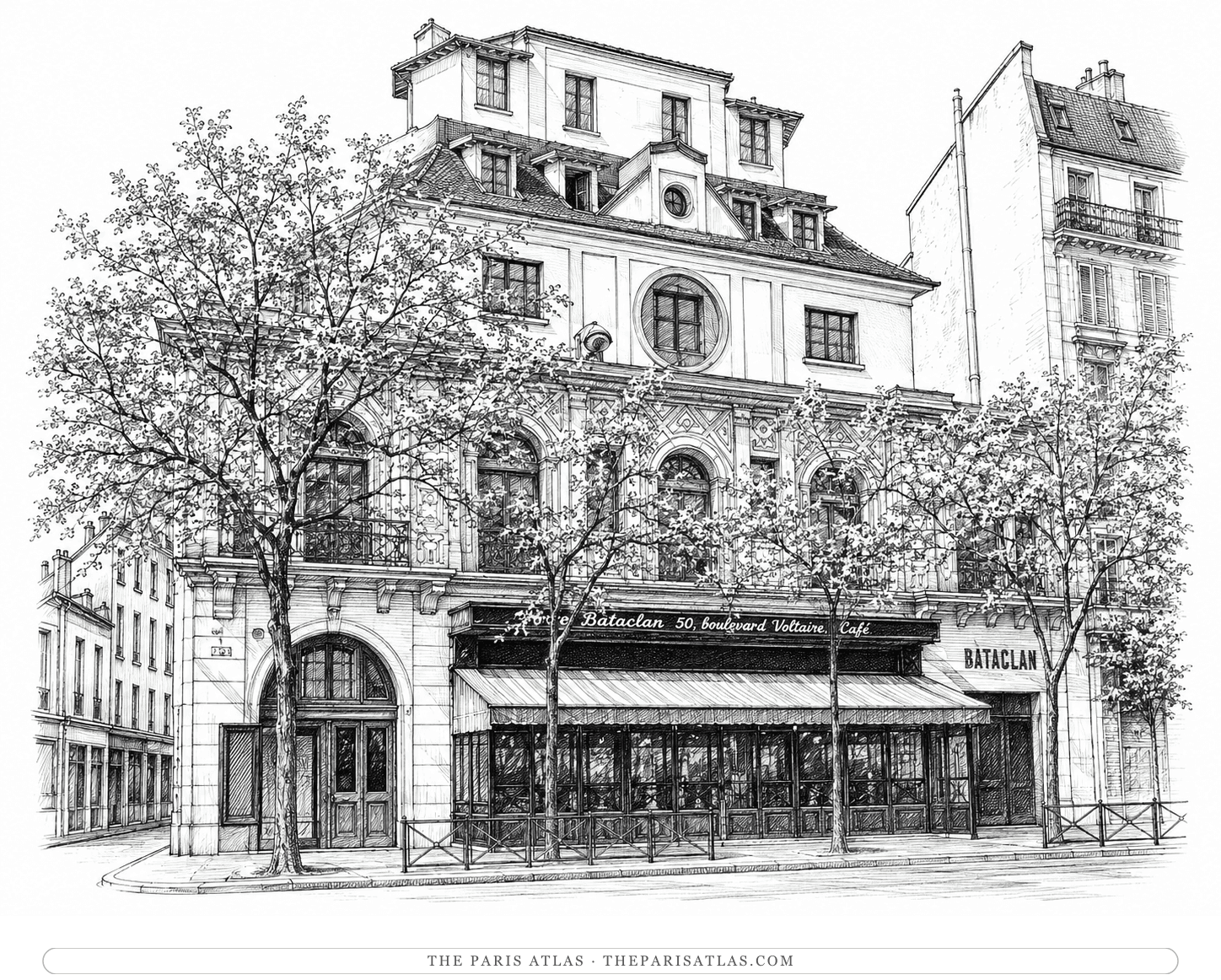
Bataclan
The Chinoiserie music hall on boulevard Voltaire where Colette performed mimodramas in 1911 and 1912, toward the end of her stage career.
Visit the placeReferences
The sources below include histories, archival materials, scholarly research, and official records that informed this page. They document Le Marais, the people connected to it, and its place in Paris.


2↑The Barnes Foundation Presents Marie Laurencin: Sapphic Paris
WebsiteBarnes Foundation, 2023Used forWeb source consulted for documented facts and historical context presented on the Le Marais page.

3Radclyffe Hall — Explore the Collection (DPP 1/88, file on The Well of Loneliness obscenity trial)
ArchiveThe National ArchivesUsed forArchival evidence used to document the historical record connected to Le Marais.
4Nightwood: The Original Version and Related Drafts, edited by Cheryl J. Plumb — edition note
WebsiteDalkey Archive PressUsed forWeb source consulted for documented facts and historical context presented on the Le Marais page.
These references provide the documented foundation for this page's history and context. Claim-level citations remain attached to the specific claims they support.
 Explore more resources
Newsletter
Paris, one address at a time.
The cafés, studios, and walk-up flats where the work was made — one story from the map in every letter.