The Paris AtlasCharting the artists, works, and places worth returning to.

Theatre · Oberkampf · 11e arrondissement

Bataclan

The buildingStill standing
Getting inHours or admission
What's there nowStill the same

Still a working concert hall at 50 boulevard Voltaire. The pagoda roof of the original Chinoiserie façade was removed long ago; the front was repainted in its first colours in 2006.

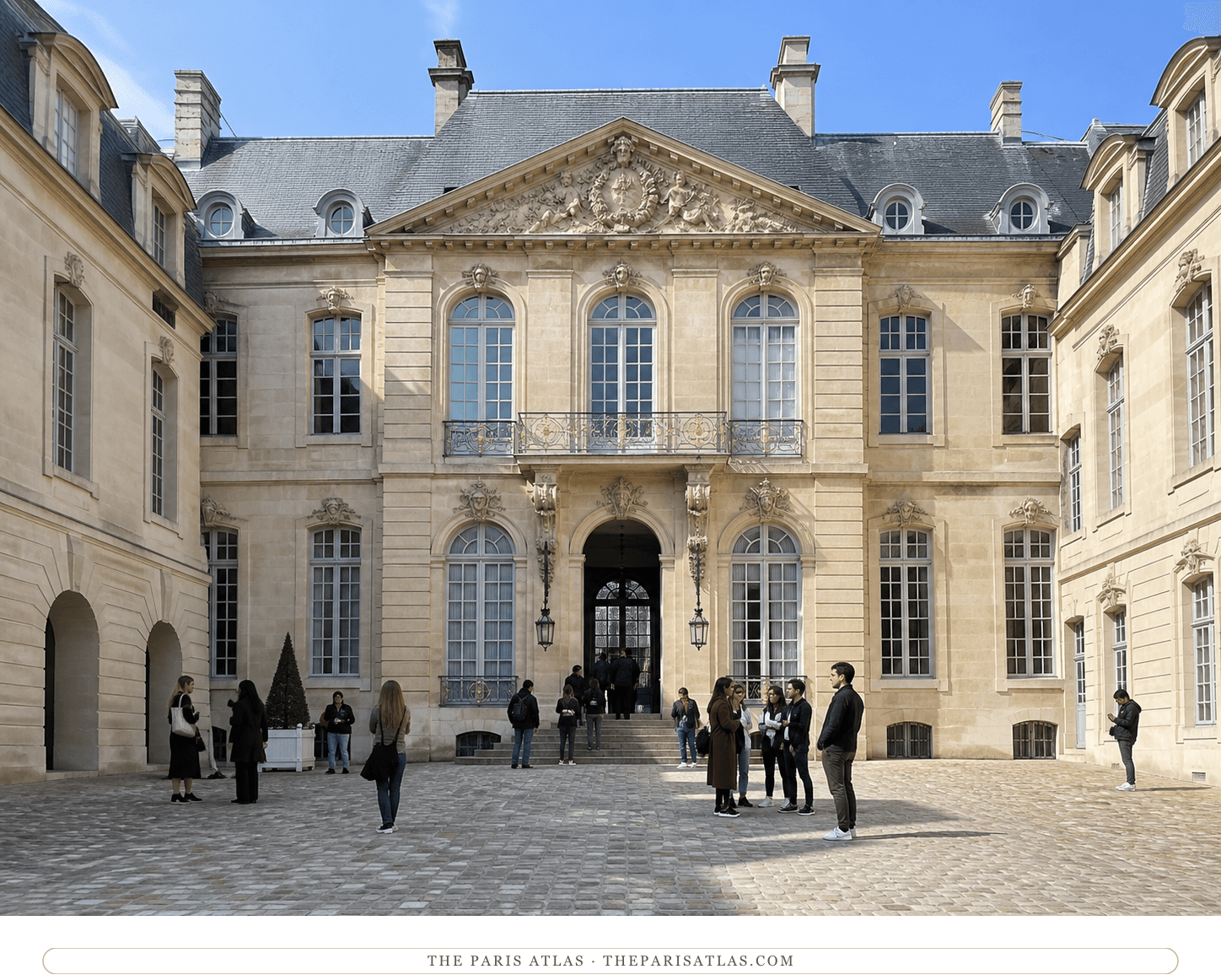
The Chinoiserie music hall on boulevard Voltaire where Colette performed mimodramas in 1911 and 1912, toward the end of her stage career.

Address
50 boulevard Voltaire, 75011 Paris
Years
1865–present
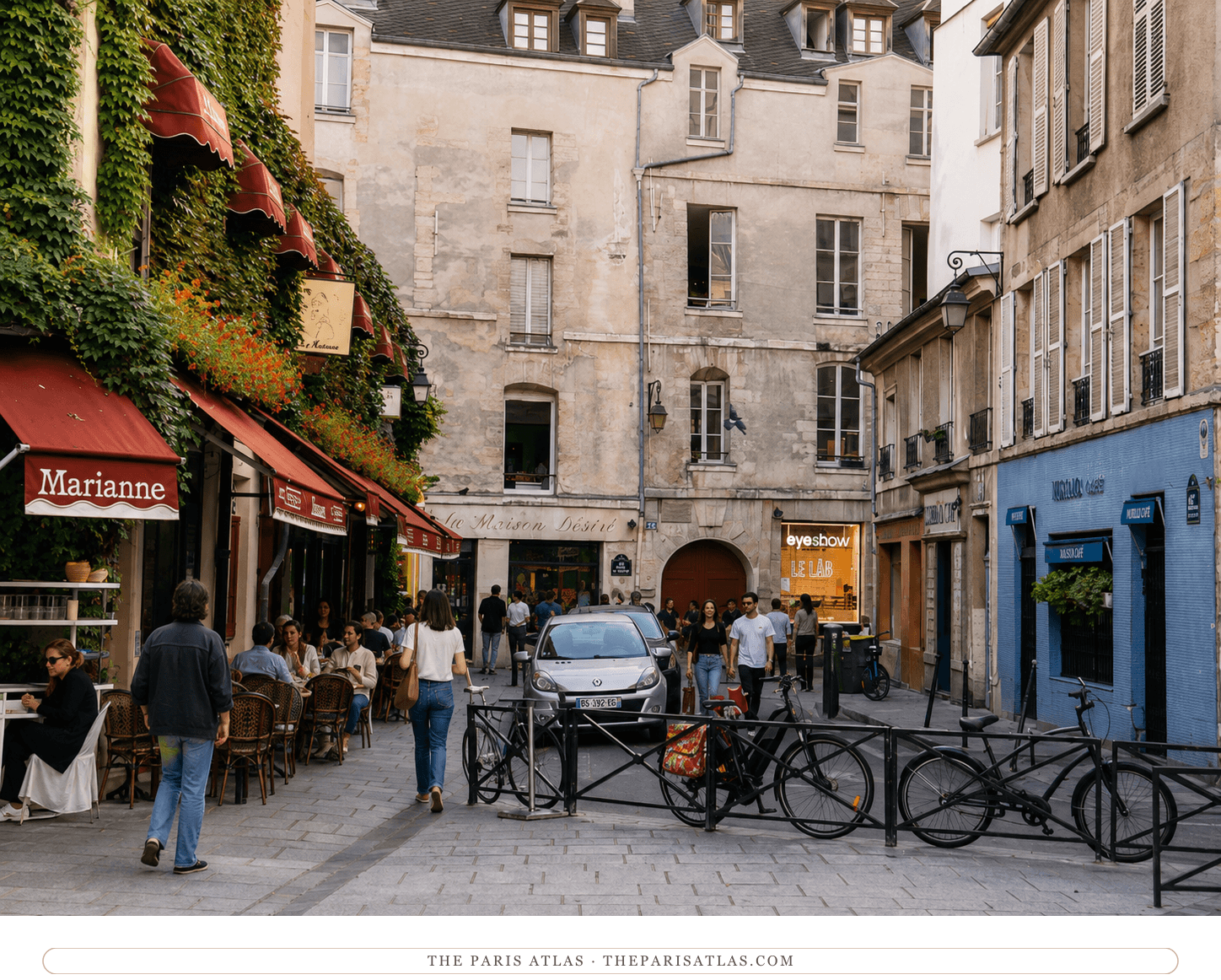
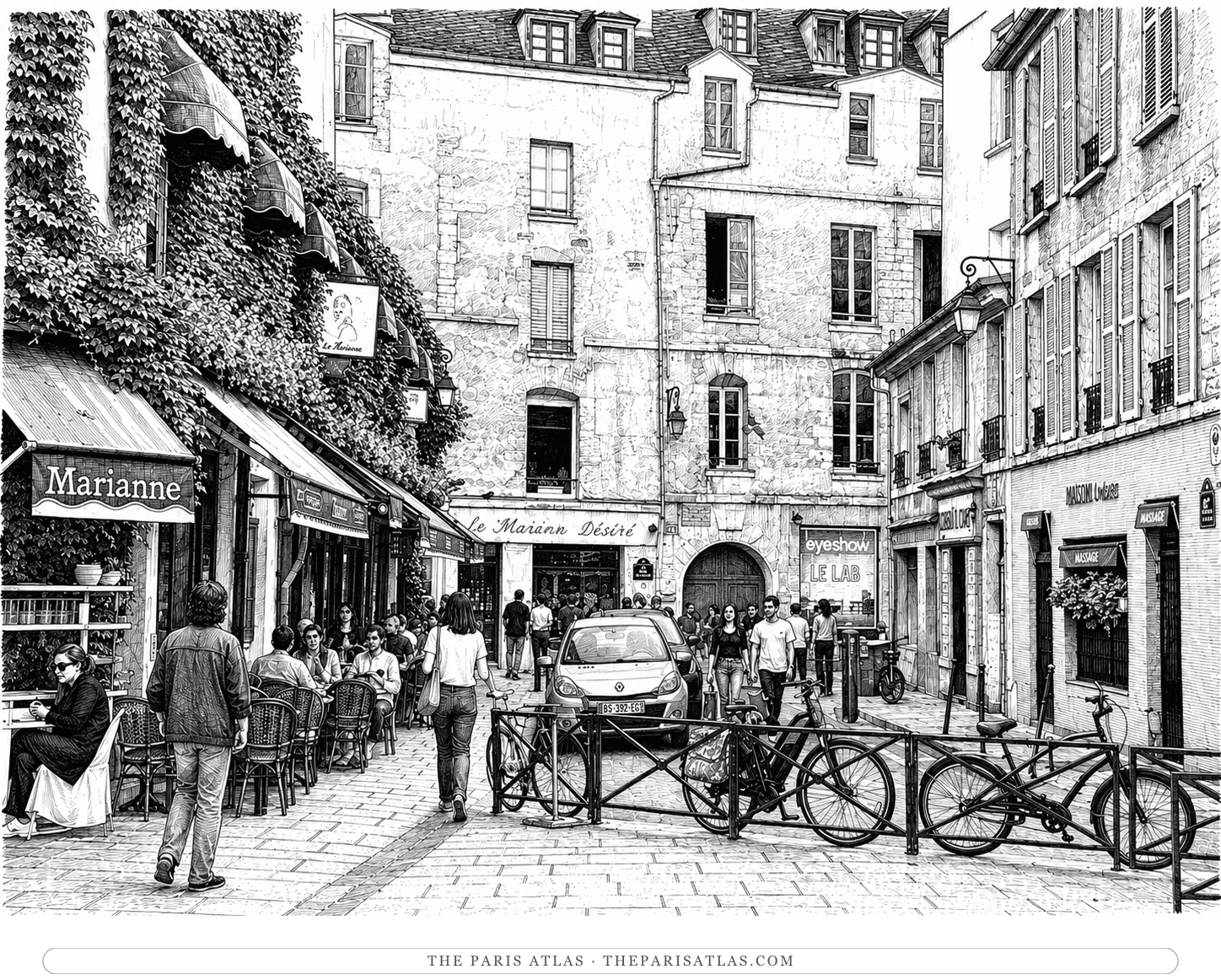
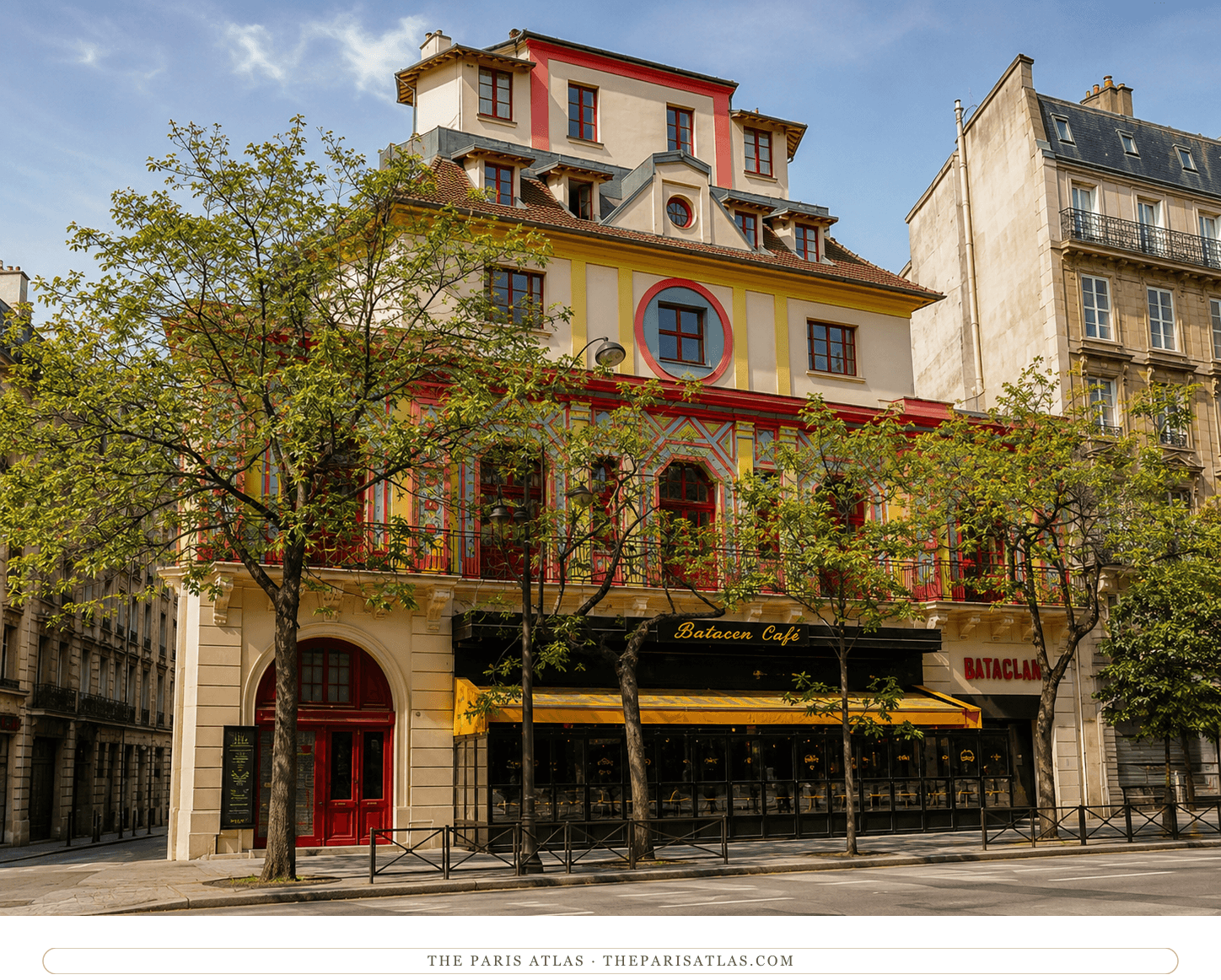
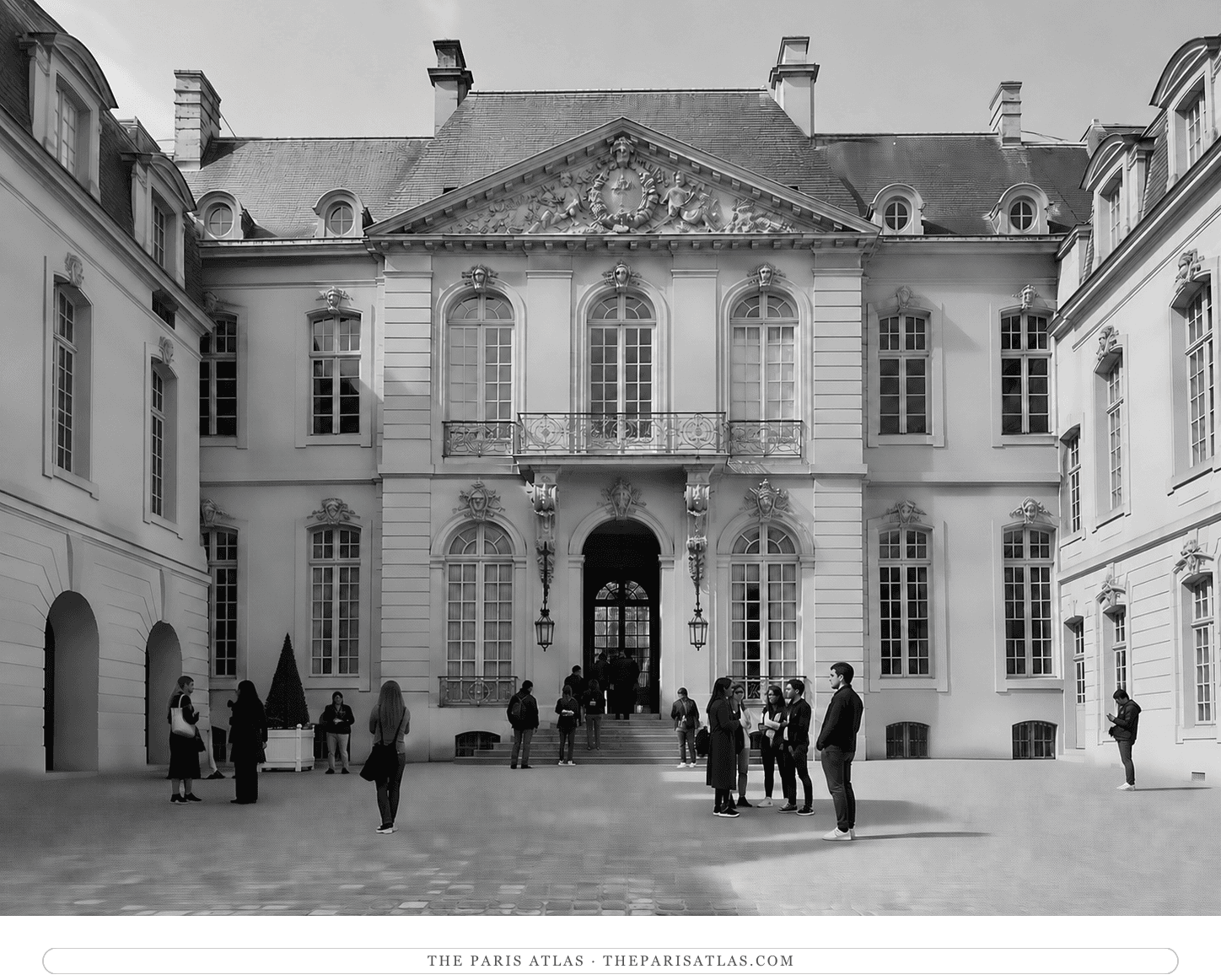
IllustrationThe Bataclan façade and café terrace in colour on boulevard Voltaire

The hall today, still a working concert venue.

Editorial illustration

The place, briefly

The Bataclan opened in 1865 as the Grand Café Chinois, a large café-concert designed by the architect Charles Duval in the Chinoiserie style, with a pagoda roof and a dance hall above the ground-floor theatre. It took its lasting name from Ba-ta-clan, an operetta by Jacques Offenbach, and settled into a long career as a Paris music hall.

Colette appeared here in the last stretch of her years on the stage. On 28 August 1911 she created the mimodrama Aux Bat. d'Af. with Georges Wague, her regular partner and teacher in pantomime, playing a part billed as la Pouliche; the run continued into September, followed by a revival of her pantomime La Chair. She returned in 1912 for the revue Ça grise in the spring and a revival of L'Oiseau de nuit that autumn.

By this point Colette had been performing in music halls since 1906, when she left her first husband and turned to the stage for a living. The Bataclan was one of several houses — with the Moulin Rouge and the Théâtre Marigny — where her revealing costumes and mime roles drew crowds. She left the stage after her marriage to Henry de Jouvenel and her return to full-time writing.

The hall still stands and operates as a concert venue. On 13 November 2015 it was the site of a terrorist attack during a rock concert; it was repaired and reopened in November 2016.

Key facts

Address
50 boulevard Voltaire, 11th arrondissement
Opened
1865, as the Grand Café Chinois, by architect Charles Duval
Colette's connection
Performed mimodramas here in 1911–1912, including the creation of Aux Bat. d'Af. with Georges Wague
Today
Still a working concert hall on boulevard Voltaire
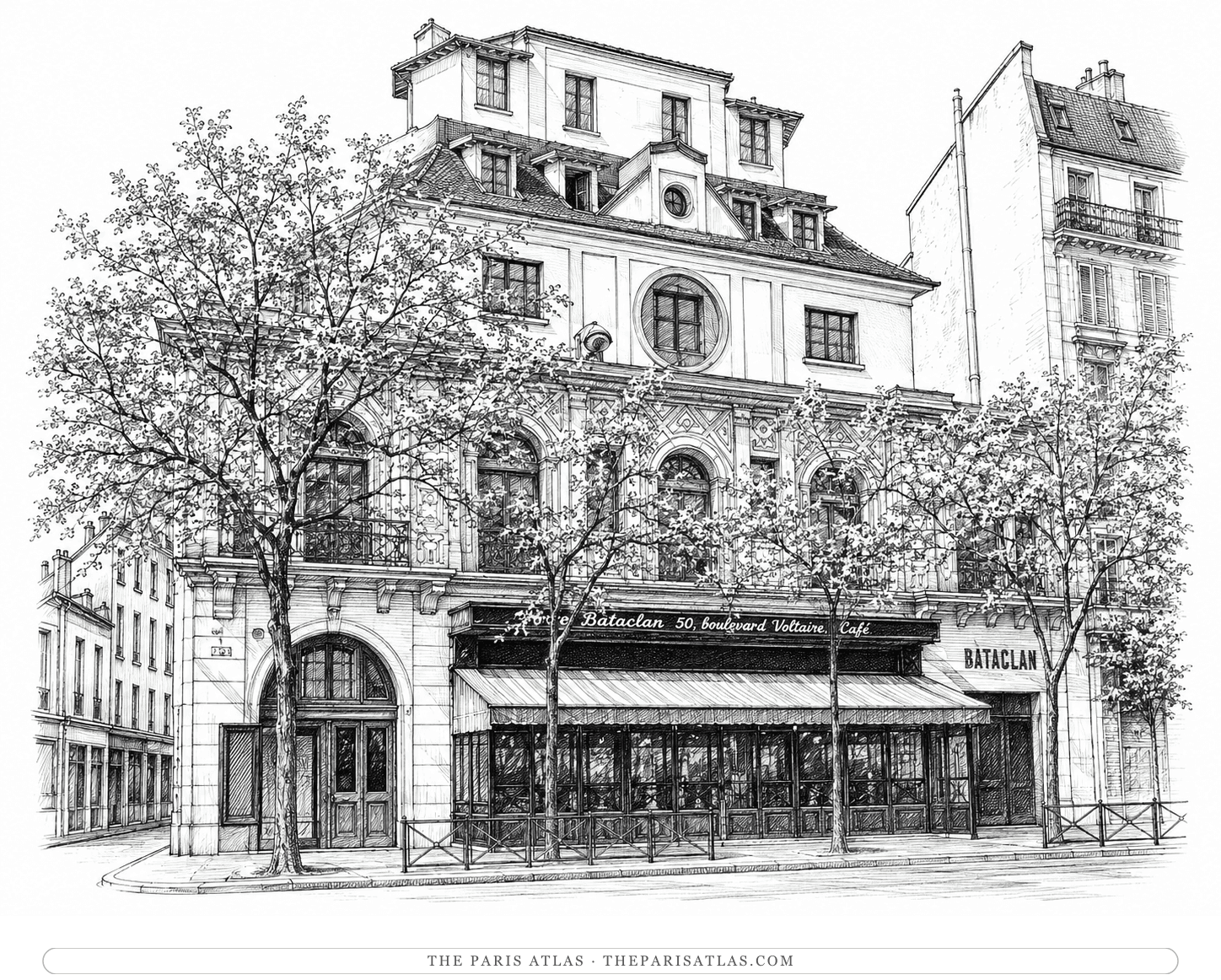
The Bataclan on boulevard Voltaire, where Colette performed mimodramas in 1911 and 1912.Editorial illustration
The hall today, still a working concert venue.Editorial illustration

Timeline

  1. 1865

    The Bataclan opens as the Grand Café Chinois, a Chinoiserie café-concert designed by Charles Duval.

  2. 1911

    Colette creates the mimodrama Aux Bat. d'Af. with Georges Wague on 28 August, followed by a revival of La Chair.

  3. 1912

    She returns for the revue Ça grise in spring and a revival of L'Oiseau de nuit in autumn.

  4. 2015

    The hall is the site of a terrorist attack on 13 November; it reopens in November 2016.

On the map

Questions before you go

Did Colette perform at the Bataclan?

Yes. She appeared there in 1911 and 1912, near the end of her music-hall career. In August 1911 she created the mimodrama Aux Bat. d'Af. with Georges Wague, and she returned in 1912 for the revue Ça grise.

What did Colette perform at the Bataclan?

Mimodramas and revues. Her documented appearances are Aux Bat. d'Af. and a revival of La Chair in 1911, then Ça grise and a revival of L'Oiseau de nuit in 1912.

Who was Georges Wague?

The mime who was Colette's stage partner and teacher through her music-hall years. He created several pantomimes with her, including Aux Bat. d'Af. at the Bataclan in 1911.

When did the Bataclan open, and what was it originally?

It opened in 1865 as the Grand Café Chinois, a café-concert in the Chinoiserie style designed by the architect Charles Duval, with a pagoda roof. It was named after Offenbach's operetta Ba-ta-clan.

Is the Bataclan still open?

Yes. It remains a working concert hall at 50 boulevard Voltaire. It was the site of a terrorist attack on 13 November 2015 and reopened in November 2016.

Writers who knew this place

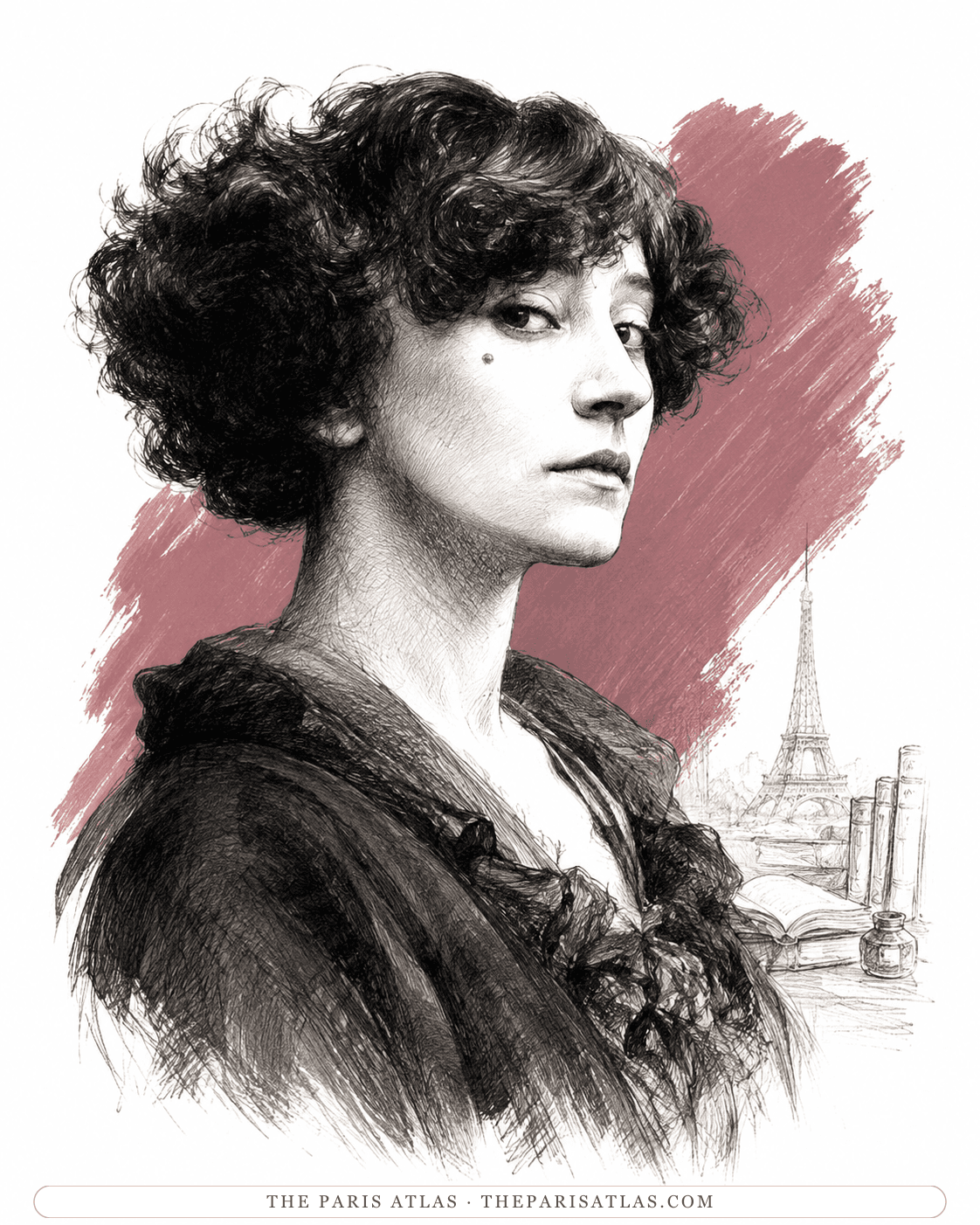
Illustrated portrait of Colette

Colette

French · The French novelist who wrote the Claudine books under Willy’s name, earned her independence on the music-hall stage, and made women’s private lives a serious literary subject.

Performed here · 1911–1912

Colette performed at the Bataclan across 1911 and 1912, near the end of her music-hall years. In late August 1911 she created the mimodrama Aux Bat. d'Af. with Georges Wague, followed by a revival of her pantomime La Chair; in 1912 she appeared in the revue Ça grise and a revival of L'Oiseau de nuit.
— Colette sur scène; Une balade sur les pas de Sidonie devenue Colette

Within walking distance

References

References

The sources below include histories, archival materials, scholarly research, and official records that informed this page. They document Bataclan, the people connected to it, and its place in Paris.

  1. 1Colette sur scène

    Website
    Société des amis de Colette
    Used for

    Web source consulted for documented facts and historical context presented on the Bataclan page.

    View source
  2. 2Une balade sur les pas de Sidonie devenue Colette

    Website
    Ville de Paris
    Used for

    Web source consulted for documented facts and historical context presented on the Bataclan page.

    View source
  3. 3The venue — Bataclan

    Website
    Le Bataclan, Paris
    Used for

    The hall's own account of itself: built in ten months as the Grand Café Chinois, named after Offenbach's one-act operetta, and reopened with Sting a year after 13 November.

    View source
  1. 4Le Bataclan, la vie d'avant, la vie d'après

    Website
    Ville de Paris
    Used for

    The city's history of the hall: Charles Duval's pagoda of 1865, the attack of 13 November 2015, and the reopening on 12 November 2016.

    View source
  2. 5OpenStreetMap

    Map data
    Used for

    Map data used to verify addresses, geographic coordinates, and the placement associated with Bataclan.

    View source
i
Why these sources are here

These references provide the documented foundation for this page's history and context. Claim-level citations remain attached to the specific claims they support.

Explore more resources

Newsletter

Paris, one address at a time.

The cafés, studios, and walk-up flats where the work was made — one story from the map in every letter.

Unsubscribe anytime.