Langston Hughes
- Poet
- Author
- Playwright
- +1
Met · 1924
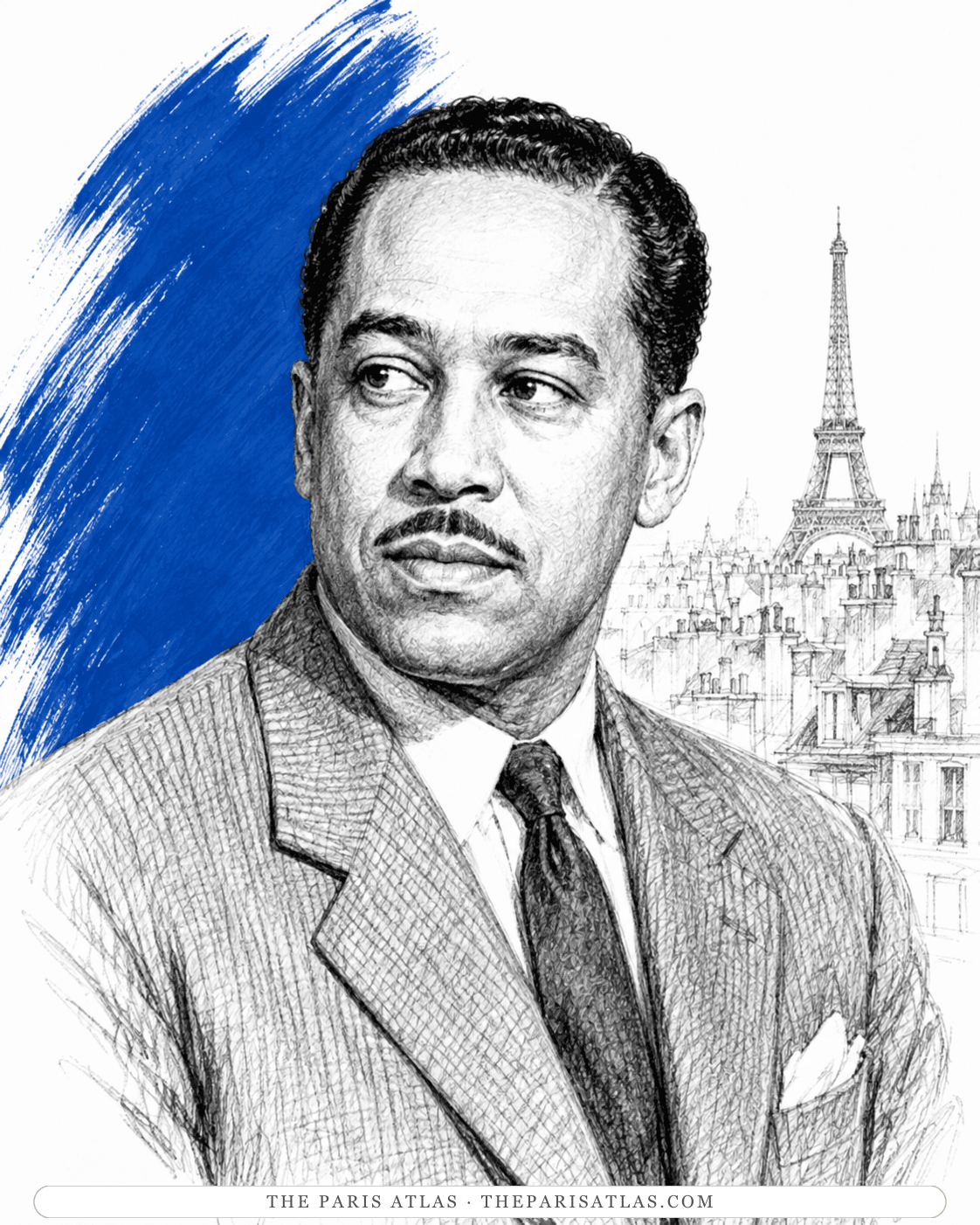
Locke sought Hughes out in Paris in 1924, visited the young poet's Montmartre attic, recruited poems for the project that became The New Negro, and became an important early mentor.
American philosopher, editor and Howard professor who became the first Black Rhodes Scholar and gave the Harlem Renaissance its defining anthology, The New Negro.
Alain Locke was the philosopher, editor, teacher and cultural critic who helped turn a concentration of Black talent in 1920s New York into a movement readers could recognize. He did not invent the phrase “New Negro,” and no single person created the Harlem Renaissance. What Locke did was connect writers, artists, publishers and patrons, give their work an intellectual frame, and place it before a national audience in The New Negro (1925).
He was also the first African American selected as a Rhodes Scholar, a Harvard-trained philosopher who spent most of his career at Howard University, a collector and advocate for Black visual art, and a gay man whose private attachments existed under social conditions that made public openness professionally dangerous. His importance lies less in one famous sentence than in a lifetime of mediation: between generations, between Africa and modern America, between art and philosophy, and between young creators and the institutions that could publish them.
Alain LeRoy Locke was born in Philadelphia on 13 September 1885 to Pliny Ishmael Locke and Mary Hawkins Locke, both members of the city's educated Black middle class. His father died when Alain was young. His mother, a teacher, directed the household toward study, culture and self-command. Childhood rheumatic fever left him with a damaged heart and limited some physical activity, helping make books, music and art the territory in which he competed.[1]
He attended Philadelphia's Central High School and the School of Pedagogy before entering Harvard. In 1907 he graduated with honors, was elected to Phi Beta Kappa, and won the Rhodes Scholarship. The achievement made headlines because he was the first African American selected. It did not protect him from racism when he reached Oxford.
At Hertford College, Oxford, Locke studied literature, philosophy, Greek and Latin. Several American Rhodes Scholars refused to include him in their gatherings, an exclusion that exposed the limits of academic distinction in a segregated culture. Europe nevertheless widened his intellectual world. He studied philosophy at the University of Berlin, traveled on the continent, learned languages, visited galleries and developed the cosmopolitan approach to culture that later shaped his criticism.[2]
Locke returned to the United States without an easy academic path. White universities largely excluded Black scholars from faculty careers. Howard University hired him in 1912 to teach English. He returned to Harvard for doctoral study and received his PhD in philosophy in 1918, writing on classification and theories of value.
Locke returned to Howard and helped establish one of the first philosophy departments at a historically Black university, becoming its chair in 1921. He taught generations of students to think about value not as a fixed property descending from authority but as something shaped through human judgment, culture and experience. That philosophical interest explains why his art criticism was never a side hobby: questions of taste, standards and cultural difference were philosophy in public.[3]
His Howard career was not placid. He challenged unequal pay and university governance, lost his position during one dispute, and returned. Over four decades he taught, lectured, organized exhibitions, developed adult-education booklets and built an art collection. Howard now holds his papers, personal library, sheet music and art, and its College of Arts and Sciences building bears his name.[4]
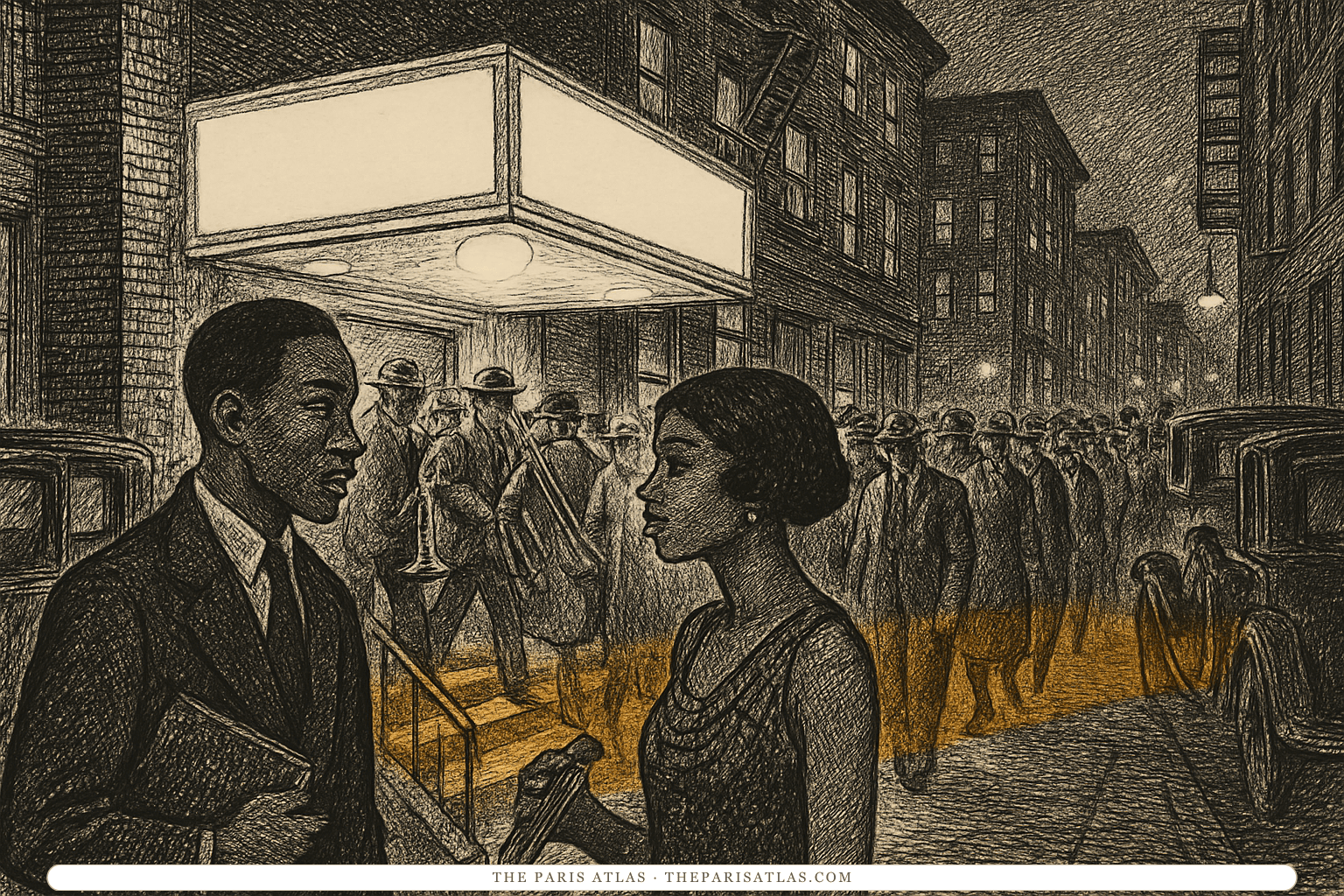
In March 1924, Locke helped organize a dinner at New York's Civic Club intended to introduce young Black writers to publishers and patrons. The room brought together generations that usually met separately: established figures including W. E. B. Du Bois and James Weldon Johnson, younger writers including Countee Cullen, and white publishing representatives who could offer contracts. The dinner did not begin the Harlem Renaissance, but it made visible the network on which the movement depended.
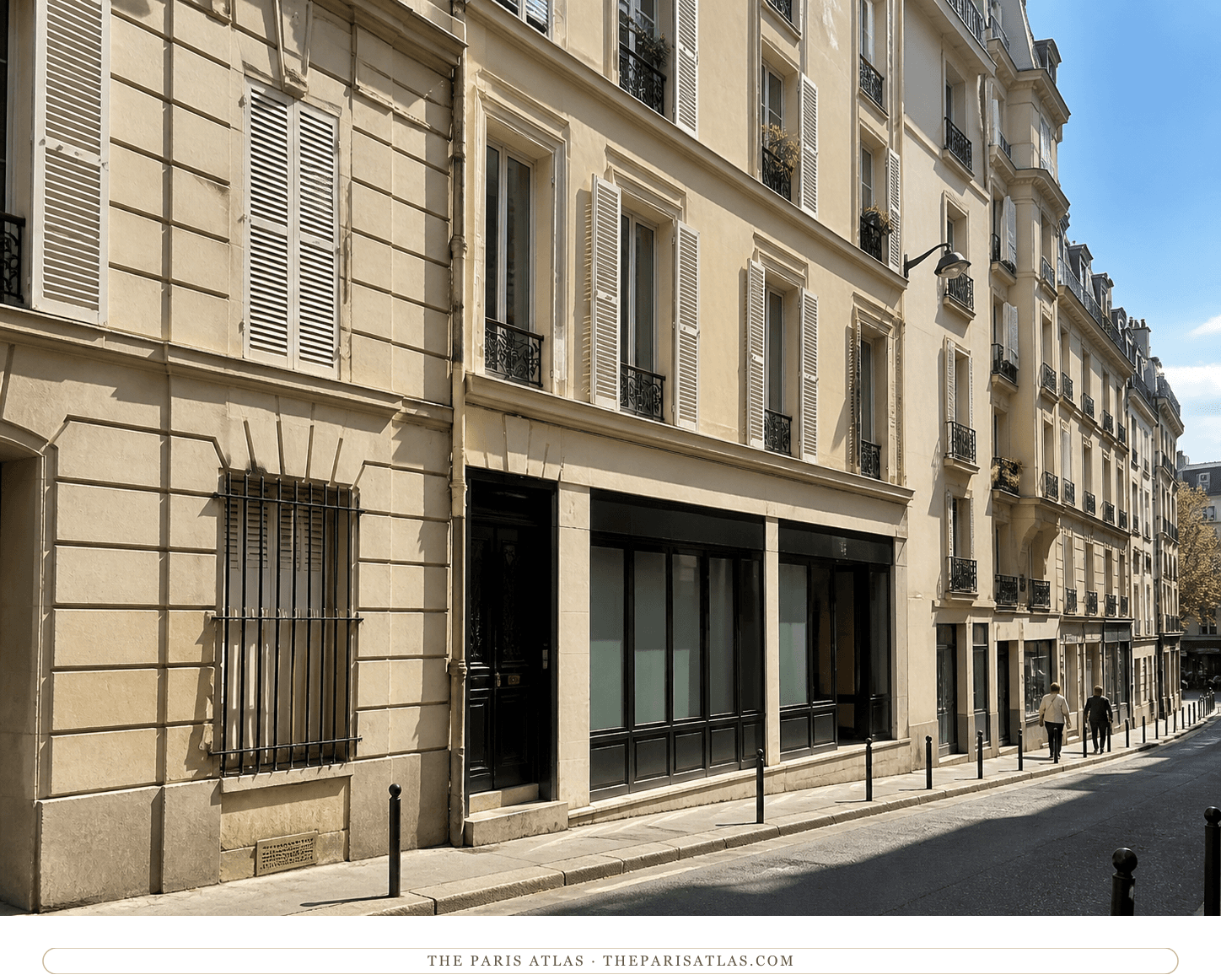
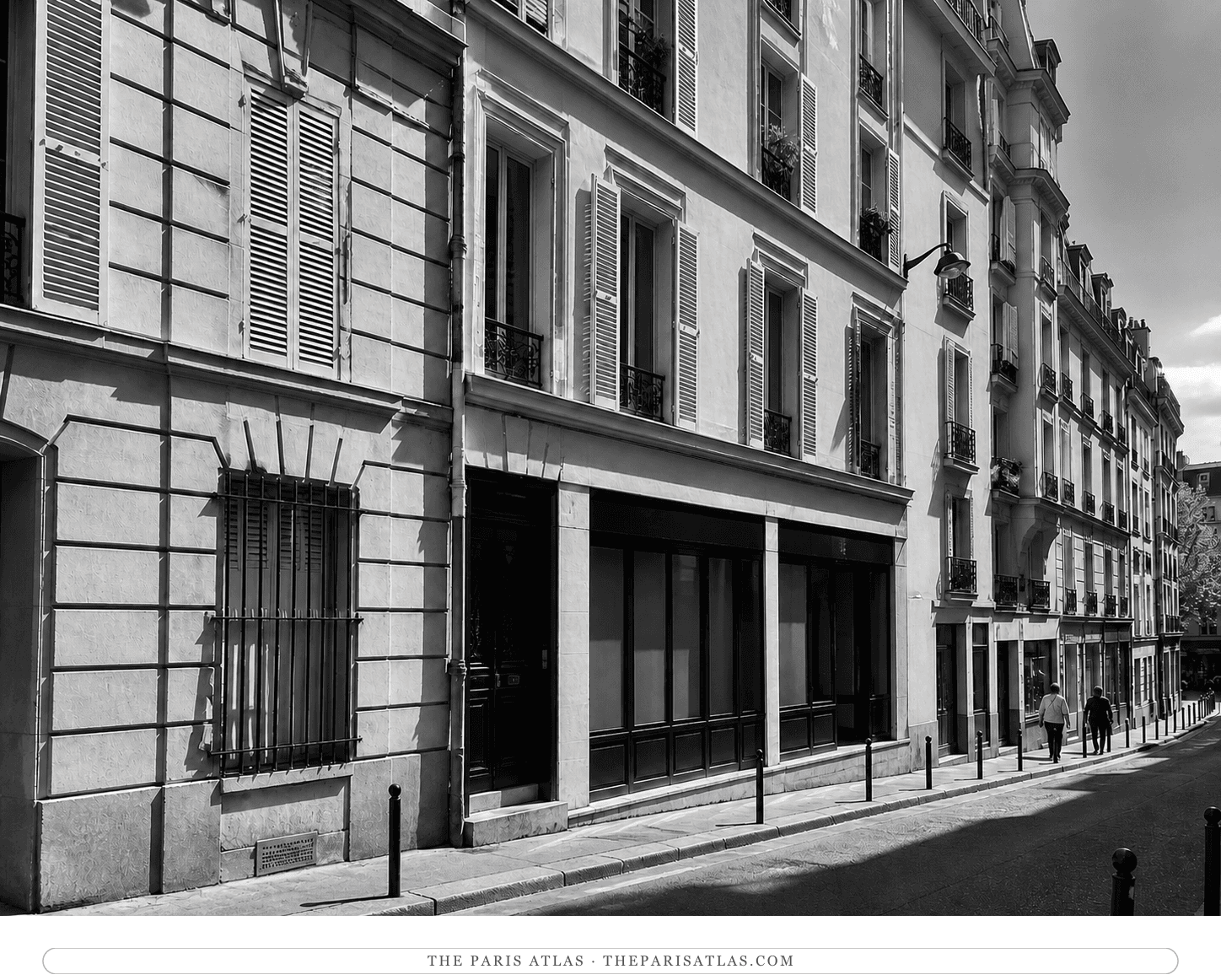
That summer Locke went looking for Langston Hughes in Paris. Hughes was twenty-three, washing dishes in Montmartre and living cheaply at 15 rue Nollet. The elegant Oxford-educated professor climbed to the poet's attic and asked for poems for the publication he was assembling. The scene captures Locke's work better than any title could: he found talent before institutions knew where to look, then carried the work back to the institutions.[5]
Locke edited a special March 1925 issue of Survey Graphic titled Harlem: Mecca of the New Negro, then expanded it into The New Negro: An Interpretation later that year. The anthology combined poems, stories, essays, reproductions of visual art, music and social analysis. Langston Hughes, Zora Neale Hurston, Countee Cullen, Claude McKay, Jean Toomer, Aaron Douglas and many others appeared within one deliberately composed argument.[2]
The argument was that a new generation was refusing the stereotypes through which Black life had been viewed and was turning migration, urban life, African heritage and artistic experiment into cultural self-definition. Locke called it a “spiritual coming of age.” He believed art could change social perception, but he did not reduce art to propaganda. That position sometimes put him at odds with Du Bois and others who demanded more direct political service from Black artists.
The book did not contain the whole movement, and Locke's editorial power had limits and biases. It nevertheless gave readers a map. “New Negro Renaissance” became an early name for what later histories usually call the Harlem Renaissance, and the anthology remains one of the clearest records of how its participants wanted to present themselves in 1925.
Locke promoted younger writers and artists through introductions, criticism, correspondence, exhibitions and practical intervention. Hughes, Hurston, Cullen and the painter Aaron Douglas all moved through his circle. Mentorship could be generous and controlling at once: Locke had strong ideas about which work would advance the movement, and the younger artists did not always welcome his judgment or his emotional investments in them.
His advocacy extended beyond literature. He argued that African sculpture and design offered Black American artists a heritage obscured by slavery and racist museum culture, while insisting that modern Black art should not simply imitate African forms. He organized exhibitions, wrote annual surveys of Black art and supported institutions capable of collecting it. The Bronze Booklets he later edited made Black history, art and social thought available to adult learners in compact form.
Locke was gay and known as such among friends, although he did not announce that identity publicly. Letters and biographical research document romantic attachments and his search for partnership, as well as the risks of exposure in academic and Black middle-class institutions. The point is not to turn every mentorship into romance. It is to understand that the philosopher of cultural self-expression lived a private life in which self-expression had strict limits.
He also encouraged younger Black writers and artists whose work or lives crossed the era's sexual boundaries. That support forms part of the Harlem Renaissance's queer history, which was present in its poems, parties, clubs and friendships even when the public language available to describe it was indirect.
Locke continued teaching, writing and promoting Black culture long after the fashionable attention around Harlem faded. His later work stressed cultural pluralism: a democracy strong enough to allow groups to retain distinct histories and contributions rather than demand assimilation into one supposedly neutral norm. He retired from Howard in 1953 and moved to New York.
He died from complications of heart disease on 9 June 1954. His influence survives in more than the label “father of the Harlem Renaissance,” which can make a collective movement sound like one man's creation. Locke's real achievement is more interesting. He recognized that cultural change needed editors, teachers, collectors and connectors as well as artists—and made that connective work into an intellectual vocation.
Born in Philadelphia on 13 September.
Graduates from Harvard with honors and becomes the first African American selected as a Rhodes Scholar.
Studies at Oxford and Berlin and travels through Europe, developing the cosmopolitan approach that shapes his cultural criticism.
Joins the faculty of Howard University.
Receives a PhD in philosophy from Harvard.
Founds and chairs Howard's philosophy department.
Helps organize the Civic Club dinner and seeks out Langston Hughes in a Montmartre attic to recruit his poems.
Edits the Survey Graphic Harlem issue and expands it into The New Negro: An Interpretation.
Promotes Black visual art through exhibitions, criticism, teaching and the Howard University Gallery of Art.
Develops and edits the Bronze Booklets series on Black history, culture and social questions.
Retires from Howard, which awards him an honorary Doctor of Humane Letters.
Dies in New York on 9 June after complications of heart disease.
Met · 1924
Locke sought Hughes out in Paris in 1924, visited the young poet's Montmartre attic, recruited poems for the project that became The New Negro, and became an important early mentor.
Cultural movement · c. 1918 – mid-1930s
Locke organized the 1924 Civic Club dinner, edited the 1925 Survey Graphic Harlem issue and expanded it into The New Negro, then promoted and mentored the movement's writers and artists.
Alain Locke is best known for editing The New Negro (1925), the anthology that gave the Harlem Renaissance an influential intellectual frame. He was also a philosopher, Howard University professor, cultural critic and advocate for Black visual art.
Yes. Locke became the first African American selected as a Rhodes Scholar in 1907 and studied at Hertford College, Oxford, before continuing philosophical study in Berlin and later earning his Harvard doctorate.
The New Negro: An Interpretation was Locke's 1925 anthology of poetry, fiction, essays, art and social analysis by a rising generation of Black creators. It expanded a special Survey Graphic issue and helped define what was then often called the New Negro Renaissance.
Locke sought Hughes out in Paris in 1924, visited his Montmartre lodging and recruited poems for the project that became The New Negro. He became an important early mentor and promoter of Hughes's work.
Locke spent most of his career at Howard University in Washington, D.C. He joined the faculty in 1912, earned his Harvard PhD in 1918, founded and chaired Howard's philosophy department, and retired in 1953.
Yes. Locke was gay and this was known within his circle, although he did not identify himself publicly in those terms. His papers and modern biographies document his private relationships and his support for younger Black LGBTQ+ artists and writers.
The title recognizes his work connecting creators, publishers and patrons and editing The New Negro. It should not imply that he single-handedly created the movement: the Harlem Renaissance was a collective flowering with many writers, musicians, artists, editors and institutions.
Associated with · 1924
Locke organized the 1924 Civic Club dinner, edited the 1925 Survey Graphic Harlem issue and expanded it into The New Negro, then promoted and mentored the movement's writers and artists.
Met · 1924
Locke sought Hughes out in Paris in 1924, visited the young poet's Montmartre attic, recruited poems for the project that became The New Negro, and became an important early mentor.
Visited · 1924
Hughes remembered the elegant Howard professor climbing to his cheap Montmartre lodging during Locke's 1924 search for work by younger Black writers.
The sources below include biographies, scholarly essays, interviews, and primary materials that informed this page. They reflect both the historical record and ongoing critical conversations about Alain Locke and their work.


Web source consulted for documented facts and historical context presented on the Alain Locke page.
Web source consulted for documented facts and historical context presented on the Alain Locke page.

Archival evidence used to document the historical record connected to Alain Locke.
First-person evidence and historical context used in preparing the Alain Locke page.
These references anchor the page in the documented record and in the scholarly conversations around Alain Locke. Every claim on this page traces back to one or more of the works listed here.
 Explore more resources