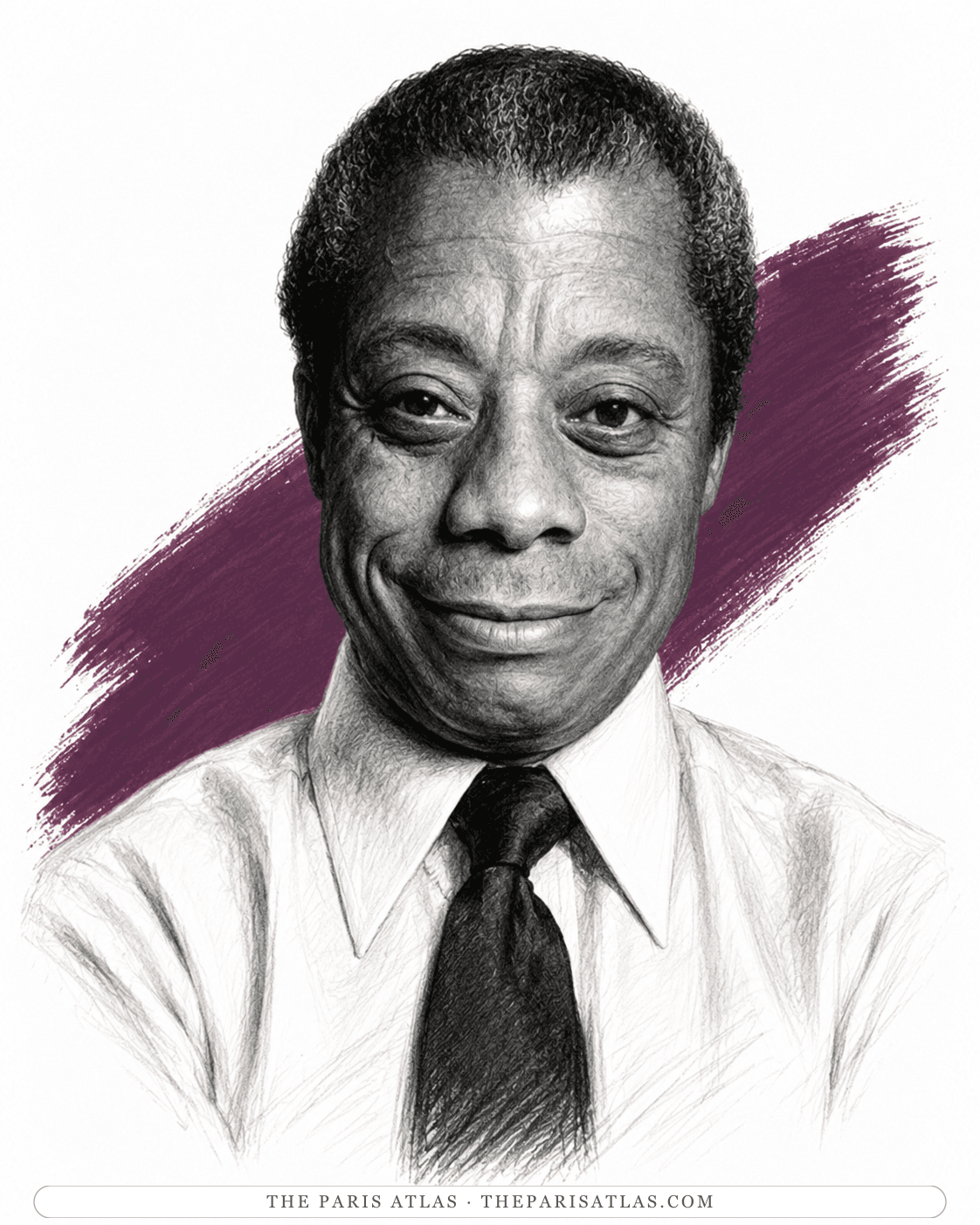
James Baldwin
- Author
- Playwright
- Critic
- +1
Mentored · 1938–1940
At Frederick Douglass Junior High School, Cullen taught French and encouraged the young Baldwin's interest in writing alongside teacher Herman W. Porter.
American poet whose traditional lyric forms carried some of the Harlem Renaissance's sharpest questions about race, faith and artistic freedom.
Countee Cullen was one of the most celebrated poets of the Harlem Renaissance. He published his first collection, Color, in 1925 while barely out of college, and poems including “Yet Do I Marvel,” “Heritage” and “Incident” made him a central voice of the movement. His work creates its pressure through apparent restraint: inherited English forms—sonnet, ballad, rhymed lyric—contain anger, theological doubt and the daily violence of American racism.[1]
Cullen resisted the expectation that a Black poet must write in a recognizably racial style, yet race remained one of his deepest subjects. That tension placed him beside and sometimes against Langston Hughes, whose blues-based poetics and 1926 essay “The Negro Artist and the Racial Mountain” argued for a different route. Their disagreement is useful because the Harlem Renaissance was never one aesthetic program. It was an argument conducted through art.
Cullen kept the first years of his life private, and the documentary record does not settle his birthplace with confidence; New York, Baltimore and Louisville have all appeared in accounts. He was born Countee LeRoy Porter on 30 May 1903. After his paternal grandmother died in 1918, the teenager entered the Harlem home of the Reverend Frederick A. Cullen and his wife, Carolyn. He took their surname and was eventually adopted by them.[1]
Frederick Cullen led Salem Methodist Episcopal Church, one of Harlem's largest congregations, and later headed the local NAACP branch. The parsonage placed Countee near Black political, religious and cultural leadership just as Harlem was becoming a national center. At DeWitt Clinton High School he excelled academically, edited the school newspaper and won prizes for poetry and public speaking.[2]
At New York University, Cullen won major undergraduate poetry prizes and published in The Crisis, Opportunity, Poetry and national magazines. The year 1925 brought a remarkable convergence: he graduated Phi Beta Kappa, entered Harvard's master's program, won further awards and published Color. At twenty-two he was one of the most visible Black poets in the United States.[1]
Color contains the poems that still define him. “Yet Do I Marvel” fits myth, Christian faith and racial injustice into a fourteen-line sonnet whose final astonishment is that God would make a poet Black and command him to sing. “Incident” compresses a childhood encounter with a racial slur into three polished ballad stanzas. “Heritage” asks what Africa means to a Christian, American, book-educated poet who knows the continent through inheritance and imagination.[3]
Cullen admired John Keats and the English Romantic tradition. He believed Black poets inherited the whole English language and should use any form they chose. He wanted to be judged as a poet rather than confined to a racial category. The wish was not a denial that racism shaped his work; the poems themselves make that impossible. It was a demand that Black identity not prescribe one approved technique.[1]
Hughes's “Racial Mountain” is often read as an answer to a young poet who wanted to be simply a poet, though Hughes did not name Cullen. Cullen's own 1927 anthology Caroling Dusk gathered verse by Black writers while insisting their work belonged within contemporary poetry rather than outside it. Between Cullen's sonnets, Hughes's blues and Hurston's folklore, the movement's range becomes visible.[1]
In April 1928 Cullen married Yolande Du Bois, daughter of W. E. B. Du Bois, in a ceremony so prominent it became a Harlem social event. The marriage joined two famous Black families at the height of Cullen's reputation. It ended quickly. Cullen left for France on a Guggenheim Fellowship, Yolande joined him, and they separated; the divorce was final in 1930.[2]
Yolande later said Cullen's attraction to men caused the separation. His closest relationships included gay men such as Harold Jackman and Alain Locke, and his poetry is now also read within queer literary history. The evidence supports describing Cullen as sexually attracted to men; it does not justify turning every friendship into a romance or imposing a public identity he did not claim in the language available during his life.[2]
The Guggenheim Fellowship took Cullen to France in 1928–1929. Europe gave him distance from Harlem's celebrity and marital crisis, and he wrote much of The Black Christ and Other Poems there. The title poem retells the crucifixion through a Black man lynched by a white mob, bringing Christian form and racial violence into the same structure.[1]
The Wall Street crash and Depression soon weakened the publishing and patronage system that had sustained the Renaissance. Cullen continued to write—poetry, a translation of Euripides' Medea, children's books, the novel One Way to Heaven and plays—but the extraordinary public attention of his early twenties did not return.[1]
In 1934 Cullen began teaching French at Frederick Douglass Junior High School in Harlem. One of his students was James Baldwin, already reading intensely and editing a school magazine. Cullen and fellow teacher Herman W. Porter encouraged him. The connection places two literary generations in one classroom: a star poet of the Renaissance helping a boy who would become one of the century's defining essayists and novelists.[4]
Teaching was not merely what Cullen did after poetry. It was steady work during a period when literary income had collapsed, and it kept him inside Harlem's intellectual life. He married Ida Mae Roberson in 1940 and continued teaching while working on drama and musical theater.[1]
Cullen spent his final years adapting Arna Bontemps's novel God Sends Sunday for the stage. The project became St. Louis Woman, with music by Harold Arlen and lyrics by Johnny Mercer. Black organizations and artists disputed whether its gamblers and working-class characters reinforced stereotypes; the controversy repeated, in a different form, the arguments about representation that had followed Cullen throughout his career.[1]
Cullen died suddenly from uremic poisoning and complications of high blood pressure on 9 January 1946, three months before St. Louis Woman opened on Broadway. He was forty-two. His reputation later narrowed to a few anthology poems, but those poems are not minor relics: their formal elegance is the instrument by which they make racial cruelty, divided inheritance and spiritual doubt impossible to dismiss as disorder.[1]
Born Countee LeRoy Porter on 30 May; his exact birthplace remains uncertain.
After his grandmother's death, enters the Harlem home of Reverend Frederick A. and Carolyn Cullen and takes their surname.
Graduates from NYU, begins graduate study at Harvard and publishes Color.
Edits Caroling Dusk, an anthology of verse by Black poets.
Marries Yolande Du Bois and receives a Guggenheim Fellowship to write in France.
Publishes The Black Christ and Other Poems.
Divorce from Yolande Du Bois becomes final.
Publishes his only novel, One Way to Heaven.
Begins teaching French at Frederick Douglass Junior High School in Harlem.
Teaches and encourages the young James Baldwin.
Marries Ida Mae Roberson.
Dies in New York on 9 January, before St. Louis Woman opens on Broadway.
Mentored · 1938–1940
At Frederick Douglass Junior High School, Cullen taught French and encouraged the young Baldwin's interest in writing alongside teacher Herman W. Porter.
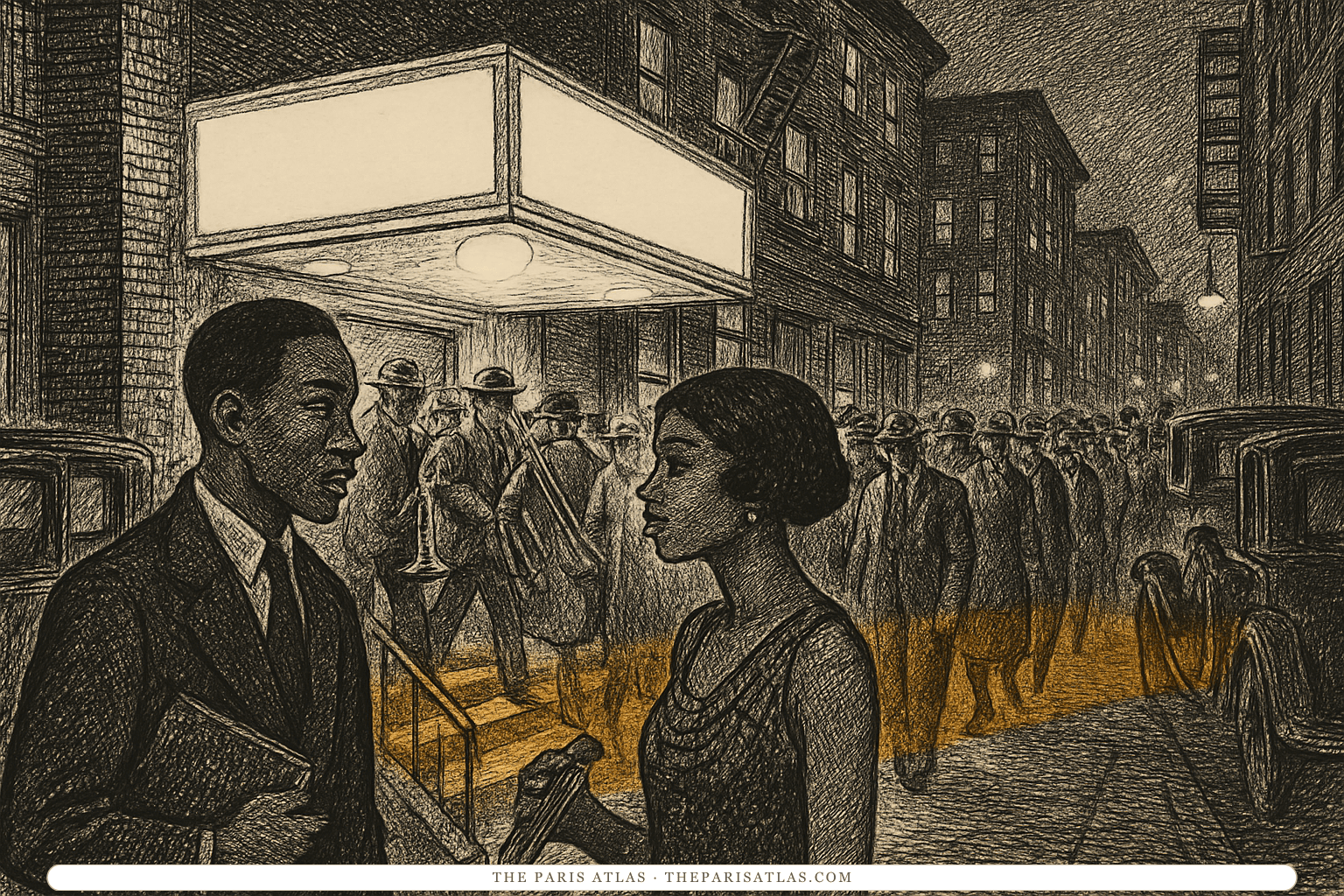
Cultural movement · c. 1918 – mid-1930s
Cullen was one of the movement's most celebrated poets, publishing Color in 1925 and editing the 1927 anthology Caroling Dusk.
Countee Cullen is best known for Color (1925) and poems including “Yet Do I Marvel,” “Heritage” and “Incident.” He was one of the most celebrated poets of the Harlem Renaissance.
Cullen's exact birthplace is uncertain. New York, Baltimore and Louisville appear in different accounts. He was born on 30 May 1903 and was raised in New York, entering Reverend Frederick Cullen's Harlem household as a teenager.
The sonnet asks how a good and all-powerful God can permit suffering, ending with the poet's astonishment that God would make him both Black and a poet in racist America. Its traditional form contains a radical theological question.
Yes. Cullen was one of its leading poets, published Color in 1925, appeared in The New Negro and edited Caroling Dusk, an influential 1927 anthology of poetry by Black writers.
Cullen married Yolande Du Bois, daughter of W. E. B. Du Bois, in 1928; they divorced in 1930. He married Ida Mae Roberson in 1940, and they remained married until his death in 1946.
Cullen kept his private life guarded. His first wife later said his attraction to men caused their divorce, and scholars read his life and poetry in queer history. It is safest to state the documented attraction without inventing romances or imposing a public label he did not use.
Yes. Cullen taught French at Frederick Douglass Junior High School in Harlem, where he and another teacher encouraged the young James Baldwin's interest in literature and writing.
Associated with · 1924
Cullen was one of the movement's most celebrated poets, publishing Color in 1925 and editing the 1927 anthology Caroling Dusk.
Mentored · 1938–1940
At Frederick Douglass Junior High School, Cullen taught French and encouraged the young Baldwin's interest in writing alongside teacher Herman W. Porter.
The sources below include biographies, scholarly essays, interviews, and primary materials that informed this page. They reflect both the historical record and ongoing critical conversations about Countee Cullen and their work.


Primary text included as part of the documented record for Countee Cullen.

Web source consulted for documented facts and historical context presented on the Countee Cullen page.
These references anchor the page in the documented record and in the scholarly conversations around Countee Cullen. Every claim on this page traces back to one or more of the works listed here.
 Explore more resources