The Paris AtlasCharting the artists, works, and places worth returning to.

In their own words

Langston Hughes quotes

28 quotations, each verified against its source and credited to the work it comes from — the wording as Langston Hughes wrote or said it, not as the internet passes it around. Page 1 of 2.

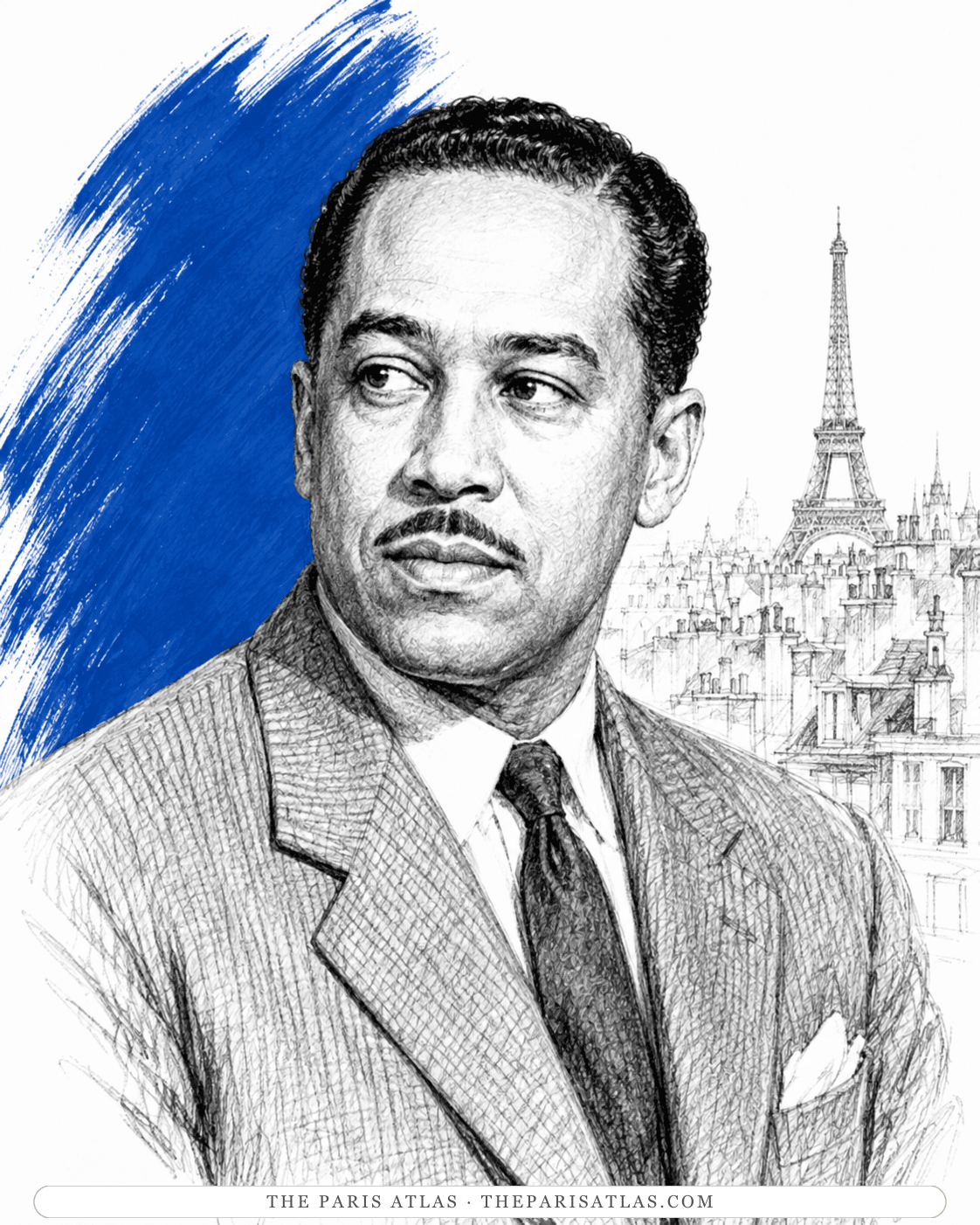
Illustrated portrait of Langston Hughes
Pen-and-ink illustration of a writer's hand, an open notebook, a fountain pen, and a vintage microphone

How these quotes were checked

How we decide whether a quote is genuine

Langston Hughes wrote in plain words, which has made him easy to rewrite. A line enters this collection only when its wording can be checked against the printed poem or book it comes from, and the work is named beside it.

His most shared lines are the opening of the poem “Dreams.” What circulates is not quite what he published, and the difference is checked below.

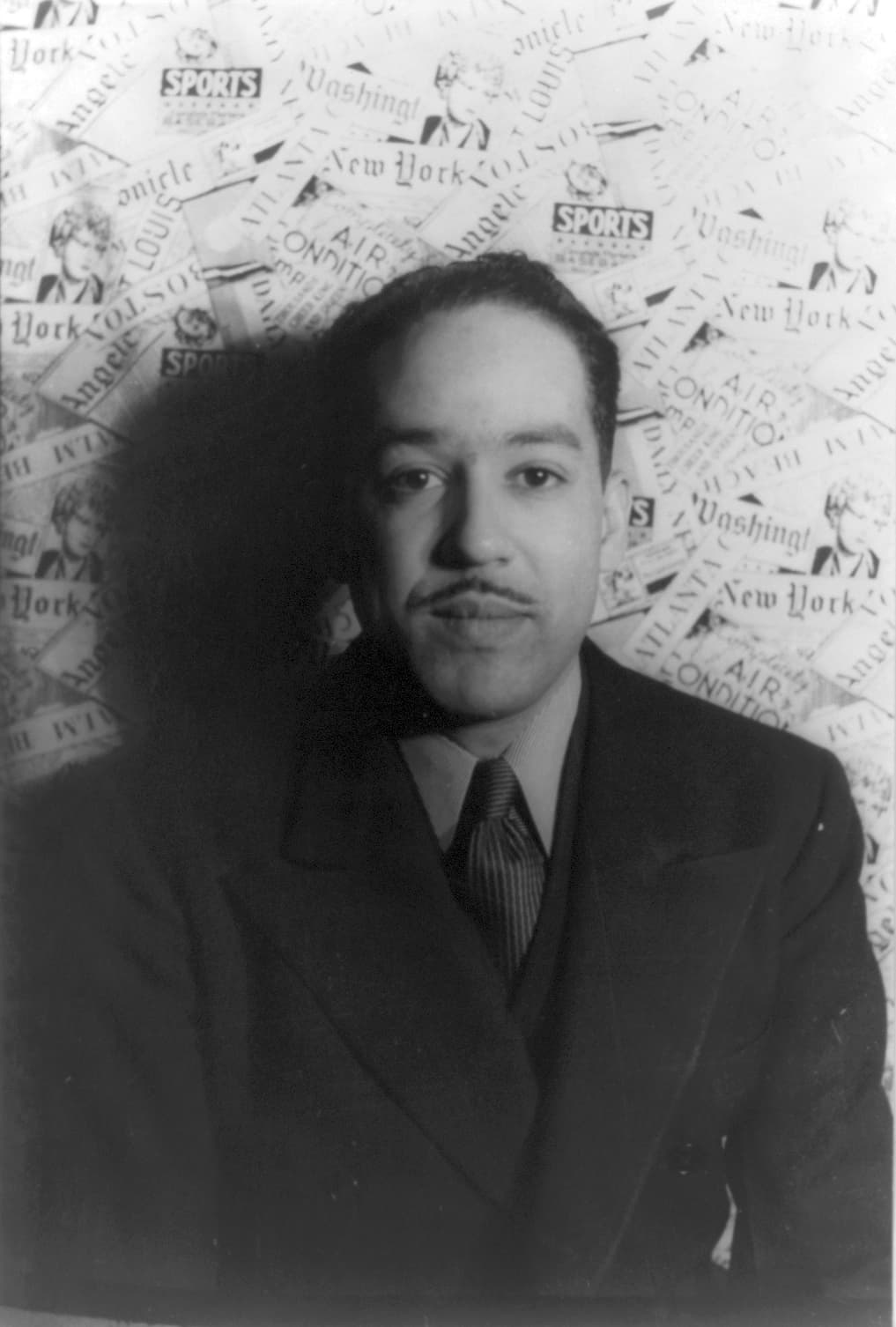
Studio portrait of Langston Hughes in 1936, in a suit and patterned tie, photographed against a patterned backdrop and looking past the camera
Langston Hughes photographed by Carl Van Vechten in 1936. Van Vechten had written the introduction to Hughes's first book, The Weary Blues, ten years earlier. Carl Van Vechten, Library of Congress. Public domain.

One famous Langston Hughes quote, fact-checked

A sentence linked to Langston Hughes may be exact, shortened, remembered by someone else, or unsupported. Each label below explains what the available evidence actually proves.

Common paraphrase

“Hold fast to your dreams, for without them life is a broken-winged bird that cannot fly.”

Hughes published the lines in “Dreams,” in his 1932 collection The Dream Keeper and Other Poems: “Hold fast to dreams / For if dreams die / Life is a broken-winged bird / That cannot fly.” The circulated version adds “your,” replaces the reason with “without them,” and flattens four lines of verse into one sentence of prose. A further step turned the metaphor into a simile — life is “like” a broken-winged bird — which the motivational speaker Zig Ziglar was printing by 1999, and by 2000 an encyclopedia had credited that reworded version to Robert Frost.

  • — Quote Origin: Hold Fast To Dreams — Quote Investigator

Hold fast to dreams / For if dreams die / Life is a broken-winged bird / That cannot fly.
— Langston Hughes, "Dreams"
What happens to a dream deferred? / Does it dry up / like a raisin in the sun?
— Langston Hughes, "Harlem", from Montage of a Dream Deferred (1951)
We younger Negro artists who create now intend to express our individual dark-skinned selves without fear or shame. If white people are pleased we are glad. If they are not, it doesn't matter. We know we are beautiful. And ugly too.
— Langston Hughes, "The Negro Artist and the Racial Mountain", The Nation, 1926
We build our temples for tomorrow, strong as we know how, and we stand on top of the mountain, free within ourselves.
— Langston Hughes, "The Negro Artist and the Racial Mountain", The Nation, 1926
Let America be America again. / Let it be the dream it used to be. / Let it be the pioneer on the plain / Seeking a home where he himself is free. / (America never was America to me.)
— Langston Hughes, "Let America Be America Again"
Life is a big sea / full of many fish. / I let down my nets / and pull.
— Langston Hughes, The Big Sea (1940), epigraph
Melodramatic maybe, it seems to me now. But then it was like throwing a million bricks out of my heart when I threw the books into the water.
— Langston Hughes, The Big Sea (1940), Part I, "Beyond Sandy Hook"
It was the period when the Negro was in vogue. I was there. I had a swell time while it lasted. But I thought it wouldn't last long. For how could a large and enthusiastic number of people be crazy about Negroes forever?
— Langston Hughes, The Big Sea (1940), Part III, "When the Negro was in Vogue"
The ordinary Negroes hadn't heard of the Negro Renaissance. And if they had, it hadn't raised their wages any.
— Langston Hughes, The Big Sea (1940), Part III, "When the Negro was in Vogue"
I got to the Gare du Nord in Paris early one February morning with only seven dollars in my pockets. I didn't know anybody in Paris.
— Langston Hughes, The Big Sea (1940), Part II, "Montmartre"
Harlem was like a great magnet for the Negro intellectual, pulling him from everywhere.
— Langston Hughes, The Big Sea (1940), Part III, "Harlem Literati"
I was saved from sin when I was going on thirteen. But not really saved.
— Langston Hughes, The Big Sea (1940), Part I, "Salvation"
Literature is a big sea full of many fish. I let down my nets and pulled. I'm still pulling.
— Langston Hughes, The Big Sea (1940), Part III, "Postscript"
Droning a drowsy syncopated tune, / Rocking back and forth to a mellow croon, / I heard a Negro play. / Down on Lenox Avenue the other night / By the pale dull pallor of an old gas light / He did a lazy sway.... / He did a lazy sway.... / To the tune o' those Weary Blues.
— Langston Hughes, "The Weary Blues", The Weary Blues (1926)
I got the Weary Blues / And I can't be satisfied. / Got the Weary Blues / And can't be satisfied— / I ain't happy no mo' / And I wish that I had died.
— The piano player (sung) · Langston Hughes, "The Weary Blues", The Weary Blues (1926)
The stars went out and so did the moon. / The singer stopped playing and went to bed / While the Weary Blues echoed through his head. / He slept like a rock or a man that's dead.
— Langston Hughes, "The Weary Blues", The Weary Blues (1926)
I've known rivers ancient as the world and older than the flow of human blood in human veins. / My soul has grown deep like the rivers.
— Langston Hughes, "The Negro Speaks of Rivers", The Weary Blues (1926)
Rest at pale evening.... / A tall, slim tree.... / Night coming tenderly / Black like me.
— Langston Hughes, "Dream Variations", The Weary Blues (1926)
Well, son, I'll tell you: / Life for me ain't been no crystal stair.
— The mother · Langston Hughes, "Mother to Son", The Weary Blues (1926)
I, too, sing America. / I am the darker brother.
— Langston Hughes, "Epilogue" ("I, Too"), The Weary Blues (1926)
We have tomorrow / Bright before us / Like a flame.
— Langston Hughes, "Poem", The Weary Blues (1926)
The night is beautiful, / So the faces of my people. / The stars are beautiful, / So the eyes of my people. / Beautiful, also, is the sun. / Beautiful, also, are the souls of my people.
— Langston Hughes, "Poem", The Weary Blues (1926)
What happens to a dream deferred?
— Langston Hughes, Harlem, in Montage of a Dream Deferred (1951)
and somewhat more free.
— Langston Hughes, Theme for English B, in Montage of a Dream Deferred (1951)
I’ve got to go back to school.
— Sandy in Langston Hughes, Not Without Laughter (1930), Chapter 29

From the books

Every book with a quote collection of its own, each line verified against the text.

Questions about Langston Hughes quotes

What is Langston Hughes's most famous quote?

The opening of his poem “Dreams,” published in The Dream Keeper and Other Poems in 1932: “Hold fast to dreams / For if dreams die / Life is a broken-winged bird / That cannot fly.” The prose version that circulates — “hold fast to your dreams, for without them…” — is a rewrite, and is sometimes even credited to Robert Frost.

Did Robert Frost write “Hold fast to dreams”?

No. The lines are Hughes's, first published in 1932. The Frost credit attaches to a reworded version of the poem and appears to date from a reference book published in 2000.

Where do these Langston Hughes quotes come from?

From his published poems, his fiction, and his autobiographies. Each quote above names the work it belongs to, so the wording can be checked against the page rather than taken from another quotation site.

References

References

The sources below are the editions, archives, and full-text searches used to verify the quotations on this page. Every line was checked against one or more of them before it appeared here.

  1. 1Quote Origin: Hold Fast To Dreams — Quote Investigator

    Website
    Quote Investigator
    Used for

    The rewriting history of the poem's opening lines.

    View source
i
Why these sources are here

Verification is the point of this collection: a quotation is listed only when its wording has been checked against the sources above, and the attribution notes record what each check found about the famous lines that failed.

Explore more resources

Newsletter

Join our newsletter

New stories about art, literature and famous places around the world.

Unsubscribe anytime.