Langston Hughes
- Poet
- Author
- Playwright
- +1
Met
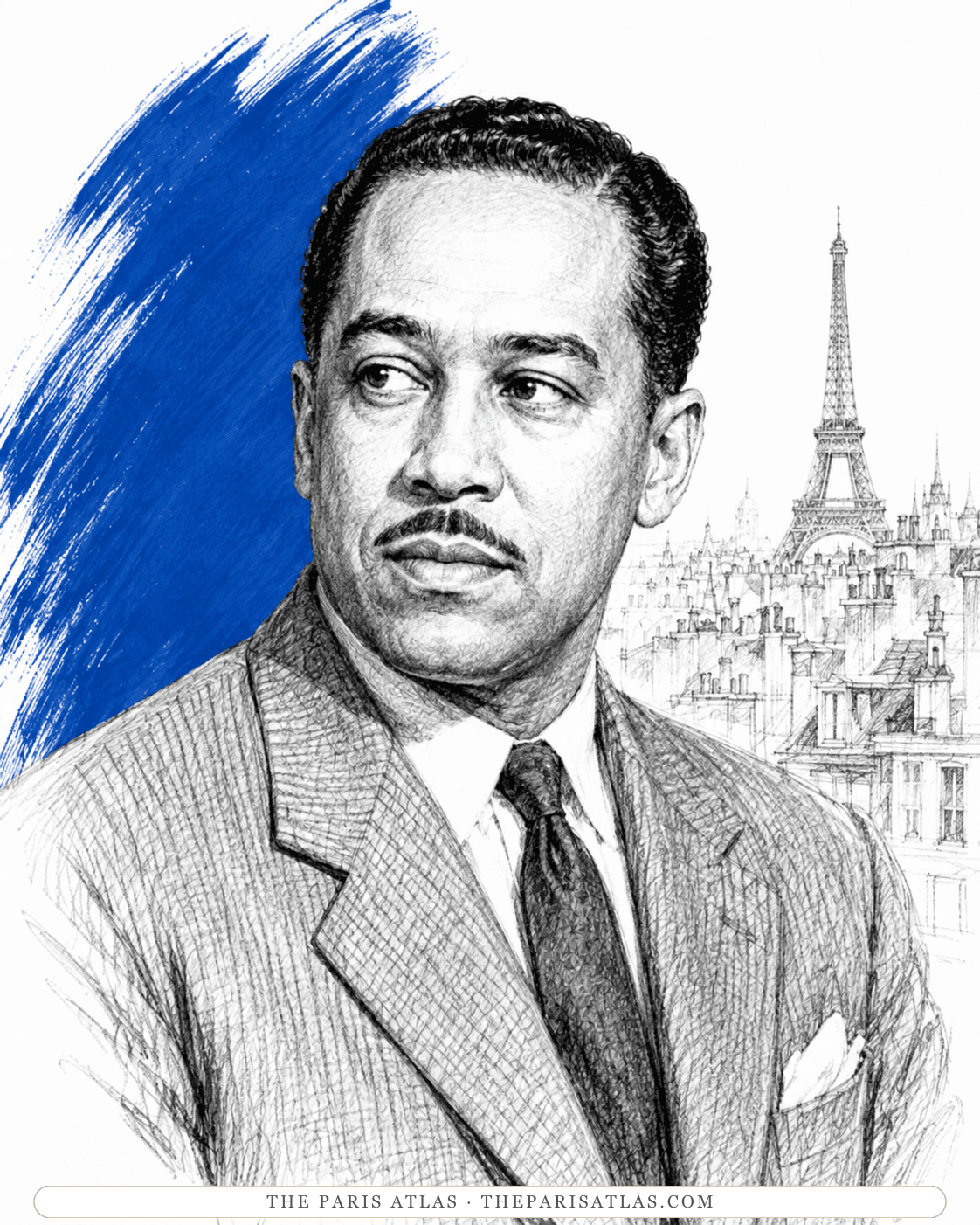
Ellison met Hughes within days of arriving in New York in 1936, and it was Hughes who introduced him to Richard Wright the following year.
American novelist, whose Invisible Man of 1952 is one of the essential American books of the century. His Paris is deliberately brief: he came in the summer of 1954 to travel and lecture, spent a few weeks among the American expatriates, and gave The Paris Review its Art of Fiction interview at the Café de la Mairie the day before he left. Unlike Richard Wright and James Baldwin, he would not stay.
Ralph Ellison was an American writer whose novel Invisible Man, published in 1952, is one of the central books of twentieth-century American literature. He was born in Oklahoma City on 1 March 1913 and died in New York on 16 April 1994.
Invisible Man is narrated by an unnamed Black man who describes himself as invisible: not physically, but because the people around him see only what they expect. The novel follows him from a Southern college through a Harlem political movement to a coal cellar lit by 1,369 light bulbs burning stolen electricity.
It won the National Book Award in 1953 and has never been out of print. Ellison spent the next forty years working on a second novel and never finished it.[1]
He was also a trained musician, a jazz critic and an essayist, and his essays about music and American identity are read alongside the novel.
Ralph Waldo Ellison was born in Oklahoma City on 1 March 1913 and named after Ralph Waldo Emerson. His father, Lewis Ellison, sold ice and coal and died when Ralph was three; his mother, Ida, worked as a domestic servant and canvassed for the Socialist Party.[2]
Oklahoma had been a state for five years when he was born, and he later said that mattered. It had no long history of slavery in the way the Deep South did, and that sense of a place still being made shaped how he thought about being American.
He grew up poor. His mother brought home magazines and records from the houses she cleaned. He played trumpet from boyhood, studied music seriously at school, and wanted to be a composer of symphonies.[3]
In 1933 Ellison went to the Tuskegee Institute in Alabama, the college founded by Booker T. Washington, to study music. He travelled there from Oklahoma by riding freight trains, and was beaten by railway guards on the way.[4]
He studied trumpet and composition for three years. The library gave him the other education: he read T. S. Eliot's The Waste Land there and later said it disturbed and fascinated him more than any Black writing he had then encountered, because its shifts of rhythm and voice reminded him of jazz.[4]
He left in 1936, at the end of his third year, intending to earn money in New York for his final year, and never went back.[4]
In New York Ellison met Langston Hughes within days of arriving, and through Hughes he met Richard Wright in 1937. Wright was then finishing the stories that became Uncle Tom's Children.[4]
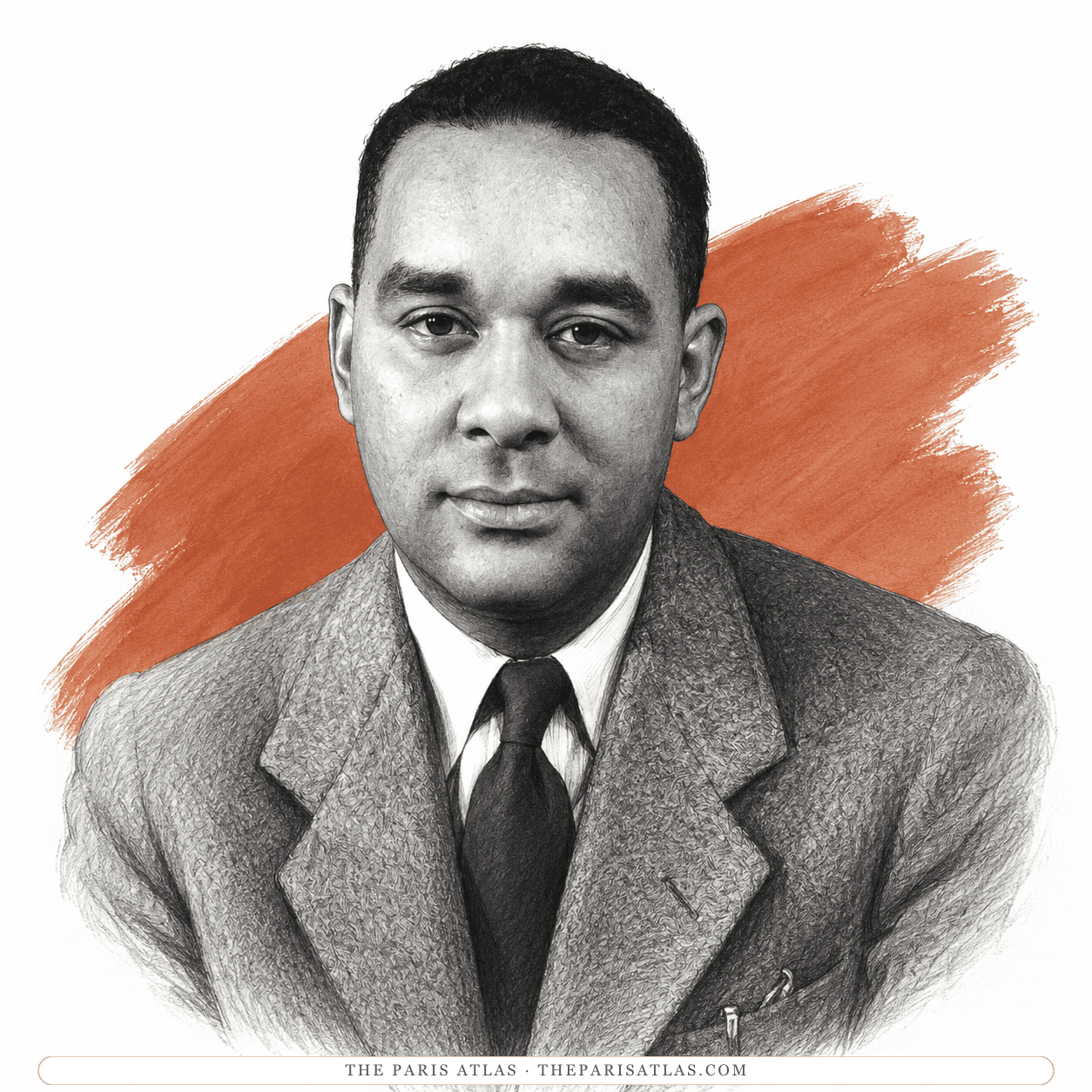
Wright pushed him to write. Ellison's first published piece was a book review Wright commissioned, and his first short story appeared in a magazine Wright edited. For several years Ellison was, in effect, Wright's apprentice, and he later spent a good deal of energy explaining how their aims differed.[4]
From 1938 he worked for the Federal Writers' Project in New York, collecting oral histories and street speech in Harlem. That work is audible in the novel: the voices in Invisible Man are transcribed as much as invented.[5]
Ellison served in the Merchant Marine during the Second World War rather than the segregated army, working as a cook on supply convoys.[3]
He began Invisible Man in 1945, while on sick leave at a friend's farm in Vermont. The first sentence arrived, he said, as a joke he did not understand — "I am an invisible man" — and it took him seven years to work out what it meant.[6]
Invisible Man was published in April 1952. It follows an unnamed narrator through a Southern Black college, a paint factory, a hospital, and a Harlem political organisation called the Brotherhood, to a Harlem riot and finally underground.[4]
The narrator's discovery is that everyone he meets — white trustees, Black college presidents, communists, nationalists — needs him to be a symbol of something, and none of them see the person. He ends in a hidden basement, stealing electricity to burn 1,369 light bulbs, writing the account that becomes the novel.
The novel is written in several styles at once: naturalism, surrealism, folk tale, sermon, political speech. Ellison had taken the modernist techniques he learned from Eliot and Joyce and used them on Black American material, which is why the book was received as a break with the protest novel that came before it.[6]
It won the National Book Award in 1953. Ellison was thirty-nine.[1]
Invisible Man made Ellison famous and also made him a target. Some Black critics attacked it for refusing protest. Its narrator is not a victim in a system to be denounced, but a man discovering that every group around him wants him to stand for a cause rather than be seen as a person.
In 1963 the critic Irving Howe wrote an essay criticising Ellison and James Baldwin for abandoning Richard Wright's protest tradition. Ellison's reply, The World and the Jug, is one of the best-known essays in American criticism. He argued that a Black writer is not obliged to write about oppression alone, and that Wright had been his friend rather than his father. Howe, he said, was assigning him a role, exactly as the characters in his novel do to its narrator.[4]
Ellison spent the rest of his life on a second novel. He published extracts from the 1960s onwards and spoke about it constantly, and it was never done.
In November 1967 a fire at his summer house in Plainfield, Massachusetts, destroyed part of the manuscript. Ellison said the loss set him back badly. The scale of what burned has been disputed since — the surviving papers suggest less was lost than the story implies — but the fire became the standard explanation for a book that was already years late.[5]
At his death he left more than two thousand pages of drafts. His literary executor, John Callahan, edited a version published as Juneteenth in 1999, and a fuller scholarly assembly, Three Days Before the Shooting…, followed in 2010.[5]
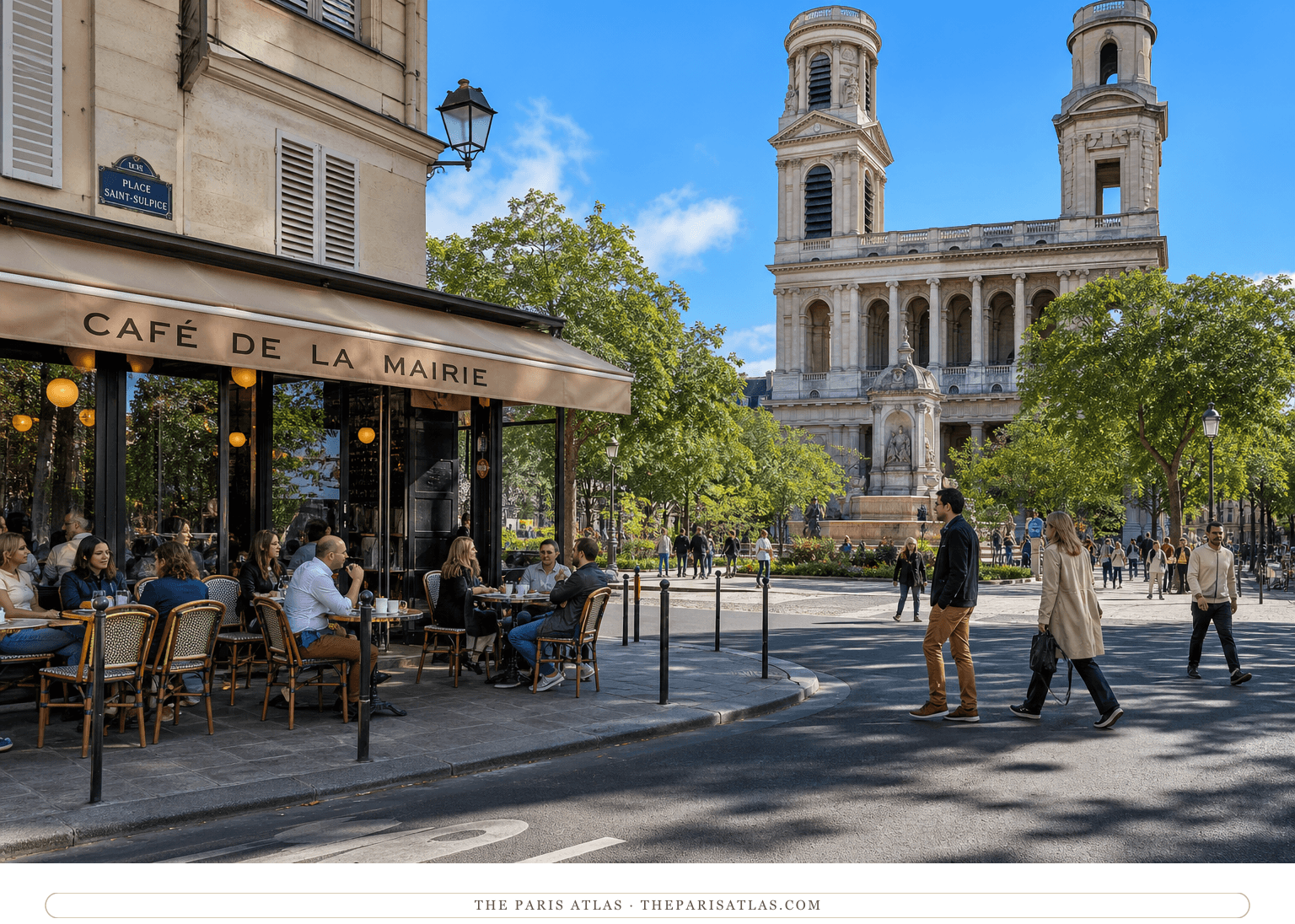
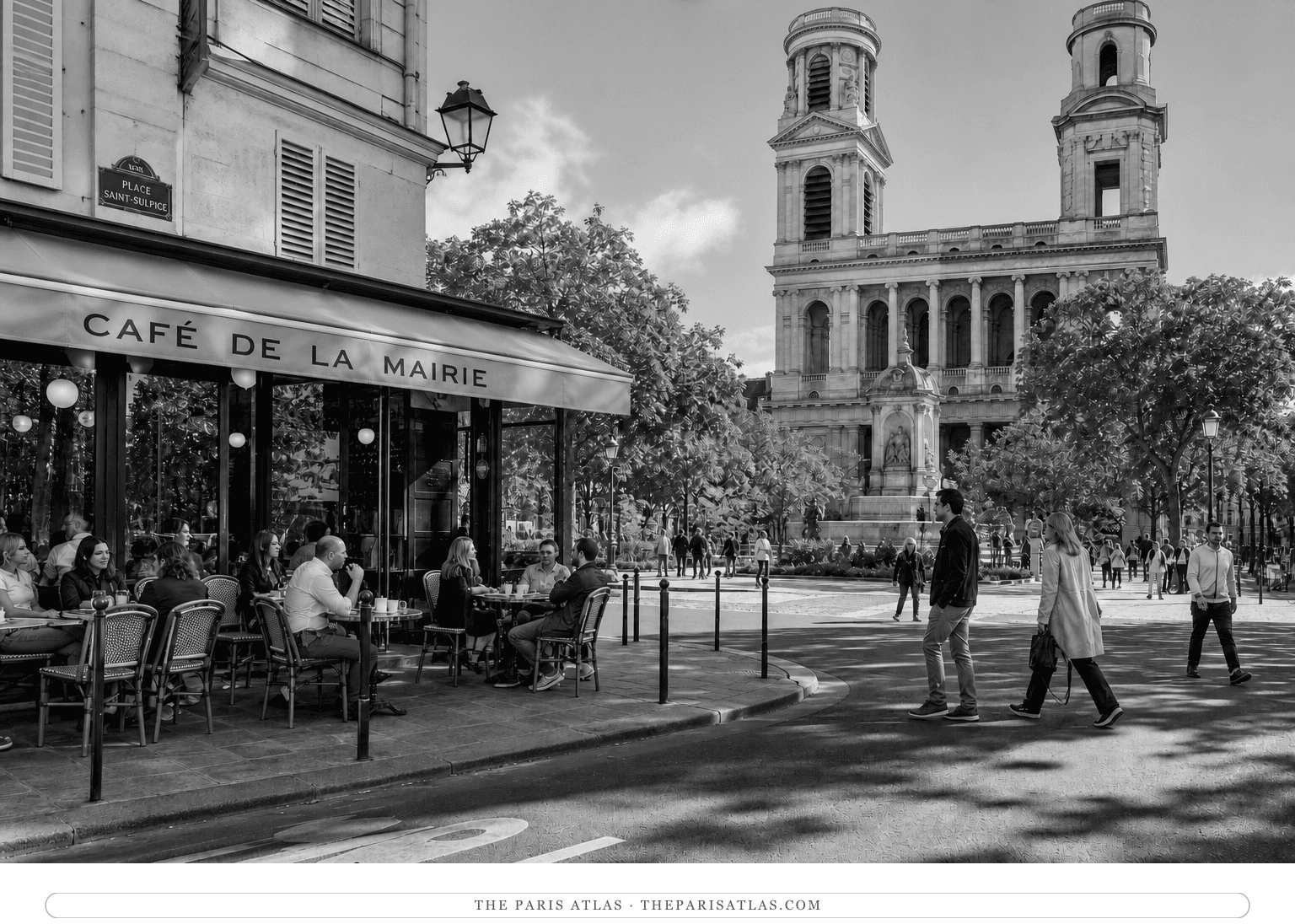
In 1954 Ellison sat for a long interview in Paris, at the Café de la Mairie on the place Saint-Sulpice. Alfred Chester and Vilma Howard conducted it for the Paris Review. The result, The Art of Fiction No. 8, appeared in the spring 1955 issue, and it is the fullest account he ever gave of how Invisible Man was built.[6]
The magazine's own introduction to the piece noted that Djuna Barnes had written Nightwood in the same café.[6]
Paris held a substantial community of Black American writers by then. James Baldwin had arrived in 1948 with almost nothing and stayed. Ellison did not join it, and in 1956 he turned down an invitation to the Présence Africaine congress of Black writers held in the city.
Ellison taught for decades — at Bard, Rutgers, Chicago, and from 1970 as a professor at New York University, where he stayed until 1979. He won the Rome Prize in 1955 and spent two years at the American Academy in Rome.[2]
He published two books of essays in his lifetime: Shadow and Act in 1964, and Going to the Territory in 1986. The essays cover jazz, the blues, Mark Twain, American identity and his own education. They carry his central argument. Black and white American culture are not separate; the country's language, music and humour are already mixed; and a Black American writer inherits all of Western literature, not a segregated portion of it.[4]
His argument that American culture is already mixed, and that a Black writer inherits all of Western literature, put him at odds with the Black Arts Movement of the 1960s, which regarded him as insufficiently militant. He did not change it.
Ralph Ellison died of pancreatic cancer at his home on Riverside Drive in New York on 16 April 1994, aged eighty-one. His wife Fanny, whom he married in 1946, survived him.[2]
He is buried in Trinity Church Cemetery in Manhattan. A memorial sculpture, a fifteen-foot bronze with a standing figure cut out of it, was installed near his Harlem home in 2003.
Invisible Man changed what an American novel could do with race. It refused both the protest novel and the sociological case study, and it told a Black American life using the techniques of modernist fiction, which no American novel of that length had done before.
The essays make the same argument in a different form. Ellison argued, against considerable pressure from several directions, that American culture is inseparably mixed, and that the country's music and speech prove it. That position is now common and was not when he took it.
Born in Oklahoma City on 1 March, named after Ralph Waldo Emerson.
His father, Lewis Ellison, who sold ice and coal, dies. His mother Ida raises him working as a domestic servant.
Plays trumpet and studies music seriously at school, intending to become a composer of symphonies.
Travels to Alabama by riding freight trains, and is beaten by railway guards on the way, to study music at the Tuskegee Institute.
Reads T. S. Eliot's The Waste Land in the Tuskegee library and later says it affected him more than any Black writing he had then read, because its shifts of rhythm and voice reminded him of jazz.
Leaves Tuskegee after three years to earn money in New York, and never returns. Meets Langston Hughes within days of arriving.
Meets Richard Wright, who commissions his first published piece, a book review, and prints his first short story.
Joins the Federal Writers' Project in New York, collecting oral histories and street speech in Harlem.
Serves in the Merchant Marine as a cook on supply convoys, rather than in the segregated army.
Begins Invisible Man while on sick leave at a friend's farm in Vermont, starting from a sentence he did not yet understand.
Marries Fanny McConnell, who supports the household through the writing of the novel.
Invisible Man is published in April.
Wins the National Book Award for Invisible Man at thirty-nine.
Wins the Rome Prize and spends two years at the American Academy in Rome.
Returns to the United States and begins teaching, first at Bard College.
Publishes an extract from his second novel. He works on it for the rest of his life.
Irving Howe attacks Ellison and James Baldwin for abandoning Richard Wright's protest tradition.
Publishes Shadow and Act, his first essay collection, including The World and the Jug, his reply to Howe.
A Book Week poll of critics names Invisible Man the most distinguished American novel published since 1945.
A fire at his summer house in Plainfield, Massachusetts, in November destroys part of the second novel's manuscript.
Receives the Presidential Medal of Freedom.
Becomes a professor at New York University, where he teaches until 1979.
Elected to the American Academy of Arts and Letters. A library in Oklahoma City is named after him.
Receives the National Medal of Arts.
Publishes Going to the Territory, his second essay collection.
Dies of pancreatic cancer at his home on Riverside Drive in New York on 16 April, aged eighty-one, leaving more than two thousand pages of the unfinished second novel.
The Collected Essays of Ralph Ellison is published after his death.
Flying Home and Other Stories collects the short fiction.
Juneteenth, edited from the second novel's drafts by his literary executor John Callahan, is published.
A memorial sculpture, a fifteen-foot bronze with a standing figure cut out of it, is installed near his former Harlem home.
Three Days Before the Shooting…, a fuller scholarly assembly of the second novel's manuscripts, is published.
Met
Ellison met Hughes within days of arriving in New York in 1936, and it was Hughes who introduced him to Richard Wright the following year.
Met
Ellison met Wright in New York in 1937, introduced through Langston Hughes. Wright commissioned Ellison's first published piece, a book review, and printed his first short story, and for several years Ellison worked in effect as his apprentice. Ellison later spent considerable effort explaining how their aims differed.
An American writer, born in Oklahoma City in 1913 and died in New York in 1994. His novel Invisible Man, published in 1952, won the National Book Award and is one of the central American novels of the twentieth century.
An unnamed Black narrator who calls himself invisible — not physically, but because everyone he meets sees only what they expect. He moves from a Southern Black college through a paint factory and a Harlem political movement to a hidden basement lit by 1,369 stolen light bulbs, where he writes the book.
Two essay collections in his lifetime, Shadow and Act in 1964 and Going to the Territory in 1986, and short stories. He worked on a second novel for forty years without finishing it; edited versions appeared after his death as Juneteenth in 1999 and Three Days Before the Shooting… in 2010.
Partly. A fire at his summer house in Plainfield, Massachusetts, in November 1967 destroyed some of the manuscript, and Ellison said it set him back badly. Scholars who have worked on the surviving papers think less was lost than the story suggests. He left more than two thousand pages at his death.
Because he refused to write protest fiction and argued that Black and white American culture are inseparably mixed. The critic Irving Howe attacked him in 1963 for abandoning Richard Wright's tradition, and the Black Arts Movement of the 1960s considered him insufficiently militant. His reply, the essay The World and the Jug, is one of the best known in American criticism.
He trained as a musician before he was a writer, played trumpet from boyhood, and went to the Tuskegee Institute to study composition. He wrote about jazz and the blues throughout his life, and he described Eliot's poetry and his own prose in terms taken from music.
Frequented · 1954
On the day before he left Paris in the summer of 1954, Ellison talked to the staff of The Paris Review at the Cafe de la Mairie about art and the novel. The conversation was published as The Art of Fiction No. 8 in spring 1955.
Met
Ellison met Hughes within days of arriving in New York in 1936, and it was Hughes who introduced him to Richard Wright the following year.
Met
Ellison met Wright in New York in 1937, introduced through Langston Hughes. Wright commissioned Ellison's first published piece, a book review, and printed his first short story, and for several years Ellison worked in effect as his apprentice. Ellison later spent considerable effort explaining how their aims differed.
The sources below include biographies, scholarly essays, interviews, and primary materials that informed this page. They reflect both the historical record and ongoing critical conversations about Ralph Ellison and their work.


Reference article cross-checked for the Oklahoma childhood, Tuskegee, the Federal Writers' Project, the 1967 fire and the posthumous publications.
These references anchor the page in the documented record and in the scholarly conversations around Ralph Ellison. Every claim on this page traces back to one or more of the works listed here.
 Explore more resources