The Paris AtlasCharting the artists, works, and places worth returning to.

Bar · Saint-Germain-des-Prés · 6e arrondissement

La Reine Blanche

The buildingStill standing
Getting inOutside only
What's there nowHôtel Au Manoir Saint Germain des Prés

The bar is gone. The building stands as the Hôtel Au Manoir Saint Germain des Prés, and nothing at the address records the former venue; visit for the exterior rather than Baldwin's vanished bar room.

The cheap bar across the boulevard from the Café de Flore where James Baldwin drank through his first Paris years, and where he met Lucien Happersberger in 1949.

Address
153 Bd Saint-Germain, 75006 Paris
Years
By the 1920s–1950s
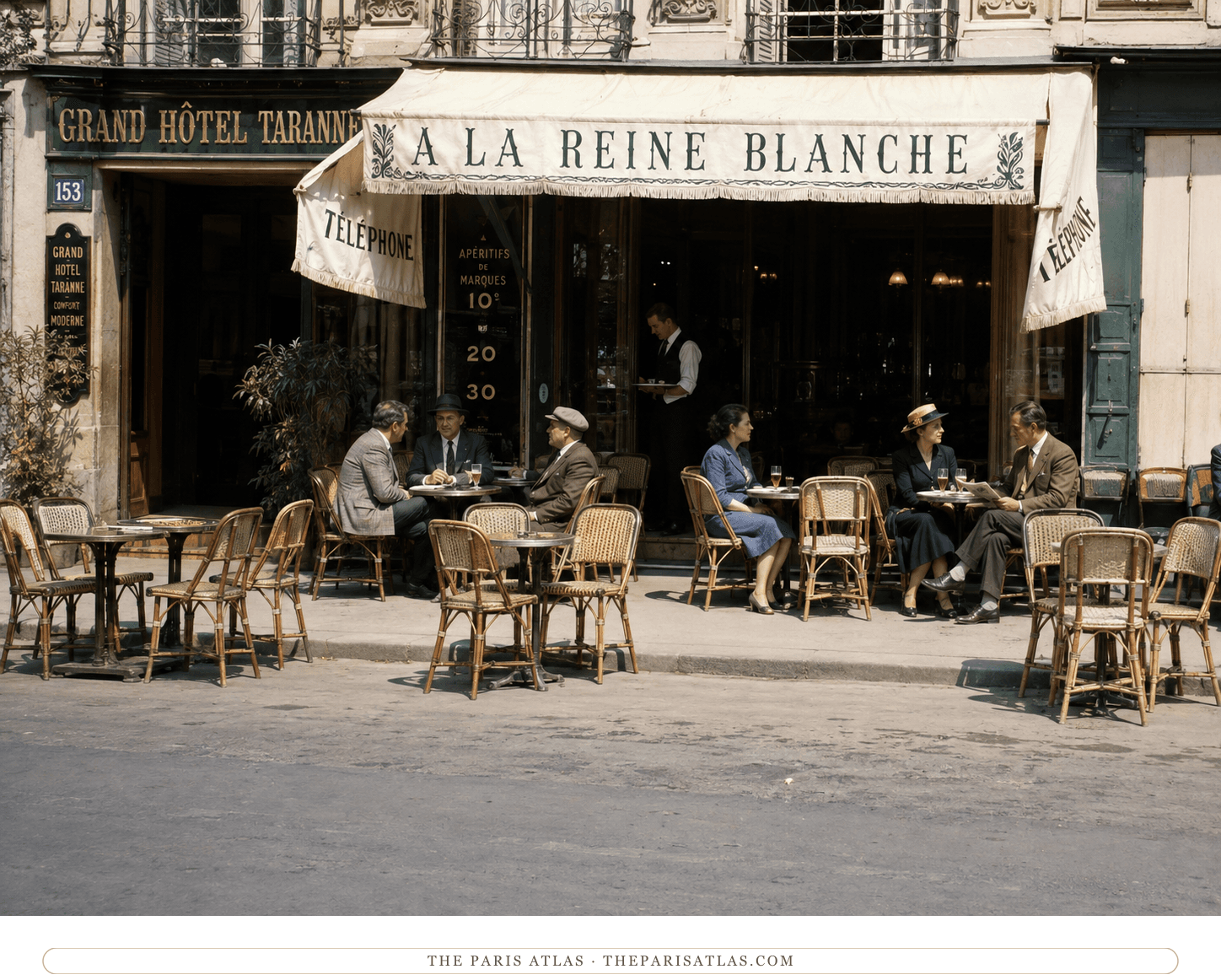
Artistic reconstructionThe same terrace in colour, the awning cream and green, glasses of beer on the tables in afternoon sun

The same frontage in colour — the number 153 on the plaque beside the hotel door.

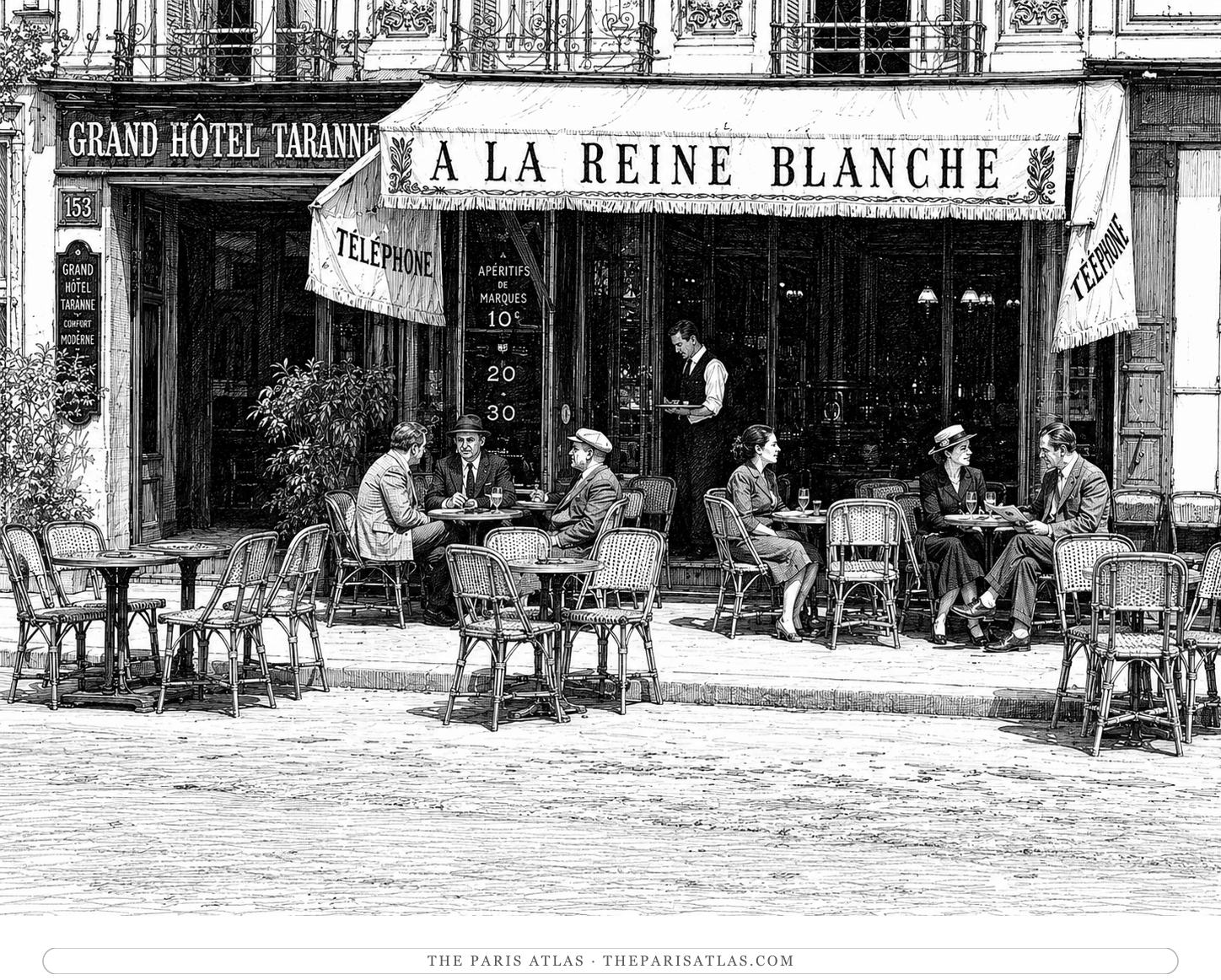
Artistic reconstruction

The story

Physical location and geography

The room mattered because of exactly where it sat along the dividing lines of post-war Paris.

  • The address reconstruction: No biography gives the exact street number, so the address must be worked out rather than quoted. A photograph from the 1920s shows the Grand Hôtel Taranne with A LA REINE BLANCHE lettered across its ground floor. The hotel is at 153 boulevard Saint-Germain, trading on that spot since 1870 and still open today under the name Au Manoir Saint-Germain-des-Prés. The photograph's geotag lands within about ten meters of the address point for number 153.
  • The caveat: What cannot be definitely proven is that the café photographed in the 1920s and the bar Baldwin used in 1949 were the exact same business, rather than simply the same name at the same address.
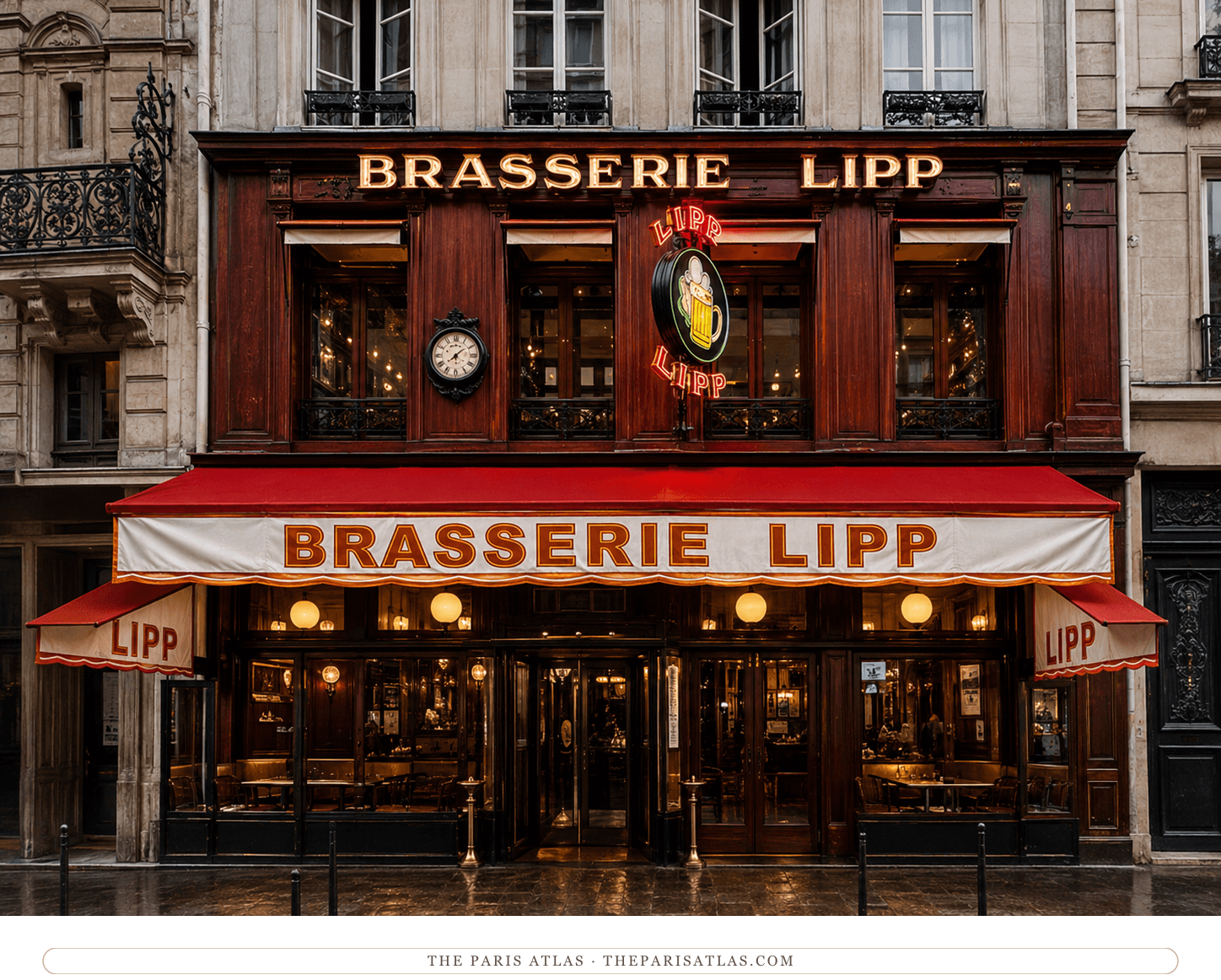
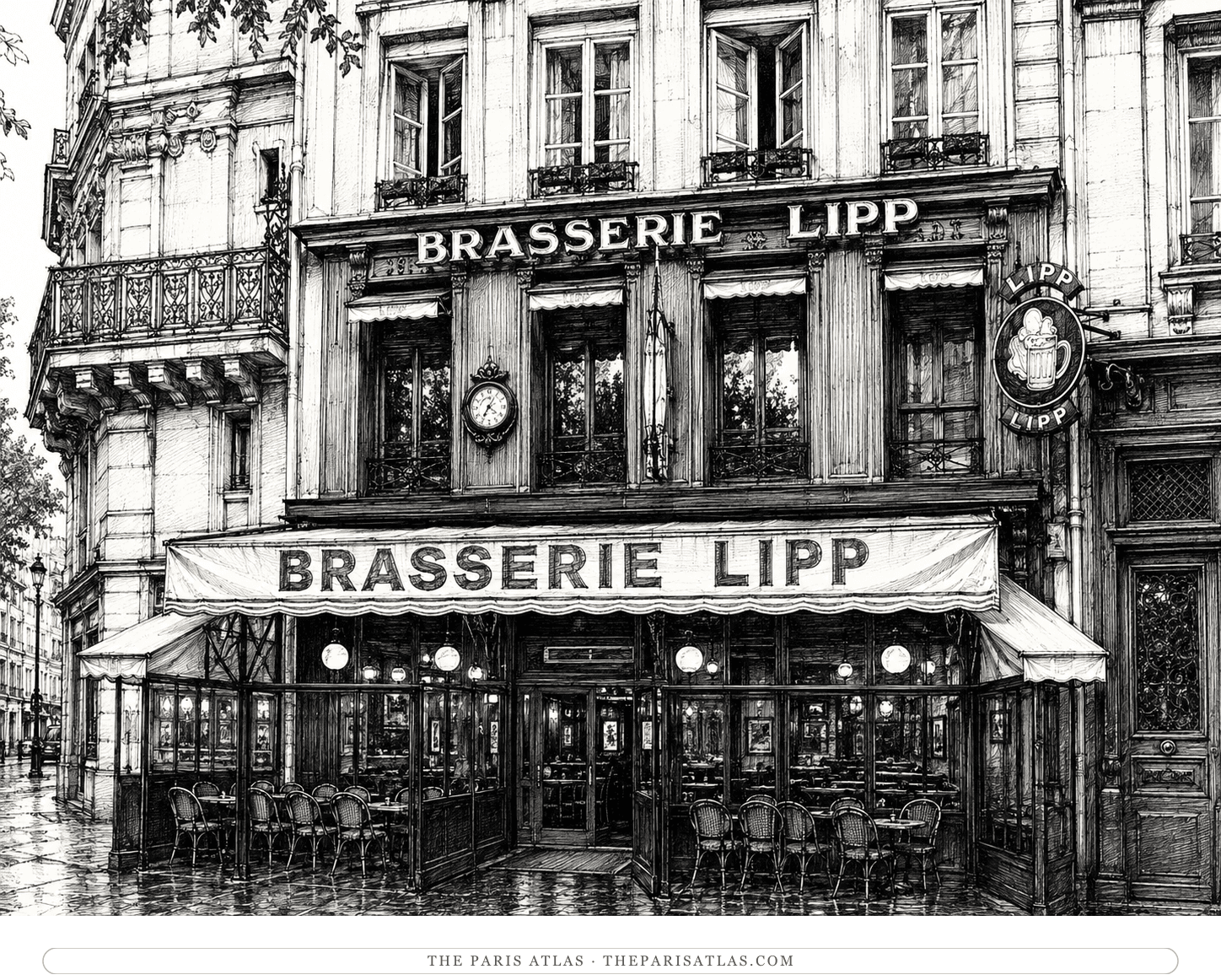
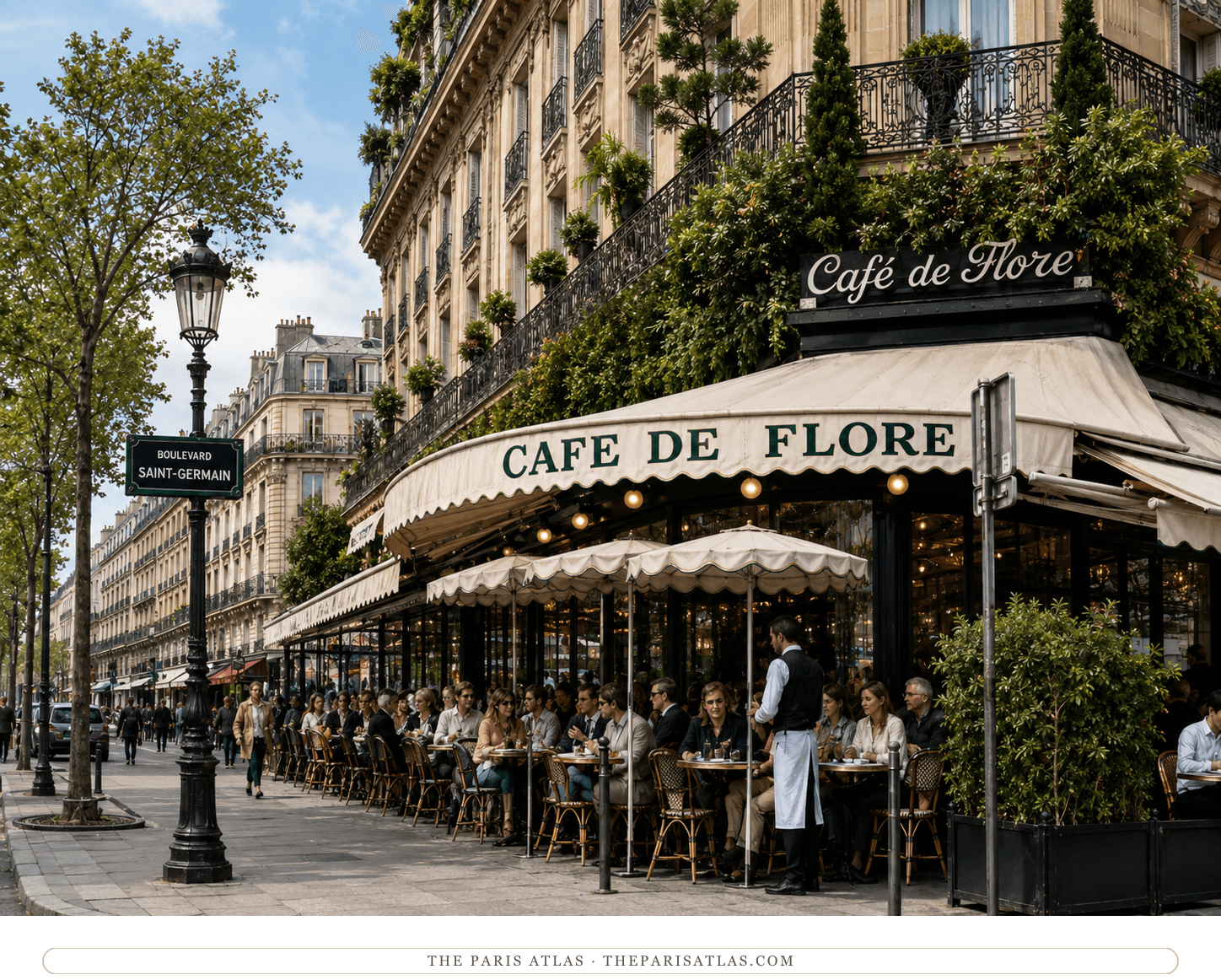
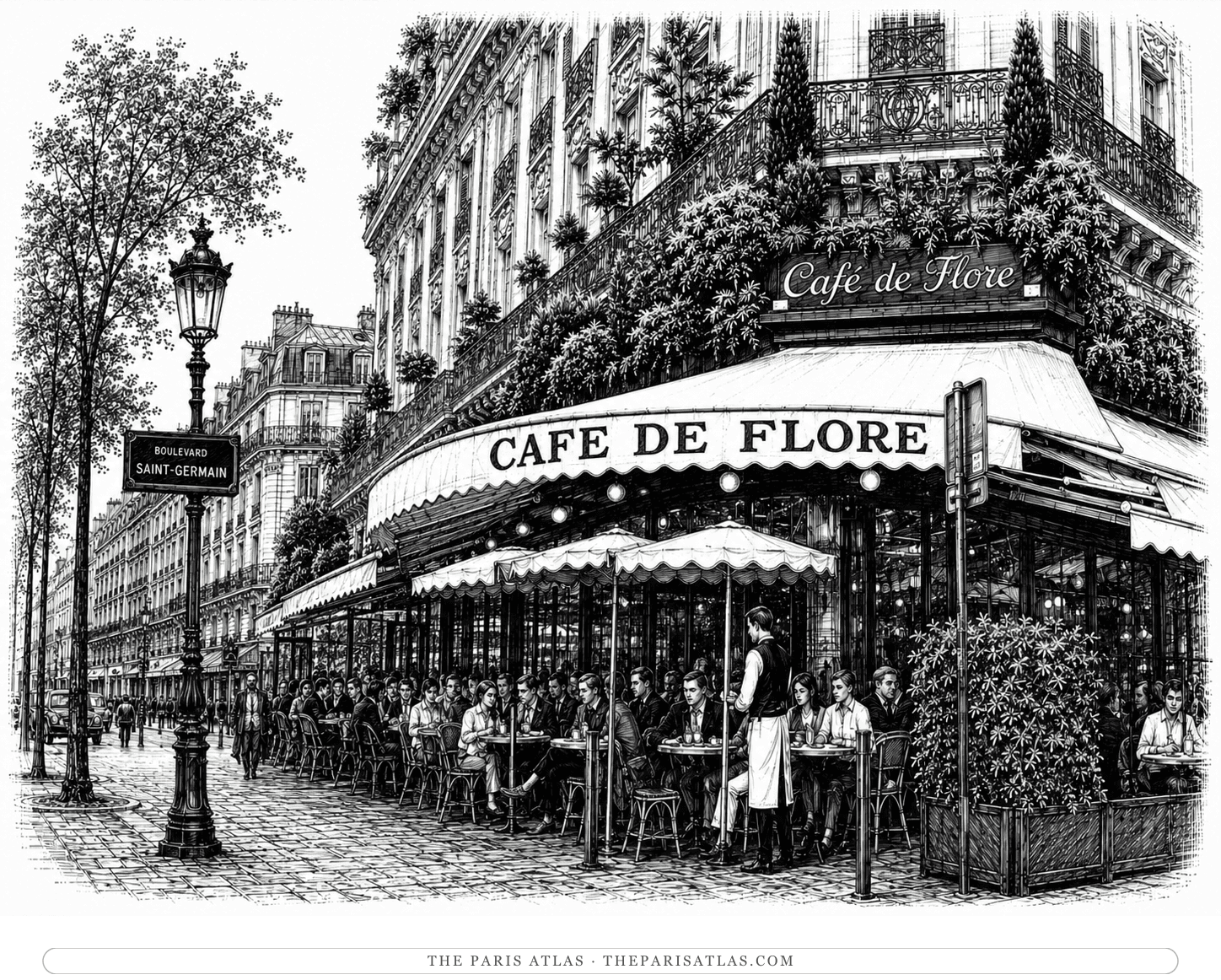
  • Across the street in every sense: The Café de Flore is at 172, on the far side of the boulevard, while Brasserie Lipp is next door to the hotel at 151. As the biographer James Campbell writes, La Reine Blanche stood "on the other side of the street—in every sense—from the Cafe de Flore." While the famous intellectual terraces hosted high-minded philosophers, the young people around La Reine Blanche drank there regardless of societal expectations or who they went home with.

The bar behind Guillaume's bar

While Baldwin never named a real-world model for Guillaume's bar in any letter or interview in the public record, biographers have identified La Reine Blanche as the creative epicenter behind the famous meeting in Giovanni's Room.

  • The inception of the novel: In 1949, inside this ground-floor venue, Baldwin met Lucien Happersberger. Happersberger was a seventeen-year-old Swiss who had come to Paris to paint and had not much more money than Baldwin did. The relationship that followed ran, in one form or another, for the rest of Baldwin's life.
  • The literary fruits: This relationship produced two consequential facts in his biography. First, Happersberger's family had a chalet at Loèche-les-Bains in the Alps; it was there, in a village where nobody had seen a Black man before, that Baldwin finally finished Go Tell It on the Mountain. Second, seven years after they met, Giovanni's Room appeared with a simple, two-word dedication: FOR LUCIEN.
  • The "tunnel-like" room: Nicholas Boggs, whose 2025 biography of Baldwin is the first to work through the author's letters at length, writes that the bar where David meets Giovanni is clearly modelled in part on La Reine Blanche. That identification calls the bar "tunnel-like," a term that has historically been misread as underground. The bar was actually on the ground floor at street level; the word describes the shape of the room, long and narrow and running back from the boulevard, which is what the 1920s frontage implies and what the building still allows.
  • A tale of two bars: The New York Times account of Baldwin's Paris is precise about how he constructed his fictional space. Baldwin and Happersberger drank at both La Reine Blanche and Le Fiacre, a few minutes' walk away on the rue du Cherche-Midi. The two bars supplied different halves of the fictional setting: Le Fiacre's owner became the basis for the character of Guillaume, providing the novel with a proprietor and an upstairs. La Reine Blanche gave it the meeting.

Ultimately, no scene in the novel is set at La Reine Blanche. The novel came out of it.

A sanctuary of the post-war queer subculture

In the years after the war, Saint-Germain-des-Prés operated as the center of homosexual Paris. La Reine Blanche supplied the exact conditions needed for a novel about a man who cannot survive being loved where anyone can see it.

  • Visible but vulnerable: The historian Georges Sideris lists La Reine Blanche alongside the Flore, the Royal Saint-Germain, and the Pergola as cafés where queer men were visible without pretending otherwise. However, visible was not the same as safe. The police still took an interest, and an administrative closure could end a business overnight.
  • The system of survival: The bars that lasted were the ones that found some form of protection. While Le Fiacre ran a chic restaurant upstairs precisely so that the bar downstairs would be left alone, La Reine Blanche sat at the cheap end of that world, a place where an admission of love could be made, but could still cost something.

The present-day aftermath

Nothing of the room survives to look at today. The bar closed, the hotel above it has been renovated more than once, and the ground floor at 153 gives no sign of what used to be there. Saint-Germain keeps its literary plaques for the Flore and Les Deux Magots forty meters away on the other side of the boulevard.

The quarter's other post-war life, the one that required cheap bars and quiet arrangements with the prefecture, is not commemorated on the street at all. By the 1990s, the center of homosexual Paris had moved out of Saint-Germain entirely, migrating first to the rue Sainte-Anne, then to Les Halles, and finally to Le Marais, where it remains today.

Key facts

What it was
A cheap, ground-level bar operating out of the Grand Hôtel Taranne, an unvarnished sanctuary for the post-war queer subculture
Where
153 boulevard Saint-Germain, directly across the traffic from the Café de Flore at 172
Why it matters
The American author James Baldwin met Lucien Happersberger here in 1949, beginning a lifelong relationship and the dedication of Giovanni's Room
Guillaume's bar
The biographer Nicholas Boggs writes that the bar in the novel is modelled in part on this one, though Baldwin never publicly confirmed a model
How the address is known
Reconstructed from a 1920s photograph of the hotel's frontage; no biography gives the street number
Today
Closed and uncommemorated. The building trades as the Hôtel Au Manoir Saint-Germain-des-Prés and carries no marker of its literary history
The café under the Grand Hôtel Taranne. Drawn from the surviving photograph of the frontage; the terrace here is the one Baldwin's crowd would have been thrown out of, twenty years later and considerably poorer.Artistic reconstruction
The same frontage in colour — the number 153 on the plaque beside the hotel door.Artistic reconstruction
The address today. The building survives, but La Reine Blanche's bar room and frontage have vanished behind the modern hotel entrance and shops.Editorial illustration
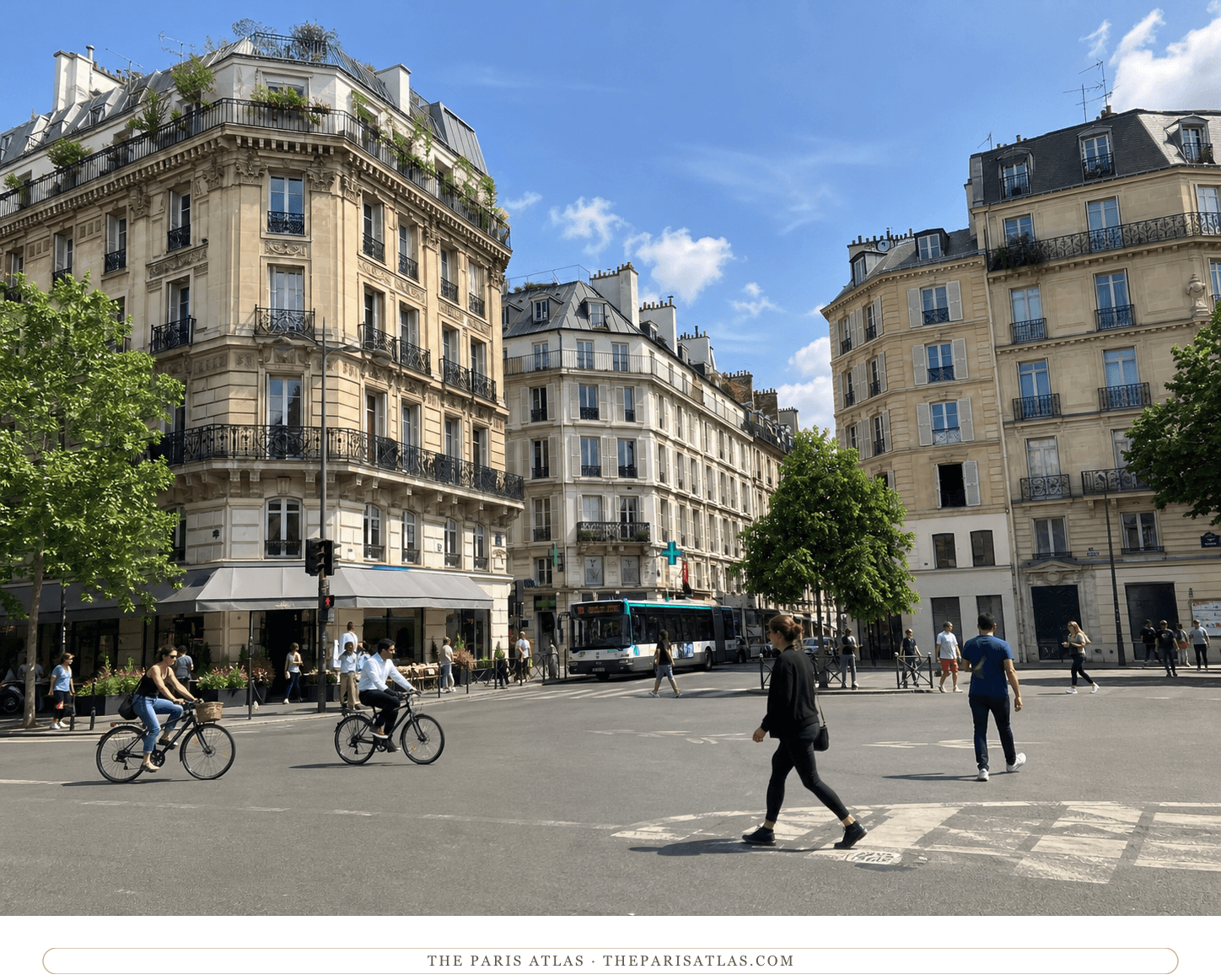
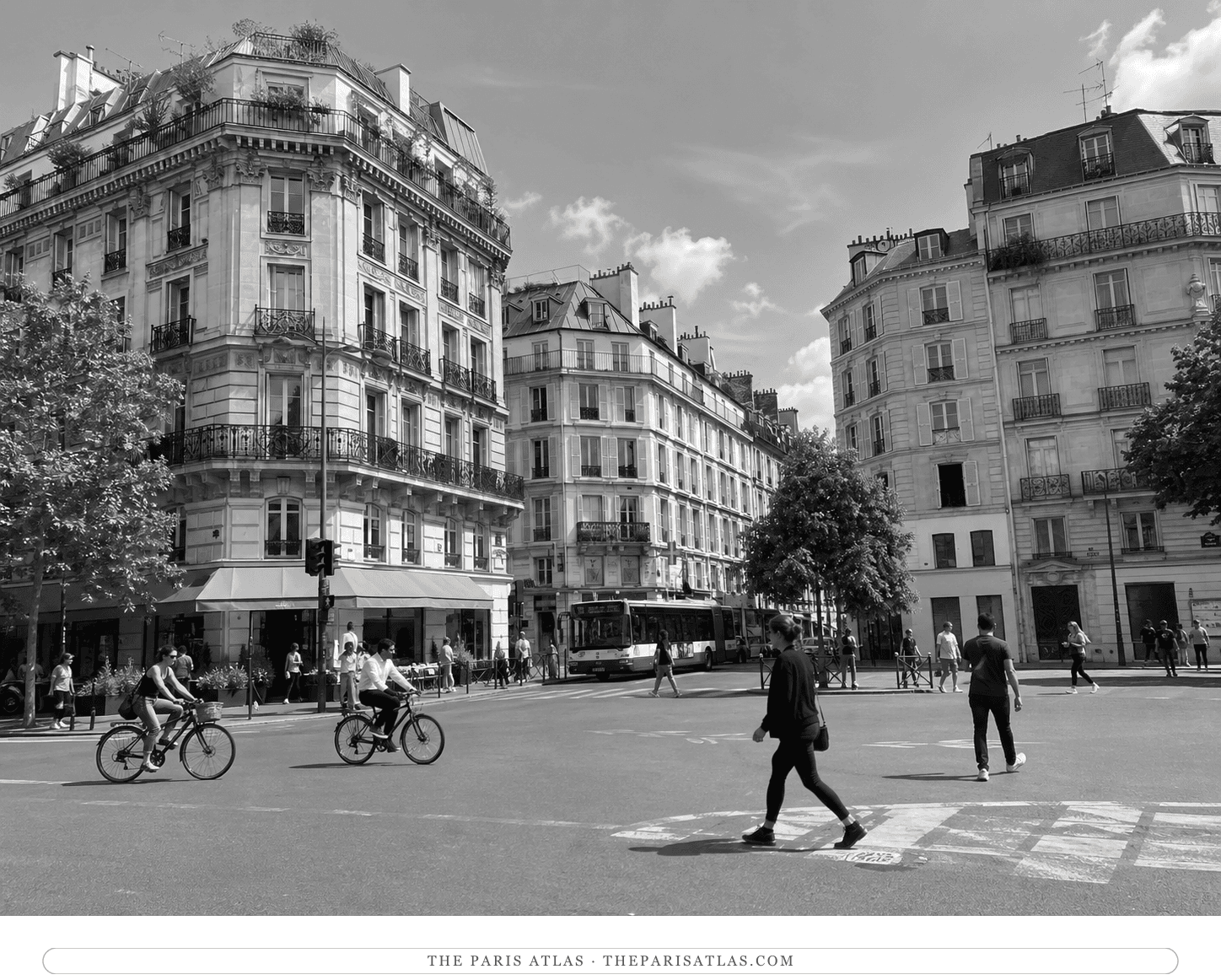
What a visitor sees now at 153 boulevard Saint-Germain: a hotel entrance and modern shops, with no marker for Baldwin's former bar.Editorial illustration

Timeline

  1. 1870

    The Hôtel Taranne opens at 153 boulevard Saint-Germain, on the boulevard Haussmann had just cut through the quarter.

  2. 1920s

    A photograph shows the café «A la Reine Blanche» lettered across the hotel's ground floor.

  3. November 1948

    James Baldwin arrives in Paris with forty dollars, and falls in with the crowd who drink here.

  4. 1949

    Baldwin meets Lucien Happersberger, a seventeen-year-old Swiss painter, in this bar.

  5. 1951–52

    Baldwin finishes Go Tell It on the Mountain at the Happersberger family chalet in the Swiss Alps.

  6. 1956

    Giovanni's Room is published, dedicated to Happersberger. Its invented bar is later said to draw on this one and on Le Fiacre.

On the map

Related books

Cover of Giovanni's Room by James Baldwin

A model for the book's version

Giovanni's Room

James Baldwin · 1956

Nicholas Boggs identifies the bar where David meets Giovanni as this one — the room where Baldwin met Lucien Happersberger in 1949, seven years before the novel appeared dedicated to him. No scene is set here; Guillaume's bar is invented.
Writers who knew this place

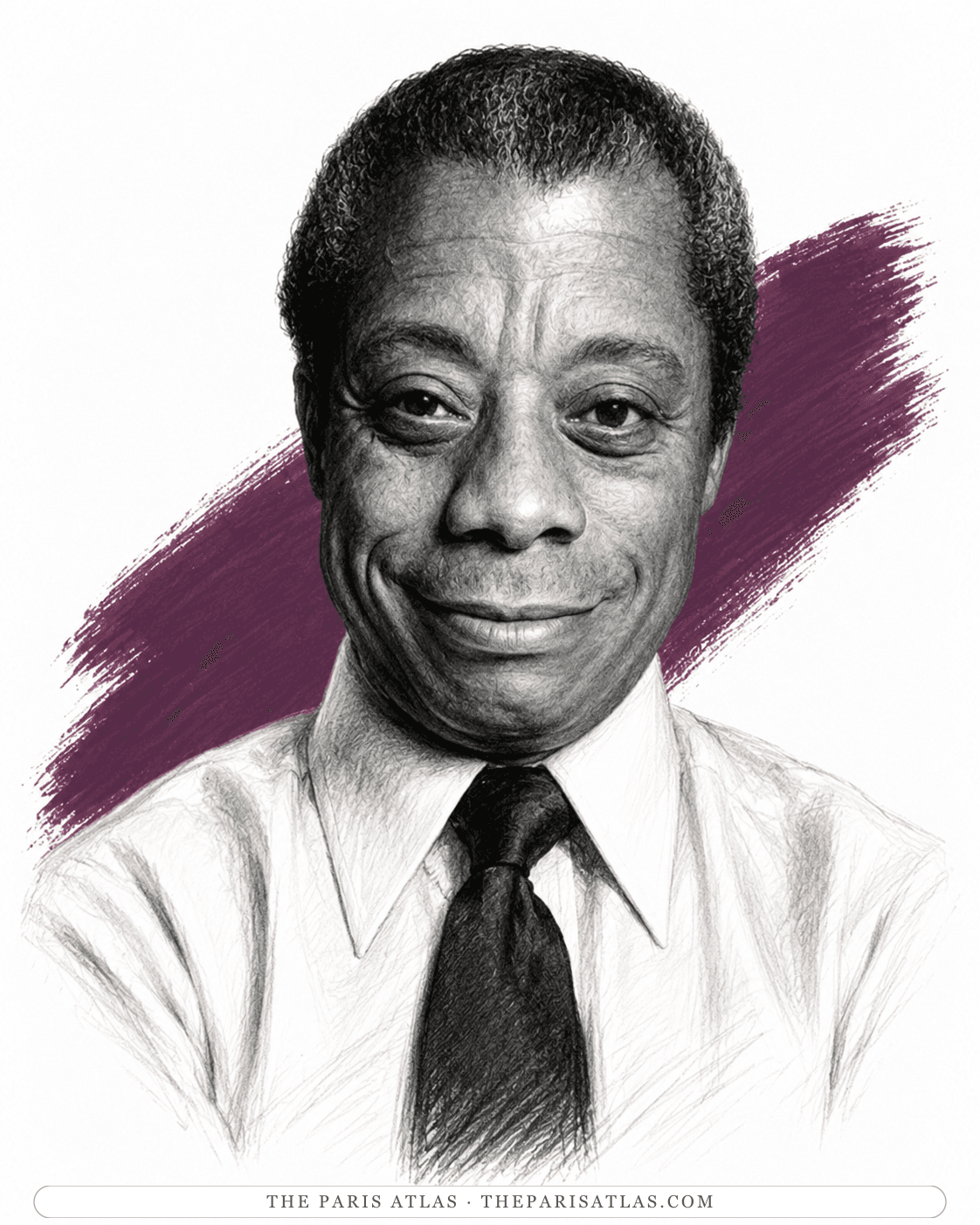
Illustrated portrait of James Baldwin

James Baldwin

American · American novelist and essayist who left Harlem for Paris at twenty-four with forty dollars, and wrote the books that made him the most quoted witness to race, sex and belonging in twentieth-century America.

Frequented by

Campbell names La Reine Blanche as the bar Baldwin and his circle used in his first Paris years, and describes the crowd there as the people who kept him fed. He met Lucien Happersberger in it in 1949. The habit is documented; the street number is not, and is worked out from a photograph of the café at the Grand Hôtel Taranne.

James Campbell, Exiled in Paris: Richard Wright, James Baldwin, Samuel Beckett, and Others on the Left Bank (1995)

Artists who knew this place

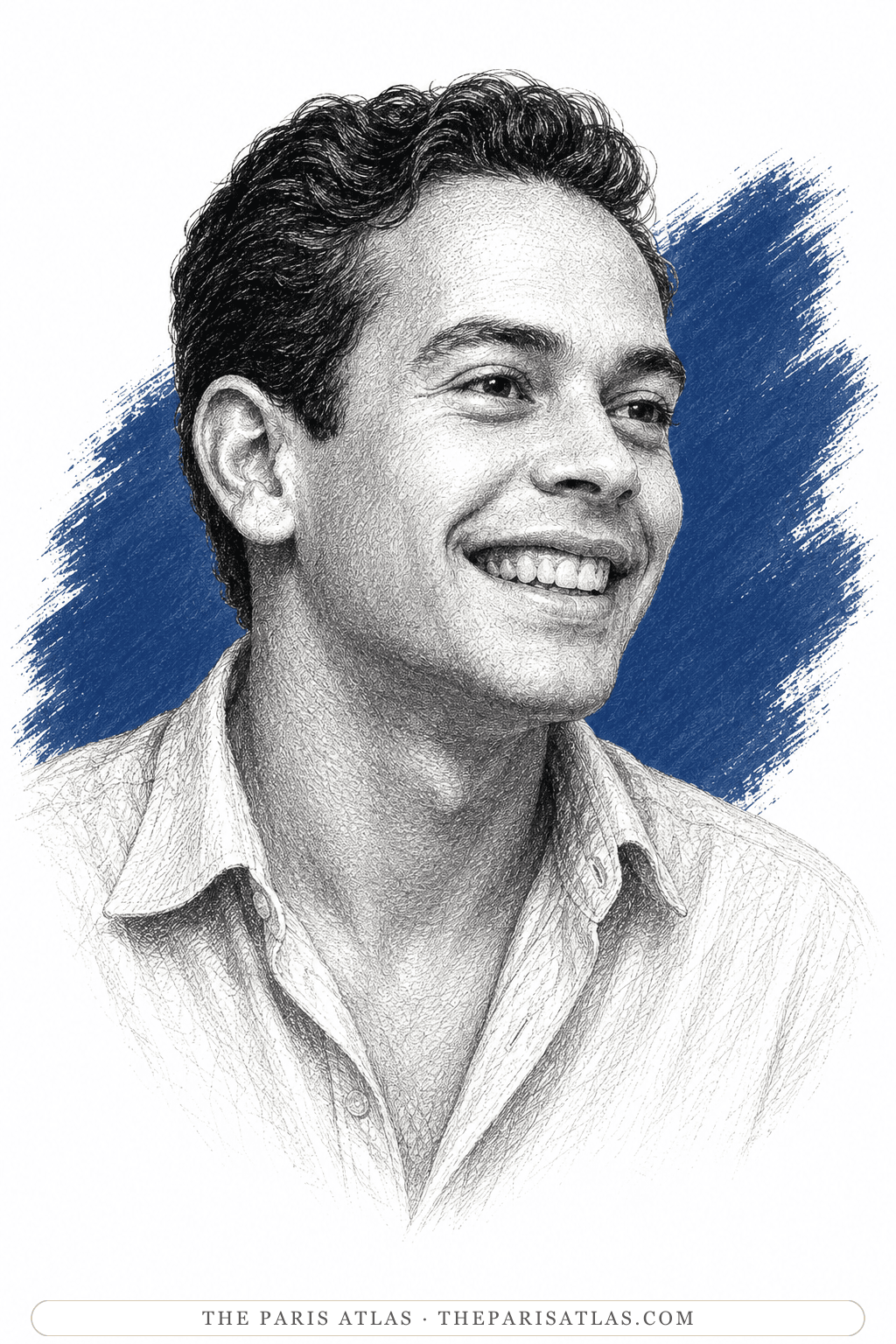
Illustrated portrait of Lucien Happersberger

Lucien Happersberger

Swiss · Painter

Happersberger met James Baldwin in this bar in 1949, at seventeen, newly arrived in Paris to paint. That single evening is what the record establishes. He was part of the same broke Left Bank crowd, so more visits are likely, but no account says so.

Within walking distance

The Friday Letter

Paris, one address at a time.

The cafés, studios, and walk-up flats where the work was made — one story from the map in every letter.

One email a week. No spam, no selling your address. Unsubscribe anytime.