The place, briefly
Les Halles was the belly of Paris in the plainest sense: the wholesale market where the food for a city of millions arrived at night, was fought over before dawn, and was gone by the middle of the morning. It had stood on this ground since the twelfth century. From the 1850s it stood under Victor Baltard's iron and glass pavilions, ten great sheds that were among the most admired industrial buildings in Europe and among the least sentimental.[1]
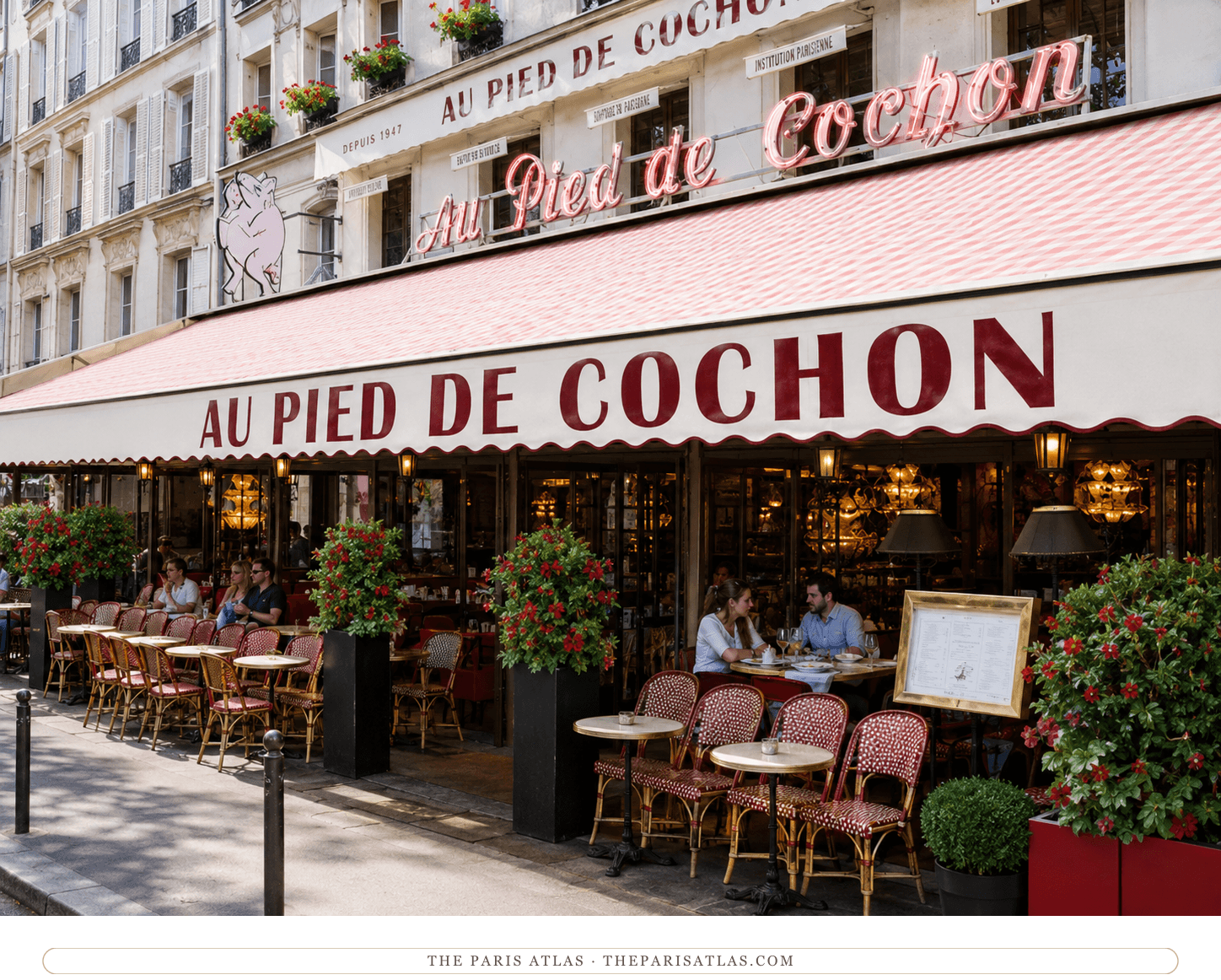
The market kept the hours of nobody else's Paris. Trucks came in from every corner of France through the night, the selling happened between about three and seven in the morning, and the quarter's cafés served the men who had been working since midnight alongside whoever was still out from the evening before. That overlap is the reason Les Halles turns up in so much writing about Paris nightlife. It was the one place where the two ends of the clock met and neither party was out of place.[1]
James Baldwin uses it for exactly that, and gives it the longest sustained piece of description in Giovanni's Room. David and Giovanni have met a few hours earlier at Guillaume's bar. At five in the morning Guillaume locks up and the four of them — David, Giovanni, Jacques and Guillaume — take a taxi across the city and arrive at what Baldwin calls the choked boulevards and impassable side-streets of Les Halles.[2]
What follows is a paragraph of inventory. Leeks, onions, cabbages, oranges, apples, potatoes, cauliflowers standing in gleaming mounds on the pavements and in the streets, before the metal sheds; inside the sheds more fruit and vegetables, and in others fish, cheese, whole animals lately slaughtered. It scarcely seemed possible, David thinks, that all of it could ever be eaten. In a few hours it would be gone. The market workers are in blue, as the working multitude of Paris is in blue every day but Sunday, and they dispute the taxi's passage inch by inch with their handcarts and their baskets. A red-faced woman carrying fruit shouts an obscenity at the cab, and Giovanni and the driver shout back at the tops of their voices, delightedly, after she has already gone past.[2]
The market is also Giovanni's own history, and Baldwin drops it in without ceremony. When Jacques objects to the cheap place Giovanni has chosen, Giovanni says that the expensive one is for tourists and that they are not tourists. Then, to David: when he first came to Paris he worked in Les Halles, for a long time, and he prays never to do it again. Guillaume, from his corner of the cab, tells him to say who rescued him. Behold my saviour, Giovanni says, my patron. Everything that will destroy both of them is already in that exchange, and it happens on the way to breakfast.
They eat at Madame Clothilde's, which Baldwin names but never places. The four of them drink cognac and marc at the bar in the early light, among people who have been there all night, and then they sit outside in the sun with white wine and oysters. Giovanni's black hair gathers the yellow of the wine. Afterwards they smoke, surrounded by oyster shells, finishing the bottle, in what David calls this strange, crooked corner, brazen now with sunlight and heavy with people. It is the last unclouded hour in the book.[2]
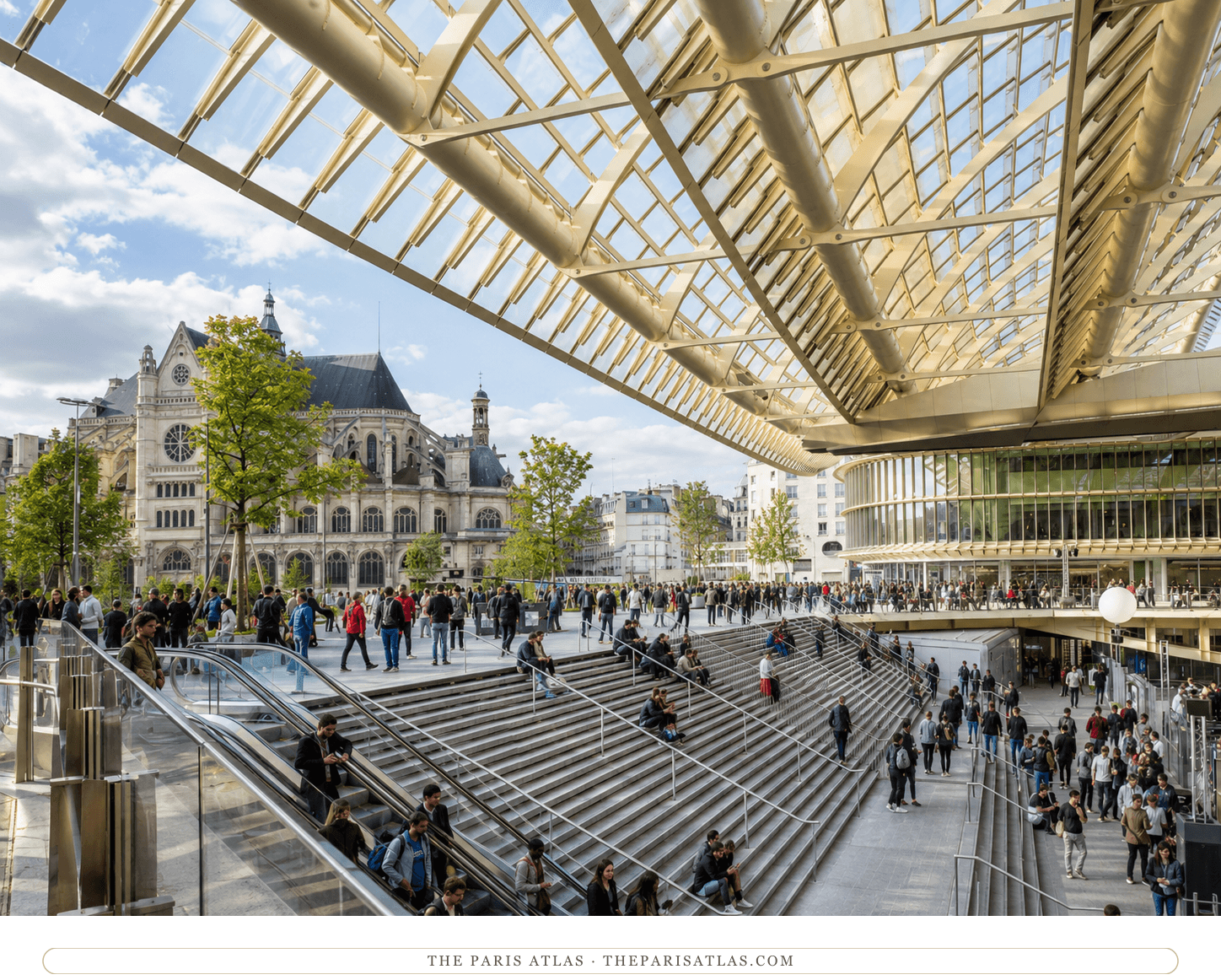
The market did not survive the century. It was moved out to Rungis, by the airport, in 1969, and in 1971 the Baltard pavilions were pulled down over the loud objection of most of the architectural profession — one shed was saved and re-erected at Nogent-sur-Marne, and a medallion bearing the city's arms and the motto Fluctuat nec mergitur went to the Musée Carnavalet. What was left was an enormous hole, then an underground shopping centre, and since 2016 a glass roof called the Canopée over the top of it.[3]
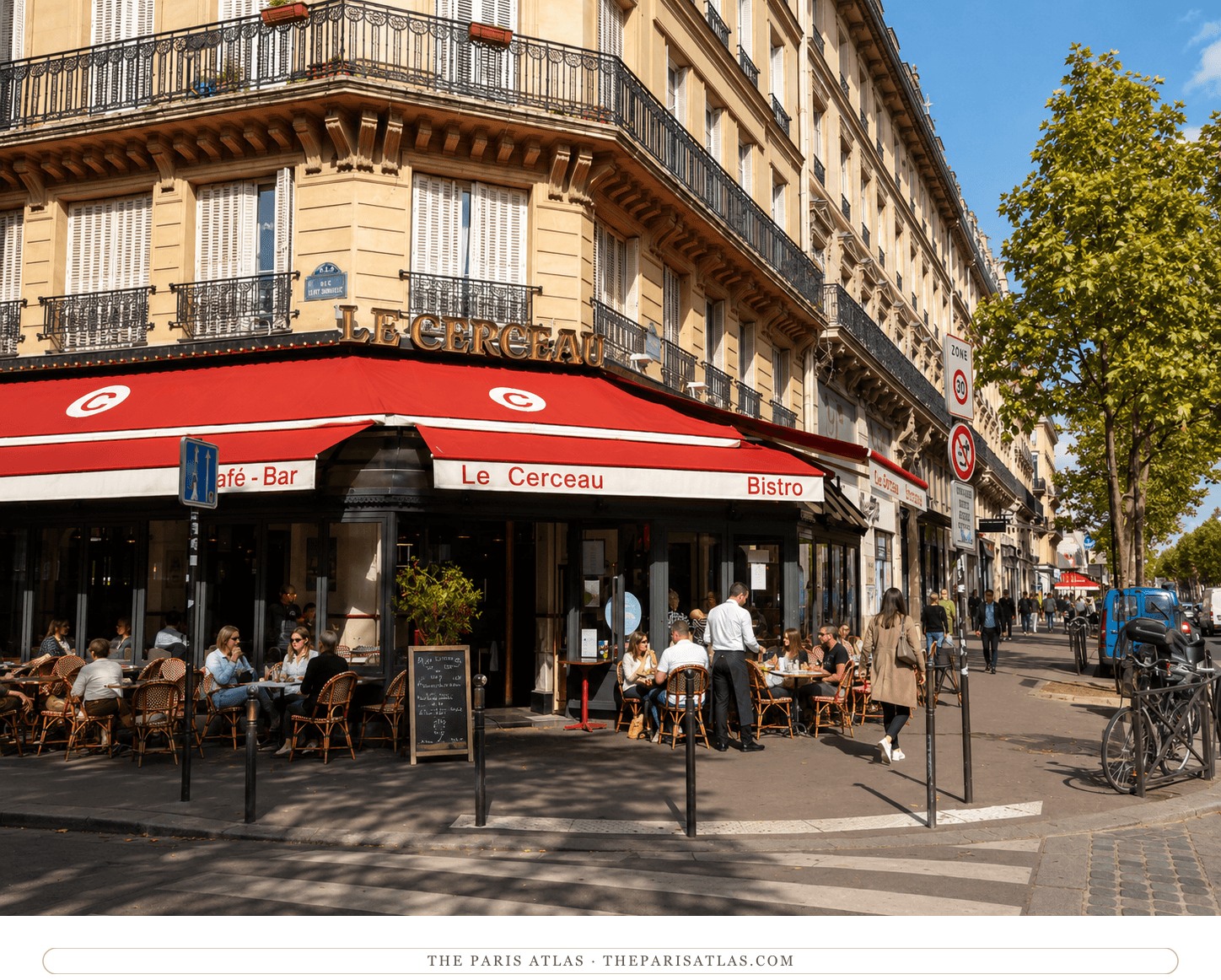
So there is no exact spot to stand on. There is no Madame Clothilde's, and the restaurant may never have existed outside the novel. What is still here is the geometry: a dense quarter of narrow streets north of the river, walkable, and worth walking at the hour Baldwin sets the scene, when the light comes up and the people going home meet the people arriving.









 View source