The Paris AtlasCharting the artists, works, and places worth returning to.

Restaurant · Les Halles · 1er arrondissement

Au Pied de Cochon

The buildingStill standing
Getting inIn, as a customer
What's there nowStill the same

The brasserie opened in 1947 to feed the porters of the old Les Halles food market, and the last place still serving at the address where they ate.

Address
6 Rue Coquillière, 75001 Paris
Years
1947–present
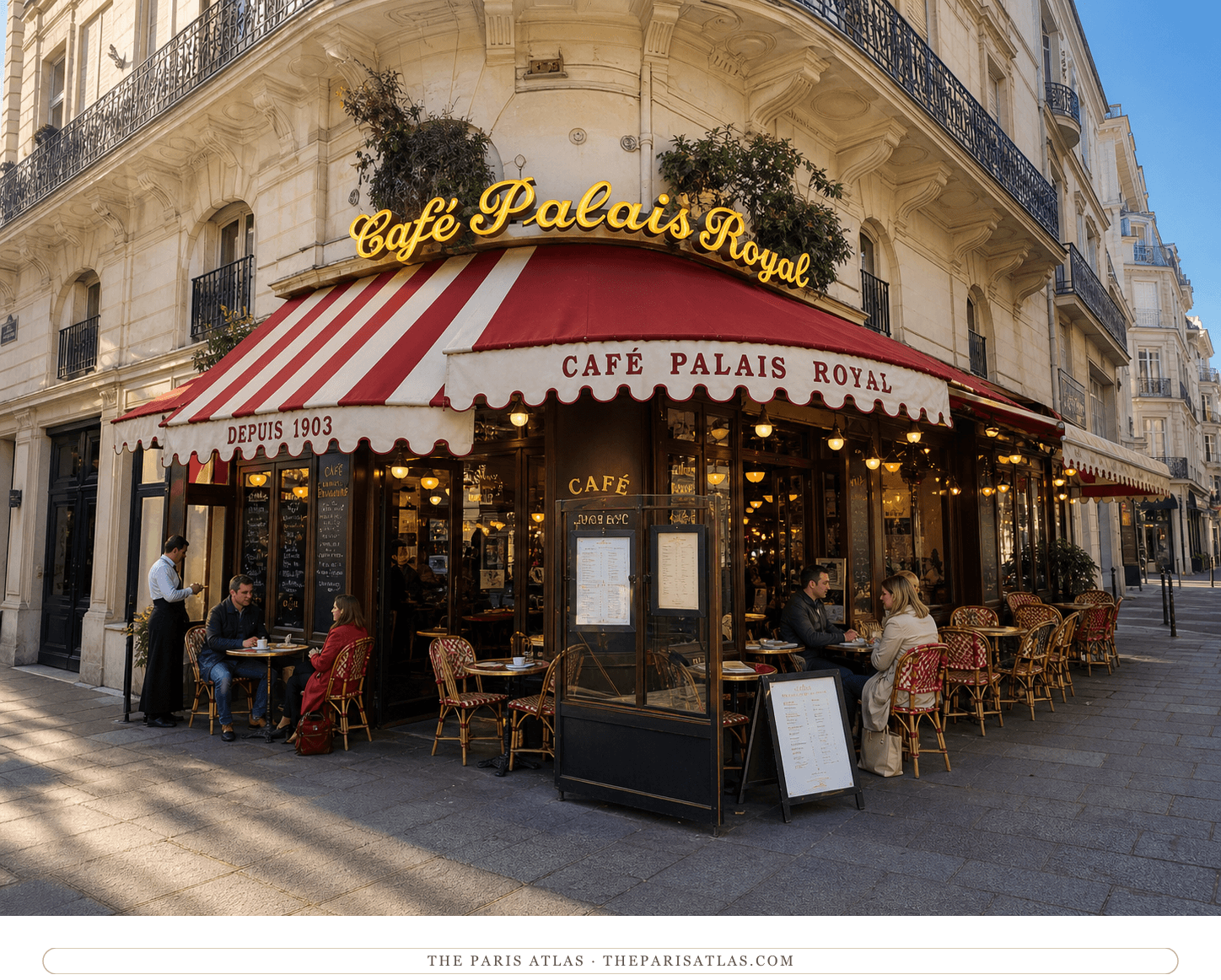
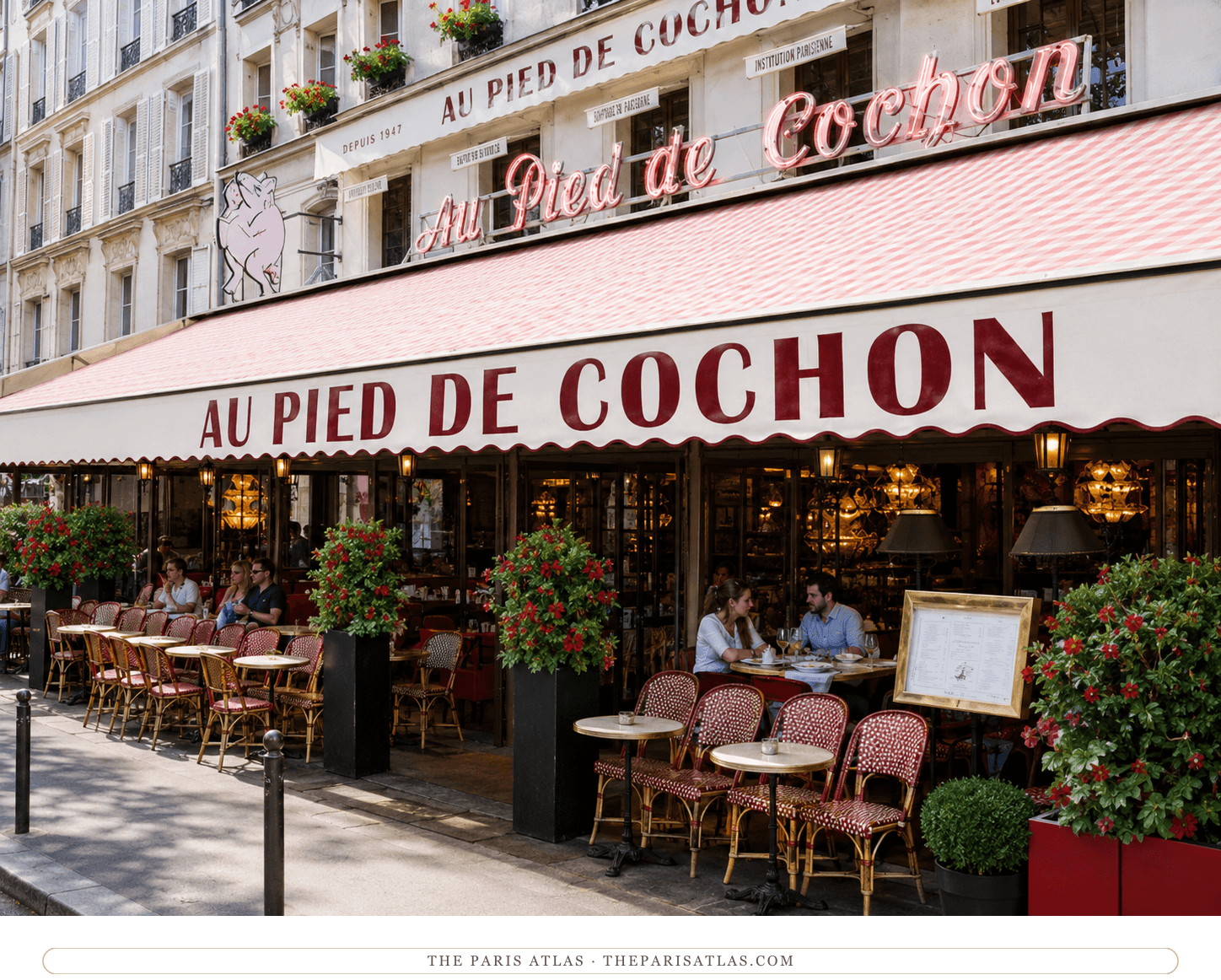
IllustrationThe same façade in colour, the awning red and cream under a neon script sign, geraniums in the planters and the terrace full in afternoon sun

The same frontage in colour — the red awning, the neon, and the pig over the door.

Editorial illustration

The story

Born in the Old Les Halles

The story of Au Pied de Cochon begins just after the Second World War.

In 1946, restaurateur Clément Blanc acquired a small bistro at 6 Rue Coquillière that had been closed during the war. In 1947, he opened Au Pied de Cochon. The restaurant’s own history identifies its earliest clientele as the Forts des Halles, the powerful porters responsible for carrying heavy merchandise into the market’s pavilions.

The location could hardly have been better suited to them.

At the time, Les Halles was still Paris’s great wholesale food market, a sprawling operation centered on the iron-and-glass pavilions designed by Victor Baltard. Produce, meat, fish, flowers and other goods arrived while much of Paris was sleeping.

The market followed an extraordinary timetable. Trucks entered the market area late at night, with different categories of food sold through the small hours and into the morning. Fish trading, for example, took place around six or seven in the morning.

Les Halles therefore had its own clock.

Restaurants surrounding it had to accommodate customers who might be ending their working day at five in the morning rather than five in the afternoon.

Au Pied de Cochon was built for precisely that Paris.

The Restaurant That Never Slept

Clément Blanc’s defining innovation was continuous service.

When Au Pied de Cochon opened in 1947, it became the first Paris establishment to offer continuous service twenty-four hours a day, seven days a week.

That decision transformed the restaurant into a meeting place between two versions of Paris.

One was the working city: porters, merchants and people whose jobs began when everyone else’s ended.

The other was nocturnal Paris: people leaving restaurants, theaters, bars and clubs who discovered that Au Pied de Cochon was still serving dinner when almost everything else had closed.

The attraction was simple.

Everybody eventually got hungry.

At Au Pied de Cochon, the rhythms of nightlife and manual labor collided over the same white tablecloths.

That mixture explains much of the restaurant’s mythology. It wasn’t an intellectual headquarters in the manner of Café de Flore or Les Deux Magots. Its importance came instead from its position within the machinery of the city itself.

Why Is It Called Au Pied de Cochon?

The name translates literally as “At the Pig’s Foot.”

Clément Blanc made pig’s trotter the signature of the restaurant. According to the restaurant’s history, it was a cut that butchers did not particularly value at the time. Blanc turned that inexpensive ingredient into the identity of the house.

The restaurant still leans enthusiastically into the theme.

Pork appears throughout its traditional brasserie menu, and its signature dishes include pied de cochon farci façon Périgourdine, or stuffed pig’s trotter, alongside other hearty French dishes. The restaurant also serves traditional brasserie classics including cassoulet, frog’s legs and pig’s ears.

Even the entrance plays along: the restaurant is known for its handles shaped like pig’s feet.

It is unapologetically old-fashioned food, and that is part of the point.

Onion Soup After Midnight

Another dish has become nearly synonymous with Au Pied de Cochon: French onion soup.

It belongs naturally to the restaurant’s history.

A bowl of deeply cooked onions beneath bread and melted cheese is exactly the kind of warming food suited to a neighborhood where people emerged from work, drinking or nightlife in the middle of the night.

Seafood belongs to the story as well. The old Les Halles was the distribution center for much of the food eaten throughout Paris, and oysters and seafood platters became part of the late-night brasserie culture surrounding the market.

That is also where Au Pied de Cochon’s history unexpectedly intersects with one of the great Paris novels of the twentieth century.

James Baldwin, Giovanni’s Room and Les Halles

James Baldwin arrived in Paris in November 1948 at the age of twenty-four, barely a year after Au Pied de Cochon opened.

Paris would become central to his development as a writer.

It was during his years in France that Baldwin produced some of the work that established his reputation, including his second novel, Giovanni’s Room, published in 1956.

And Les Halles occupies an especially memorable place in that novel.

Oysters and White Wine in Giovanni’s Room

Early in Giovanni’s Room, David and Giovanni leave the nighttime world of bars and eventually make their way to Les Halles.

There, in a working-class establishment, they eat oysters and drink white wine as morning begins to break over the city.

The scene is important because it captures one of the rare moments of openness and possibility between the two men. They have left the darker, enclosed world of the night’s bars behind them. Giovanni is sitting in the daylight. Paris is waking around them.

The meal is public, bright and shared — strikingly different from the secrecy and confinement that increasingly define David and Giovanni’s relationship.

It is difficult to fully imagine that scene in today’s Les Halles.

Au Pied de Cochon helps.

Was Au Pied de Cochon the Restaurant in Giovanni’s Room?

There is an important distinction to make.

There is currently no reliable evidence that the unnamed Les Halles establishment in Giovanni’s Room was Au Pied de Cochon. Nor is there sufficiently strong evidence to state that Baldwin himself ate here.

Paris Atlas therefore does not identify Au Pied de Cochon as “Baldwin’s restaurant” or claim that the oyster scene happened inside it.

Its significance is subtler — and, in some ways, more interesting.

Au Pied de Cochon was actually operating in Les Halles at exactly the time Baldwin knew the neighborhood.

It opened in 1947.

Baldwin arrived in 1948.

And the restaurant had been created specifically for the nocturnal working population of the old market — the same social and physical environment Baldwin evokes when David and Giovanni emerge into Les Halles.

Au Pied de Cochon therefore provides something increasingly difficult to find in Paris: a surviving doorway into the world of the novel.

A visitor cannot walk through Baldwin’s old Les Halles market anymore.

But they can still walk into a restaurant that served that market.

The Belly of Paris Disappears

The Les Halles Baldwin knew did not survive the twentieth century.

For generations, the market had functioned as one of the great engines of Parisian daily life. Émile Zola famously immortalized the district as “the belly of Paris,” and by Baldwin’s time the neighborhood remained an extraordinary landscape of food, commerce, labor and nightlife.

But the market had become increasingly difficult to operate in the center of a modern city.

Traffic congestion, lack of space, sanitation problems and the enormous logistical demands of supplying metropolitan Paris eventually led authorities to move the wholesale market outside the city.

The transition began in March 1969, when the food market started moving from Les Halles to the new market at Rungis. The remaining meat, poultry and offal wholesalers were gone by early 1973.

The Baltard pavilions were largely demolished.

The transformation was so dramatic that the enormous excavation left behind during redevelopment became known as the “trou des Halles” — the hole of Les Halles.

The streets around Au Pied de Cochon changed completely.

The restaurant remained.

Au Pied de Cochon as a Survivor

That survival is what gives Au Pied de Cochon its particular value today.

There are grander restaurants in Paris. There are cafés with stronger literary pedigrees. There are restaurants offering more adventurous contemporary cooking.

But relatively few places allow someone to sit in the same establishment, at the same address, that was feeding people in this neighborhood while the old Les Halles market was still alive.

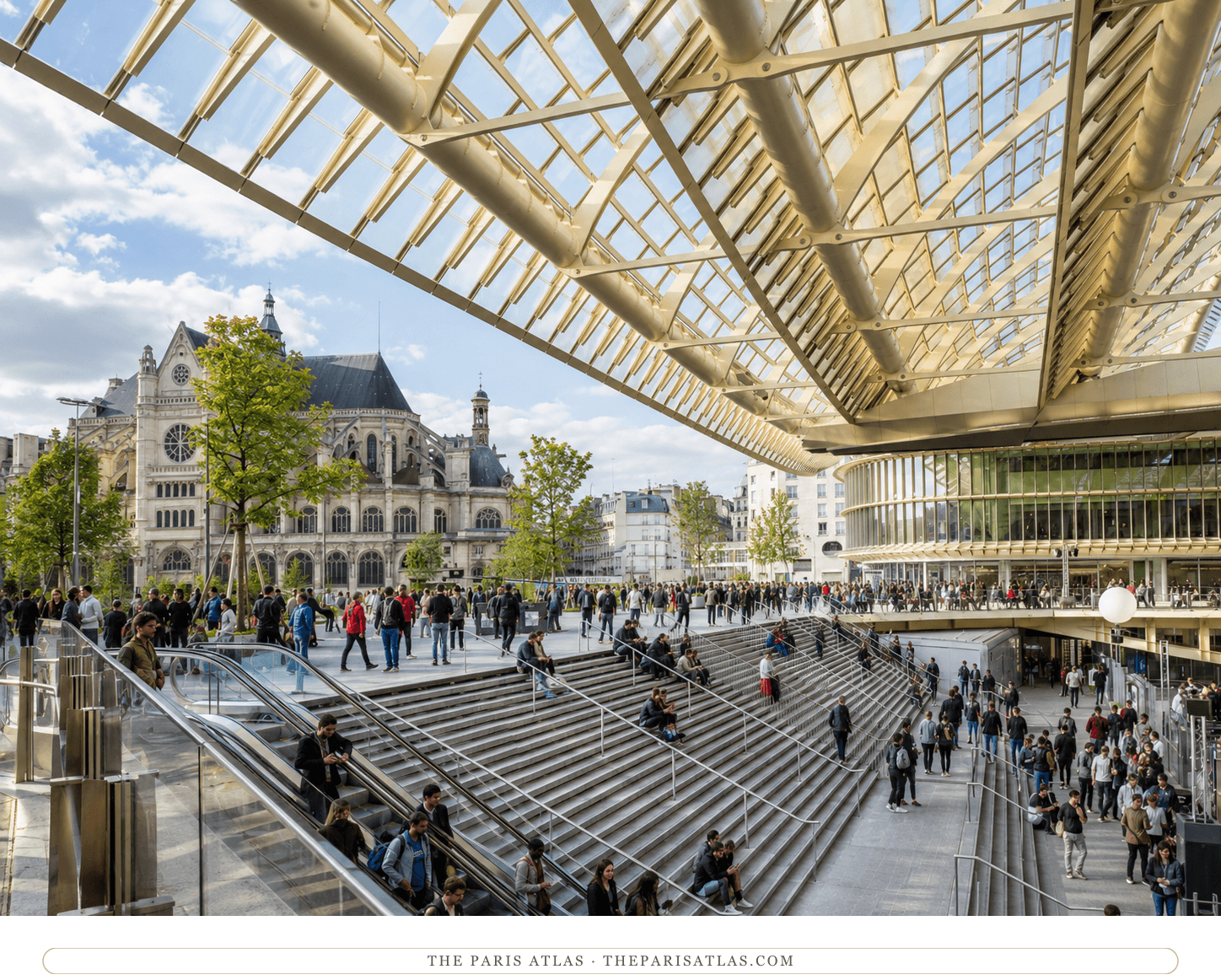
Au Pied de Cochon has watched the neighborhood pass through several different identities: the Baltard market, its destruction, the Forum des Halles and finally today’s enormous Châtelet–Les Halles complex and Canopée.

Paris changed around it.

The restaurant simply kept serving dinner.

Visiting Au Pied de Cochon Today

Au Pied de Cochon remains at its original address: 6 Rue Coquillière, 75001 Paris.

It sits just beside Saint-Eustache, a few minutes from the modern Les Halles complex and within walking distance of the Louvre.

Its current schedule is no longer literally twenty-four hours. The restaurant presently lists opening hours of approximately 8 a.m. to 5 a.m., seven days a week, preserving its identity as one of Paris’s great late-night dining rooms.

Inside, the experience is unmistakably that of a traditional Parisian brasserie: closely packed tables, mirrors, glowing lights, red accents, servers moving rapidly across the room and an atmosphere that becomes particularly appropriate as the hour grows later.

For a Paris Atlas visit, late evening or very early morning makes more historical sense than lunchtime.

That is when the connection to the old restaurant becomes easiest to imagine.

What to Order

For the full historical experience, order the pied de cochon.

It is the dish around which Clément Blanc built the identity of the restaurant in 1947 and remains one of the house specialties.

For a less adventurous introduction, French onion soup captures the spirit of old late-night Paris beautifully.

And for readers visiting because of Giovanni’s Room, there is another obvious direction: oysters and white wine.

Not because Baldwin’s characters are known to have eaten them at this restaurant — they aren’t — but because eating them in Les Halles connects the modern visitor to one of the novel’s most luminous Paris scenes.

Why Au Pied de Cochon Matters

Au Pied de Cochon is important not because one famous writer occupied a particular table, but because it preserves an entire ecosystem of Paris that has almost completely vanished.

When Baldwin arrived in the city in 1948, Les Halles still worked through the night.

Porters hauled food through the streets. Trucks crowded the market. Restaurants filled before sunrise. Nightlife overlapped with the beginning of the working day.

That is the Paris glimpsed in Giovanni’s Room when David and Giovanni sit over oysters and white wine as daylight reaches them.

The market has disappeared.

The workers have disappeared.

The Baltard pavilions have disappeared.

Au Pied de Cochon is still serving at 6 Rue Coquillière.

And that makes it one of the most evocative surviving places through which to understand the Les Halles of James Baldwin’s Paris.

Key facts

Address
6 Rue Coquillière, 75001 Paris
Neighborhood
Les Halles, 1st arrondissement
Opened
1947
Founded by
Clément Blanc
Known for
Pig's trotter, French onion soup, seafood, late-night dining
Literary connection
James Baldwin, Giovanni's Room, and the vanished world of old Les Halles
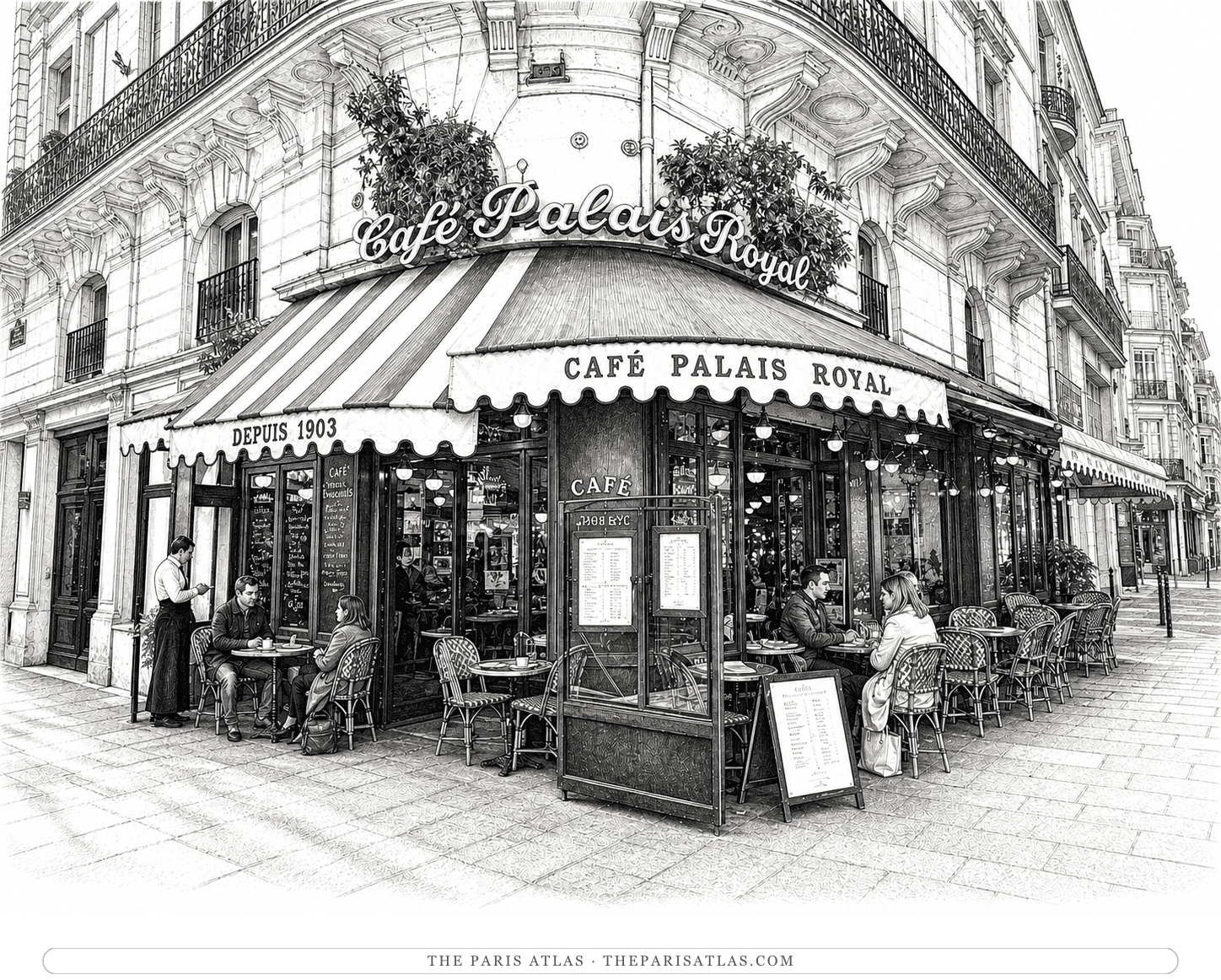
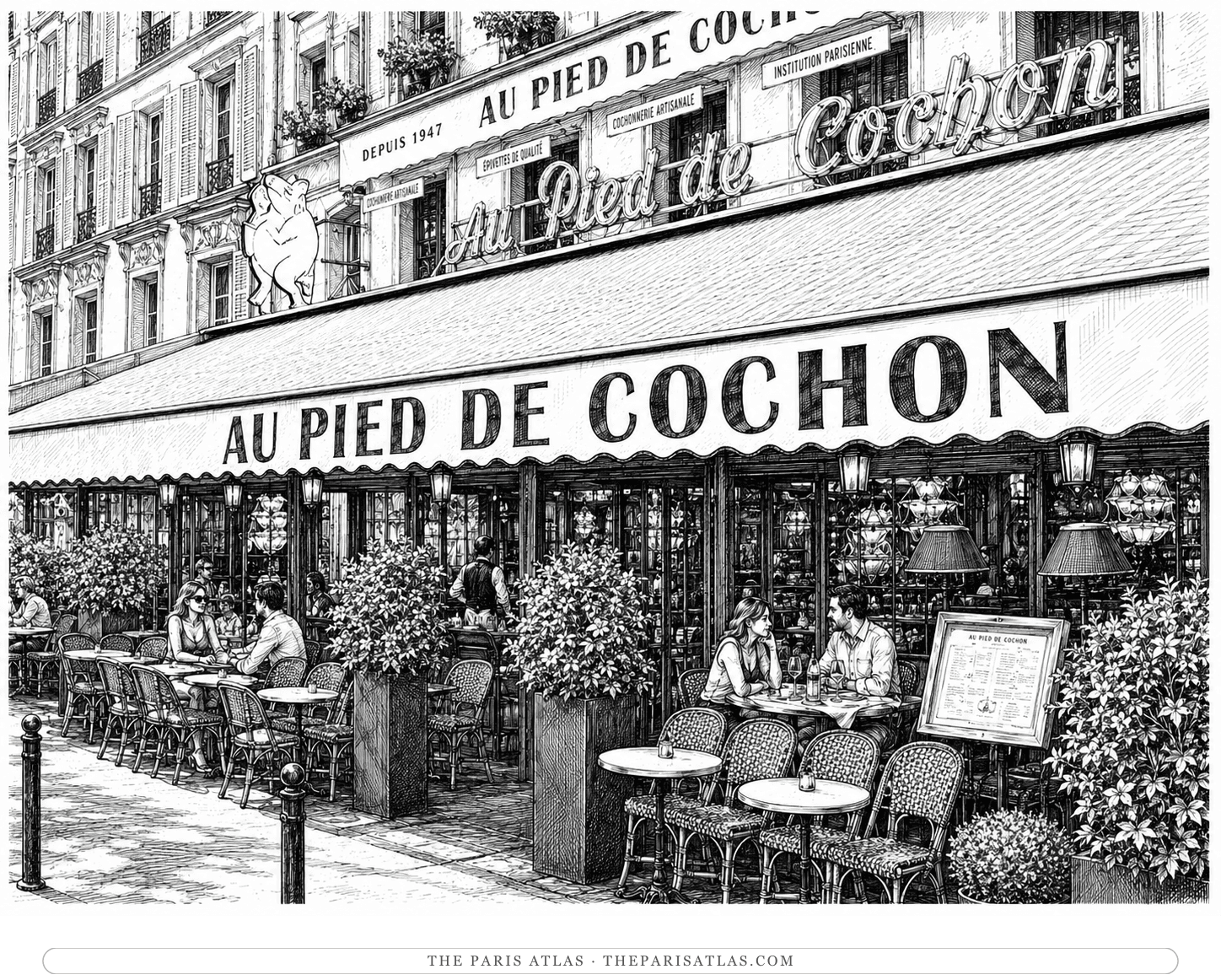
The frontage on the rue Coquillière, drawn as it stands today. The awning still carries DEPUIS 1947, and the terrace occupies pavement that market lorries once blocked.Editorial illustration
The same frontage in colour — the red awning, the neon, and the pig over the door.Editorial illustration

Timeline

  1. 1946

    Clément Blanc buys a small bistro at 6 Rue Coquillière that has been closed since the war.

  2. 1947

    Au Pied de Cochon opens, serving the Forts des Halles around the clock, seven days a week.

  3. November 1948

    James Baldwin arrives in Paris at twenty-four, a year after the restaurant opens.

  4. 1956

    Giovanni's Room is published. Its Les Halles scene puts David and Giovanni over oysters and white wine in a working-class house as the market wakes.

  5. 3 March 1969

    The wholesale food market begins moving out to Rungis.

  6. January 1973

    The last meat, offal and poultry wholesalers have left. The Baltard pavilions are largely demolished; Au Pied de Cochon stays.

On the map

Questions before you go

Did James Baldwin eat at Au Pied de Cochon?

There is no reliable evidence that he did. Baldwin reached Paris in November 1948, a year after the restaurant opened, and Les Halles appears in Giovanni's Room, but nothing on the record puts him at a table here. The Atlas does not call this Baldwin's restaurant.

Is this the restaurant in Giovanni's Room?

No. The café where David and Giovanni eat oysters and white wine is never named in the novel, and nothing identifies it as this one. What Au Pied de Cochon offers is a surviving example of the kind of all-night Les Halles house the scene describes, open in the quarter during the years Baldwin knew it.

Is Au Pied de Cochon still open twenty-four hours?

Not literally. The restaurant now lists 8 a.m. to 5 a.m., seven days a week, having dropped the round-the-clock service in the 2010s. The continuous all-night trade it opened with in 1947 is the reason it became well known.

What should I order?

The pied de cochon, the stuffed pig's trotter the restaurant was built around in 1947. The French onion soup is the easier introduction to the same history. Oysters and white wine are the order for readers who have come because of Giovanni's Room.

What happened to the Les Halles market?

It moved out of central Paris. The decision was taken in 1959, the transfer began on 3 March 1969, and the last meat, offal and poultry wholesalers had gone by January 1973. Victor Baltard's iron-and-glass pavilions were largely demolished, and the Forum des Halles was built on the site.

When is the best time to go?

Late evening or very early morning. The restaurant was designed for people whose working day ended at five in the morning, and the room makes far more sense at that hour than it does at lunch.

Related books

Cover of Giovanni's Room by James Baldwin

Still standing from the book's world

Giovanni's Room

James Baldwin · 1956

The restaurant opened at 6 rue Coquillière in 1947 to feed the night porters of the Les Halles wholesale market, and Baldwin reached Paris in November 1948. The novel sends David and Giovanni into Les Halles at dawn for oysters and white wine in a cheap working-class house, which is the trade Au Pied de Cochon was built for. This is not a claim that the novel is set here or that Baldwin drew on it — the café in the book is never named, and nothing places Baldwin at a table in this one. It records only that the restaurant survives from the world the scene is set in.

Writers who knew this place

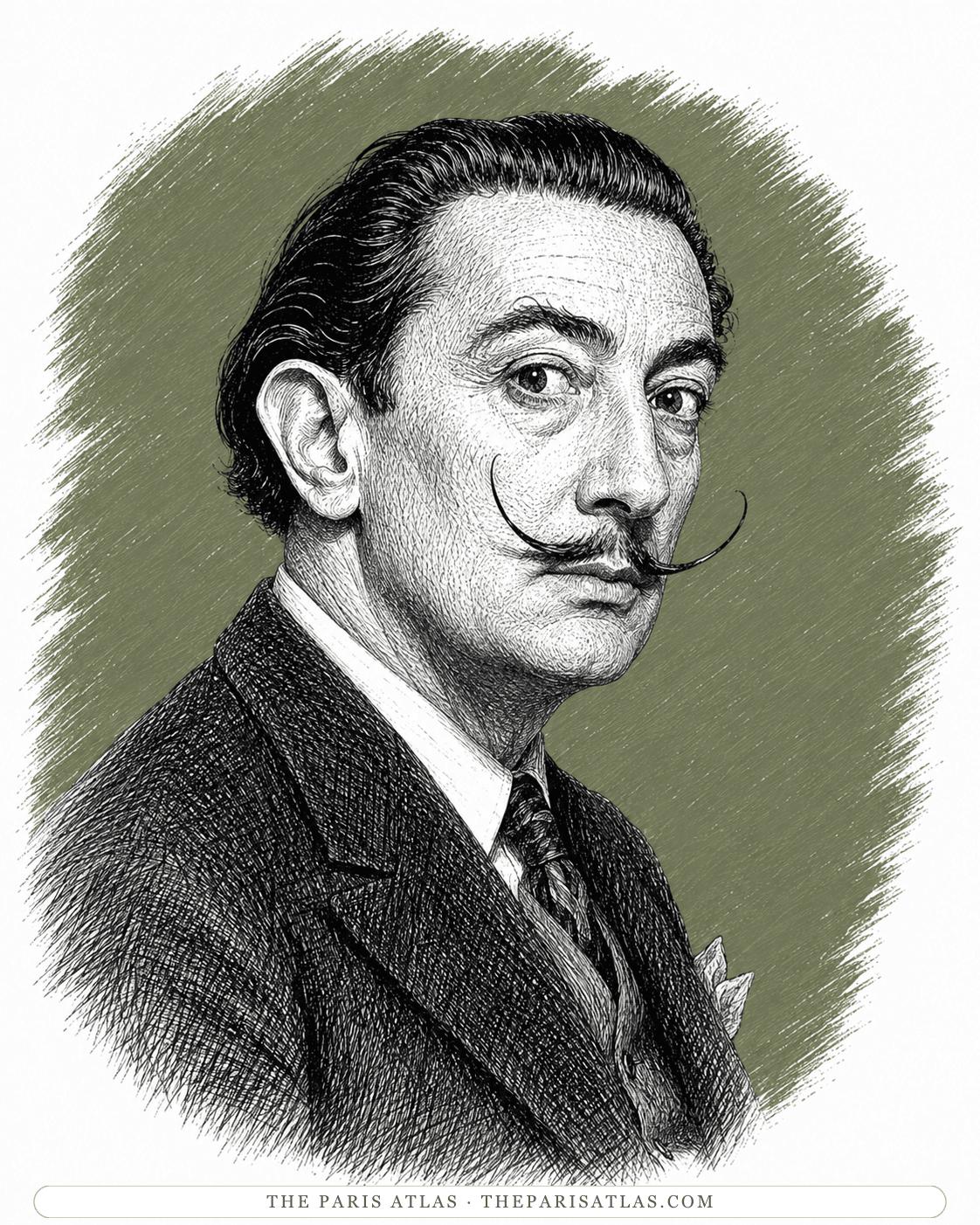
Illustrated portrait of James Baldwin

James Baldwin

American · American novelist and essayist who left Harlem for Paris at twenty-four with forty dollars, and wrote the books that made him the most quoted witness to race, sex and belonging in twentieth-century America.

James Baldwin wrote about Au Pied de Cochon in Giovanni's Room.

Within walking distance

The Friday Letter

Paris, one address at a time.

The cafés, studios, and walk-up flats where the work was made — one story from the map in every letter.

One email a week. No spam, no selling your address. Unsubscribe anytime.