

Nausea
Existence itself becomes physically disturbing to a solitary writer in a French town.
- 1938
- Atmospheric
- Savage
- experimental
- dark
- voice-driven
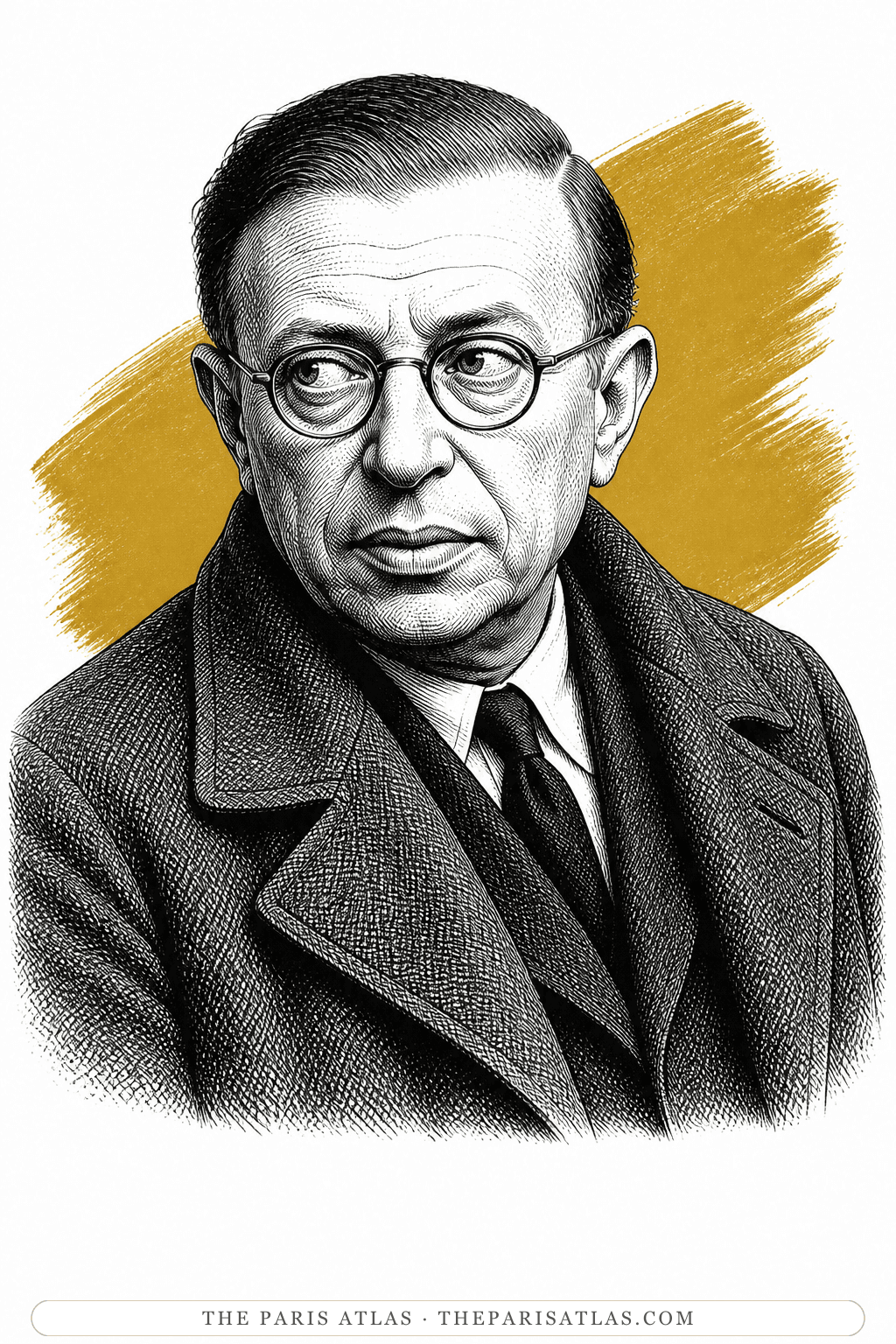
About Jean-Paul Sartre
The story, briefly
Spoiler-freeAntoine Roquentin lives alone in the fictional French port city of Bouville, researching a dead aristocrat while ordinary objects, people, and his own body become unbearably strange. He calls the experience the Nausea.
The story, in more detail
Antoine Roquentin lives alone in the fictional French port city of Bouville, where he is trying to finish a biography of the eighteenth-century Marquis de Rollebon. He has enough money not to work, few close relationships, and a growing sense that ordinary objects and people have become unbearably strange.[1]
He calls the sensation the Nausea. A tree root, a stone, his own hand, or a café can suddenly lose the familiar meanings that make daily life manageable. Instead of seeing a root as a useful category, Roquentin experiences the brute fact that the thing exists for no necessary reason.[1]
Sartre turns existential philosophy into the lived experience of one lonely man. The book can be intellectually demanding, but it is also funny, bitter, physical, and full of ordinary city detail.[1]
The full plot
Roquentin begins keeping a diary because he senses that something has changed in his perception. He is researching the Marquis de Rollebon in the Bouville library, but the papers no longer persuade him that reconstructing another man’s past can produce a true or necessary story.[1]
He spends time in cafés, walks the streets, observes bourgeois townspeople, and talks with the Self-Taught Man, a library regular who reads books in alphabetical order and believes deeply in human progress. Roquentin finds that optimism touching, conventional, and absurd.[1]
The Nausea intensifies. Stones, food, furniture, other bodies, and Roquentin’s own hand seem excessive and strangely independent of the names humans give them. In the park he looks at the thick root of a chestnut tree and experiences existence as contingent: present without reason, explanation, or necessity.[1]
Roquentin also remembers Anny, a former lover who once tried to create ‘perfect moments’ by arranging life into meaningful scenes. When they meet again in Paris, she has changed and no longer believes in that project. Their conversation closes his fantasy that returning to her might restore the past or provide a stable purpose.[1]
Back in Bouville, the Self-Taught Man is discovered making sexual contact with a schoolboy in the library and is violently expelled. The episode exposes a darker contradiction beneath his abstract love of humanity and confirms Roquentin’s distrust of moral identities that ignore particular actions.[1]
Roquentin abandons the Rollebon biography and prepares to leave Bouville. Hearing a jazz record, he imagines that a created work can possess shape and necessity even if ordinary existence does not. He begins considering a novel that might allow him to make meaning rather than discover it already waiting in the world.[1]
How it ends — spoilers ahead
Roquentin leaves Bouville without a religious conversion, restored romance, or philosophical proof that life has a hidden purpose. Anny is gone, Rollebon no longer organizes his time, and the town remains as contingent as before.
The jazz recording offers a different kind of experience. Because the song has been composed and completed, each note seems to belong to a form rather than merely existing at random. Roquentin does not confuse that artistic order with a universal answer.
He nevertheless imagines writing a novel—something beautiful and hard as steel—that might make its creator’s life worth remembering. The ending is not conventionally happy. Roquentin accepts contingency while considering that people can create limited forms of meaning instead of finding a final purpose built into existence.
Themes and analysis
Contingency
Things exist without needing to. Roquentin’s crisis comes from experiencing that fact directly rather than accepting it as an abstract statement. The world feels excessive because nothing guarantees why this object, person, or moment must be here.
Naming and reality
Words make the world manageable by grouping particular things into familiar categories. The Nausea breaks that link. ‘Root’ stops functioning as a comfortable label, and Roquentin confronts the dark, specific object before him as something language cannot fully contain.
History
The Rollebon project becomes suspect because Roquentin recognizes how much a biographer invents coherence after the fact. Documents preserve fragments, while the historian supplies motives, sequences, and necessity that the lived past may never have possessed.
Humanism
The Self-Taught Man’s faith in humanity clashes with Roquentin’s suspicion of broad moral categories. His later behavior in the library makes the problem concrete: declaring love for an abstraction does not guarantee respect for particular people.
Love and memory
Anny represents the hope that a shared past can provide stable meaning. Their reunion destroys that hope because neither person remains inside the old romantic story. Memory cannot make the relationship necessary or recover the ‘perfect moments’ she once pursued.
Art
The final possibility is not salvation but creation. A song or novel may impose form where existence provides none. That meaning is made, limited, and vulnerable, yet it offers Roquentin a task that differs from inventing false necessity in Rollebon’s life.
Writing style
Sartre combines diary form, philosophical reflection, grotesque physical description, irony, and close sensory detail. The prose can become abstract, but its major philosophical moments begin with concrete experiences: a stone in the hand, a face in a café, or a root in the soil.
Roquentin is not a neutral lecturer. He is irritable, lonely, observant, self-involved, and often funny in a sour way. His personality keeps the book from becoming a textbook and reminds readers that every philosophical claim reaches them through one particular consciousness.
Editions and translations
English readers have encountered translations by Lloyd Alexander and Robert Baldick, among others. Translation matters because Sartre moves between slang, philosophical vocabulary, black comedy, and sensory grotesque description. A page should always identify which voice the translator has created.
Major adaptations
There is no single canonical screen adaptation. The diary’s interior perception makes direct adaptation difficult, and films influenced by existentialism should not be mislabeled as versions of this novel.
Why we recommend it
Existential unease made physical
Sartre begins with hands, stones, faces, and roots before turning the experience into philosophy.
A difficult mind with a distinct personality
Roquentin’s sour humor, loneliness, and irritation keep the diary from reading like a neutral lecture.
Art as a limited answer
The ending offers creative work rather than a hidden cosmic purpose or sentimental cure.
What this book explores
The people in its pages
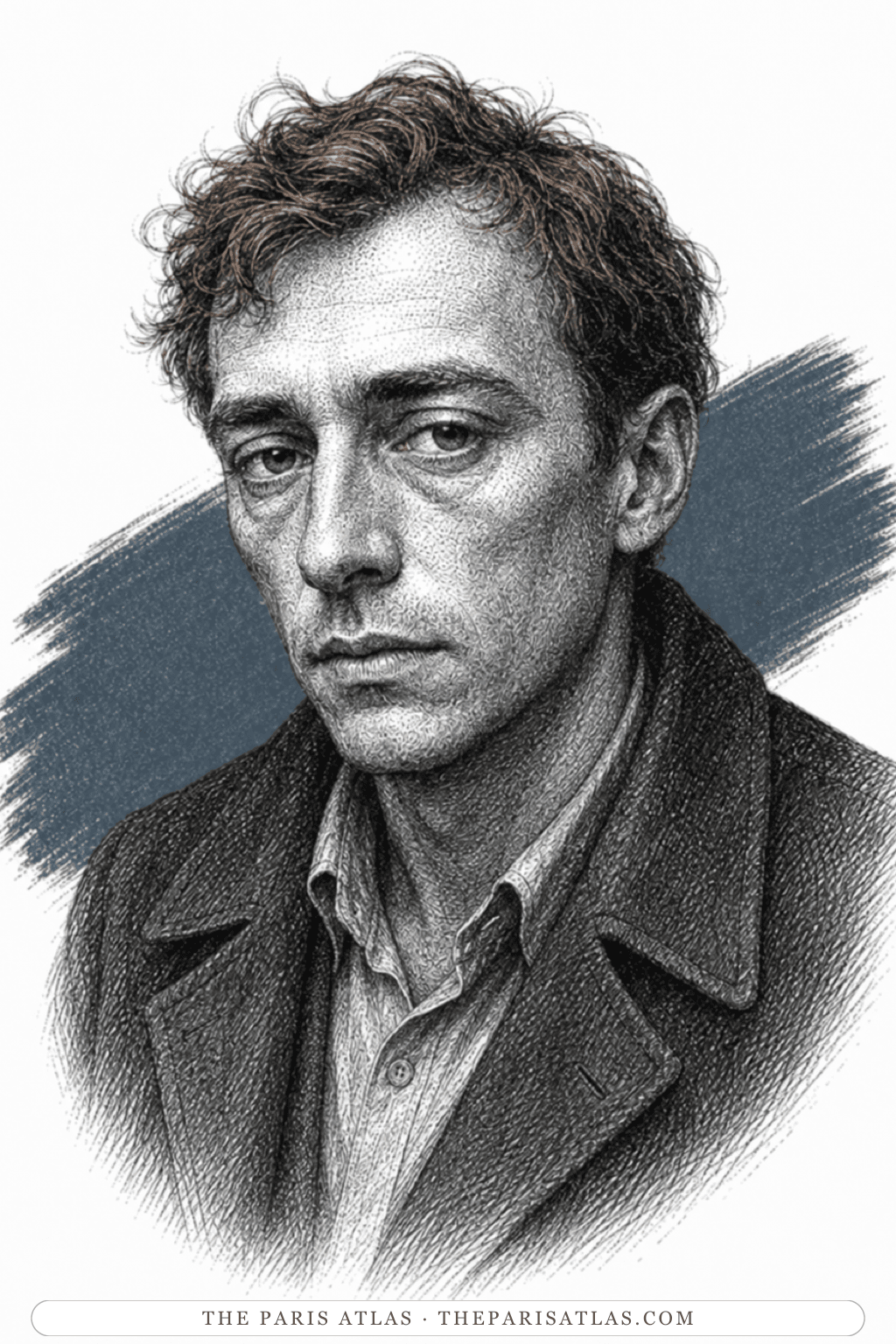
Antoine Roquentin
The solitary diarist whose encounter with contingency destroys his historical project and turns him toward fiction.
Also in the book

Anny
Roquentin’s former lover, who once tried to create perfect moments and later rejects that romantic project.
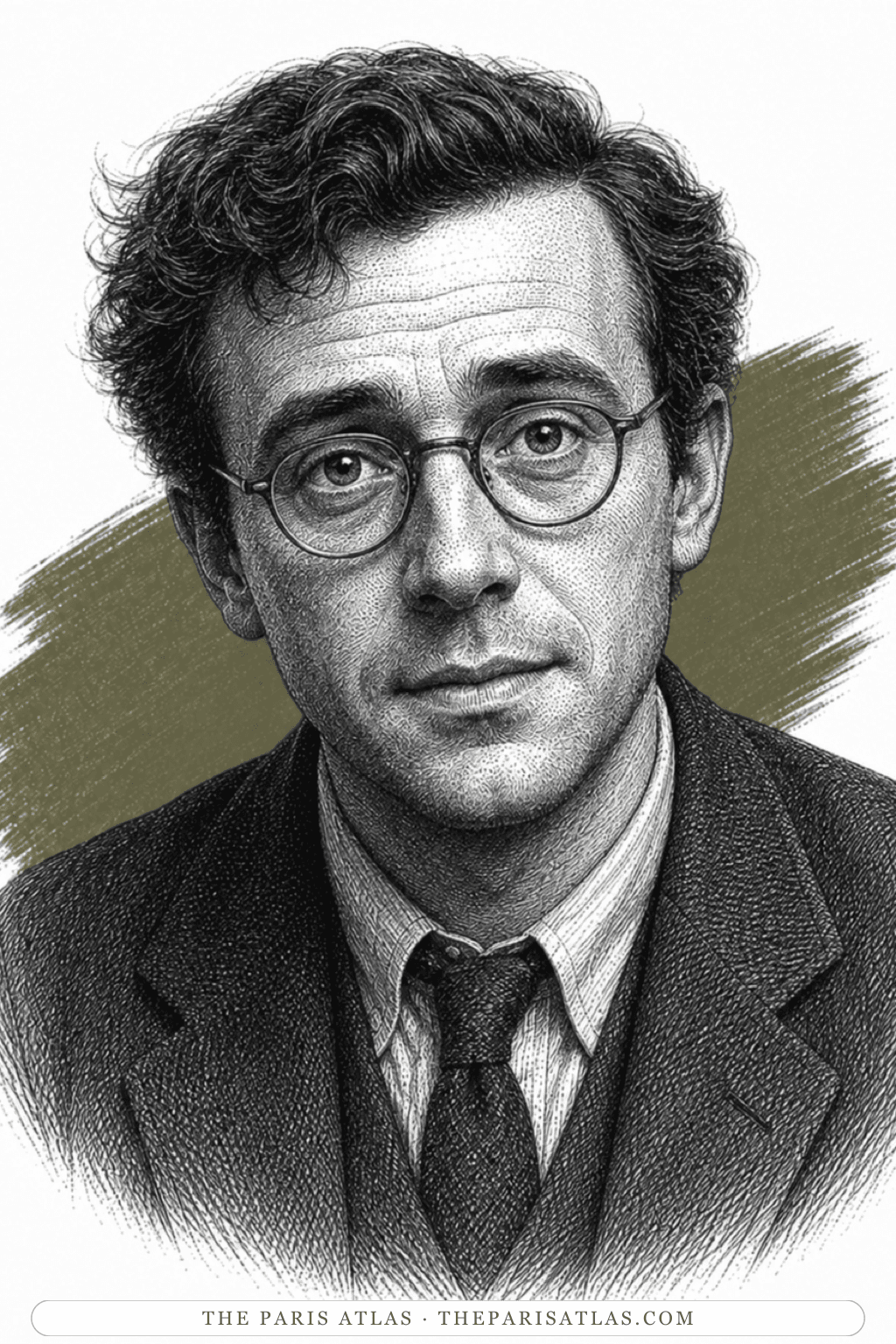
The Self-Taught Man
A Bouville library regular whose faith in humanism offers Roquentin an earnest but compromised counterargument.
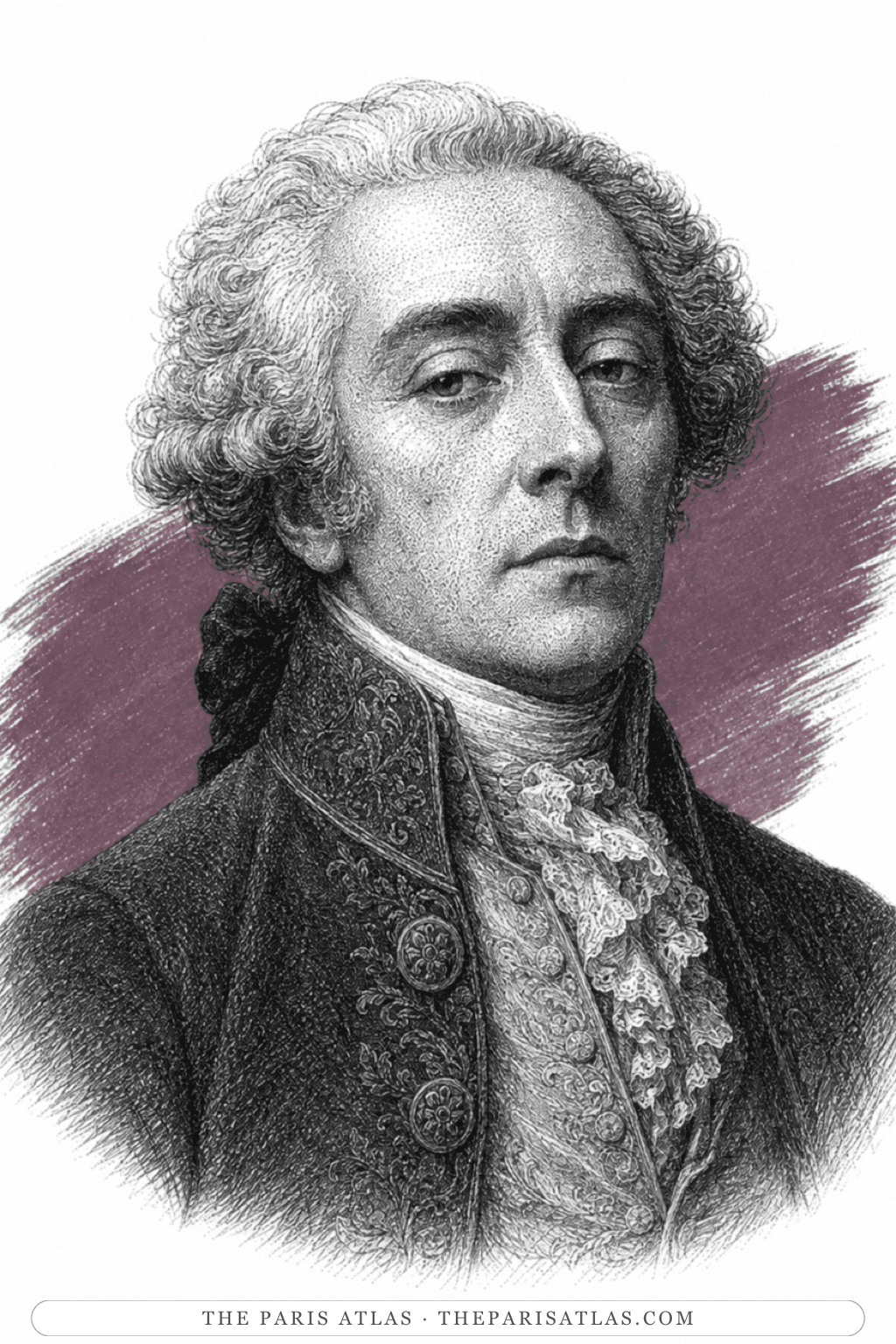
Marquis de Rollebon
The dead eighteenth-century aristocrat whose scattered records become the subject of Roquentin’s abandoned biography.
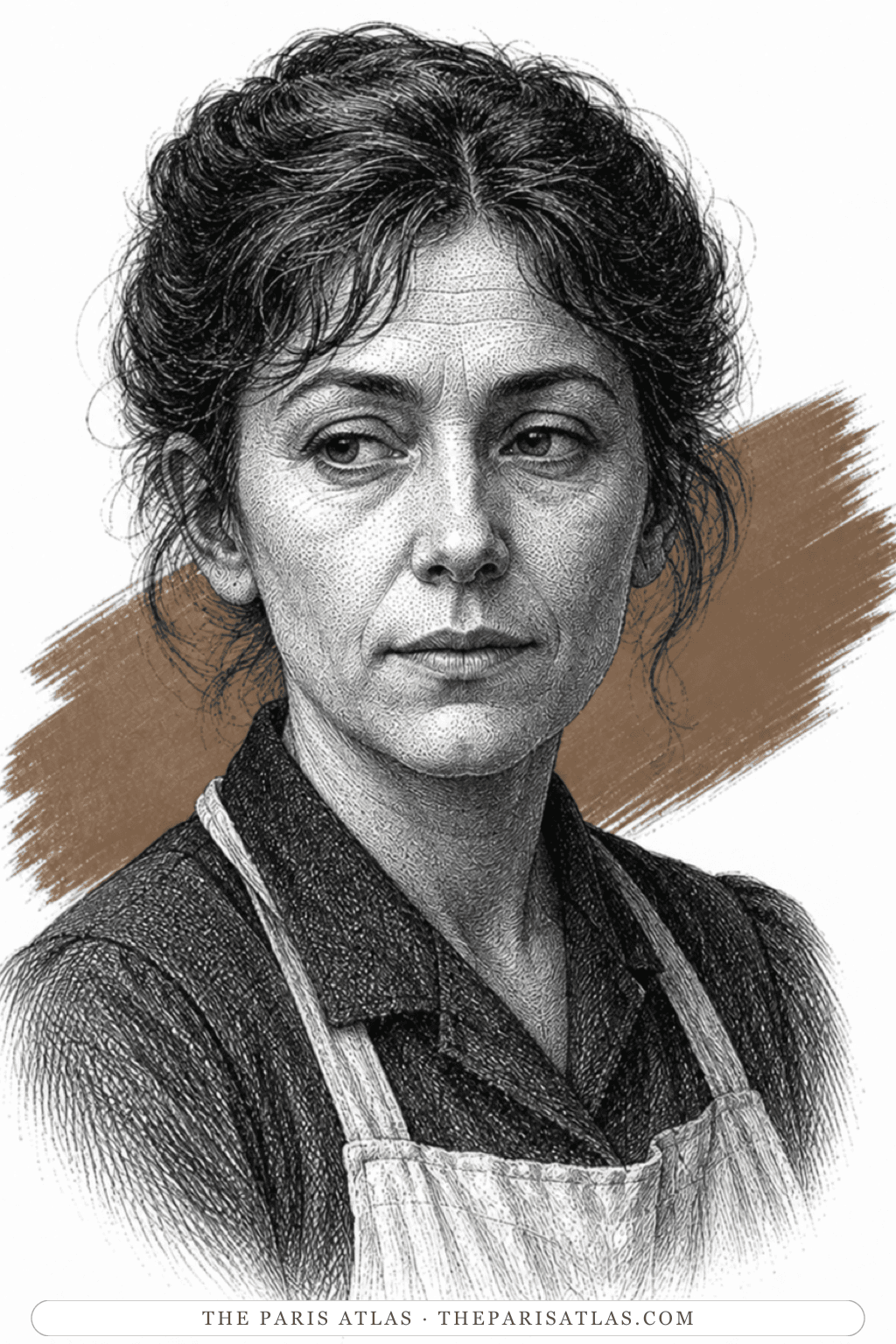
Bouville café figures
The waitresses, patrons, bourgeois residents, and library users who form the ordinary social world Roquentin experiences as strange.
Bring it to book club
- Is the Nausea insight, illness, or both?
- Why does Rollebon stop mattering to Roquentin?
- What is wrong with the Self-Taught Man’s humanism?
- Why does the chestnut root matter more than an abstract argument?
- What did Anny’s ‘perfect moments’ mean?
- Does art solve anything for Roquentin?
- How reliable is Roquentin’s disgust with other people?
- Would the novel work without the diary form?
Timeline
1938
Gallimard publishes La Nausée in France.
1949
Lloyd Alexander’s English translation appears.
20th century
Robert Baldick’s translation becomes another standard English version.
2020
Penguin Classics issues a modern paperback of Baldick’s translation with an afterword by James Wood.
Book editions
Hardcover
- Hardcover
- Gallimard
- 1938
Paperback
- Paperback
- New Directions
- 1949
- Lloyd Alexander

- Paperback
- Penguin Classics
- 2020
- 9780141185491
- Robert Baldick
Reader reviews
Readers may also like


Notes from Underground
A major precursor to the self-contradictory existential antihero.
Read our take

The Death of Ivan Ilyich
Existential crisis centers on mortality rather than contingency.
Read our takeNausea: frequently asked questions
What causes the Nausea?
No medical cause is given. It is Roquentin’s name for an existential experience of brute, contingent existence.
Is Bouville real?
It is fictional but modeled partly on the French port city of Le Havre.
Who is Rollebon?
He is an eighteenth-century aristocrat whom Roquentin is researching for a biography.
What happens with Anny?
They reunite briefly but do not resume their relationship. The meeting closes Roquentin’s hope that the past can restore meaning.
What is the chestnut-tree scene?
Roquentin experiences the root as existing beyond the ordinary word ‘root,’ which produces an overwhelming realization of contingency.
Does Roquentin become happy?
Not exactly. He finds a possible direction in creating art, but the contingency that caused the Nausea does not disappear.
Is the book existentialist?
Yes, although Sartre’s later philosophical terminology should not be mechanically imposed on every scene.
Is it hard to read?
Some passages are philosophically dense, but the diary structure, concrete objects, city scenes, and sour humor keep much of it accessible.
If you like Jean-Paul Sartre
Explore authors with a similar voice, perspective, and influence.
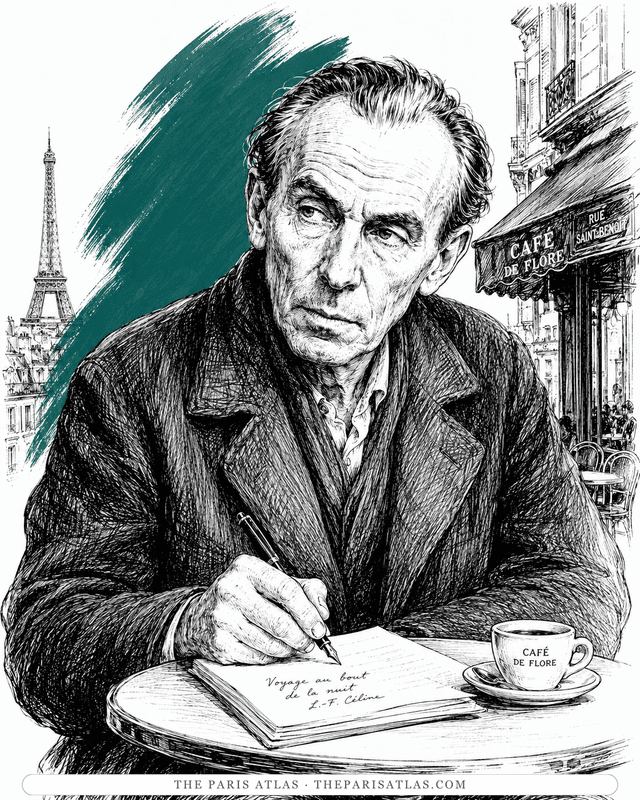
Louis-Ferdinand Céline
The doctor of the Paris slums who wrote the century's blackest, funniest novel — and changed the sound of French prose.
View author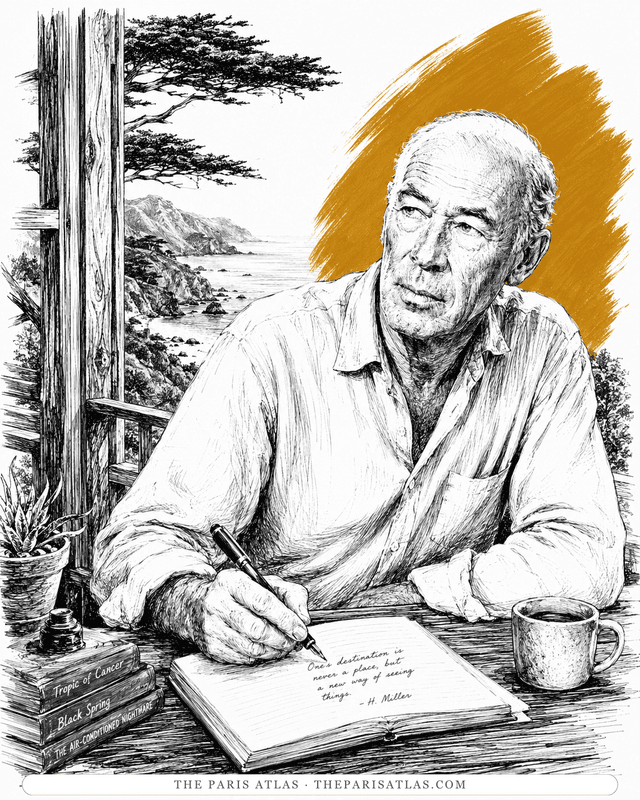
Henry Miller
The Brooklyn dropout who arrived in Paris broke at thirty-eight and wrote the exuberant, banned books that ended American censorship.
View author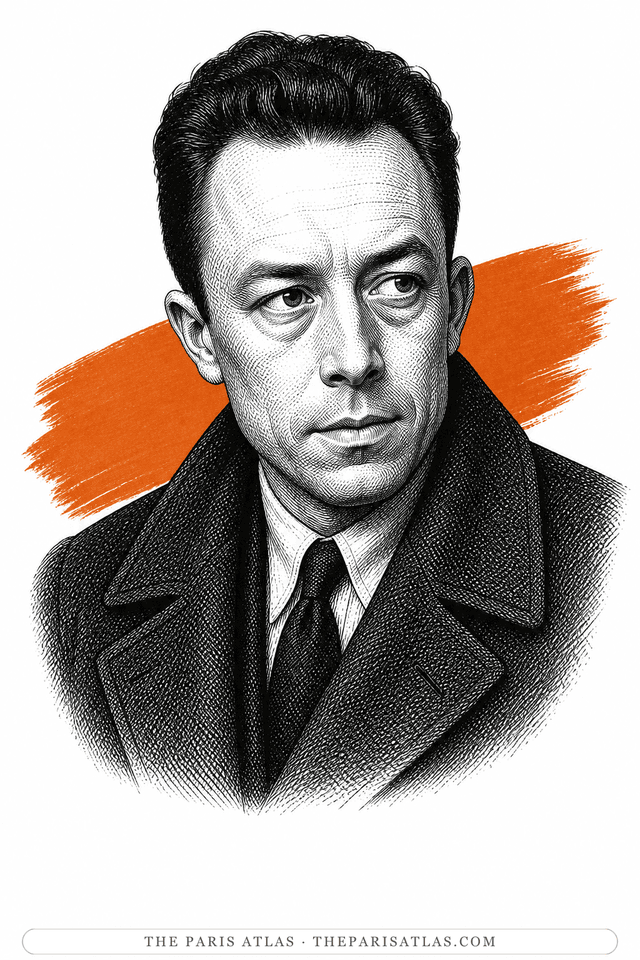
Albert Camus
French Algerian novelist, essayist, journalist and playwright who used the absurd and revolt to ask how people should live without false consolation.
View author
References
References
The sources below include the primary text, editions, scholarship, archival materials, and other records that informed this page. They document Nausea, its publication, and its place in literary history.

2Nausea — Google Books catalogue
Official recordGoogleUsed forGoogle Books catalogue record used to cross-check the title and edition metadata.
3Nausea — Internet Archive ISBN catalogue
Official recordInternet ArchiveUsed forInternet Archive ISBN catalogue used to cross-check the edition and its availability in library holdings.
4Nausea — Library of Congress books catalogue
Official recordLibrary of CongressUsed forLibrary of Congress books catalogue used to cross-check the bibliographic record by ISBN.
5Nausea
Official recordPenguin Classics, 2020Used forPublisher record used to verify the Penguin edition, Robert Baldick translation, ISBN, and the novel’s existential framing.
i
Why these sources are here
The primary text is the baseline reference for every book page. Additional references document publication history, interpretation, and historical context where that evidence is available.
 Explore more resources