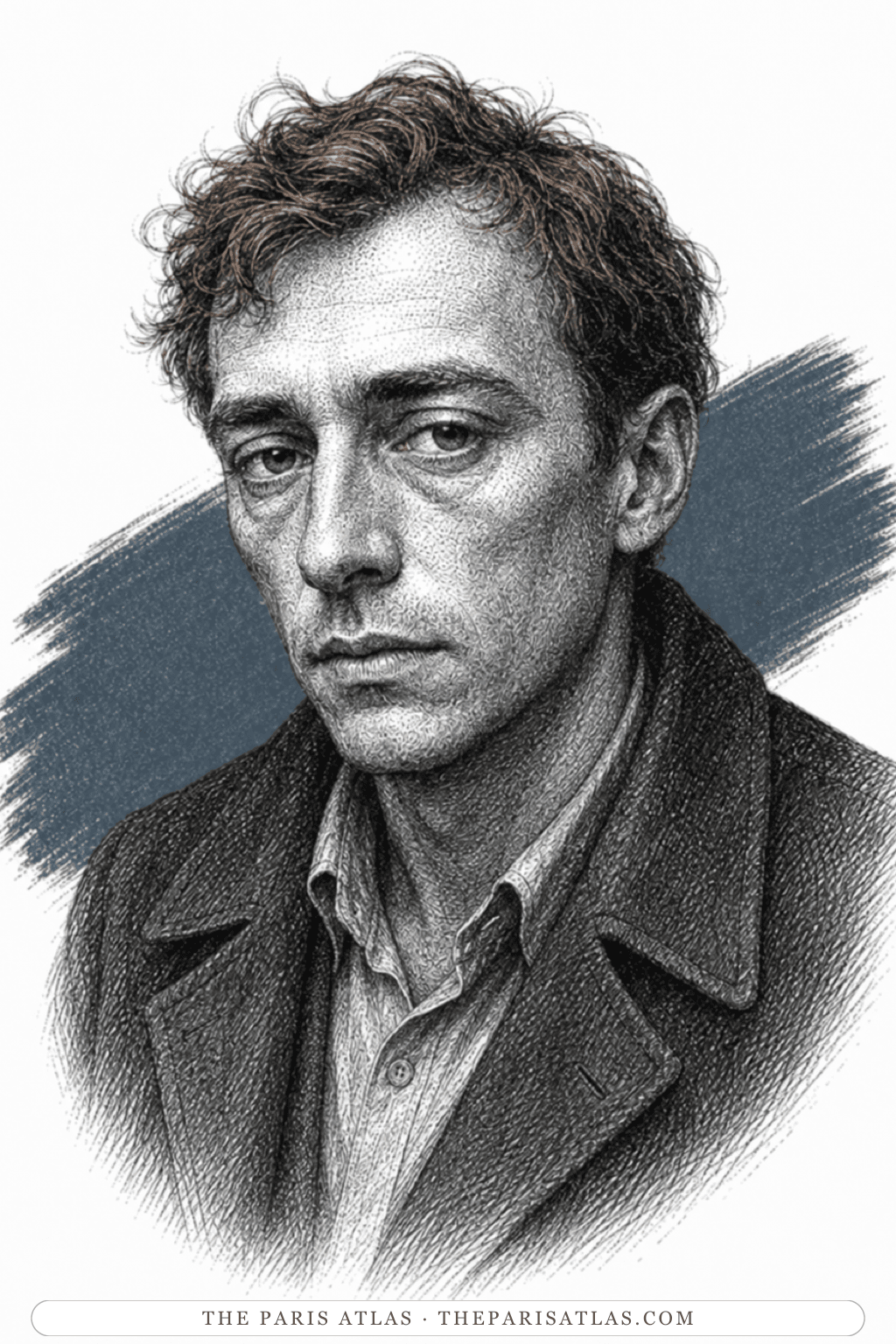
Antoine Roquentin
The solitary diarist whose encounter with contingency destroys his historical project and turns him toward fiction.
To understand the change in his perception and find a form of work or creation that does not depend on inventing false meaning.
The book

At a glance
- Bouville
- Biography of the Marquis de Rollebon
- Diary narrator
Who they are in the book
Spoiler-freeRoquentin has traveled widely and now lives on private means while researching Rollebon in Bouville. He is observant enough to make ordinary things vivid and isolated enough to mistrust nearly every social explanation.
The Nausea is not presented as a simple diagnosis. It is his physical name for perceiving existence without the categories, habits, and stories that usually make it feel necessary.
How Antoine Roquentin Is Portrayed
- Solitary manHis posture suggests distance from public life.
- 1930s French coatHis clothing is practical and slightly worn.
- Distinctive reddish hairThe portrait uses the book’s memorable physical impression.
- Observant tired eyesHe watches objects and people closely.
- Close engraved bustNo root, café, or diary appears.
- Muted blue-gray accentThe cool color suits his estrangement.
Roquentin abandons the Rollebon biography and leaves Bouville. A jazz record leads him to consider writing a novel that could create form without pretending existence has a necessary purpose.
If you like Nausea


If you like Jean-Paul Sartre
Explore authors with a similar voice, perspective, and influence.
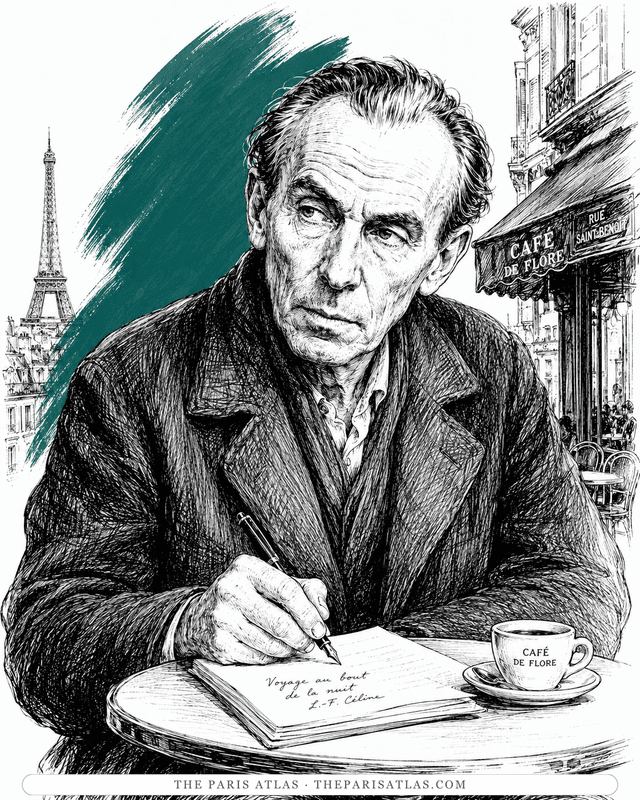
Louis-Ferdinand Céline
The doctor of the Paris slums who wrote the century's blackest, funniest novel — and changed the sound of French prose.
View author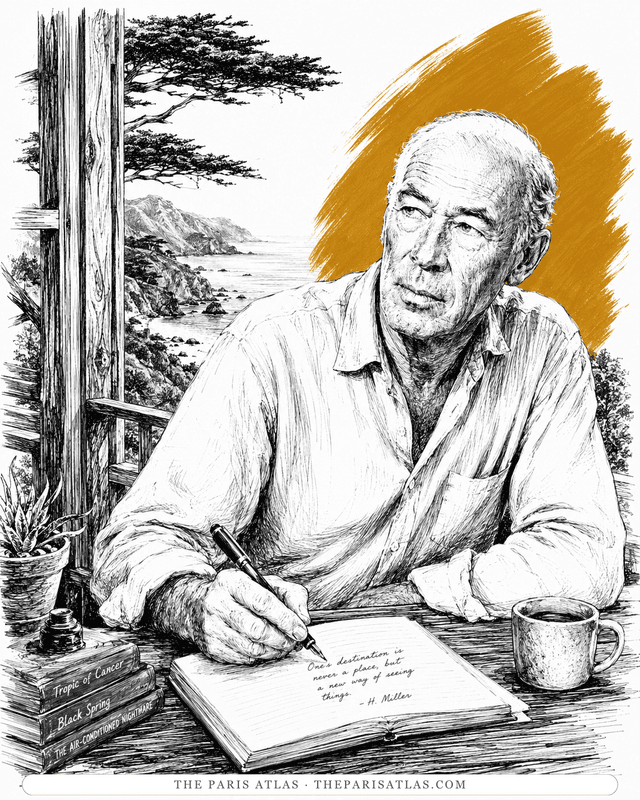
Henry Miller
The Brooklyn dropout who arrived in Paris broke at thirty-eight and wrote the exuberant, banned books that ended American censorship.
View author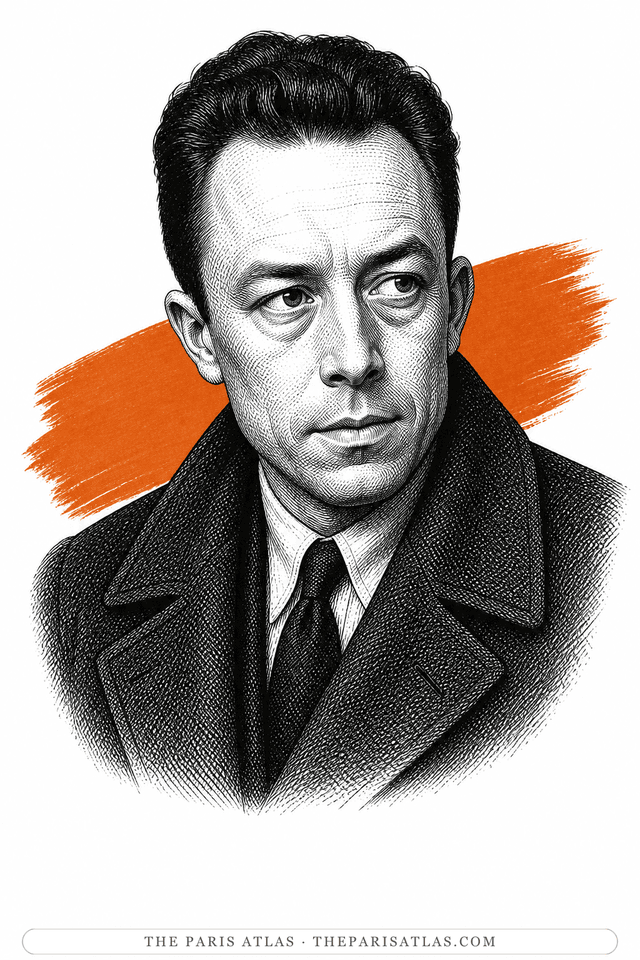
Albert Camus
French Algerian novelist, essayist, journalist and playwright who used the absurd and revolt to ask how people should live without false consolation.
View author