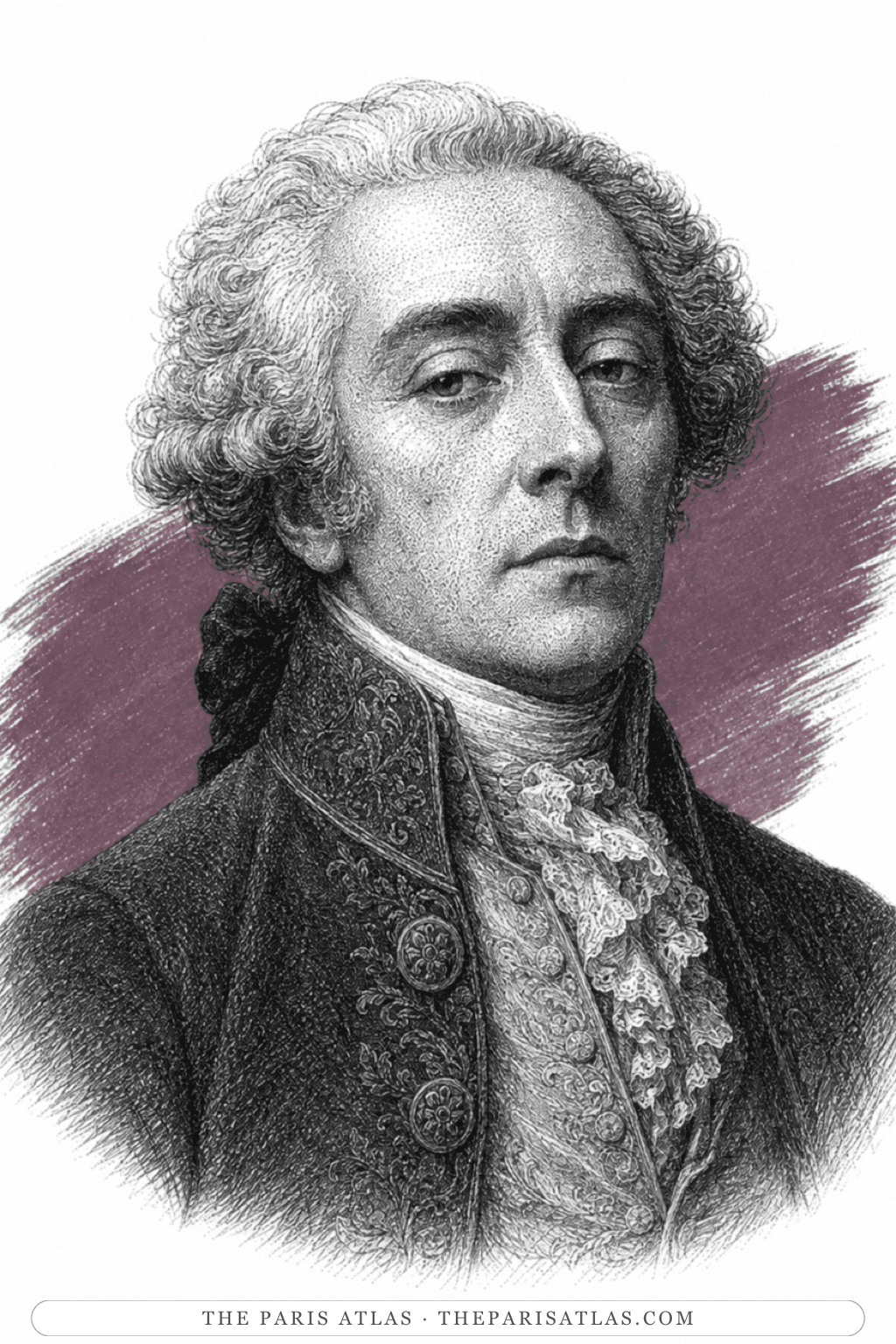
Marquis de Rollebon
The dead eighteenth-century aristocrat whose scattered records become the subject of Roquentin’s abandoned biography.
To the extent the documents permit a character to be inferred, to act within eighteenth-century court and diplomatic worlds while remaining impossible to reconstruct completely.
The book

At a glance
- Eighteenth century
- Aristocrat and historical subject
- Roquentin’s abandoned biography
Who they are in the book
Spoiler-freeRollebon never appears as a living participant in the diary’s present. He exists through portraits, documents, rumors, and the coherent personality Roquentin tries to build from them.
As Roquentin’s confidence in historical storytelling collapses, Rollebon becomes evidence of how a researcher may use a dead person to escape his own contingent life.
How Marquis de Rollebon Is Portrayed
- Eighteenth-century aristocratThe image resembles an archival engraved portrait.
- Formal court dressPeriod status is clear.
- Ambiguous expressionThe records do not yield one stable personality.
- Historical distanceHe is imagined, not presented as directly known.
- Close engraved bustNo documents, palace, or silhouette treatment appears.
- Muted plum accentThe color separates the archival figure from Bouville.
Rollebon remains dead and unrecoverable. Roquentin abandons the biography when he no longer believes the documents justify the coherent life he has been constructing.
If you like Nausea


If you like Jean-Paul Sartre
Explore authors with a similar voice, perspective, and influence.
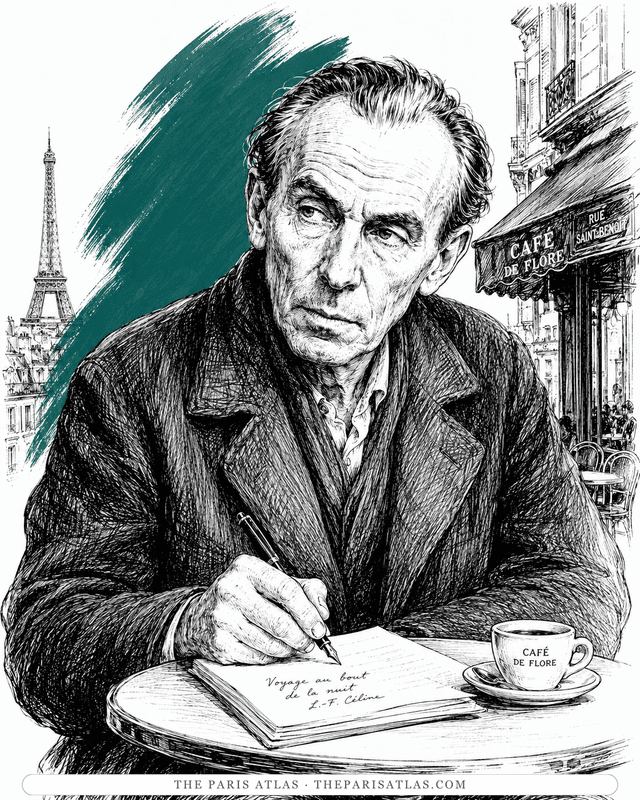
Louis-Ferdinand Céline
The doctor of the Paris slums who wrote the century's blackest, funniest novel — and changed the sound of French prose.
View author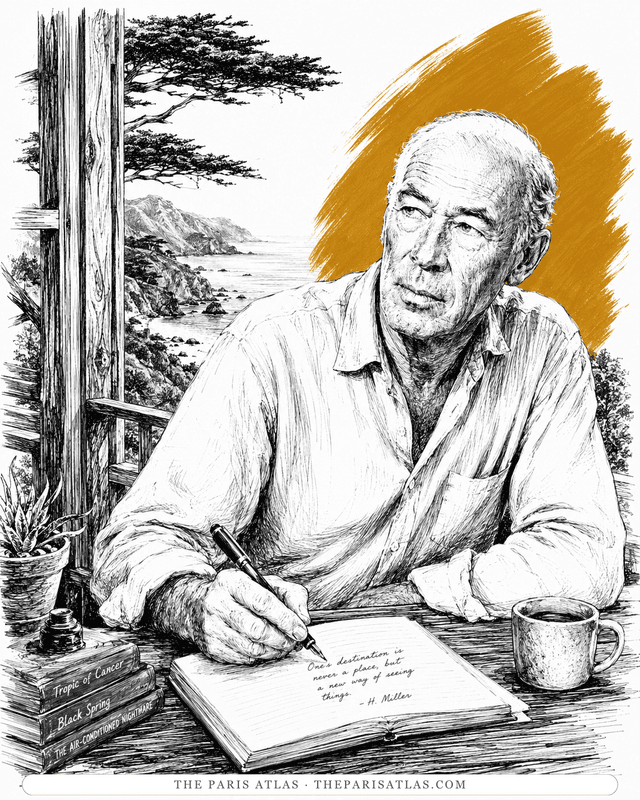
Henry Miller
The Brooklyn dropout who arrived in Paris broke at thirty-eight and wrote the exuberant, banned books that ended American censorship.
View author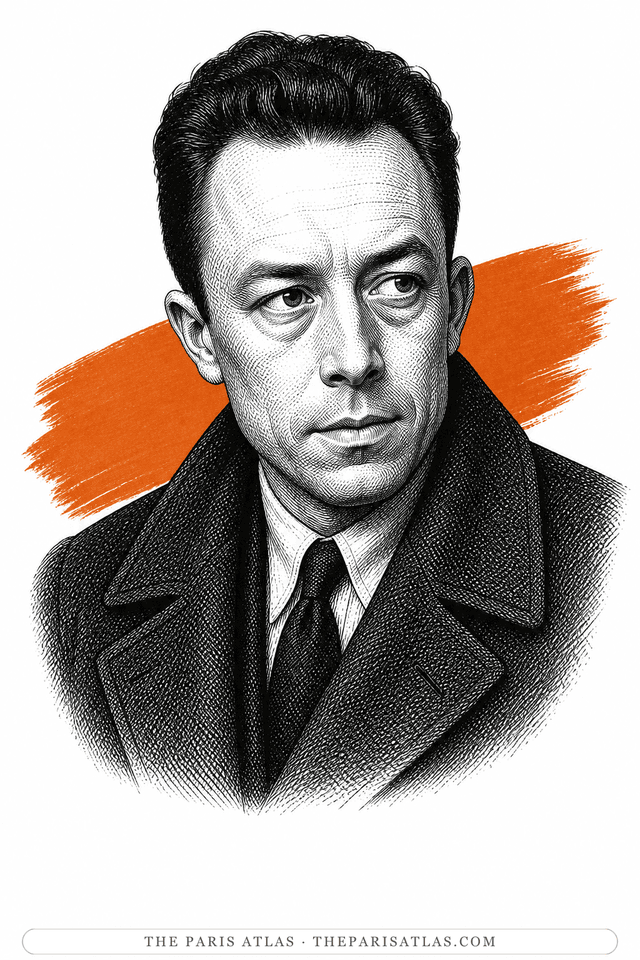
Albert Camus
French Algerian novelist, essayist, journalist and playwright who used the absurd and revolt to ask how people should live without false consolation.
View author