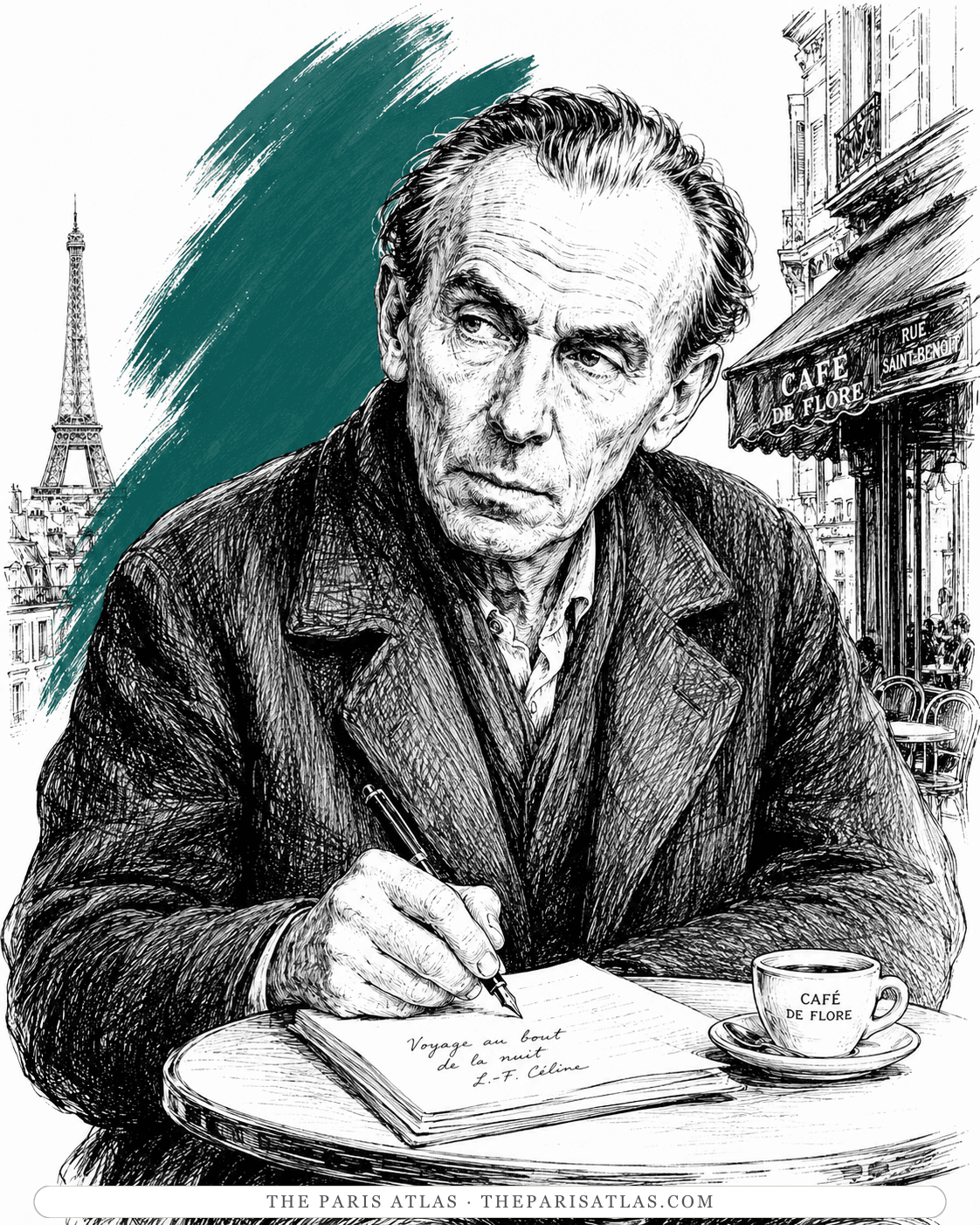

Journey to the End of the Night
The debut whose war chapters are what happened after this night.
Read our take
Louis-Ferdinand Céline's unfinished 1949 novel — an eighteen-year-old cavalry volunteer's first terrible night at the barracks.
Eighteen-year-old Ferdinand arrives at a French cavalry barracks after voluntarily enlisting. What he imagines might be an initiation into military life immediately becomes a night of rain, confusion, bullying, exhausted horses, incomprehensible orders and petty humiliation. The surviving text is unfinished, but that incompleteness suits its central idea: Ferdinand has entered a system from which there appears to be no easy escape.
Ferdinand reports to the 12th Cuirassiers during terrible weather and is immediately subjected to the authority of noncommissioned officers such as Rancotte.
A storm has frightened the regiment's horses, creating confusion in the stables. Ferdinand is pulled into an exhausted patrol trying to restore order. Brigadier Le Meheu compounds the disaster by losing the password needed to relieve a guard.
The night becomes a grotesque initiation ceremony. The soldiers hide in the stable, drink, sleep in cramped conditions and subject the newcomer to the rituals expected of a young recruit.
Ferdinand arrives at the cavalry barracks in darkness, wind and rain. He is given little explanation of what is expected and immediately discovers that the regiment operates through shouting, intimidation and arbitrary authority.
When horses panic during the storm, the exhausted soldiers are sent out. Le Meheu cannot remember the password necessary to complete part of the guard relief, so the patrol hides near an enormous oat chest in the stable while he tries to solve the problem.
The soaked men eventually fall asleep together. When they wake, Ferdinand is expected to buy wine to celebrate his admission into military life. A stableman produces hidden bottles, and Le Meheu himself becomes drunk.
Rancotte eventually discovers the group and drives them back into military order.
Another surviving section centers on an epileptic seizure suffered by a fellow volunteer and the ignorance or indifference with which the other soldiers respond. The episode reinforces the novel's picture of the barracks as a place where individual suffering barely registers.
There is no completed ending, because the published book consists of surviving portions of an unfinished manuscript.
The surviving narrative reaches dawn. The trumpet sounds, but morning provides no liberation. Rancotte lines the soldiers up again in the rain and immediately orders Ferdinand to perform menial work, including shining his boots.
The important final realization is simple: Ferdinand has enlisted for three years.
The terrible first night was not an ordeal he had to survive before life improved. It was merely the beginning.
The barracks imposes obedience through forms of speech as well as orders. In an exchange reproduced by Łukasz Szkopiński, a simple affirmative answer is rejected until the speaker adds the superior's title; approval is immediately followed by a command to stand straight. Speech and posture become parts of the same discipline. The insults surrounding these exchanges are not merely colorful background: they establish who can humiliate whom without receiving an equal reply. For the newcomer, learning military life means discovering that even ordinary conversation has changed its rules. Agreement alone is insufficient unless it also performs submission.
The shelter episode reverses the usual meaning of protection. Agnès Hafez-Ergaut draws attention to the accumulation of manure around the men and to the narrator's surprising sense of warmth and reassurance within it. What should repel them instead offers temporary insulation from weather, frightened horses and threatening superiors. That reversal makes the grotesque more than a display of disgust: it measures how hostile the barracks has become. The men can find relief only in surroundings that compromise their dignity. Beside the stable's equipment, their exhausted bodies need refuge more urgently than they need to preserve military appearances.
Casse-pipe fills in the pre-war military years the other novels only glance at: how Ferdinand became a soldier at all, and what the cavalry did to an eighteen-year-old.
Unfinished, so short, and set entirely in one long night — a good entry point to Céline's late voice without committing to a big book.
Casse-pipe's terrible first night is the world Ferdinand enters before Journey's war chapters send him into Flanders. Read it first to see the machine that produced the wounded man of the debut.

The narrator. An eighteen-year-old volunteer arriving at the cavalry barracks on a night of rain, wind and confusion, and discovering he has enlisted for three years.
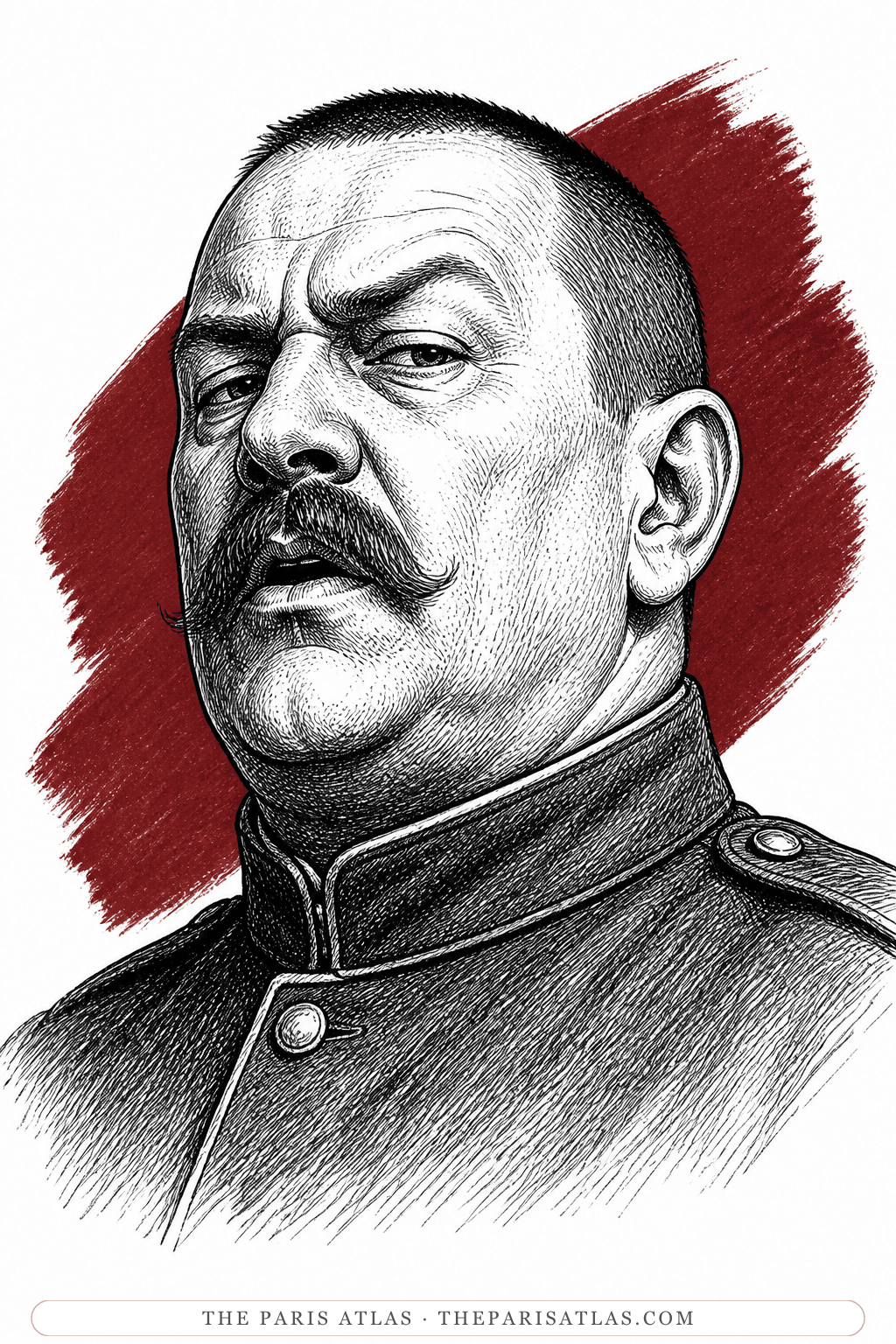
A noncommissioned officer who dominates the barracks through shouting and arbitrary authority. He restores military order after the drunken patrol and immediately puts Ferdinand to work.
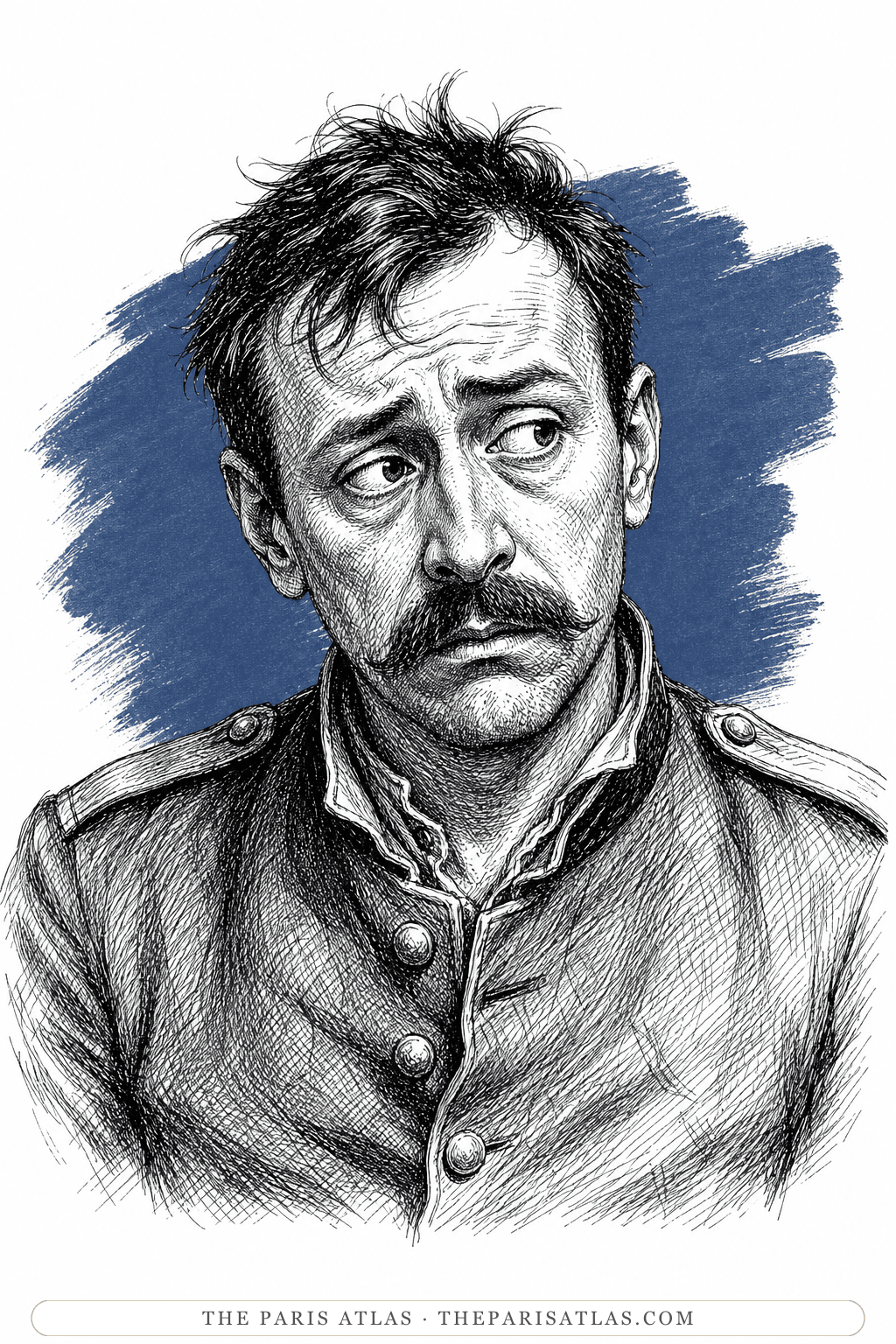
The brigadier who cannot remember the password needed to relieve a guard. He drinks with the hidden patrol in the stable while the guard-relief crisis goes unresolved.

A fellow young volunteer whose seizure occasions one of the surviving sections. The soldiers' ignorance or indifference to his suffering makes the point about a place where individual suffering barely registers.
1912
Céline enlists in the 12th Cuirassiers; his barracks experience later supplies material for the novel.
1949
Frédéric Chambriand publishes the surviving Casse-pipe fragment.
2021
The recovery of Céline’s missing manuscripts brings additional Casse-pipe material back into view.

The debut whose war chapters are what happened after this night.
Read our take
The recovered novel that picks up Ferdinand on the WWI battlefield the cavalry marched into.
Read our take
Céline's late-life return to the theme of Ferdinand in a hostile military machine.
Read our take
The first of the German trilogy, where the machinery of authority collapses instead of building.
Read our take
Hemingway on the same war — the American view of the machine Casse-pipe describes at intake.
Read our takeAn eighteen-year-old French volunteer's first terrible night at a cavalry barracks. Rain, wind, exhausted horses, incomprehensible orders, and a bullying noncommissioned officer initiate him into a system he has enlisted in for three years.
Frédéric Chambriand published Casse-pipe in 1949; Gallimard's Folio edition (Casse-pipe suivi de Carnet du cuirassier Destouches, 1913) is the standard reprint today.
The lost portions of the manuscript may have followed Ferdinand through his three-year enlistment. What survives is one long first night, published as Céline left it — a fragment that suits the novel's central idea of a system with no easy escape.
'Casse-pipe' is French military slang for going to get killed at the front — literally, breaking your pipe. The title casts the barracks as the antechamber to the mass slaughter of the First World War.
Yes, largely. Céline enlisted in the 12th Cuirassiers in 1912 at eighteen and served two years before the First World War broke out. The barracks in Casse-pipe is drawn from his own time there.
Read it before Journey to the End of the Night if you want to see the machine that produces the wounded man of the debut. Read it after Journey to see how much longer Céline had been thinking about the barracks.
Explore authors with a similar voice, perspective, and influence.
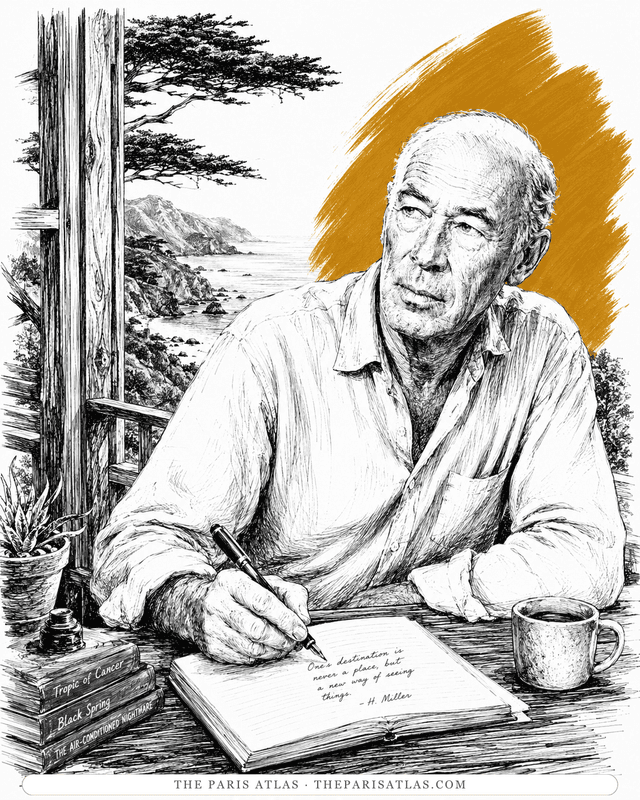
Miller read Journey in manuscript while writing Tropic of Cancer and never recovered — the two books are the era's twin gutter-testaments.
View author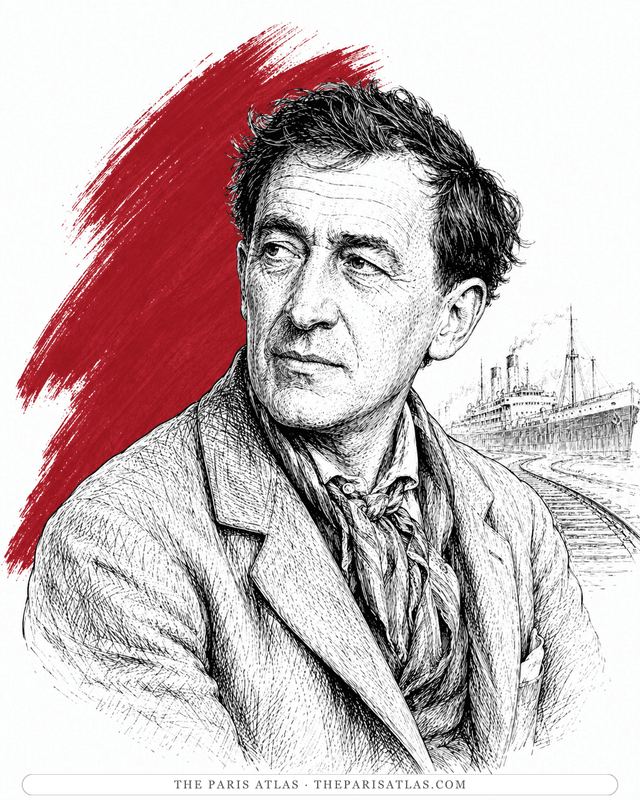
The other French modernist Céline could not look away from: a war-wounded amputee whose spoken prose ran ahead of grammar and whose Moravagine anticipates Bardamu's tour of the century's slaughterhouses.
View author
The same war, the same refusal of the big words — delivered in whispers where Céline delivers it in screams. Both writers died in the same week of July 1961.
View authorThe sources below include the primary text, editions, scholarship, archival materials, and other records that informed this page. They document Cannon-Fodder, its publication, and its place in literary history.


Publisher's public chapter excerpt, pp. 16–17; quoted dialogue and discussion of unequal verbal power. The complete primary edition was not newly collated.
The article's paragraphs 8–10 quote and interpret the shelter episode; the critical account is attributed.

Web source consulted for documented facts and historical context presented on the Cannon-Fodder page.
Biographical evidence used to verify chronology, relationships, and historical context connected to Cannon-Fodder.
Henri Godard's Pléiade edition documents the surviving text, its variants and its place in Céline's fiction.
The BnF account of Céline's recovered manuscripts supplies archival context for the incomplete work and its transmission.
The primary text is the baseline reference for every book page. Additional references document publication history, interpretation, and historical context where that evidence is available.
 Explore more resources