Bouville café figures
The waitresses, patrons, bourgeois residents, and library users who form the ordinary social world Roquentin experiences as strange.
To continue the work, appetite, courtship, status, and small routines of city life without sharing Roquentin’s philosophical crisis.
The book

At a glance
- Waitresses, patrons, residents, and library users
- Bouville
- Ordinary social life seen through estrangement
Who they are in the book
Spoiler-freeThese figures continue eating, talking, working, and observing one another while Roquentin’s sense of familiarity collapses. Their routines give Bouville its social density.
Roquentin often treats them with contempt, but the diary does not make his disgust an objective measurement of their value. They also reveal the limits of his sympathy and reliability.
How Bouville café figures Is Portrayed
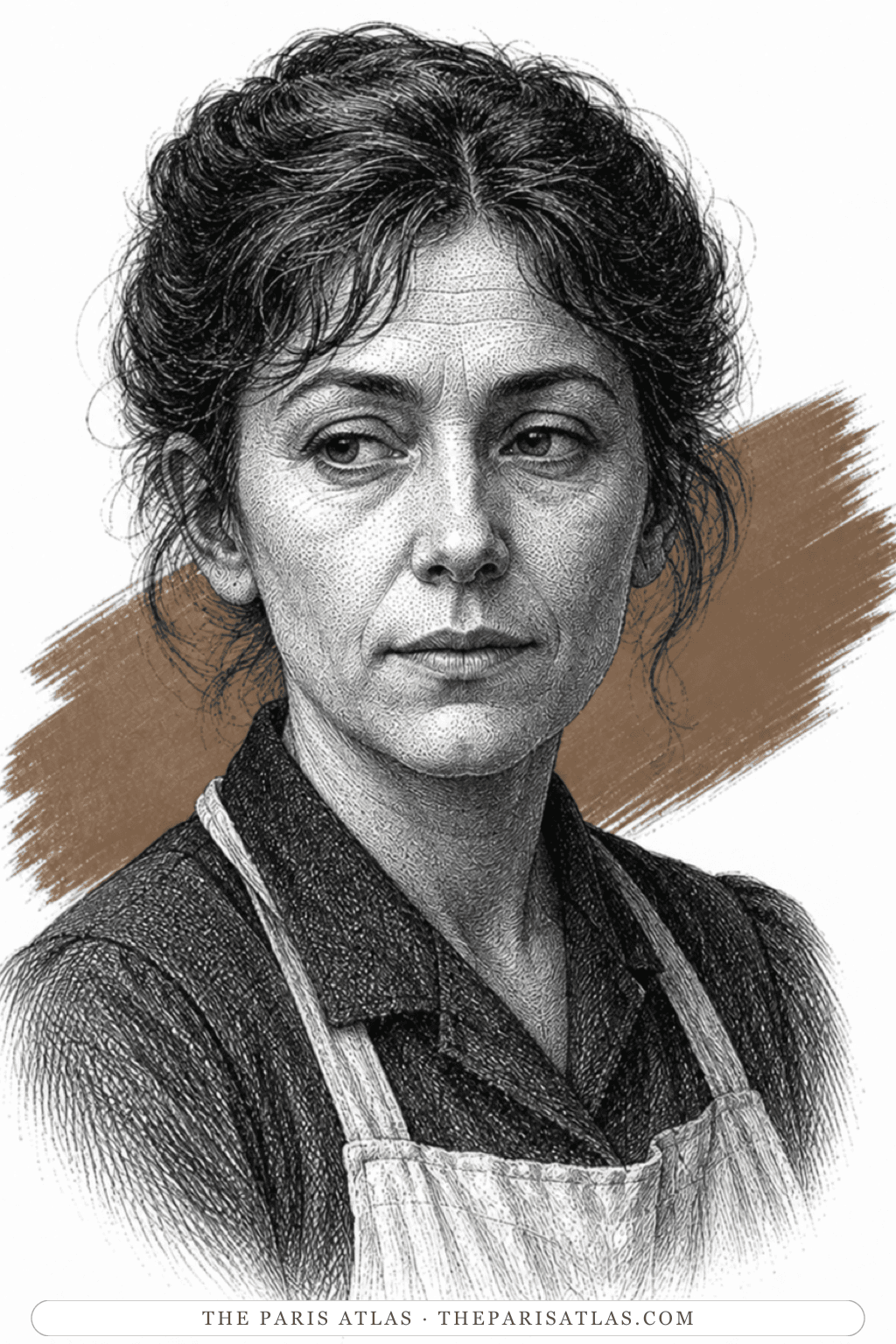
- Representative café waitressOne adult woman stands for the clearly grouped entry.
- Practical 1930s clothingThe uniform is ordinary and period-accurate.
- Watchful expressionShe belongs to a social world that also observes Roquentin.
- No symbolic distortionOrdinariness is essential.
- Close engraved bustNo café, tray, crowd, or street appears.
- Muted tobacco accentThe warm neutral suits Bouville’s daily routine.
Bouville’s residents continue their routines as Roquentin prepares to leave. The novel offers no collective revelation or transformation for them.
If you like Nausea


If you like Jean-Paul Sartre
Explore authors with a similar voice, perspective, and influence.
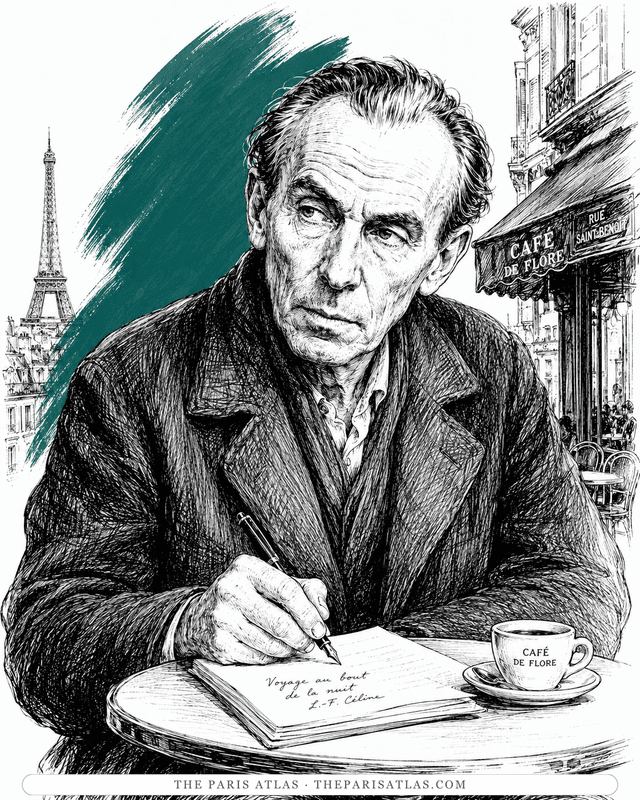
Louis-Ferdinand Céline
The doctor of the Paris slums who wrote the century's blackest, funniest novel — and changed the sound of French prose.
View author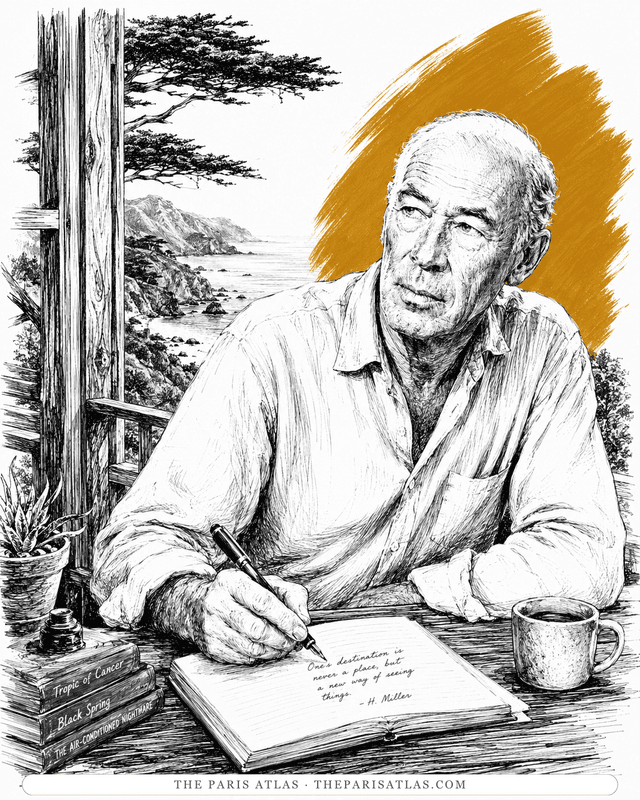
Henry Miller
The Brooklyn dropout who arrived in Paris broke at thirty-eight and wrote the exuberant, banned books that ended American censorship.
View author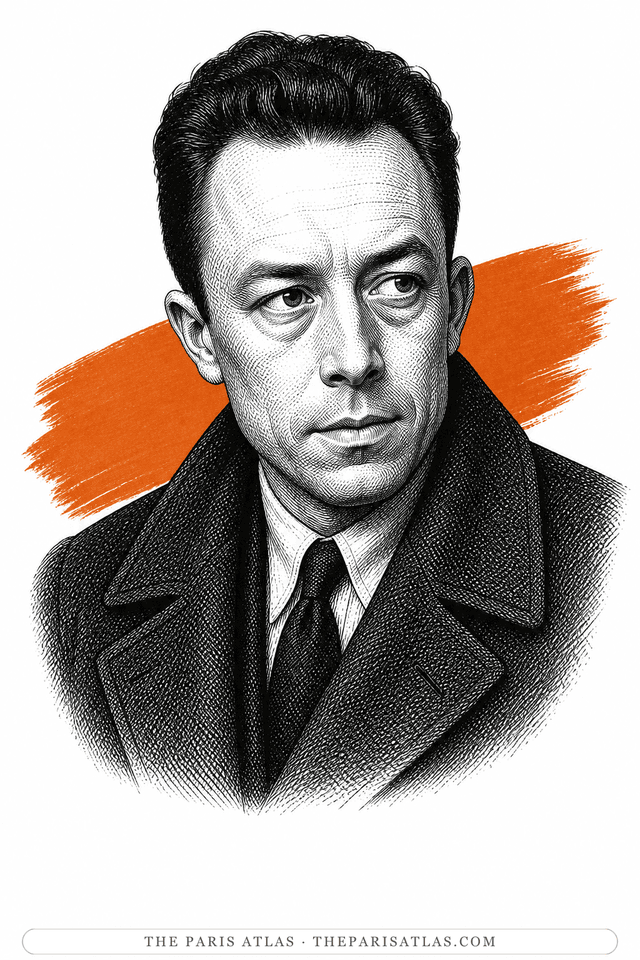
Albert Camus
French Algerian novelist, essayist, journalist and playwright who used the absurd and revolt to ask how people should live without false consolation.
View author