
Recalled in the memoir
Force of Circumstance
The memoir records Beauvoir buying the Montparnasse studio with her Prix Goncourt earnings and making it her lasting Paris home and workplace.
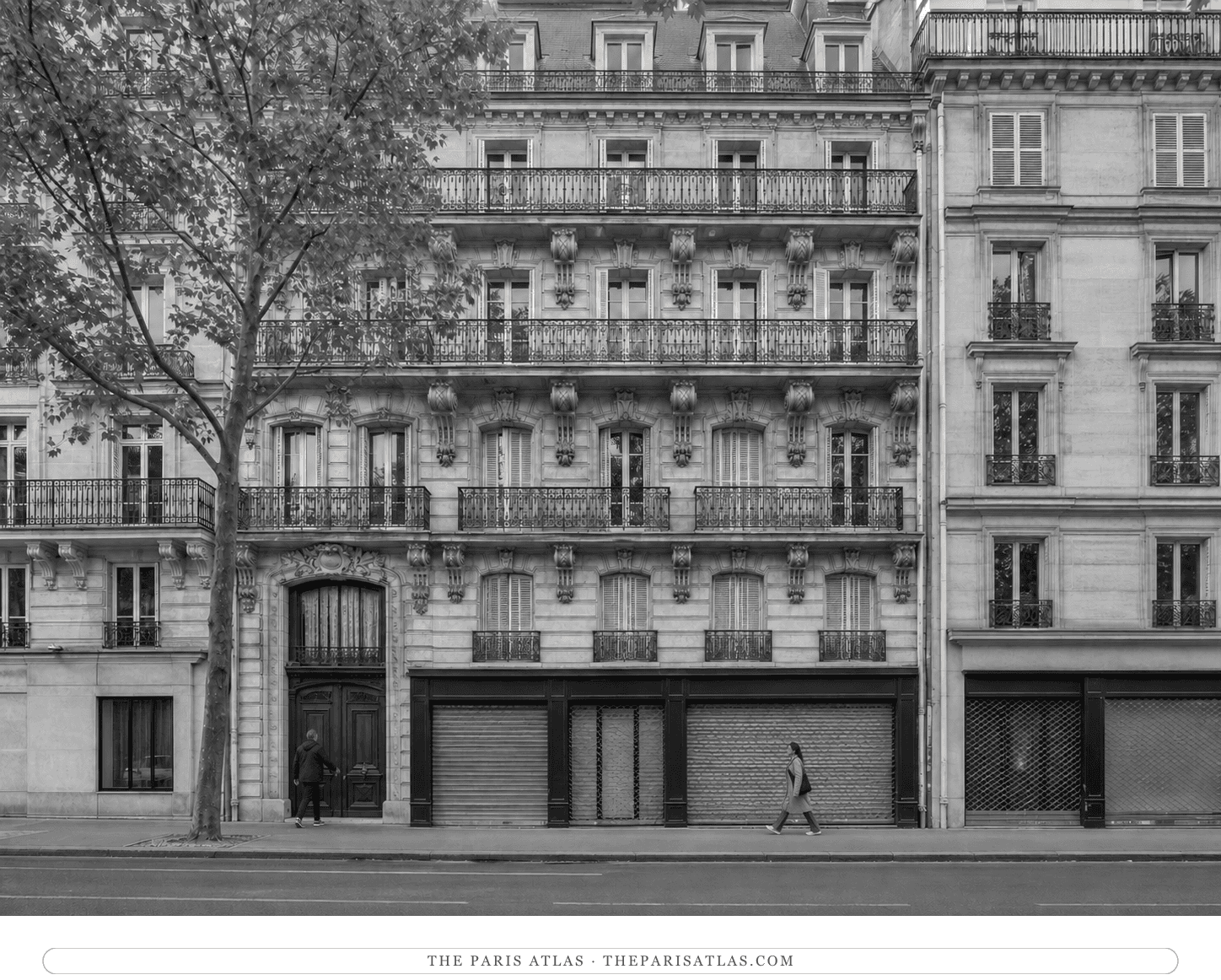
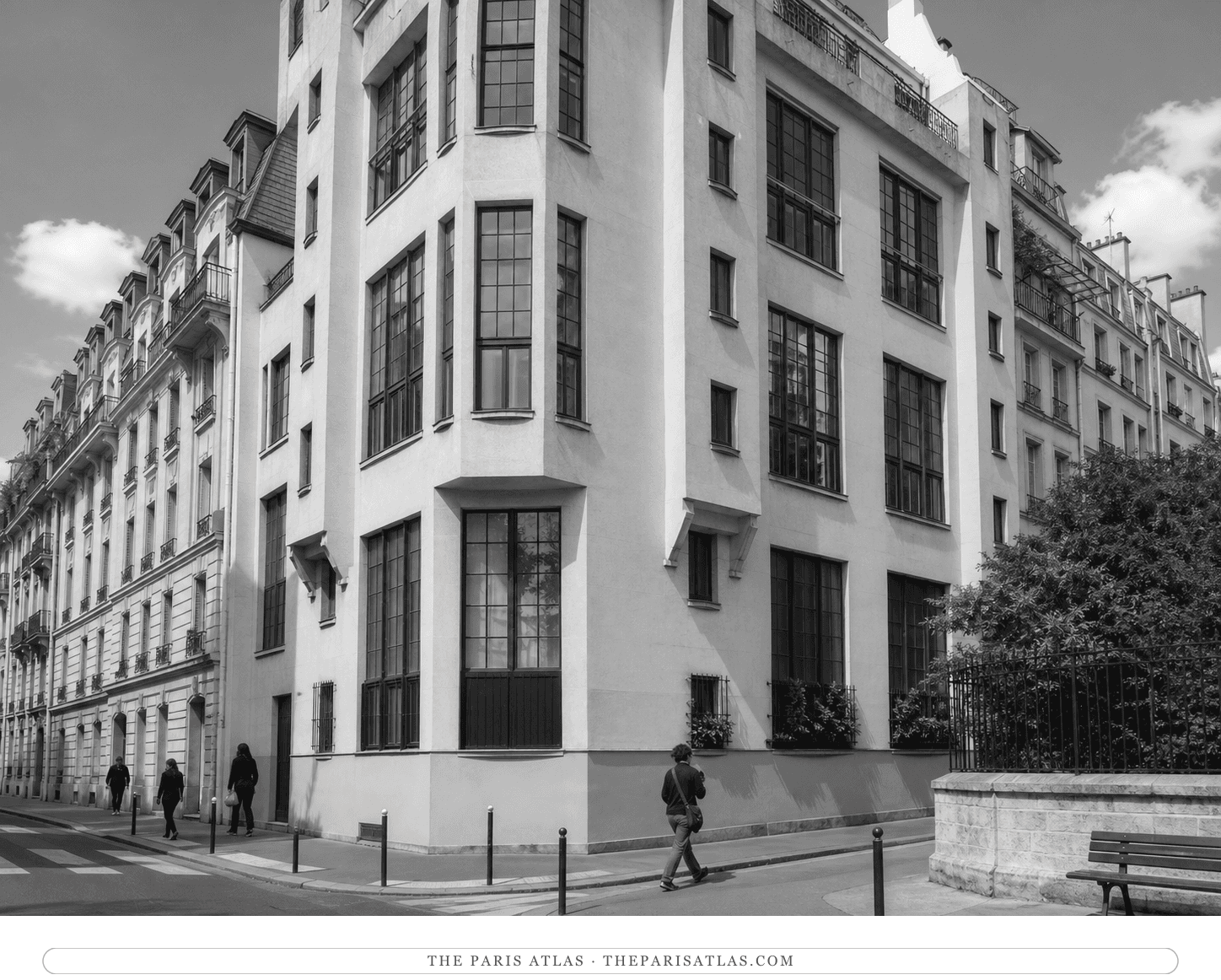
The first apartment Simone de Beauvoir could buy with her own money, after the Goncourt Prize of 1954. It became the gathering place for the Les Temps modernes circle, and it looks directly onto the Montparnasse cemetery where she is buried.

Simone de Beauvoir won the Prix Goncourt in 1954 for The Mandarins, and with the money she bought this flat — the first she could buy outright with what she had earned herself. She was forty-six, and she stayed until she died in 1986.
The city's account calls it what it was: the first apartment Beauvoir could buy with her own money. For a writer who had spent decades arguing that a woman's independence is finally a material question — that freedom without money is a description of freedom rather than the thing itself — the address is not incidental. The Second Sex had been published five years earlier. This is what its argument looks like as a lease.
The flat became a working address as much as a home. The circle around Les Temps modernes, the review she and Jean-Paul Sartre had founded, met here.
Then there is the window. The building faces Montparnasse cemetery, and Beauvoir is buried in it, in the grave she shares with Sartre. She spent the last thirty years of her life overlooking the ground she is in.
The Second Sex is published.
Beauvoir wins the Prix Goncourt for The Mandarins.
She buys the flat at 11 bis rue Victor-Schœlcher with her own money.
The apartment becomes a gathering place for the Les Temps modernes circle.
Beauvoir dies, and is buried in the cemetery the flat looks onto.
For the last thirty years of her life, at 11 bis rue Victor-Schœlcher in the 14th arrondissement — the first flat she was able to buy with her own money, bought in 1955 after the Prix Goncourt. She lived there until her death in 1986.
With the Prix Goncourt, won in 1954 for The Mandarins. The city's account is specific that this was the first apartment she could buy with money she had earned herself — which matters for a writer who had argued in The Second Sex, five years earlier, that a woman's independence is finally a material question.
Yes. The building faces Montparnasse cemetery, and Beauvoir is buried there in the grave she shares with Sartre. She spent three decades looking at the ground she is now in.
Recalled in the memoir
The memoir records Beauvoir buying the Montparnasse studio with her Prix Goncourt earnings and making it her lasting Paris home and workplace.
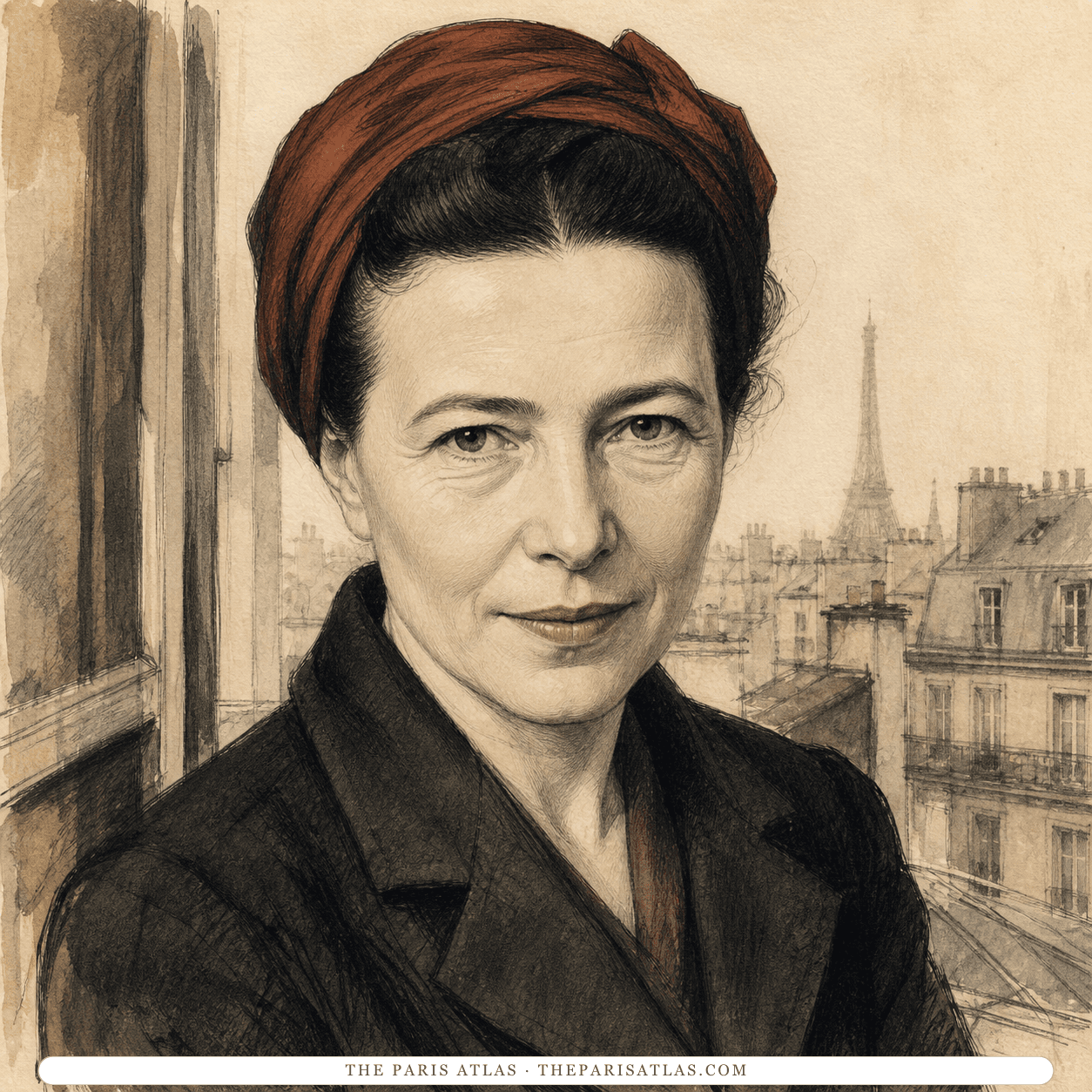
Lived here · 1955–1986
The first flat Beauvoir could buy with her own money, bought after the 1954 Prix Goncourt for The Mandarins. The Les Temps modernes circle met here, and the building faces the cemetery she is buried in.
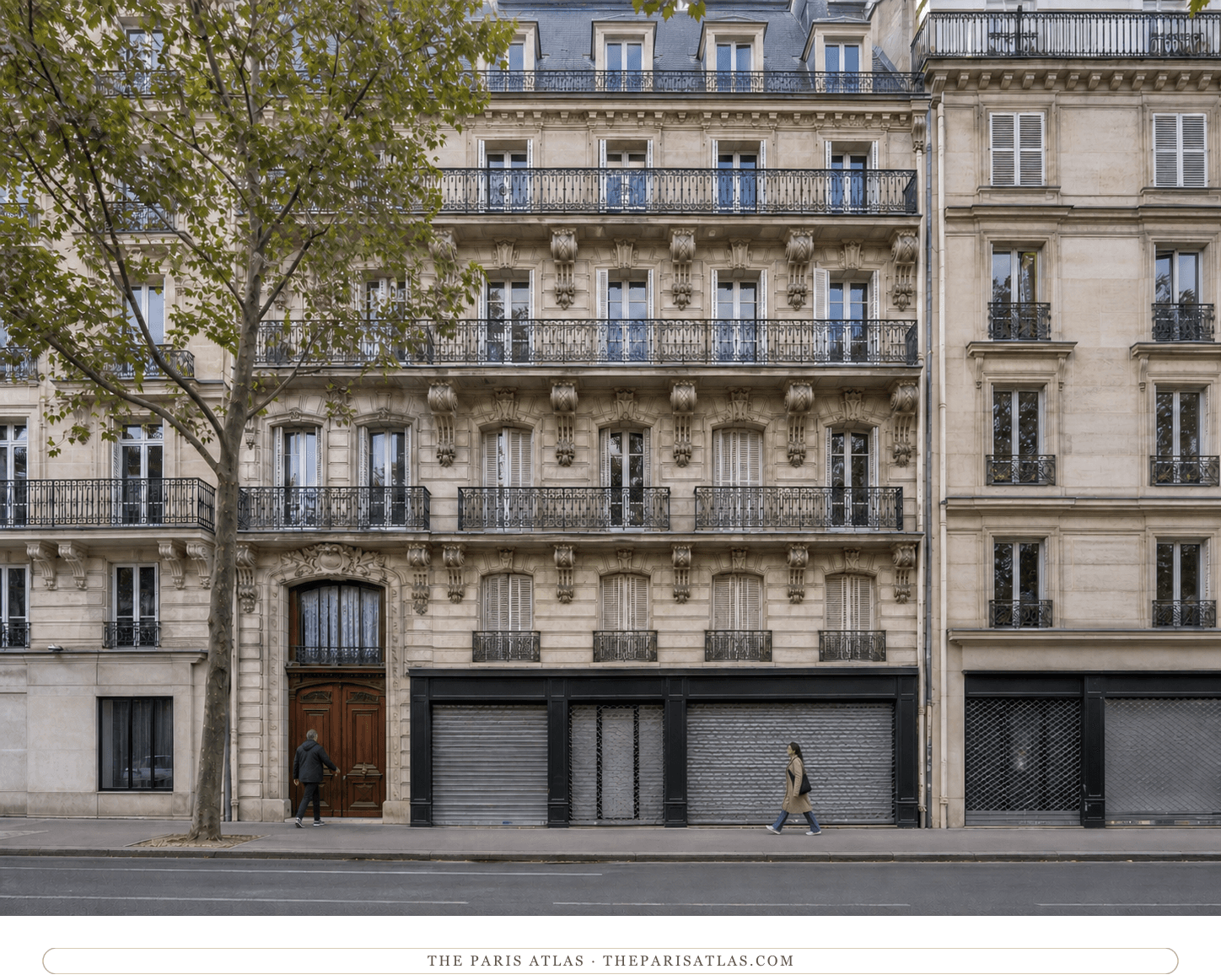
The building where Simone de Beauvoir rented a room in her grandmother's flat in July 1929, at twenty-one, to get out from under her parents — and where she studied for the philosophy agrégation she passed that year.
Visit the place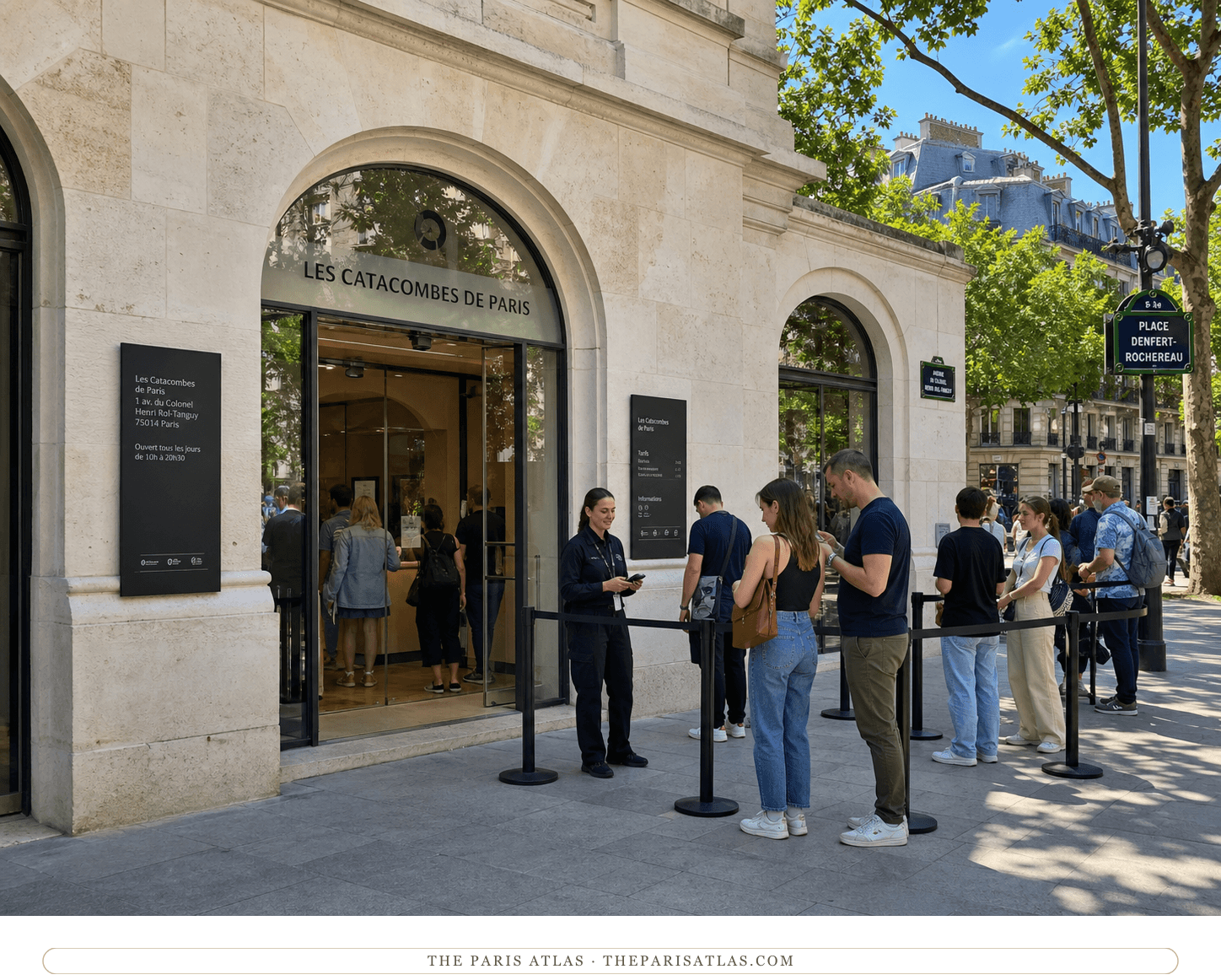
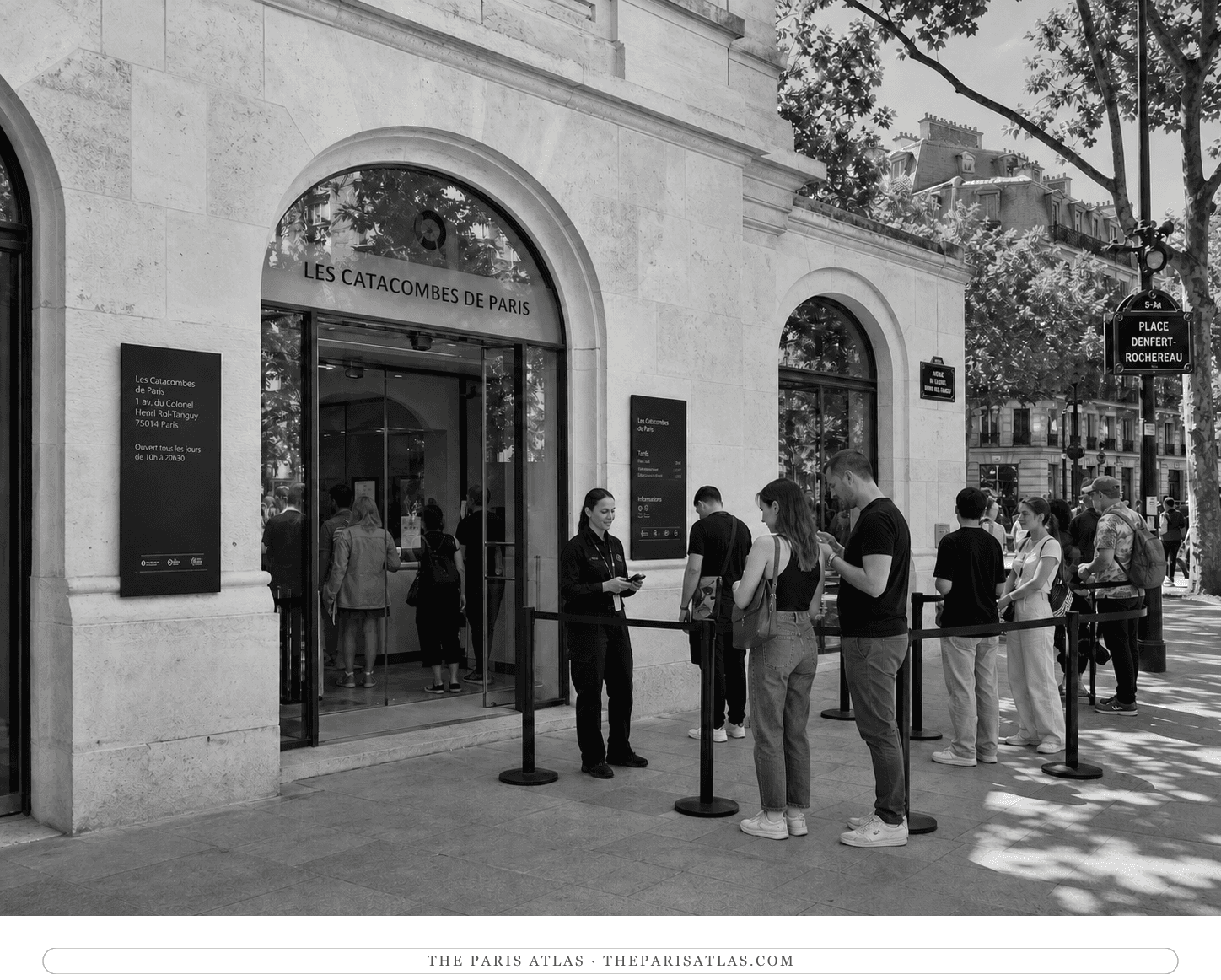
The Catacombs are a municipal ossuary in a disused limestone quarry twenty metres under the 14th arrondissement, holding the remains of several million Parisians moved out of the city's overflowing graveyards from 1786 onward. The visit is a 1.5 km one-way walk, 131 steps down and 112 up, at a constant 14°C. Open Tuesday to Sunday, 9.45 a.m.–8.30 p.m., last admission 7.30 p.m.; full rate €31.
Visit the place
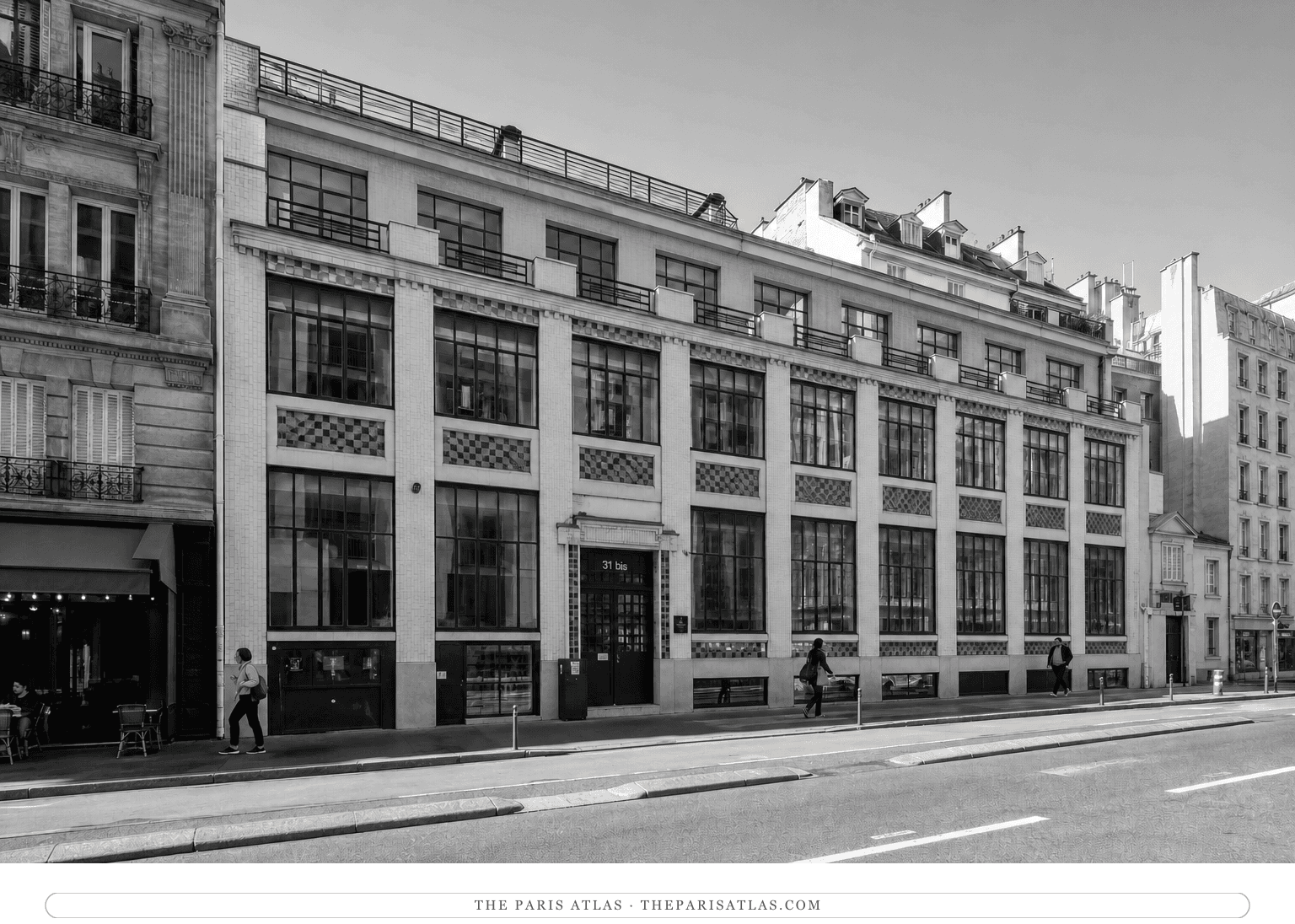
Man Ray's Montparnasse studio, where Berenice Abbott was working as his darkroom assistant in 1925 when she photographed Djuna Barnes.
Visit the place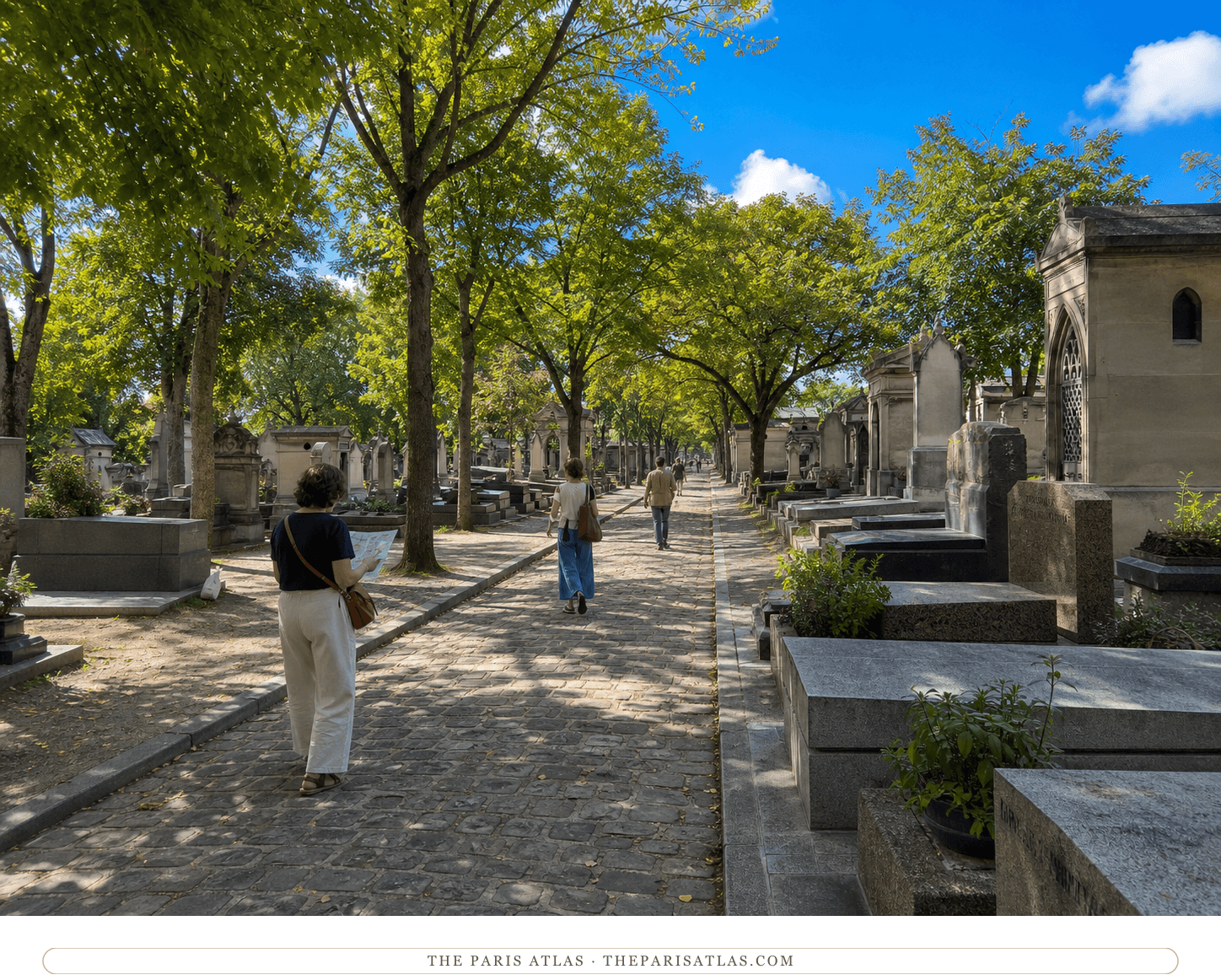
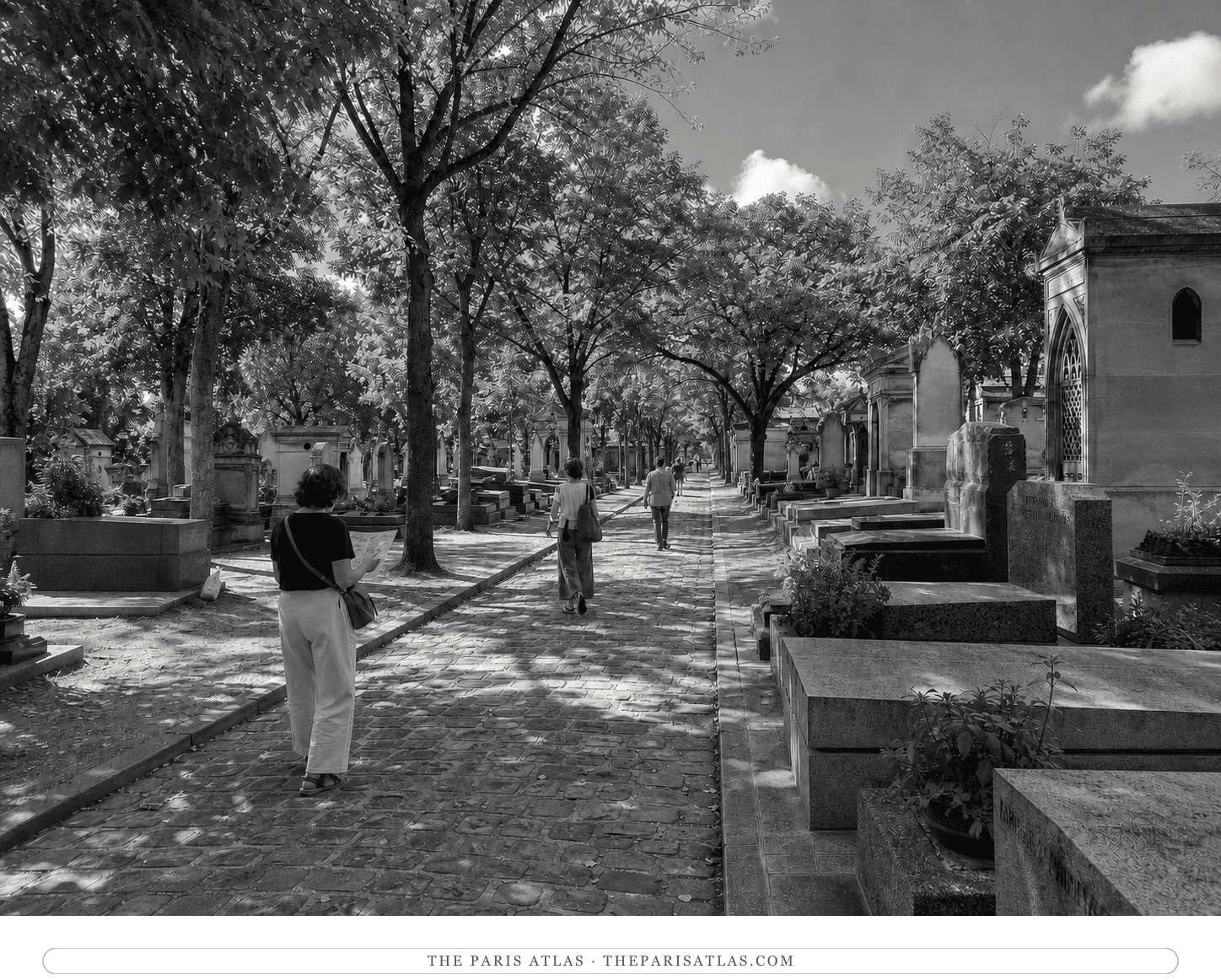
The second-largest cemetery inside Paris — nineteen flat, gridded hectares south of the boulevard du Montparnasse, holding the graves of Charles Baudelaire, Samuel Beckett, Jean-Paul Sartre and Simone de Beauvoir, Serge Gainsbourg, Man Ray, Guy de Maupassant, Constantin Brancusi and Marguerite Duras.
Visit the placeThe sources below include histories, archival materials, scholarly research, and official records that informed this page. They document 11 bis rue Victor-Schœlcher, the people connected to it, and its place in Paris.

The city's Beauvoir walk: the first flat she could buy with her own money after the 1954 Goncourt, and its use as a gathering place for writers.

Map data used to verify addresses, geographic coordinates, and the placement associated with 11 bis rue Victor-Schœlcher.
Published analysis and historical context used in preparing the 11 bis rue Victor-Schœlcher page.
Published analysis and historical context used in preparing the 11 bis rue Victor-Schœlcher page.
These references provide the documented foundation for this page's history and context. Claim-level citations remain attached to the specific claims they support.
 Explore more resources
Newsletter
The cafés, studios, and walk-up flats where the work was made — one story from the map in every letter.